
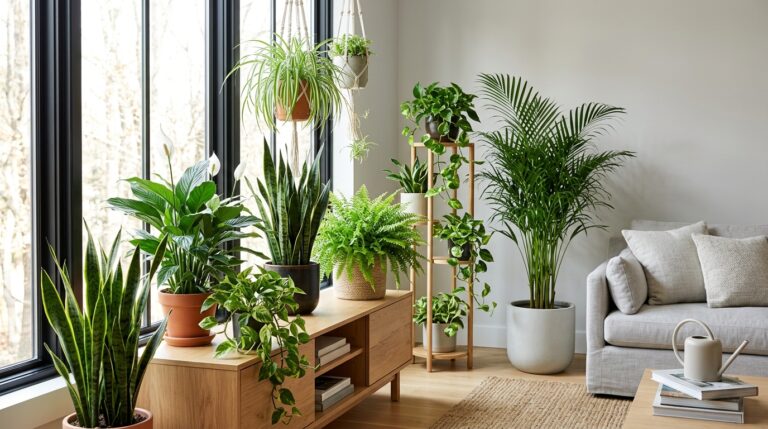
The term “oxygen bomb” appears constantly in houseplant content, the idea that certain plants are so powerful at producing oxygen and removing toxins that a single pot can transform your indoor air quality.
The claim is partly true. Mostly exaggerated. And worth understanding correctly, because the plants themselves are genuinely valuable, just not in the way the headline claims.
Here is what the research actually shows, which plants performed best, and how many you realistically need to affect your indoor air.
The NASA Clean Air Study: What It Actually Found
The source behind most “air-purifying plant” claims is the NASA Interior Landscape Plants for Indoor Air Pollution Abatement study, published in 1989 by Dr. B.C. Wolverton and colleagues at NASA’s John C. Stennis Space Center.
The study placed plants in sealed chambers and measured their ability to remove formaldehyde, benzene, trichloroethylene, and other VOCs (volatile organic compounds) from the air. The results were genuinely positive, several common houseplants removed meaningful quantities of these pollutants.
What is frequently left out of headlines:
- The chambers were small and sealed. Sealed test chambers are not homes.
- The pollutant concentrations in the study were deliberately elevated, higher than typical household levels.
- More recently, researchers at the University of Washington (Cummings & Waring, 2019) analyzed 12 studies and concluded that it would take 680 plants in an 1,800-square-foot space to achieve the equivalent air cleaning effect of a standard home’s ventilation system.
Does this mean houseplants don’t purify air? No. It means a single plant does not transform your home’s air quality the way the marketing suggests. Multiple plants distributed throughout your home do contribute measurably to cleaner indoor air, just more subtly than the dramatic claims imply.
Additionally, the microorganisms in the soil are actually responsible for much of the VOC removal, not the plant itself, which is one reason for the large number of plants needed to see real effects.
What VOCs Actually Are — And Where They Come From
Volatile Organic Compounds are carbon-based chemicals that evaporate easily at room temperature. Common sources in homes:
- Formaldehyde: Off-gassing from pressed wood furniture, particleboard, some carpets, and certain cleaning products
- Benzene: Paints, varnishes, tobacco smoke, vehicle exhaust that seeps indoors
- Trichloroethylene: Some adhesives, cleaning solvents, and certain paints
- Xylene and toluene: Paints, gasoline, and some cleaning products
- Carbon monoxide: Gas appliances, attached garages, tobacco smoke, plants do NOT effectively remove CO. For CO, only ventilation and CO detectors are appropriate.
Most modern homes have relatively low levels of these compounds due to improved ventilation and building standards. The greatest benefits from air-purifying plants are in older homes, homes with new furniture or recent renovations, homes in areas with poor outdoor air quality, and homes with minimal ventilation.
The Best “Oxygen Bomb” Plants — and What They Actually Do
1. Peace Lily (Spathiphyllum wallisii)

What it does: Topped NASA’s original list for VOC removal. Particularly effective at absorbing ammonia, benzene, formaldehyde, and trichloroethylene. One research study at the University of Technology Sydney found peace lily reduced CO2 concentration and increased oxygen percentage in a room by approximately 25%.
Care: Low to moderate indirect light. Water weekly. Droops visibly when thirsty — an honest plant.
Toxicity: Mildly toxic to cats and dogs. Keep elevated if pets are present.
2. Spider Plant (Chlorophytum comosum)
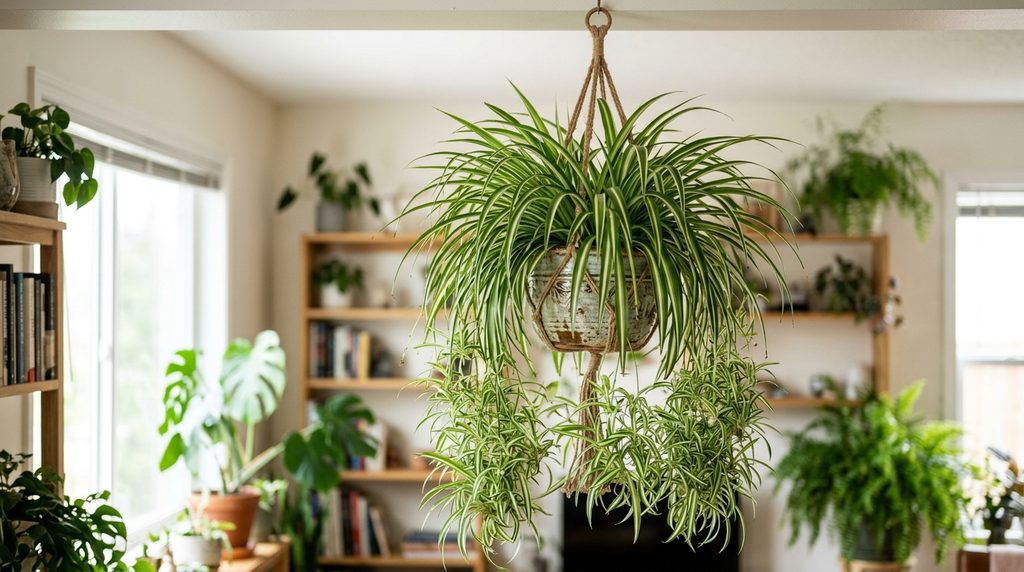
What it does: Effective at removing formaldehyde, xylene, carbon monoxide, and benzene. Fast-growing, producing “spiderettes” (baby plants) that can be propagated in water.
A University of Hawaii study found spider plants removed 95% of formaldehyde from a sealed chamber within 24 hours.
Care: Bright indirect light. Water every 1 to 2 weeks. Non-toxic to pets — a genuine advantage.
3. Snake Plant (Dracaena trifasciata)

What it does: Performs CAM photosynthesis — releases oxygen at night. Removes formaldehyde, benzene, and trichloroethylene. A Naresuan University study measured snake plants absorbing CO2 at 0.49 ppm/m³ in a closed system.
The nighttime oxygen release makes it uniquely suited for bedrooms. Its drought tolerance makes it uniquely forgiving.
Care: Tolerates low light but grows faster with indirect light. Water every 2 to 6 weeks.
4. Aloe Vera (Aloe barbadensis miller)
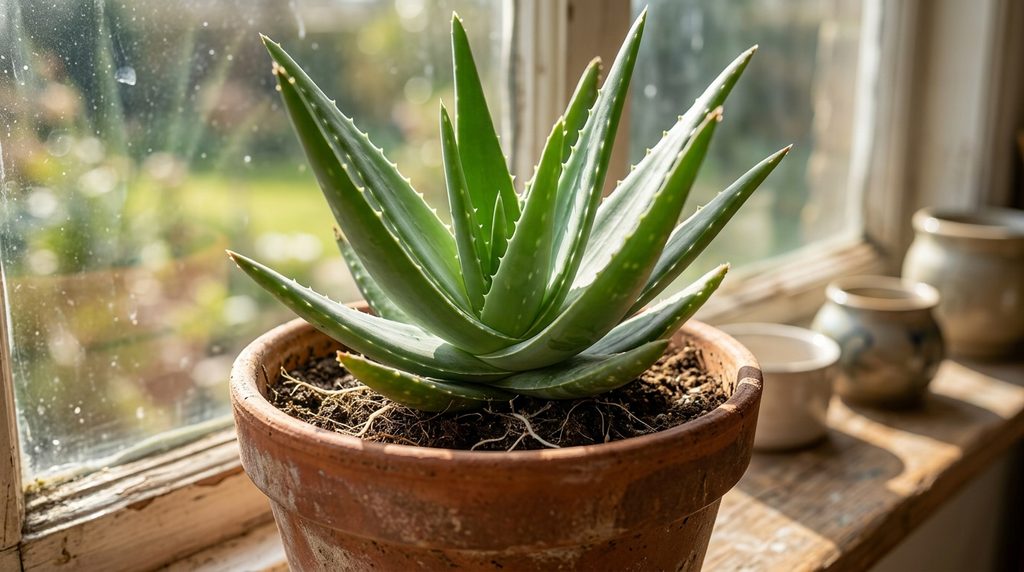
What it does: Also performs CAM photosynthesis, releasing oxygen at night. The NASA study identified it as effective at removing benzene and formaldehyde.
Care: Full sun (south-facing window). Water thoroughly, allow to dry completely between waterings. Toxic to cats and dogs.
5. Boston Fern (Nephrolepis exaltata)
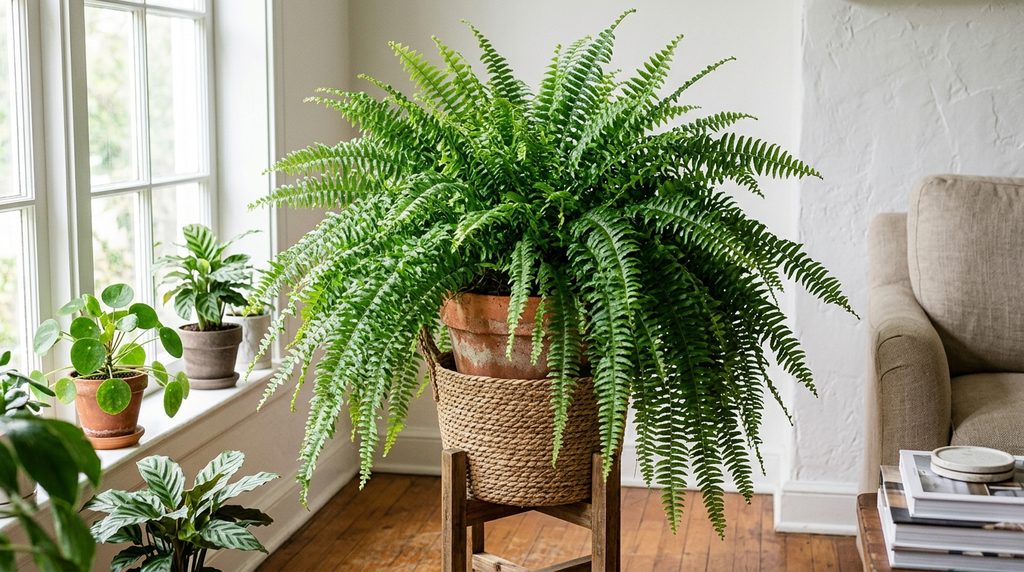
What it does: One of the most effective natural humidifiers among houseplants — releases significant moisture through transpiration. Also removes formaldehyde and xylene. The increased humidity helps reduce airborne allergen concentrations.
Care: Bright indirect light, consistently moist soil, high humidity environment. Ferns are the most maintenance-demanding plants on this list.
6. Pothos (Epipremnum aureum)
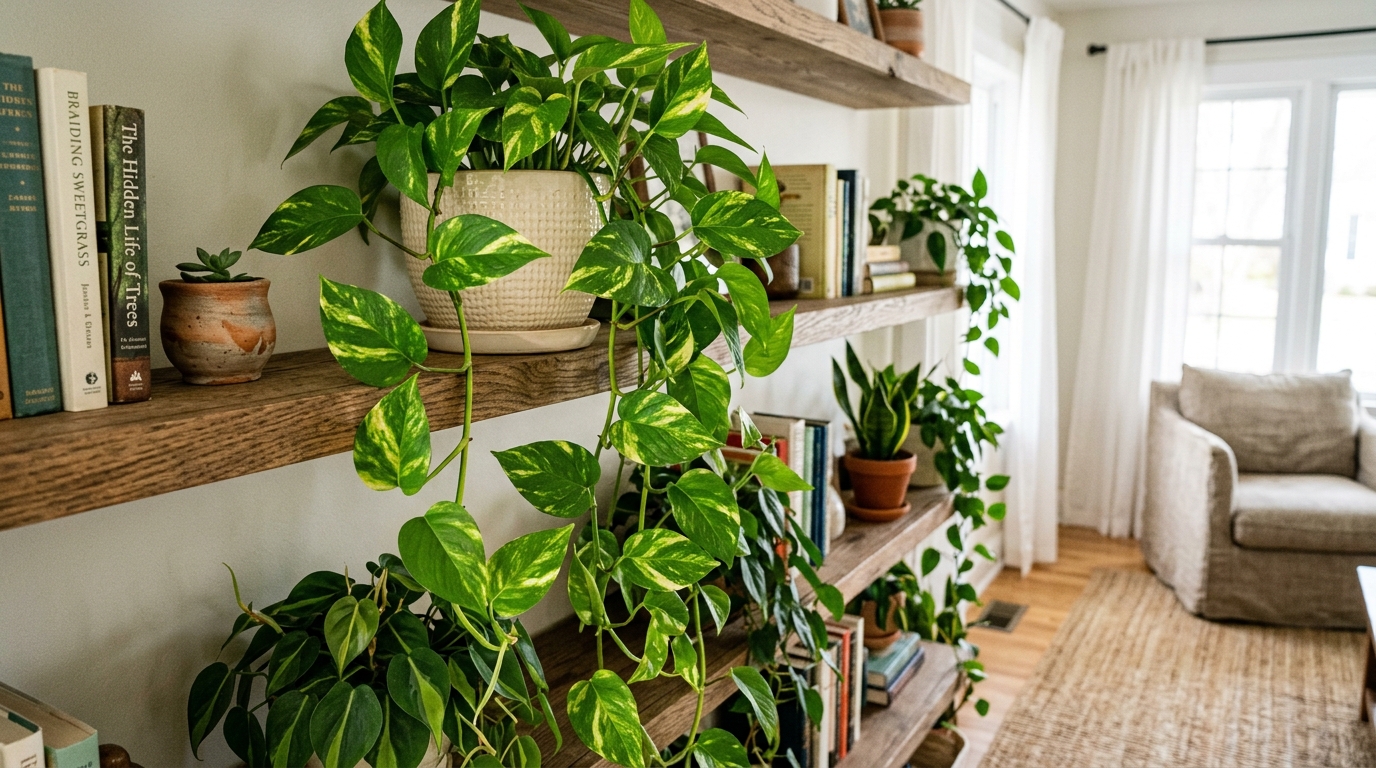
What it does: Removes formaldehyde, benzene, and xylene. Extremely adaptable to low light conditions, making it practical for dim offices and apartment spaces where it is most needed.
Care: Low to moderate indirect light. Water every 1 to 2 weeks. Mildly toxic to pets.
7. Dracaena (Dracaena marginata, D. fragrans)

What it does: The Dracaena genus was well-represented in the NASA study. Marginata removes benzene, formaldehyde, trichloroethylene, and xylene. Fragrans (corn plant) is similarly effective.
Care: Moderate indirect light. Water when topsoil is dry. Sensitive to fluoride in tap water — brown leaf tips indicate this issue. Use filtered water.
8. English Ivy (Hedera helix)
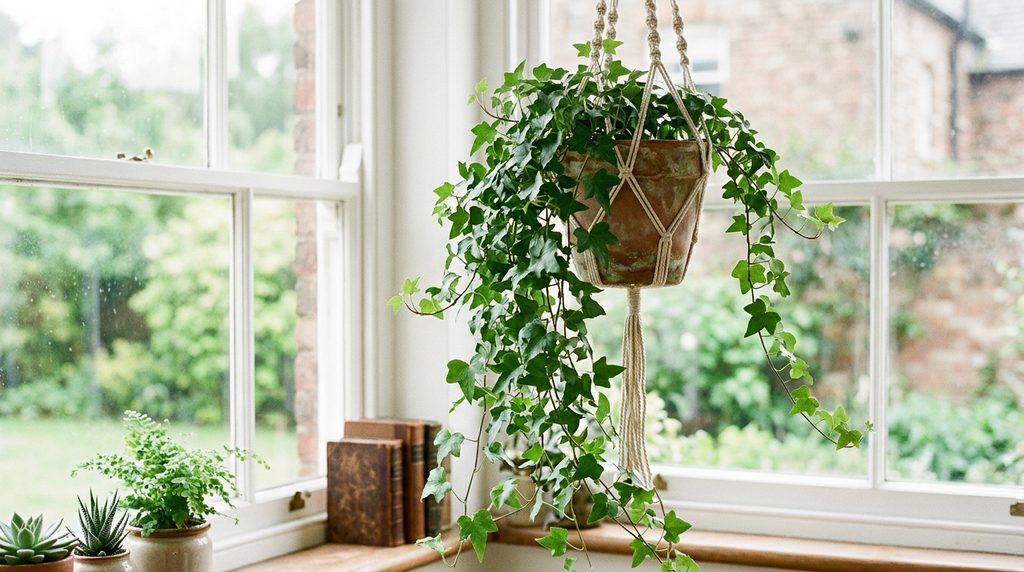
What it does: Research cited in The Hearty Soul found that English ivy can eliminate approximately 60% of airborne toxins and 58% of airborne fecal particles (from bathroom use) within 6 hours of introduction to a space.
Care: 4+ hours of indirect light. Keep moist but not soggy. Toxic to cats, dogs, and children.
9. Chrysanthemum (Chrysanthemum morifolium)

What it does: Among the most effective at removing benzene (found in paints and plastics) and formaldehyde in the NASA study. Requires more light than most other options.
Care: Place near a window with direct morning light for buds to open. Remove spent flowers to encourage reblooming. Treated as a seasonal plant in most indoor settings.
10. Bamboo Palm (Chamaedorea seifrizii)
What it does: Excellent at removing benzene, trichloroethylene, and formaldehyde. Also releases significant moisture, raising indoor humidity. The Areca palm (Dypsis lutescens) performs similarly and is also non-toxic to pets.
Care: Bright indirect light. Water consistently. Pet-safe — one of few larger plants that is non-toxic to both cats and dogs.
How Many Plants Do You Actually Need?
NASA’s original recommendation was 1 medium-to-large plant per 100 square feet of floor space. For a typical 1,500-square-foot home, that is 15 plants.
The more recent University of Washington analysis suggests this underestimates the number needed for meaningful VOC reduction in real-world (non-sealed) conditions.
A practical approach:
- Place 1 to 2 plants in rooms where VOC sources are concentrated: the kitchen (cleaning products), office (computers, printers, off-gassing electronics), bedroom (new furniture)
- Use larger plants where possible — a large snake plant or peace lily processes more air than three small succulents
- Supplement with good ventilation: opening windows regularly does more for air quality than any plant, and works synergistically with plant-based air purification
- Keep leaves dust-free: dusty leaves photosynthesize less efficiently. Wipe with a damp cloth monthly.
|
✅ Tip The most significant indoor air quality improvement is not plants — it is ventilation. Open windows for 10 minutes per day in most climates. Use bathroom and kitchen exhaust fans whenever cooking or showering. Then add plants as a complement to these fundamentals, not a replacement for them. Houseplants improve indoor environments in other well-documented ways beyond air chemistry: they reduce perceived stress (multiple psychology studies), lower cortisol levels, and improve mood and concentration. These benefits are real and don’t depend on large plant numbers to be felt. |
Frequently Asked Questions
Do houseplants actually clean the air?
Yes, but more modestly than most content suggests. The NASA study is real, and its results are genuine. However, studies in real-world conditions rather than sealed chambers show that it takes a significantly larger number of plants (50 to 680 in a typical home) to achieve the level of air purification that headlines imply. Multiple plants distributed throughout a home do contribute meaningfully to cleaner air — just not dramatically from a single plant.
Which houseplant produces the most oxygen?
Pothos, peace lily, and snake plant are among the highest performers for oxygen production relative to their size and care requirements. The snake plant is uniquely valuable for bedrooms because it continues producing oxygen at night via CAM photosynthesis, unlike most plants that consume oxygen in darkness.
Are there plants that are actually dangerous to indoor air quality?
Some plants release trace amounts of VOCs themselves as part of normal respiration, but these are at levels far too low to be harmful. The net effect of all common houseplants is air quality improvement, not reduction. The main indoor air quality concern with plants is overwatered soil developing mold — good drainage practices prevent this.
The Bottom Line
The “oxygen bomb” framing overstates what individual houseplants do to indoor air quality. But the underlying premise is real: houseplants remove VOCs, some produce oxygen at night, and they have well-documented effects on mood, stress, and cognitive function.
Start with a snake plant in the bedroom, a peace lily in the office, and a spider plant in the kitchen. Give them proper care. That is not a miracle cure for indoor air pollution — but it is a genuinely positive contribution to your indoor environment, delivered by something beautiful and living.
