
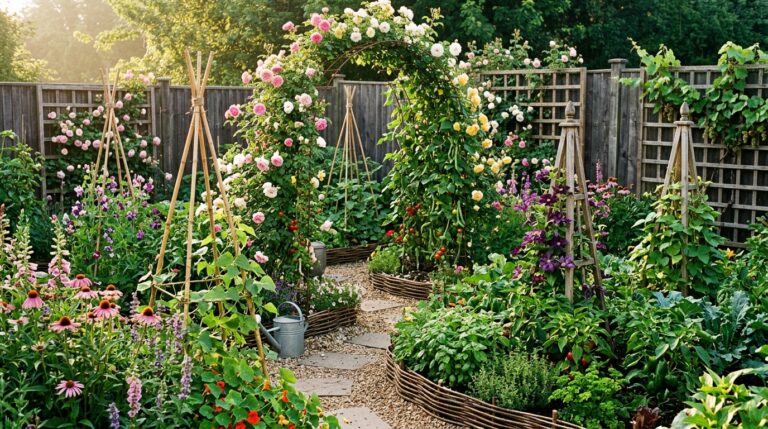
A garden trellis does two things simultaneously that few other garden features can: it supports your plants and creates architecture.
A well-chosen trellis transforms a flat garden into a layered, three-dimensional space. It creates visual interest in every season, lush and green in summer, beautifully structural in winter. And for climbers and vining vegetables, it is not optional: cucumbers, beans, peas, tomatoes, and climbing roses all produce more, stay healthier, and are easier to harvest when properly supported vertically.
These 25 designs range from a 30-minute project costing nothing to weekend builds that become permanent landscape features. Each includes a skill level, cost estimate, and best plant suggestions.
Why Every Garden Needs at Least One Trellis
- Disease prevention: Climbing plants with better airflow suffer significantly less fungal disease. Powdery mildew on cucumbers, for instance, is dramatically reduced by vertical growing that improves air circulation.
- Yield increase: Vertically grown cucumbers and beans are more accessible for harvest — easy picking means you harvest more frequently, and more frequent harvest means the plant produces longer.
- Space efficiency: A 6-foot trellis panel can support the same number of plants as 3 to 4 feet of horizontal bed space.
- Aesthetic value: A vine-covered trellis is one of the most beautiful things a garden can contain — the combination of structure and living growth is uniquely satisfying.
Simple Weekend Trellises (Beginner, Under $20)
1. Bamboo Teepee
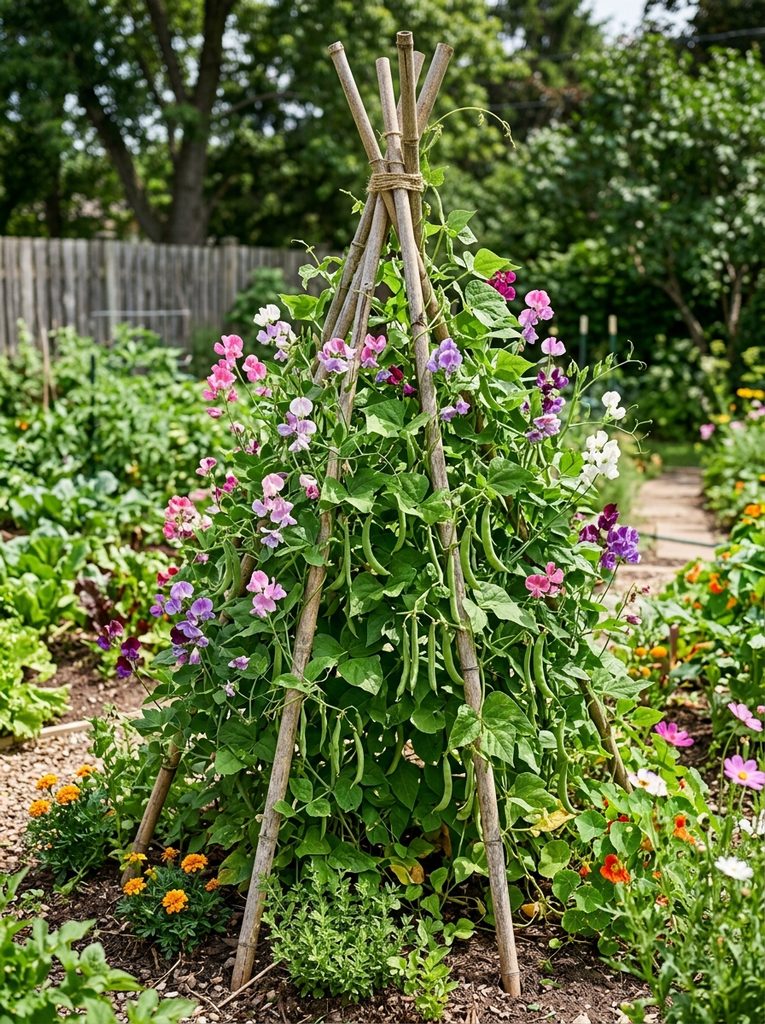
Skill: Beginner | Cost: $5 to $15 | Time: 30 minutes
The bamboo teepee is the universal beginner trellis — gather 6 to 8 bamboo stakes (4 to 6 feet long), push the bases into the soil in a circle 18 to 24 inches in diameter, pull the tops together, and bind with garden twine.
Best plants: Pole beans, sweet peas, cucumbers, climbing nasturtiums. One teepee provides support for 6 to 8 bean plants and becomes a beautiful living feature throughout the season.
2. Wire Cylinder

Skill: Beginner | Cost: $5 to $10 | Time: 20 minutes
Roll heavy-gauge wire mesh or concrete reinforcing mesh (rebar mesh) into a cylinder 12 to 18 inches in diameter. Fasten with wire clips or zip ties. Push into the soil around a tomato, pepper, or dahlia plant.
This produces sturdier support than most commercial tomato cages, which frequently collapse under heavy fruit loads.
3. Branch and Twig Trellis
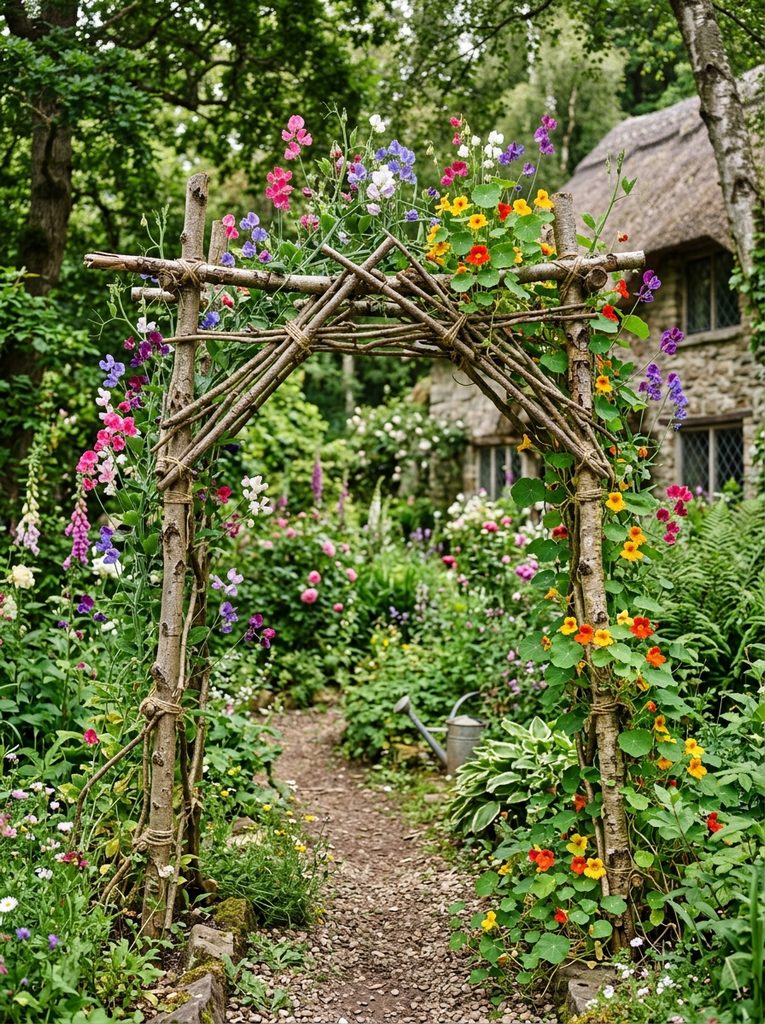
Skill: Beginner | Cost: Free | Time: 1 hour
Collect sturdy fallen branches from your yard or nearby woods. Push vertical branches into the soil as uprights, then weave or tie horizontal branches between them to create a natural grid pattern.
The result is a genuinely beautiful rustic structure that looks completely at home in cottage or woodland gardens. Use for lightweight climbers: sweet peas, morning glories, nasturtiums.
4. Old Ladder Trellis

Skill: Beginner | Cost: Free or $5 from a thrift store | Time: 10 minutes
Lean a vintage wooden ladder against a wall, fence, or stand it freestanding with diagonal support. Plants naturally wind through the rungs. Works beautifully in cottage and farmhouse garden styles.
5. String and Stakes

Skill: Beginner | Cost: Under $5 | Time: 30 minutes
Drive wooden or metal stakes at 2-foot intervals along the planting row. String twine horizontally between stakes at 6-inch intervals to create a flat trellis panel. Suitable for peas, beans, and shorter climbing plants.
Mid-Level Wooden Trellises (Intermediate, $20 to $80)
6. Classic Wooden Lattice Panel

Skill: Intermediate | Cost: $25 to $50 | Time: 2 to 3 hours
Purchase pre-made lattice panels from a home improvement store ($10 to $20 each) and attach to a simple wooden frame built from 2×2 or 2×4 lumber. Set in the soil using pressure-treated fence posts or mount to an existing wall or fence.
Cedar lattice weathers beautifully and lasts 10 to 15+ years without treatment. Paint or stain to match your home’s exterior.
7. A-Frame Trellis
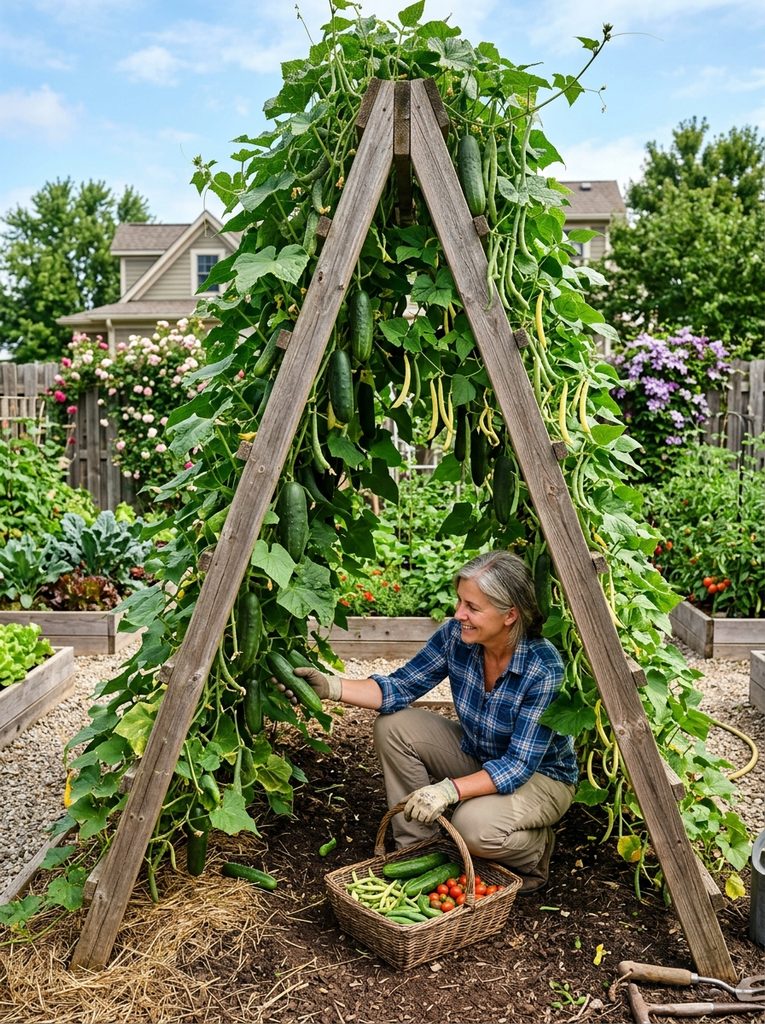
Skill: Intermediate | Cost: $20 to $40 | Time: 2 to 4 hours
Build two rectangular frames from cedar fence pickets or 1×2 lumber, join at the top with hinges, and stretch wire mesh or garden netting between them. The A-frame folds flat for storage in winter.
Best use: Cucumbers, squash, and beans — excellent airflow and very easy to harvest from underneath.
8. Fan Trellis
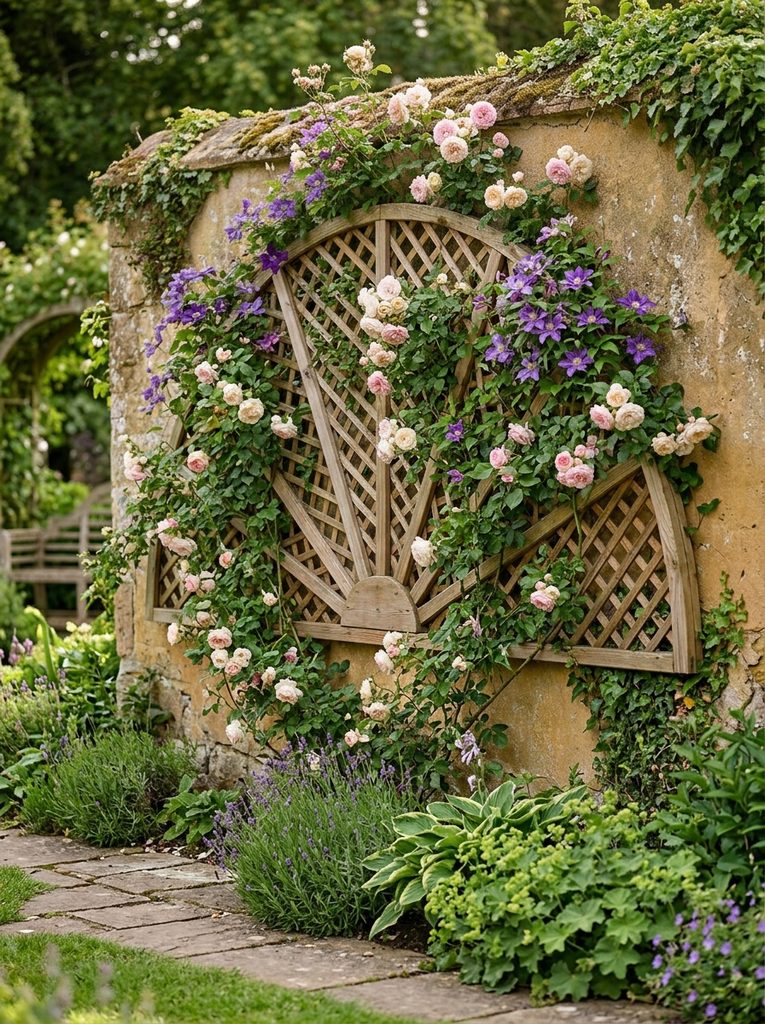
Skill: Intermediate | Cost: $25 to $40 | Time: 3 to 4 hours
Arrange cedar slats in a radiating fan pattern from a single base point, widening upward. Mount to a wall or fence. The fan shape suits corners and provides a graduated surface that looks intentional and architectural.
9. Raised Bed with Integrated Trellis
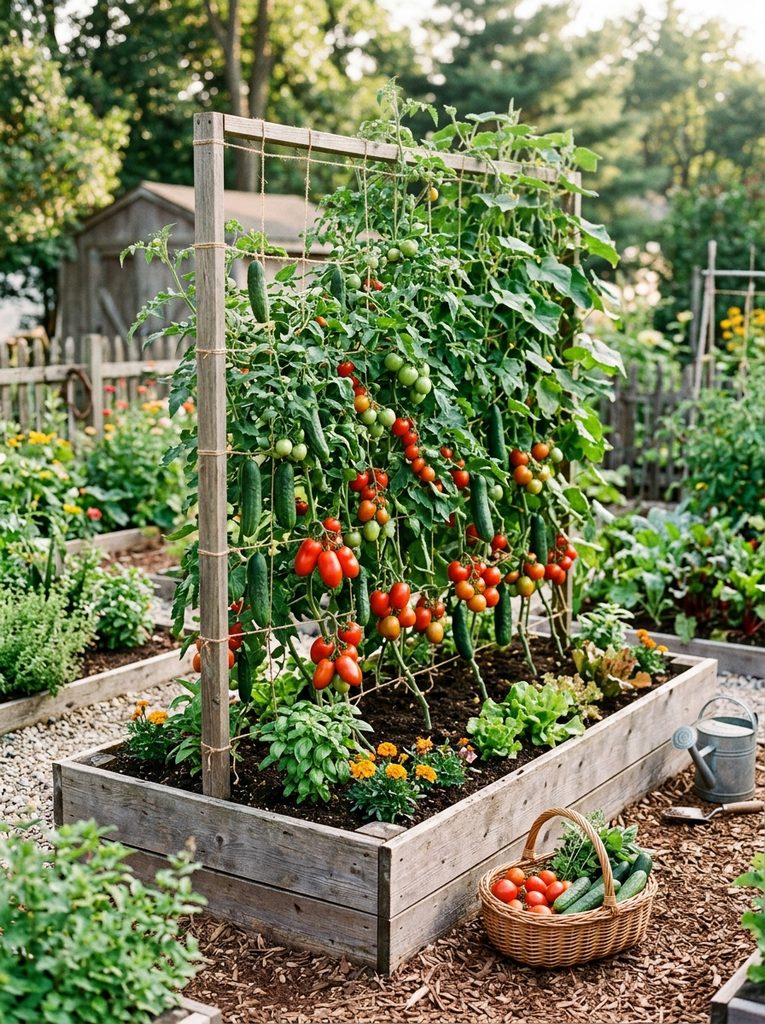
Skill: Intermediate | Cost: $50 to $100 | Time: Full day
Build a raised bed with tall corner posts extending 5 to 6 feet above the bed surface. String horizontal wires between the posts to create a trellis framework directly above the planting area.
This design creates a self-contained growing system where the trellis and bed form a unified garden feature — particularly effective for cucumber and tomato production in limited spaces.
10. Wooden Obelisk

Skill: Intermediate | Cost: $30 to $60 | Time: 3 to 4 hours
A four-sided wooden obelisk (pyramid shape) serves as both a trellis and a garden focal point. Build from 1×2 cedar strips with a decorative finial on top. Paint white for a formal look, leave natural for a cottage aesthetic.
Upcycled and Creative Trellises (Any Skill Level)
11. Repurposed Screen Door
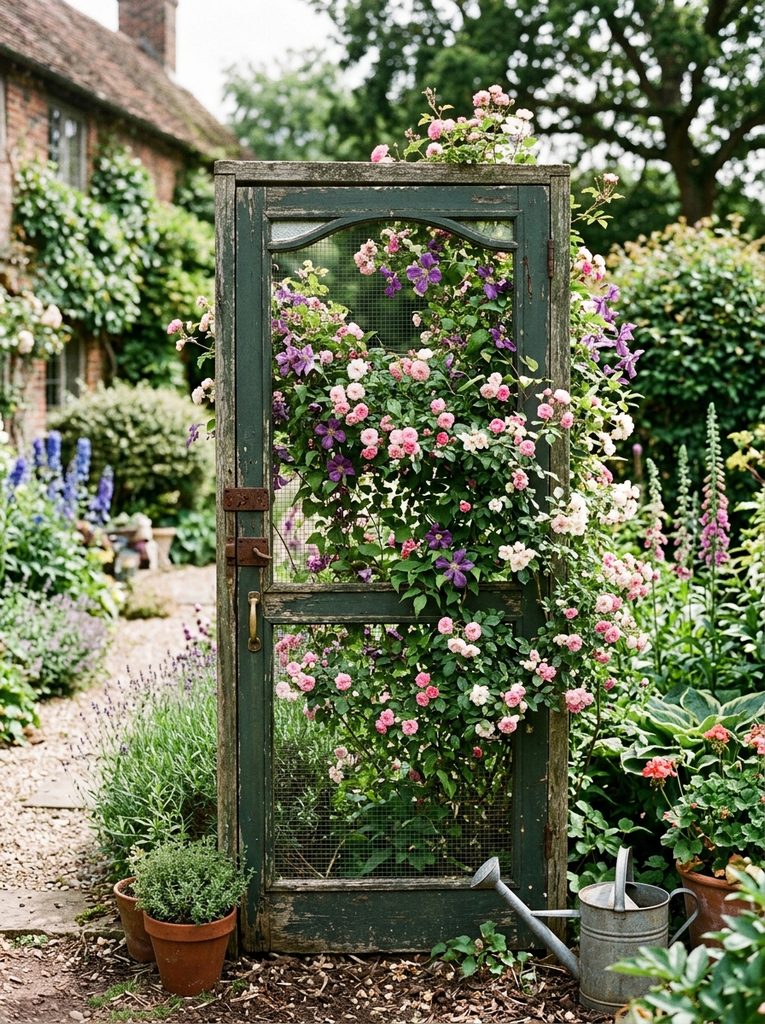
An old screen door leaned against a fence or wall becomes an instant vintage trellis. The metal mesh screen accepts climbing plants with ease, and the door frame provides structural stability without additional bracing.
12. Bicycle Wheel Trellis

Two bicycle wheels secured with vertical metal rods or wooden dowels between them create a circular, architectural trellis for sweet peas or other lightweight climbers. Particularly effective as a garden sculpture when not in active use.
13. Headboard Trellis

An ornate metal or wooden headboard from a thrift store (typically $10 to $30) becomes an instant decorative trellis. The existing decorative framework is perfect for climbing roses, clematis, or sweet peas. Set in the soil using T-posts or rebar inserted through the headboard structure.
14. Cattle Panel Arch

Cattle panels — 16-foot sections of welded wire mesh available at farm supply stores for $25 to $40 — bent into an arch and anchored with T-posts create one of the most productive and dramatic garden structures available.
A single cattle panel arch spanning two raised beds creates a tunnel of climbing plants: beans, cucumbers, squash, and climbing roses all thrive on this structure. The arch remains visually striking year-round.
15. Pallet Trellis

Stand pallets vertically and attach garden netting or hardware cloth across the face for a climbing surface. Multiple pallets joined create a privacy screen trellis that also grows food.
Only use HT (heat treated) pallets marked with the IPPC stamp for any food garden use.
Metal and Architectural Trellises (Intermediate to Advanced)
16. Copper Pipe Trellis

Skill: Intermediate | Cost: $40 to $80 | Time: 3 to 4 hours
Copper plumbing pipe and fittings from a hardware store can be assembled without soldering using compression fittings to create an elegant, modern trellis that weathers to a warm patina over time.
Copper\’s natural antimicrobial properties also offer some limited protection against fungal disease on plant stems in contact with the structure.
17. Rebar Trellis
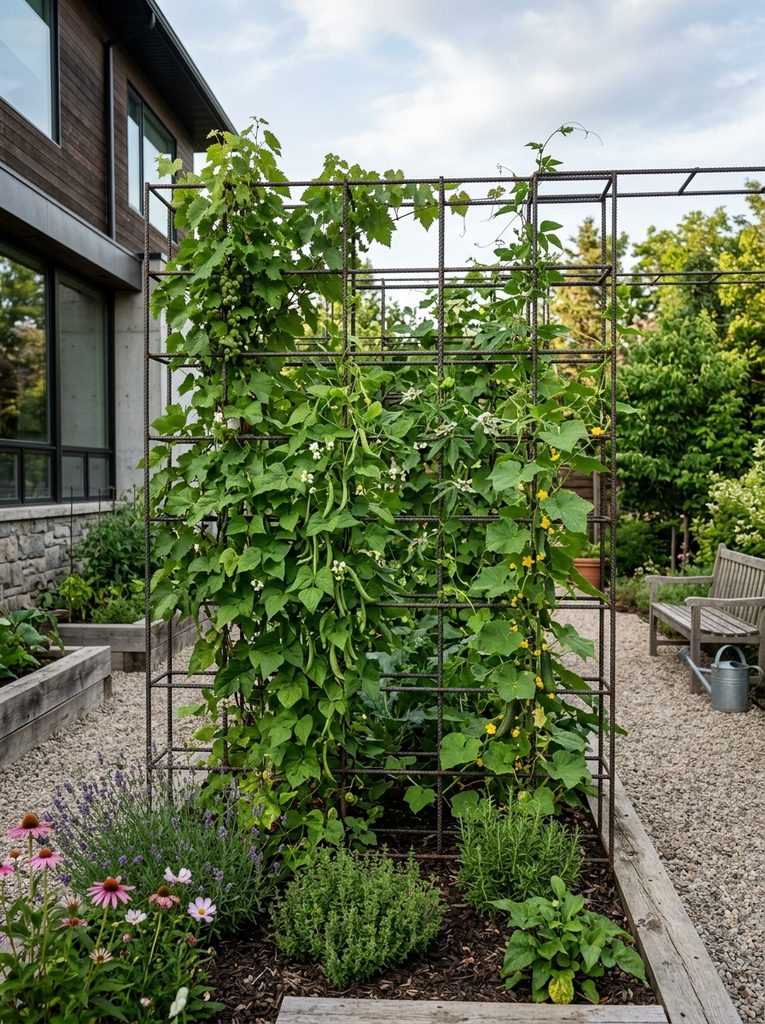
Skill: Beginner to Intermediate | Cost: Under $20 | Time: 1 to 2 hours
Rebar (concrete reinforcing rod) is inexpensive, weather-resistant, and can be bent into curves using simple leverage techniques. Hammer vertical rods directly into the soil and string horizontal wires between them.
Modern, industrial aesthetic. Excellent for contemporary garden designs.
18. Metal Pipe Grid
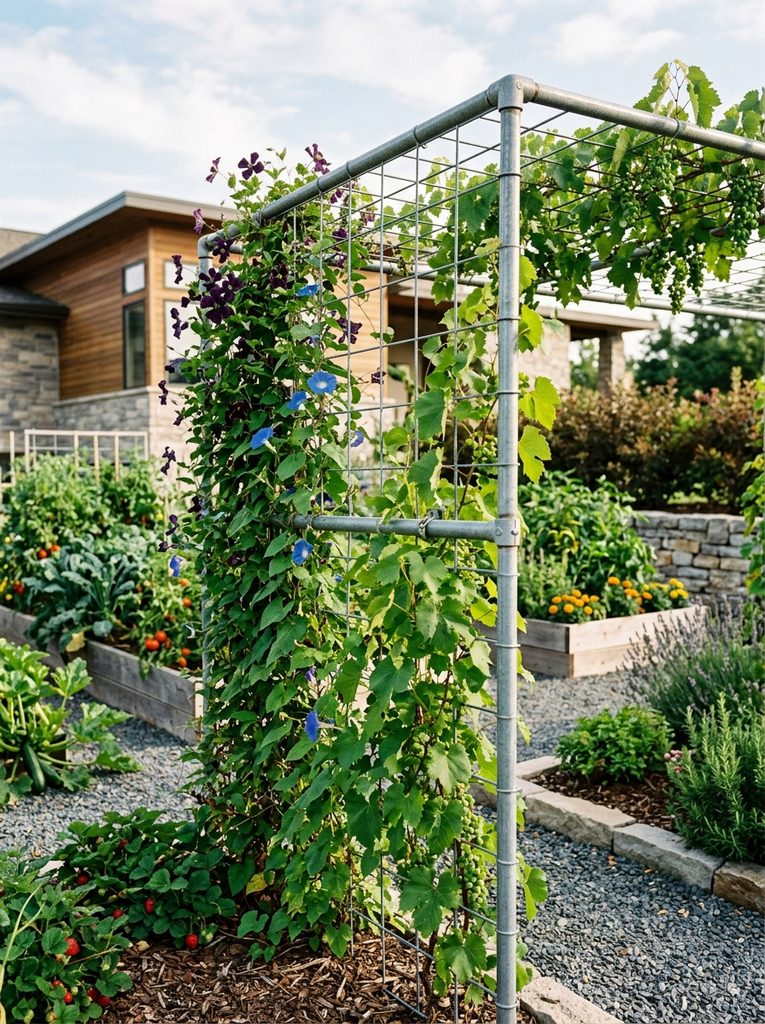
Skill: Intermediate | Cost: $30 to $60 | Time: 3 to 4 hours
Assemble a grid trellis from electrical conduit or galvanized metal pipe using connector fittings. The result is a durable, weather-resistant structure with a modern-industrial look that suits raised bed vegetable gardens.
Specialty and Feature Trellises (Intermediate to Advanced)
19. Garden Arbor / Tunnel

Skill: Intermediate | Cost: $100 to $300 | Time: Weekend
A garden arbor creates a threshold — a gate through a garden space that defines rooms and creates a sense of arrival. Build from pressure-treated lumber or cedar. Train a climbing rose, wisteria, or grape over the top.
20. Wall-Mounted Horizontal Wire Trellis

Skill: Intermediate | Cost: $20 to $50 | Time: Half day
Attach vine eyes (masonry anchors) to a wall or fence, then string stainless steel wire horizontally between them at 8 to 12-inch intervals. The wires are nearly invisible — the climbing plant appears to grow directly on the wall.
This technique is used in formal British and European kitchen gardens where the aesthetic is intentionally clean and architectural.
21. Chevron Wood Panel

Skill: Advanced | Cost: $50 to $100 | Time: Weekend
Arrange cedar boards in a V-pattern (chevron) on a backing frame for a geometric trellis with strong visual impact. Paint in two complementary colors (frame and chevrons) for maximum effect.
22. Willow Wattle Panel
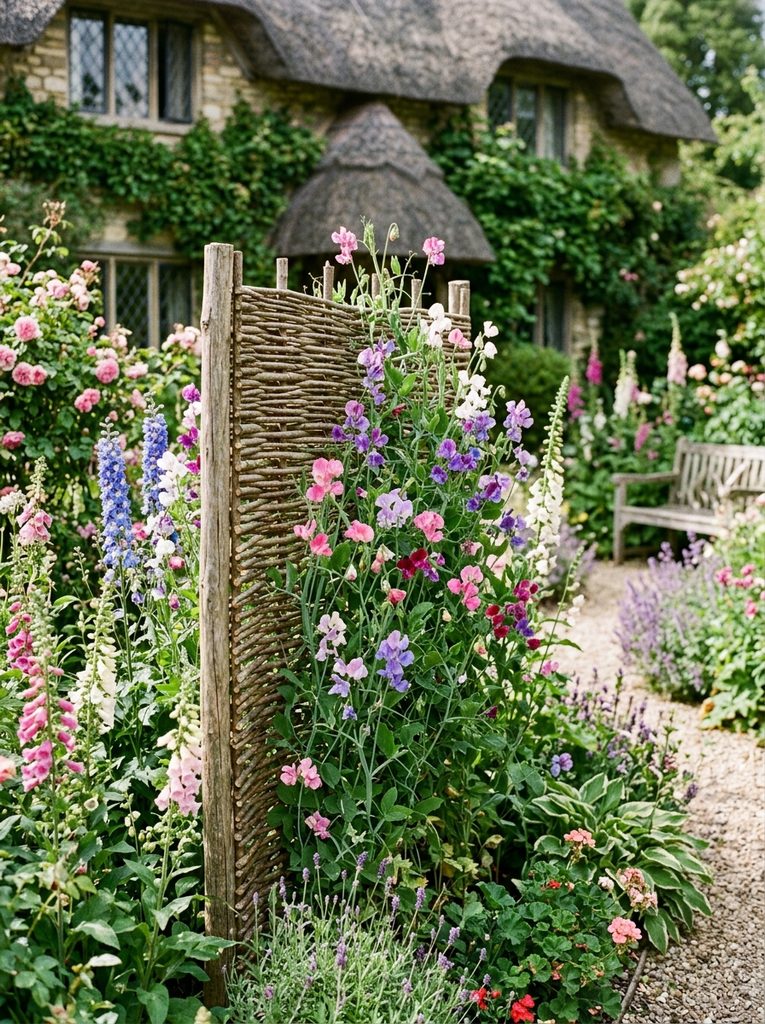
Skill: Intermediate | Cost: $5 to $20 | Time: 3 to 4 hours
Weave fresh willow branches (cut in late winter when pliable) through vertical upright stakes to create a traditional wattle fence panel that doubles as a trellis. The woven texture suits cottage and English garden styles perfectly.
23. PVC Pipe Trellis

Skill: Beginner | Cost: $15 to $30 | Time: 1 to 2 hours
Schedule 40 PVC pipe cuts easily with a handsaw and assembles with standard fittings without adhesive for a removable trellis. Lightweight, weather-resistant, and inexpensive. Best for temporary seasonal use.
24. Growing Room Divider

Skill: Intermediate | Cost: $50 to $150 | Time: Weekend
Build two planter boxes on wheels with tall trellis frames attached. Train climbing plants on the trellis to create a living, movable room divider for patios, decks, or outdoor entertaining spaces.
25. Espalier Frame
Skill: Advanced | Cost: $30 to $60 | Time: 2 to 4 hours
Espalier is the practice of training a fruit tree or ornamental tree to grow flat against a wall by pruning and tying branches to a horizontal wire or wooden framework. The result is one of the most space-efficient and dramatic garden features possible.
Build a simple espalier frame from horizontal wires attached to wall-mounted vine eyes. Train an apple, pear, fig, or magnolia into a flat-facing pattern over 3 to 5 years of guided pruning.
|
✅ Tip Trellis height should match your plants’ mature height plus 12 to 18 inches. Cucumbers routinely reach 6 to 8 feet if not pinched back. Indeterminate tomatoes can exceed 8 feet. Design for the plant’s full potential, not its size at planting. Install trellises BEFORE planting, not after. Driving posts into an established bed damages roots. If you must add support to existing plants, do so carefully and stake along the outer edge of the root zone. |
Frequently Asked Questions
What is the best material for a garden trellis?
Cedar is the most popular DIY material — naturally rot-resistant, weather-beautifully, and works with any garden style. For more permanence, galvanized steel wire and metal framing last indefinitely. Bamboo is excellent for lightweight climbers and annual use. Avoid untreated pine or spruce for any trellis that will remain outdoors year-round.
How do I get climbing plants to attach to a trellis?
Many climbers attach naturally: beans and peas send out tendrils that grip wire and twine without assistance. Tomatoes do not climb on their own and need to be tied with soft garden ties or clips. Climbing roses need their long canes threaded through the trellis and secured with ties at multiple points.
The Bottom Line
A trellis is one of the highest-value additions to any garden — improving plant health, increasing yields, creating visual interest, and making otherwise wasted vertical space productive.
Start with a bamboo teepee if you are a first-time builder. Graduate to a cattle panel arch if you want something that lasts decades. By the time your first climber reaches the top of its support, you will understand exactly why every serious gardener uses them.
