
Most vegetable garden advice assumes you have unlimited horizontal ground.
A 4×8-foot raised bed, a row of tomato cages, a sprawling zucchini that eventually claims half the yard.
Vertical vegetable gardening challenges this assumption. By growing up rather than out, you can produce the same quantity of food — or more — in a fraction of the footprint. A 4-foot-wide trellis section planted with pole beans produces more beans per square foot than a ground-level bed of bush beans. A cattle panel arch spanning two raised beds creates a productive green tunnel from a 20-square-foot ground area.
These 10 designs range from a single trellis installed in an afternoon to more elaborate structures that transform a small space into a high-yield food garden.
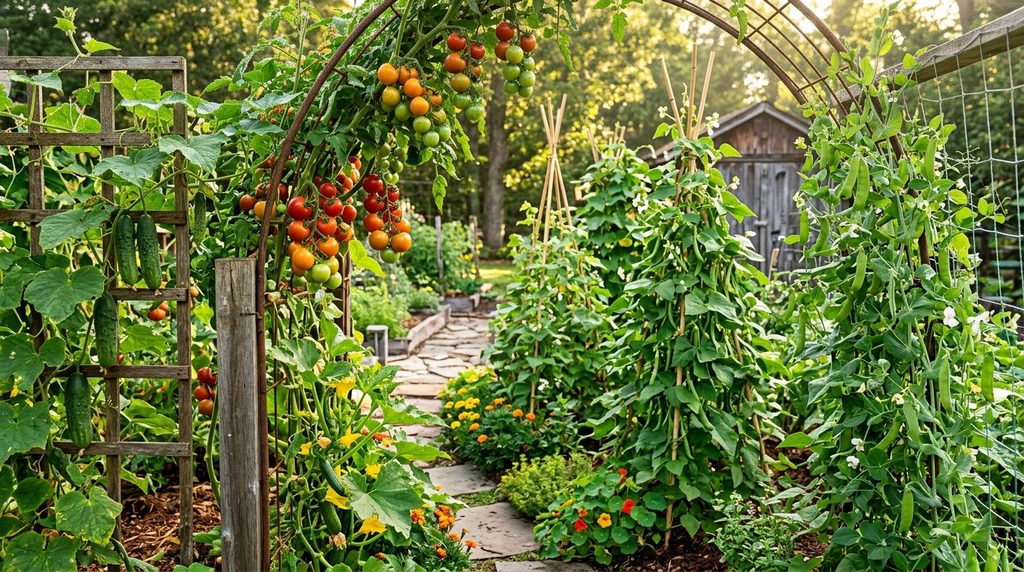
The Case for Growing Vertically
- Yield per square foot: Properly trellised indeterminate tomatoes can produce 4 to 8 times more fruit per ground square foot than sprawling unsupported plants
- Airflow and disease prevention: Vertical growing dramatically improves airflow around plant foliage — the single most effective prevention for fungal diseases like powdery mildew and blight
- Easier harvest: Cucumbers and beans hanging at eye level are faster and more comfortable to pick than crops hidden under foliage at ground level
- Shade and microclimates: A tall trellis creates valuable shaded zones on its northern side — ideal for lettuce and other cool-season crops during summer heat
- Aesthetic value: A productive climbing plant is one of the most visually beautiful garden features possible
Best Vegetables for Vertical Growing
Not all vegetables respond equally to vertical training. The best candidates:
- Cucumbers: Natural climbers with tendrils. All varieties grow vertically; compact types like Spacemaster are ideal for smaller structures.
- Pole beans: Enthusiastic climbers that outperform bush beans in yield and picking ease on vertical supports.
- Peas: Tendrilled climbers — both snow peas and shelling peas grow beautifully on wire or twine supports.
- Indeterminate tomatoes: Need training rather than natural climbing, but grow 6 to 10+ feet and produce heavily when supported vertically.
- Winter squash and small pumpkins: Heavier vines need sturdier supports but grow well vertically. Support developing fruit with fabric hammocks or old pantyhose tied to the trellis.
- Melons (small varieties): Sugar Baby watermelon and Minnesota Midget cantaloupe can be grown vertically with fruit support slings.
- Climbing flowering vegetables: Scarlet runner beans (with spectacular red flowers and edible beans), hyacinth beans (purple pods), and yard-long beans are both productive and beautiful.
10 Vertical Vegetable Garden Designs
1. Cattle Panel Arch
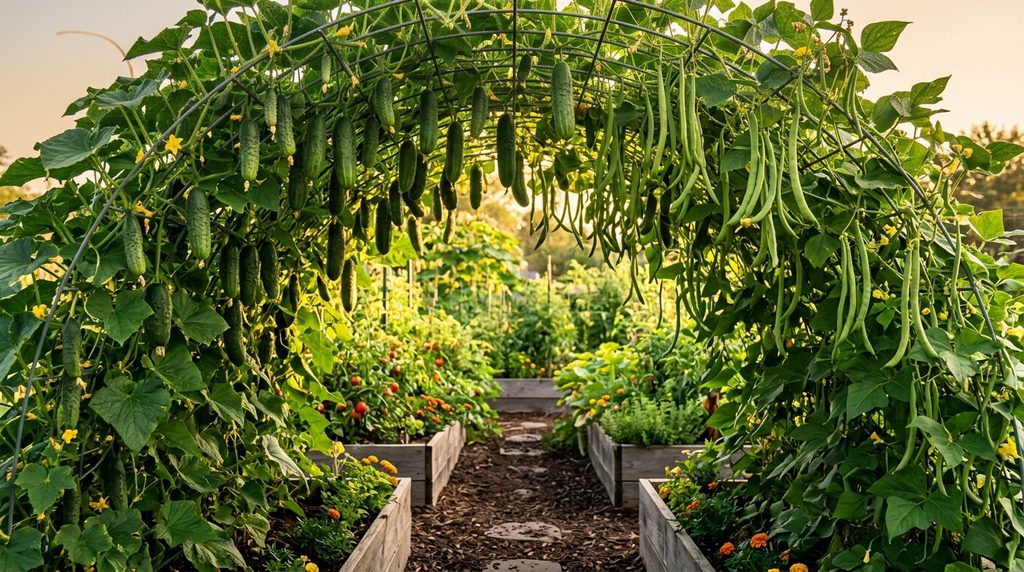
Cost: $60 to $100 | Skill: Intermediate | Lifespan: 20+ years
The cattle panel arch is the most productive structure in this list per square foot of ground area. A 16-foot cattle panel (welded wire livestock fencing, available at Tractor Supply or Rural King for $25 to $35) is bent into an arch and anchored with T-posts at each end. Two arches spanning a pair of raised beds create a living tunnel.
Plant cucumbers, pole beans, small squash, or indeterminate tomatoes at the base of the arch on either side. Within 6 to 8 weeks, the arch is completely covered with foliage and fruit.
The walk-through space underneath provides comfortable harvesting access and becomes a shaded area suitable for heat-sensitive lettuce in midsummer.
2. Living Wall / Pocket Planter
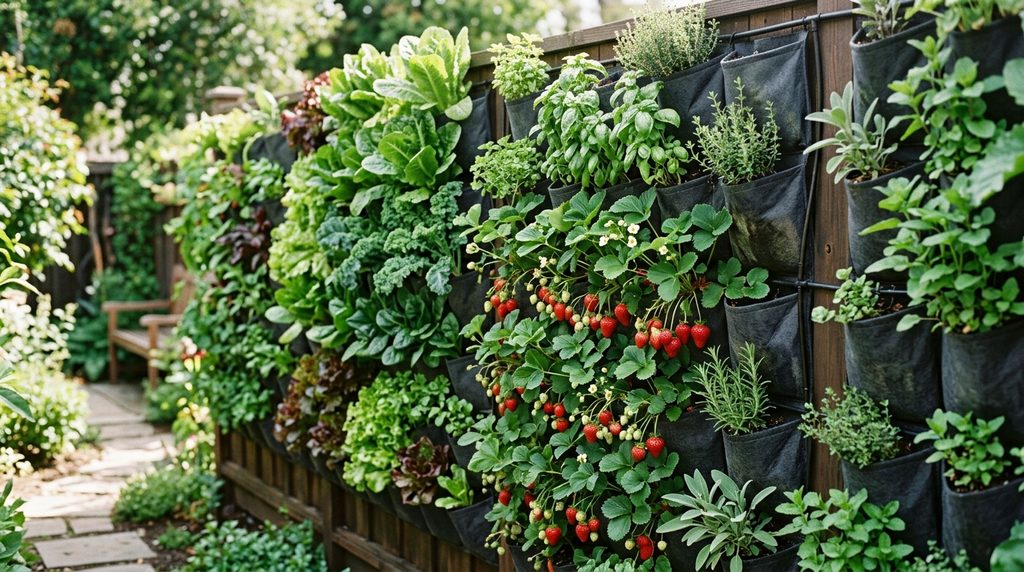
Cost: $50 to $150 for the system | Skill: Beginner | Lifespan: Varies
Wall-mounted pocket planters (available from Woolly Pockets, Gronomics, and Amazon in fabric or plastic versions) mount directly to a fence or wall and create a vertical growing surface. Each pocket holds one plant.
Best crops for pocket planters: Lettuce, spinach, kale, herbs, strawberries, and other shallow-rooted crops. Fruiting vegetables with extensive root systems are less suitable.
One 3×5-foot pocket wall can hold 15 plants in less than 15 square feet — transforming a fence into a productive garden wall.
3. Tall Wire Trellis in a Raised Bed
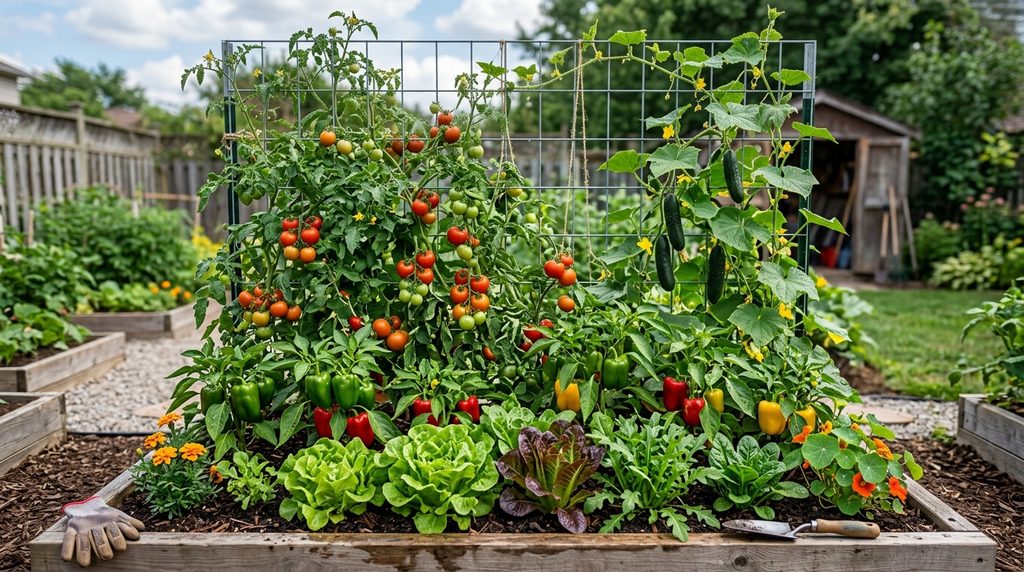
Cost: $20 to $60 | Skill: Beginner to Intermediate | Lifespan: 10+ years
Install a 6-foot-tall wire trellis panel (concrete reinforcing mesh works perfectly, available at hardware stores for $8 to $12 per sheet) at the north end of a raised bed. This allows crops in front of the trellis to receive full sun while the climbing plants grow upward behind them.
System: Back row — indeterminate tomatoes or cucumbers on the trellis. Middle row — determinate tomatoes, peppers, or eggplant. Front row — lettuce, herbs, or compact flowers. Three productive zones in one raised bed.
4. Pallet Vertical Planter
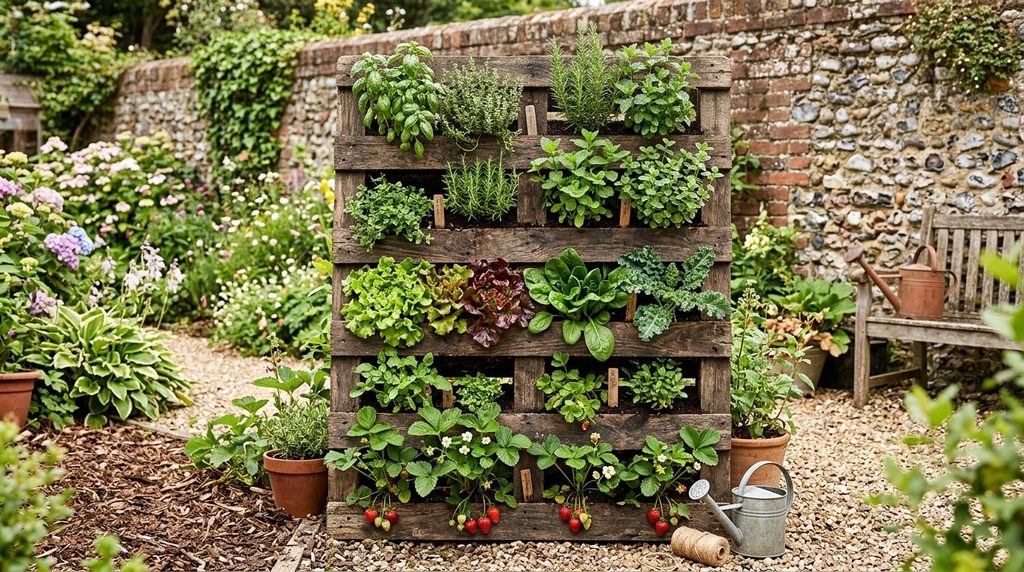
Cost: Free to $15 | Skill: Beginner | Lifespan: 3 to 5 years
Stand an HT-stamped shipping pallet upright against a fence. Staple landscape fabric to the back and sides of each horizontal slat to create individual planting pockets. Fill with potting mix and plant herbs, lettuce, or strawberries into each pocket.
Note: Use only HT (heat-treated) pallets near food crops. Avoid MB (methyl bromide) treated pallets.
5. Tower Planter for Herbs and Greens
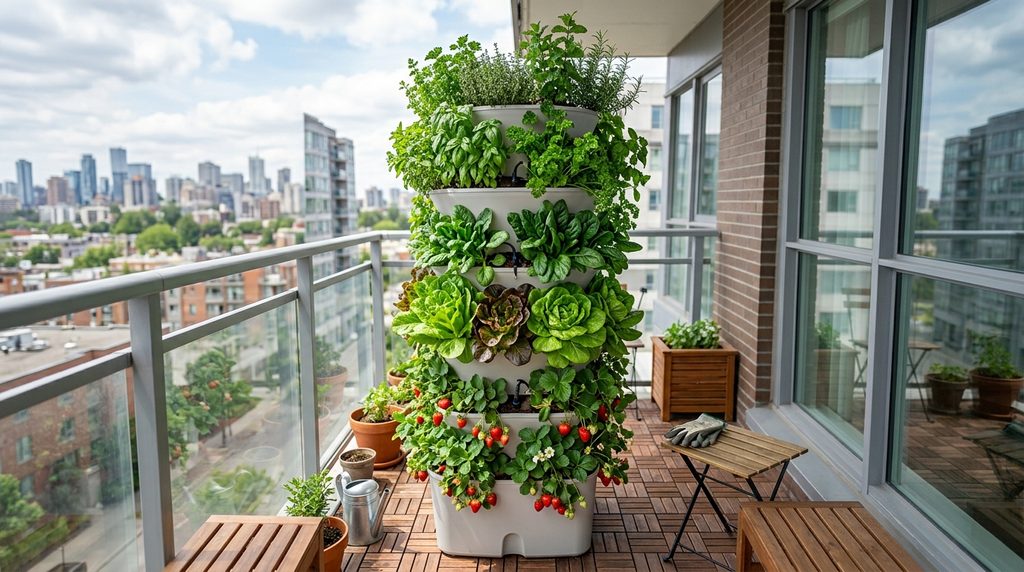
Cost: $30 to $80 | Skill: Beginner | Lifespan: Variable
Commercial tower planters (Garden Tower Project, Bright Agrotech ZipGrow, or DIY PVC pipe towers) grow 20 to 40 plants in a 2-square-foot ground footprint. Ideal for herbs, lettuce, spinach, and strawberries on a patio or balcony.
DIY version: Stand a 4-inch-diameter PVC pipe vertically. Drill 2-inch holes around the circumference at 6-inch intervals. Fill with potting mix and plant through the holes.
6. Bamboo Teepee Cluster
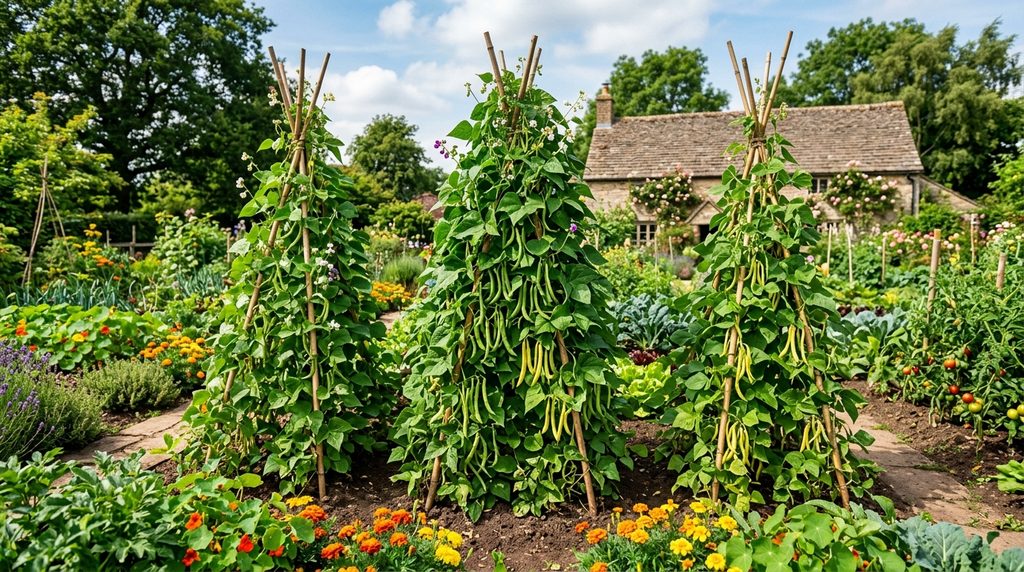
Cost: $10 to $20 | Skill: Beginner | Lifespan: 2 to 3 seasons
Group three bamboo teepees (each made from 6 to 8 stakes) in a triangle formation with 3 to 4 feet between them. Plant one pole bean plant per stake (6 to 8 plants per teepee). By midsummer, the teepees become connected towers of bean foliage producing continuously.
This arrangement is both highly productive and visually beautiful — worth photographing when in full production.
7. Tiered Raised Bed System
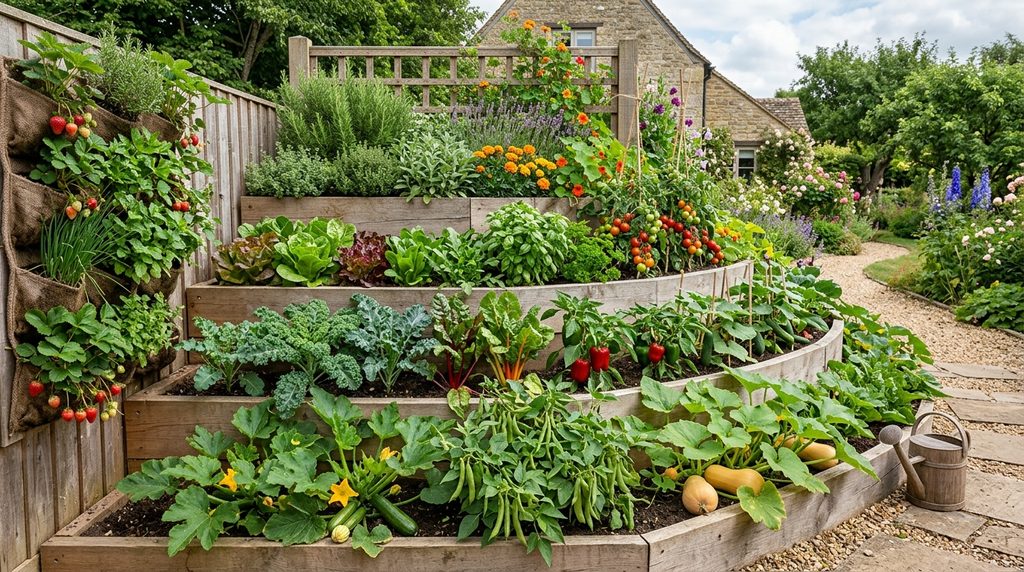
Cost: $200 to $500 | Skill: Intermediate | Lifespan: 10+ years
Build raised beds at different heights — ground level (12 to 14 inches tall) as the standard bed, with a second tier (24 to 30 inches tall) at the north or east end. This creates growing space at two heights with full sun access to both.
The upper tier is ideal for herbs and compact vegetables that benefit from the extra drainage and easy access height. The lower tier handles larger crops. A trellis panel mounted behind the upper tier extends the growing surface further.
8. Espalier Fruit and Vegetable Wall
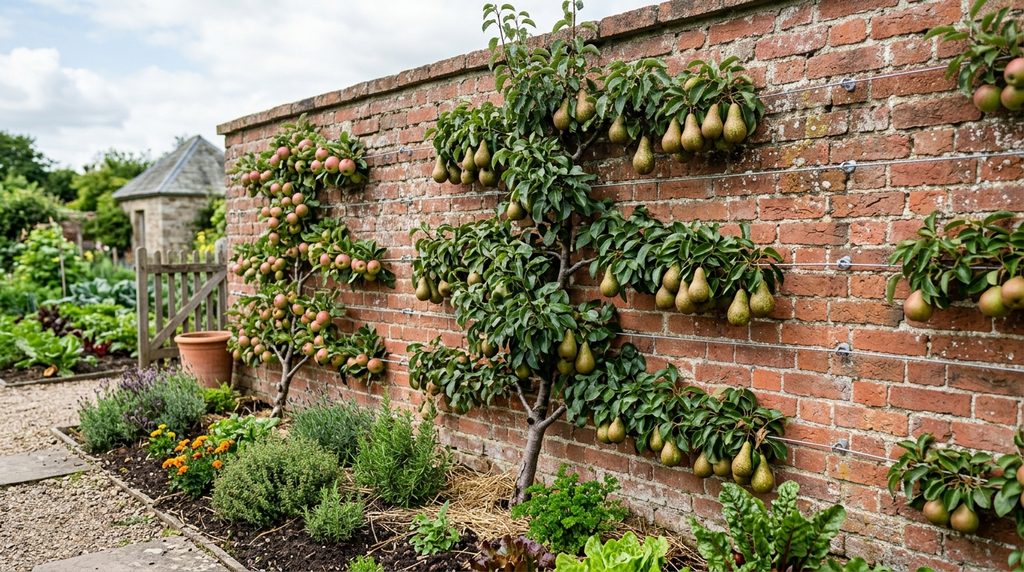
Cost: $40 to $100 for the framework | Skill: Advanced | Lifespan: Permanent
Attach horizontal wires at 12-inch intervals to a south-facing wall or fence. Train an espalier apple, pear, fig, or grapevine to grow flat against the wall — a centuries-old French and English kitchen garden technique that produces maximum fruit in minimum space.
A single espalier tree trained to a 10-foot wall section produces as much fruit as a standard free-standing tree while taking almost no garden footprint.
9. Container Trellis Tower
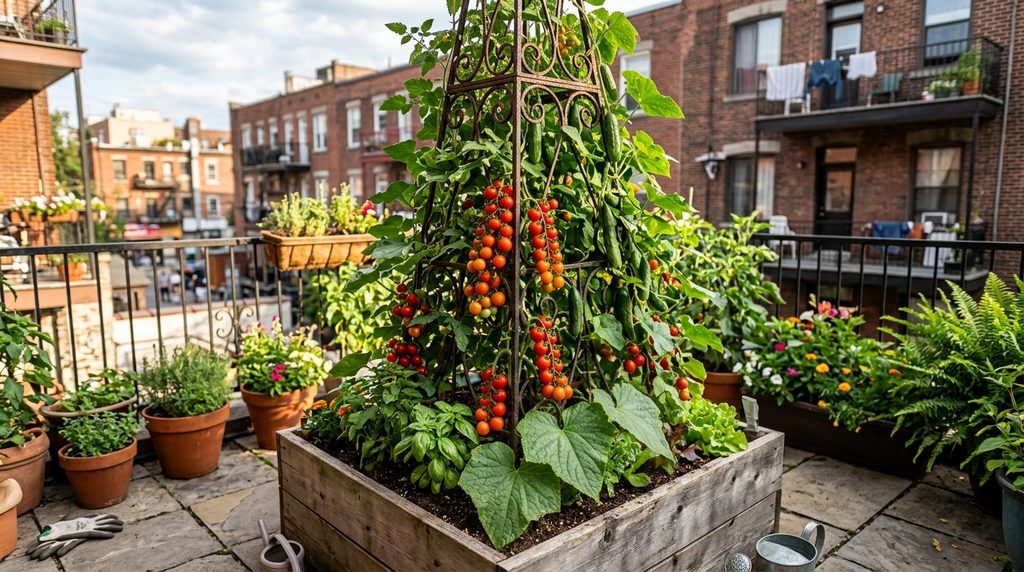
Cost: $30 to $60 | Skill: Beginner | Lifespan: Varies
Place a large (15 to 20-gallon) container on a wheeled dolly for mobility. Insert a 6-foot wire obelisk or bamboo teepee into the container. Plant cucumbers, pole beans, or indeterminate cherry tomatoes.
This approach works on balconies, patios, and decks where in-ground planting is impossible. Move the container throughout the season to optimize sun exposure.
10. DIY Cucumber A-Frame Trellis
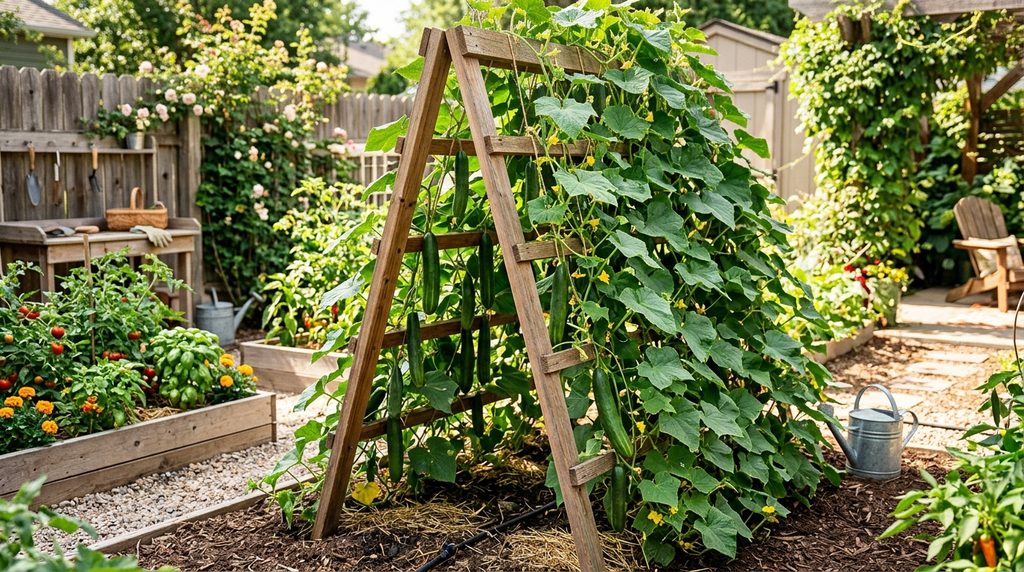
Cost: $25 to $50 | Skill: Intermediate | Lifespan: 5 to 10 years
Build two 4-foot-by-5-foot rectangular frames from 2×2 cedar lumber. Stretch wire mesh or garden netting across each frame. Join the frames at the top with hinges to create a freestanding A-frame that can be folded flat for storage.
Plant cucumbers at the base of both sides. Fruit hangs through the frame for easy picking from underneath without bending. The A-frame folds completely flat for winter storage.
Essential Tips for Vertical Vegetable Gardening
- Water more frequently: Container and vertically grown plants dry out faster than in-ground crops. Check moisture daily in summer.
- Orient structures correctly: Position trellises and tall structures on the north or east side of the bed to prevent shading other crops.
- Support heavy fruit: Squash, melons, and large tomatoes need additional support when grown vertically. Use fabric slings tied to the trellis structure to support developing fruit.
- Train weekly: Spend 10 minutes per week during the growing season tying and guiding climbing plants. Left unguided, even natural climbers can grow in the wrong direction.
|
✅ Tip The most productive vertical vegetable garden combines two plant types: natural climbers (beans, cucumbers, peas) that grip supports with tendrils, and supported non-climbers (tomatoes, squash) that are tied at weekly intervals as they grow. Add a layer of tomato cage around the base of any vertical structure before vines fill in — this provides additional support for heavy fruit weight as the season progresses and plants become too dense to access easily. |
|
▶ YouTube Search Recommendation Search: “vertical vegetable garden ideas small space high yield” Watch a video tutorial to see this technique in action. |
Frequently Asked Questions
What vegetables grow best vertically?
Cucumbers, pole beans, peas, and indeterminate tomatoes are the top four. All are natural or easily trained climbers that produce more abundantly and are easier to harvest when grown vertically. Small winter squash, gourds, and mini watermelons also grow excellently on stout vertical structures with fruit support slings.
Can I grow vegetables vertically in containers?
Yes — this is one of the best approaches for balconies and patios. Use 15 to 20-gallon containers with drainage, quality potting mix, and a vertical support (obelisk, bamboo teepee, or small wire cage) inserted before planting. Cherry tomatoes, cucumbers (compact varieties), pole beans, and peas are all productive in vertical container systems.
The Bottom Line
Vertical vegetable gardening is not a compromise for small spaces — it is often a superior approach for any space.
Plants grown vertically typically outperform their ground-level equivalents in yield, disease resistance, and harvest ease. The structures themselves become the most visually interesting features in the garden.
Start with a bamboo teepee of pole beans this season. Add a cattle panel arch next year. The garden you can build growing up is remarkable.
