

Black flowers are one of nature’s most dramatic offerings.
They exist in a space where botany meets artistry, producing blooms so deeply pigmented that they appear to absorb light rather than reflect it.
True black does not exist in the botanical world.
What we call black flowers are, botanically speaking, the deepest shades of purple, burgundy, maroon, and navy, and the effect is equally stunning.
In morning light, they reveal deep jewel tones.
In shade, they appear genuinely, dramatically black.
This guide goes beyond the usual short lists to bring you 20 of the most spectacular near-black flowers available to home gardeners, with detailed growing guides for each.
Why Black Flowers Work So Powerfully in Garden Design
Black flowers create depth and drama that no other color can replicate.
They work as anchors in planting schemes, grounding bright, vibrant colors with a gravitas that prevents borders from looking chaotic.
Paired with white flowers, they create a timeless, high-contrast elegance that is equally at home in formal and cottage garden styles.
Combined with rich red, orange, and burgundy companions, they create an intensely atmospheric, jewel-toned effect.
Against silver and grey foliage, they produce a moonlit, ethereal quality that looks spectacular in the evening garden.
20 Most Beautiful Black Flowers for Your Garden
1. Black Dahlia (‘Chat Noir’, ‘Arabian Night’, ‘Karma Choc’)
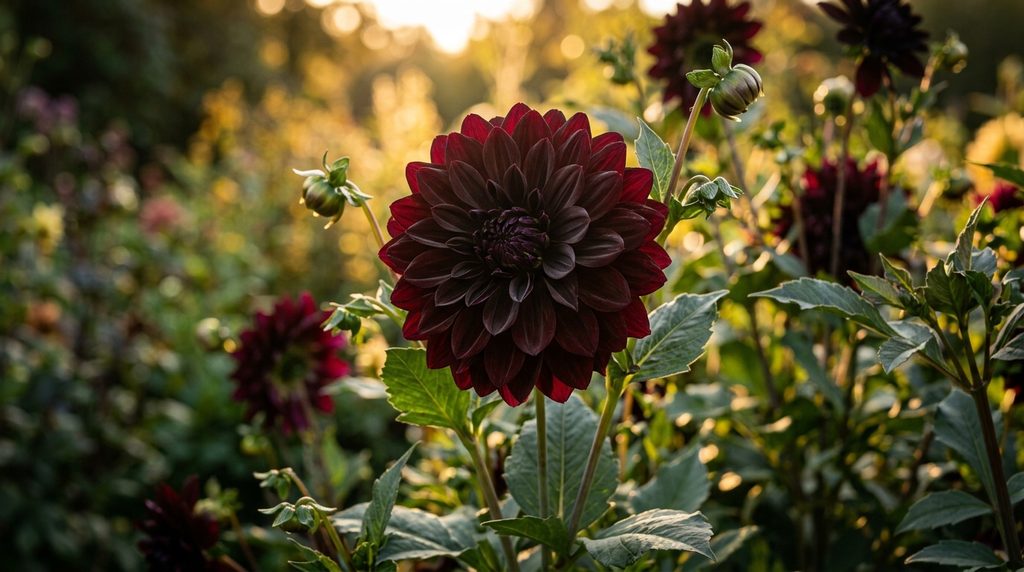
The reigning queens of dark flowers.
‘Chat Noir’ produces deep burgundy-black blooms up to 5 inches across.
‘Arabian Night’ displays intense maroon-black with a velvety texture.
‘Karma Choc’ is chocolatey dark brown to near-black.
Plant tubers in spring in full sun after last frost.
Feed weekly with high-potassium fertilizer once flowering begins.
2. Queen of Night Tulip (Tulipa ‘Queen of Night’)
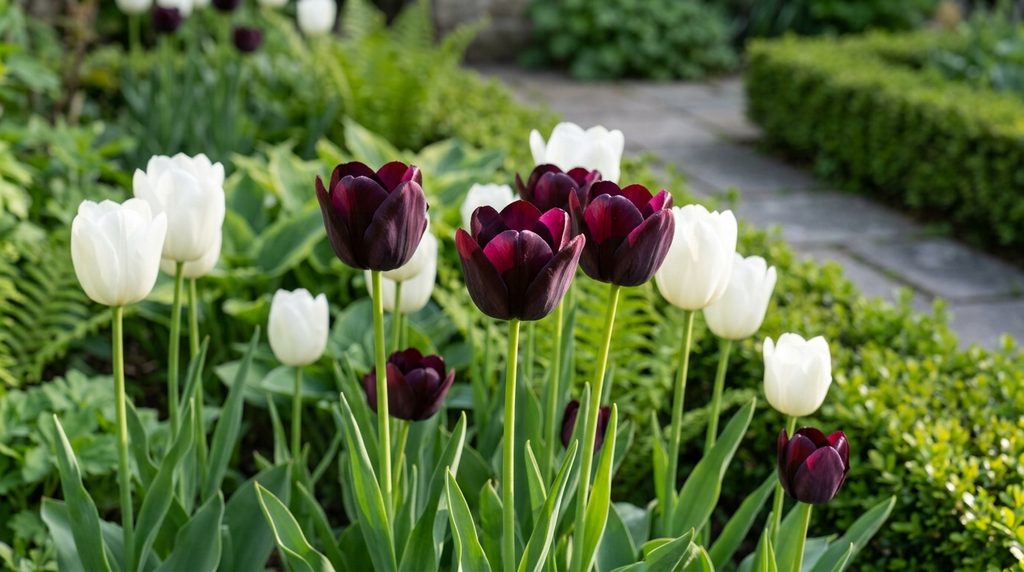
The most iconic dark tulip.
Deep maroon-black petals with a satin sheen that makes them look lacquered.
Plant bulbs in autumn for a May display.
Combine with white tulips ‘White Triumphator’ for a breathtaking contrast.
Hardy to zone 3.
3. Black Viola / Pansy (‘Bowles Black’, ‘Molly Sanderson’)
Tiny, velvet-black faces with the smallest yellow eye at the center.
Provides months of cold-season color from autumn through spring.
Perfect for containers, window boxes, and border edging.
Self-seeds freely to maintain its presence year after year.
4. Chocolate Cosmos (Cosmos atrosanguineus)
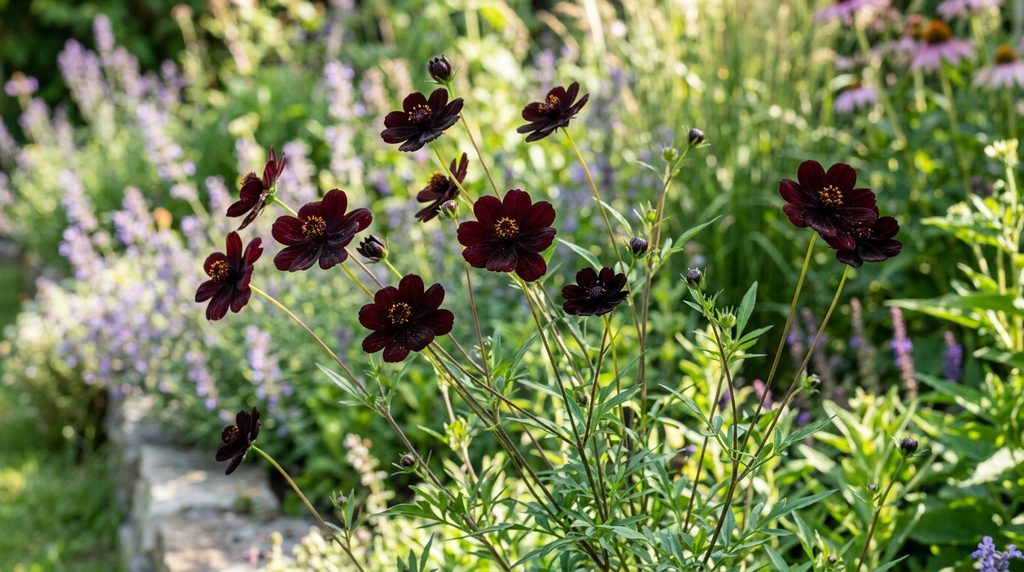
Dark maroon-black, daisy-like flowers with a genuine chocolate and vanilla fragrance.
A sensory experience as much as a visual one.
Treat as an annual in zones 1 to 7, or lift tubers for winter storage.
Blooms continuously from June to frost.
5. Black Bat Flower (Tacca chantrieri)
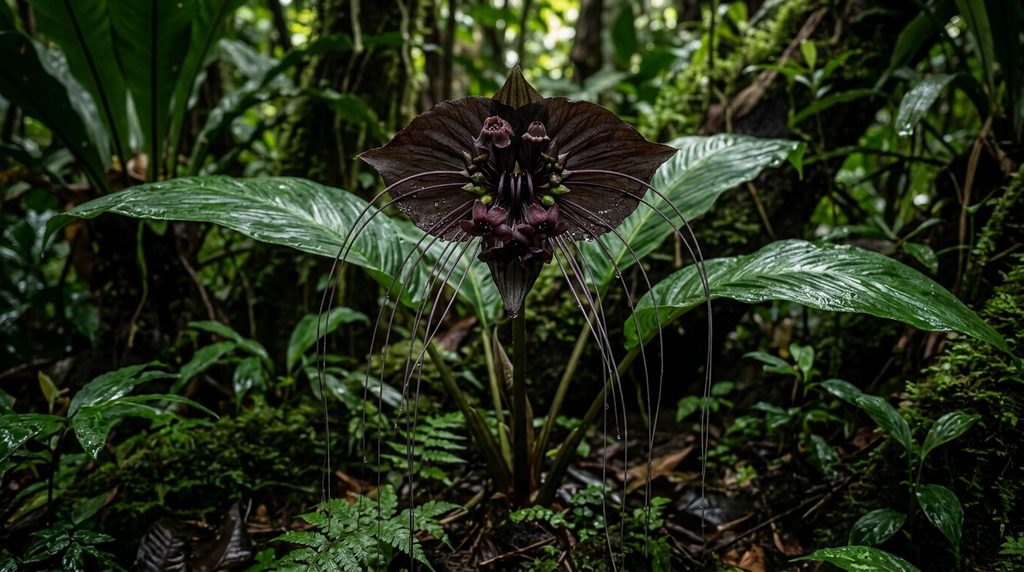
One of the most extraordinary plants on earth.
Dramatic black flowers shaped like bat wings with whisker-like bracts that reach up to 28 inches long.
Requires warm, humid conditions and filtered shade.
A collector’s specimen that stops every visitor in their tracks.
6. Black Iris (Iris chrysographes ‘Black Form’)
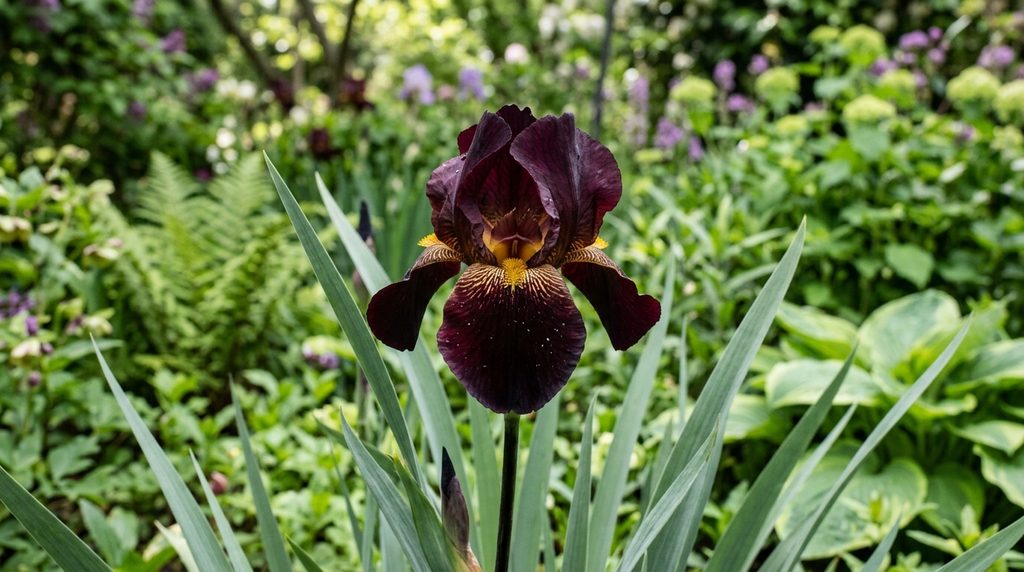
Deep burgundy-black falls with golden central veining that catches the light like stained glass.
Blooms in late spring in moist, humus-rich soil in full sun to partial shade.
Magnificent when planted in groups of five or more.
7. Helleborus ‘Almost Black’ / ‘Dark and Handsome’
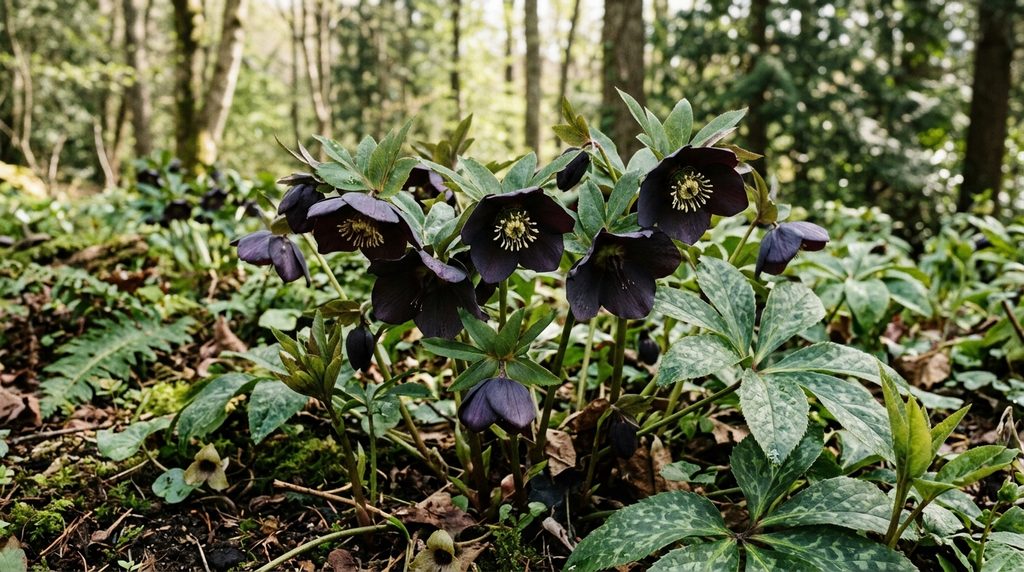
One of the few truly dark-flowered plants for shade gardens.
Blooms from January through April when almost nothing else is flowering.
Evergreen, deer-resistant, slug-resistant, and virtually indestructible once established.
8. Black Hollyhock (Alcea rosea ‘Nigra’)
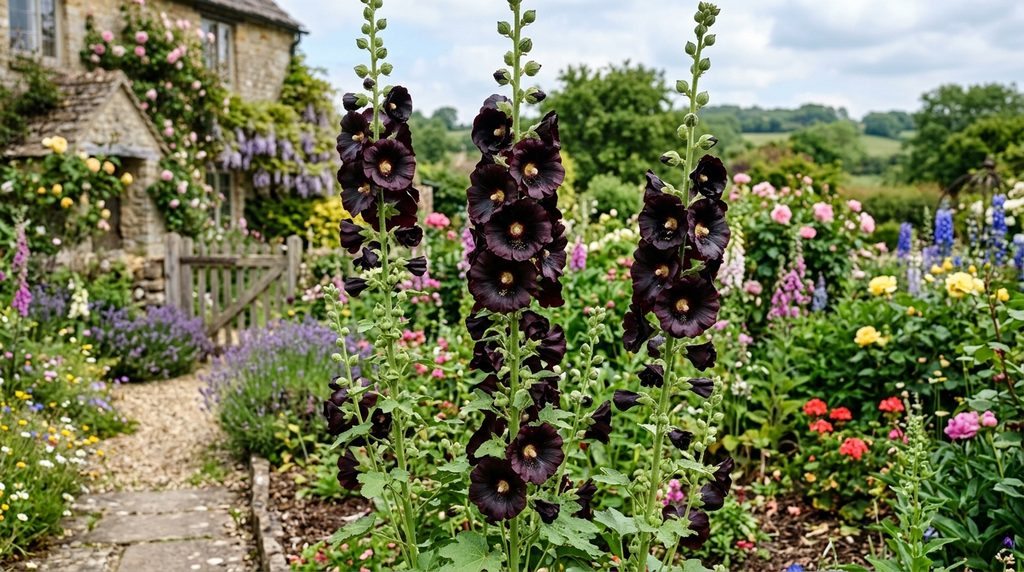
Tall, stately spikes of near-black, single flowers with a small yellow eye.
A dramatic cottage garden plant that reaches 6 to 8 feet in height.
Biennial but self-seeds prolifically.
Needs a sunny, sheltered spot and good air circulation.
9. Black Petunia (‘Black Velvet’)
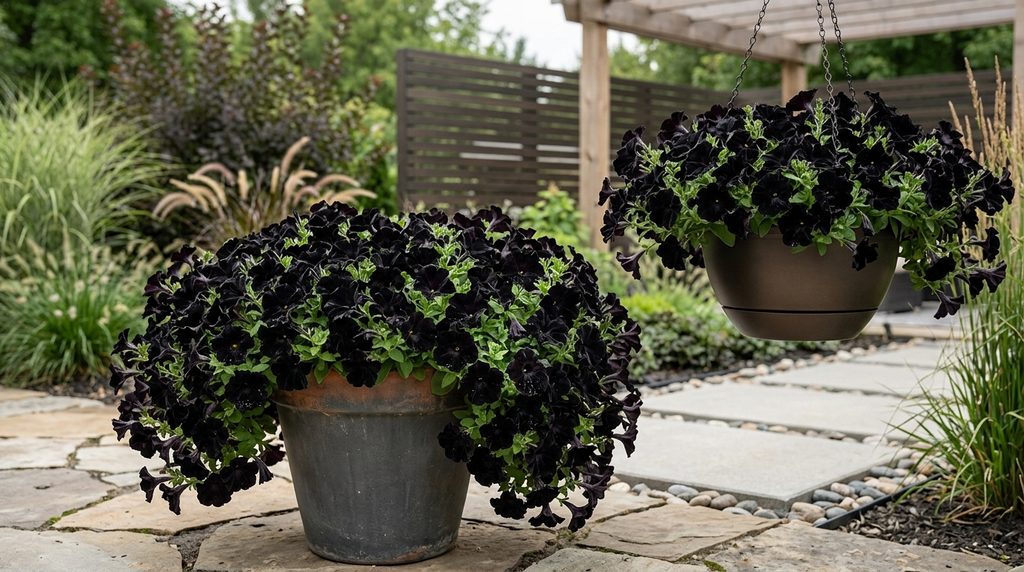
One of the first genuinely near-black petunia varieties.
Produces an abundance of velvety, deep black flowers in containers and hanging baskets throughout summer.
Combine with lime green Dichondra ‘Silver Falls’ for a stunning contrast.
10. Dark Sweet William (Dianthus barbatus ‘Sooty’)
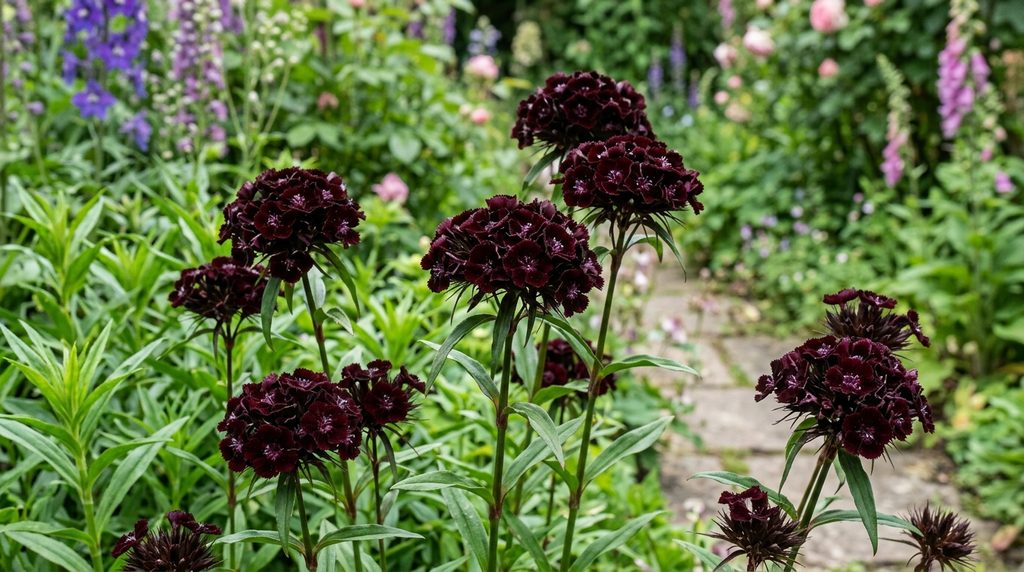
Deep maroon to almost black flower clusters on sturdy stems from May to July.
A beautiful cottage garden biennial that smells wonderful.
Self-seeds to maintain a colony in the border.
11. Black Scabiosa (‘Chile Black’)
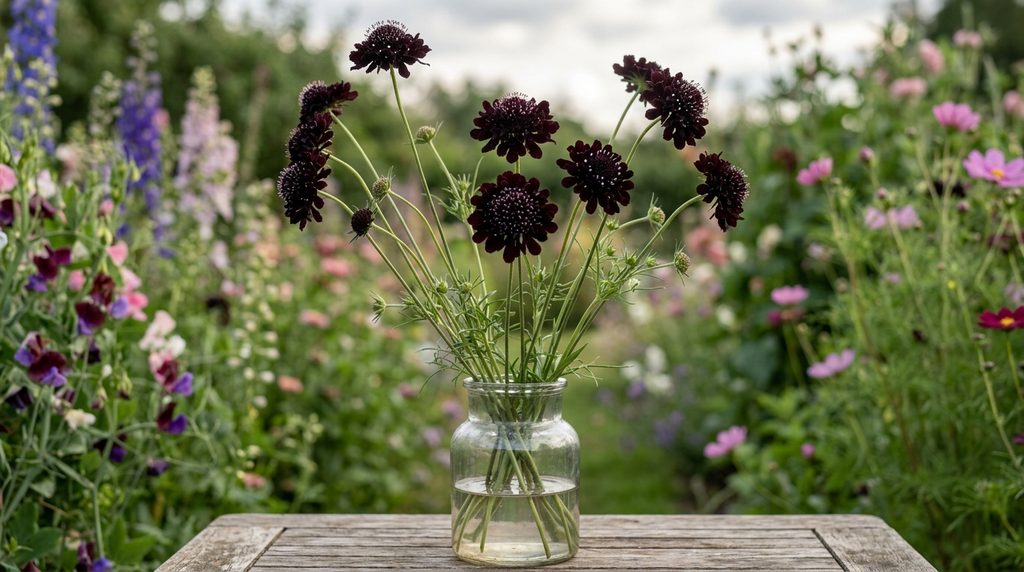
Deep maroon, almost black pompom flowers on wiry stems from June through September.
The darkest scabiosa available and one of the most elegant dark flowers for cutting.
Deadhead consistently for the best continuous display.
12. Fritillaria persica ‘Adiyaman’
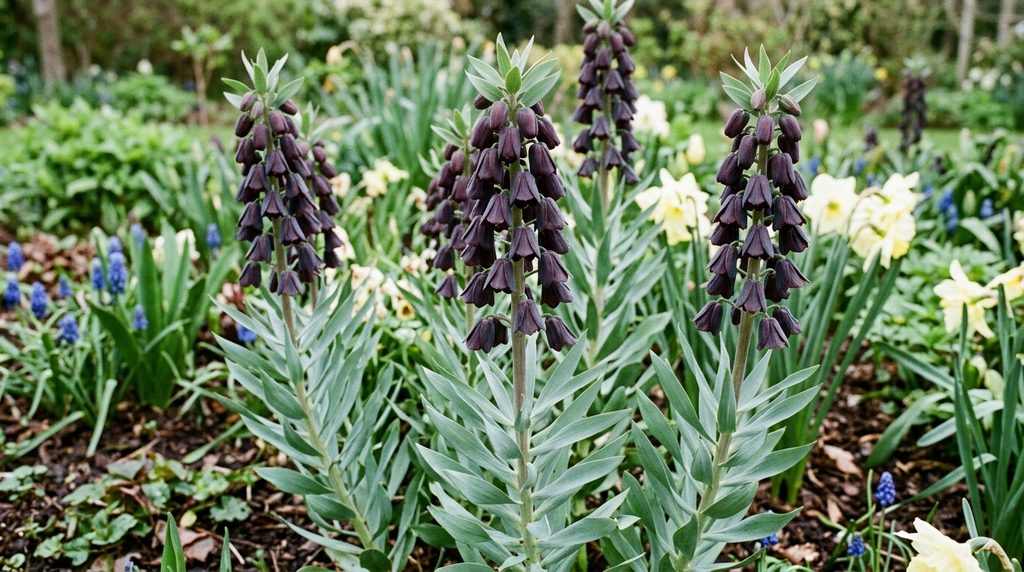
Deep plum-purple to near-black bell-shaped flowers hanging in racemes from tall, blue-grey stems in spring.
A sophisticated bulb for well-drained soils in sunny positions.
Spectacular planted in drifts among silver-leaved plants.
13. Black Columbine (Aquilegia vulgaris ‘William Guinness’)
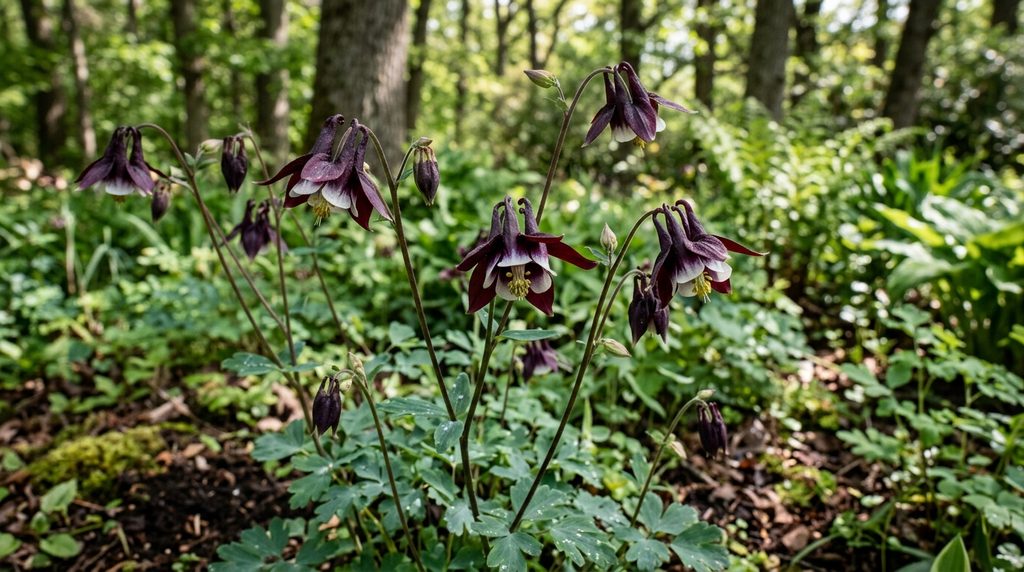
Two-tone flowers with deep purple-black outer sepals and white inner petals.
Blooms in late spring and early summer in partial shade.
Self-seeds gently to create naturalistic drifts.
14. Dark Geranium (‘Espresso’, ‘Midnight Reiter’)
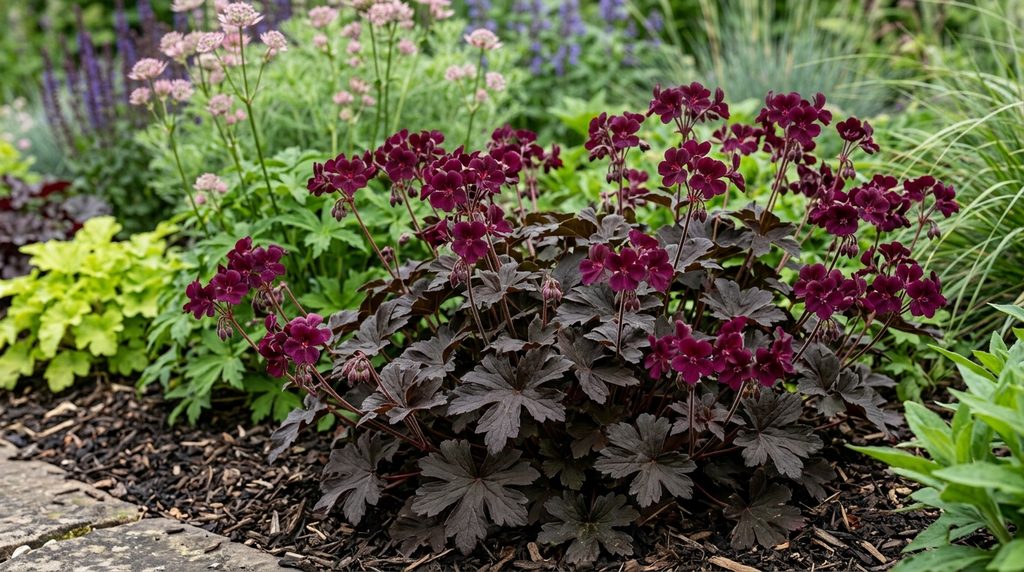
Deep maroon-purple flowers combined with dark, chocolate-toned foliage create a doubly dramatic effect.
Hardy perennials that bloom from May through August with some deadheading.
15. Black Orchid (Fredclarkeara ‘After Dark’)
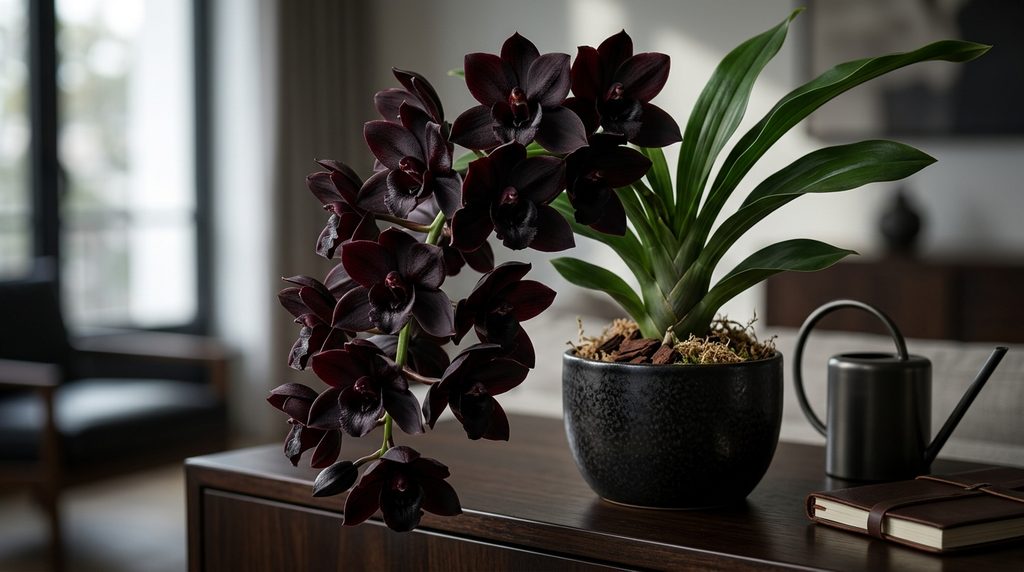
Deep maroon to near-black orchid flowers with a strong, spicy fragrance.
Requires bright indirect light and regular watering.
A show-stopping houseplant that earns immediate admiration.
16. Echinacea ‘Delicious Candy’
Deep wine-purple coneflowers that appear almost black in certain lighting conditions.
Blooms from July through September, attracting bees and butterflies.
Hardy to zone 3.
17. Dark Sunflower (‘Black Magic’, ‘Moulin Rouge’)
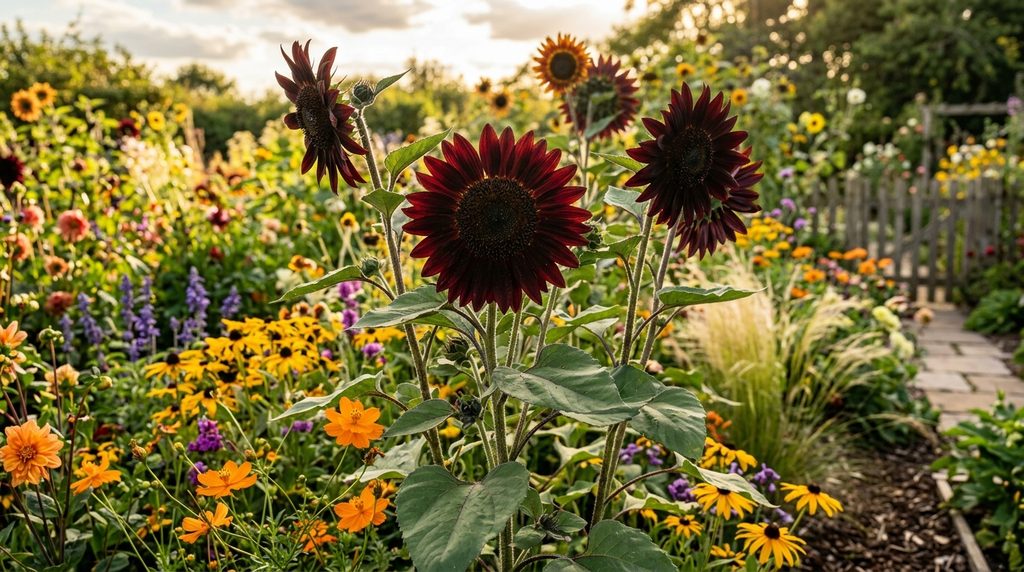
Deep burgundy to near-black petals surrounding a dark center disk.
‘Black Magic’ and ‘Moulin Rouge’ are the darkest sunflower varieties available.
Annual, easily grown from seed, reaching 5 to 6 feet tall.
18. Lathyrus odoratus ‘Black Night’ (Sweet Pea)
Deep maroon to near-black sweet pea flowers with the variety’s characteristic sweet fragrance.
An annual climber that thrives in cool conditions.
Sow in autumn or early spring for the best results.
19. Veronicastrum virginicum ‘Pointed Finger’
Tall spikes of deep purple flowers in late summer.
Architectural and dramatic at the back of a border, providing height and dark color at a time when many other plants are fading.
20. Allium ‘Purple Sensation’
Deep purple, almost black globe-shaped flower heads on 24-inch stems in late spring.
One of the darkest alliums available and one of the most photogenic.
Plant bulbs in autumn.
Leaves die back as flowers appear, so plant among perennials that will grow up to disguise the untidy foliage.
Design Tips for Using Black Flowers
- Use as anchor plants: Black flowers ground and stabilize a planting scheme. Position them centrally or at regular intervals throughout a border
- Maximize the contrast principle: Pair with white (Queen of Night tulip with White Triumphator), silver foliage (artemisia, stachys), or lime green (euphorbias, lady’s mantle)
- Group for impact: A single dark flower can disappear in a border. Plant in groups of three, five, or seven for the full effect
- Consider the light angle: Dark flowers look most dramatic in raking, low-angle morning or evening light. Plant where this natural lighting effect will be maximized
- Combine dark flowers with dark foliage: Pairing black dahlias with black elephant ears or dark elder creates an intensely atmospheric effect
Frequently Asked Questions
These are optimized for Google’s People Also Ask feature and featured snippet positions.
|
Q: Do true black flowers exist? A: Botanically, true black flowers do not exist. Plants cannot produce pure black pigment. What we call black flowers are extremely deep shades of purple, burgundy, maroon, and navy. The human eye perceives these as black, especially in low or raking light. |
|
Q: What is the easiest black flower to grow? A: Black violas and pansies (particularly ‘Bowles Black’) are the easiest. They are cold tolerant, long-blooming, and self-seed freely. Black hellebores are the best easy option for shade gardens. |
|
Q: What flowers look black in a night garden? A: Deep purple and burgundy flowers appear genuinely black in evening light. The best choices for a night garden include Queen of Night tulips, Black Bat Flower, dark dahlias, and Helleborus ‘Almost Black’. |
|
Q: What grows well with black flowers? A: White flowers create the most dramatic contrast with black. Silver foliage plants like artemisia and lamb’s ear are also excellent companions. For a jewel-toned effect, pair with deep red, orange, and rich purple companions. |
Conclusion
Black flowers are the garden designer’s most powerful tool for creating depth, drama, and sophistication.
They transform ordinary planting schemes into extraordinary ones.
And unlike many design trends that fade, the appeal of dark, mysterious flowers is timeless.
Start with the most accessible options on this list: Queen of Night tulips for spring, black violas for autumn through spring, and a dark dahlia for summer.
These three plants alone will transform the atmosphere of your garden.
Then explore further as your confidence grows.
The dark side of gardening is a very beautiful place.
