
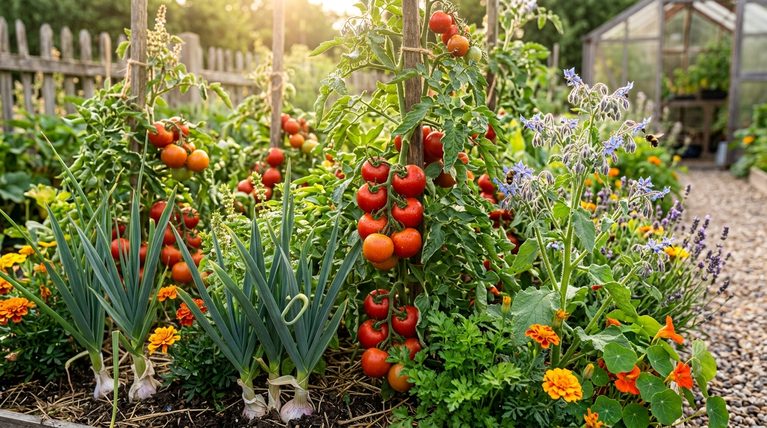
Companion planting is one of gardening’s most powerful (and most misunderstood) practices.
The idea is simple: certain plants grow better together, benefiting each other by repelling pests, attracting pollinators, fixing nutrients, or providing shade and support.
Other plants actively harm each other, competing for resources or producing allelopathic chemicals that inhibit growth.
Tomatoes, as the most popular home garden vegetable, are at the center of many companion planting strategies. Getting their neighbors right can mean the difference between a bumper harvest and a frustrating season.
Let’s dive into the science and practice of tomato companion planting.
How Companion Planting Actually Works
Companion planting isn’t folklore — it’s rooted in real plant biology. The main mechanisms that make it work include:
- Chemical repellence: Some plants produce scents or compounds that deter specific pests (basil, for example, repels thrips and aphids that attack tomatoes)
- Trap cropping: Certain plants attract pests away from your main crop (nasturtiums lure aphids away from tomatoes)
- Nitrogen fixation: Legumes (beans, peas) fix atmospheric nitrogen into the soil, benefiting nitrogen-hungry crops nearby
- Beneficial insect attraction: Flowers attract pollinators and predatory insects that prey on garden pests
- Physical barriers: Tall plants can provide shade, windbreaks, or support for climbing plants
- Allelopathy: Some plants release chemicals that suppress the growth of neighbors — this is the mechanism behind the tomato-cucumber problem
The Best Companion Plants for Tomatoes
These plants actively improve tomato growth, health, yield, or flavor when planted nearby.
Basil (the #1 tomato companion)
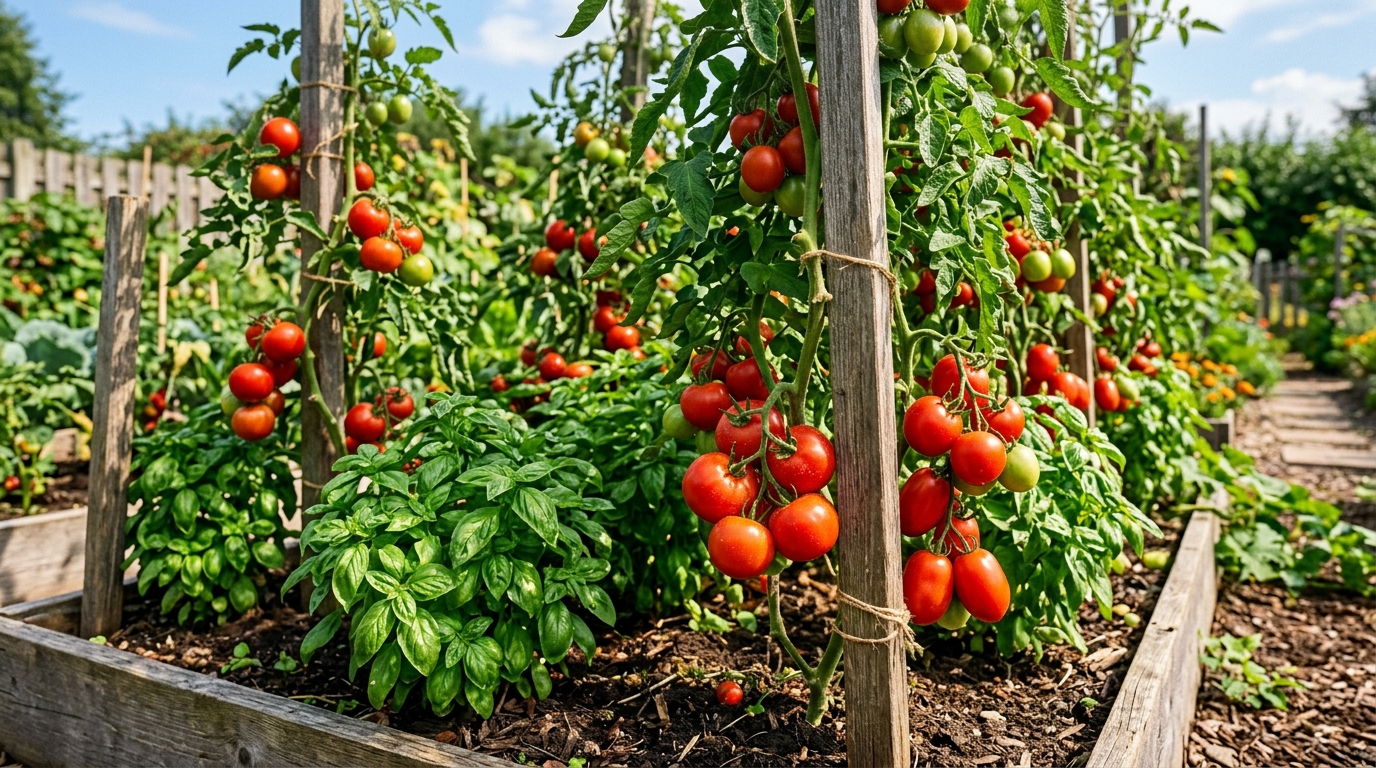
The classic pairing, and it genuinely works. Basil repels thrips, aphids, and tomato hornworm moths. Some gardeners report improved tomato flavor when basil grows nearby (unconfirmed by science but widely observed in practice). Plant basil 12-18 inches from tomato stems to avoid competing for water and nutrients.
Marigolds (French Marigold, Tagetes patula)
One of the most powerful pest-deterrent plants in the garden. Marigold roots produce alpha-terthienyl, a compound that suppresses nematodes in the soil — one of the most damaging tomato pests. Their scent also repels whiteflies and aphids. Plant thickly around the perimeter of your tomato bed.
Carrots
Carrots aerate the soil around tomato roots as they grow, improving drainage and root oxygenation. Tomatoes, in turn, produce solanine, which appears to deter some carrot pests. A great space-efficient pairing.
Parsley
Attracts predatory insects — particularly parasitic wasps that prey on the caterpillars that damage tomatoes. Let some parsley flower to maximize beneficial insect attraction.
Borage
An underrated companion. Borage deters tomato hornworm and cabbage worms, and attracts bees for pollination. It’s also beautiful, producing brilliant blue star-shaped flowers.
Garlic and Onions
Their pungent compounds repel spider mites, aphids, and other sucking insects that attack tomato foliage. Plant around the drip line of tomato plants.
Asparagus
Asparagus produces a chemical called asparagine that repels nematodes harmful to tomatoes. In return, tomatoes repel asparagus beetles. A mutually beneficial long-term relationship.
Spinach and Lettuce
These low-growing crops benefit from the shade that tall tomato plants provide in hot summers, while using space efficiently without competing significantly for root space.
The Worst Plants to Grow Near Tomatoes
These plants actively harm tomatoes — avoid planting them together.
Cucumbers (the big surprise)
Despite both being summer vegetables often grown together, cucumbers and tomatoes make poor companions. They share many of the same diseases (mosaic virus, powdery mildew) and are vulnerable to the same pests, so planting together concentrates problems. They also compete heavily for water and nutrients. Keep them at opposite ends of your vegetable garden.
Fennel
Fennel is one of the most allelopathic vegetables — it releases chemicals from its roots that inhibit the growth of many plants, including tomatoes. Keep fennel in its own isolated bed, well away from all other vegetables.
Brassicas (Cabbage, Broccoli, Kale, Cauliflower)
Brassicas are heavy feeders that compete with tomatoes for soil nutrients, particularly calcium and magnesium. They also attract different but competing sets of beneficial insects, diluting the effectiveness of companion planting strategies.
Corn
Both corn and tomatoes are targeted by the corn earworm (also called the tomato fruitworm — same insect). Growing them together creates a perfect environment for populations of this pest to explode.
Potatoes
Tomatoes and potatoes are in the same family (Solanaceae) and share many devastating diseases, most importantly blight (Phytophthora infestans). Planting them together is a recipe for disease spread. Keep them as far apart as possible.
Dill (when mature)
Young dill is actually a reasonable tomato companion, attracting beneficial insects. But mature dill produces compounds that inhibit tomato growth. Plant dill nearby but harvest it before it matures and goes to seed.
A Simple Companion Planting Layout for Tomatoes
Here’s a practical planting layout that uses companion planting principles:
- Inner circle (12-18 inches from plant): Basil — one plant per tomato
- Mid circle (18-24 inches): Parsley and borage alternating
- Outer border: French marigolds planted thickly around the entire bed perimeter
- Between rows: Carrots or spinach planted in the spaces between tomato plants
- Perimeter: Garlic or chives at the corners of the bed
|
🌿 Pro Tip: Before publishing, make sure your article includes at least one original image, a proper schema markup (Article or HowTo), and links to 3-5 of your own related posts to build topical authority. |
Frequently Asked Questions
These FAQs are optimized for Google’s ‘People Also Ask’ featured snippets. Answer each clearly and concisely in your published article.
|
Q: Does companion planting with basil really improve tomato flavor? A: This is widely reported by gardeners but hasn’t been definitively proven in controlled scientific studies. The pest-repelling benefits of basil are well-documented; the flavor improvement may be partly due to healthier plants (fewer pest-damaged fruits taste better) rather than a direct chemical interaction. |
|
Q: How close should companion plants be to work effectively? A: For pest repellence through scent, companions should be within 18-24 inches. For soil-level effects (root exudates, nematode suppression), plants need to be within 12-18 inches. For beneficial insect attraction, anywhere within 20-30 feet provides benefit. |
|
Q: Can I practice companion planting in raised beds? A: Yes — and raised beds are actually ideal for companion planting because you have complete control over plant placement. The same principles apply; just scale spacing to your bed size. |
|
Q: Is it too late to add companion plants mid-season? A: Not at all. Adding marigolds, basil, or other companions mid-season still provides pest repellence benefits for the remainder of the growing season. |
Conclusion
Companion planting with tomatoes is one of the highest-return strategies available to vegetable gardeners. Done right, it reduces pest damage, can improve yields, and makes your garden more biologically diverse and resilient.
The key rules: embrace basil and marigolds as non-negotiable tomato neighbors, keep cucumbers and potatoes well separated, and ban fennel from your vegetable garden entirely.
A little strategic planting goes a long way. Your tomatoes will thank you.
