
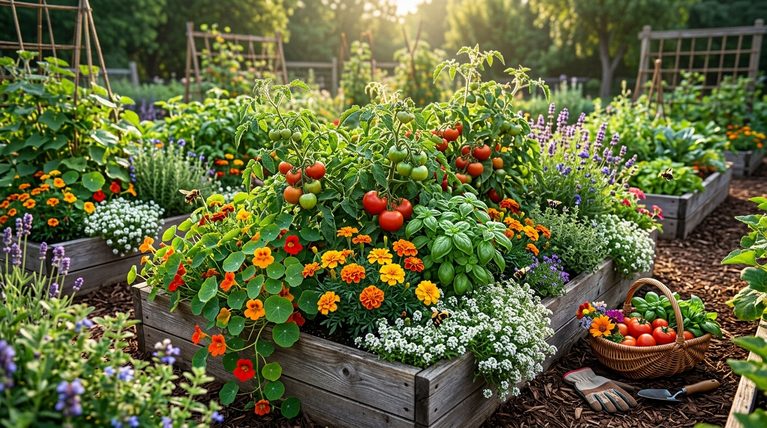
Of all the companion planting relationships in the vegetable garden, none is better studied, better proven, or more widely recommended than marigolds with tomatoes.
French marigolds in particular are not just modestly helpful neighbors for tomatoes.
They are genuinely powerful pest control agents that attack soil-borne threats at the root level.
This guide explains exactly why the marigold-tomato relationship works so well, with references to the science behind it.
Then we go further, presenting 25 additional companion planting combinations that will improve yield, reduce pest pressure, and create a more productive, resilient vegetable garden.
Why Marigolds Are the #1 Companion Plant for Tomatoes
The marigold-tomato relationship works through two distinct and complementary mechanisms.
Root-Level Nematode Control
French marigolds (Tagetes patula) produce a compound called alpha-terthienyl from their roots.
This compound is toxic to soil-dwelling nematodes, particularly root-knot nematodes (Meloidogyne species), which are among the most damaging tomato pathogens worldwide.
Research from Kansas State University found that growing French marigolds in a bed for one full season significantly reduced nematode populations in the soil for years afterward.
For maximum effect, plant marigolds thickly around and between tomato plants, not just at the perimeter.
Above-Ground Pest Deterrence
Marigold flowers and foliage produce compounds that repel aphids, whiteflies, and thrips, all of which commonly attack tomato plants.
A study from the University of Southampton found that French marigolds in particular significantly reduced aphid populations on nearby plants compared to control plots without marigolds.
Beneficial Insect Attraction
Marigold flowers attract hoverflies, whose larvae are voracious aphid predators.
They also attract parasitic wasps that lay their eggs in tomato hornworm caterpillars, controlling one of the tomato grower’s most damaging pests without any chemical intervention.
How to Plant Marigolds with Tomatoes
Placement matters for maximum effectiveness.
- Plant French marigolds (Tagetes patula) rather than African marigolds (Tagetes erecta). French varieties have higher concentrations of the nematode-controlling compounds
- Plant densely: one marigold plant for every tomato plant is a good starting ratio
- Plant within 12 to 18 inches of tomato stems for maximum root-zone effect
- Include some marigolds between rows as well as at the border
- For nematode suppression the following season, plant marigolds as a dedicated cover crop in autumn beds and till them in before spring planting
25 More Winning Companion Planting Combinations
1. Basil and Tomatoes
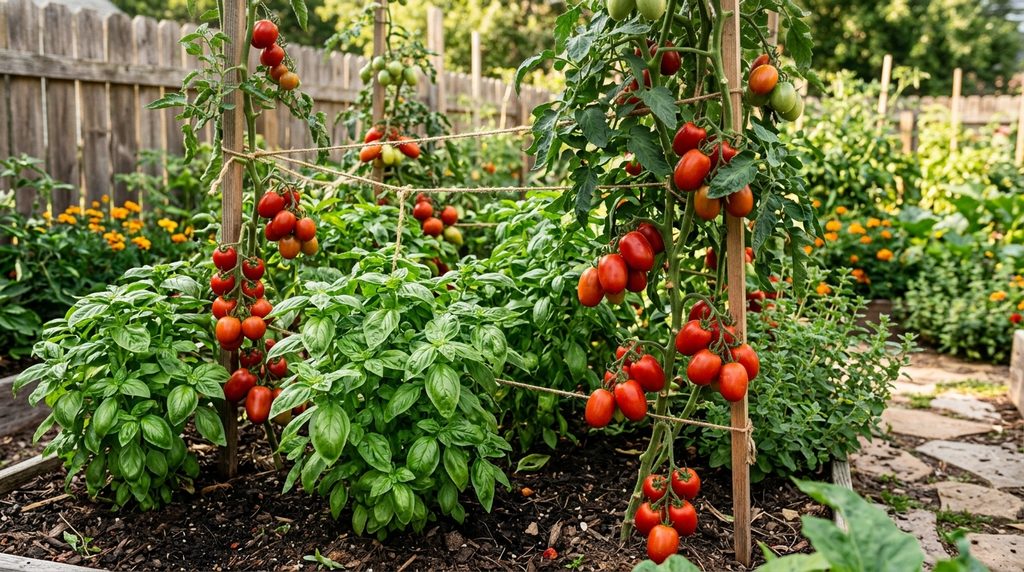
Basil repels thrips, aphids, and tomato hornworm moths through aromatic compounds.
It may also improve tomato flavor.
Plant every 12 to 18 inches between tomato plants.
2. Nasturtiums and Brassicas
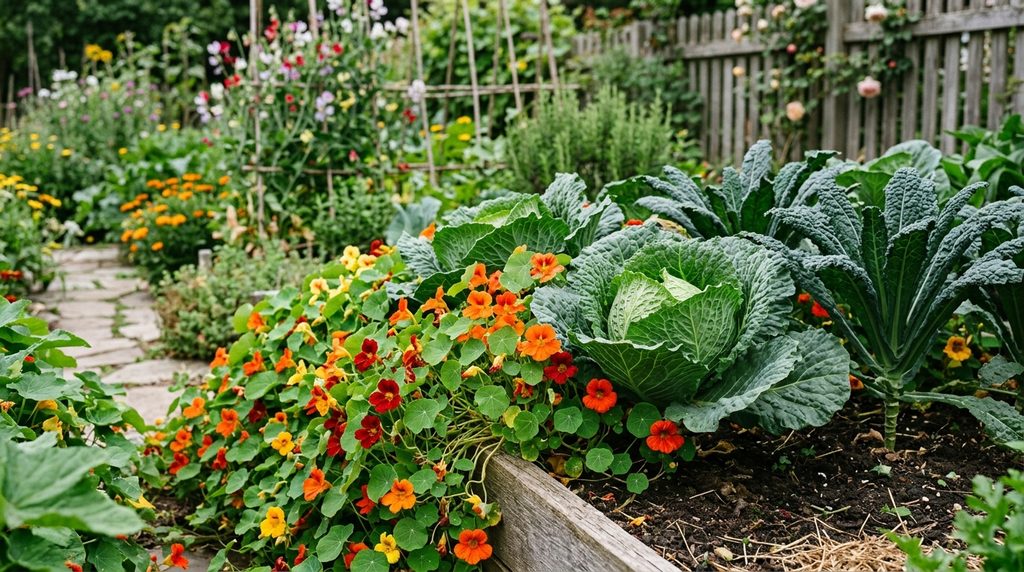
Nasturtiums are trap crops that lure aphids away from broccoli, cabbage, and kale.
Monitor nasturtiums for aphid colonies and remove or destroy them before aphids spread.
3. Dill and Brassicas
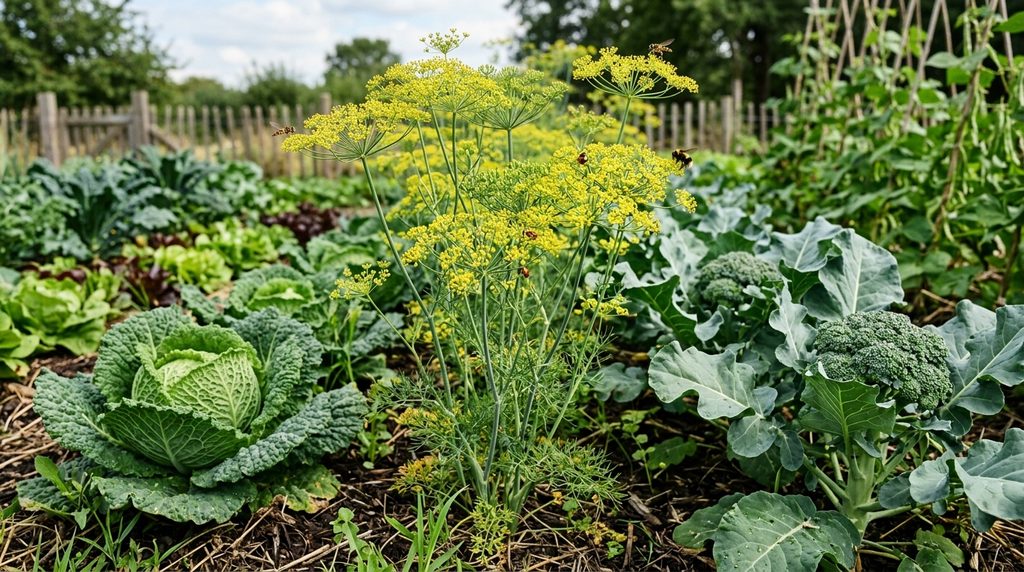
Dill attracts parasitic wasps and hoverflies that prey on cabbage worms and aphids.
Let dill flower for maximum beneficial insect attraction.
4. Carrots and Leeks
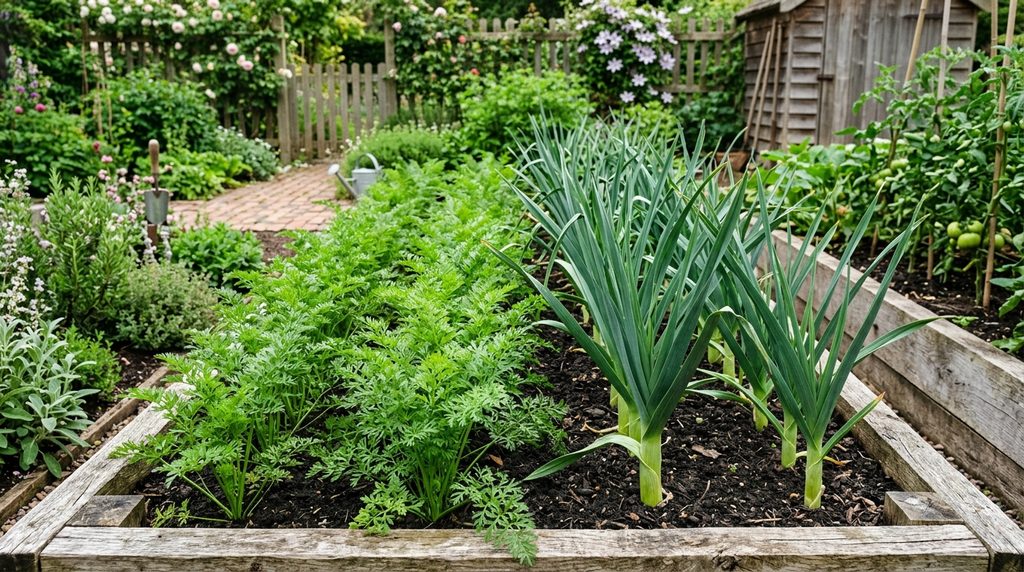
Leek moth avoids carrots, and carrot fly avoids leeks.
Planted together, they reduce each other’s primary pest pressure.
A genuinely mutually beneficial pairing.
5. Borage and Strawberries
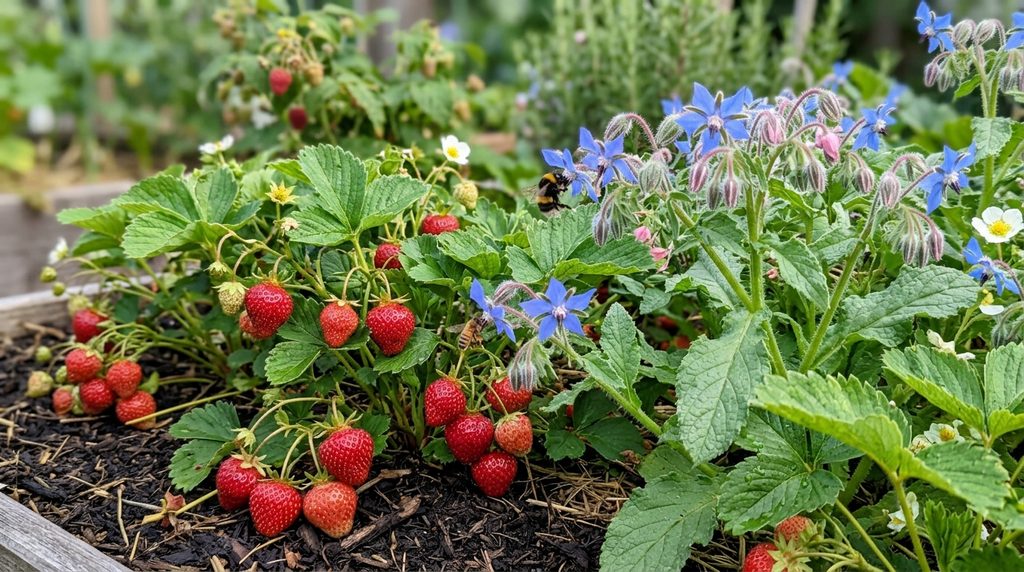
Borage is believed to improve strawberry flavor and yield while deterring strawberry pests.
It also self-seeds freely, making it a one-time investment that returns annually.
6. Garlic and Roses
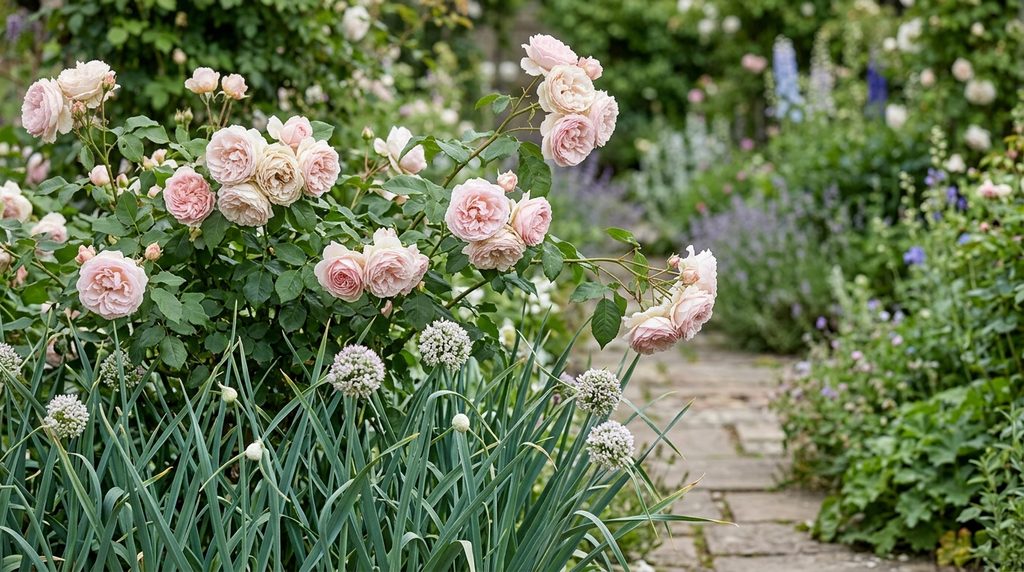
Garlic planted at the base of roses repels aphids and black spot fungal spores.
A traditional companion planting pair that has been used by rose growers for centuries.
7. Chamomile and Vegetables Generally

Chamomile is sometimes called the ‘physician of the garden’.
It improves the health of plants growing nearby and attracts beneficial insects in large numbers when in flower.
8. Lavender and Brassicas

Lavender’s strong fragrance confuses and deters the whiteflies and cabbage moths that are the primary pests of brassica crops.
9. Beans and Corn and Squash (The Three Sisters)
The most famous companion planting relationship in history.
Corn provides a climbing pole for beans, beans fix nitrogen that feeds the corn and squash, and squash leaves shade the soil to retain moisture and deter weeds.
A complete, self-sustaining plant community.
10. Peppers and Basil
Basil repels aphids and spider mites that commonly attack pepper plants.
Plant basil densely between pepper rows for both pest control and a practical herb harvest.
11. Cucumber and Sunflowers

Sunflowers provide a natural trellis for cucumber vines and attract pollinating bees that improve cucumber fruit set.
They also shade the soil, reducing moisture loss.
12. Lettuce and Tall Tomatoes
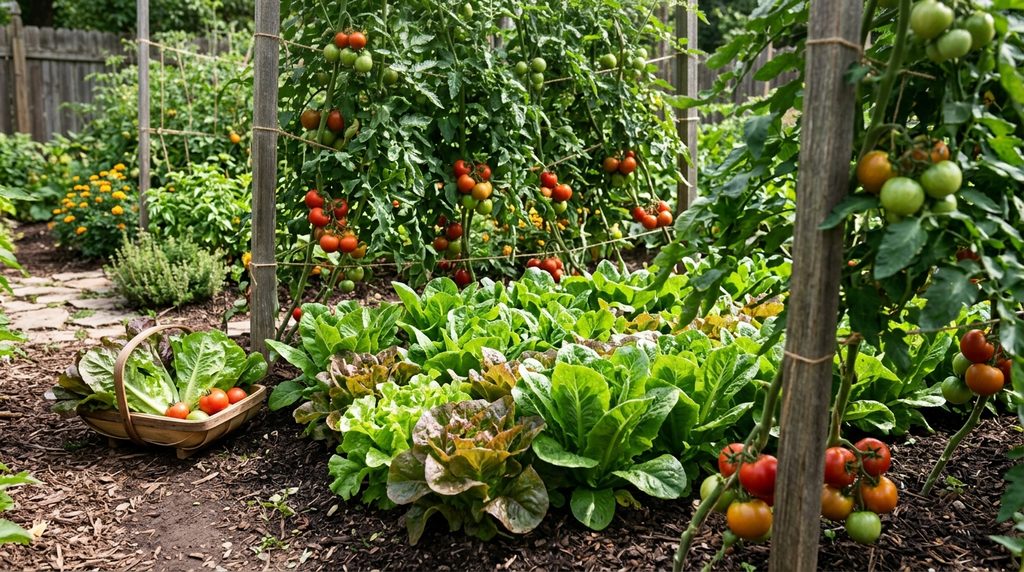
Lettuce benefits from the afternoon shade that tomato plants provide, extending the lettuce season by reducing bolting in hot weather.
13. Radish and Squash
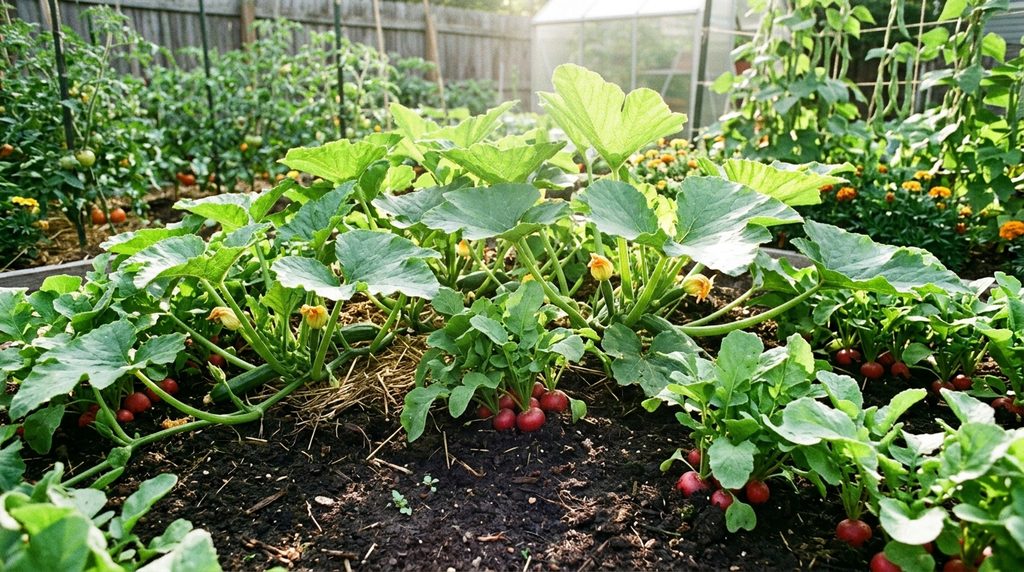
Radishes deter squash vine borers and cucumber beetles.
Plant radishes around squash plants and allow some to flower, which further enhances beneficial insect attraction.
14. Chives and Carrots
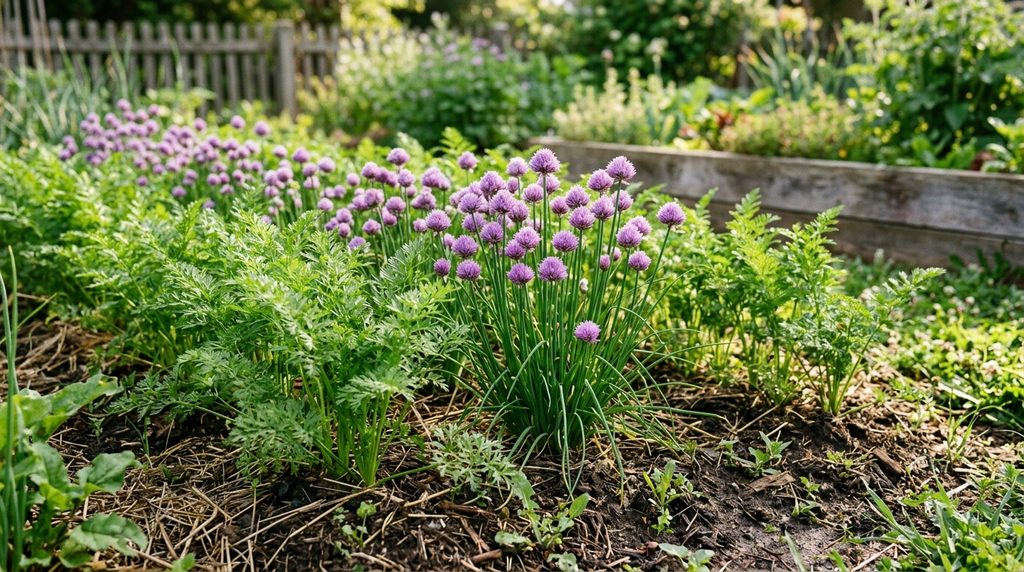
Chives repel carrot fly (carrot rust fly) through their aromatic compounds.
Interplant chives with carrots throughout the bed, not just at the perimeter.
15. Mint and Brassicas

Mint’s strong scent deters cabbage moths and aphids.
Grow mint in buried containers within the brassica bed to prevent it from spreading while still delivering pest control benefits.
16. Parsley and Asparagus

Parsley attracts predatory insects that protect asparagus from asparagus beetles.
In return, asparagus provides light shade that prevents parsley from bolting in hot weather.
17. Rosemary and Beans
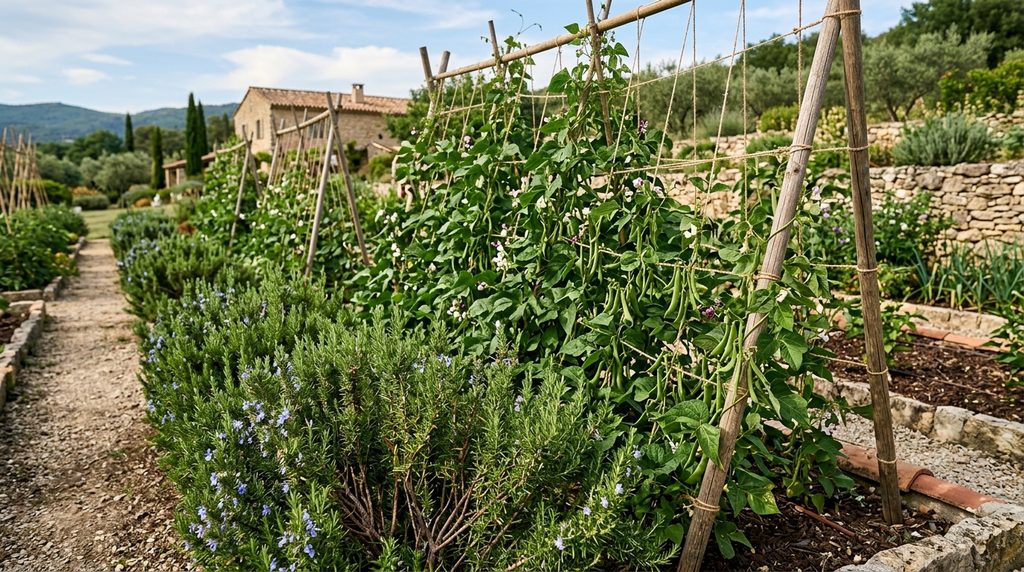
Rosemary repels bean beetles and other bean pests through its aromatic oils.
It also deters cabbage moths, making it a valuable border plant around any vegetable garden.
18. Oregano and Cucumbers
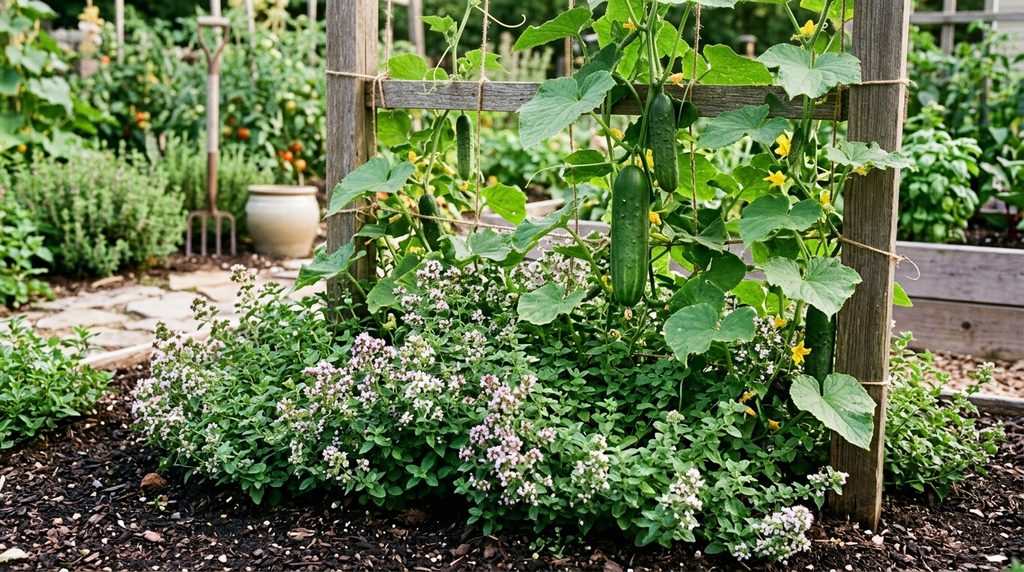
Oregano provides general pest deterrence for cucumber plants and attracts beneficial insects.
It does not compete significantly with cucumbers for nutrients or water.
19. Petunias and Tomatoes
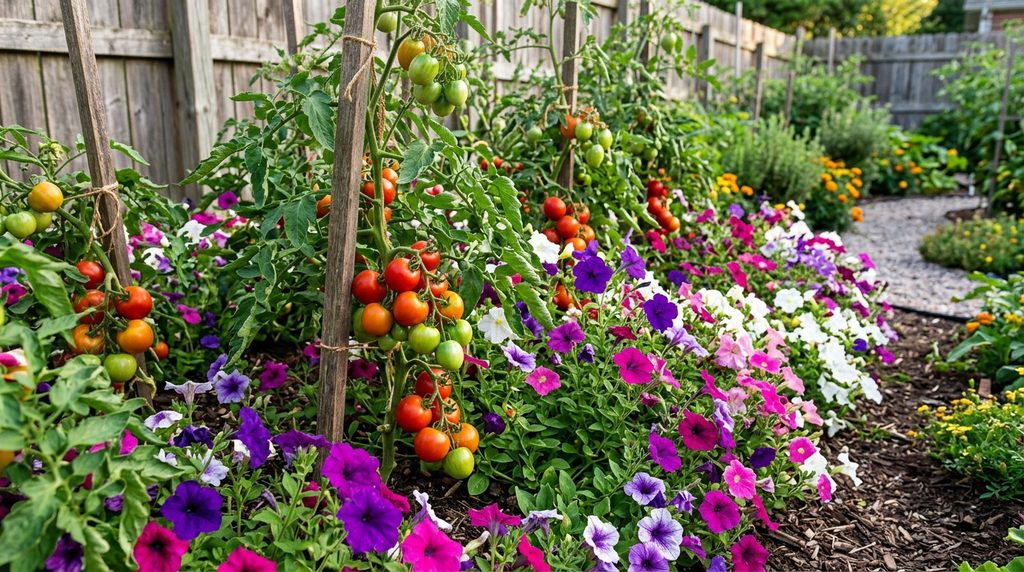
Petunias deter aphids, leafhoppers, and certain caterpillars from tomato plants.
They are also beautiful, making them functional and decorative additions to the vegetable garden.
20. Tansy and Potatoes
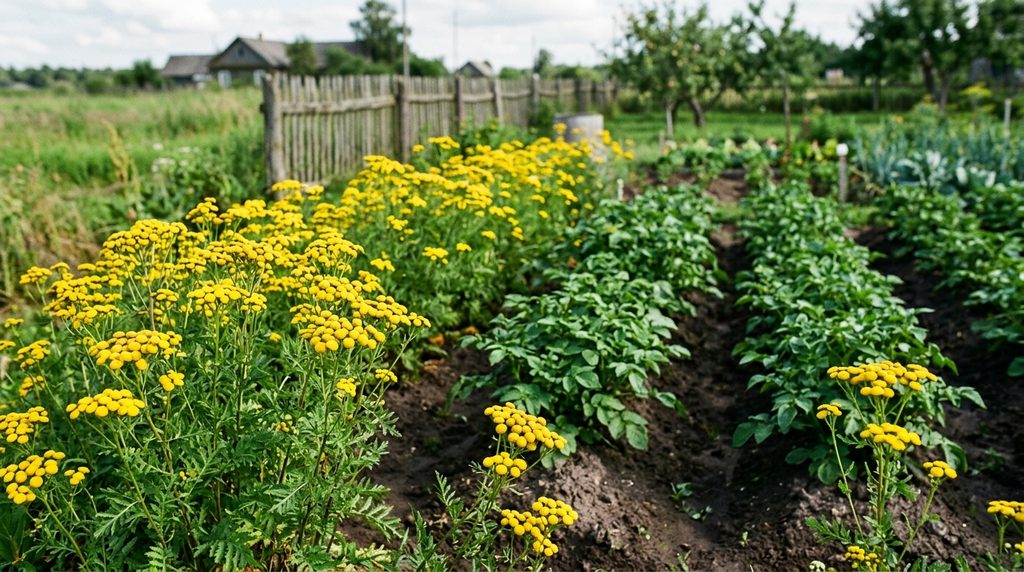
Tansy repels Colorado potato beetles, one of the most damaging potato pests.
Plant around the perimeter of potato rows.
Note: tansy is invasive in some regions.
Grow in buried containers.
21. Comfrey and Fruit Trees
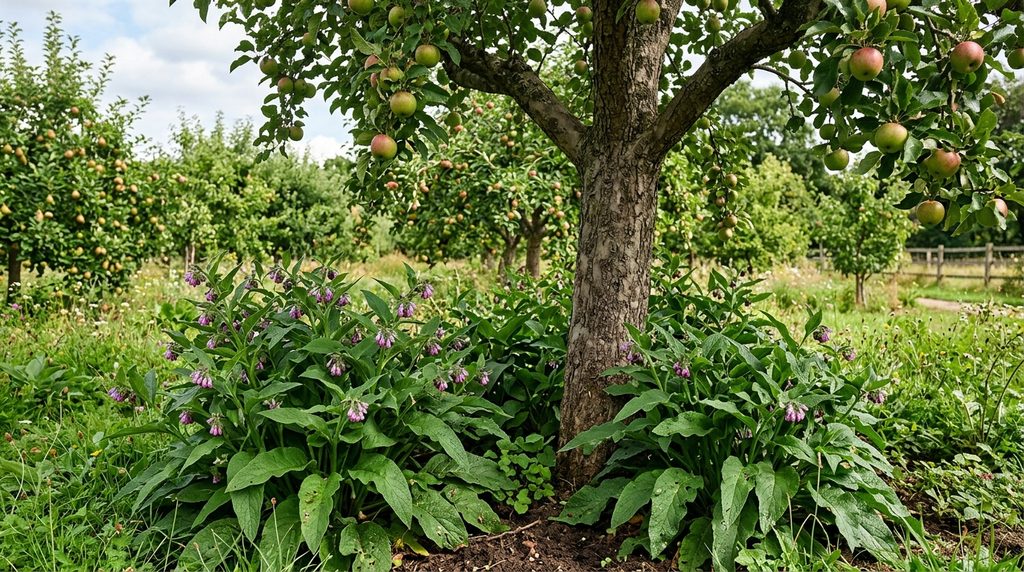
Comfrey accumulates nutrients from deep soil via its long taproot.
Cut the leaves and use as mulch around fruit trees to release potassium, phosphorus, and other nutrients as they decompose.
22. Fennel (in isolation) and Everything
A warning: fennel is allelopathic and inhibits the growth of most vegetable crops.
Grow it in its own bed, away from all other vegetables.
The one exception is fennel with dill.
Keep these apart too, as they cross-pollinate and produce seeds with neither parent’s flavor profile.
23. Sweet Alyssum and Vegetables
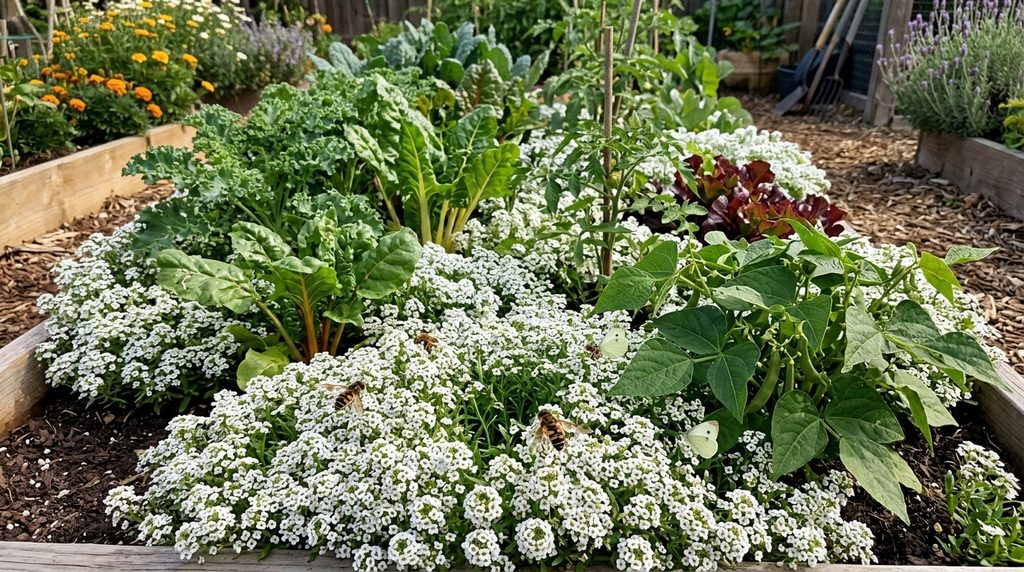
Sweet alyssum produces tiny flowers that are irresistible to hoverflies, parasitic wasps, and other beneficial predatory insects.
Plant as a living mulch under taller vegetables throughout the garden.
24. Calendula and Most Vegetables
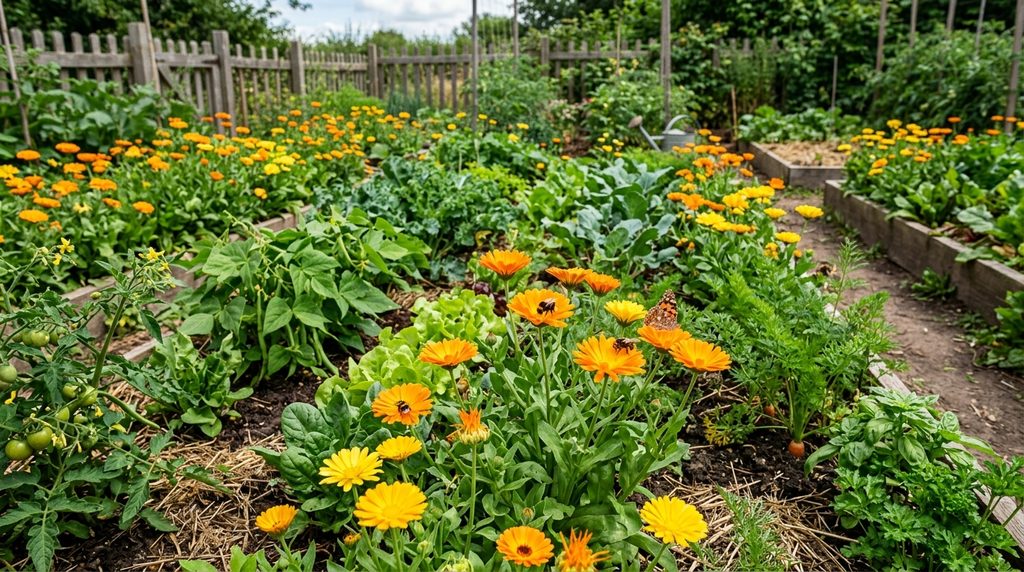
Calendula (pot marigold, not the same as Tagetes marigolds) attracts aphids as a trap crop and also attracts an extraordinary range of beneficial insects.
Scatter throughout the vegetable garden freely.
25. Yarrow and Vegetables Generally
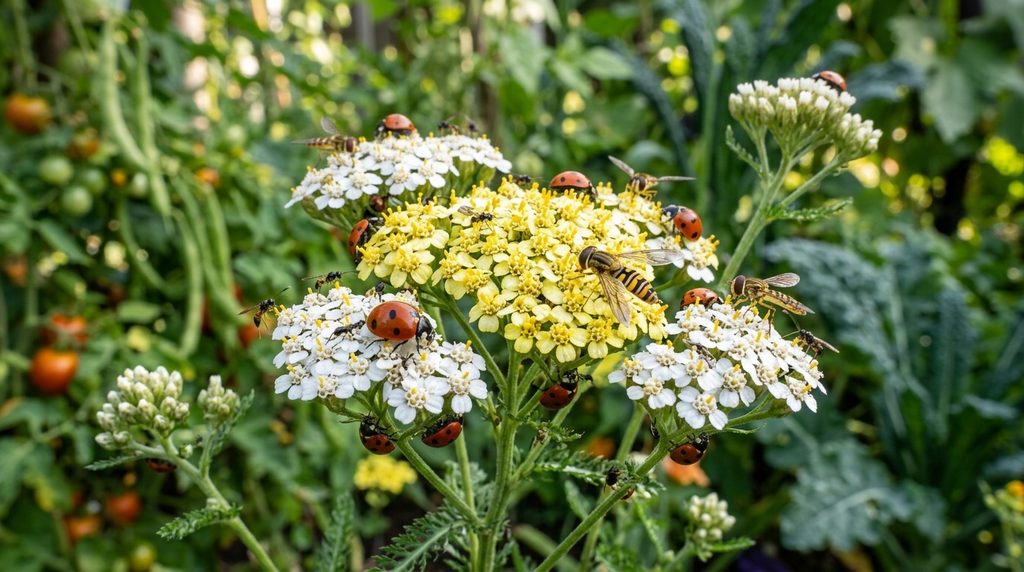
Yarrow is one of the most effective plants for attracting beneficial predatory insects including ladybugs, parasitic wasps, and hoverflies.
Plant at the corners of beds or in dedicated strips between vegetable rows.
Frequently Asked Questions
These are optimized for Google’s People Also Ask feature and featured snippet positions.
Q: What type of marigold is best for companion planting with tomatoes? A: French marigolds (Tagetes patula) are the most effective for companion planting with tomatoes. They have the highest concentrations of alpha-terthienyl, the root-produced compound that suppresses nematodes. African marigolds (Tagetes erecta) also provide above-ground pest deterrence but are less effective against nematodes. |
Q: How many marigolds do I need per tomato plant? A: For maximum pest control, aim for at least one French marigold plant for every tomato plant, planted within 12 to 18 inches. For border protection only, plant marigolds densely around the perimeter of the tomato bed. |
Q: Does companion planting really work or is it just folklore? A: Many companion planting combinations are backed by genuine scientific research. The marigold-nematode relationship is among the best-proven examples. Basil’s pest-deterrent effect and the Three Sisters combination also have solid research support. Some traditional combinations have less scientific backing but are based on generations of observed results. |
Q: What should you never plant near tomatoes? A: Avoid planting potatoes (shared diseases, particularly blight), fennel (allelopathic to tomatoes), corn (shared pests), and brassicas (competition for nutrients and beneficial insects) near tomatoes. |
Conclusion
Companion planting is one of the most powerful tools available to the home vegetable gardener.
Done well, it reduces pest pressure naturally, improves soil health, attracts beneficial insects, and in some cases genuinely improves the yield and flavor of your crops.
Marigolds and tomatoes represent the gold standard of the practice, and the science behind their relationship makes a compelling case for planting them together every single season.
Start by adding French marigolds to your tomato beds this year.
Then try two or three of the other combinations on this list.
Observe what happens.
The results, over time, will convince you more thoroughly than any research paper.
