
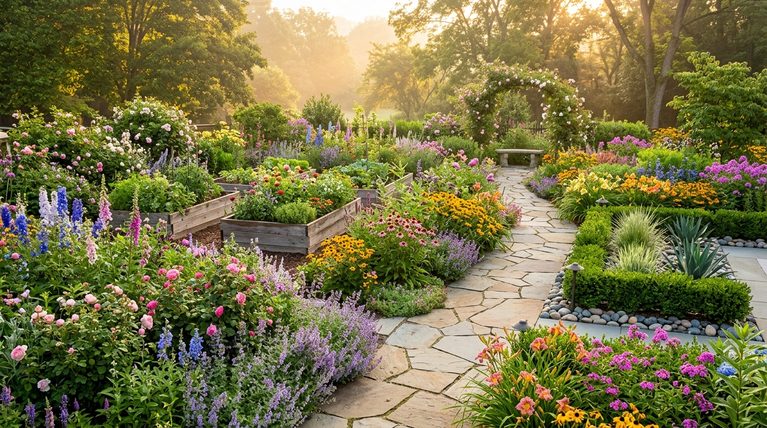
A well-designed flower bed is the single biggest visual upgrade you can make to a garden.
It frames the space, tells a story through color and texture, and turns a bare patch of lawn into something that genuinely catches the breath.
But knowing where to start is often the hardest part.
Do you go formal or naturalistic?
Cottage garden abundance or minimalist modern?
Should you build raised beds or work with the ground level?
This guide presents 25 of the most beautiful, achievable flower bed ideas and projects, organized by style and setting, with practical guidance to help you bring each one to life.
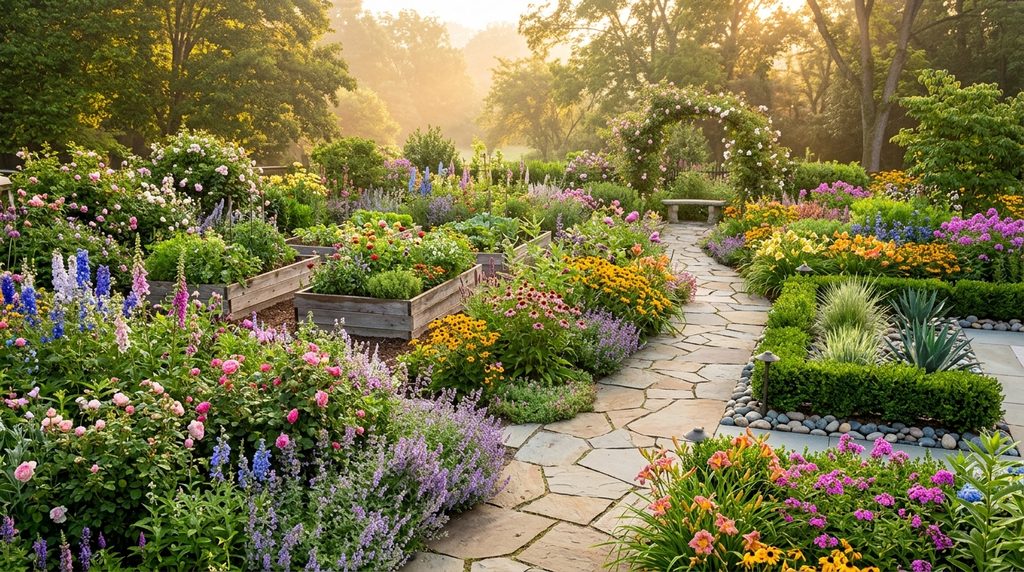
The Foundations of a Great Flower Bed
Before choosing plants or styles, these design principles will ensure your flower bed looks intentional and beautiful rather than accidental.
Define the Edge Clearly
The edge of a flower bed is what separates it from the surrounding lawn or paving.
A crisp, well-defined edge makes even a simple planting look professionally designed.
Use a half-moon edger for lawn borders, or install a physical edge of brick, steel, or timber.
Use the Rule of Threes
Plant in odd numbers.
Groups of three, five, or seven of the same plant create naturalistic drifts that look intentional.
Single plants scattered randomly create a busy, confused effect.
Layer from Back to Front
Place tall plants at the back, medium plants in the middle, and low plants at the front.
This tiered structure ensures every plant is visible and creates a sense of depth.
Repeat Elements
Repeating one or two plants, colors, or textures throughout a border creates cohesion.
A border that uses every different plant once looks chaotic.
Repetition creates rhythm and visual harmony.
5 Raised Flower Bed Projects
1. Simple Timber Raised Bed
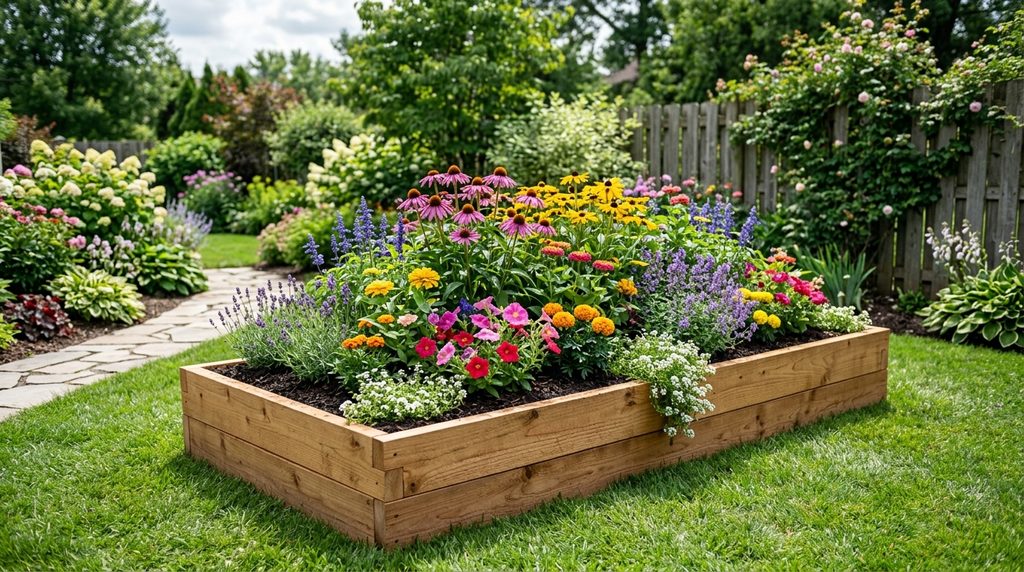
A classic raised bed built from untreated cedar or pine boards.
Cedar is naturally rot-resistant and lasts 10 to 15 years without treatment.
A 4 x 8 foot bed, 12 inches deep, can be built in an afternoon with basic tools.
Fill with a mix of topsoil, compost, and sharp sand.
2. Sleeper-Edged Cottage Bed

Railway sleepers (landscape timbers) stacked one or two high create a chunky, informal raised bed that suits cottage and rustic garden styles beautifully.
Stack and pin with rebar for stability.
Fill and plant with cottage favorites.
3. Brick-Bordered Formal Bed
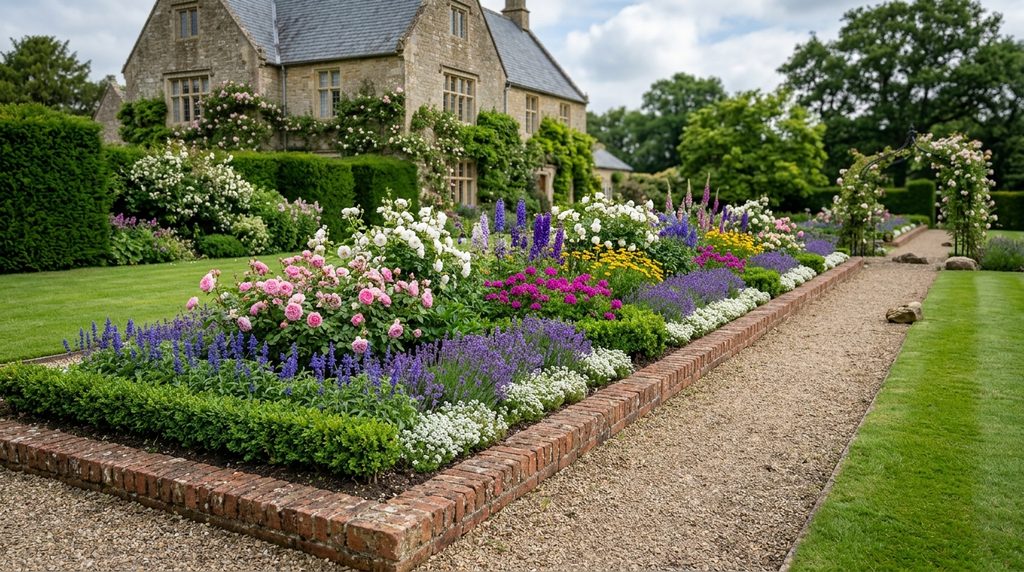
A low brick border gives flower beds a formal, permanent feel.
Use reclaimed brick for a weathered, traditional look.
Lay the bricks on a simple mortar bed or dry-lay them for a less permanent but equally attractive result.
4. Curved Stone Raised Bed
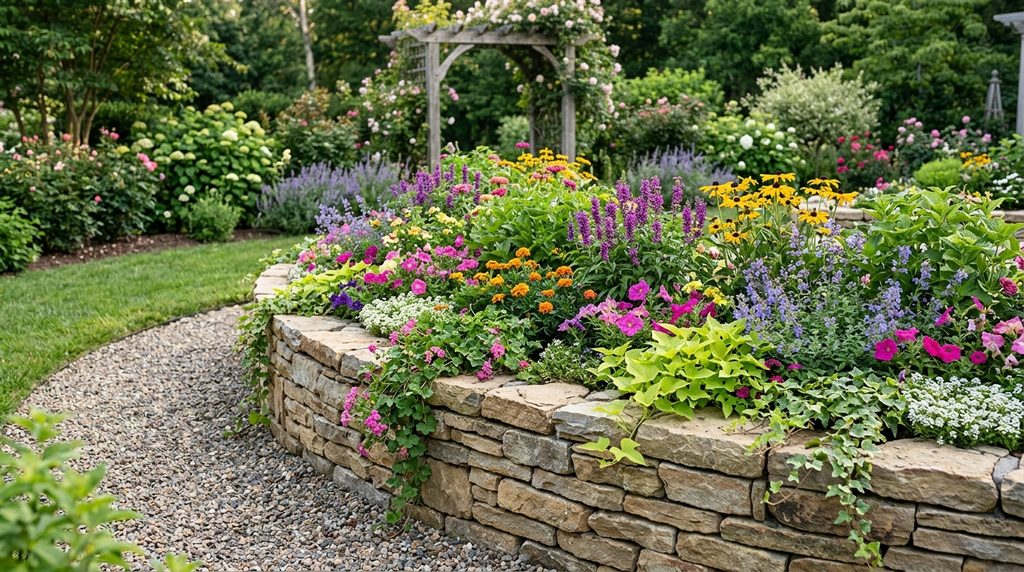
Dry-stacked natural stone creates curved, organic raised beds that look as if they have been part of the landscape for decades.
Stack stones without mortar for a naturalistic effect, leaving gaps for creeping plants like thyme and aubrietia.
5. Galvanized Metal Trough Bed
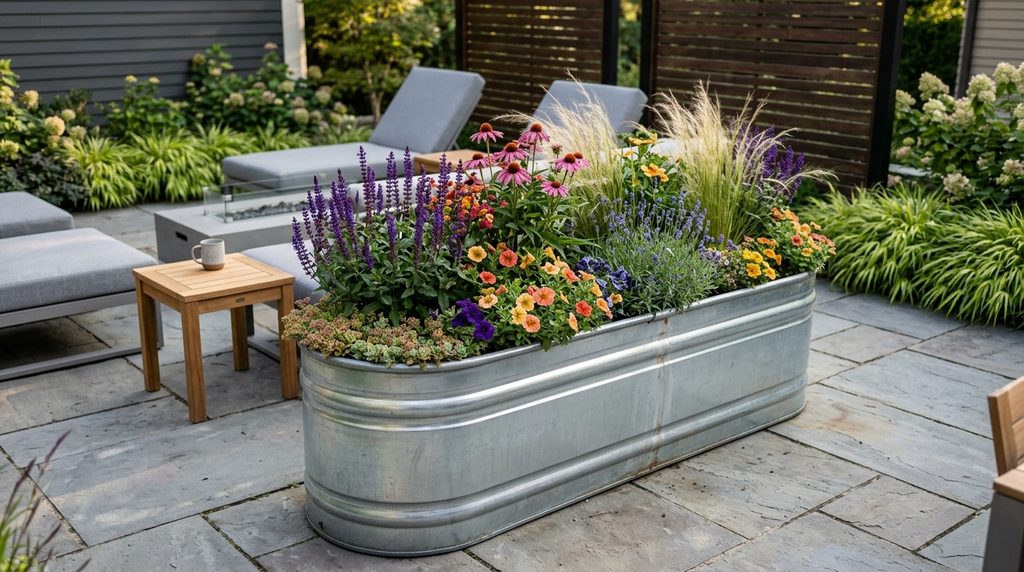
Large galvanized metal stock tanks have become fashionable as contemporary raised beds.
They are durable, look striking in a modern garden setting, and require no construction skills.
Drill drainage holes in the base and fill with premium potting mix.
5 Cottage Garden Bed Ideas
6. Classic English Cottage Border

A billowing mix of roses, delphiniums, phlox, aquilegia, and hardy geraniums.
The key to a convincing cottage border is density and apparent informality, with plants allowed to spill and self-seed freely.
Use a backbone of roses or peonies and fill with seasonal perennials and self-seeding annuals.
7. Wildflower Meadow Bed

Prepare a patch of bare earth by removing existing vegetation, raking to a fine tilth, and broadcasting a native wildflower seed mix.
Water and leave.
A wildflower bed requires virtually no ongoing maintenance and produces extraordinary seasonal color while supporting enormous numbers of pollinators.
8. The Cut Flower Bed
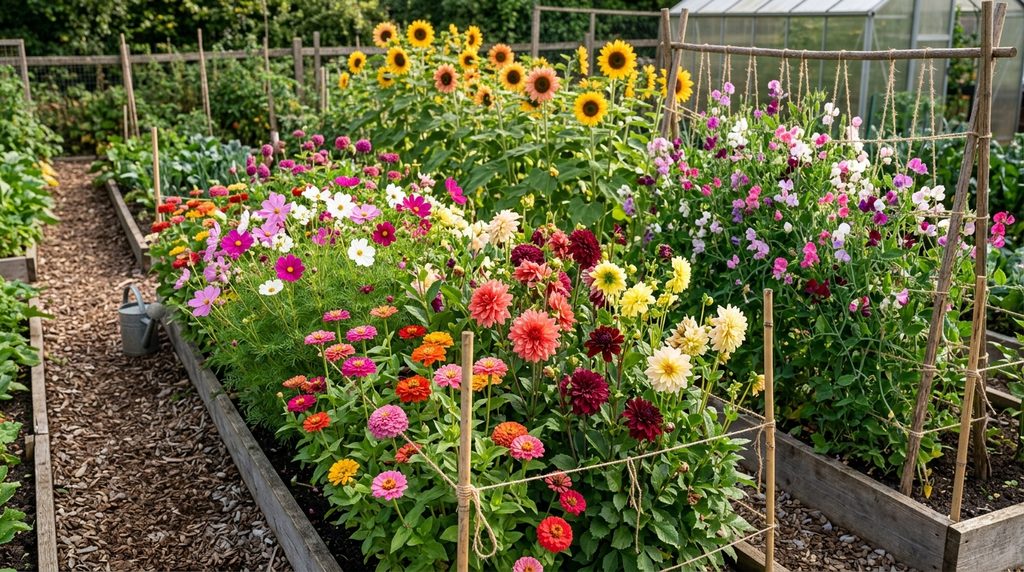
Designed entirely for harvest rather than display in the garden.
Plant sweet peas, cosmos, zinnias, dahlias, sunflowers, and lisianthus in rows for easy cutting.
This is the most practical flower bed you can make and delivers months of free fresh flowers for your home.
9. Fragrant Evening Border
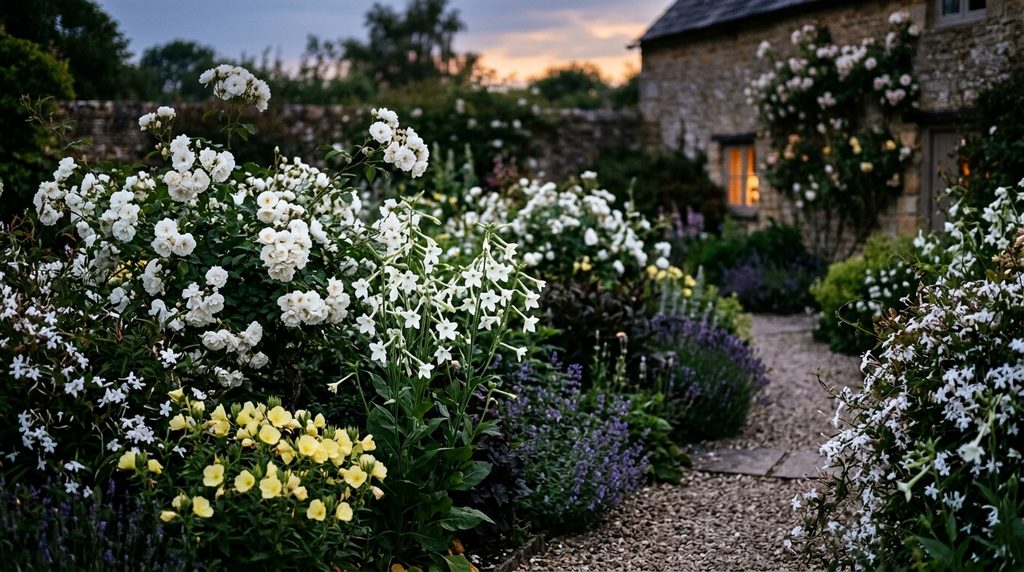
Plant night-scented stock, evening primrose, jasmine, nicotiana, and white roses.
This border is specifically designed to be enjoyed in the evening, when these plants release their strongest fragrances.
Position near a seating area or path.
10. Butterfly and Bee Garden Bed
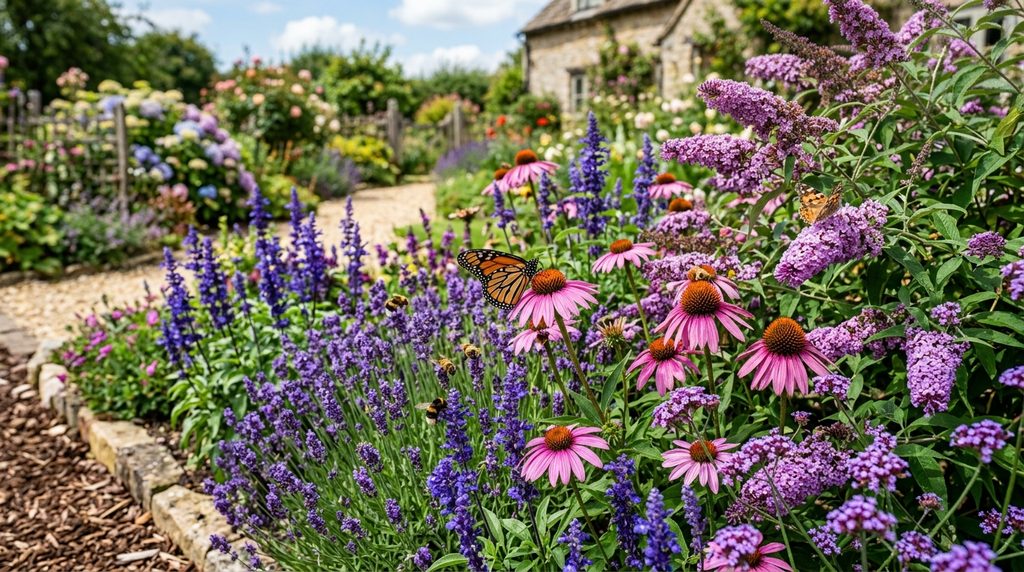
Fill with buddleia, lavender, echinacea, verbena bonariensis, scabiosa, and salvias.
A pollinator border provides food for butterflies and bees from April through October and creates a genuinely dynamic, living garden experience.
5 Modern and Minimalist Bed Ideas
11. Architectural Grass Border
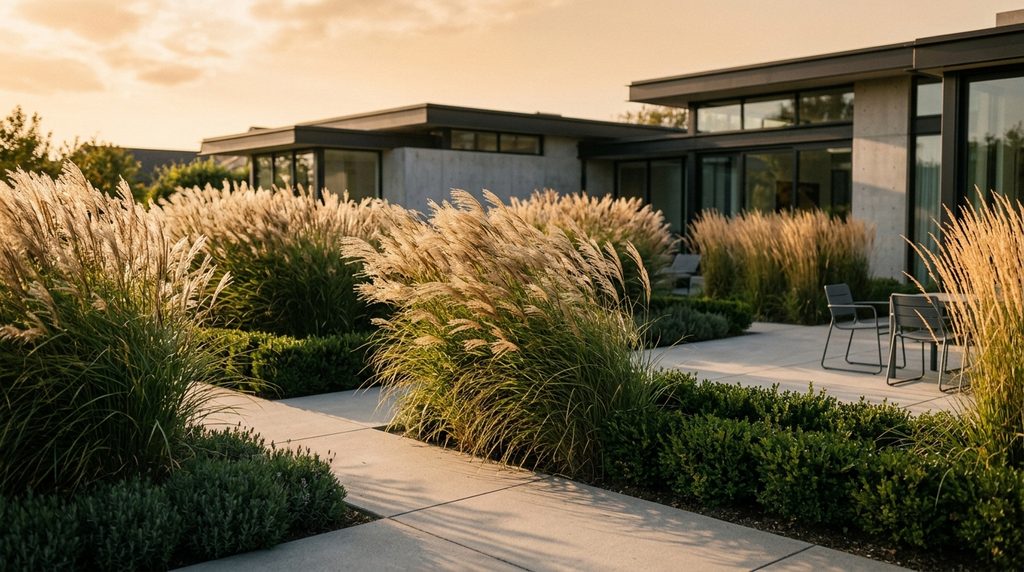
Mass plantings of a single ornamental grass species, such as Miscanthus ‘Gracillimus’ or Calamagrostis ‘Karl Foerster’, create a striking, low-maintenance modern border.
The movement of the grasses in wind adds a kinetic quality unlike any other plant.
12. Monochromatic White Border
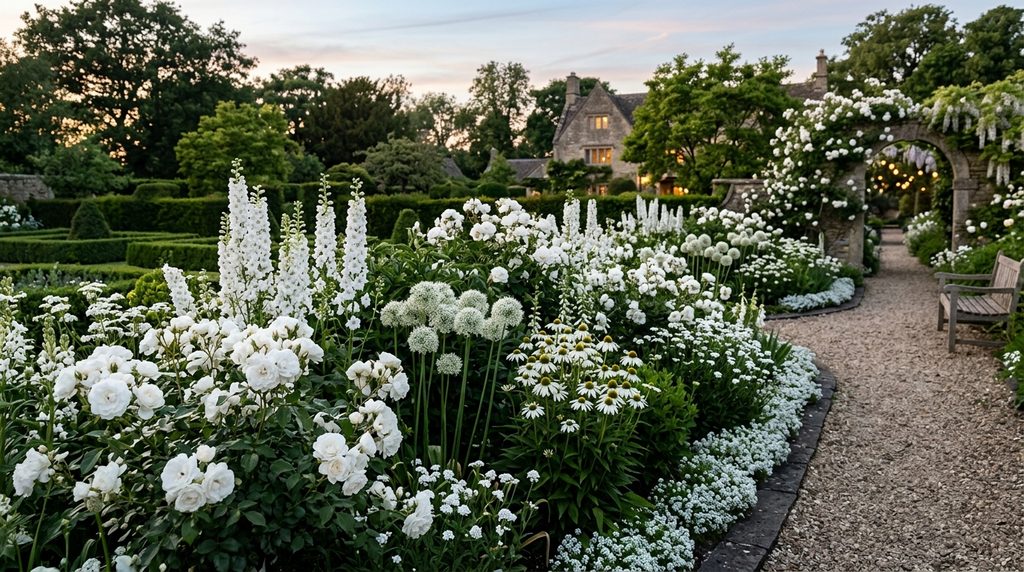
An all-white flower bed using white roses, white echinacea, white alliums, and white delphiniums creates a timeless, luminous effect that looks particularly magical in the evening.
White gardens, famously exemplified by Sissinghurst, are among the most photographed in the world.
13. Gravel and Drought-Tolerant Bed
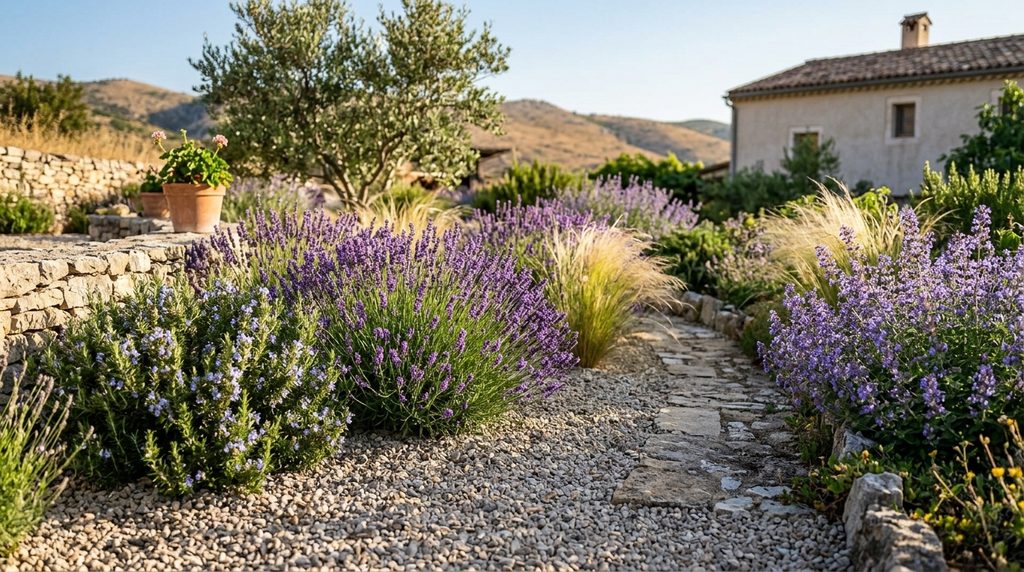
Layer landscape fabric over the soil, cover with decorative gravel, and plant drought-tolerant specimens like lavender, rosemary, catmint, and ornamental grasses through holes in the fabric.
Near zero maintenance, no weeding, and beautiful year-round structure.
14. Succulent and Alpine Bed
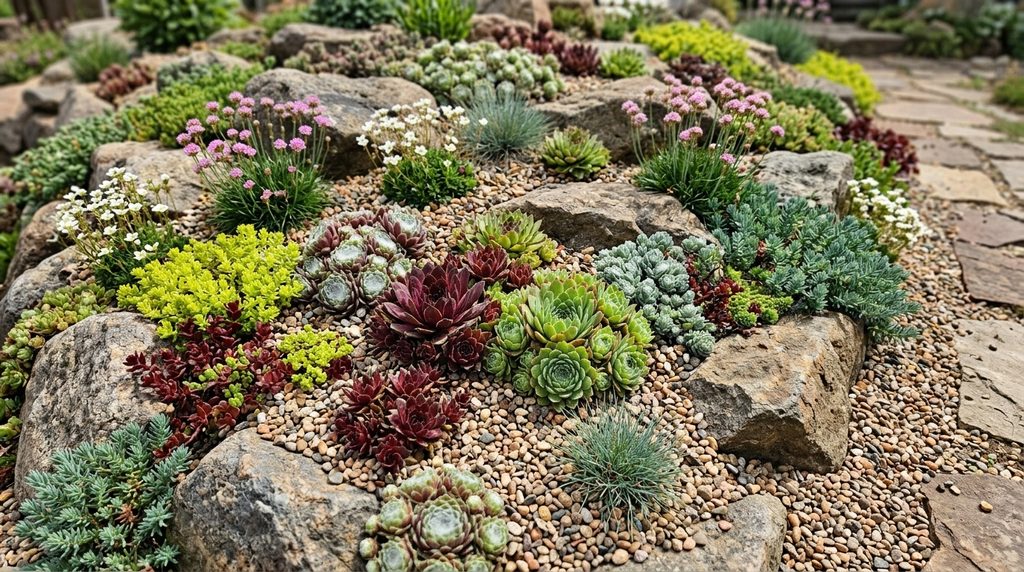
A bed of raised, gravelly soil planted with sedums, sempervivums, and alpine plants.
Incredibly low maintenance and beautifully detailed, with intricate textures and rosette forms that reward close examination.
15. Single-Species Mass Planting

Choose one spectacular plant and plant it in mass.
A bed of 50 Rudbeckia ‘Goldsturm’, or 30 Salvia nemorosa ‘Caradonna’, or 40 Verbena bonariensis creates a bold, confident statement that is more impactful than any mixed planting.
5 Themed Flower Bed Concepts
16. Moon Garden
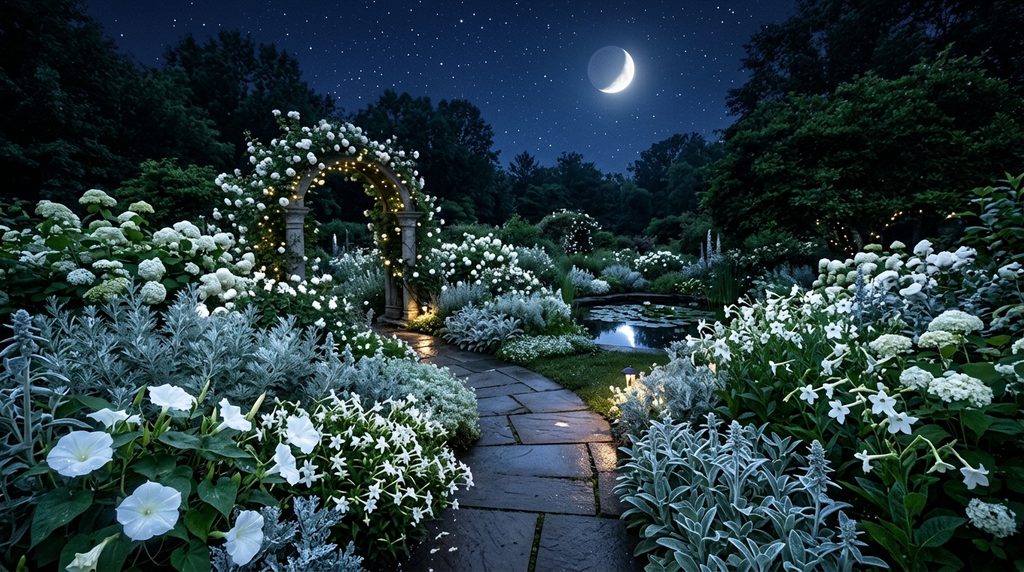
A bed planted entirely with white and silver flowers and foliage that glows in moonlight or artificial light.
Include white cosmos, white dahlias, silver artemisia, white nicotiana, and snow-in-summer.
Position near a garden bench for evening enjoyment.
17. Rainbow Gradient Border
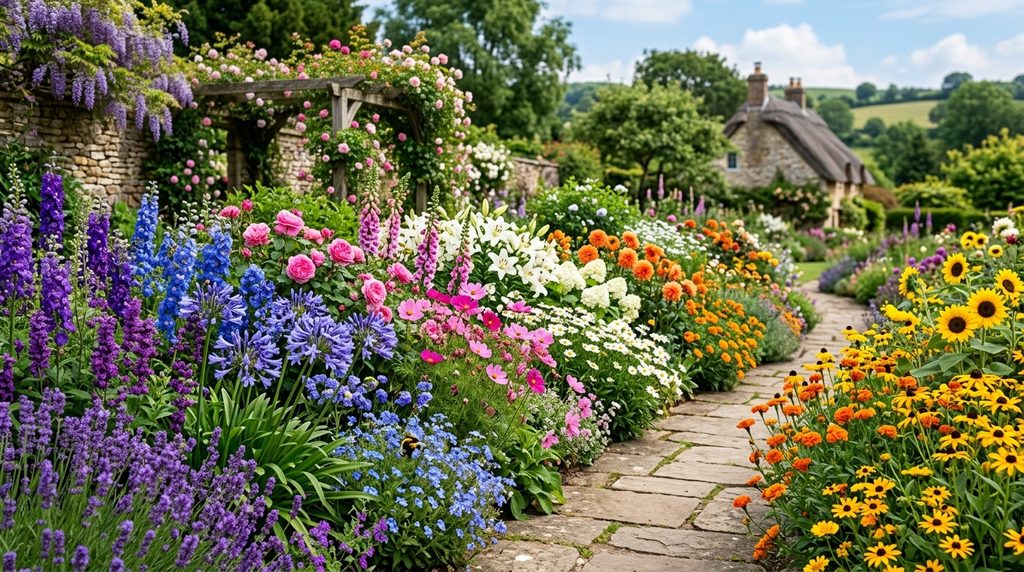
Arrange flowers in a color gradient from one end of the border to the other: cool purple and blue at one end transitioning through pink and white to warm orange and yellow at the other.
This takes careful planning but creates a breathtaking, Instagram-worthy effect.
18. Hot Color Border
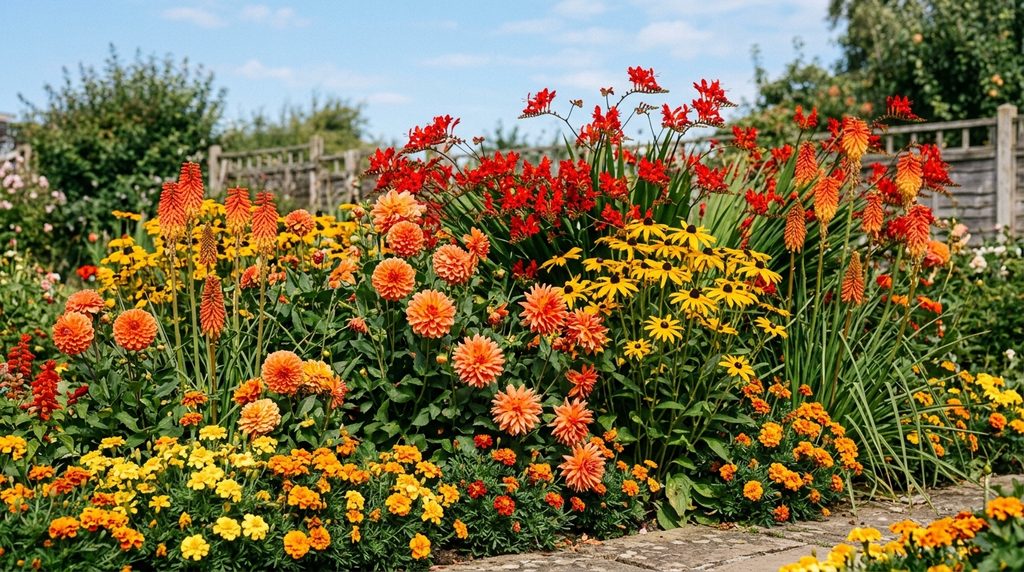
Fill with blazing reds, oranges, and yellows: red crocosmia, orange dahlias, yellow rudbeckia, red hot poker, and orange marigolds.
A hot border is exhilarating and performs best in full sun.
19. Cool Blue and Purple Border
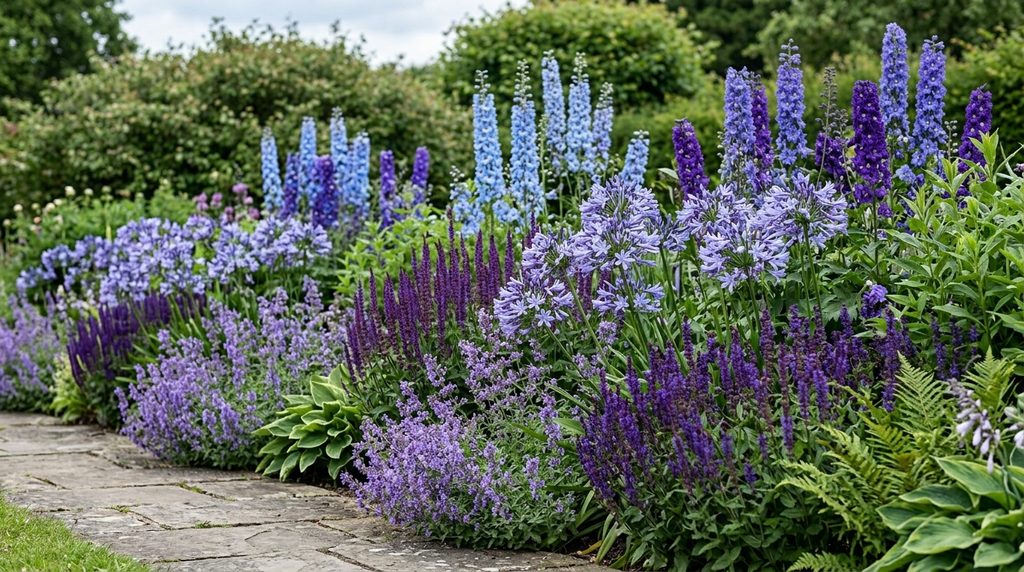
Combine salvias, agapanthus, delphiniums, catmint, and veronicastrum in shades of blue, purple, and lavender.
Cool borders are serene and particularly effective in gardens viewed from inside the house.
20. Autumn Interest Bed
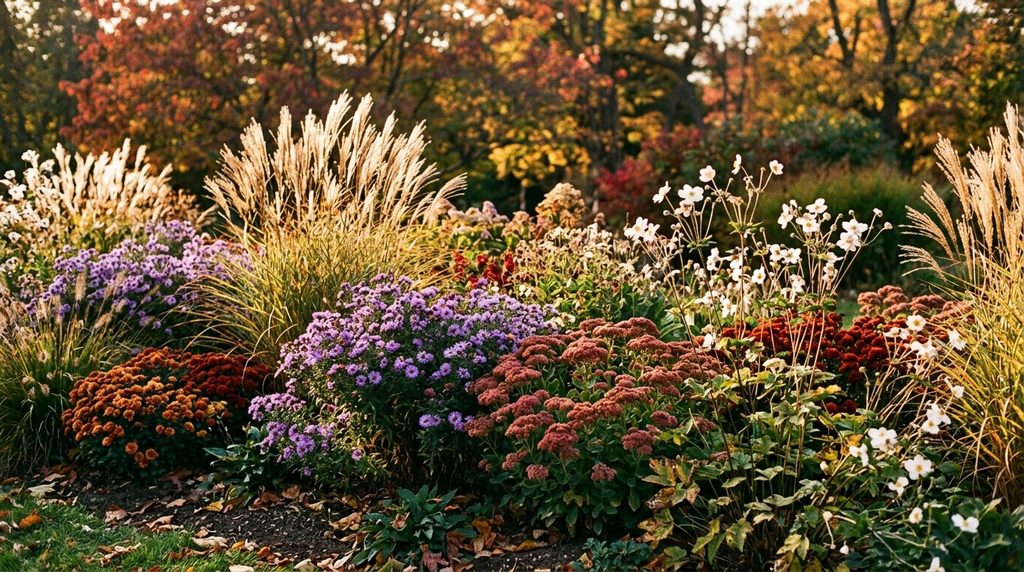
Design specifically for September through November interest when most gardens are fading.
Use Japanese anemones, sedum, asters, rudbeckia, and ornamental grasses with their autumn seed heads.
Bronze and golden chrysanthemums add rich color through to first frost.
5 Low Maintenance Bed Solutions
21. Ground Cover Tapestry Bed
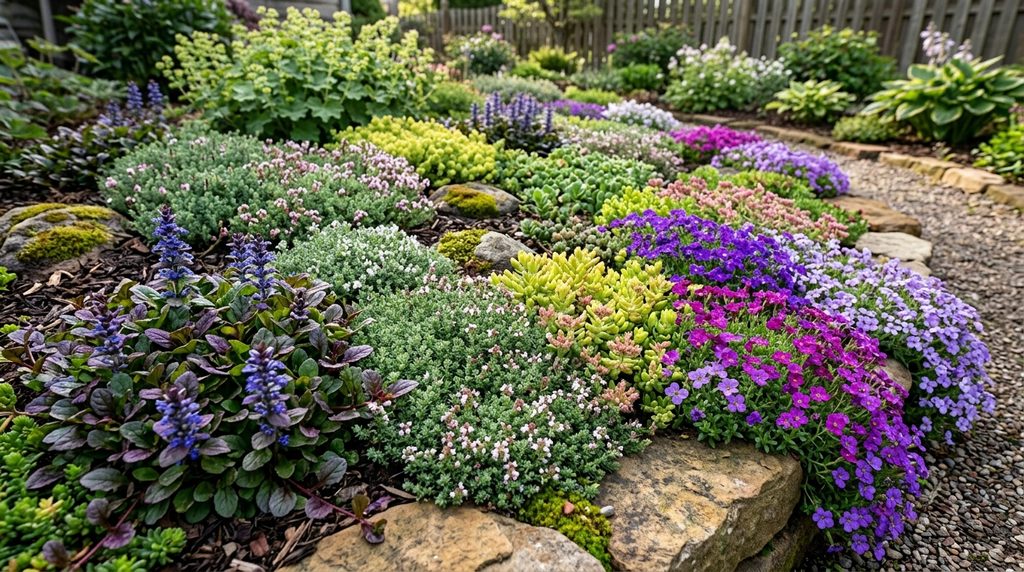
Combine complementary ground cover plants to create a weed-suppressing tapestry.
Mix ajuga, sedum, thymus, and aubrietia for a low-growing, colorful, virtually maintenance-free bed that flows naturally around existing trees and shrubs.
22. Native Plant Wildscape
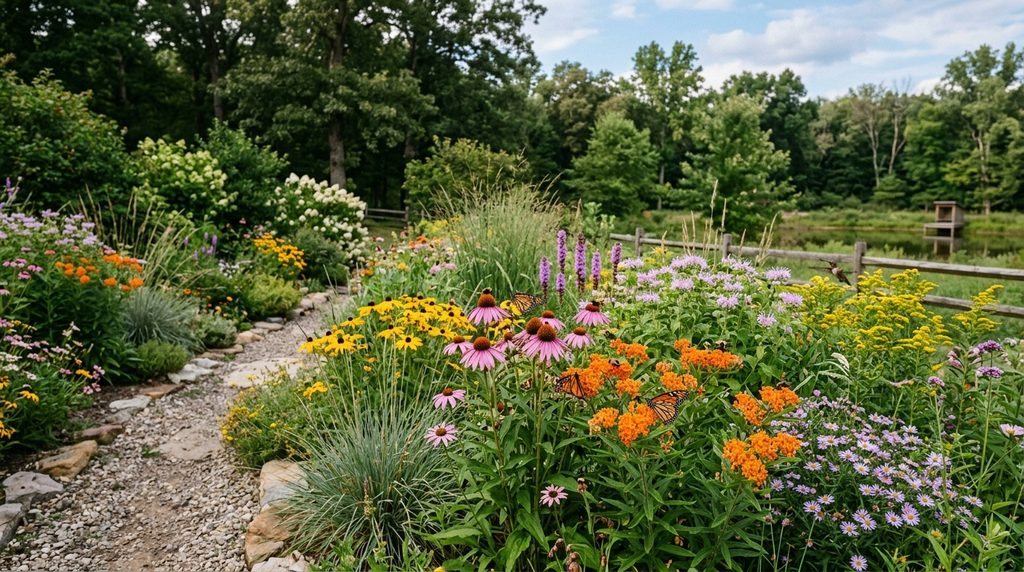
Use exclusively native plants to create a wildlife-friendly bed that requires no irrigation, no fertilizing, and minimal management once established.
Choose plants native to your specific region for the best results.
23. The No-Dig Bed
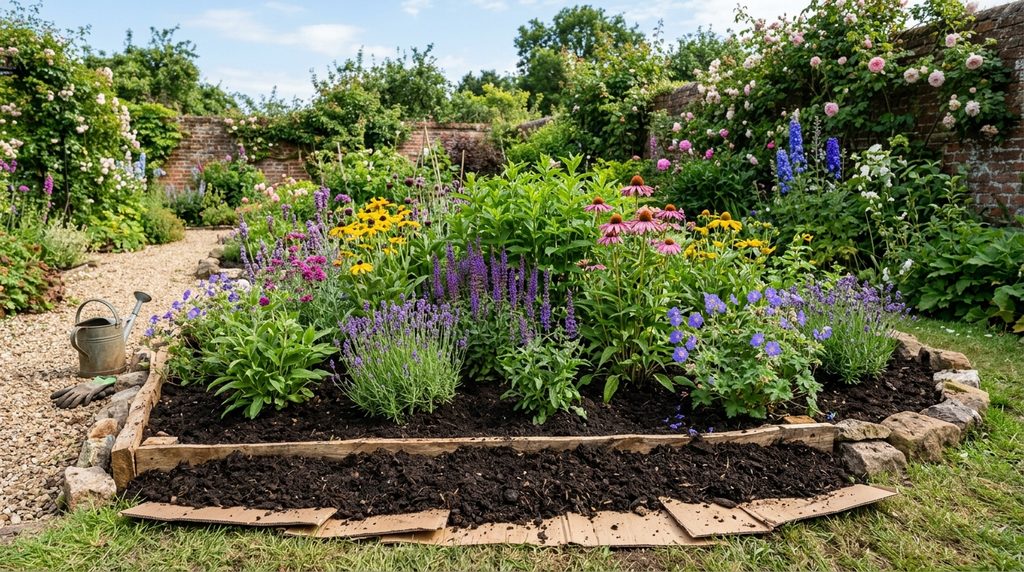
Create a new flower bed without digging by placing cardboard over grass, covering with 6 inches of compost, and planting directly through.
The cardboard kills the grass, worms work it into the soil, and you have a productive bed within one season with minimal effort.
24. Perennial Island Bed
A self-sustaining island of perennials in the middle of a lawn.
Choose a mix of spring, summer, and autumn perennials that establish and spread to fill the space over time, requiring only annual tidying and mulching.
25. Edible Flower Bed
Combine edible flowers with ornamental value: nasturtiums, calendula, borage, viola, and lavender.
A bed that is both beautiful and useful, providing edible garnishes for salads, cocktails, and cakes throughout the season.
Frequently Asked Questions
These are optimized for Google’s People Also Ask feature and featured snippet positions.
|
Q: What are the best flowers for a low maintenance flower bed? A: Rudbeckia, salvia, echinacea, sedum, ornamental grasses, and hellebores are the most reliable, genuinely low-maintenance flower bed plants. Once established, they require minimal watering, no deadheading (except for more blooms), and divide themselves every few years to fill the space. |
|
Q: How deep should a flower bed be? A: For most perennials and annuals, 12 inches of good soil is sufficient. For shrubs and deep-rooted perennials, aim for 18 to 24 inches. The single most important factor is soil quality, not depth. Rich, well-draining soil outperforms deep but poor-quality soil every time. |
|
Q: When is the best time to create a new flower bed? A: Autumn is the best time in most climates. The soil is warm and moist, plants establish quickly before winter, and you are ready to hit the ground running in spring. Spring planting also works well. Avoid creating new beds in summer when heat and drought stress newly planted specimens. |
Q: How do I stop weeds in a flower bed? A: The most effective weed control is a combination of dense planting (to shade the soil), a thick mulch layer (3 to 4 inches applied in spring), and prompt hand-weeding of any weed seedlings before they establish. Landscape fabric is effective but prevents natural soil improvement over time. |
Conclusion
A beautiful flower bed is one of the most satisfying things a gardener can create.
It takes a bare or neglected patch of outdoor space and transforms it into something that gives you pleasure every single day.
The 25 ideas in this guide span every style, skill level, and budget.
Start with one that excites you, build it this weekend, and experience the transformation.
Then, when the gardening obsession takes hold, come back for the next one.
There are 24 more waiting.
