
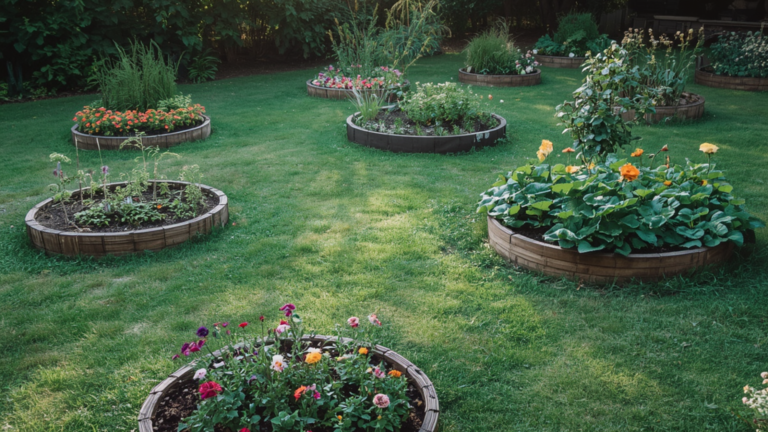
Most garden beds are rectangles. Rectangles are practical. They are easy to build, simple to work in, and efficient in their use of space.
But unique garden bed designs solve problems that rectangles cannot while creating features that are as visually interesting as any ornamental garden element. A keyhole bed provides access from all sides. An herb spiral creates multiple microclimates in 6 square feet. A sunken desert bed creates drought-tolerant conditions in a rainy climate.
These 12 designs range from functional problem-solvers to genuine garden art pieces.
12 Unique Garden Bed Designs
1. Keyhole Bed

The keyhole bed is a circular raised bed (typically 6 feet in diameter) with a narrow access path cut into the circle from the edge to the center, creating a keyhole shape when viewed from above. This design allows the gardener to reach every part of the planting from the path, eliminating the need to step into the bed or stretch awkwardly across it.
Keyhole beds are particularly valuable for gardeners with limited mobility, as the central access allows comfortable working at standing height from the path. Originally popularized in permaculture and African food growing traditions, they are now widely adopted in both productive and ornamental garden design.
- Diameter: 6 feet maximum (allows arm reach to center from any point on the perimeter)
- Access path: 18 to 20 inches wide (wheelchair-accessible version: 30 to 36 inches)
- Best for: Intensive vegetable growing, herb gardens, or mixed productive/ornamental beds
2. Herb Spiral
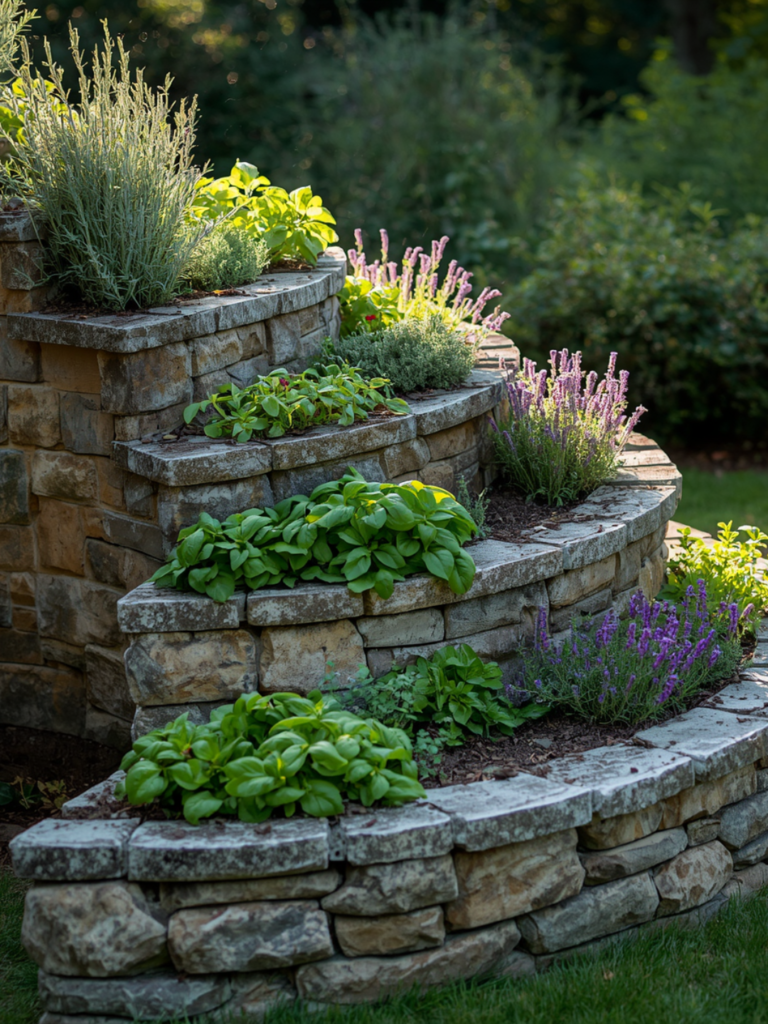
An herb spiral is a three-dimensional spiral of stacked stone, brick, or timber that creates a raised mound 3 to 4 feet high at the peak and spirals down to ground level. The design creates multiple distinct microclimates within 6 to 8 square feet:
- Top of spiral: Driest, hottest, most sun-exposed. Plant thyme, rosemary, sage, and lavender.
- Mid-spiral on sunny side: Good drainage and sun. Plant basil, oregano, marjoram.
- Mid-spiral on shaded side: Slightly cooler. Plant chives, tarragon, cilantro.
- Base of spiral: Moist, lowest. Plant parsley, mint (in a sunken pot to contain spreading), chervil.
The result is 6 to 8 herb varieties in an attractive sculptural feature that produces a continuous harvest across the season.
3. Raised Bed with Integrated Seating
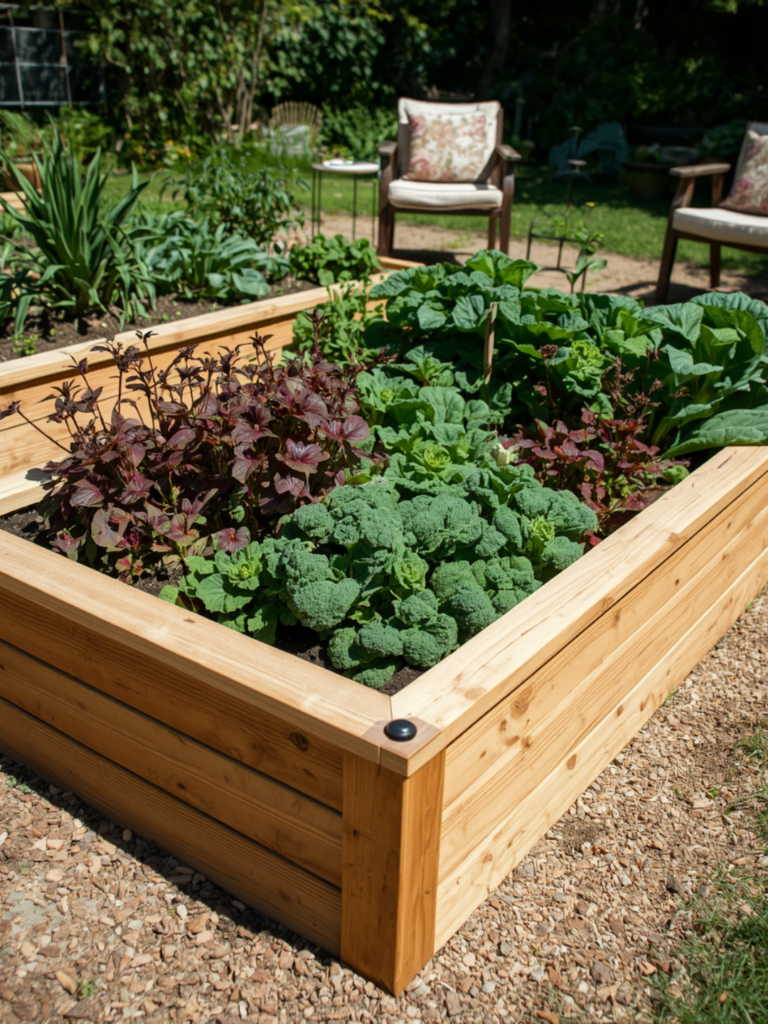
Build a raised bed 24 to 30 inches tall with a wider frame (4 to 6 inches) that doubles as a seat at the bed edge. This design is as much about the experience of working and being in the garden as it is about growing, sitting at bed-edge while weeding, harvesting, or simply watching the garden is a qualitatively different experience from bending over or kneeling.
- Materials: Cedar (naturally rot-resistant) or powder-coated steel at bench height
- Ergonomic note: 24 to 28 inches is the ideal seat height for most adults
4. Sunken Garden Bed

A sunken bed (dug 6 to 12 inches below grade) collects rainwater and runoff, creating naturally wetter conditions for moisture-loving plants in areas that would otherwise drain too quickly. The technique is traditional in arid regions of North Africa and the American Southwest.
- Best plants: Moisture-loving vegetables (celery, bog-standard lettuce, watercress), or rain garden species (cardinal flower, Louisiana iris, bog rosemary)
- Construction: Excavate the bed area to the desired depth. Line sides with treated wood, stone, or brick. Fill with moisture-retentive soil mix.
5. Hugelkultur Bed
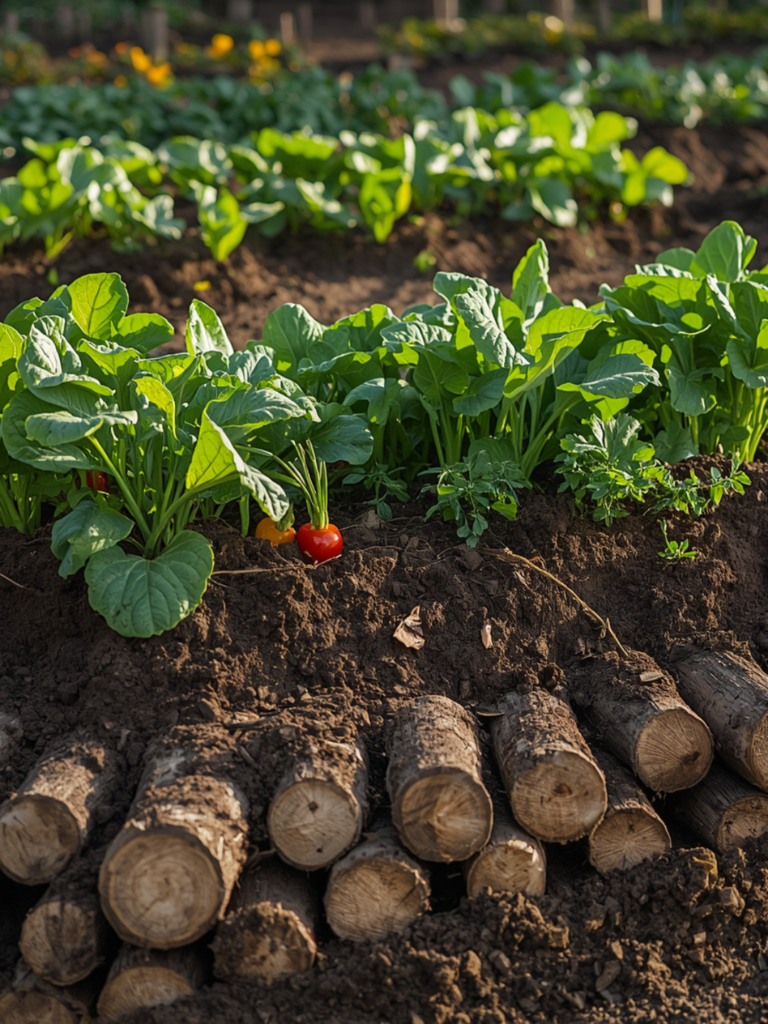
Hugelkultur (a German permaculture technique) involves burying large logs, branches, and woody debris under a mound of soil to create a self-fertilizing, water-retaining raised bed. As the wood decomposes over 2 to 5 years, it releases nutrients and creates a sponge-like reservoir that retains moisture between rain events.
A well-built hugelkultur bed can go 2 to 4 weeks without irrigation during dry periods once established, a significant advantage in water-restricted gardens.
- Construction: Dig a 12 to 18-inch trench. Fill with large logs and branches. Cover with smaller woody debris, then compostable materials (grass clippings, kitchen scraps), then 8 to 12 inches of topsoil.
- Timeline: Beds improve over 2 to 3 years as wood decomposes. First year may require supplemental watering as the wood initially absorbs moisture.
6. Mandala Garden
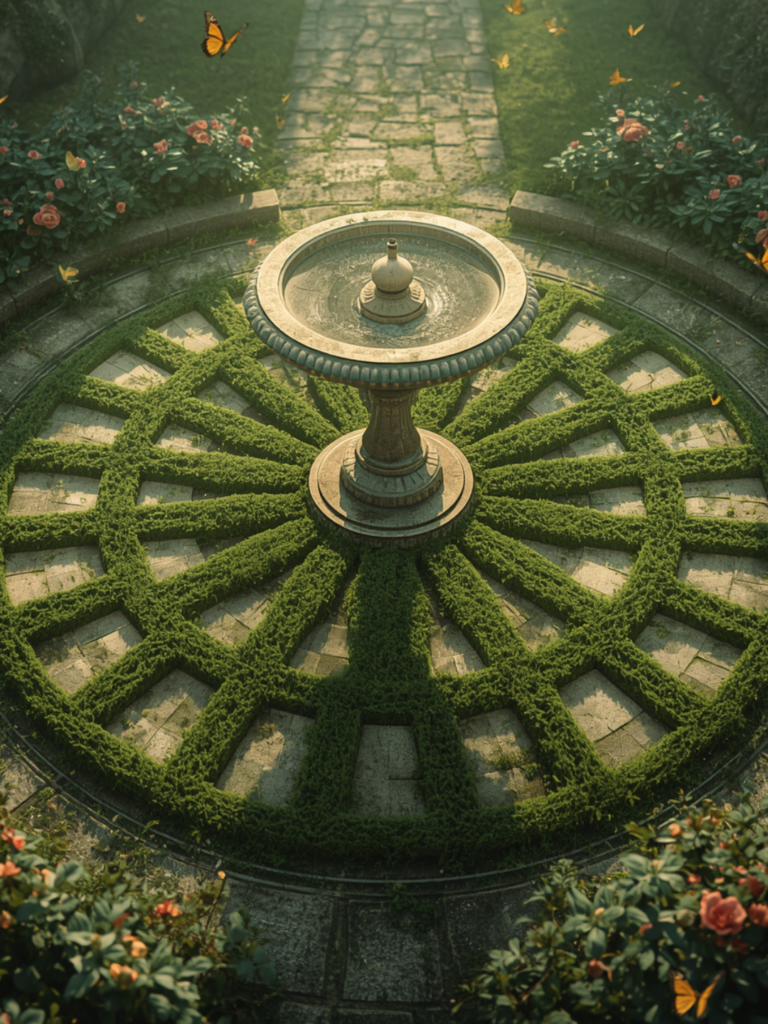
A mandala garden is a circular design divided into wedge-shaped planting sections radiating from a central focal point (a water feature, sundial, sculpture, or specimen plant). The sacred geometry creates a visually compelling garden feature that is also highly productive when planted with vegetables or herbs in each wedge.
- Typical size: 10 to 20 feet in diameter
- Central feature: A birdbath, small pond, obelisk, or dwarf fruit tree
- Path structure: Circular paths at each ring allow access to all sections
7. Lasagna Garden Bed
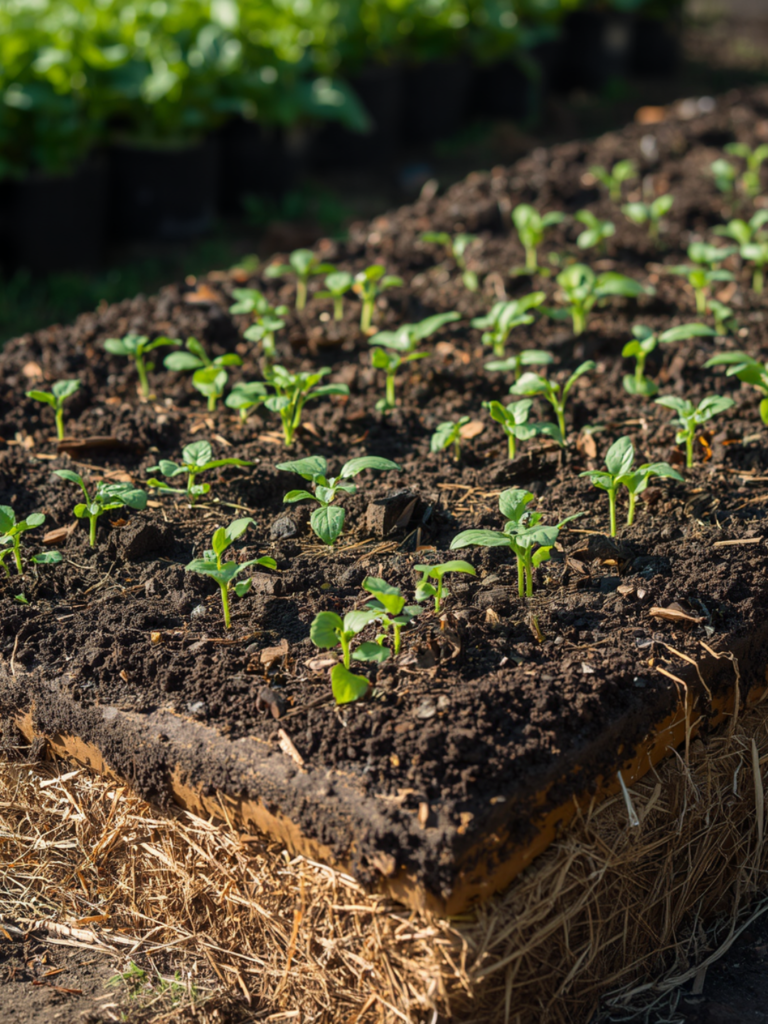
Also called no-dig or sheet mulch gardening, a lasagna bed is built up in layers directly over existing lawn or soil without digging:
- Lay cardboard over the ground (overlapping edges by 6 inches)
- Add 3 to 4 inches of compost
- Add 2 to 3 inches of wood chips or straw
- Repeat compost and carbon layers to a total height of 18 to 24 inches
The layers break down over one season, smothering the grass below and creating deep, rich planting medium. No digging, no sod removal.
- Benefit: Can be built over concrete, compacted soil, or lawn in a single afternoon
- Timeline: Best built in fall for spring planting, or built in spring and planted immediately with transplants
8. Wicking Bed
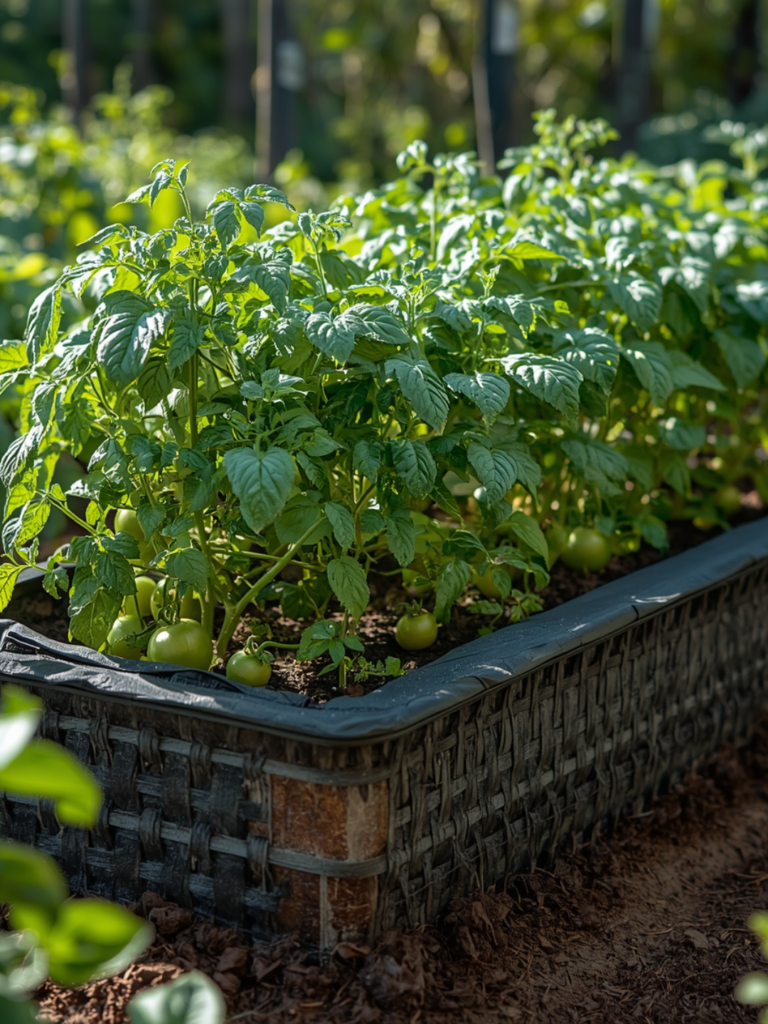
A wicking bed is a sealed raised bed with a water reservoir built into the base. The planting medium draws water upward through capillary action as the soil dries, maintaining consistent root zone moisture without surface watering.
Wicking beds use 50 to 70% less water than conventional raised beds, significant in regions with water restrictions or for gardeners who travel frequently.
- Construction: Requires a waterproof liner, overflow holes at the correct height, a pipe for filling the reservoir, and a separation layer between reservoir and soil
- Water reservoir depth: 6 to 12 inches
- Best crops: Root vegetables, tomatoes, and crops that are sensitive to inconsistent watering (cracking, blossom end rot)
9. Terraced Hillside Beds

On sloped gardens, terraced beds turn a challenging topography into a productive asset. Level terraces retain soil and water, preventing runoff erosion while creating distinct planting zones accessible from a path running along each terrace.
- Construction materials: Railroad tie equivalents, stone retaining walls, treated timber, or concrete block
- Terrace depth: Each terrace should be at least 3 feet deep to allow productive planting space
- Best for: Gardens with 10 to 30-degree slopes. Steeper grades require engineered retaining walls.
10. Container Cluster Garden

A thoughtfully arranged cluster of containers at varying heights creates the visual and functional equivalent of a garden bed in locations where in-ground growing is impossible (concrete patios, rooftops, balconies). Using containers of dramatically different heights (6-inch pots, 24-inch containers, wine barrels) creates the layered aesthetic of an in-ground mixed border.
- Group odd numbers: 3, 5, or 7 containers clustered together are more visually cohesive than even-numbered groups
- Vary materials: Mixing terracotta, galvanized, and wooden containers creates interest
11. Fairy Garden / Themed Specialty Bed
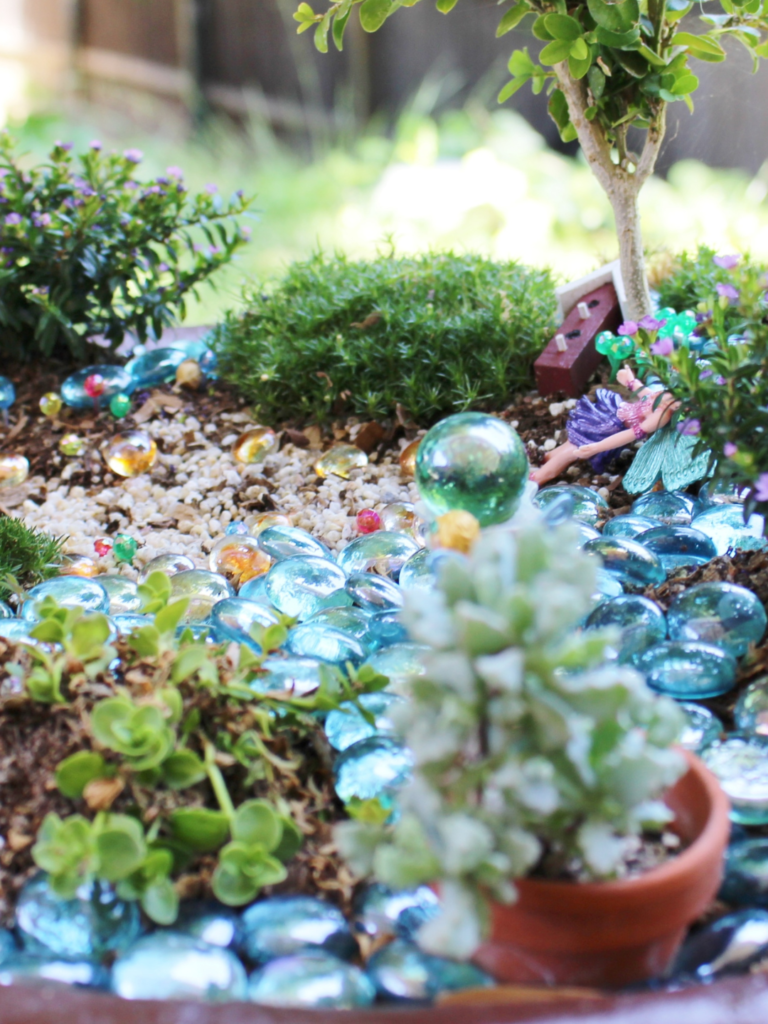
A deliberately themed small bed creates a garden feature that is as much about the creative concept as the plants: a butterfly garden (planted exclusively with butterfly larval and nectar plants), a moon garden (white-flowered plants that glow at dusk), a pizza garden (all the herbs and vegetables for pizza), or a children’s fairy garden with miniature accessories and small-scale plants.
- Moon garden plants: White roses, white phlox, white nicotiana, moonflower vine (Ipomoea alba), white lavender, white alyssum
- Pizza garden plants: Tomatoes, basil, oregano, garlic, peppers, and fennel in a circular or wedge-shaped bed
12. Round or Oval Feature Bed
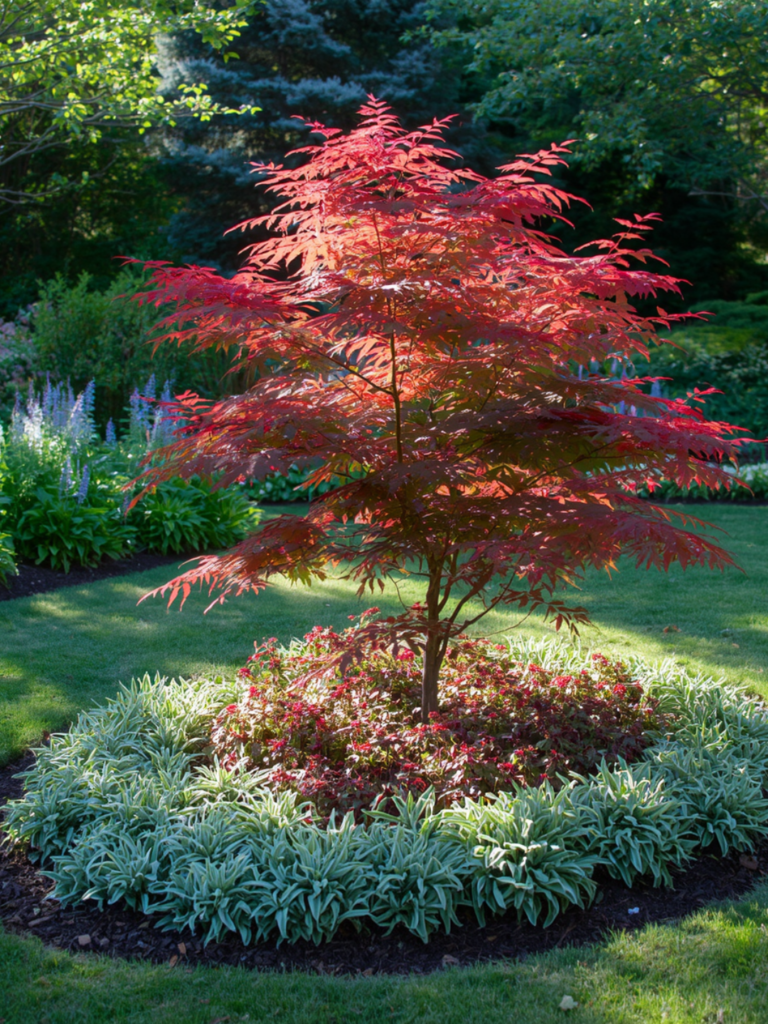
A simple departure from the standard rectangle: a circular or oval island bed creates a more natural, organic shape that suits formal lawn settings and cottage garden approaches. A single specimen shrub or small tree at the center, surrounded by concentric rings of low-to-medium perennials, creates a self-contained, visually complete feature.
- Construction: Use a hose or rope to mark the shape before digging or building
- Central specimens: Standard roses (grafted onto a tall stem), small ornamental trees (crab apple, Japanese maple), or ornamental grasses
✅ Tip Whatever garden bed shape you choose, the ideal width is 4 feet maximum for in-ground beds and 3 feet maximum for elevated raised beds. This ensures you can reach the center from either side without stepping into the planting area. Beds wider than this compromise access and soil health over time through compaction. The most common mistake in creative garden bed design is underestimating the path width needed. Paths between beds should be at minimum 18 inches wide for single-person access and 30 to 36 inches wide for wheelbarrow access. |
Frequently Asked Questions
What is the most productive garden bed shape?
The keyhole bed and the standard 4×8-foot raised bed are consistently the most productive designs per square foot. The keyhole maximizes accessible planting area relative to path space. The 4×8 raised bed is the most versatile and widely adapted design for intensive vegetable production using square foot gardening techniques.
How do I build a no-dig garden bed quickly?
A lasagna / sheet mulch bed can be built in under two hours. Lay overlapping cardboard directly on grass or weeds. Cover with 4 to 6 inches of compost, then 2 to 3 inches of wood chip or straw mulch. For immediate planting, add an additional 4 to 6 inches of topsoil or compost on top. Plant transplants (not seeds) directly into the bed.
The Bottom Line
Standard rectangular beds work. They will always work. But the alternative designs in this list solve real problems (access, water retention, steep slopes, small spaces) while creating garden features that are genuinely beautiful and conversation-worthy.
Start with a keyhole bed or herb spiral if you are ready to move beyond the rectangle. Both designs improve on their rectangular equivalent in meaningful ways and look spectacular in any garden setting.
Related Articles:
- 20 Stunning Country Garden Decoration Ideas for a Charming Outdoor Space
- 15 Best Climbing Plants for Your Pergola and Arbor
