
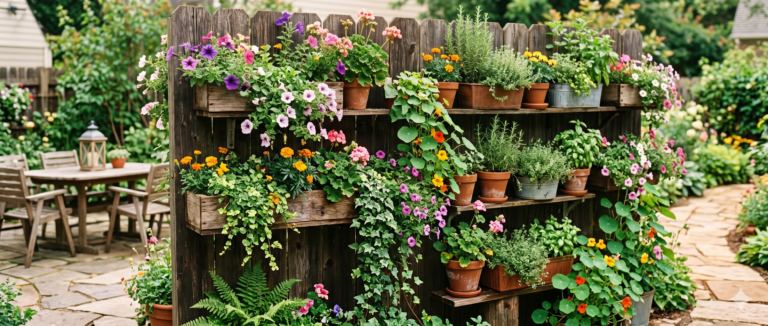
A privacy fence is a significant investment in outdoor infrastructure. Most homeowners install one, immediately forget about it aesthetically, and look at a flat wooden or vinyl wall for the next decade.
Fence planters transform that surface. They add color, life, and fragrance to otherwise dead vertical space. They can increase privacy (taller plants), reduce the visual weight of the fence (trailing plants softening the surface), and grow food in a surprisingly small footprint.
The competitor article lists 15 ideas with checkmarks and minimal detail. This guide adds what any serious planter builder needs: weight considerations, drainage requirements, mounting hardware, and realistic plant recommendations for each design.
Before You Start: Weight and Structural Considerations
This is the section most fence planter guides omit. A wet planting container is significantly heavier than an empty one. Understanding the weight your fence can support prevents damage to your fence structure.
- A standard 6-inch window box: Dry soil — approximately 8 lbs. After watering — 18 to 25 lbs.
- A large 24-inch window box: After watering — 60 to 80 lbs.
- A pocket planter with 8 pockets: After watering — 20 to 35 lbs.
A standard 6-foot wooden privacy fence can typically support 50 to 100 lbs of distributed load when mounted to fence posts (not pickets). Mount to the structural posts or fence rails, not to individual fence boards.
Vinyl fences have lower load capacity and require mounting through the vinyl into the frame behind it.
15 Fence Planter Ideas
1. Gutter Planters
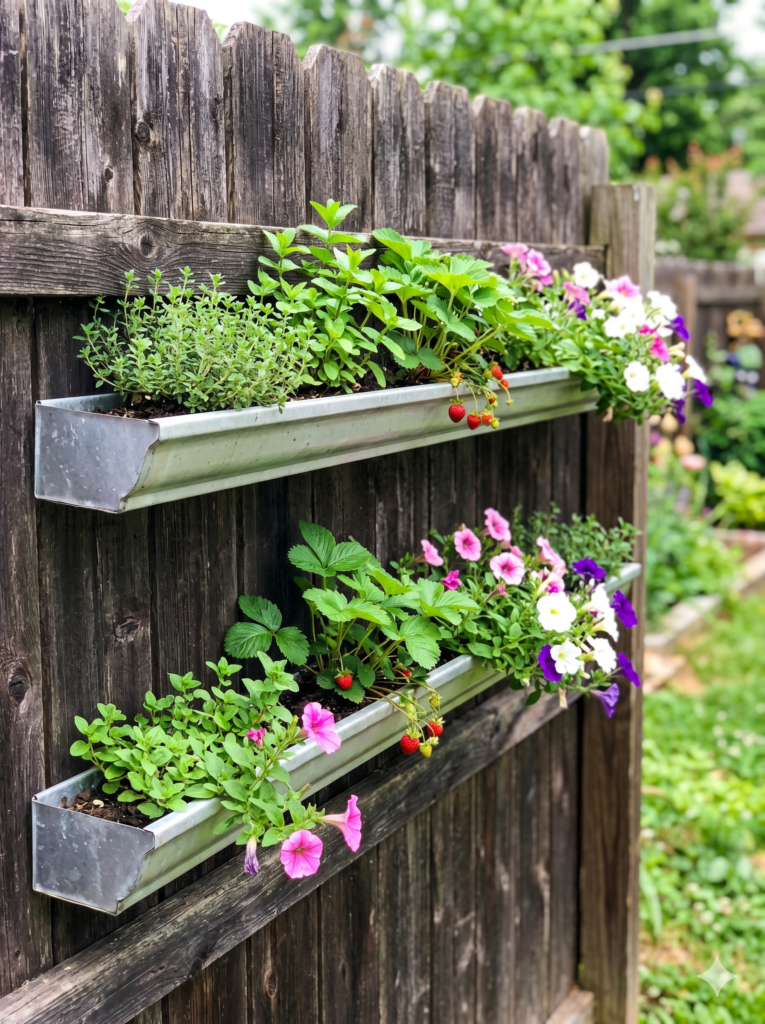
Repurposed aluminum rain gutters (cut to length, capped at ends, and drilled for drainage) are the most cost-effective fence planter option. Mount with gutter brackets directly to fence rails or posts.
- Cost: Under $20 for a 10-foot run (using salvage gutters)
- Weight when full: Approximately 3 to 5 lbs per linear foot — very fence-friendly
- Best plants: Lettuce, herbs, strawberries, trailing annuals, succulents
- Drainage: Drill 1/4-inch holes every 6 inches along the bottom
2. Fabric Pocket Planters
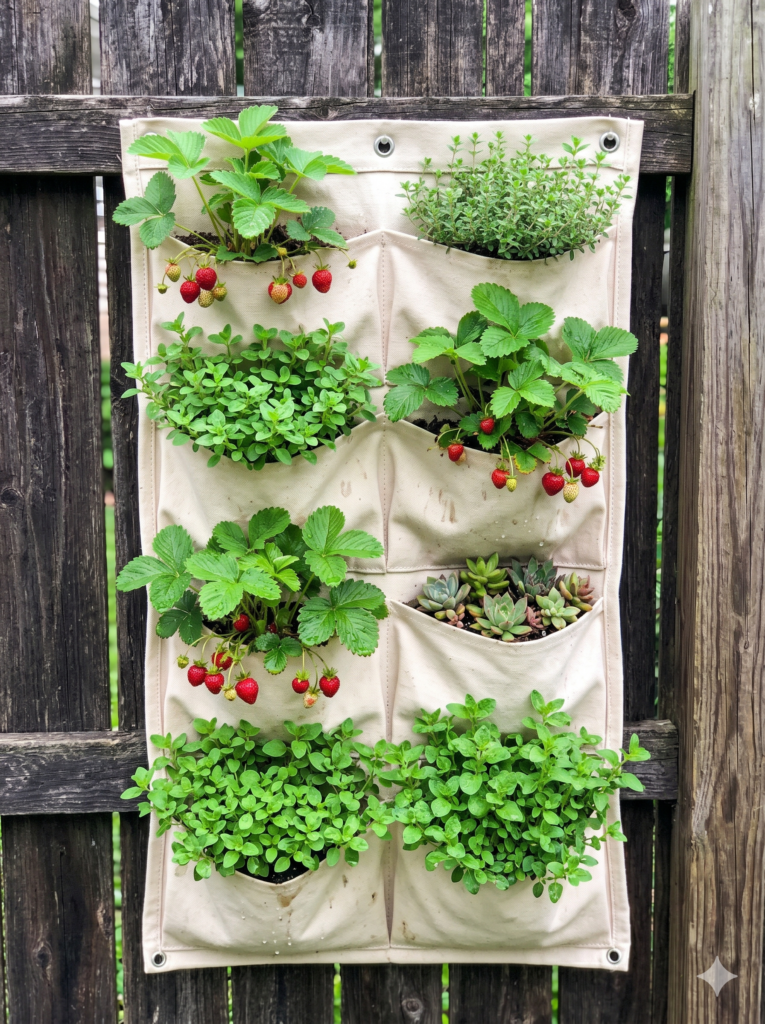
Felt or canvas pocket planters hang from fence rails using grommets and hooks. Each pocket holds one plant. Lightweight when dry, easy to install and remove seasonally.
- Cost: $15 to $30 for a 4×4-foot panel with 12 to 20 pockets
- Best plants: Shallow-rooted herbs, lettuce, strawberries, succulents, small annuals
- Limitation: Shallow pockets dry out quickly — require more frequent watering than larger containers
- Advantage: Non-toxic to pets (no drainage into soil), completely removable for seasonal changes
3. Wood Pallet Planter Wall
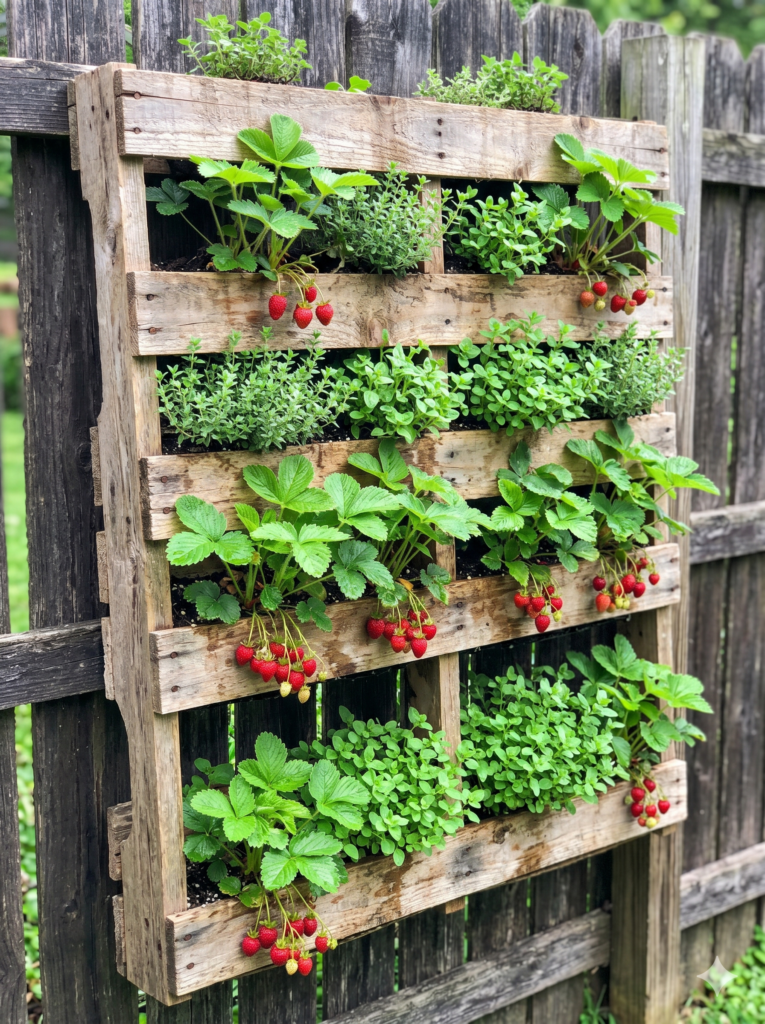
Stand an HT-stamped pallet vertically against or mounted to the fence. Staple landscape fabric to the back of each horizontal slat, fill with potting mix, and plant through the openings. Multiple pallets create a wall of green.
- Critical: Use only HT (heat-treated) pallets for food crops. Avoid MB (methyl bromide) marked pallets.
- Cost: Free to $15 for the pallet
- Best plants: Herbs, small annual flowers, lettuce, strawberries
- Lifespan: 3 to 5 years before the pallet begins to deteriorate
4. Floating Wooden Shelf Planters
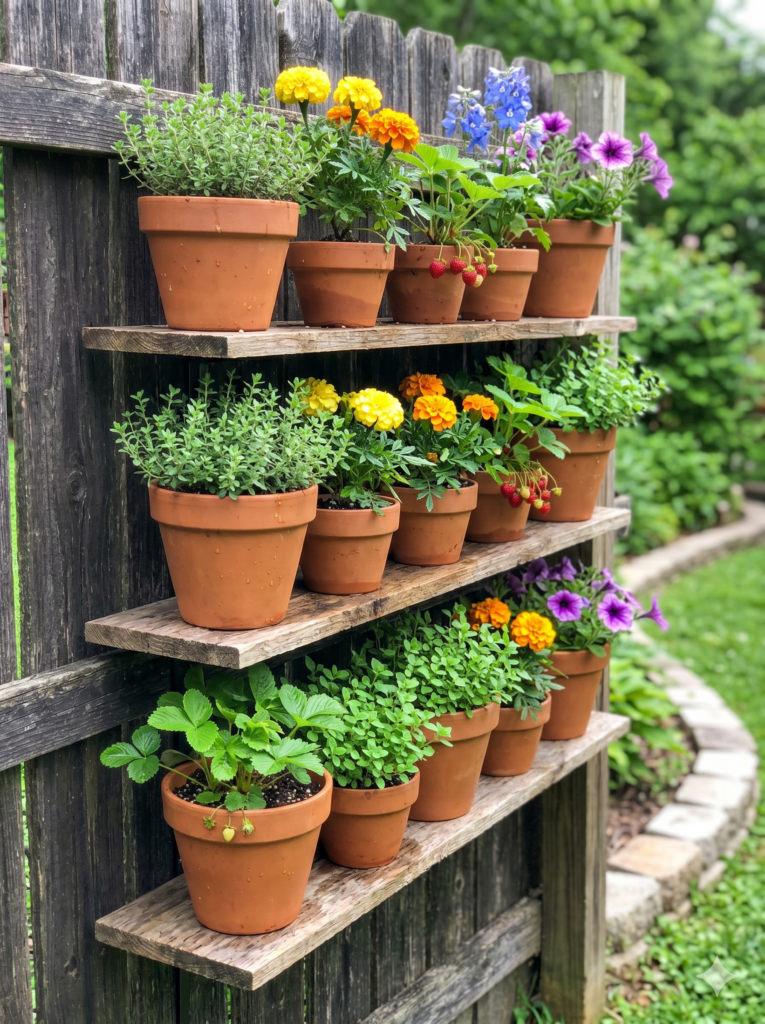
Mount simple cedar or pressure-treated wood shelves (1×6 boards, 12 to 24 inches wide) to fence posts using heavy-duty brackets. Place standard pots or window boxes on the shelves, allowing easy seasonal rotation.
- Cost: $15 to $40 in lumber plus $10 to $20 in hardware per shelf
- Advantage: The shelves themselves hold no soil — the pots do. Fully flexible and seasonally adaptable.
- Best for: Herb gardens, succulent displays, rotating seasonal annuals
5. Window Box Rail Planters
Standard window boxes designed for fence rail mounting (available at Home Depot and Lowe’s in wood, vinyl, and resin for $15 to $60) are the most reliable, weatherproof option for a clean, tidy fence garden.
- Ensure boxes have drainage holes. If buying resin boxes, drill additional 1/4-inch holes if not pre-drilled.
- Best plants: Geraniums, petunias, lavender, herbs, and seasonal combinations
- Mounting: Use stainless steel screws into fence rails or posts. Avoid mounting to individual fence boards.
6. Stacked Wooden Crates
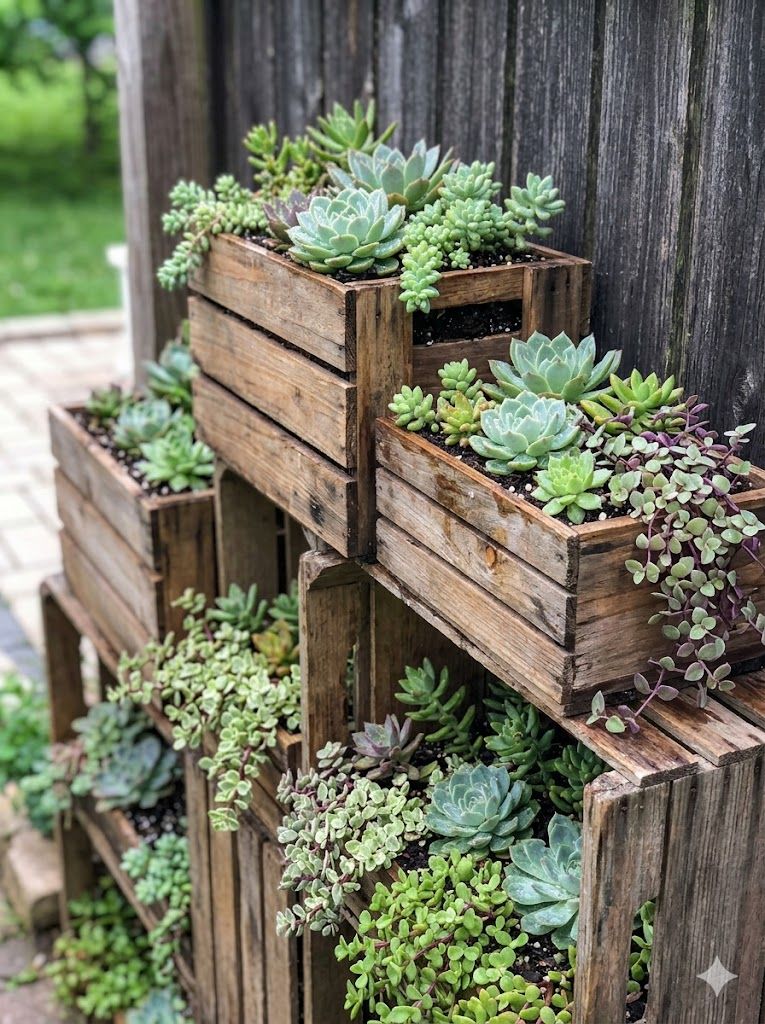
Vintage wooden crates (wine crates, produce crates) stacked in a staggered pyramid against the fence create a rustic vertical garden. Secure crates together and to the fence with zip ties or screws.
- Line with burlap or landscape fabric before filling with soil
- Best plants: Succulents, small herbs, trailing annuals
- Drainage: Crates provide excellent drainage naturally through gaps in the wood
7. Hanging Basket Hooks
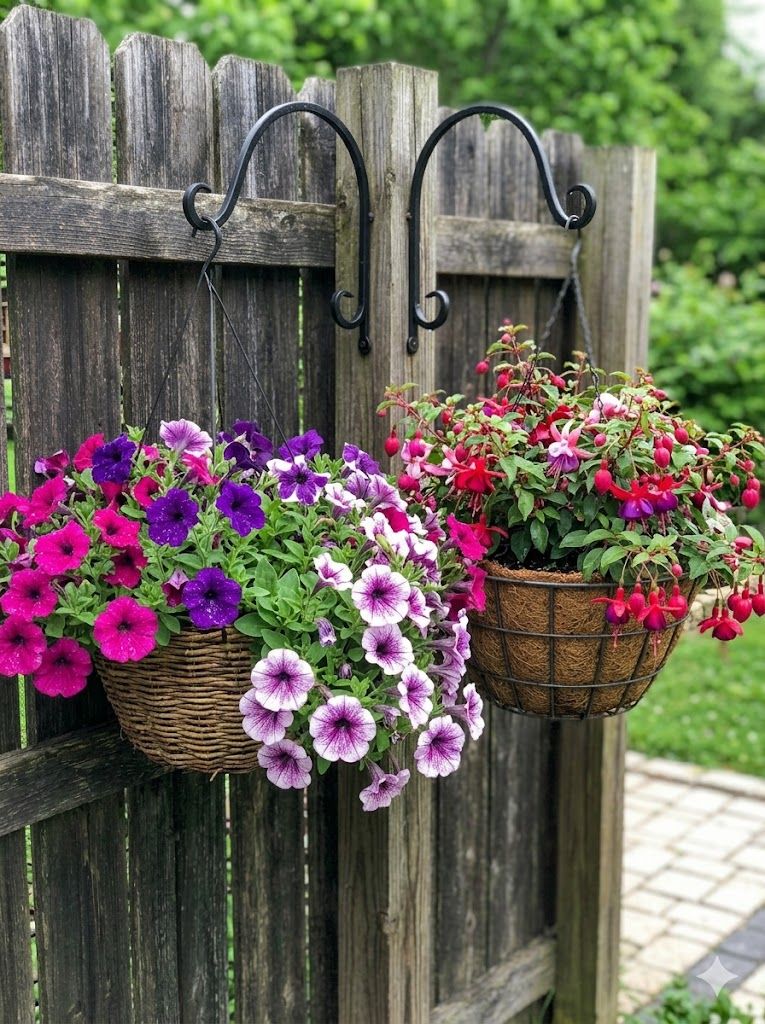
Heavy-duty wrought iron or galvanized shepherd’s hooks screwed directly into fence posts allow standard hanging baskets to be displayed at any height. The simplest and most flexible approach.
- Hardware: Use 3.5-inch lag bolts into fence posts for baskets weighing up to 20 lbs
- Best plants: Wave petunias, trailing fuchsia, bacopa, and verbena for full cascading displays
8. Succulent Living Wall Panels
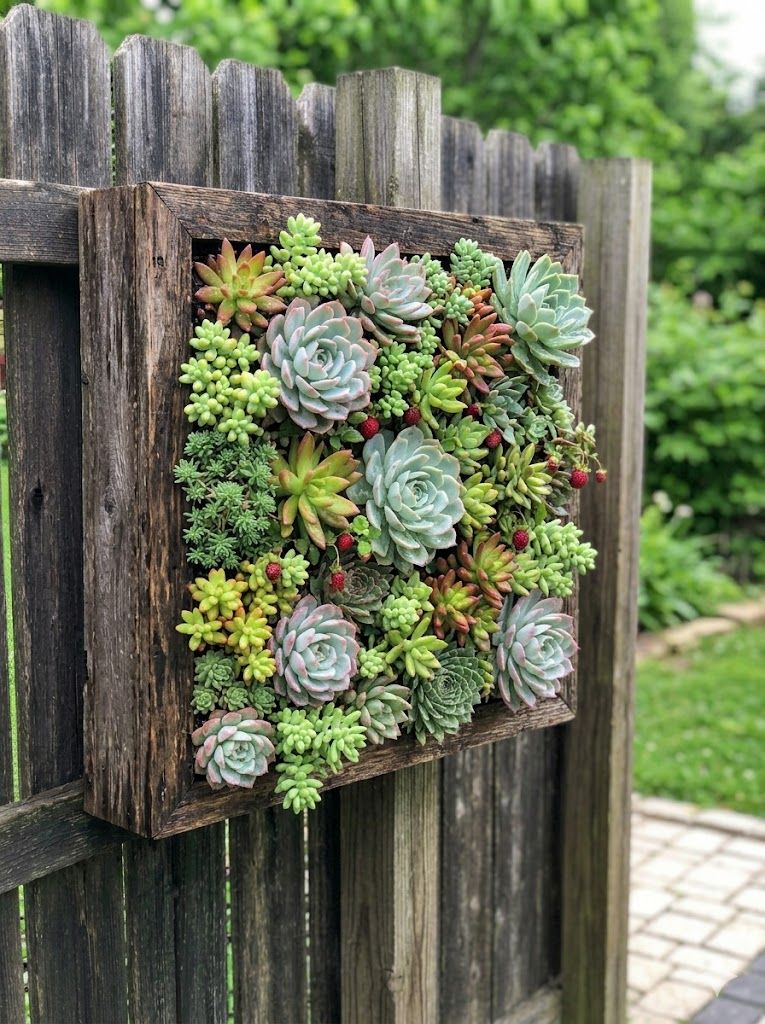
Shallow lattice-backed picture frame planters filled with succulent potting mix and planted with a variety of echeveria, sedum, and sempervivum create a living wall art installation.
- The frames lay flat for 4 to 6 weeks while succulents root before being hung vertically
- Best in: Full sun to partial shade locations
- Maintenance: Mist every 2 to 3 weeks rather than soaking
9. Recycled Container Gallery Wall

Collect matching containers (same color galvanized buckets, same size terracotta pots, or mason jars in wire holders) and mount in a grid arrangement. The repetition creates a designed look from simple materials.
- Mount with: U-shaped pipe straps (galvanized buckets), wire holders with screws (mason jars)
- Paint theme: A single color unifying all containers creates a designer aesthetic regardless of container type
10. Privacy Trellis Planter
Build a narrow raised planter box (12 inches wide, 18 inches tall) that sits at the base of the fence and is fitted with a trellis panel extending 4 to 5 feet above the top of the box. Plant fast-growing climbers (clematis, climbing roses, sweet peas, jasmine) to cover the trellis and dramatically increase privacy.
- Best climbers for privacy: Clematis viticella types (non-invasive, dense coverage), climbing roses, black-eyed Susan vine
- Timeline: Most climbing plants reach full trellis coverage in 2 to 3 seasons
11. Lattice Panel Planter Combo
A long, horizontal planter box (available in cedar for $40 to $80) fitted with a lattice panel rising from the back provides both planting space and a climbing surface in a single, unified structure. Plant trailing flowers in the box and climbing plants at the base of the lattice.
12. Wave Pattern Tiered Planter
A layered, wave-like arrangement of window boxes at different heights (staggered up the fence face) creates depth and movement. Use boxes in the same color at three heights: 1 foot, 2 feet, and 3 feet above the fence top. The stepped heights create a cascading effect as trailing plants grow down.
13. Removable Seasonal Display Planters
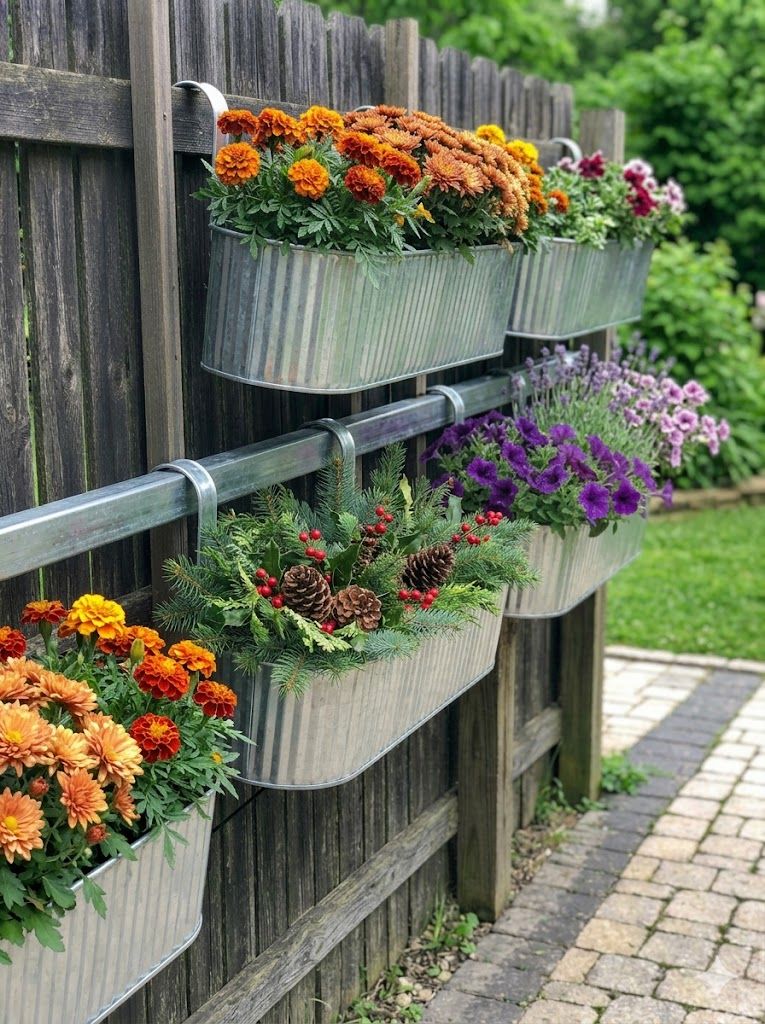
Mount a simple rail system (lengths of pressure-treated 2×4 with 3-inch gap) horizontally across the fence. Wooden or resin planters with hooks that slip over the rail can be installed and removed without tools. This is the most flexible system for those who want different displays in different seasons.
14. Corrugated Metal Trough Planters
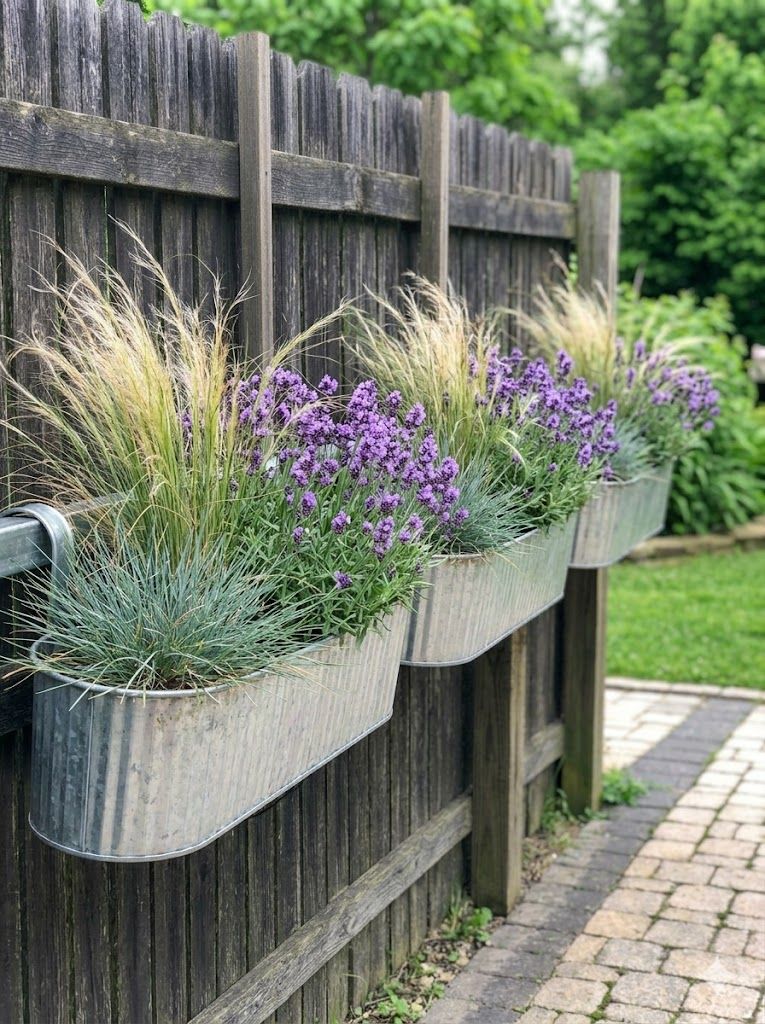
Corrugated metal stock troughs (galvanized metal cattle troughs in 2 to 4-foot sections) mounted horizontally to fence posts at two heights create an industrial-farmhouse aesthetic that is extremely popular in modern garden design.
- Mount: Use 3/8-inch through-bolts directly into fence posts
- Drainage: Drill 1/2-inch holes every 8 inches along the bottom
- Best plants: Ornamental grasses, succulents, lavender, and dwarf shrubs
15. Bamboo Tube Planters
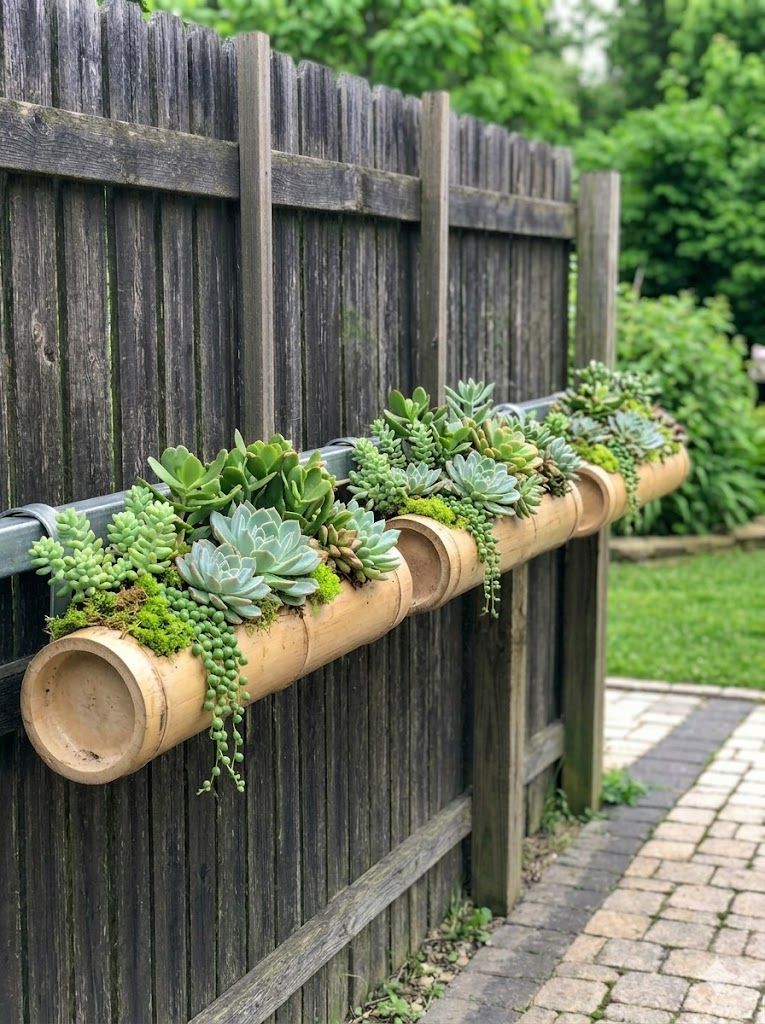
Large-diameter bamboo sections (3 to 4 inches diameter, available at garden centers and online) capped at the bottom and open at the top make beautiful natural containers for succulent or herb displays. Mount in a staggered arrangement directly to fence boards with bamboo-specific mounting clips.
- Drainage: Drill from below through the bamboo cap
- Best plants: Single succulent rosettes, small herbs, or a cluster of moss
|
✅ Tip For all fence planters, use lightweight potting mix rather than heavy garden soil. A mix of potting soil, perlite, and coco coir (1:1:1 ratio) retains moisture without the excessive weight of standard soil. This can reduce container weight by 30 to 40% compared to straight potting soil. Water fence planters from above and make sure drainage directs water away from the fence material. Standing water against wood fence boards accelerates rot. Position drip holes to discharge water downward and slightly away from the fence face. |
Frequently Asked Questions
Will fence planters damage my fence?
Planters mounted correctly to structural posts and rails rather than individual boards cause minimal damage. The key risks are moisture (wet containers against wood cause rot) and weight (overloaded individual boards can split). Use stainless steel screws rather than standard zinc-plated ones, mount to posts and rails rather than pickets, and ensure all containers drain away from the fence surface.
What are the easiest herbs to grow in fence planters?
Basil, mint, thyme, chives, and oregano are all ideal. Mint is particularly well-suited to container growing because its aggressive spreading habit (which makes it invasive in garden beds) is naturally contained by the planter. Grow different mint varieties in adjacent fence containers for a living mint collection.
The Bottom Line
A privacy fence is not just a boundary. It is 40 to 80 square feet of vertical growing surface that most homeowners leave completely unused.
Start with gutter planters and fabric pockets for a minimal investment and immediate result. Build toward a more permanent tiered system as you determine which plants and arrangements work best for your fence orientation and sunlight conditions.
