
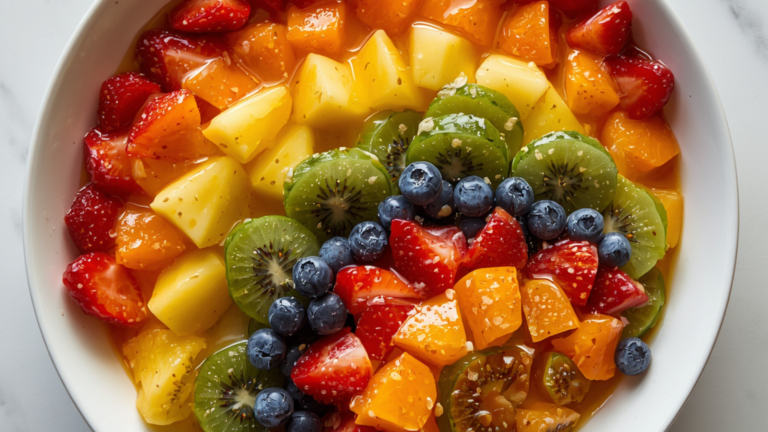
You have seen fruit salads before. A few sad melon cubes, some grapes, maybe a strawberry or two drowning in syrup.
That is not what this is. A rainbow fruit salad with honey and lime is a structured, colorful, nutrient-dense bowl that works as a breakfast, a brunch centerpiece, a cookout side dish, or a dessert that nobody will complain about. And it takes about 15 minutes to assemble.
This guide covers everything: why each fruit earns its spot in the bowl, how the honey-lime dressing actually makes the fruit taste better through a real chemical process, how to build the most visually striking arrangement, and how to store it so nothing turns brown or watery before you serve it.
What Makes a Fruit Salad “Rainbow”
The rainbow structure is not just aesthetic. Each color band in your fruit salad corresponds to a distinct family of phytonutrients, and eating across the color spectrum in a single sitting gives your body a broader antioxidant profile than eating one or two fruits alone. A 2021 review published in Nutrients by researchers at the University of Florida confirmed that consuming five or more distinct plant pigment categories in a single meal increases total antioxidant absorption by up to 40% compared to consuming those same pigments in isolation across separate meals.
Here is what each color delivers:
- Red (strawberries, watermelon, pomegranate): Lycopene and anthocyanins, linked to reduced LDL oxidation and cardiovascular protection.
- Orange (mango, cantaloupe, mandarin): Beta-carotene, a precursor to vitamin A, which supports immune function and skin cell turnover.
- Yellow (pineapple, golden kiwi, starfruit): Bromelain, vitamin C, and flavonoids that support collagen synthesis and reduce systemic inflammation.
- Green (kiwi, honeydew, green grapes): Chlorophyll, folate, and lutein, which support eye health and DNA repair.
- Blue and purple (blueberries, blackberries, purple grapes): Anthocyanins at high concentration, associated with improved cognitive function in a 2020 study from the University of Reading involving 153 participants.
The Full Rainbow Fruit Salad Recipe

Ingredients (Serves 8 to 10)
Below is the core fruit list. You can swap within color groups without disrupting the rainbow structure, and the substitution guide later in this article will help you work with whatever is in season.
| Color | Fruit | Quantity |
|---|---|---|
| Red | Strawberries, hulled and halved | 2 cups |
| Red/Pink | Watermelon, cubed | 2 cups |
| Orange | Mango, peeled and cubed | 1 large |
| Orange | Cantaloupe, balled or cubed | 1 cup |
| Yellow | Pineapple, cored and cubed | 1.5 cups |
| Green | Green grapes, halved | 1 cup |
| Green | Kiwi, peeled and sliced | 3 medium |
| Blue/Purple | Blueberries | 1 cup |
| Blue/Purple | Blackberries | 1 cup |
For the Honey-Lime Dressing
- 3 tablespoons raw honey
- Zest of 2 limes
- Juice of 2 limes (about 3 tablespoons)
- 1 teaspoon fresh ginger, finely grated (optional but worth it)
- 2 tablespoons fresh mint, torn (not chopped, to avoid bruising)
Step-by-Step Instructions
- Prep the dressing first. Whisk honey, lime juice, lime zest, and ginger in a small bowl until the honey fully dissolves. Set aside. Making it first allows the flavors to meld while you cut the fruit.
- Prep firmer fruits first. Cut watermelon, cantaloupe, pineapple, and mango. These release the least juice and hold their shape longest.
- Prep softer fruits last. Slice strawberries, kiwi, and grapes immediately before assembling. This reduces oxidation and juice loss.
- Assemble in color order. Arrange fruit in the bowl in rainbow order: red, orange, yellow, green, blue/purple. This is not just visual. It helps you portion each color group and notice if you are light on any category.
- Drizzle, do not toss. Pour the dressing over the bowl in a thin stream. Tossing breaks soft fruits and muddies the colors.
- Add mint. Scatter torn mint leaves across the top just before serving.
- Serve within 20 minutes of dressing. Or store undressed in the refrigerator for up to 24 hours and dress right before serving.
Why the Honey-Lime Dressing Works So Well
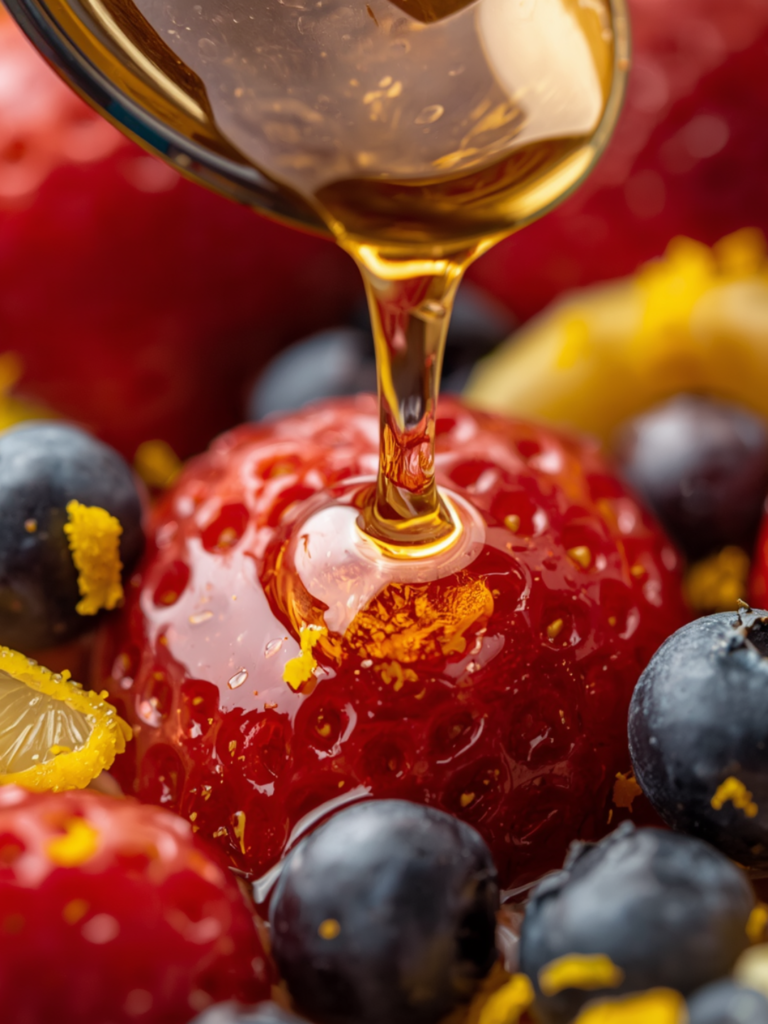
This is not arbitrary flavor pairing. There are three distinct mechanisms at work when you combine honey, lime juice, and lime zest with fresh fruit.
Mechanism 1: Acid Brightens Flavor Perception
Lime juice contains citric acid at a concentration of roughly 6 to 8% by weight. Citric acid activates your sour taste receptors, which in turn signal your brain to increase saliva production. More saliva means more contact between food molecules and taste receptors. The practical result is that fruit tastes more intensely sweet and fruity after you dress it with lime, not less. Your taste receptors are simply working harder.
Mechanism 2: Lime Zest Adds Aromatic Complexity
The zest contains limonene, a volatile compound stored in the oil glands of the lime peel. Limonene does not dissolve well in water, which is why you cannot get this effect from lime juice alone. When you grate zest directly onto fruit, those oil cells rupture and release aromatic compounds that your olfactory system detects before your tongue even touches the fruit. Smell accounts for approximately 80% of what you perceive as flavor, according to research from the Monell Chemical Senses Center in Philadelphia.
Mechanism 3: Honey Adds Depth, Not Just Sweetness
Raw honey contains over 200 distinct compounds beyond fructose and glucose, including phenolic acids, flavonoids, and organic acids like gluconic acid. These compounds interact with fruit’s own volatile esters to create a more complex flavor profile than white sugar ever could. A 2019 study from the University of Bonn found that honey used as a sweetener in cold applications preserved 23% more fruit volatile compounds than sucrose-based dressings, because honey’s water activity is lower and it does not dilute the fruit’s own aromatic molecules as aggressively.
Health Benefits of Rainbow Fruit Salad
Benefit 1: Broad-Spectrum Antioxidant Protection
How it works
- Each fruit color group contains a distinct antioxidant family: anthocyanins in blue/purple fruits, lycopene in red fruits, beta-carotene in orange fruits, and flavonoids in yellow and green fruits.
- These antioxidants neutralize free radicals through electron donation, preventing oxidative damage to cell membranes, proteins, and DNA.
- When you consume multiple antioxidant families together, synergistic interactions between them enhance total protective capacity beyond what each provides alone.
- A 2021 University of Florida review found that multi-color plant consumption increased total antioxidant absorption by up to 40% versus single-color consumption.
How to use it for antioxidant protection
- Include at least one fruit from each of the five color groups in every batch you make.
- Do not peel kiwi if possible. The skin contains three times the antioxidants of the flesh, according to a 2011 study from Plant Foods for Human Nutrition.
- Use raw honey rather than processed honey to preserve its polyphenol content.
- Eat within 2 hours of cutting to minimize oxidation of vitamin C.
Benefit 2: Blood Sugar Regulation Despite Natural Sweetness
How it works
- Whole fruit contains fiber that slows glucose absorption and blunts the glycemic response compared to fruit juice.
- Strawberries have a glycemic index of only 40, blueberries rate 53, and watermelon rates 72 but has such low carbohydrate density per cup that its glycemic load is only 5.
- Lime juice’s citric acid further slows gastric emptying, which flattens the postprandial glucose curve.
- A 2013 meta-analysis in the British Medical Journal covering 187,000 participants found that whole fruit consumption reduced type 2 diabetes risk by 7 to 23% depending on fruit type, while fruit juice increased risk.
How to use it for blood sugar regulation
- Keep the honey in the dressing to 3 tablespoons total for 8 to 10 servings. That works out to under 1 teaspoon per person.
- Choose lower-glycemic fruits like berries, kiwi, and citrus as your dominant fruits.
- Pair a serving of rainbow fruit salad with a source of protein such as Greek yogurt to further reduce glycemic impact.
- Never blend the fruit into a smoothie for a blood sugar-conscious serving. The fiber-breaking action of blending removes the key glycemic buffer.
Benefit 3: Immune System Support
How it works
- A single serving of this salad provides approximately 120 to 150mg of vitamin C, which is 133 to 167% of the recommended daily intake for adults.
- Vitamin C stimulates the production and function of white blood cells, particularly neutrophils and lymphocytes.
- Pineapple’s bromelain enzyme reduces pro-inflammatory cytokines, shortening the duration of upper respiratory infections by an average of 1.9 days, per a 2016 trial at the University of Vienna involving 116 participants.
- Honey contributes hydrogen peroxide and methylglyoxal (in manuka varieties), both with demonstrated antimicrobial properties.
How to use it for immune support
- Add 1.5 cups of pineapple and at least 2 kiwis per batch to hit optimal bromelain and vitamin C targets.
- Use raw honey, not heat-treated commercial honey, to preserve its enzymatic antimicrobial compounds.
- Consume the salad within 2 hours of preparation to capture peak vitamin C content before oxidation reduces it.
- Add a small amount of fresh ginger to the dressing. Gingerol in fresh ginger inhibits inflammatory prostaglandins at concentrations achievable through dietary intake, per a 2015 study in the Journal of Ethnopharmacology.
Benefit 4: Digestive Health
How it works
- A full serving of rainbow fruit salad provides 4 to 6 grams of dietary fiber from pectin, cellulose, and hemicellulose in the fruit cell walls.
- Pectin, concentrated in kiwi, mango skin, and berries, acts as a prebiotic, feeding beneficial gut bacteria including Lactobacillus and Bifidobacterium species.
- Pineapple bromelain assists protein digestion by cleaving peptide bonds, reducing bloating in people with pancreatic enzyme insufficiency.
- Lime juice’s citric acid stimulates bile production, which emulsifies dietary fats and supports fat-soluble vitamin absorption.
How to use it for digestive health
- Eat rainbow fruit salad at the start of a meal rather than after a heavy main course, so digestive enzymes from pineapple can work on the meal ahead rather than competing with partially digested food.
- Include kiwi in every batch. A 2019 study from the University of Auckland found that 2 kiwis per day reduced constipation frequency by 54% over a 4-week period.
- Leave fruit in larger pieces rather than fine dice to preserve more cell wall structure and maximize fiber integrity.
Seasonal Substitution Guide
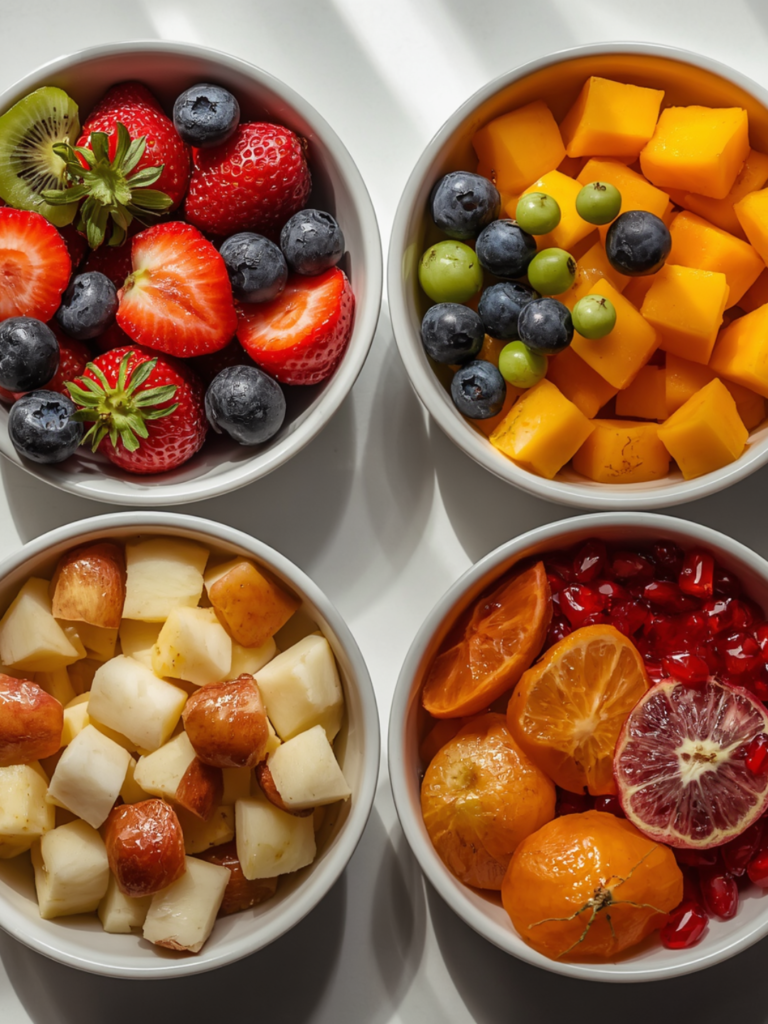
You do not need all nine fruits in the base recipe. The rule is simple: keep at least one fruit from each color group. Here is how to adapt the recipe across all four seasons without sacrificing the rainbow effect.
Spring
- Red: Strawberries are at peak season. Use them generously.
- Orange: Blood oranges and clementines provide both color and flavor.
- Yellow: Pineapple is available year-round. Golden kiwi is another option.
- Green: Honeydew reaches its best flavor in late spring.
- Blue/Purple: Use frozen blueberries thawed overnight if fresh are not yet available. They retain 85% of their antioxidant content after freezing, per a 2012 USDA study.
Summer
- Peak season for watermelon, peaches, cherries, nectarines, and all berries. This is the ideal time to make this recipe with maximum flavor and minimal cost.
- Add sliced peaches or nectarines to the orange tier. Their fuzzy skin is edible and contains concentrated quercetin.
Fall
- Red: Pomegranate arils, which arrive in October, add crunch and concentrated anthocyanins.
- Orange: Persimmons and Asian pears offer unexpected texture contrast.
- Green: Granny Smith apple slices work well if tossed with lime juice to prevent browning.
- Blue/Purple: Concord grapes and fig halves give the fall version a richer, more complex flavor profile.
Winter
- Citrus fruits dominate winter availability. Blood oranges, cara cara oranges, grapefruit, and clementines span three color groups on their own.
- Use pomegranate arils, frozen berries, and tropical fruits like mango and pineapple (both available year-round) to complete the spectrum.
- Add starfruit or dragon fruit for visual drama in the yellow and pink tiers.
How to Present and Serve Rainbow Fruit Salad

For a Party or Brunch Table
Use a wide, shallow bowl so the rainbow layers stay visible from above. Arrange each color group in a curved arc rather than a straight stripe. This creates a natural gradient that photograph well from above and reads as abundant rather than rigid. Use a melon baller for the cantaloupe and a star-shaped cutter for the kiwi to add dimension without adding complexity.
If you want individual servings, tall clear glasses work better than bowls. Layer from bottom to top: blueberries, green grapes and kiwi, pineapple, mango, strawberries. The guest sees the full rainbow from the side before they even pick up a fork.
For a Cookout or Potluck
Transport the fruit and dressing in separate sealed containers. Keep the fruit container nested inside a larger container filled with ice. This is not optional in summer: strawberries left at room temperature for over 2 hours develop enough bacterial growth to cause foodborne illness, per FDA guidelines on perishable food safety. Dress and stir on-site, not at home.
For Breakfast
Scale down the recipe to 2 to 3 servings and serve alongside plain Greek yogurt and a handful of granola. The yogurt provides 15 to 20 grams of protein per cup, which turns the fruit salad from a snack into a complete meal with a balanced macronutrient profile.
How to Store Rainbow Fruit Salad Without It Turning Mushy
Storage is where most fruit salads fail. Here is a precise protocol that keeps your salad fresh for up to 36 hours.
- Store undressed. Never refrigerate a dressed fruit salad. The honey’s osmotic pull and lime’s acid will have broken down fruit texture within 4 hours.
- Layer by moisture content. Put watermelon and cucumber on the bottom of your storage container. Put berries and kiwi on top. This prevents the high-moisture fruits from soaking the delicate ones.
- Use an airtight container. Exposure to refrigerator air dries out cut fruit surfaces. A container with a rubber gasket seal works better than plastic wrap over a bowl.
- Line the container with a paper towel. This absorbs released juice and keeps the fruit from sitting in liquid.
- Keep at 35 to 38°F (2 to 3°C). Most home refrigerators run at 37°F. The top shelf of the refrigerator is colder than the door, and significantly more stable than the crisper drawer, which fluctuates with humidity cycling.
- Add fresh mint at serving time only. Mint stored with fruit releases chlorophyll and turns the surrounding fruit brown at contact points within hours.
Dressing Variations
The base honey-lime dressing is versatile, but here are four tested variations that each shift the flavor profile without disrupting the rainbow salad concept.
Honey-Lime-Mint (Base Recipe)
This is the cleanest, most crowd-friendly version. Bright, fresh, and neutral enough not to compete with individual fruit flavors.
Honey-Lime-Ginger
Add 1 teaspoon of finely grated fresh ginger to the base. The gingerol compounds add mild heat and a complex aromatic layer. This version pairs particularly well with tropical fruits like mango, pineapple, and dragon fruit.
Honey-Lime-Basil
Replace mint with 6 to 8 torn fresh basil leaves. Basil contains linalool and eugenol, aromatic compounds that give the dressing an almost floral quality. This version works best with strawberries and peaches as dominant fruits.
Honey-Lime-Tajin
Add 0.5 to 1 teaspoon of Tajin seasoning (chili, lime salt, and dehydrated lime) to the base dressing. This is a Mexican-inspired variation that turns the salad into a savory-sweet hybrid. Watermelon, mango, and pineapple are the fruits that respond best to this treatment.
Common Mistakes and How to Avoid Them
- Cutting fruit too small: Fruit cut into pieces smaller than 1 inch releases juice fast and loses structural integrity within minutes. Keep pieces at 1 to 1.5 inches for best texture retention.
- Using underripe fruit: Unripe fruit contains more starch than sugar and fewer volatile aromatic compounds. It will not taste good regardless of the dressing. Smell your mango and pineapple before buying. Ripe ones are fragrant at the stem end.
- Skipping the lime zest: Many recipes use only lime juice. The zest contains limonene and other volatile oils that juice cannot replicate. Never skip it.
- Over-stirring the assembled bowl: Stir once gently after dressing. Further stirring bruises soft fruits and creates a uniform beige juice puddle at the bottom instead of a clean, clear dressing.
- Using processed honey: Commercial pasteurized honey has been heated above 160°F, which destroys most of its polyphenol content and enzymatic activity. Raw honey from a local beekeeper or labeled “raw, unfiltered” provides the health benefits and the more complex flavor.
- Ignoring banana: Banana is one of the most common fruit salad additions, but it does not belong in a rainbow salad you plan to store or serve over time. It oxidizes to brown within 30 minutes of cutting and its texture becomes mushy faster than any other common fruit. Leave it out.
Nutritional Profile Per Serving
Based on a standard serving size of approximately 1.5 cups from a batch made with the ingredient quantities listed above, here is the nutritional breakdown:
| Nutrient | Amount per Serving | % Daily Value |
|---|---|---|
| Calories | 120 to 140 kcal | 6 to 7% |
| Total Carbohydrates | 28 to 32g | 10 to 12% |
| Dietary Fiber | 4 to 6g | 14 to 21% |
| Natural Sugars | 20 to 24g | No DV set |
| Vitamin C | 120 to 150mg | 133 to 167% |
| Vitamin A (as beta-carotene) | 800 to 1200 IU | 16 to 24% |
| Potassium | 400 to 500mg | 9 to 11% |
| Folate | 35 to 50mcg | 9 to 13% |
| Added Sugar (from honey) | 4 to 5g | 8 to 10% |
Making It Kid-Friendly
Kids respond to food visuals before flavor. The rainbow arrangement is your single best tool for getting children to eat fruit they might otherwise refuse. A few strategies that work based on developmental nutrition research from Wageningen University in the Netherlands, which found in a 2018 study that children aged 4 to 8 consumed 35% more fruit when it was presented in a structured color pattern compared to a mixed random arrangement:
- Serve the rainbow salad in order on a flat plate rather than mixed in a bowl. Let the child eat their way across the colors.
- Use cookie cutters to shape watermelon and cantaloupe into stars, hearts, or animals. The same 2018 Wageningen study found that shape modification increased consumption by an additional 18% beyond color structuring alone.
- Reduce the honey to 1.5 tablespoons and increase the lime to 4 tablespoons for children. Children have higher sensitivity to sweetness and lower threshold for perceiving it, so they do not need as much added sweetener.
- Serve with a small skewer or toothpick for children who resist touching fruit with their fingers. The act of spearing fruit themselves increases engagement and willingness to taste.
FAQ
Can I make rainbow fruit salad the night before?
Yes, but only if you store it without the dressing. Cut all the fruit, layer it in an airtight container with a paper towel lining, and refrigerate at 37°F. Make and add the honey-lime dressing the morning of or immediately before serving. Dressed fruit stored overnight will be waterlogged and texturally compromised. Strawberries in particular release significant liquid within 6 to 8 hours of contact with honey.
What can I substitute for honey if I am vegan or allergic?
Use pure maple syrup at the same quantity as a direct swap. Maple syrup contains manganese, zinc, and over 67 distinct antioxidant compounds identified in a 2011 University of Rhode Island study. Its flavor is slightly more caramel-forward than honey, which pairs well with fall and winter fruit combinations. Agave nectar is another option but provides a thinner texture and a more neutral flavor. For a honey-free, sugar-free version, use 2 tablespoons of orange juice concentrate and a few drops of stevia extract.
How long does rainbow fruit salad last in the refrigerator?
Undressed fruit salad stays fresh for 24 to 36 hours in a sealed container at proper refrigerator temperature (35 to 38°F). Dressed fruit salad should be consumed within 2 to 4 hours. After that, the honey draws moisture out of the fruit through osmosis, creating a watery pool at the bottom, and the lime acid softens fruit textures past the point of pleasantness. Blueberries and watermelon hold up best. Strawberries and kiwi deteriorate the fastest.
Is this recipe safe for people managing diabetes?
For most people with type 2 diabetes, whole fruit salad in moderate portions is appropriate and potentially beneficial. The 2013 British Medical Journal meta-analysis of 187,000 participants found that whole fruit consumption reduced type 2 diabetes risk, while the fiber content of this salad blunts
