
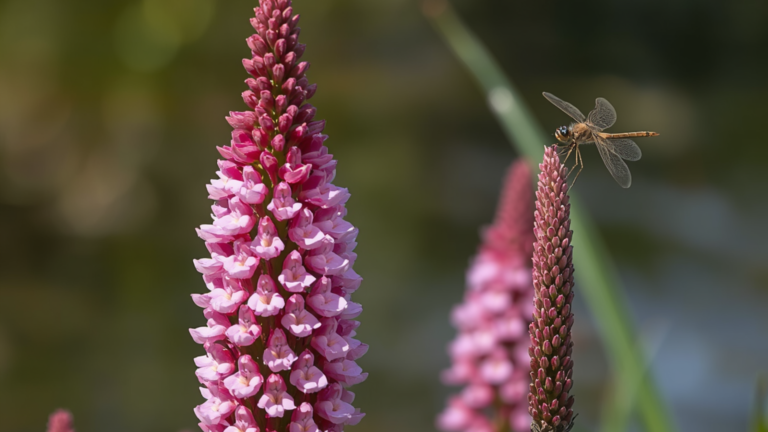
A single dragonfly can eat between 30 and 100 mosquitoes per day, and some researchers at Harvard’s Museum of Comparative Zoology put their hunting success rate at a staggering 95%, making them the most accurate predators on the planet.
Not lions. Not sharks. Dragonflies. If you want fewer mosquitoes in your yard without spraying chemicals that also wipe out bees, butterflies, and beneficial beetles, attracting dragonflies is one of the smartest moves you can make.
The good news? You do not need a degree in entomology or a massive property. You need the right plants, a little water, and an understanding of what dragonflies are actually looking for. This guide covers all of it.
Why Dragonflies Are the Best Natural Mosquito Control You Are Not Using
Dragonflies (order Odonata) have existed for over 300 million years, and their hunting biology has been refined to near perfection. A 2012 study published in Science by researchers at the Howard Hughes Medical Institute found that dragonflies intercept prey rather than chase it, calculating the future position of a moving target and flying directly to that point. No other known predator does this with as much consistency.
They target mosquitoes at every stage of life. Adult dragonflies catch flying mosquitoes mid-air. Their larvae, which live underwater for one to three years before emerging, consume mosquito larvae and pupae in standing water. According to the University of Florida’s Entomology and Nematology Department, a single dragonfly larva can consume dozens of mosquito larvae per week during its aquatic phase.
Chemical mosquito treatments, by contrast, kill indiscriminately. Pyrethroids, the active ingredient in most yard sprays, are highly toxic to aquatic insects, honeybees, and monarch butterflies. A 2019 report from the American Bird Conservancy linked widespread pyrethroid use to population declines in insect-eating birds. Dragonflies offer targeted, zero-collateral-damage control.
What Dragonflies Actually Need in a Yard
Before you plant anything, understand what dragonflies need to stay in your yard. They are not random visitors. They choose territories based on three non-negotiable criteria: water for breeding, sun for warming their bodies (they are ectotherms and need external heat to function), and vertical perching structures for hunting and resting.
Plants serve all three functions when you select them correctly. The right plants create microhabitats near water, provide the vertical stems dragonflies perch on, and attract the secondary insects that round out their diet beyond mosquitoes.
The Best Plants to Attract Dragonflies to Your Yard
1. Swamp Milkweed (Asclepias incarnata)
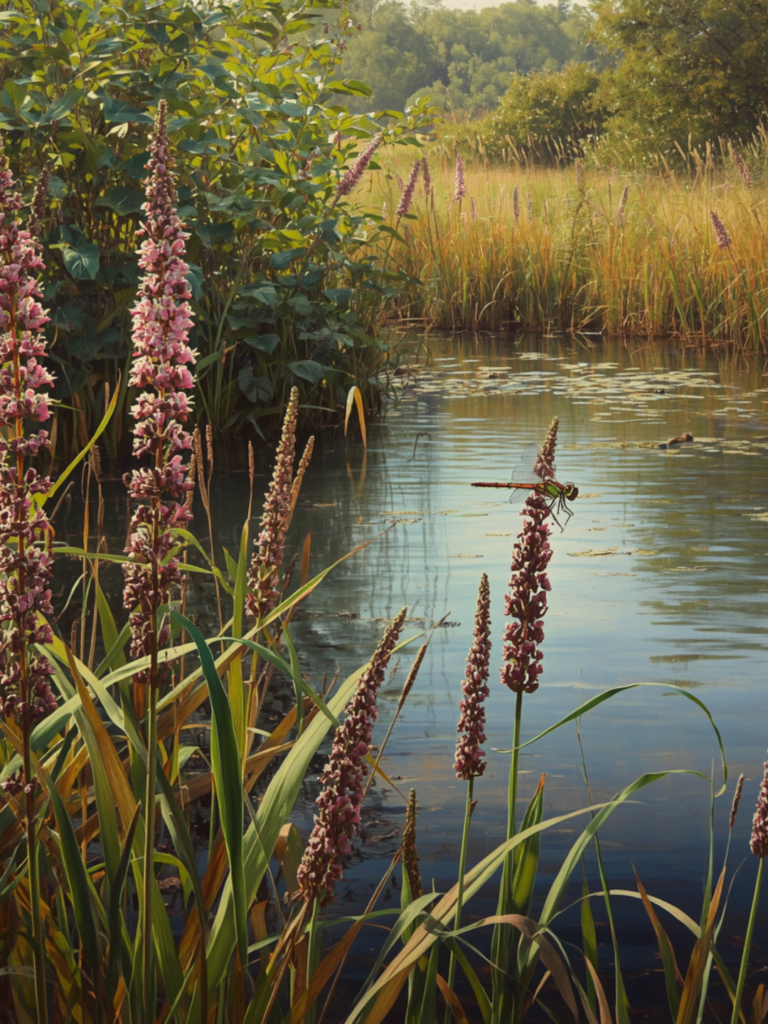
Swamp milkweed is one of the top dragonfly plants you can grow in North America. It thrives in moist to wet soil, making it ideal for planting at the edges of a pond or water feature. Its flat-topped pink flower clusters bloom from June through August and attract the small flying insects that supplement a dragonfly’s diet. The tall, stiff stems give dragonflies a high perch from which to scan for prey.
How it works
- Swamp milkweed’s hollow stems and leaf axils collect small amounts of moisture, attracting midges and gnats that dragonflies eat.
- The upright 3-5 foot stems act as elevated perches, letting dragonflies survey a wide hunting radius.
- Its proximity to wet soil signals a suitable breeding habitat to female dragonflies scouting territories.
How to use it for attracting dragonflies
- Plant swamp milkweed within 10 feet of a water source in full sun.
- Space plants 18-24 inches apart to allow air circulation while maintaining a dense visual barrier dragonflies can orient toward.
- Leave stems standing through winter: they provide overwintering habitat for other beneficial insects that dragonflies eat in spring.
2. Blue Flag Iris (Iris versicolor)
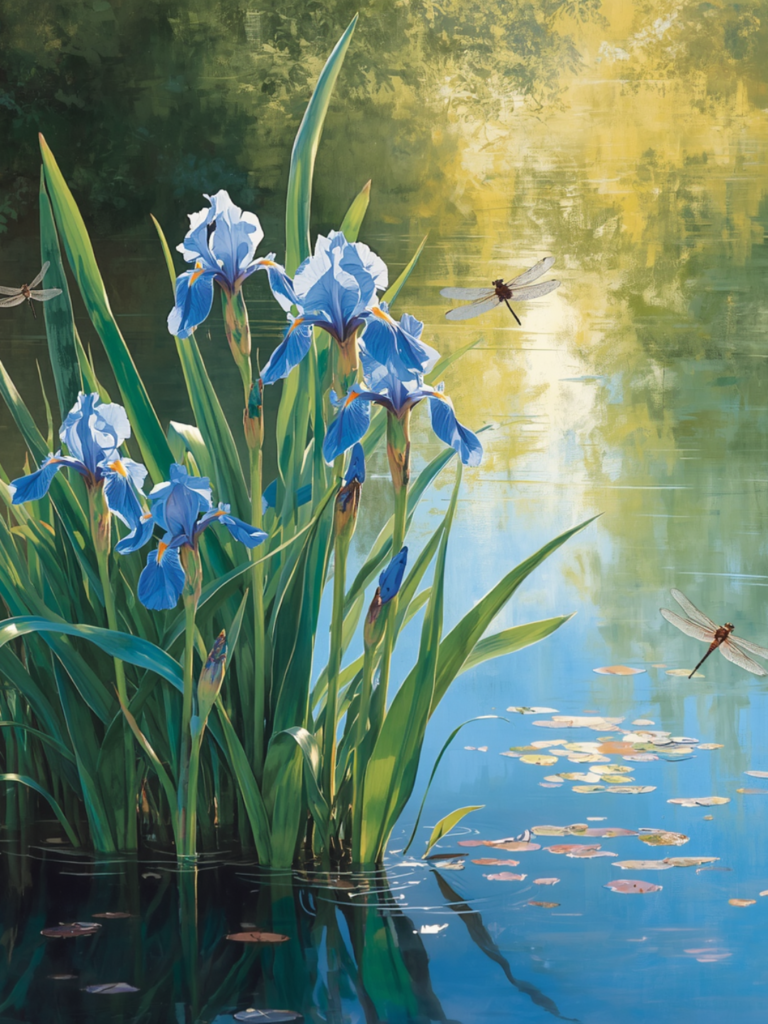
Blue flag iris is a native North American perennial that grows in shallow water and at water’s edge. The Missouri Botanical Garden lists it as one of the most valuable marginal aquatic plants for wildlife because it provides both structure and shelter. Its sword-shaped leaves create the vertical architecture dragonflies need to perch and rest between hunting flights.
How it works
- The stiff, upright leaves give dragonflies multiple perching angles at varying heights.
- Iris roots stabilize pond edges, reducing erosion that muddies the water and drives dragonflies away.
- The dense foliage near water provides shelter for dragonfly larvae emerging from the water as they complete metamorphosis.
How to use it for attracting dragonflies
- Plant in 0-6 inches of standing water or in consistently moist soil at a pond margin.
- Choose a south or east-facing bank so the plants receive morning sun, which warms the immediate area and encourages dragonfly activity from early morning onward.
- Group three or more plants together: dragonflies respond to visual mass, not isolated stems.
3. Pickerelweed (Pontederia cordata)
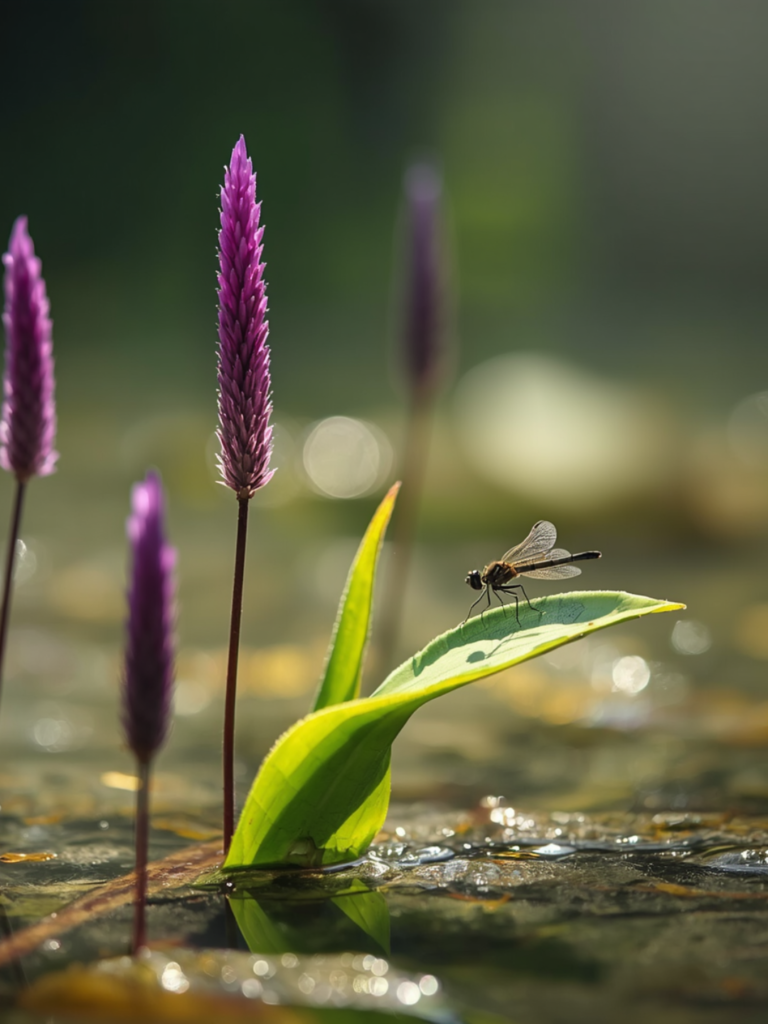
Pickerelweed is a native aquatic perennial that produces purple flower spikes above heart-shaped leaves. It grows in 1-5 inches of water and creates exactly the kind of marginal aquatic habitat that dragonflies and damselflies prefer for egg-laying. Research from the North American Butterfly Association confirms that ponds with native emergent vegetation like pickerelweed support significantly higher odonata diversity than open-water ponds with no marginal planting.
How it works
- Female dragonflies lay eggs on pickerelweed stems at or just below the waterline, making it a direct breeding support plant.
- The submerged portions of the stems harbor the aquatic invertebrates that dragonfly larvae feed on during their underwater phase.
- Flower spikes attract small pollinators that then become prey for adult dragonflies hunting near the water’s surface.
How to use it for attracting dragonflies
- Place pickerelweed in a planting basket submerged in 2-4 inches of water along the sunny side of your pond.
- Pair it with blue flag iris for structural variety: different perching heights attract different dragonfly species.
- Thin aggressively every two years to prevent overcrowding, which shades out the open water dragonflies need for hunting.
4. Water Lily (Nymphaea spp.)
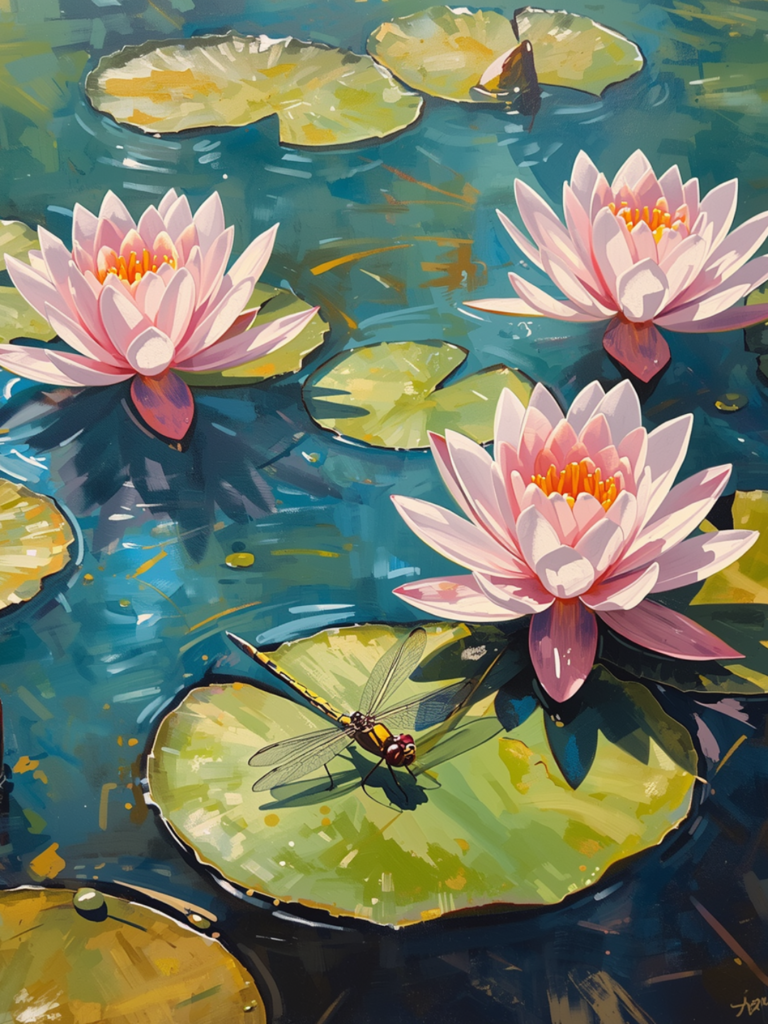
Water lilies pull double duty in a dragonfly garden. Their floating pads create resting platforms at the water surface for both adult dragonflies and emerging nymphs. Their submerged stems and root systems provide the structural complexity that dragonfly larvae need underwater for shelter and hunting. A study from the journal Hydrobiologia found that ponds with native floating-leaf vegetation supported up to 40% more odonata species than bare-bottomed ponds of equal size.
How it works
- Floating pads offer low, sun-warmed resting spots for newly emerged dragonflies drying their wings.
- Submerged stems create a three-dimensional underwater habitat that shelters dragonfly larvae from fish predation.
- Water lily flowers attract midges, hoverflies, and small bees that become part of a dragonfly’s diet.
How to use it for attracting dragonflies
- Cover no more than 50-60% of your pond surface with lily pads: dragonflies need open water for hunting flight paths.
- Choose native species where possible. Nymphaea odorata (fragrant water lily) is native to eastern North America and less aggressive than introduced varieties.
- Plant in 12-18 inches of water in full sun for maximum leaf and flower production.
5. Joe-Pye Weed (Eutrochium purpureum)
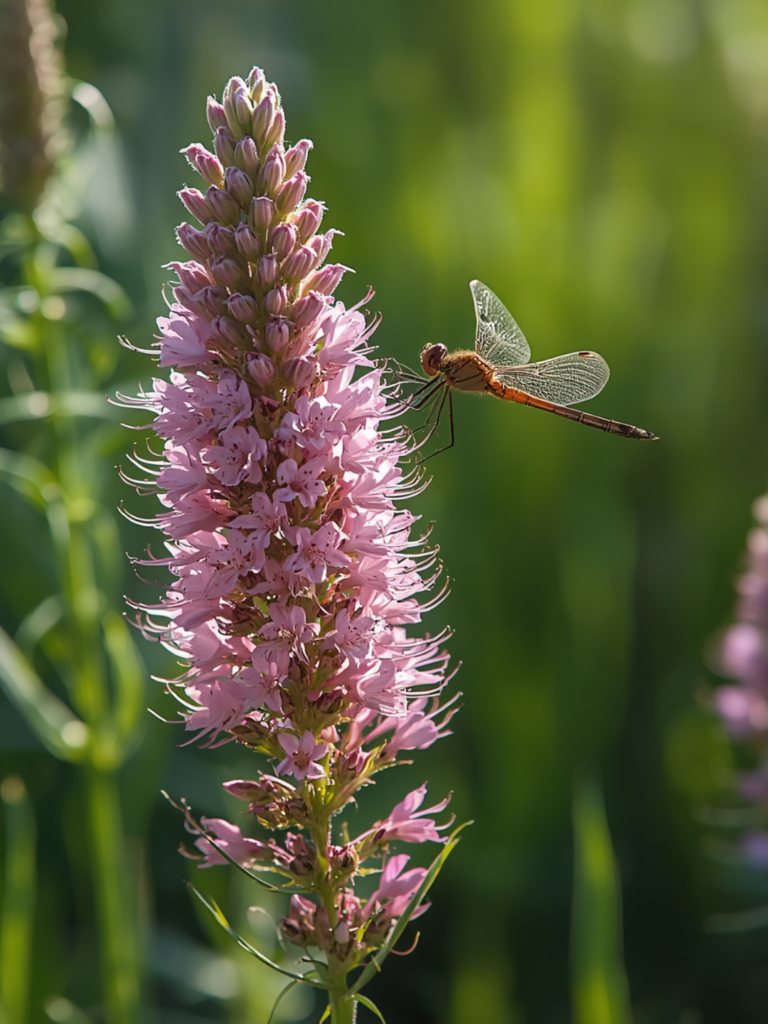
Joe-Pye weed is a tall native perennial that reaches 4-7 feet in height, providing the elevated perching structures that dragonflies require to maintain territorial visibility. It blooms in late summer with large domed clusters of dusty-pink flowers that attract dozens of small insect species. The USDA Plant Database classifies it as a high-value native plant for wildlife in 28 U.S. states.
How it works
- The tall, rigid stems give dragonflies an elevated 360-degree view, essential for both hunting and mate selection.
- The late-summer bloom fills the window when other flowers fade, maintaining insect prey availability when dragonflies are most active.
- Hollow stem sections harbor the overwintering prey insects that attract dragonflies back to your yard early the following season.
How to use it for attracting dragonflies
- Plant Joe-Pye weed in full sun to partial shade within 20-30 feet of your water feature so dragonflies can move between the hunting zone and perching zone without crossing open lawn.
- Cut stems to 12 inches in early spring rather than fall to preserve overwintering insects inside the hollow stalks.
- Combine with shorter plants in front to create a gradient of heights that multiple dragonfly species can use.
6. Black-Eyed Susan (Rudbeckia hirta)
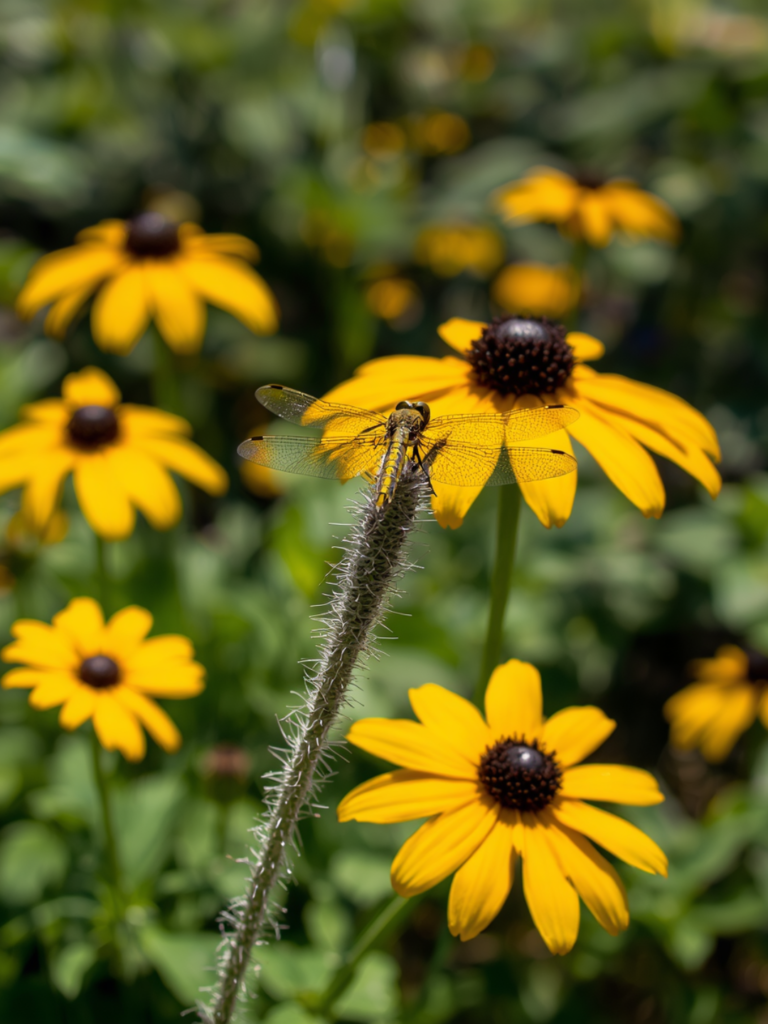
Black-eyed Susan is one of the most reliable dragonfly support plants you can grow because it attracts the secondary prey insects, beetles, bees, and hoverflies that keep dragonflies hunting in your yard even when mosquito populations temporarily dip. North Carolina State University’s Extension Service lists it as one of the top 10 native plants for supporting insect food webs. Its stiff, hairy stems also give dragonflies a textured grip surface for perching.
How it works
- The golden flowers are visible from distances exceeding 30 feet, drawing in a wide range of small flying insects that form the base of the prey web dragonflies hunt within.
- Hairy stems provide traction for dragonflies gripping in wind, making them more stable perches than smooth-stemmed alternatives.
- Black-eyed Susan seeds attract small birds, whose activity signals a healthy, insect-rich environment to territorial dragonflies.
How to use it for attracting dragonflies
- Plant in large drifts of at least 9-12 plants rather than single specimens: the visual mass attracts more insects and therefore more dragonflies.
- Deadhead sparingly. Leaving some spent flower heads extends the insect activity season by several weeks.
- Pair with swamp milkweed and Joe-Pye weed to create a continuous bloom sequence from June through October.
7. Meadow Sage (Salvia nemorosa)
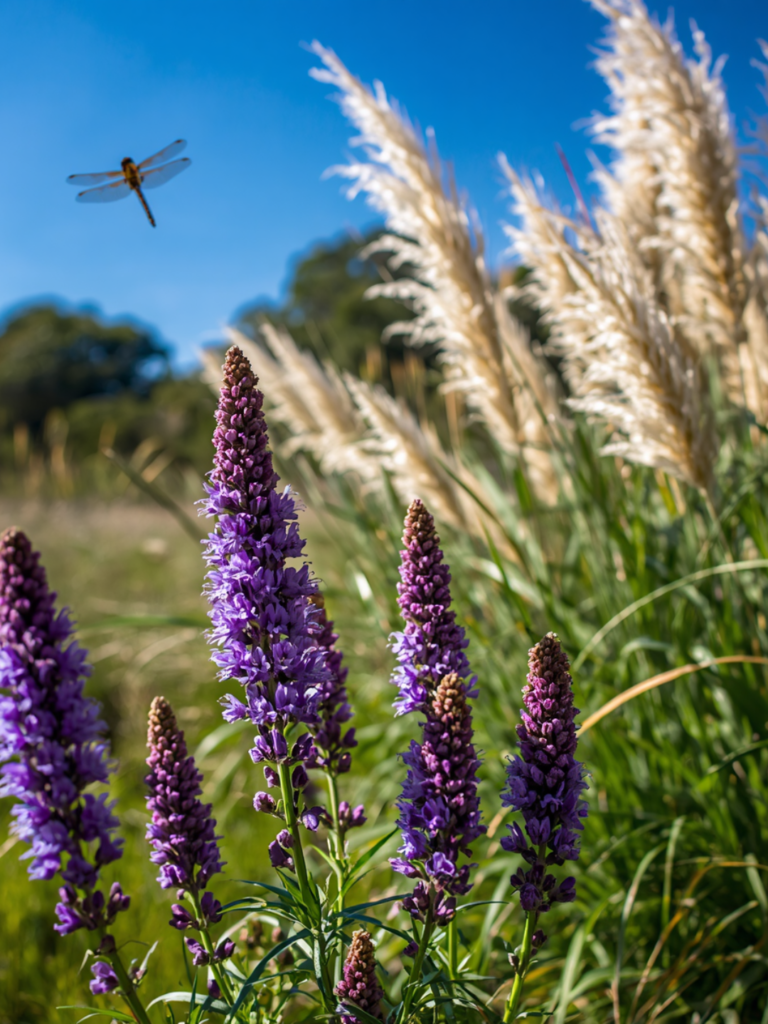
Meadow sage produces vertical spikes of deep blue-purple flowers that attract enormous numbers of native bees, hover flies, and small wasps. These insects represent a substantial prey source for dragonflies, particularly during the mid-morning hours when dragonflies are most active. The Royal Horticultural Society’s Plant for Pollinators program rates meadow sage as one of the top 10 herbaceous perennials for insect attraction in temperate climates.
How it works
- Salvia’s nectar production peaks between 9 a.m. and 2 p.m., overlapping directly with peak dragonfly hunting hours.
- The upright flower spikes create visual landmarks that dragonflies use to orient their patrol routes.
- Dense plantings of meadow sage trap warm air close to the ground, creating microclimate pockets that extend the usable hunting day for dragonflies on cooler mornings.
How to use it for attracting dragonflies
- Plant in full sun in well-drained soil: waterlogged roots kill meadow sage within one season.
- Cut back to one-third height after the first flush of bloom to trigger a second flowering in late summer.
- Position along the border between your lawn and water feature to create a visual corridor that guides dragonflies from perching areas to the hunting zone over water.
8. Arrowhead (Sagittaria latifolia)
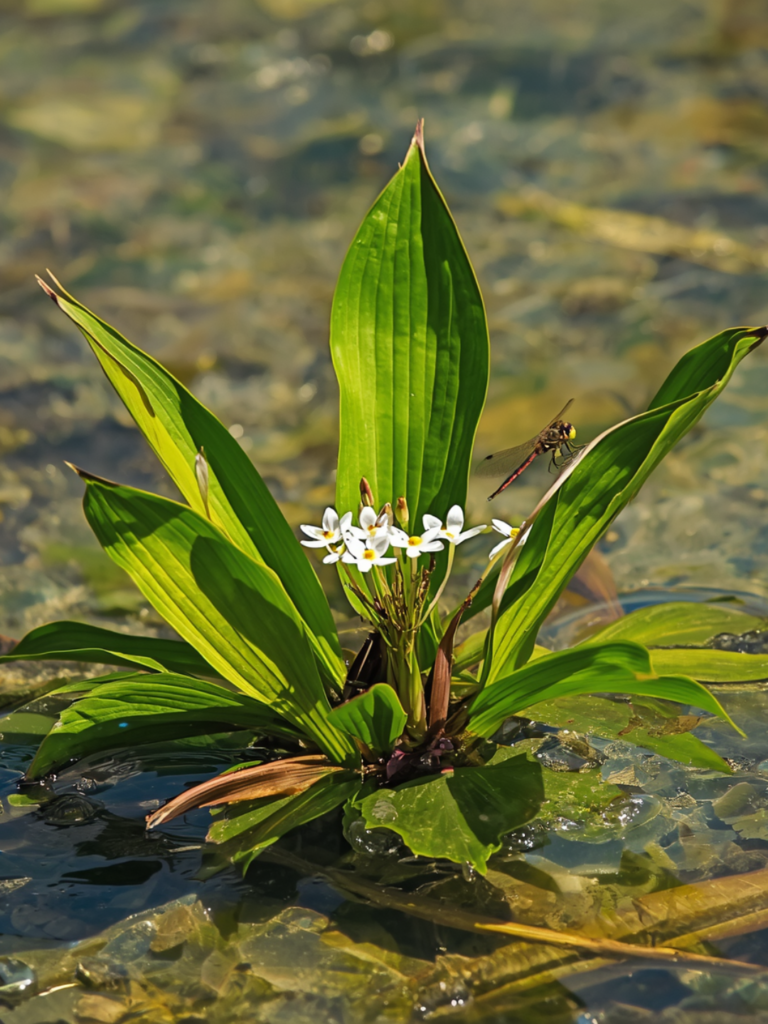
Arrowhead is a native aquatic plant with arrow-shaped leaves and white three-petaled flowers. It grows in shallow water and mud margins and is one of the most direct dragonfly recruitment plants available, with females of multiple dragonfly species documented depositing eggs on its stems in peer-reviewed surveys published by the Dragonfly Society of the Americas. If you have a pond or water garden, arrowhead belongs in it.
How it works
- Submerged and emergent stems provide egg-laying substrates for at least 12 documented odonata species.
- The starchy tubers it produces attract waterfowl, whose surface disturbance flushes invertebrates into open water where dragonfly larvae can catch them.
- Arrowhead’s dense root mat stabilizes pond banks and traps the organic sediment layer where dragonfly larvae burrow during winter months.
How to use it for attracting dragonflies
- Plant in 0-12 inches of still or slow-moving water in full sun.
- Control spread with root barriers or annual thinning since it spreads via rhizomes and can overtake a small pond within 2-3 seasons.
- Plant on the north or east margin of your pond so it does not shade the open south-facing water surface that dragonflies need for thermoregulation.
9. Cattail (Typha latifolia)
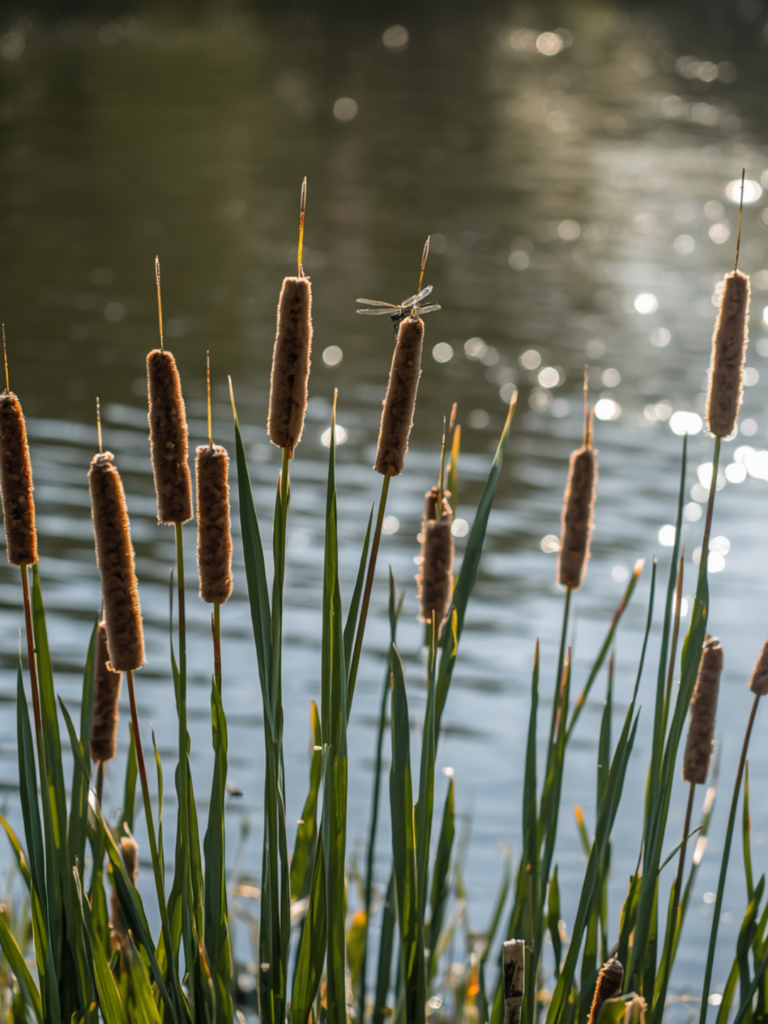
Cattails are the classic dragonfly habitat plant. The International Odonata Research Institute identifies dense cattail stands as one of the top three habitat features associated with high dragonfly species richness in freshwater environments. The brown seed heads and tall stems serve as prominent perching structures, and the leaf bases provide protected egg-laying sites for species like the common whitetail (Plathemis lydia) and eastern pondhawk (Erythemis simplicicollis).
How it works
- Cattail stems extend 4-8 feet above the waterline, giving dragonflies the highest perch available in most backyard water gardens.
- The leaf-litter mat that cattails produce at the water’s edge creates an oxygen-rich decomposition zone where dragonfly larvae thrive.
- Dense cattail root systems create a nursery zone protected from predatory fish, supporting higher larval survival rates than open-pond margins.
How to use it for attracting dragonflies
- Plant in containers submerged in 0-6 inches of water to control spreading: wild cattail spreads without limit in an open pond and will choke your water feature within 3-5 years.
- Limit to one corner or one margin of your pond. Leave at least 60% of the shoreline open for dragonfly landing access.
- Cut old brown stems in late winter before new growth emerges so dragonflies have fresh, tall perches available at the start of the active season.
10. Buttonbush (Cephalanthus occidentalis)

Buttonbush is a native shrub that grows in wet soil and shallow water at pond edges. It produces unusual spherical white flower clusters that are extraordinarily attractive to a wide range of insects, with one Ohio State University study cataloguing over 60 insect species visiting a single buttonbush shrub over a four-week observation period. More insects means more prey, and more prey means more dragonflies.
How it works
- The high insect traffic around buttonbush flowers creates a dense hunting zone that keeps dragonflies in a concentrated area for extended periods.
- The shrub’s woody structure provides stable perching even in strong wind, which is a limitation of herbaceous perennials.
- Buttonbush’s root system grows into the water, creating the complex underwater architecture that dragonfly larvae need for cover.
How to use it for attracting dragonflies
- Plant at the water’s edge where roots can reach standing water: buttonbush tolerates flooding up to 3 feet deep.
- Allow it to reach its natural 5-12 foot height without heavy pruning. The larger the shrub, the more insects it attracts, and the more hunting territory it creates for resident dragonflies.
- Plant on the west side of your pond so it creates afternoon shade for you without shading the open water dragonflies hunt over.
Building the Ideal Dragonfly Habitat: The Water Feature
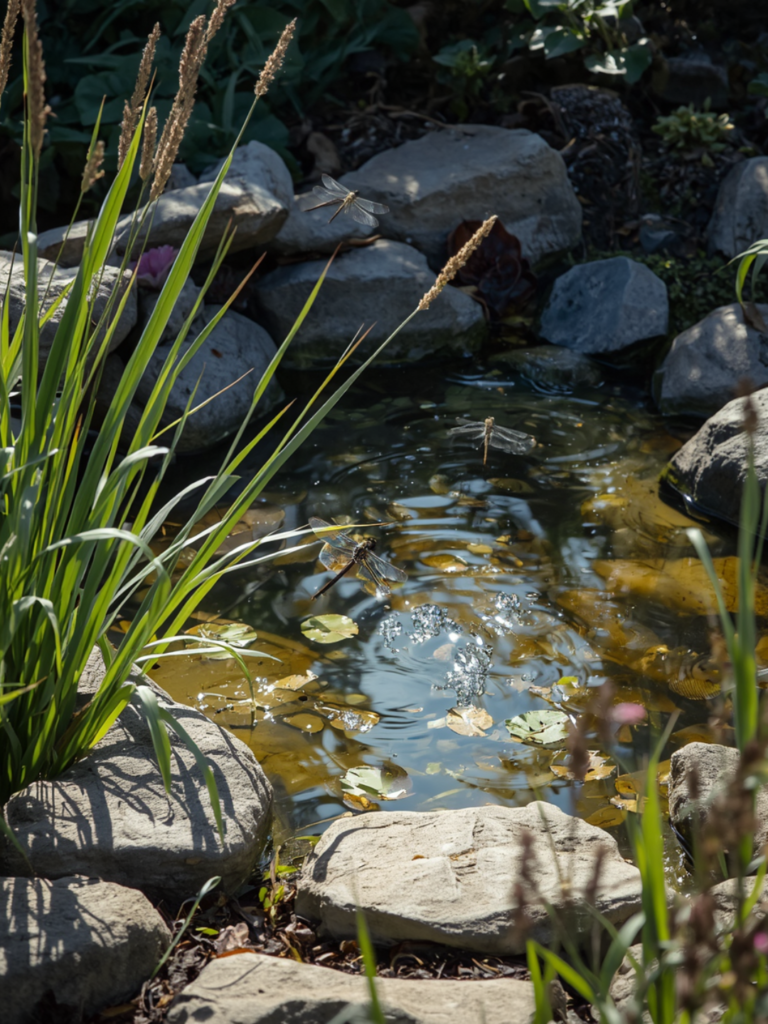
Plants attract dragonflies but water keeps them. Without a water feature, you are unlikely to establish a resident dragonfly population. You will see occasional visitors, but not the sustained presence needed for real mosquito control.
Your water feature does not need to be large. A study from the University of Leicester published in the journal Urban Ecosystems found that garden ponds as small as 2 square meters (roughly 21 square feet) supported dragonfly and damselfly populations when they included native marginal plants and received at least 5 hours of direct sunlight per day.
| Water Feature Type | Minimum Size for Dragonflies | Key Requirements |
|---|---|---|
| Container pond | Half barrel, 18+ inches diameter | Full sun, marginal plants, no fish |
| Small garden pond | 6 x 4 feet, 18 inches deep | Shallow shelf for marginal plants, sloped edge for larval exit |
| Formal water garden | 10 x 6 feet, 24 inches deep | Mix of open water and planted margins, native plants |
| Natural bog garden | 8 x 4 feet | Consistent moisture, full sun, no standing water required |
One design detail matters more than size: the exit ramp. Dragonfly larvae crawl out of the water to complete metamorphosis. If your pond has sheer vertical walls with no slope, larvae cannot exit and your dragonfly population collapses before it starts. Build or line at least one side of your pond with a gentle slope of 20-30 degrees that larvae can climb.
Sunlight and Yard Layout: Getting the Positioning Right
Dragonflies are cold-blooded (ectothermic). They cannot fly or hunt until their body temperature reaches a functional threshold, typically around 25 degrees Celsius (77°F). They achieve this by basking in direct sunlight. A water feature in shade, no matter how well planted, will attract far fewer dragonflies than the same pond in full sun.
Position your water feature where it receives a minimum of 6 hours of direct sunlight per day. In North America, south-facing or southeast-facing placement maximizes morning sun exposure and triggers earlier dragonfly activity each day. Surrounding flatstones or light-colored pavers near the pond edge serve as basking platforms that warm up faster than soil or mulch and give dragonflies a heat source separate from the water itself.
What to Avoid in a Dragonfly Garden
Several common garden practices actively repel dragonflies or kill their larvae. Eliminate these if you want a resident population:
- Pesticides and insecticides: Any broad-spectrum insecticide applied near water will run off into your pond and kill dragonfly larvae. This includes “natural” options like spinosad and neem oil, both of which are toxic to aquatic insects at low concentrations.
- Mosquito dunks in dragonfly ponds: Bacillus thuringiensis israelensis (Bti) in mosquito dunks kills mosquito larvae but also kills the closely related midge larvae that dragonfly nymphs feed on. Use in catch basins and gutters, not in your dragonfly pond.
- Lawn chemicals near the pond: Herbicides and synthetic fertilizers that reach water cause algae blooms, which reduce oxygen levels and kill aquatic invertebrates that dragonfly larvae depend on.
- Koi, goldfish, and other ornamental fish: Already covered, but worth repeating. A single koi can consume dozens of dragonfly larvae per week.
- Shaded ponds: A pond under a tree canopy stays too cold in the morning for dragonfly activity and accumulates leaf litter that decomposes into hydrogen sulfide, which is toxic to aquatic life.
Native Plants vs. Non-Native Plants for Dragonfly Gardens
Native plants consistently outperform non-native ornamentals in studies measuring insect biodiversity. A landmark study by University of Delaware entomologist Douglas Tallamy found that native oak trees support 557 species of caterpillars while non-native ornamental trees of equivalent size support fewer than 5. The same principle applies at the herbaceous level. Native aquatic and pond-edge plants support the insect communities that dragonflies depend on. Non-native alternatives do not.
Every plant on this list is native to some part of North America. If you garden in Europe or Australia, look for regional equivalents: native rushes, sedges, and aquatic irises fill the same ecological role. Contact your local native plant society for species-specific recommendations tied to your watershed.
Dragonfly Species You Can Expect to Attract
Different plants attract different dragonfly species, and each species has a somewhat different hunting profile. Here is a quick overview of the species you are most likely to see in a well-planted backyard habitat in North America:
| Species | Size | Preferred Habitat Plant | Primary Prey |
|---|---|---|---|
| Common whitetail (Plathemis lydia) | Medium, 1.7 in. | Cattail, arrowhead | Mosquitoes, gnats |
| Eastern pondhawk (Erythemis simplicicollis) | Medium, 1.6 in. | Pickerelweed, water lily | Other dragonflies, mosquitoes |
| Twelve-spotted skimmer (Libellula pulchella) | Large, 2 in. | Open water, cattail perches | Large flies, mosquitoes |
| Blue dasher (Pachydiplax longipennis) | Small, 1.3 in. | Swamp milkweed, iris | Mosquitoes, midges |
| Black saddlebags (Tramea lacerata) | Large, 2 in. | Open areas near water | Swarming mosquitoes |
How Long Does It Take to Attract Dragonflies?
If you build a new pond with native marginal plants in spring, expect your first adult dragonfly visitors within 2-4 weeks during warm weather. These are scouts, territorial males assessing the site. If conditions meet their criteria (open water, perching structures, sun), they will establish a territory and you will see them daily.
Resident breeding populations take longer. Female dragonflies lay eggs that develop through an aquatic larval stage lasting 1-3 years depending on species. Your first generation of home-raised dragonflies will not emerge until the second or third summer after you establish your pond. This is why persistence matters. The habitat improves every year as plants mature and the aquatic ecosystem develops complexity.
FAQ
Do dragonflies bite or sting humans?
Dragonflies do not sting. They have no stinger. Large species can deliver a minor pinch if handled roughly, but they have no venom and no interest in humans. They are focused entirely on hunting insects. You can stand near a dragonfly’s territory without any concern.
How deep does a pond need to be to support dragonfly larvae?
Most dragonfly species require a minimum depth of 12-18 inches in at least part of the pond to overwinter as larvae without the water freezing solid. Shallower container ponds work in mild climates but will not support overwintering populations in areas with hard winters. A depth of 24 inches in the center of your pond protects larvae through most North American winters.
Can I attract dragonflies without a pond?
You can attract dragonfly visitors with plants and perching structures alone, but you will not establish a breeding population without water. A large, shallow container pond (minimum 18-inch diameter, 12-inch depth) is the smallest viable option. Even a half-barrel water garden with two or three native aquatic plants will begin attracting scouting dragonflies within weeks during summer.
Will dragonflies help if I already have a bad mosquito problem?
Dragonflies reduce mosquito populations over time, but they are not an instant solution to a severe infestation. Research from the Florida Medical Entomology Laboratory suggests that dragonfly predation reduces adult mosquito populations by 30-50% in areas where dragonflies are established and abundant. Combined with eliminating standing water breeding sites in gutters, buckets, and low spots, this level of reduction makes outdoor spaces significantly more comfortable without any chemical application.
The Bottom Line
Dragonflies are the most effective mosquito predators on earth, with a 95% hunting success rate and the ability to consume hundreds of mosquitoes per day across both adult and larval stages. Attracting them requires three things: water, sun, and native plants that provide perching structures, egg-laying sites, and a rich prey insect community.
Start with a simple pond, even a container pond, positioned in full sun. Add native marginal plants like pickerelweed, arrowhead, and blue flag iris at the water’s edge. Back these with taller structural plants like cattail, Joe-Pye weed, and buttonbush. Extend the blooming season with swamp milkweed, black-eyed Susan, and meadow sage to keep prey insects active from June through October.
Skip the fish. Skip the pesticides. Give it three seasons. What you will end up with is not just fewer mosquitoes: it is a living, self-sustaining ecosystem that handles pest control for you, costs nothing to run, and gets more effective every year.
