
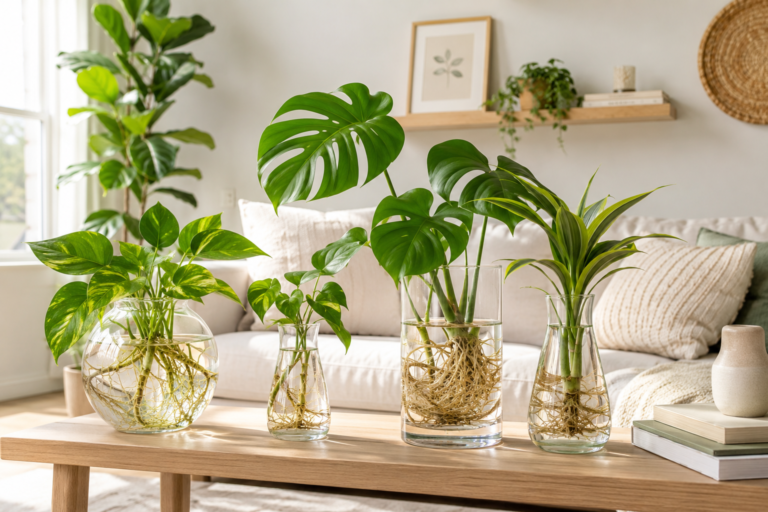
The two most common ways to kill a houseplant are overwatering and underwatering.
Growing plants in water eliminates both problems entirely.
Hydroponically grown houseplants in glass vessels need no soil, produce no mess, attract virtually no pests (goodbye, fungus gnats), and are impossible to overwater. Many common houseplants that are typically grown in soil will root, establish, and grow indefinitely in a glass of clean water.
This guide covers 15 plants with specific guidance on starting cuttings, preventing algae, fertilizing water-grown plants, and choosing the right containers for the most beautiful indoor display.
Why Grow Plants in Water?
- No overwatering: The single most common cause of houseplant death is eliminated
- No underwatering: Plants take what they need when they need it
- No soil mess: No repotting, no spilled soil, no dirt on shelves
- No fungus gnats: The larvae of this common pest breed exclusively in moist soil
- Root visibility: Watching white roots develop in a clear glass container is genuinely beautiful and satisfying
- Easy propagation: Many plants root faster in water than in any other medium
- Minimal maintenance: Water changes every 1 to 2 weeks is the primary care task
The 15 Best Plants to Grow in Water
1. Pothos (Epipremnum aureum)
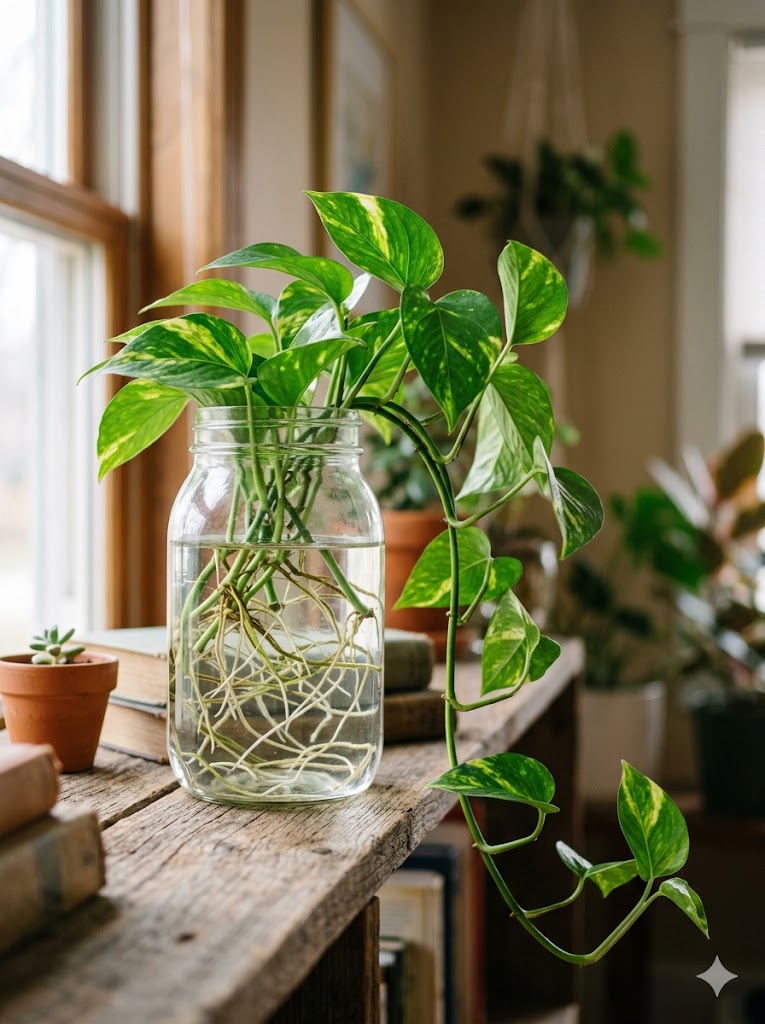
Pothos is the most reliable plant to grow in water. Cut a 4 to 6-inch stem just below a leaf node and remove the lower leaves. Place in a glass with the node submerged. Roots appear within 1 to 2 weeks and the plant continues growing in water indefinitely.
Pothos is tolerant of low light, making it one of the few plants that grows well in water even in dim interiors.
- Container: Clear glass or colored bottle — either works
- Light: Low to bright indirect; avoid direct sun which causes algae growth
- Water change: Every 7 to 14 days
- Note: Mildly toxic to pets and people
2. Heartleaf Philodendron (Philodendron hederaceum)

Philodendrons root quickly in water and produce glossy, heart-shaped leaves on trailing vines. Like pothos, they grow well in low-to-moderate indirect light. Cut below a node, remove lower leaves, and submerge the stem.
- Grows well in: Propagation station bottles, vintage vases, standard glass jars
- Timeline: Visible roots in 1 to 2 weeks; established growth within 4 to 6 weeks
- Note: Mildly toxic to pets and people
3. Spider Plant (Chlorophytum comosum — Spiderettes)
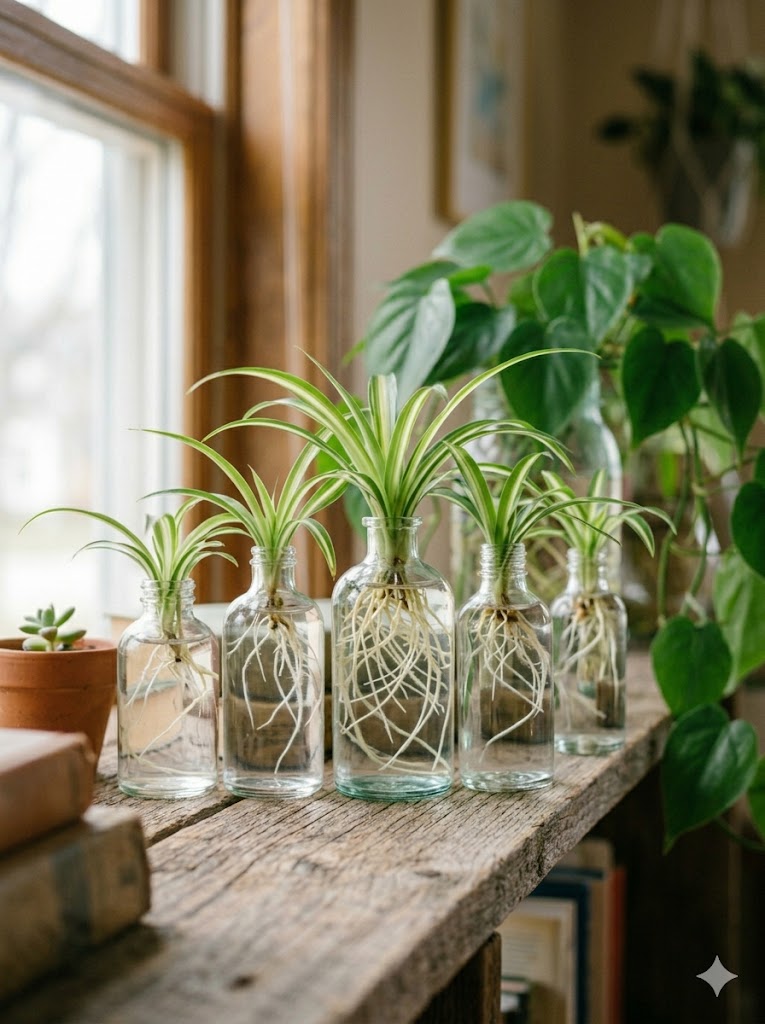
Spider plants produce “spiderettes” — tiny plantlets on long runners. These babies can be snipped and placed directly in water, where they develop roots rapidly. The spiderette does not need a node to be submerged; place the small root nub in water and the roots will develop.
- Unique advantage: Non-toxic to cats and dogs — the best option for pet households
- Best use: Small glass bottles that show off the developing root system
4. English Ivy (Hedera helix)
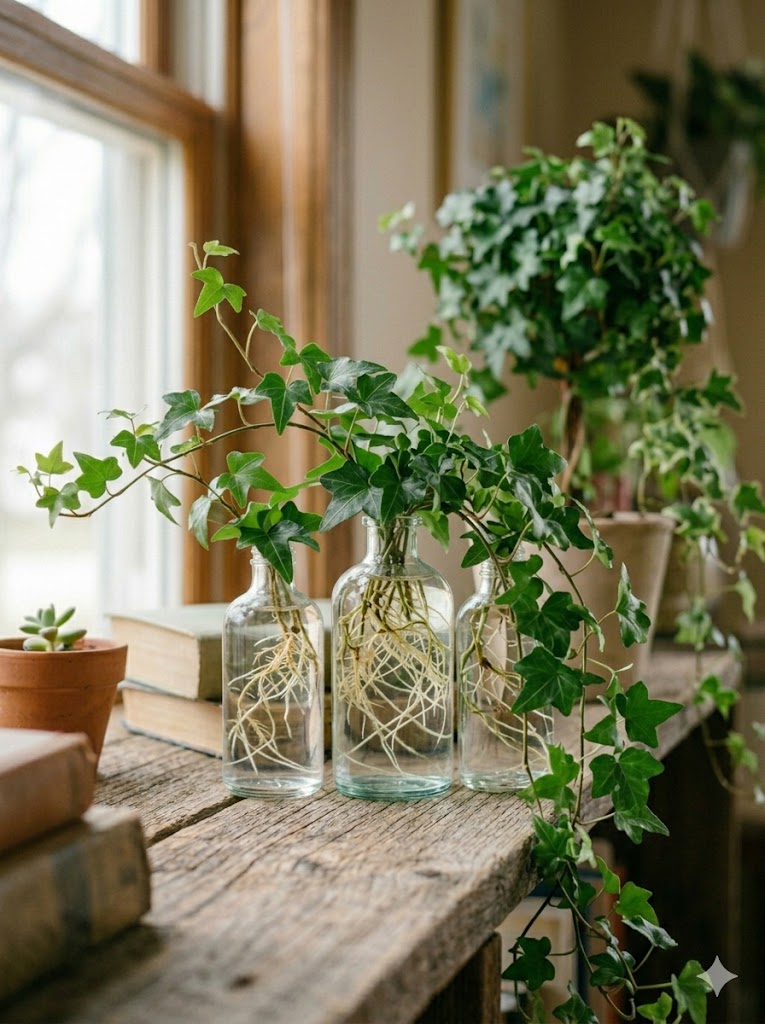
English ivy takes cuttings well and roots in water within 2 to 4 weeks. The trailing vines create a cascading effect from tall vases or wall-mounted glass containers.
- Light: Bright indirect light preferred for fastest growth
- Note: Toxic to cats, dogs, and children. Use in elevated positions away from pets.
5. Chinese Evergreen (Aglaonema)

Chinese evergreens are among the most low-maintenance houseplants, and they transfer to water growing well. Use stem cuttings with 2 to 3 nodes submerged. The plant’s variegated foliage (silver, green, pink, or red depending on variety) creates beautiful contrast in a glass vessel.
- Special need: Chinese evergreens prefer slightly warm water and high humidity. Mist occasionally.
- Light: Tolerates low light better than almost any other plant on this list
6. Coleus (Solenostemon scutellarioides)
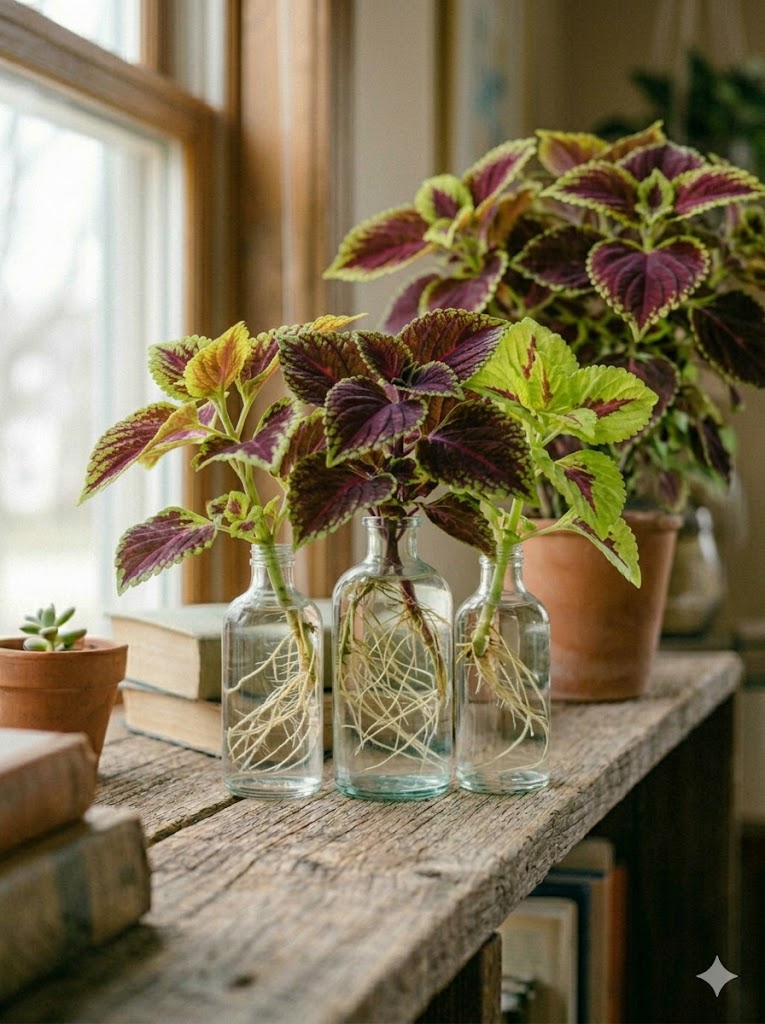
Coleus is grown for its dramatically colorful foliage and transfers to water growing easily from stem cuttings. Change water every 3 to 4 days (faster than other plants) to prevent bacterial buildup. The vivid leaf colors, from deep burgundy to chartreuse to multicolored, create striking display pieces.
- Water change frequency: Every 3 to 4 days
- Light: Bright indirect light preserves the most vivid leaf coloration
7. Begonia (Begonia rex and wax begonias)
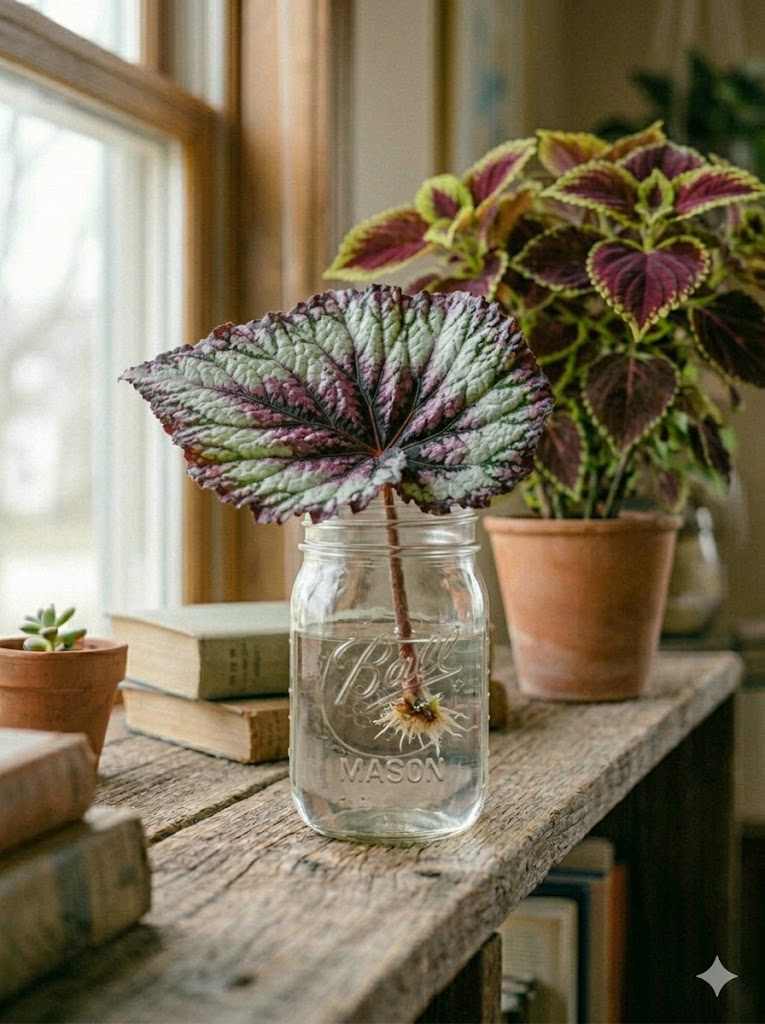
Rex begonias with their spectacular patterned foliage and wax begonias both root successfully in water. Use stem cuttings with the lower leaves removed. Rex begonia leaves can also be propagated in water by laying a cut leaf flat with the stem submerged.
- Timeline: Roots in 2 to 4 weeks
- Containers: Wide-mouth jars work best for begonias, which benefit from more lateral water access
8. Peace Lily (Spathiphyllum wallisii)
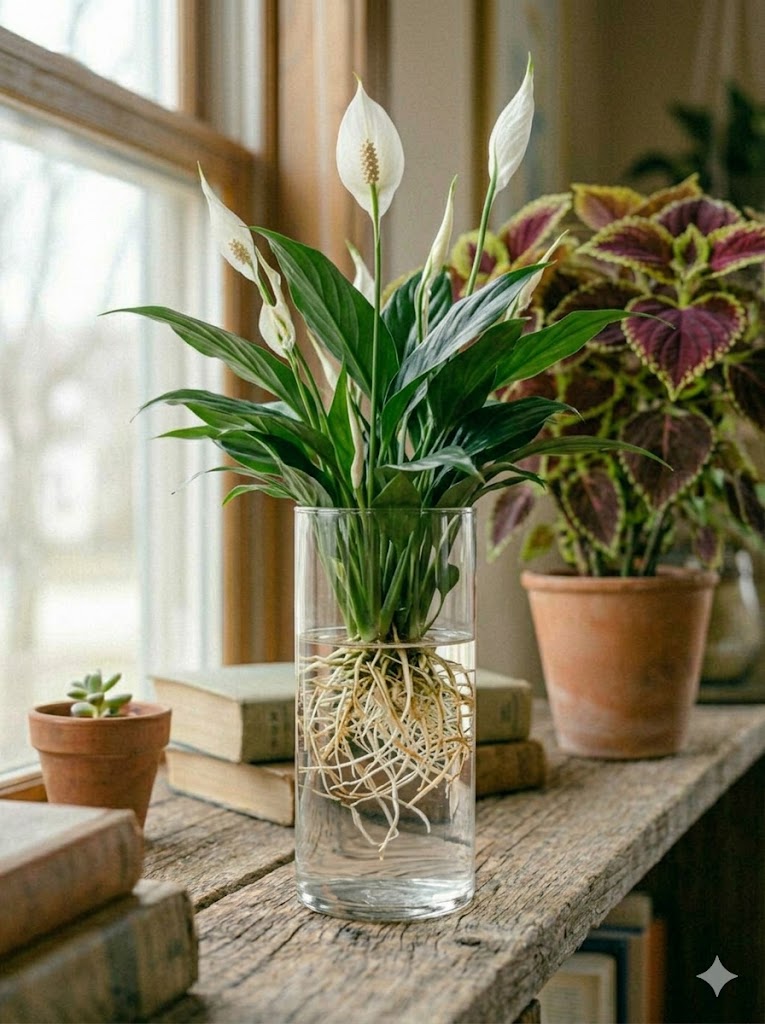
Peace lilies are one of the few plants on this list that can be grown indefinitely in water from an established soil plant. To convert a soil-grown peace lily: remove from soil, rinse roots thoroughly, and place in a vase with water covering the roots but not the crown (the top where leaves emerge from the base).
- Key detail: Do not submerge the crown. Only the roots should be in water.
- Unique advantage: The peace lily’s white flowers and dark foliage look beautiful in a tall, narrow glass vase
9. Wandering Dude (Tradescantia zebrina)
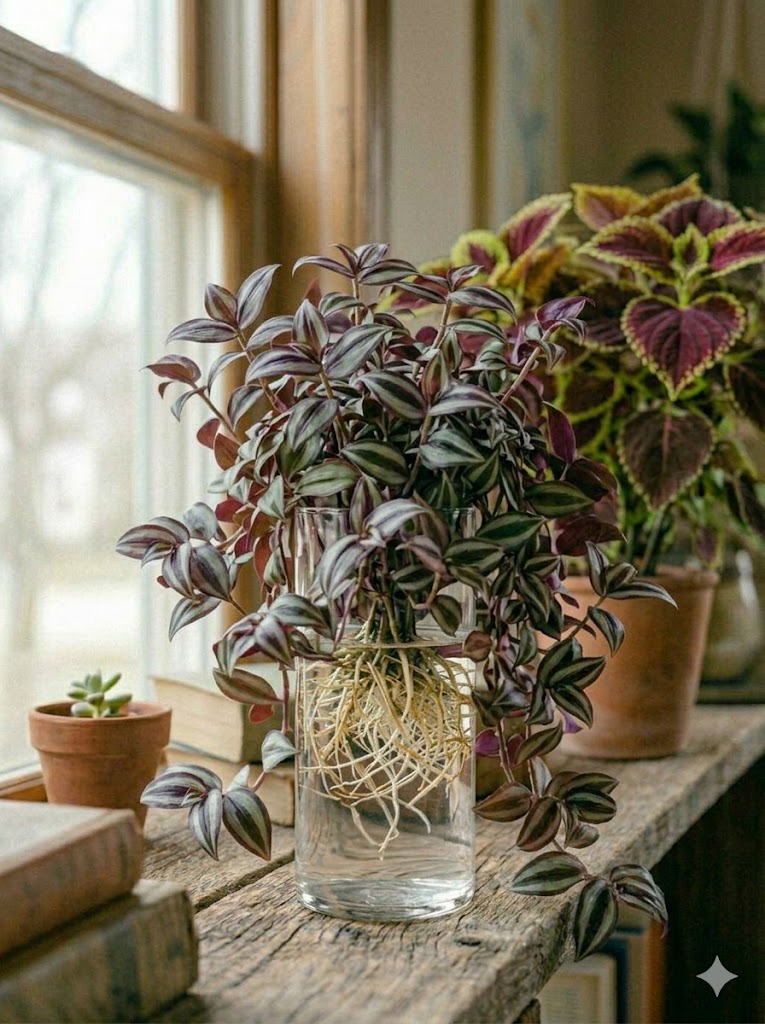
Wandering Dude (formerly known by a different common name) roots extremely quickly in water and produces trailing stems with distinctive purple and silver striped foliage. One of the fastest-rooting plants on this list.
- Roots visible: Within 3 to 5 days of placing in water
- Growth rate: Fast — provides trailing coverage quickly for tall vases
10. Lucky Bamboo (Dracaena sanderiana)
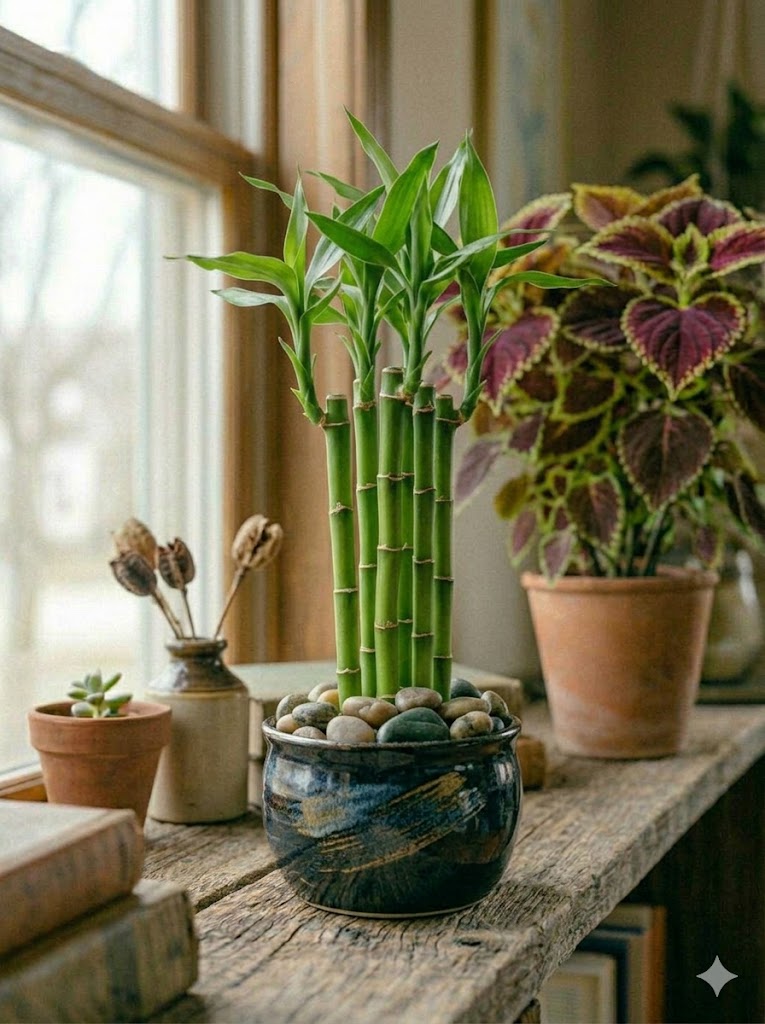
Lucky bamboo is almost always sold growing in water or gravel and water — it is one of the few plants that has been commercially popularized in soil-free displays. Keep in a clean container with a few pebbles or marbles to support the stems, and change water weekly.
- Container: Opaque or decorative containers work well — lucky bamboo does not need visible roots
- Water: Use filtered or distilled water; lucky bamboo is sensitive to fluoride in tap water, which causes brown leaf tips
11. Dracaena (Dracaena marginata, D. fragrans)
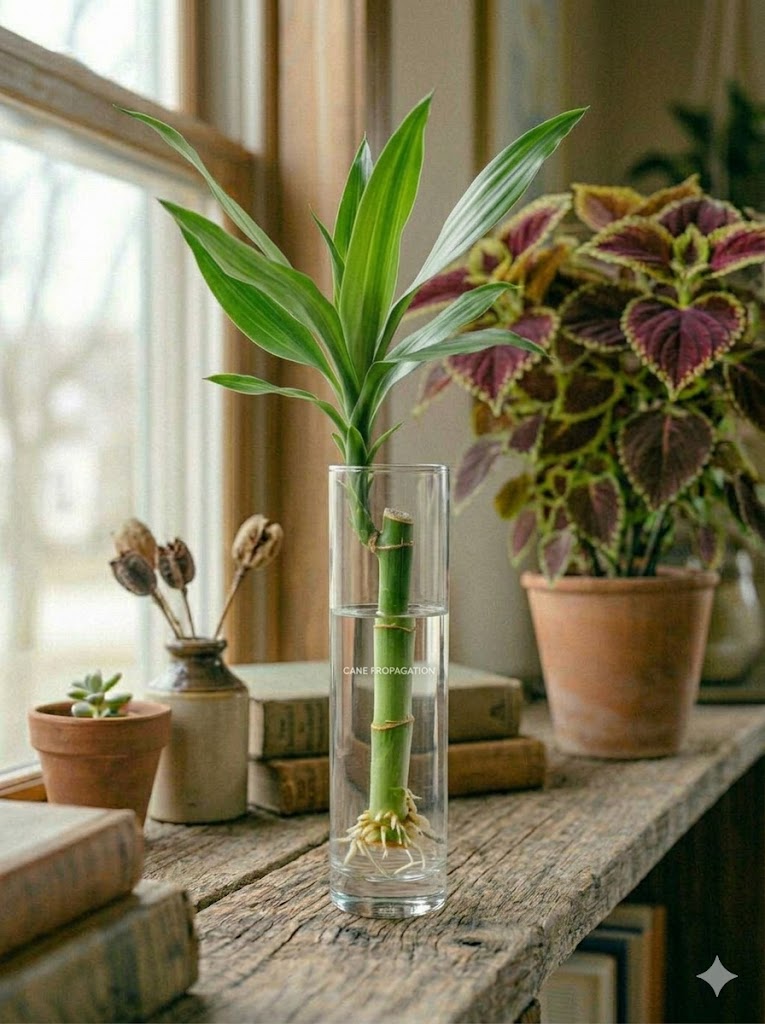
Dracaena stem cuttings root in water when placed with 2 to 3 inches of stem submerged. The cane-like stem develops roots from the base. Choose a tall, narrow vessel that supports the upright growth habit.
- Timeline: Roots in 3 to 5 weeks
- Water sensitivity: Like lucky bamboo, dracaenas are fluoride-sensitive. Use filtered water.
12. Arrowhead Plant (Syngonium podophyllum)
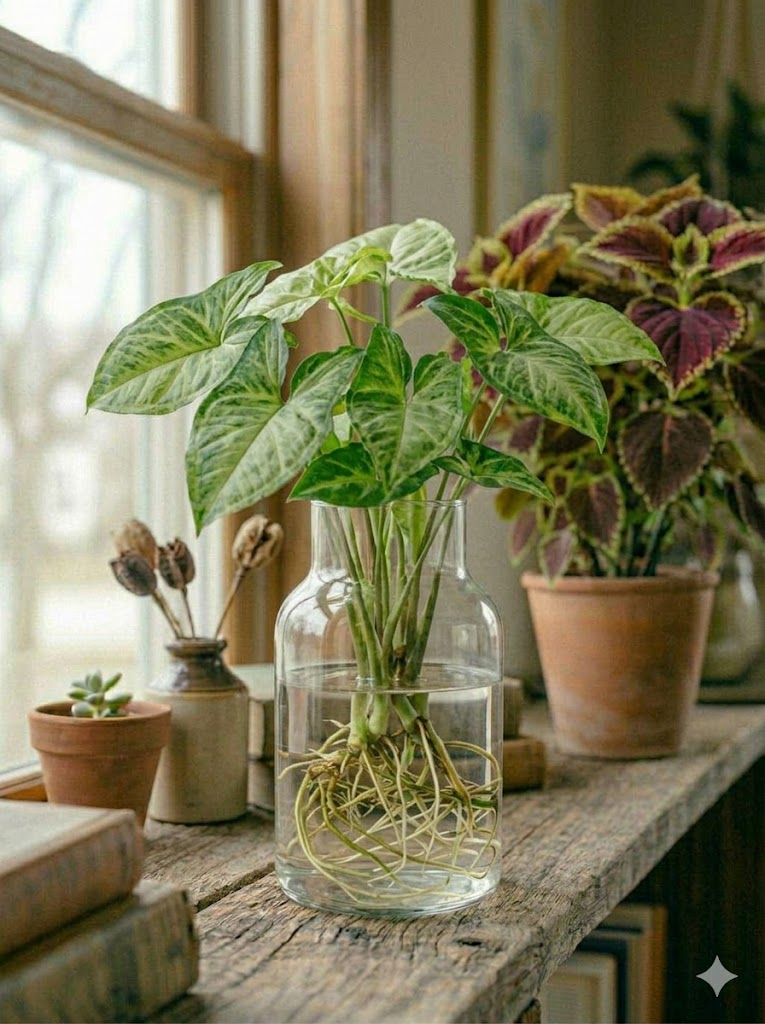
Arrowhead plants root well in water and produce distinctive arrow-shaped leaves that shift from simple to multi-lobed as the plant matures. Use a large glass vessel with filtered or non-chlorinated water and submerge at least 2 to 3 nodes.
- Light: Bright indirect light; loses variegation in very low light
- Growth rate: Moderate — produces new leaves every 2 to 3 weeks in good conditions
13. Impatiens (Impatiens walleriana)

Impatiens cuttings root rapidly in water and continue blooming, making them one of the few flowering plants well-suited to water propagation. Particularly effective for prolonging the life of garden impatiens after the first frost threatens outdoor plants.
- Best use: Overwintering favorite garden impatiens varieties indoors
- Blooming: Yes, water-grown impatiens continue to produce flowers
14. African Violet (Saintpaulia)
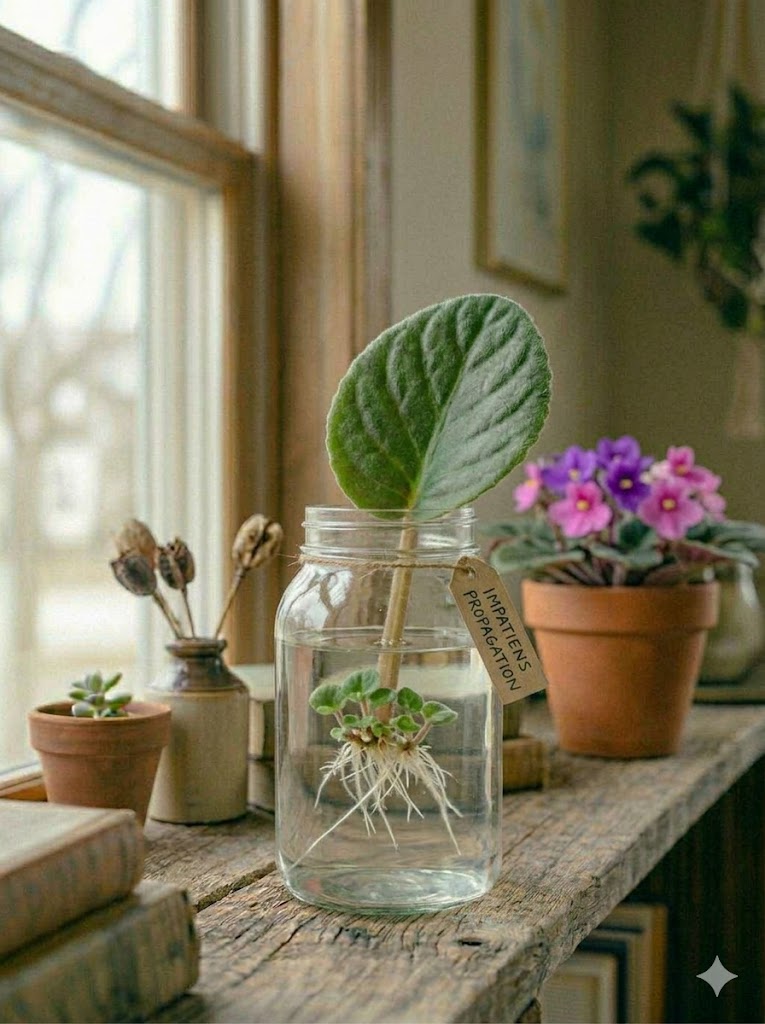
African violets can be propagated in water from leaf cuttings. Take a young, healthy leaf with 1 to 2 inches of petiole (stem). Place the petiole in water without submerging the leaf blade. Small plantlets develop at the base of the petiole within 4 to 8 weeks.
- Key detail: Only the petiole goes in water — keep the leaf blade dry and above water
- This method is slower than soil propagation but allows you to observe root development
15. Basil and Herb Cuttings
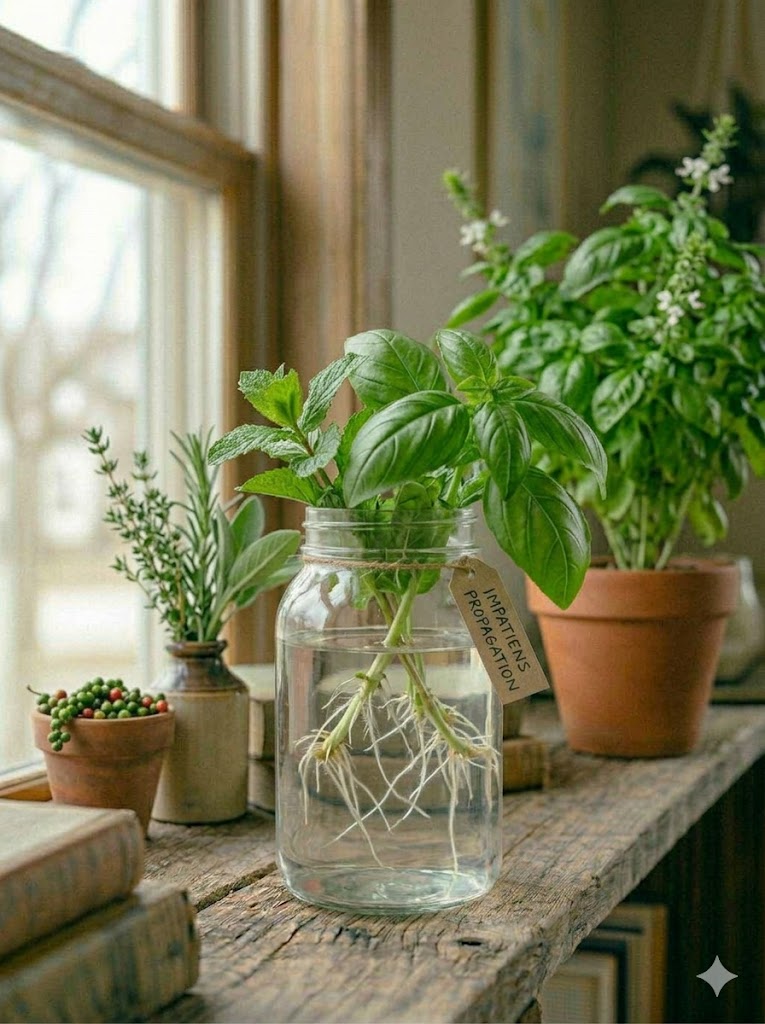
Fresh basil, mint, oregano, rosemary, and thyme cuttings from the grocery store or garden will root in water and continue producing fresh herbs for months on a kitchen windowsill. This is arguably the most practical application of water growing for everyday use.
- Most reliable in water: Basil, mint, oregano, and lemon balm root fastest
- Slightly slower: Rosemary and thyme take 3 to 4 weeks but do root successfully
- Best placement: South-facing kitchen window with 4 to 6 hours of direct sun
Essential Care for Water-Grown Plants
Water Quality
Tap water contains chlorine and sometimes fluoride, which can damage sensitive plants like dracaenas and lucky bamboo. For these plants, leave tap water in an open container for 24 hours before use (allows chlorine to off-gas), or use filtered water. Rainwater or distilled water are also excellent.
Water Change Frequency
Most plants: Every 7 to 14 days. Coleus and fast-growing plants: every 3 to 4 days. Lucky bamboo: weekly. The water should be changed when it becomes cloudy or you detect an odor.
Fertilizing
This is the part most guides skip. Soil-grown plants access nutrients in the growing medium. Water-grown plants have no such reservoir and will eventually exhaust the nutrients naturally present in tap water.
Add a very dilute liquid fertilizer to the water: use 1/4 of the recommended dose for soil application. Apply once every 3 to 4 weeks during the growing season. Too much fertilizer in water causes salt buildup and burns roots.
Hydroponic nutrient solutions (available from garden centers for $10 to $20) are formulated specifically for water growing and are the best option for plants you plan to keep in water long-term.
Algae Prevention
Green algae grows in water when it receives too much direct sunlight. Solutions:
- Use opaque or dark-colored containers that block light from reaching the water
- Keep containers away from direct sun windows
- Clean containers thoroughly at each water change
- Add a small piece of activated charcoal to the water to reduce algae and bacterial growth
Container Ideas for Water-Grown Plants
- Propagation stations: Small hanging glass ball vases designed for single cuttings — beautiful grouped collections
- Vintage medicine bottles and bud vases: Thrift store finds work perfectly for individual cuttings
- Wide-mouth mason jars: Practical and widely available; use dark glass or wrap with twine to reduce algae
- Clear laboratory flasks or Erlenmeyer flasks: Scientific-aesthetic that shows off root systems beautifully
- Tall glass cylinders (vase style): Best for taller plants like peace lily, lucky bamboo, and dracaena
✅ Tip Rinse the container with a dilute bleach solution (1 tablespoon per gallon of water) before refilling after any signs of algae or bacterial cloudiness. Rinse thoroughly with clean water before returning the plant. For plants you want to grow in water long-term (rather than just propagating before potting), replenish the water level between full changes by adding fresh water to maintain the level without doing a full clean. |
Frequently Asked Questions
Do plants grow well in water long-term or just for propagation?
Both. Many plants — pothos, philodendron, lucky bamboo, peace lily, Chinese evergreen — grow indefinitely in water without ever being potted in soil. They may grow more slowly than soil-grown plants, but they remain healthy and attractive for years with proper water changes and occasional fertilization.
Why are my water-grown plant roots turning brown?
Brown roots in water-grown plants usually indicate bacterial growth (from infrequent water changes), too much fertilizer causing salt damage, or insufficient oxygen in the water. Change the water, rinse roots gently, clean the container, and return the plant to fresh water. Increase change frequency going forward.
The Bottom Line
Growing houseplants in water is not a trend or a novelty. It is genuinely one of the lowest-maintenance approaches to indoor gardening available, and the clear glass containers displaying living root systems are beautiful in their own right.
Start with a pothos or heartleaf philodendron cutting in a mason jar. Place in indirect light. Change the water weekly. That’s the entire care routine for the first six months.
