

Homemade weed killers get a mixed reputation online because of two problems: they are often presented with unrealistic claims about what they can do, and they are often applied in situations where they cannot work.
This guide covers 7 genuinely effective natural weed control methods with honest assessments of what each one does and does not do well.
Important Framing: Contact vs. Systemic Action
Before the methods: the single most important concept in DIY weed control is the difference between contact herbicides and systemic herbicides.
- Contact herbicides kill plant tissue where they touch. They burn foliage, but if the root system is intact, the weed grows back. Most homemade weed killers are contact herbicides.
- Systemic herbicides are absorbed by the plant and move through its vascular system to kill roots. Commercial glyphosate (Roundup) is systemic. Homemade solutions are generally not.
This means: for annual weeds with shallow roots (chickweed, crabgrass, annual bluegrass), a contact herbicide works, the plant dies and cannot regrow from seed because the root system is small. For perennial weeds with deep root systems (bindweed, dandelion, thistle, ground ivy), a contact herbicide kills the foliage but the roots resprout within weeks.
Set your expectations accordingly.
7 Homemade Weed Killers
1. Vinegar Spray (The Most Popular Option)
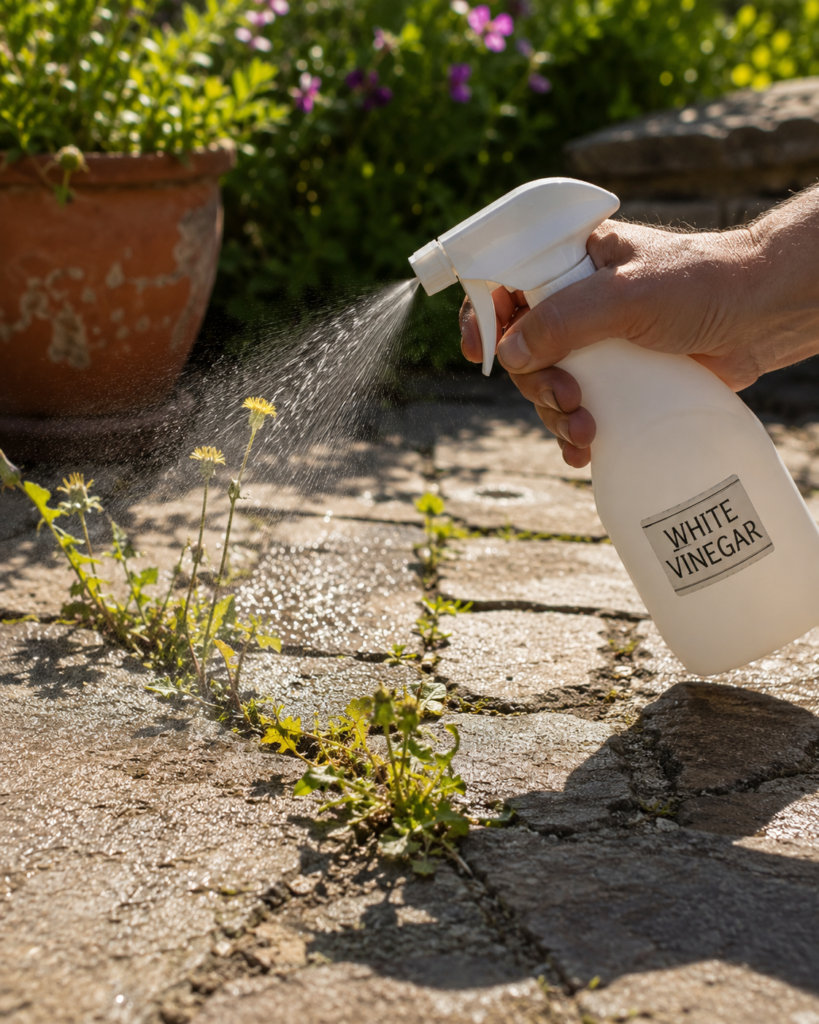
Mechanism: Acetic acid in vinegar draws moisture out of plant cells through osmosis, causing rapid dehydration. At 5% acetic acid (standard household vinegar), it effectively kills young annual weeds on contact, particularly on hot, sunny days when heat accelerates the desiccation.
The classic recipe:
- 1 gallon white distilled vinegar (5% acetic acid)
- 1 tablespoon liquid dish soap (acts as surfactant, helps the solution stick to waxy leaf surfaces)
- Optional: 1 cup table salt (adds dehydrating salt effect, but see salt caveat below)
Apply directly to weed foliage on a hot, dry day. Avoid applying near soil you plan to plant in.
What it works well on: Annual weeds in pavement cracks, driveways, gravel paths, and areas where you never want any plant growth.
What it does not work well on: Established perennial weeds with tap roots (dandelion, bindweed). The foliage dies but regrowth from the root is common within 2 to 3 weeks. For persistent perennials, multiple applications are required.
Stronger alternatives: Horticultural vinegar at 20 to 30% acetic acid is significantly more effective on established weeds but is a skin and eye irritant requiring gloves and eye protection. Available from garden supply companies.
2. Boiling Water
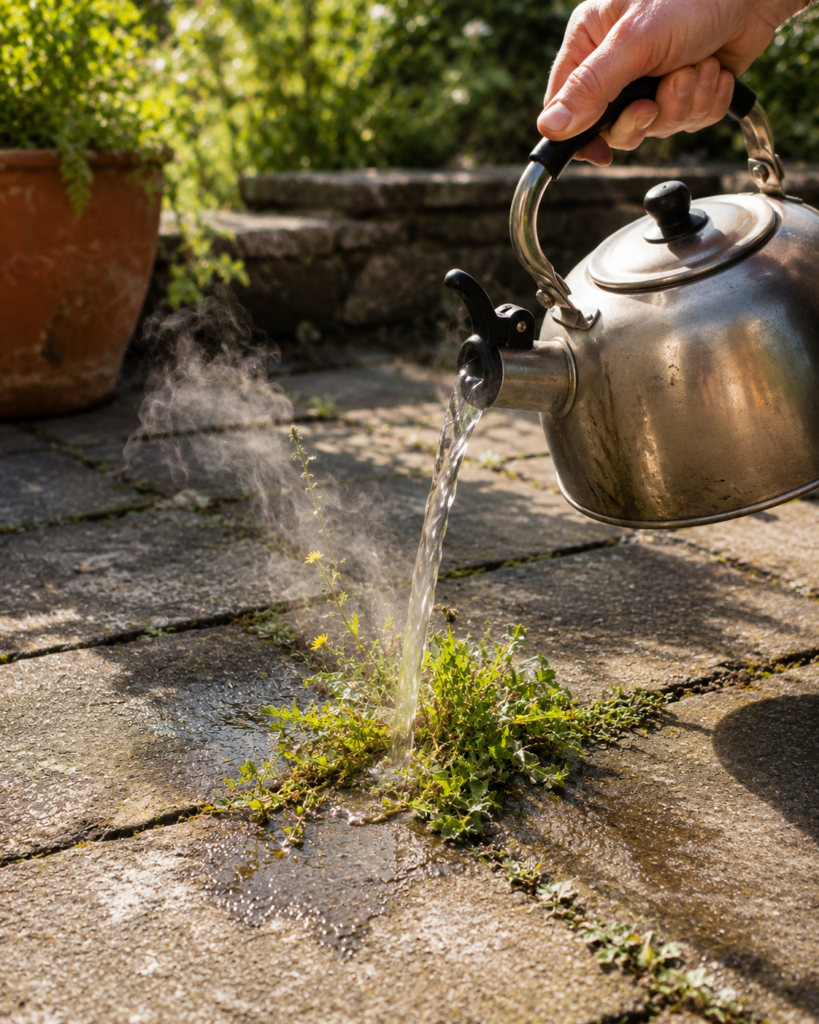
Mechanism: Boiling water (212°F) denatures plant proteins through heat, killing cells it contacts. Unlike vinegar, it also penetrates several inches of soil, making it more effective on shallow-rooted perennials than vinegar.
Aaron Steil of Iowa State University notes that boiling water is particularly useful in cracks in patios, sidewalks, and driveways where other plants are not nearby.
What it works well on: Weeds in pavement cracks, driveways, path edges, and between stepping stones. Also effective in areas of persistent annual weed germination, the heat sterilizes the surface soil.
Practical limitation: Requires boiling kettle or pot of water, making large-scale application impractical. The soil heating effect also dissipates within 24 hours for deep-rooted plants.
- Application: Pour directly onto the base of weeds, not just the foliage. Contact with the root zone is more effective than foliar contact.
3. Salt Solution

Mechanism: Salt (sodium chloride) dehydrates plant cells and, critically, also alters soil chemistry, making it difficult for any plant to grow in the treated area for an extended period. This is both its benefit and its major limitation.
What it works well on: Permanent hardscape areas (between patio pavers, gravel driveways, along fence posts) where you never want vegetation.
Critical limitation: Salt persists in the soil and prevents all plant growth, not just weeds. It can migrate through soil to adjacent planting areas during rain events. Do NOT use salt near garden beds, lawn edges, or trees. Multiple applications can make soil toxic to plants for years.
- Safe application: In gravel paths and driveway cracks where soil contamination of adjacent planting areas is impossible
4. Baking Soda
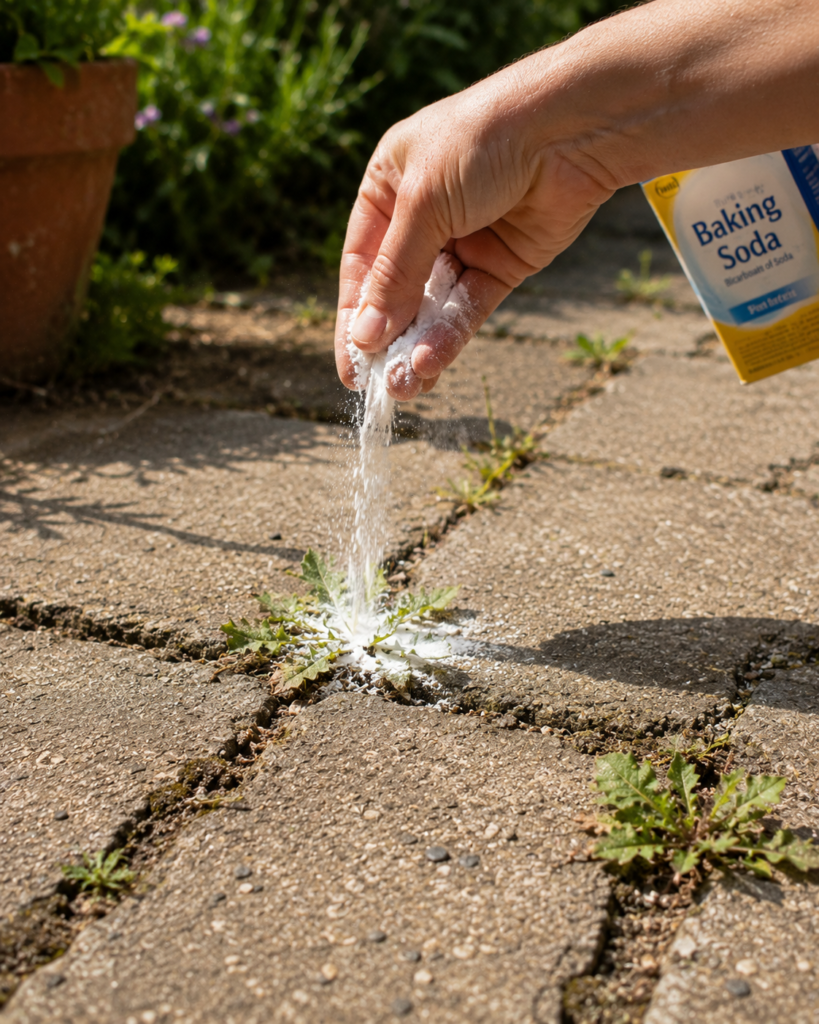
Mechanism: Sodium bicarbonate disrupts cellular functions in plants, particularly affecting pH balance at the leaf surface. It functions as a mild contact herbicide and also has some pre-emergent effect when applied to bare soil.
Most effective use: Sprinkle dry baking soda directly onto the leaves of young annual weeds in dry conditions. Water lightly to help it contact leaf surfaces. Also effective when applied directly into cracks in pavement.
What it does not do well: Established weeds with deep roots, and any weed in wet conditions (the sodium carbonate washes off before activating).
- Caution: In large quantities in garden beds, baking soda raises soil pH and can impair plant growth. Use as a spot treatment, not as a broadcast application.
5. Rubbing Alcohol (Isopropyl Alcohol) Spray
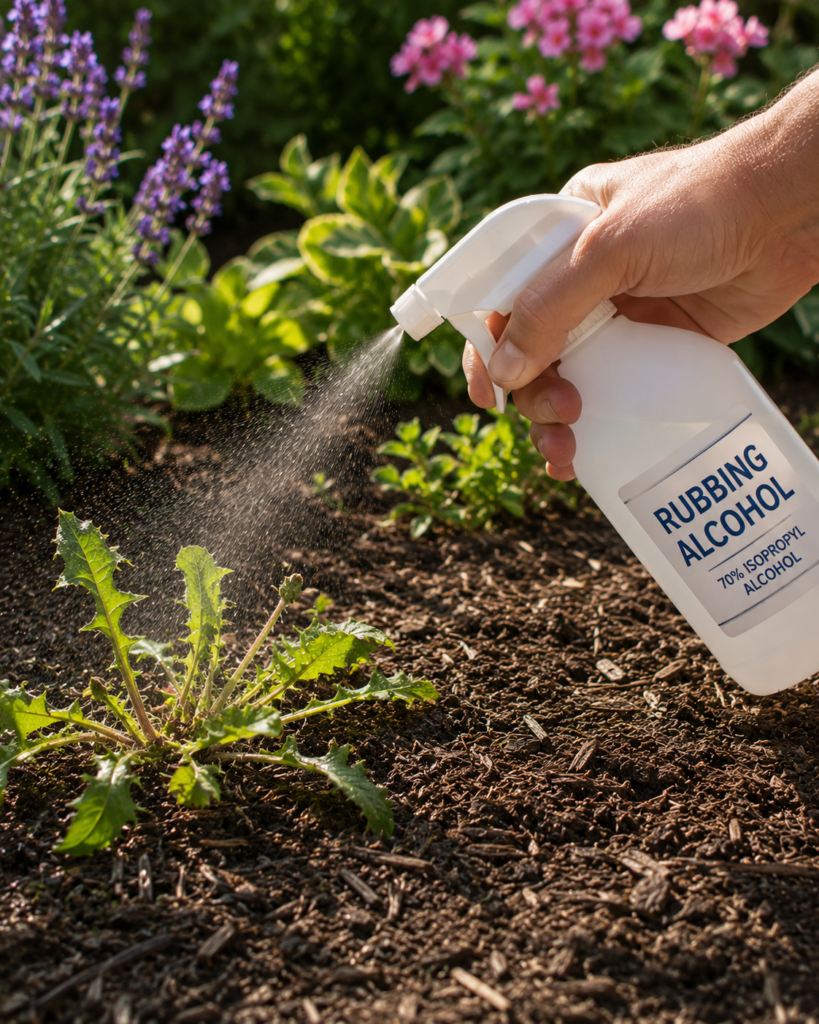
Mechanism: Isopropyl alcohol rapidly dehydrates plant tissue it contacts, disrupting cell membrane structure and causing rapid wilting. Diluted solution (30% isopropyl alcohol in water) is effective as a spot spray.
What it works well on: Young annual weeds, especially in containers, garden beds, and between pavers.
Limitations: Do NOT use in areas with existing desirable plantings, alcohol is non-selective and kills any plant it contacts. It degrades quickly in soil (unlike salt) but is too expensive for large-scale use.
6. Corn Gluten Meal (Pre-Emergent)
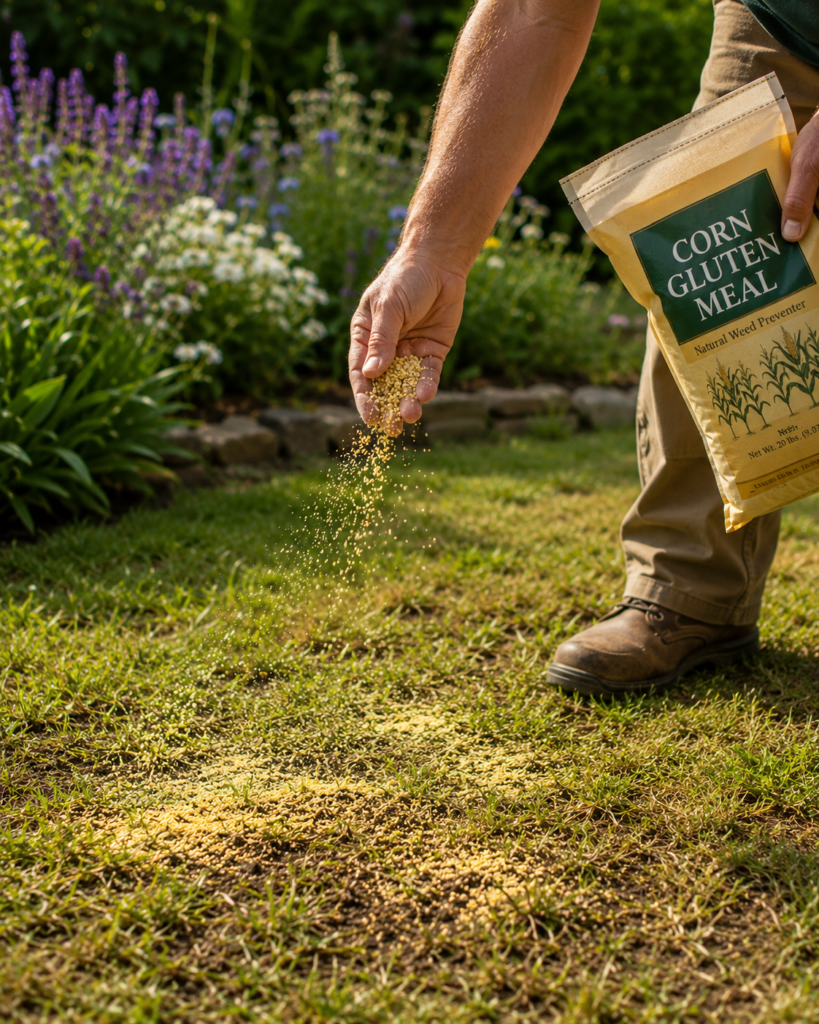
Mechanism: Unlike the other methods in this list, corn gluten meal is a pre-emergent rather than a post-emergent weed control. It does not kill existing weeds; it inhibits seed germination by releasing proteins that prevent root formation in germinating seeds.
Application: Spread on garden beds and lawn areas 2 to 3 weeks before weed seeds typically germinate in your region. Water lightly to activate.
Critical requirement: Do NOT apply in the same year you are direct sowing desirable seeds (vegetables, grass seed, annual flowers), the pre-emergent effect does not discriminate between weed seeds and garden seeds.
- Annual application: Corn gluten meal must be reapplied each year to maintain pre-emergent effect
- Nitrogen benefit: Corn gluten meal is approximately 9% nitrogen by weight, it is also a slow-release lawn fertilizer
7. Newspaper / Cardboard Mulch (Sheet Mulching)
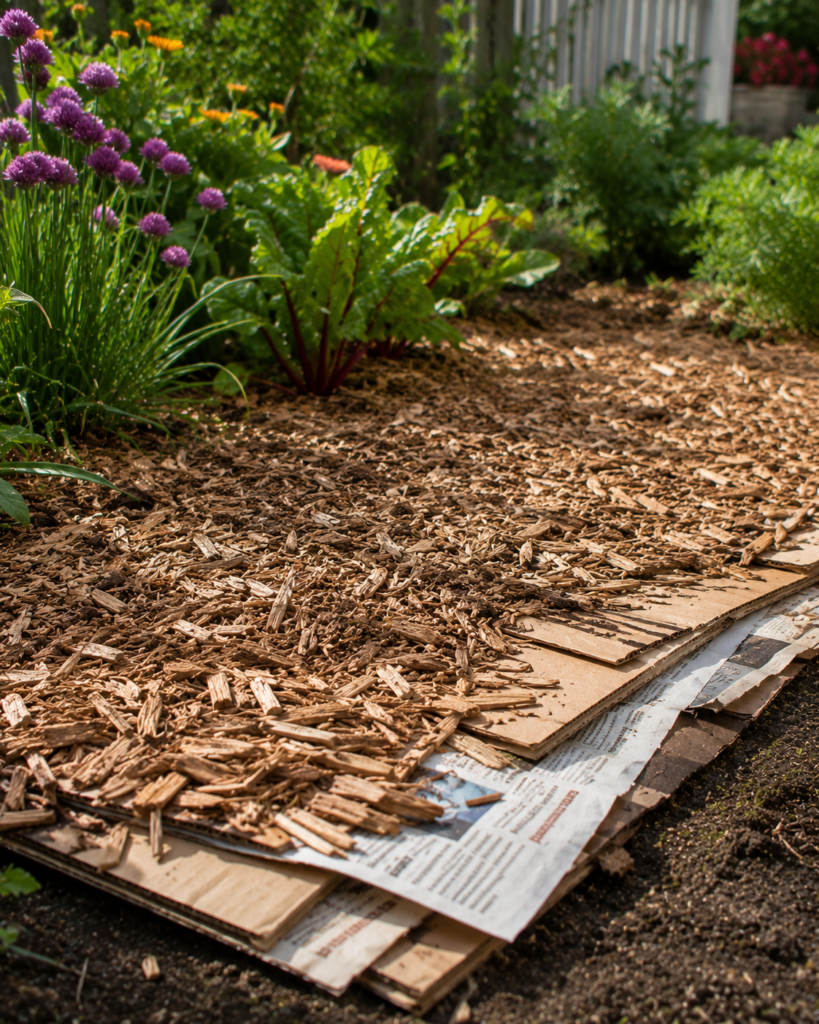
Mechanism: Multiple layers of newspaper (8 to 10 sheets) or single layers of cardboard placed over weed areas and covered with wood chip mulch block light from reaching the weed foliage and prevent germination of new weed seeds in the soil surface.
This is not a spray herbicide, it is a physical suppression method. But for large areas of persistent annual weeds in garden beds and new garden space reclaimed from lawn, it is one of the most effective long-term strategies available.
What it works well on: Reclaiming new garden beds from grass and annual weed growth. Suppressing weed germination in mulched paths and ornamental beds.
Limitations: Determined perennial weeds (bindweed, horseradish, Japanese knotweed) eventually push through even thick cardboard. Sheet mulching is most effective against annual weeds and grass.
- Application: Wet cardboard or newspaper before laying to prevent it from blowing away and to accelerate decomposition. Overlap edges by at least 6 inches to prevent gaps that weeds will exploit.
What Homemade Weed Killers Cannot Do
Being honest about limitations is as important as describing benefits:
- None of these methods match commercial systemic herbicides for killing established perennial weeds with deep root systems permanently
- Vinegar and salt solutions do not disappear from treated soil immediately, avoid using near garden beds or trees
- Most require repeated applications on persistent weeds, not a single treatment
- None are effective preventively, they only kill weeds that are already present or germinating
When Commercial Herbicides Make Sense
There are scenarios where commercial herbicides used responsibly are the most practical tool: heavily infested areas, invasive species management (Japanese knotweed, bindweed infestations), and situations where physical or DIY approaches have repeatedly failed.
If choosing commercial options, spot treatment with a targeted herbicide causes far less environmental harm than broadcast application. The concern with glyphosate (Roundup) is specifically with routine broadcast use on lawns and farms. Occasional spot treatment of a stubborn weed patch is a different magnitude of exposure.
✅ Tip The most effective long-term weed management strategy combines prevention (mulch suppressing germination), prompt removal of weeds before they set seed, and spot treatment with the appropriate tool for each weed type. No single method manages all weeds equally well. For weeds in lawn grass (crabgrass, dandelion, clover), pulling by hand after rain when soil is moist, using a dandelion fork or hori hori knife to remove the full taproot, is often the most effective non-chemical approach for individual plants. |
Frequently Asked Questions
Does vinegar really kill weeds permanently?
Vinegar kills the foliage it contacts quickly and effectively. For annual weeds, this is typically sufficient because the root system is small and the plant dies completely. For perennial weeds with deep root systems (dandelion, bindweed), the foliage dies but regrowth from the roots is common within 2 to 3 weeks. Multiple applications at 2-week intervals gradually weaken perennial weeds by exhausting root reserves, but it is rarely permanent after a single treatment.
Is vinegar weed killer safe for pets?
Household white vinegar (5% acetic acid) is non-toxic to pets once dry and absorbed into the soil. Fresh application can irritate pets’ paws and skin, so keep them off treated areas until dry. Horticultural vinegar (20 to 30% acetic acid) requires more caution, keep pets away until the treated area is dry and washed by rain.
The Bottom Line
Homemade weed killers are genuinely effective tools when used for the right situations. Boiling water and vinegar spray on annual weeds in pavement cracks, salt in permanent hardscape areas, corn gluten meal as a spring pre-emergent in established beds, all of these work well in their appropriate contexts.
Expect them to require more effort and more reapplication than commercial systemic herbicides. Use them as part of an integrated approach that also includes mulching, hand-weeding, and prompt removal before weeds set seed.
Related Articles:
- 15 Best Climbing Plants for Your Pergola and Arbor
- 20 Stunning Country Garden Decoration Ideas for a Charming Outdoor Space
