
The most effective organic gardeners spend almost nothing on fertilizer, because the best organic soil amendments are made from what most households throw away or readily have available: kitchen scraps, yard waste, and common household items.
Here are 15 DIY fertilizer recipes and natural soil amendments, organized by primary nutrient contribution.
NPK: What Plants Actually Need
All fertilizers are described by their NPK ratio:
- N (Nitrogen): Drives leafy growth, stem development, and overall plant size. Deficiency shows as yellowing of lower leaves.
- P (Phosphorus): Drives root development, flowering, and fruit/seed set. Deficiency shows as purpling of stems and leaves.
- K (Potassium): Drives overall plant health, disease resistance, water use efficiency, and fruit quality. Deficiency shows as browning leaf edges.
Most garden crops need a balanced supply of all three, with emphasis shifting during different growth stages — more nitrogen in early growth, more phosphorus and potassium as plants approach flowering.
High-Nitrogen Fertilizers (Leaf Growth)
1. Compost Tea
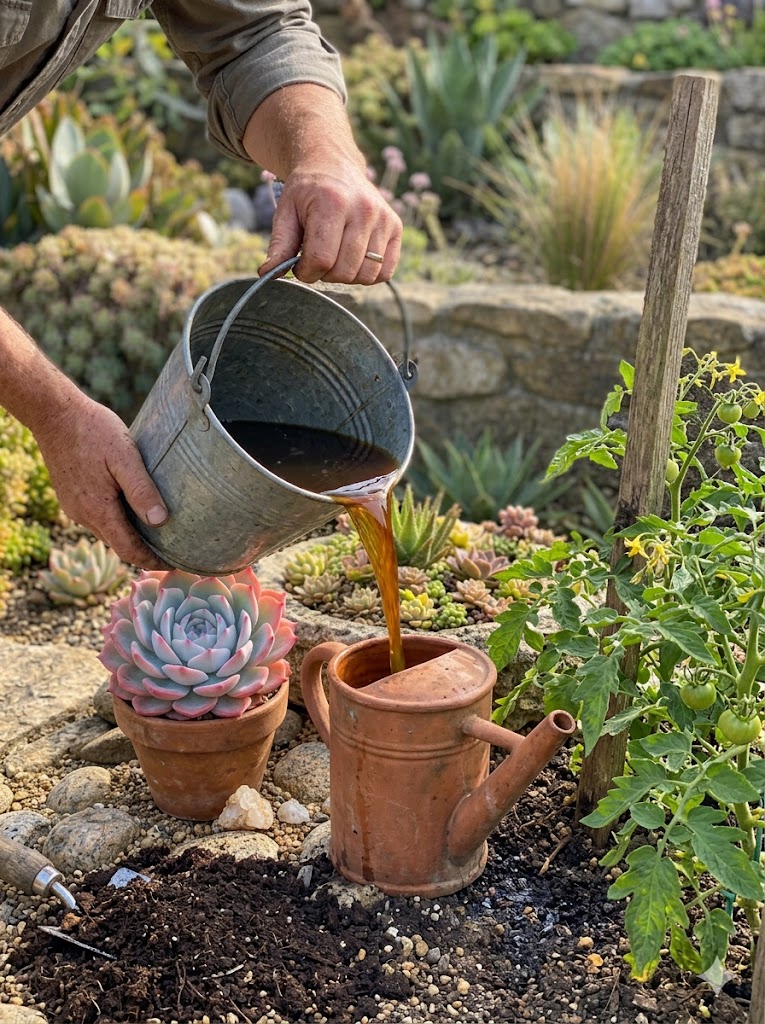
NPK: Variable, approximately 0.5-0.5-0.5 with abundant microorganisms
Fill a 5-gallon bucket 1/3 with finished compost. Fill with water. Let steep for 24 to 48 hours, stirring occasionally. Strain through burlap or cheesecloth. Dilute 1:10 with water and apply as a drench at the root zone or as a foliar spray.
Compost tea is less about the NPK nutrients (which are modest) and more about the beneficial microorganisms — bacteria and fungi that inoculate the soil and improve nutrient availability for plant roots.
2. Nettle Tea

NPK: Approximately 0.7-0.1-0.3 — high nitrogen, high iron
Stinging nettles (Urtica dioica) are one of the richest plant sources of nitrogen and iron available to home gardeners. Wear gloves when harvesting!
Pack a bucket with nettle leaves and stems. Fill with water. Cover with a lid (it smells during fermentation). Steep for 2 to 4 weeks. Dilute 1:10 with water and apply as a root drench. Use for heavy nitrogen feeders: tomatoes, brassicas, corn, and leafy greens.
3. Grass Clipping Tea
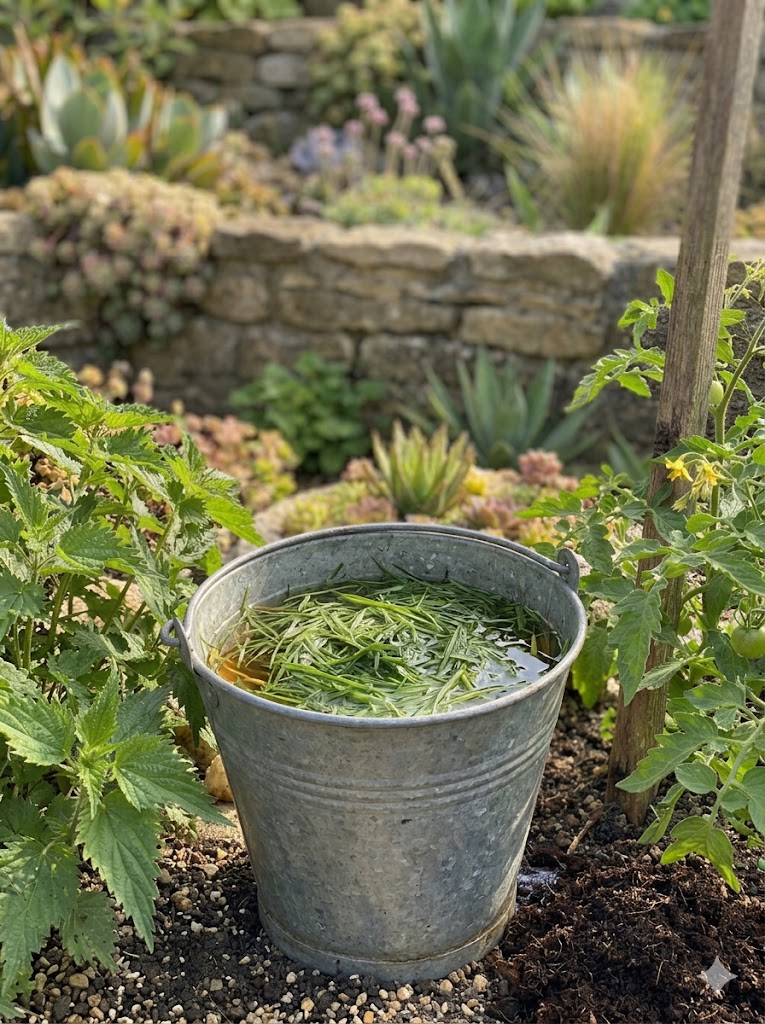
NPK: Approximately 0.5-0.2-0.5
Fill a bucket 1/3 with fresh grass clippings. Fill with water. Steep for 3 to 5 days. Strain and dilute 1:5. Apply as a root drench. Higher nitrogen availability than compost tea, and completely free.
4. Coffee Ground Application
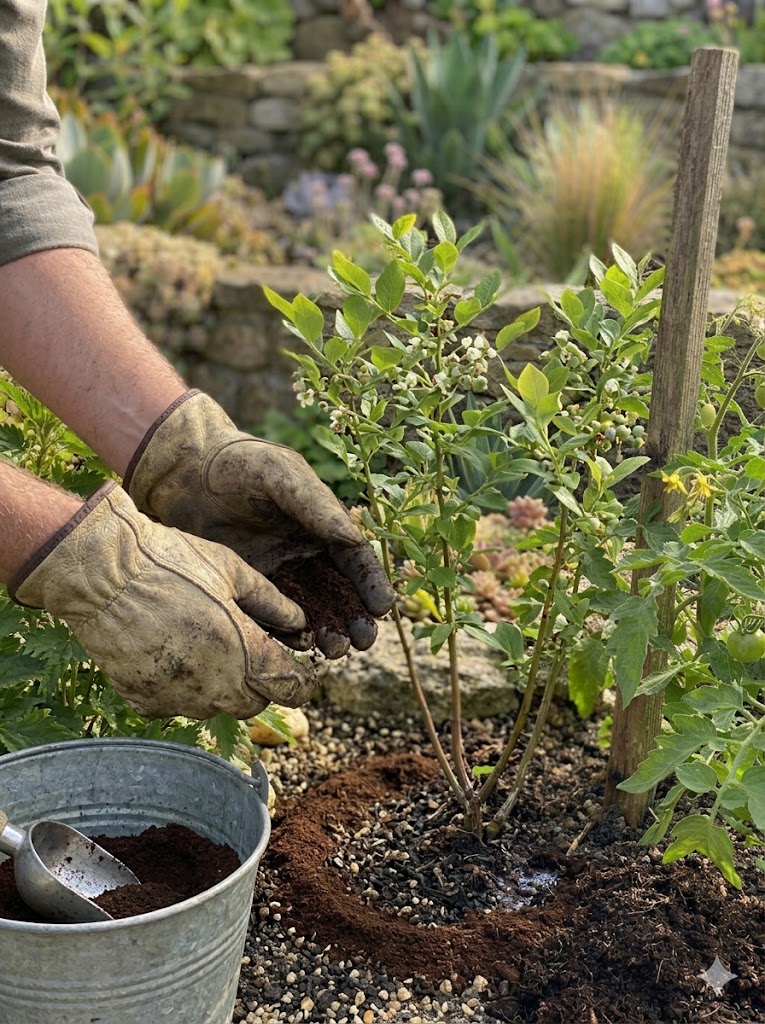
NPK: Approximately 2.1-0.3-0.3 — high nitrogen
Used coffee grounds are a nitrogen-rich soil amendment particularly beneficial for acid-loving plants (blueberries, azaleas, rhododendrons, hydrangeas) and general leafy vegetable use.
Apply a thin layer (1/4 inch maximum) to the soil surface and work in lightly. Do not over-apply — coffee grounds are acidifying and in excess can lower soil pH below the range most vegetables prefer (6.0 to 7.0).
5. Fish Emulsion (DIY Version)
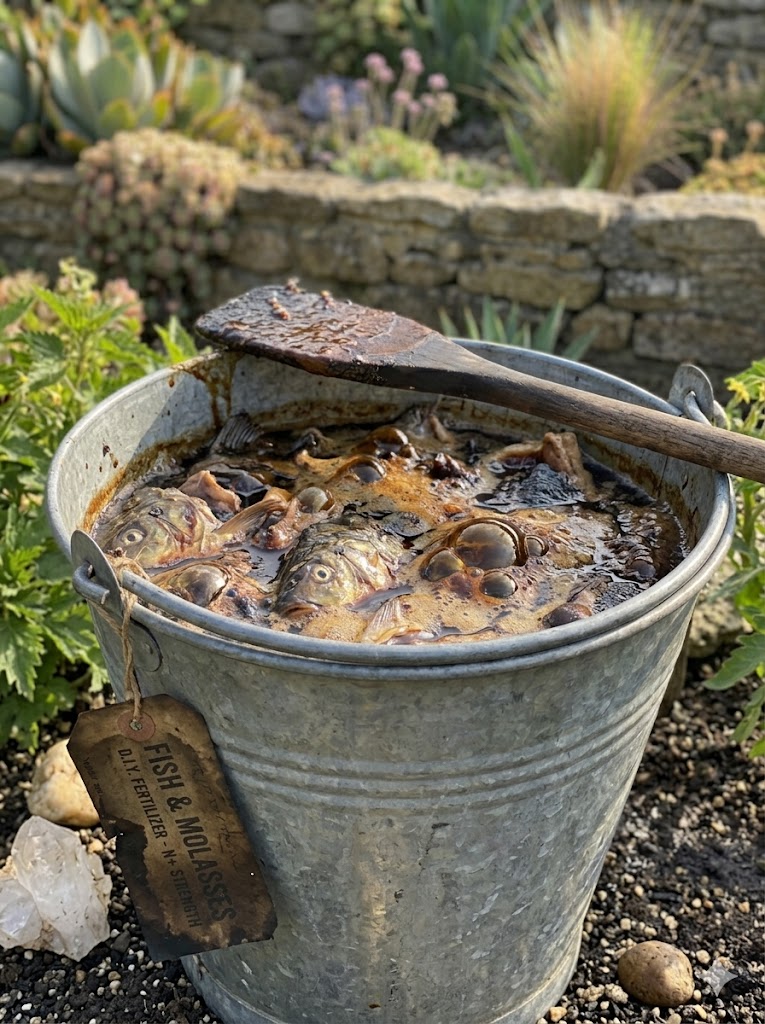
NPK: Approximately 4-1-0 — very high nitrogen
Fill a 5-gallon bucket 1/3 with fresh fish scraps (frames, heads, skins). Fill with water and add 1/4 cup unsulfured molasses (to feed bacteria that break down the material). Cover loosely (gas needs to escape). Steep for 3 to 4 weeks, stirring every few days.
Strain and dilute 1:20 with water. Apply as a root drench. This is one of the most powerful nitrogen sources available organically and is particularly effective for vegetables in heavy growth phases.
- Fair warning: This ferments actively and smells strongly. Keep covered and away from living spaces during fermentation.
High-Phosphorus Fertilizers (Roots and Flowers)
6. Bone Broth / Bone Water
NPK: Approximately 0.5-5-0 — very high phosphorus
Save the cooking water from boiling bones (chicken, beef, pork). Allow to cool. Apply undiluted as a root drench around flowering plants, fruiting vegetables, and seedlings establishing new roots.
The phosphorus in bone broth is in a water-soluble, immediately plant-available form — unlike ground bone meal, which must be microbially broken down before becoming available.
7. Banana Peel Fertilizer
NPK: Approximately 0.6-0.4-11.5 — extremely high potassium, some phosphorus
Dry banana peels in the oven at 200°F until completely dried and crispy. Grind in a blender or food processor. Apply the powder around the base of plants at 1 to 2 tablespoons per plant, or steep 1 cup of dried peels in 1 gallon of water for 24 hours and apply as a liquid.
Alternatively, bury fresh banana peel pieces 2 to 3 inches below the soil surface directly in the root zone of tomatoes, peppers, and roses.
8. Eggshell Solution
NPK: 0-0.4-0 with high calcium
Rinse eggshells and dry in the oven. Grind to a fine powder. For the fastest available form: steep 1 cup powdered shells in 1 gallon water with 1 tablespoon apple cider vinegar (the acid dissolves calcium into the water). Steep for 24 hours. Apply as a root drench.
The vinegar breaks calcium carbonate into calcium acetate, which is immediately soluble — making this calcium available to plants far more quickly than whole or crushed eggshells.
High-Potassium Fertilizers (Fruit and Health)
9. Wood Ash Tea
NPK: 0-1.5-7 — very high potassium, raises soil pH
Collect cooled hardwood ash from a fireplace or fire pit. Mix 1/4 cup of ash in 1 gallon of water. Let settle, then pour off the clear liquid and apply as a root drench.
Wood ash is alkalizing — use on acidic soils or for plants that prefer alkaline conditions. Do not use around blueberries, rhododendrons, or other acid-loving plants.
Do not use ash from treated wood, painted wood, or charcoal briquettes — these contain chemicals harmful to plants.
10. Kelp and Seaweed Spray
NPK: Low macronutrients but rich in micronutrients and plant growth hormones (cytokinins and auxins)
If you live near a coast with access to fresh seaweed: rinse with fresh water to remove excess salt, chop, and soak 1 cup in 1 gallon of water for 24 to 48 hours. Apply as foliar spray or root drench.
Commercial dried kelp meal ($10 to $20 per bag) is available at most garden centers and can be made into tea by steeping 2 tablespoons in 1 gallon of water for 24 hours.
Seaweed’s real value is in its micronutrient content and natural growth hormones that stimulate root development and overall plant vigor.
Comprehensive Liquid Fertilizers
11. Vermicompost Leachate (Worm Bin Liquid)
NPK: Variable, approximately 1-0.5-0.5 with abundant beneficial microorganisms
The liquid that drains from a worm composting bin is often called “worm tea” and is one of the most biologically rich liquid fertilizers available. Dilute 1:10 with water and apply as a root drench or foliar spray. Immediately available to plant roots.
12. Comfrey Fertilizer
NPK: Approximately 1.8-0.5-5.3 — very high potassium, good nitrogen
Comfrey (Symphytum officinale) is called “dynamic accumulator” for its ability to draw nutrients from deep soil layers. Growing it as a dedicated fertilizer plant and making a liquid feed from the leaves is a permaculture staple.
Pack leaves into a bucket, weigh them down with a brick, and cover with water. Steep for 3 to 6 weeks. The resulting dark liquid smells strongly but is one of the most complete organic liquid fertilizers available. Dilute 1:15 before applying.
13. Molasses Drench
NPK: 0-0-0 but feeds soil microorganisms rapidly
Unsulfured blackstrap molasses contains sugars that feed beneficial soil bacteria, helping them break down organic matter faster and make nutrients more available to plants.
Mix 1 tablespoon of unsulfured blackstrap molasses in 1 gallon of water and apply as a root drench. Best used in combination with compost tea for a synergistic microorganism boost.
14. Aquarium Water
NPK: Low but with beneficial nitrogen in ammonia form and live beneficial bacteria
If you have a freshwater aquarium, the water removed during regular tank cleaning is a mild but complete fertilizer. It contains fish waste nitrogen, trace minerals, and beneficial bacteria. Apply directly as a root drench — no dilution needed. Saltwater aquarium water should not be used on terrestrial plants.
15. Milk Dilution
NPK: Low macronutrients but rich in calcium and beneficial proteins
Dilute milk 1:2 with water. Apply as a foliar spray or soil drench around brassicas and fruiting vegetables. Milk proteins, when broken down by soil bacteria, release nitrogen and calcium in plant-available forms. There is also research suggesting that milk sprays have mild antifungal properties against powdery mildew.
Application Tips
- Apply liquid fertilizers in the early morning or evening — midday heat can cause foliar spray to burn leaves
- Always water the root zone before applying concentrated liquid fertilizers to dilute any concentration effect
- More is not more: Over-fertilizing with organic fertilizers can still create nutrient imbalances — follow recommended dilution ratios
- Rotate your fertilizer types to provide a complete range of nutrients over the season rather than repeatedly applying the same amendment
- Soil test every 2 to 3 years to understand what your specific soil lacks — targeted amendments are more effective than generic applications
✅ Tip Store homemade liquid fertilizers in sealed containers away from sunlight. Most remain effective for 2 to 4 weeks refrigerated. Nettle tea and comfrey liquid can be stored indefinitely — they continue fermenting and become more concentrated over time. Label everything clearly. It is easy to forget what is in which bucket. Include the date made, the contents, and the dilution ratio for use. |
Frequently Asked Questions
What is the best homemade fertilizer for vegetables?
Compost tea and nettle tea are the most balanced and broadly effective homemade liquid fertilizers for vegetable gardens. For a complete amendment approach, combine compost tea (for soil microorganisms and balanced nutrition), banana peel or wood ash tea (for potassium), and eggshell solution (for calcium). This covers the three primary macronutrients and calcium without purchasing anything commercial.
Can too much organic fertilizer harm plants?
Yes, though it is far more difficult to over-apply organic amendments than synthetic ones. Excess nitrogen from over-application of fish emulsion or nettle tea can cause rapid leafy growth at the expense of fruit production, and can burn roots if applied undiluted. Always dilute liquid fertilizers as recommended, and do not apply more frequently than once every 2 weeks during the growing season.
The Bottom Line
The most productive vegetable gardens are maintained by gardeners who invest in soil biology rather than simply adding chemical NPK.
Compost, worm castings, and biological liquid fertilizers feed the entire soil ecosystem — creating conditions where plants access a full spectrum of nutrients through microbial partnerships rather than depending on synthetic supplementation.
Start with compost tea and banana peel fertilizer. Add the recipes that use your household waste streams. Over a few seasons, you will build a garden soil that becomes increasingly fertile and productive with minimal purchased inputs.
