
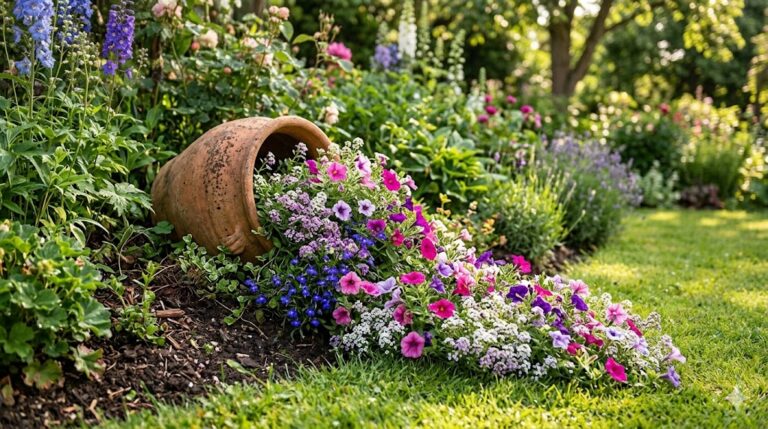
A spilling planter does something that almost no other garden feature can: it creates movement.
The eye follows the cascade of flowers from the container’s lip down toward the ground, creating a sense of living overflow.
When those cascading flowers are also fragrant, the effect reaches two senses at once, and a garden corner that might otherwise be forgotten becomes a destination.
This guide gives you everything to actually create the effect: the best fragrant trailing plants, how to combine scents, which containers work best, and how to manage the display across all three seasons.
What Is a Spilling Planter?
A spilling planter arrangement creates the visual illusion that a container has tipped over and is pouring its contents onto the ground. The technique uses a tipped or angled pot (often partially buried or propped at the edge of a garden bed) with plants arranged to flow outward from the opening in a spreading, curving pattern.
The effect ranges from subtle (a tilted pot with trailing nasturtiums flowing across a border) to theatrical (a large urn half-buried at the edge of a lawn with a river of petunias spreading 3 feet across the grass).
For a fragrant version, plant selection focuses on trailing or mounding varieties with strong scent, positioned so the flowers at ground level release their fragrance at nose height when you lean in, or drift across a seating area on the breeze.
The 10 Best Fragrant Trailing Plants for Spilling Displays
1. Sweet Alyssum (Lobularia maritima)
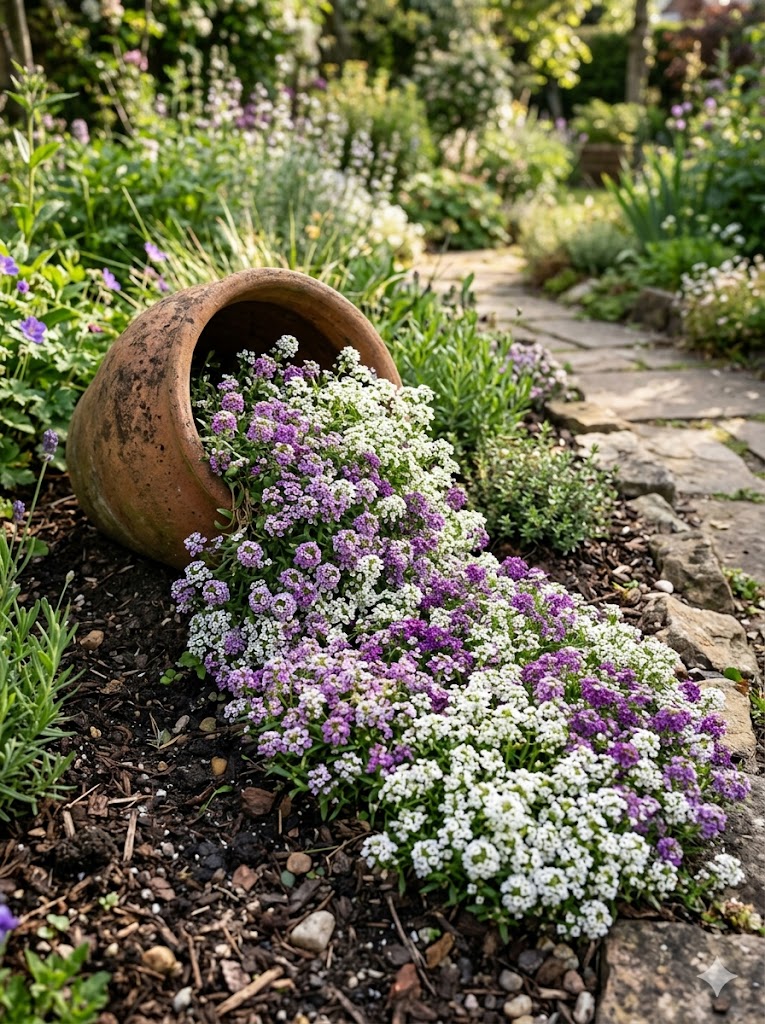
Sweet alyssum is arguably the best fragrant cascading annual available to home gardeners. The tiny white, pink, or purple flowers produce a honey-almond scent that is disproportionately powerful for such small blooms. A mat of alyssum flowing from a tipped pot releases fragrance in waves on warm afternoons.
- Scent: Honey and almonds, light and sweet
- Bloom time: Spring through frost, with a mid-summer pause in extreme heat
- Sun: Full sun to partial shade
- Container behavior: Mounds and cascades naturally, fills gaps around other plants
- Best partner: Combine with deep purple lobelia for a white-and-purple scented cascade
2. Trailing Petunias (Petunia x hybrida — Wave and Supertunia series)
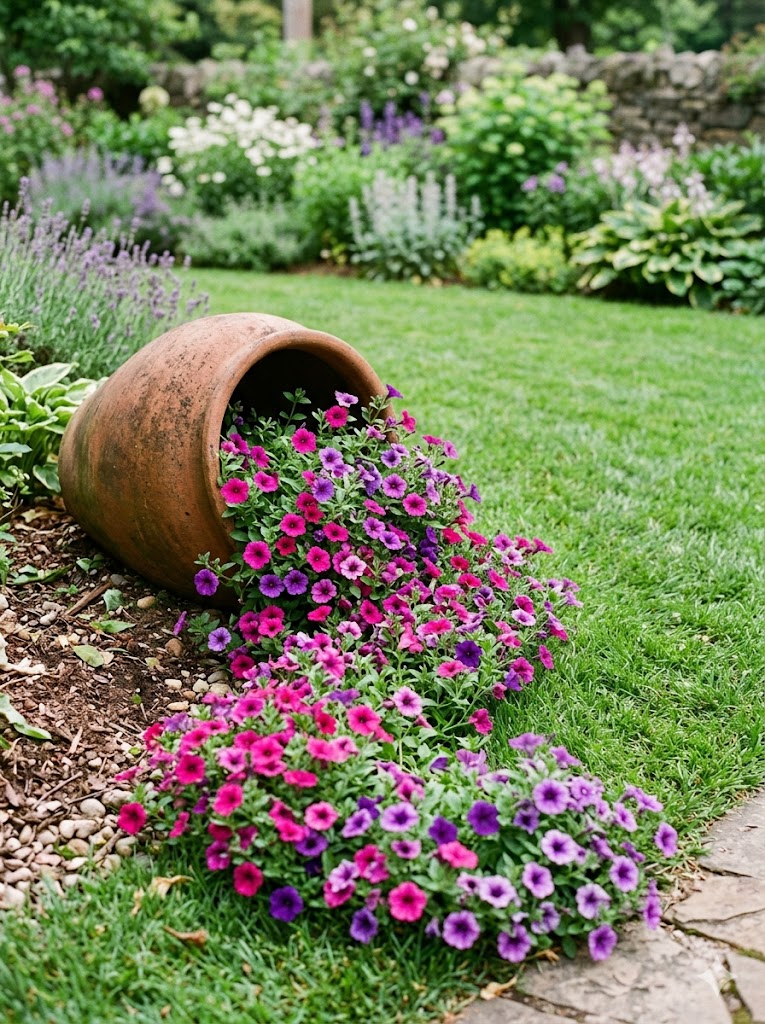
Trailing petunias are the workhorses of summer container displays. The Wave and Supertunia series produce vigorous cascading growth to 18 to 24 inches, covering the “spill” path with continuous color from spring to frost. Many varieties carry a light, sweet fragrance particularly noticeable in the morning.
- Scent: Light floral, most pronounced in cool morning temperatures
- Best fragrant varieties: Supertunia Vista Bubblegum, Wave Purple, Petunia ‘Sugar Daddy’
- Sun: Full sun for maximum bloom
- Maintenance: Deadhead weekly or use self-cleaning varieties to maintain density
3. Heliotrope (Heliotropium arborescens)
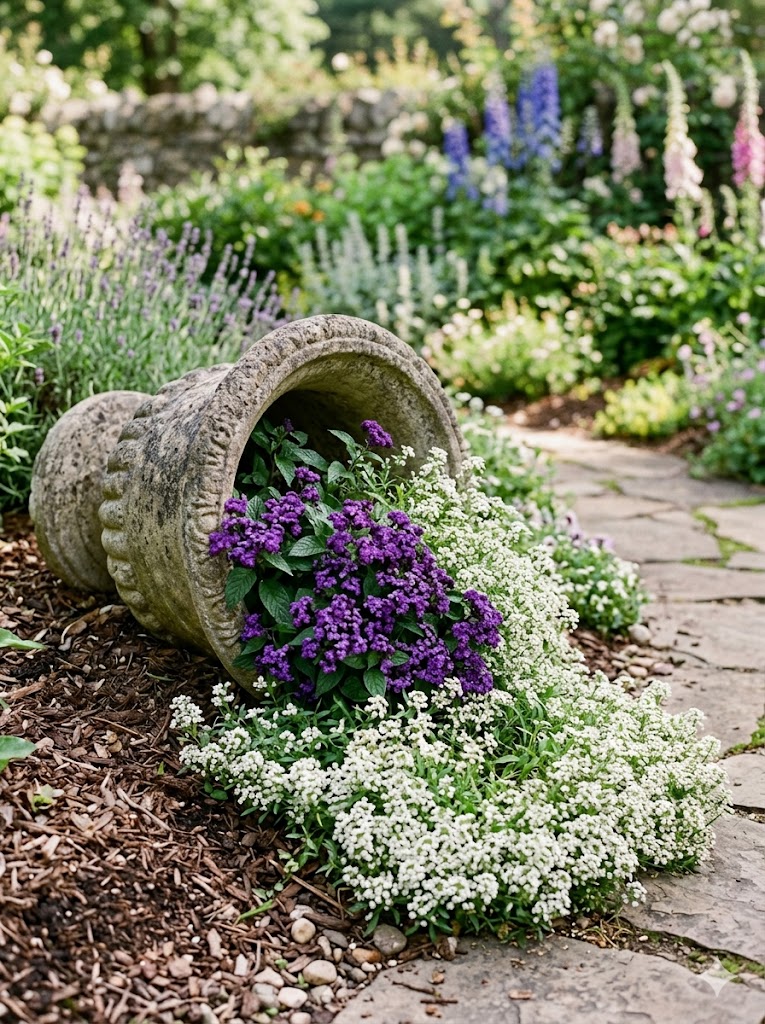
Heliotrope produces clusters of deep purple to violet flowers with one of the most distinctive fragrances in the garden: a rich, warm vanilla-cherry scent that becomes very apparent on warm evenings. Though less cascading than petunias, heliotrope placed at the lip of a spilling arrangement adds extraordinary fragrance.
- Scent: Vanilla and cherry, warm and complex
- Note: Heliotrope is toxic if ingested. Keep away from children and pets.
- Best use in spilling arrangements: Plant at the pot opening; surround with low alyssum to cascade
4. Trailing Verbena (Verbena x hybrida)
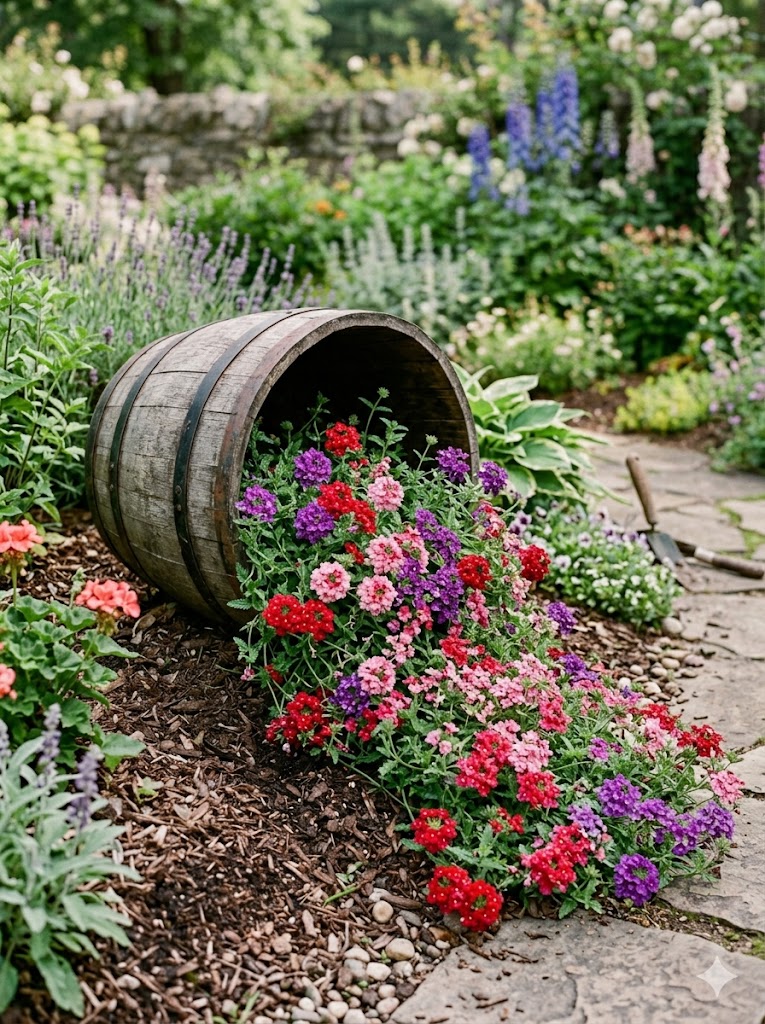
Verbena produces spreading stems that trail 12 to 18 inches with clusters of small flowers in white, pink, red, purple, and bicolor patterns. The scent is soft and slightly spicy, most noticeable in warm afternoons. Excellent drought tolerance makes verbena particularly practical for cascade arrangements that may receive less consistent water.
- Scent: Light, slightly spicy floral
- Bloom time: Spring through frost
- Bonus: Attracts butterflies and is highly resistant to powdery mildew in improved varieties
5. Trailing Lantana (Lantana montevidensis)
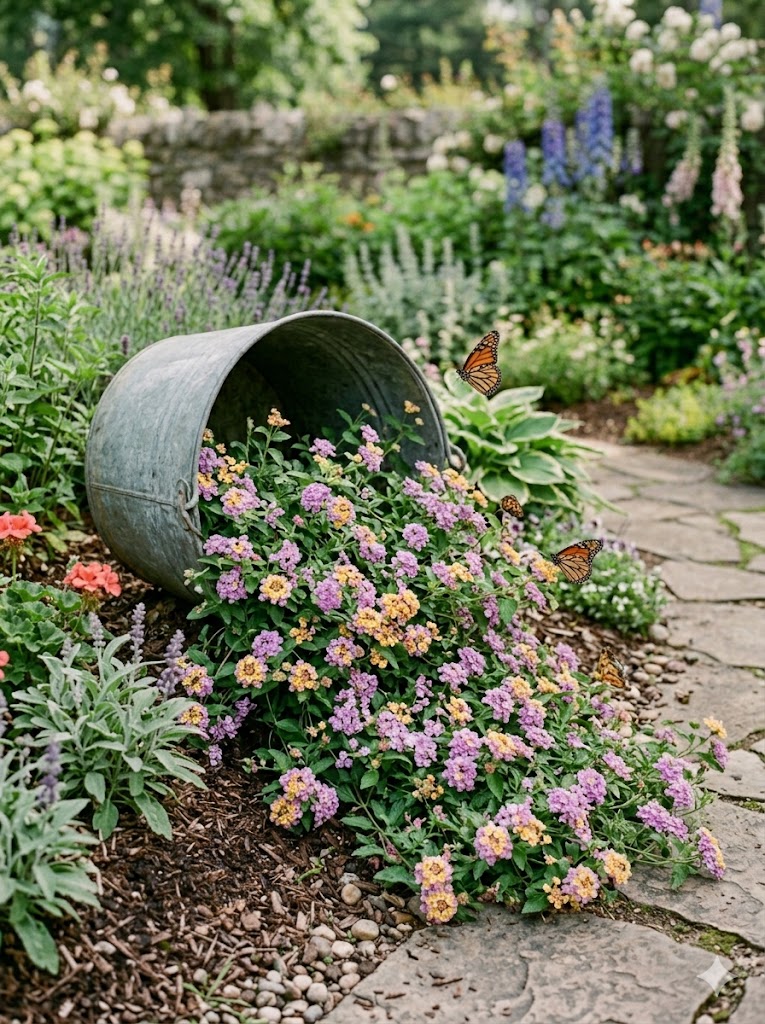
Trailing lantana produces clusters of tiny flowers in lavender-white or yellow-pink that cascade gracefully from containers. The foliage has a distinctive citrus-herbal scent when touched, and the flowers attract butterflies in large numbers. Particularly heat and drought tolerant.
- Scent: Foliage is strongly citrus-herbal when brushed; flowers are lightly fragrant
- Note: Lantana berries are toxic. Best in arrangements where children will not handle the plant.
- USDA zones: Perennial in zones 9-11; annual elsewhere
6. Bacopa / Sutera (Chaenostoma cordatum)
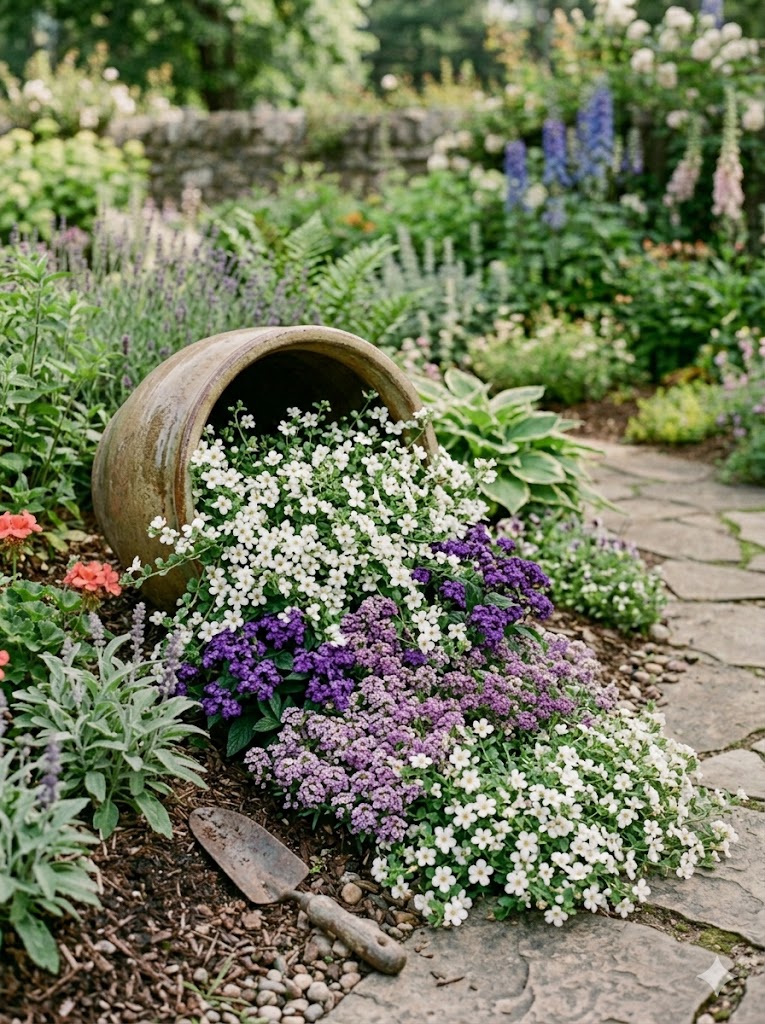
Bacopa produces small white or pink flowers on trailing stems that cascade elegantly from containers. While not strongly fragrant, the plant pairs beautifully with more fragrant companions and provides a delicate, airy texture that softens the overall arrangement.
- Best role: Filler and texture plant in fragrant combos
- Pairs especially well with heliotrope, alyssum, and trailing scented geraniums
7. Scented Geraniums (Pelargonium species)
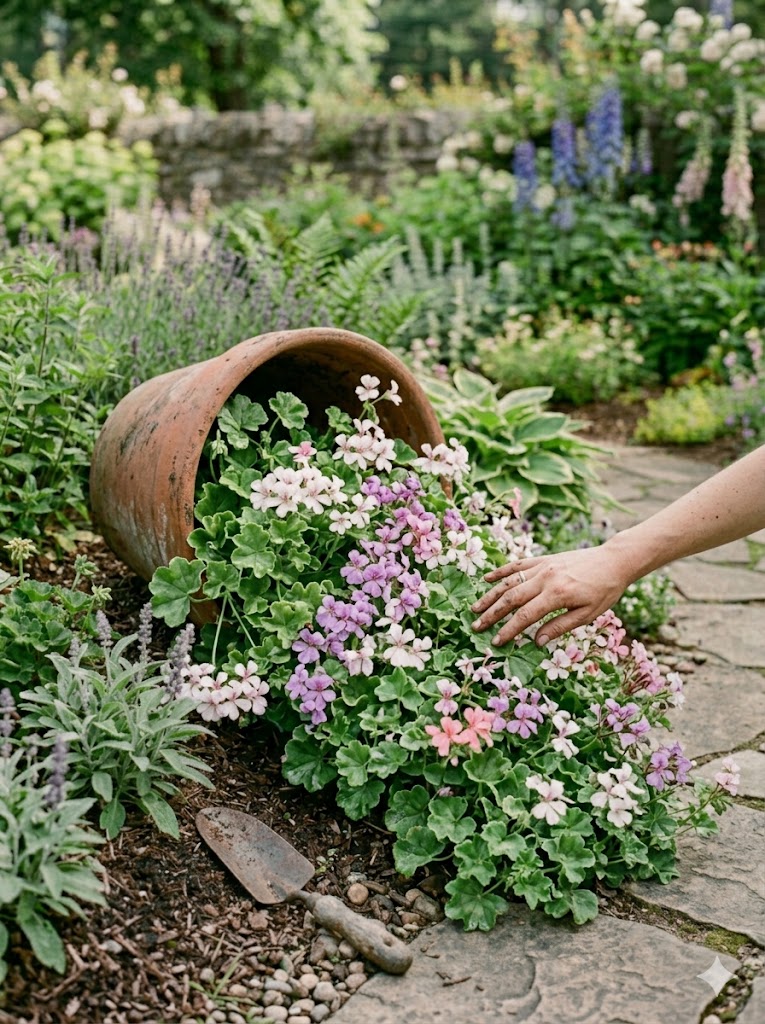
Scented geraniums are not the standard balcony geranium but a related species grown primarily for fragrant foliage: varieties exist with rose, lemon, peppermint, apple, coconut, and many other scent profiles. The trailing varieties cascade attractively from containers, and brushing the leaves releases the scent.
- Best trailing variety: Pelargonium peltatum (ivy geranium) in scented cultivars
- Scent: Varies by variety from rose to lemon to peppermint
- Key point: The fragrance comes from the foliage, not the flowers, activated by touch
8. Trailing Thyme (Thymus serpyllum and varieties)
Creeping and trailing thyme varieties produce a carpet of tiny flowers (white, pink, or purple) with strongly aromatic foliage. Used at the ground level of a spilling arrangement, thyme fills in gaps, suppresses weeds, and releases a fresh herbal scent particularly delightful when walked past.
- Scent: Fresh, herbal, with some varieties carrying lemon overtones
- Best for: Permanent or semi-permanent spilling arrangements in sunny spots
- Zone hardiness: Most trailing thymes are hardy to zone 4
9. Lobularia ‘Easter Bonnet’ Mix
A more heavily fragrant selection of sweet alyssum, with improved heat tolerance for the challenging mid-summer period when standard alyssum pauses. Produces dense, fragrant mounds in mixed colors.
10. Four O’Clocks (Mirabilis jalapa)
Four O’Clocks are mounding plants that overflow naturally from large containers, producing fragrant trumpet-shaped flowers that open in late afternoon and evening. The scent is jasmine-like and particularly strong at dusk.
- Scent: Jasmine and spice, strongest in evening
- Best use: Evening garden seating areas where their evening fragrance is most enjoyed
- Note: Seeds are toxic. Position carefully around children.
How to Create a Spilling Planter: Step by Step
- Choose a container with character: terracotta urns, wooden barrels, galvanized buckets, ceramic pots, old wheelbarrows, and stone troughs all work. The container shape should allow for an open mouth positioned at ground level.
- Prepare the site: Choose a spot in a garden bed where the spill will be visible and accessible. Remove grass or weeds from the area where plants will cascade.
- Position the container: Tilt at 30 to 45 degrees, mouth facing downhill. Secure with a large stone or brick underneath, or partially bury the base. The pot opening should rest nearly at soil level.
- Fill and plant inside the pot: Add drainage material, fill with potting mix, and plant 2 to 3 fragrant plants inside the container to create the “source” of the spill.
- Create the cascade: Plant fragrant trailing varieties in the ground immediately in front of the pot opening, in a fan or teardrop shape that widens as it extends away. Use high-density planting to create a full, overflowing effect quickly.
- Add gravel or pebbles: Optionally, scatter white or light-colored pea gravel among the plants in the “spill path” to reinforce the visual illusion of poured liquid.
Fragrance Combination Strategies
Not all fragrances blend well. Consider these combinations:
- Sweet and floral: Alyssum + trailing petunia + bacopa — gentle, all-day fragrance suitable near seating areas and entrances
- Rich evening scent: Four O’Clocks + heliotrope + trailing verbena — peaks in late afternoon and evening, ideal for outdoor dining spaces
- Herbal and fresh: Creeping thyme + lemon-scented geranium + alyssum — a kitchen garden adjacent combination that releases fragrance when brushed
Avoid combining strongly competing fragrances (mint and jasmine, for example) in the same arrangement. The competing scents confuse rather than delight.
Seasonal Care and Rotation
A well-managed spilling planter changes through the season:
- Spring (cool season): Sweet alyssum, trailing lobelia, pansies. Best fragrance period for alyssum in mild temperatures.
- Summer (warm season): Trailing petunias, verbena, bacopa, heliotrope, lantana. Heat-tolerant trailing plants for the peak display season.
- Fall (cool return): Repeat alyssum (it rebounds with cooler temperatures), add trailing nasturtiums for spicy fragrance and edible interest.
✅ Tip For the strongest fragrance effect, position spilling planters near heat-trapping surfaces: stone walls, south-facing fences, and paved areas. Heat radiating from these surfaces in the afternoon warms the flowers and intensifies volatile aromatic compounds. Deadhead trailing petunias and verbena every 7 to 10 days to maintain the dense, cascading shape and prevent the plants from setting seed and stopping flower production. |
Frequently Asked Questions
What flowers work best for spilling planters?
Sweet alyssum, trailing petunias, verbena, and bacopa are the most reliable performers for trailing displays. For fragrance specifically, alyssum and heliotrope are the standouts. All of these are widely available as transplants at garden centers in spring.
How do I stop a tipped pot from falling over?
The most reliable methods are partial burial (dig the base 3 to 4 inches into the soil), a large flat stone placed underneath the back of the pot to hold the angle, or cement adhesive applied to a decorative rock or brick attached to the base. For permanent installations, a short rebar spike driven through drainage holes into the soil works extremely well.
The Bottom Line
A spilling planter with fragrant flowers is one of the most distinctive and conversation-worthy features you can add to a garden with minimal cost and effort.
Plant alyssum, trailing petunias, and heliotrope in your first attempt. Give the arrangement full sun and consistent water. Within three to four weeks, you’ll have a cascade of fragrant color that looks like it took a professional landscaper to create.
