
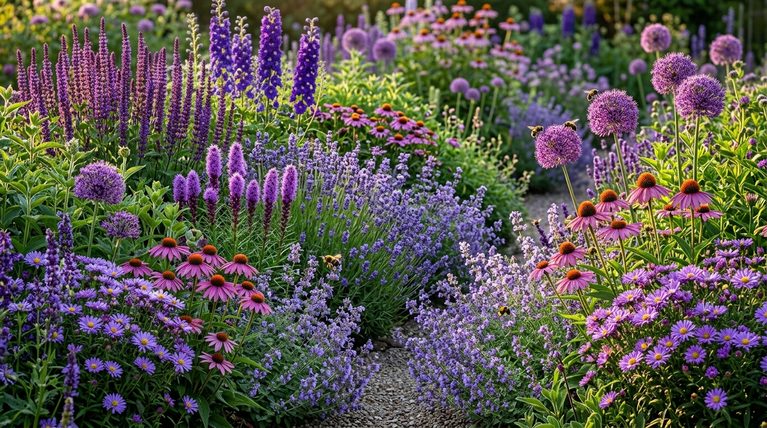
Purple is arguably the most regal and versatile color in the garden palette.
It works equally well in formal, cottage, and naturalistic garden styles.
It harmonizes beautifully with almost every other color, from silver and white to deep red and orange.
And perennial purple plants offer something that annual purples cannot: they come back every year, often spreading and improving as they mature.
This guide presents 15 of the finest purple perennial flowers available to home gardeners.
We go well beyond a simple list to give you bloom times, companion planting advice, and detailed care guides for each plant.
Why Purple Perennials Are Essential in Any Garden
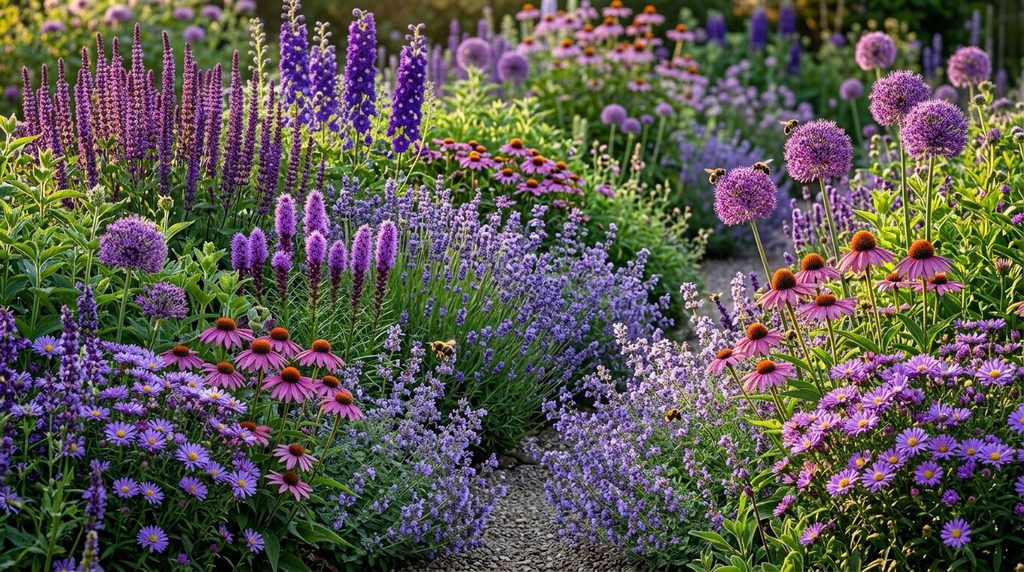
Purple occupies the meeting point between warm and cool on the color wheel, which is why it works as a unifier in mixed planting schemes.
Deep purples and violets recede visually, making spaces appear larger and deeper.
Pale lavenders and mauves catch and reflect light beautifully, glowing at dusk when many other colors disappear.
Purple flowers are also disproportionately attractive to bees and butterflies, which are drawn to the UV reflectance patterns that many purple blooms produce.
A garden with plenty of purple perennials is not just beautiful to human eyes.
It is a living ecosystem.
15 Best Purple Perennial Flowers
1. Salvia nemorosa (Ornamental Sage)
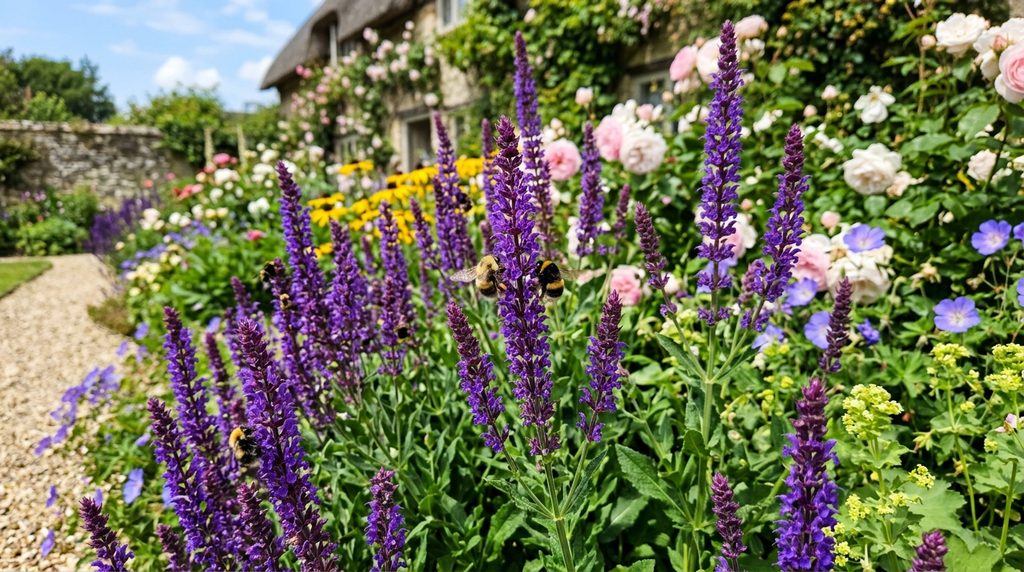
One of the most reliable and long-blooming purple perennials available.
Dense spikes of violet-purple flowers from June through August, with a second flush in September if cut back after the first display.
‘Caradonna’ has black stems that make the purple flowers even more dramatic.
Hardy to zone 5, deer resistant, and beloved by bees.
2. Echinacea purpurea (Purple Coneflower)
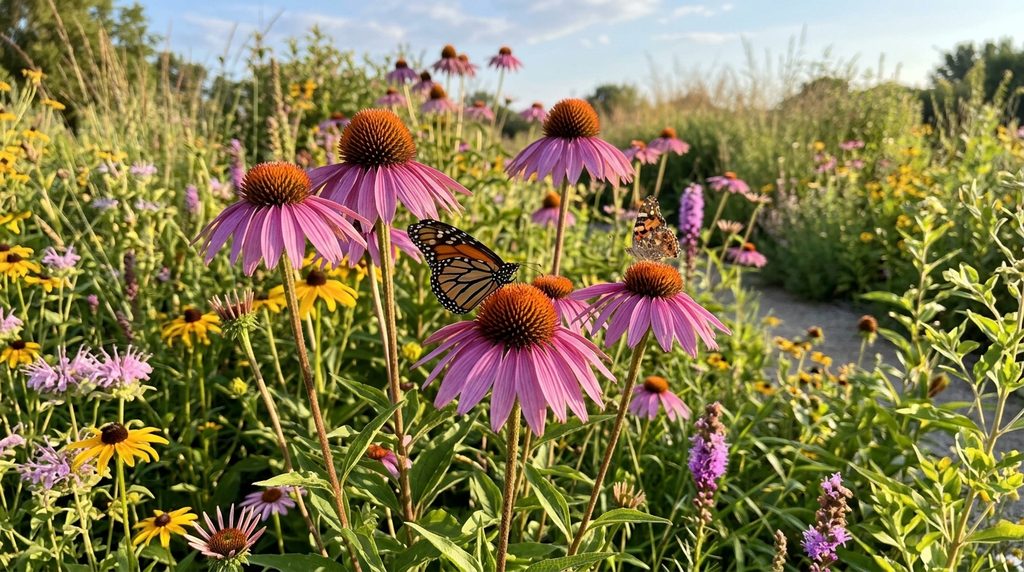
A North American native that blooms from July through September with large, daisy-like flowers in rosy purple with distinctive orange-bronze central cones.
One of the best perennials for wildlife, supporting bees in summer and goldfinches in winter when the seed heads are left standing.
Hardy to zone 3.
3. Lavandula angustifolia (English Lavender)
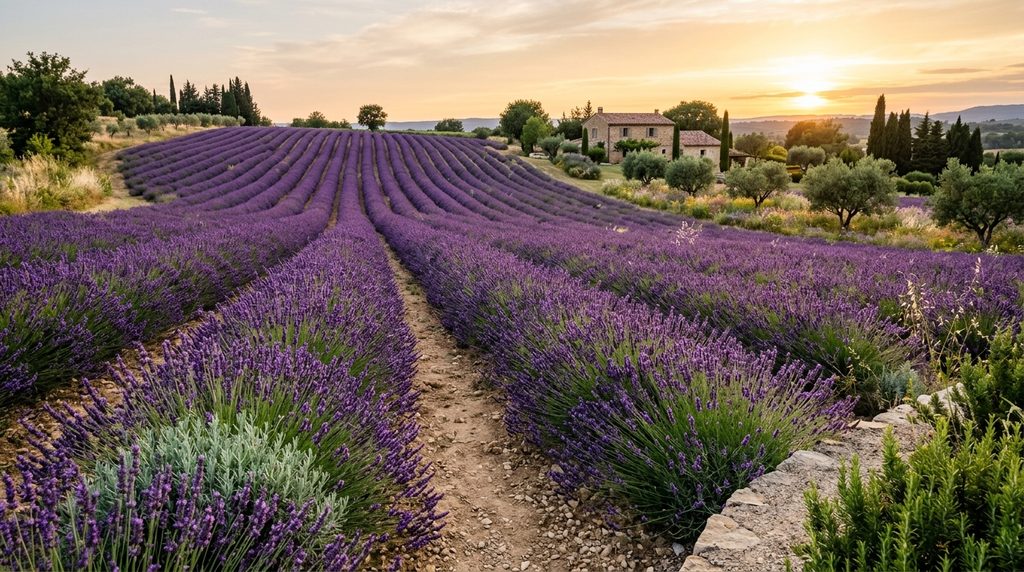
The most fragrant purple perennial of all.
Lavender blooms from June through August in a range of purple shades from pale lilac to deep violet.
Hardy to zone 5.
Annual pruning after flowering keeps it compact and productive for 15 to 20 years.
4. Nepeta x faassenii (Catmint)
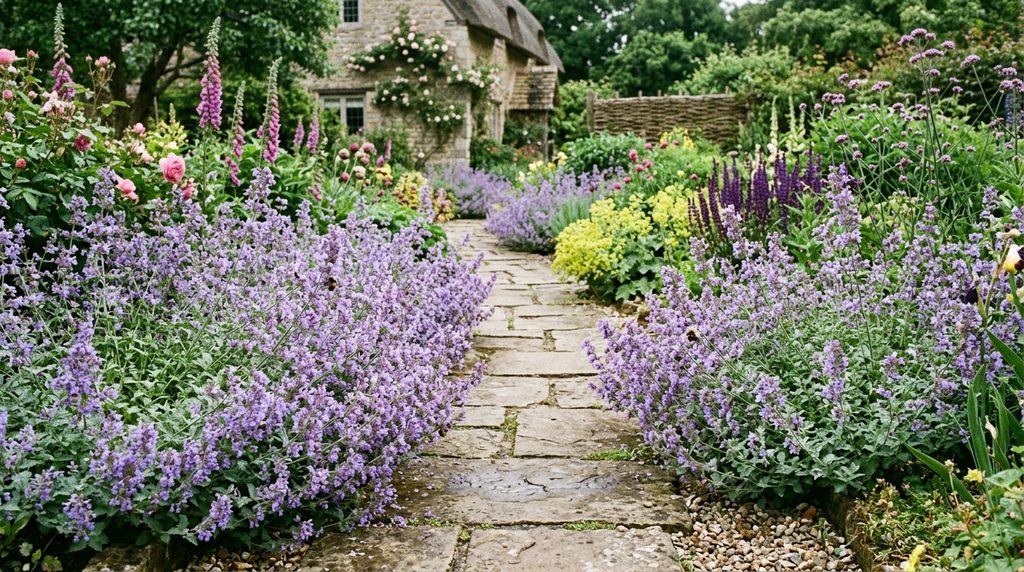
A cloud of lavender-blue flowers above silver-grey foliage from May through September, with regular deadheading.
Cut back by half after the first flush in July and it rebounds within 3 to 4 weeks with fresh growth and a second display.
Hardy to zone 4.
Completely deer and rabbit proof.
5. Agapanthus (African Lily)
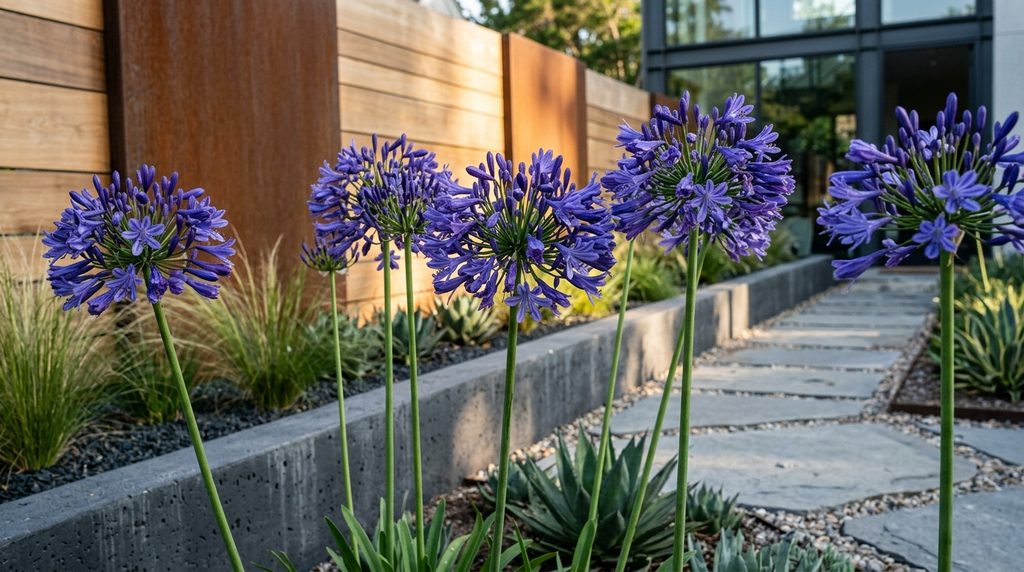
Tall stems carrying globe-shaped clusters of violet-blue or deep purple flowers from July through September.
One of the most architectural purple perennials, delivering dramatic height and structure to borders and containers.
Hardy to zone 7.
In colder zones, grow in containers and overwinter indoors.
6. Veronicastrum virginicum (Culver’s Root)
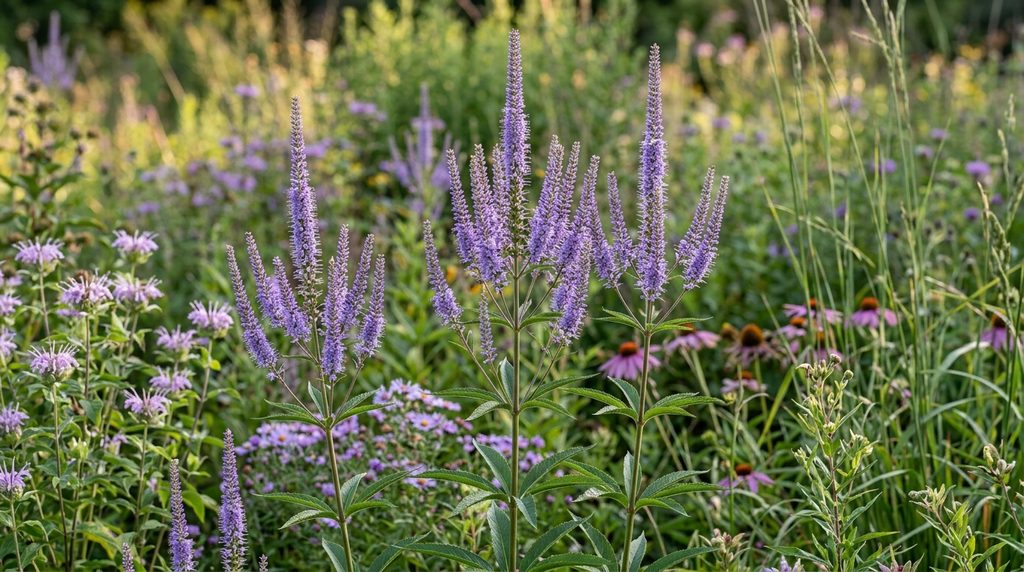
Tall, elegant spires of lavender-purple flowers on stately upright stems from July through September.
One of the most architectural perennials for the back of a border.
Reaches 5 to 6 feet and provides dramatic vertical structure.
Hardy to zone 3.
7. Geranium ‘Rozanne’
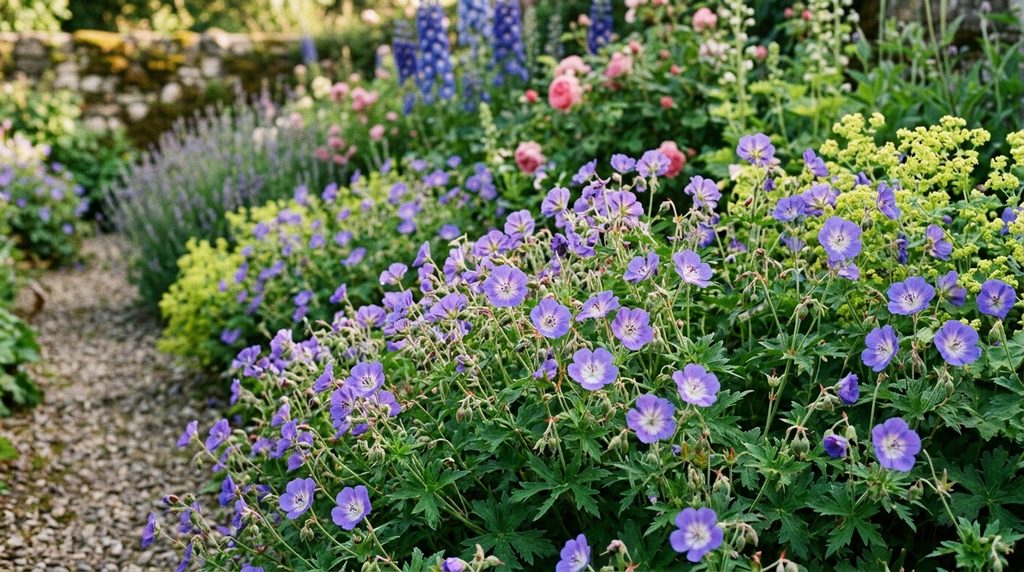
Perhaps the most widely recommended border perennial of the last two decades.
‘Rozanne’ produces large, violet-blue flowers with white centers continuously from June through October with virtually no deadheading required.
Spreads to form a weed-suppressing ground cover.
Hardy to zone 5.
8. Allium ‘Purple Sensation’

Spherical, deep purple flower globes on 24-inch stems in May and June.
One of the most photogenic plants in the spring garden.
Hardy bulb that naturalizes reliably.
Plant in autumn in full sun with excellent drainage.
9. Iris germanica (Bearded Iris)
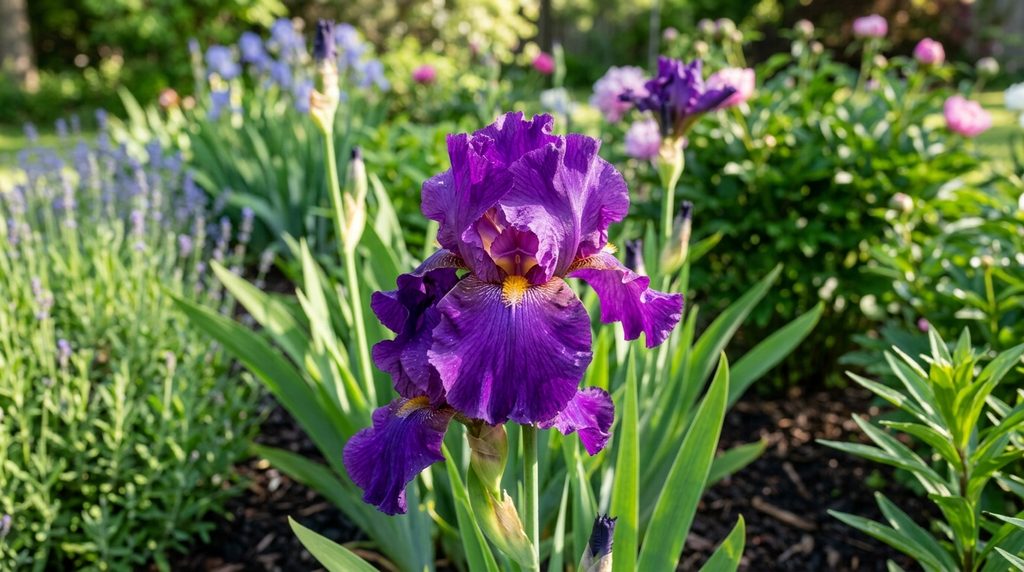
The purple varieties of bearded iris, including ‘Black Tie Affair’, ‘Midnight Oil’, and ‘Sultan’s Palace’, deliver dramatic, deeply colored blooms in May and June.
Bearded irises are drought-tolerant once established and extremely long-lived perennials in well-drained soil in full sun.
10. Baptisia australis (False Indigo)
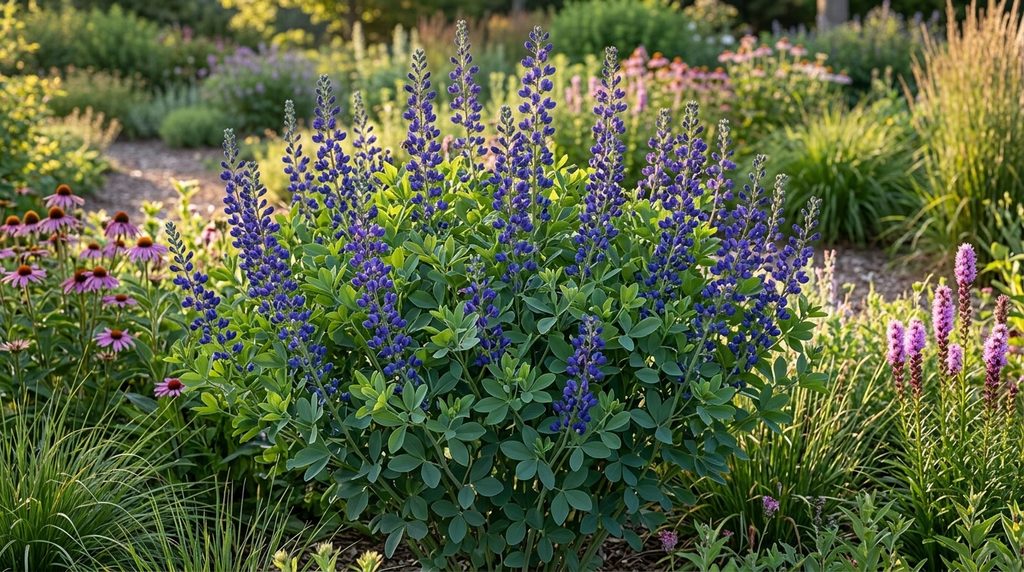
Deep indigo-blue flowers in May and June followed by attractive inflated seed pods.
A slow-growing but extremely long-lived native perennial that is virtually indestructible once established.
Hardy to zone 3.
Requires no staking, no deadheading, and almost no maintenance.
11. Penstemon ‘Dark Towers’

Deep purple-pink tubular flowers on dark-stemmed spikes from June through September.
The dark, bronze-purple foliage provides year-round interest.
Attracts hummingbirds consistently.
Hardy to zone 4.
12. Liatris spicata (Blazing Star / Gayfeather)
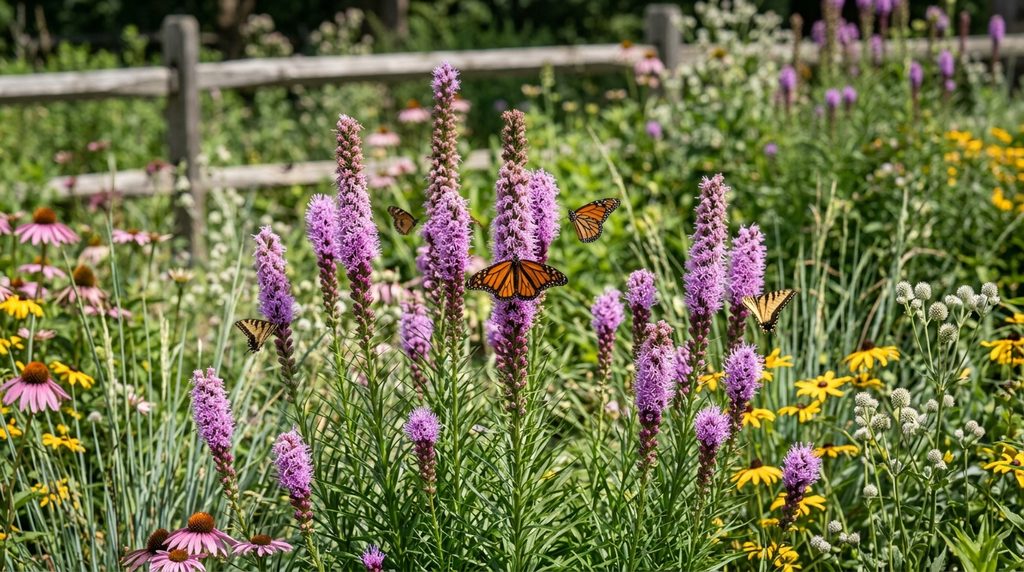
Unusual in that its purple flower spikes open from the top down rather than the bottom up.
Blooms in July and August in deep rosy purple.
Absolutely magnetic for butterflies, particularly monarchs and swallowtails.
Hardy to zone 3.
13. Delphinium (Tall varieties)
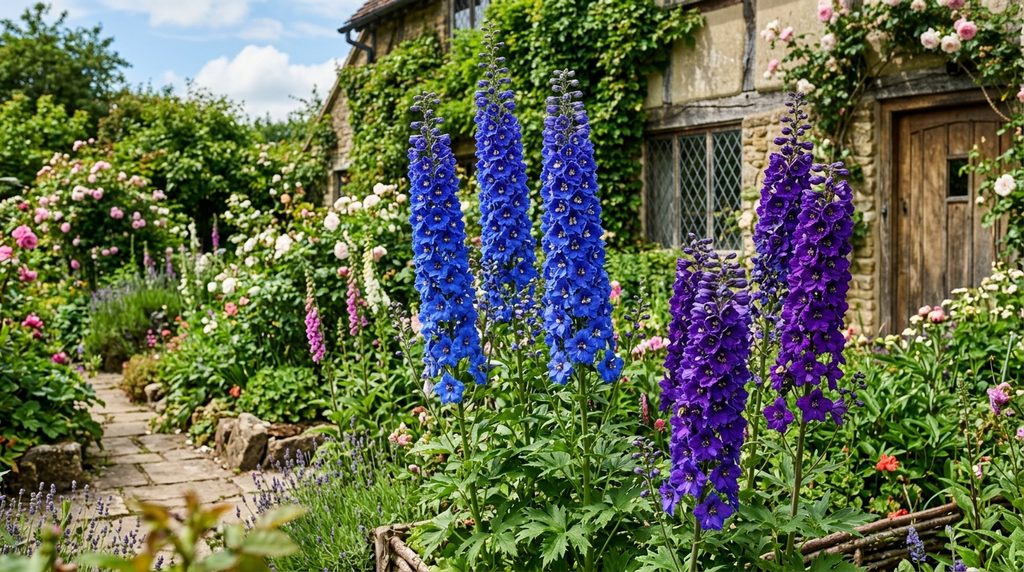
The towering, cobalt-blue to deep purple flower spires of delphiniums are among the most dramatic sights in the summer garden.
They require staking in exposed positions but are completely worth the effort.
Cut back after the first flush in July for a second display in September.
14. Aster (Symphyotrichum)
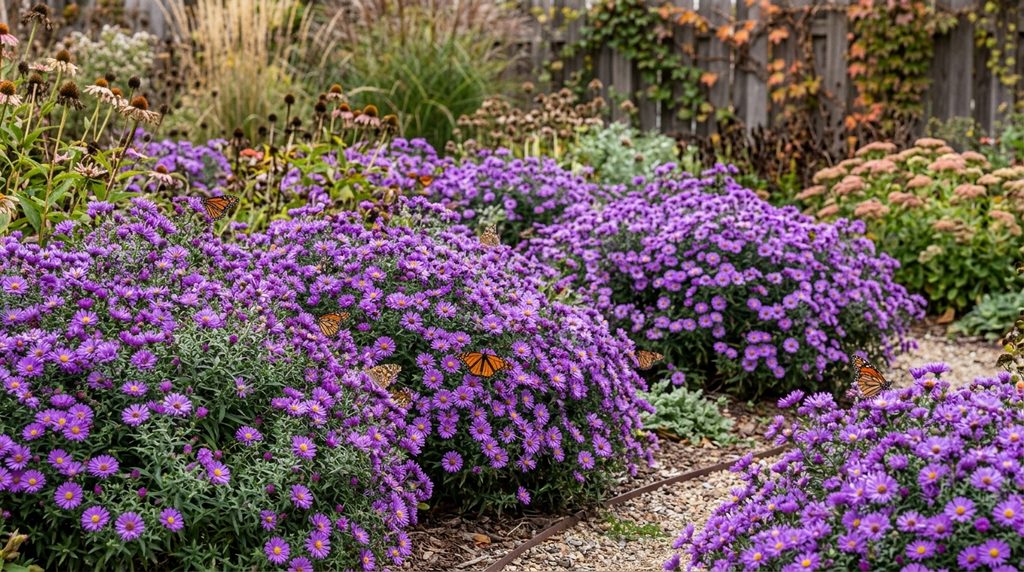
Autumn’s purple champion.
Asters produce masses of daisy-like flowers in shades from pale lavender to deep purple from August through October, providing vital late-season nectar for migrating butterflies and late bees.
Varieties like ‘Purple Dome’ stay compact without staking.
15. Aconitum (Monkshood)
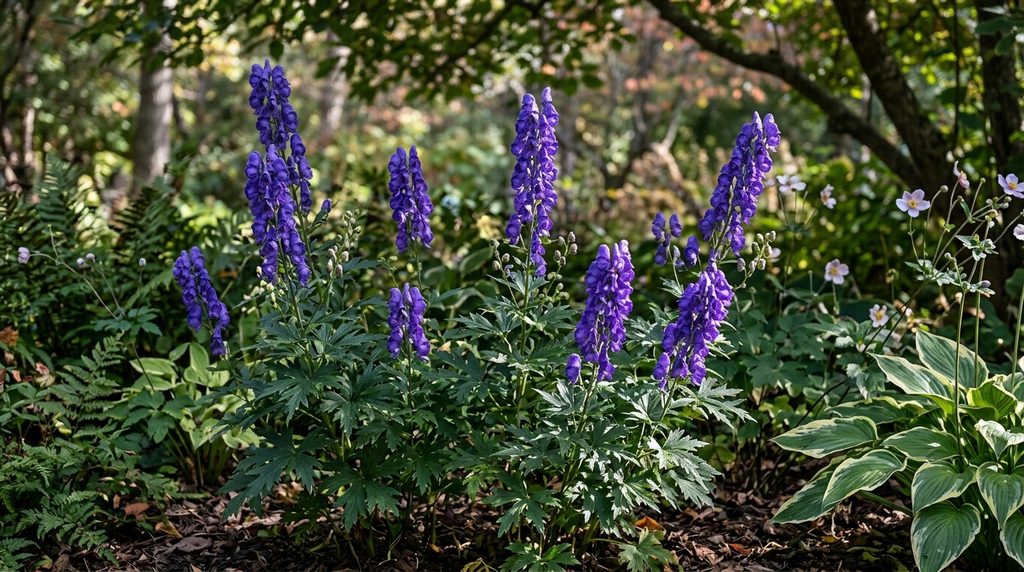
Deep violet-blue, hooded flowers on tall spikes from August through October, providing rich purple color at the back of a border when many other perennials are fading.
Extremely shade tolerant.
Note: all parts of aconitum are poisonous and gloves should be worn when handling.
Designing with Purple Perennials
- Layer bloom times: Combine spring-blooming alliums and irises with summer-blooming salvias and echinacea and autumn-flowering asters for a purple display that runs from April through October
- Play with shade variation: Pair deep violet salvias with pale lavender catmint for a sophisticated tonal scheme within the purple family
- Use silver as a connector: Silver foliage plants like artemisia and stachys byzantina (lamb’s ears) harmonize beautifully with all shades of purple
- Add white for freshness: White flowers like white echinacea or white gaura prevent an all-purple scheme from feeling heavy
- Contrast with yellow: Yellow and purple are complementary colors and create the most vibrant, high-energy pairings in the garden
Frequently Asked Questions
These are optimized for Google’s People Also Ask feature and featured snippet positions.
|
Q: What is the longest blooming purple perennial? A: Geranium ‘Rozanne’ is widely considered the longest-blooming purple perennial, flowering continuously from June through October. Catmint (Nepeta) is a close second, blooming from May through September with regular deadheading. |
|
Q: What purple perennials grow in shade? A: Aconitum (monkshood), Geranium ‘Rozanne’, Salvia nemorosa (partial shade), and Liriope muscari (lilyturf) are the best purple perennials for shaded conditions. |
|
Q: What purple perennials attract butterflies? A: Lavender, echinacea, liatris, salvia, asters, and verbena bonariensis are the most consistently effective purple butterfly plants. Liatris is particularly famous for attracting monarch butterflies during their autumn migration. |
|
Q: Are purple perennials deer resistant? A: Many purple perennials are deer resistant because deer avoid strongly aromatic plants. Lavender, catmint, salvia, and agastache are all reliably deer-proof. Delphinium and echinacea are sometimes browsed, especially in areas with high deer pressure. |
Conclusion
Purple perennials are one of the best investments a gardener can make.
They return every year, spread to fill the space generously, attract wildlife throughout the season, and work harmoniously with virtually every other garden color.
With the 15 varieties on this list, you can have purple flowers in your garden from April through October.
Choose three or four that suit your conditions and start there.
Let them establish for two or three years and watch as they transform from small transplants into substantial, floriferous clumps that reward you more generously with every passing season.
That is the deepest pleasure of perennial gardening.
The garden keeps getting better.
