
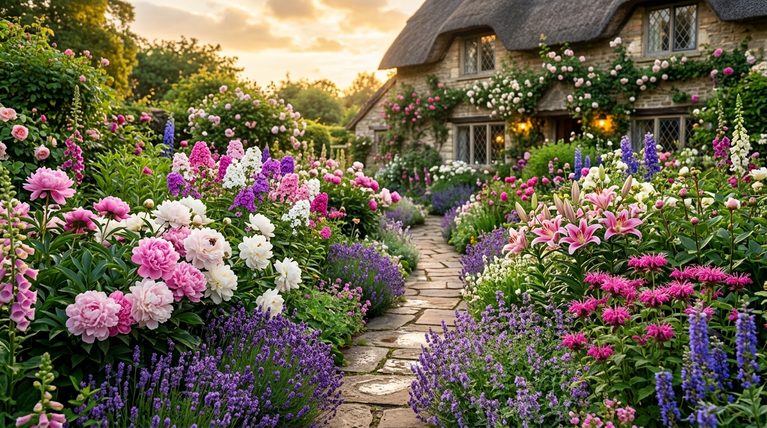
Fragrance is the most overlooked design element in the home garden.
Colors fade. Structures eventually age. But a garden that smells wonderful is an experience that stays with people, the kind of thing that triggers memories years later when someone walks past a similar scent somewhere else.
The key to continuous garden fragrance is succession: choosing plants that peak at different times, so the aromatic relay never fully breaks.
Here are 10 perennials selected specifically to cover spring through fall with minimal overlap, giving you as close to year-round scent as most US climates allow.
How to Design a Fragrant Garden
Before the plant list, a few design principles that maximize the experience of garden fragrance:
- Place fragrant plants near paths, gates, and seating areas where people slow down and spend time. Fragrance that drifts across an open lawn often goes unnoticed.
- Group plants in masses of at least 3 to 5 individuals. Single plants of even the most intensely scented perennial often fail to produce a “cloud” of fragrance that catches attention.
- Mix leaf-scented plants (lavender, catmint, bee balm) with flower-scented plants (peonies, garden phlox, lily). Leaf fragrance is released by touch or brushing — flower fragrance is passive and drifts on air movement.
- Layer heights: low fragrant groundcovers at path edges, medium-height perennials in border middles, taller fragrant plants at the back that release scent downwind.
- Sequence bloom times for continuous fragrance. The plants below are arranged by typical bloom season.
Early Spring (March to May)
1. Lily of the Valley (Convallaria majalis)
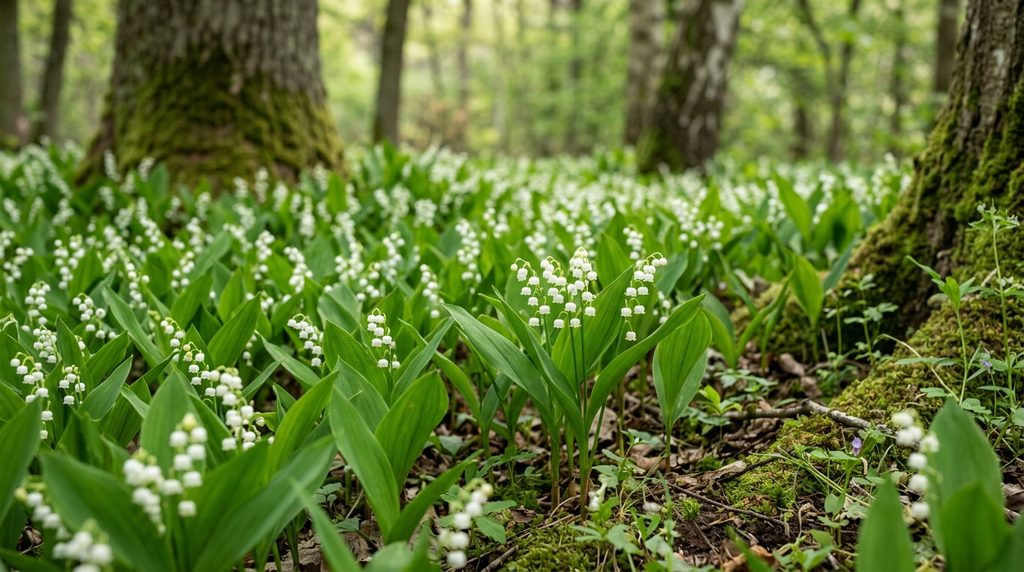
Bloom time: April to May | Zones: 2 to 7 | Height: 6 to 10 inches
Lily of the Valley is famous for an almost overwhelming sweet, fresh fragrance that has influenced perfumery for centuries — it is the signature scent of Christian Dior’s Diorissimo and has been used in wedding bouquets across cultures for generations.
The scent comes from the compound bourgeonal and around 100 other volatile compounds released by the tiny bell-shaped white flowers. It spreads easily on cool spring air and can be detected from 20 to 30 feet away in still conditions.
- Care: Grows best in part shade to full shade in consistently moist, humus-rich soil
- Spreads aggressively via rhizomes — plant in contained areas or use underground barriers
- All parts toxic if ingested: keep away from pets and children
- Caution: Not suitable for hot, humid climates (zones 8+) where it typically struggles
2. Peony (Paeonia lactiflora hybrids)
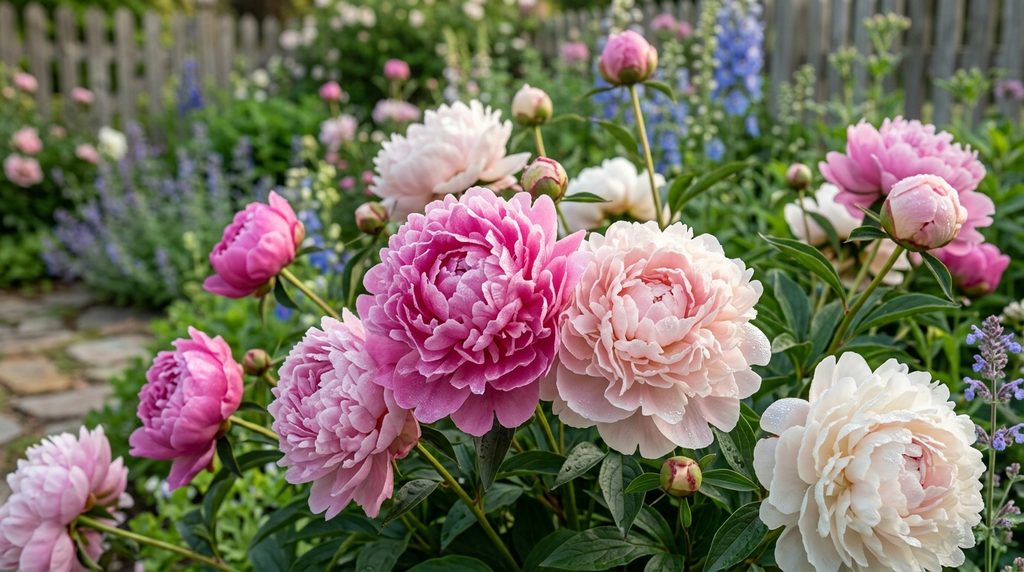
Bloom time: May to early June | Zones: 3 to 8 | Height: 24 to 36 inches
The peony’s fragrance ranges from sweet and rosy to spicy and citrusy, depending on variety. Double-flowered varieties tend to be the most intensely scented.
Most fragrant varieties: Sarah Bernhardt (classic rosy-sweet), Festiva Maxima (strong, sweet), Karl Rosenfield (deep rose scent), Eden’s Perfume (extremely fragrant, AAS winner).
- Care: Full sun, well-draining soil, plant with eyes no more than 1 to 2 inches below soil surface
- Longer-lived than almost any other perennial — established clumps can thrive for 50+ years without division
- Ants on peony buds are harmless — they are attracted to nectar and do not damage the plant
Late Spring to Early Summer (May to July)
3. Catmint (Nepeta x faassenii)
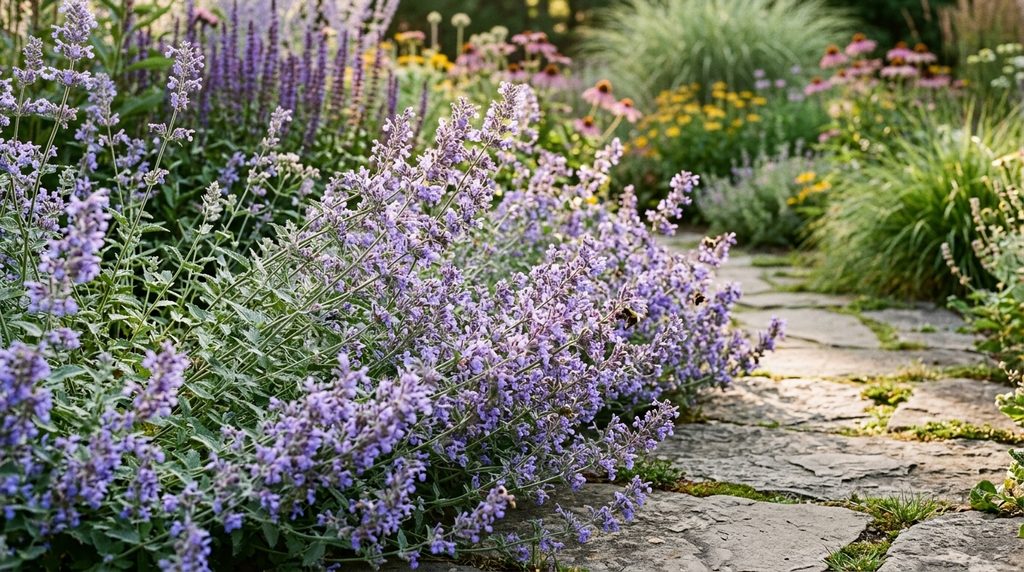
Bloom time: May through September | Zones: 4 to 8 | Height: 12 to 24 inches
Catmint offers a two-for-one aromatic experience: its small lavender-blue flower spikes have a light, fresh scent, while its soft gray-green foliage releases a sharp, minty-herbal fragrance when brushed or crushed.
It blooms for an exceptionally long period — May through September in most regions, with a heavy rebloom after cutting back by half in midsummer. Proven Winners’ ‘Walker’s Low’ and ‘Cat’s Meow’ are particularly long-blooming.
- Care: Full sun, excellent drainage, minimal watering once established
- Highly drought tolerant; deer and rabbit resistant
- Cut back by one-third to one-half after the first bloom flush for robust reblooming
4. Garden Phlox (Phlox paniculata)
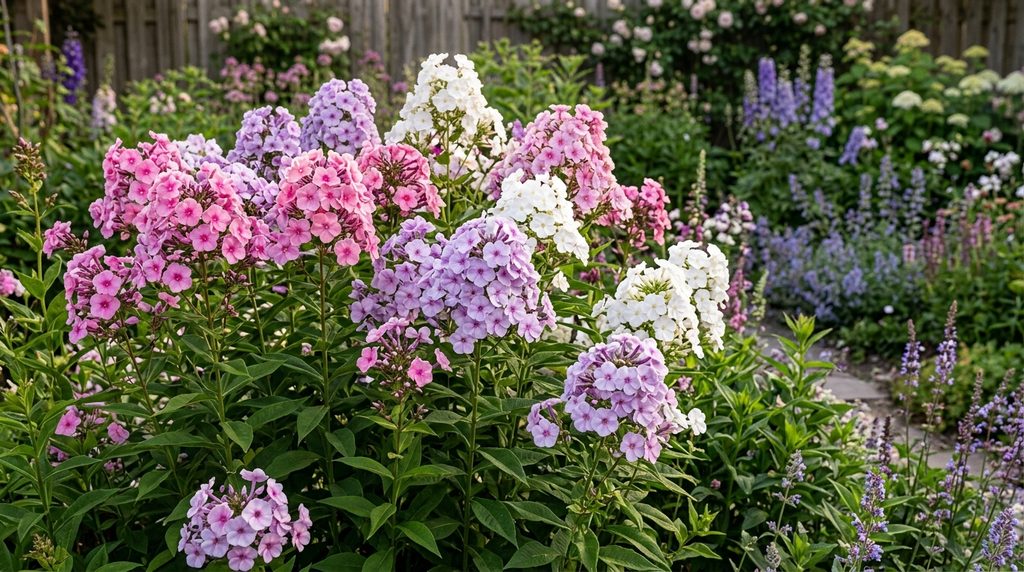
Bloom time: June through September | Zones: 4 to 8 | Height: 24 to 48 inches
Garden phlox produces large, densely packed flower clusters in white, pink, red, lavender, and bicolors. The fragrance is sweet and spicy — comparable to carnation or clove with a floral overlay — and is particularly noticeable in the evening and early morning when the air is still.
Powdery mildew was historically a problem with garden phlox, but modern mildew-resistant varieties have largely solved this issue. Look for David (white, highly mildew resistant), Jeana (small-flowered, lavender, extremely mildew resistant), or Flame Series.
- Care: Full sun to part shade, consistently moist and fertile soil, good air circulation
- Divide clumps every 3 to 4 years to maintain vigor and reduce disease pressure
Summer (June to August)
5. Lavender (Lavandula angustifolia)
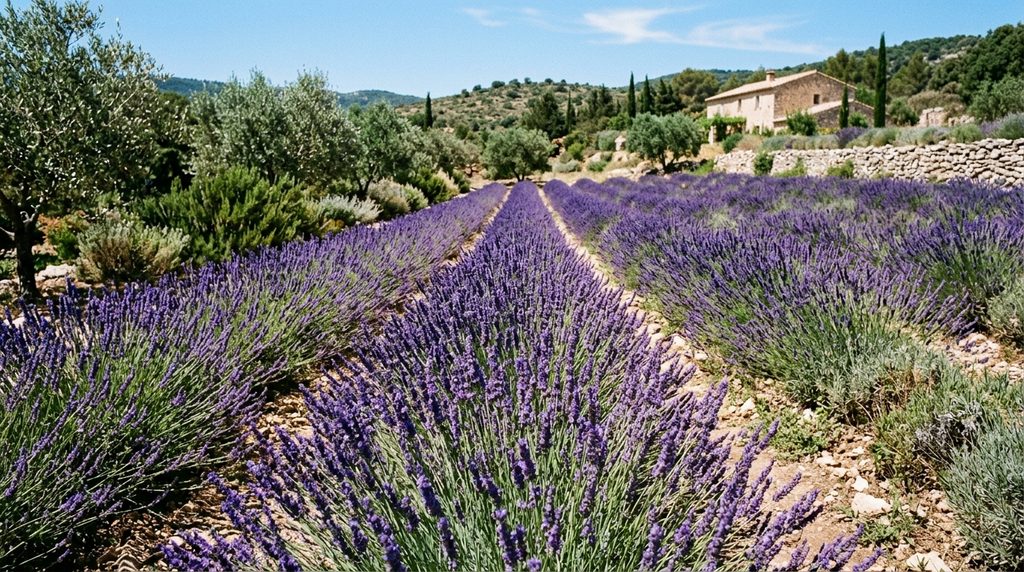
Bloom time: June through August | Zones: 5 to 8 (varies by variety) | Height: 12 to 24 inches
Lavender’s fragrance comes primarily from linalool and linalyl acetate — compounds that have been shown in multiple peer-reviewed studies to have genuine calming effects on the nervous system when inhaled.
The fragrance is primarily in the foliage, not the flowers, meaning lavender releases scent every time the wind moves through it or someone brushes past — making it the ideal path-edge plant.
Most fragrant varieties: Hidcote (compact, deep purple, intensely fragrant), Vera (English lavender, classic fragrance), Grosso (Lavandin hybrid, very high essential oil content), Phenomenal (exceptionally cold hardy to zone 4).
- Care: Full sun, extremely well-draining soil (lavender dies in wet roots), low fertility
- Never mulch directly against the crown — this promotes crown rot
- Prune lightly after bloom; never cut into old woody stems
6. Oriental Lily (Lilium Oriental hybrids)
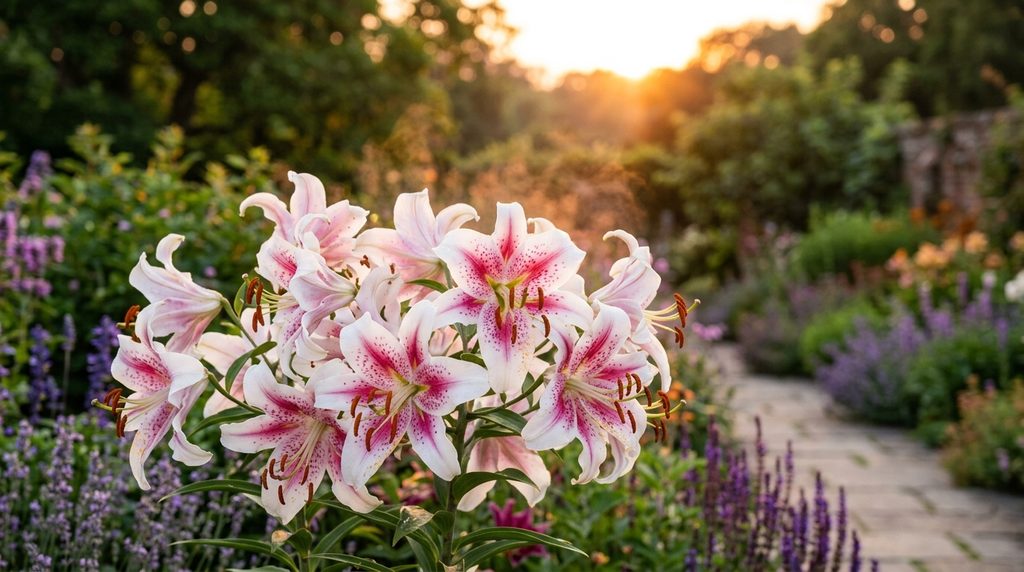
Bloom time: July through August | Zones: 4 to 9 | Height: 24 to 48+ inches
Oriental lilies produce some of the most powerful floral fragrances in the garden. Stargazer, Casa Blanca, and Acapulco are among the most intensely scented — on a still summer evening, a cluster of Stargazer lilies can fill a garden room with fragrance from 40 feet away.
Unlike Asiatic lilies (which are scentless), Oriental lilies are specifically selected for fragrance.
- Care: Full sun, well-draining soil, plant bulbs 6 to 8 inches deep
- Stake tall varieties to prevent wind damage
- Toxic to cats: even pollen landing on fur can cause fatal kidney failure. Do not plant where cats roam.
7. Bee Balm (Monarda didyma)
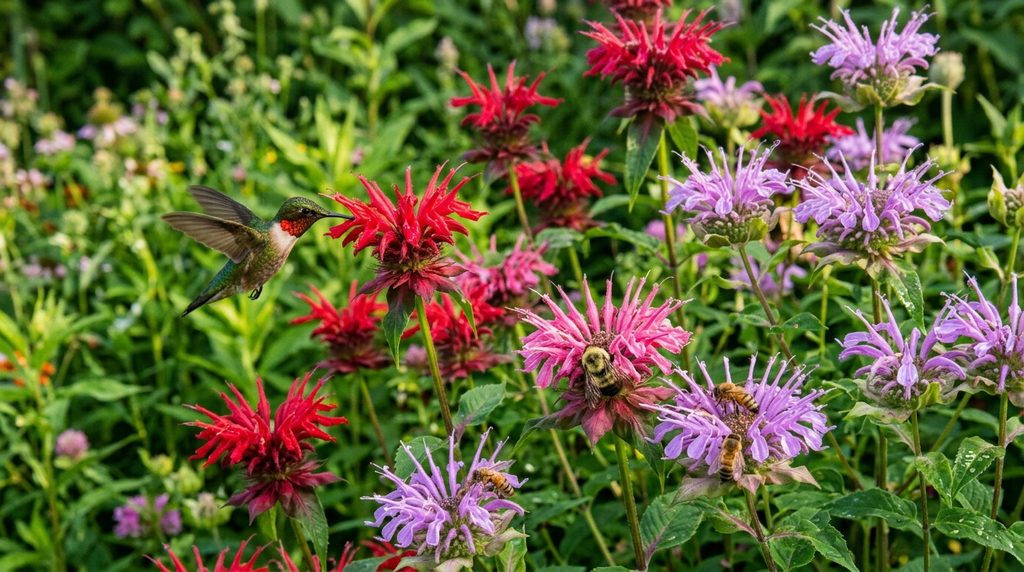
Bloom time: July through August | Zones: 4 to 9 | Height: 24 to 48 inches
Bee balm’s fragrance comes from its leaves, not its flowers. Crush a leaf and you release a complex spicy-citrusy scent — the same aroma that gives Earl Grey tea its characteristic bergamot flavor (Monarda fistulosa, the wild bergamot relative, is botanically related to the bergamot orange).
The tubular red, pink, or purple flowers are a hummingbird magnet. Modern varieties including Jacob Cline and Raspberry Wine are significantly more mildew resistant than old-fashioned types.
- Care: Full sun to part shade, moist soil, space for spread via rhizomes
- Divide every 2 to 3 years to prevent center die-out and control spread
Late Summer to Fall (August to October)
8. Russian Sage (Perovskia atriplicifolia)
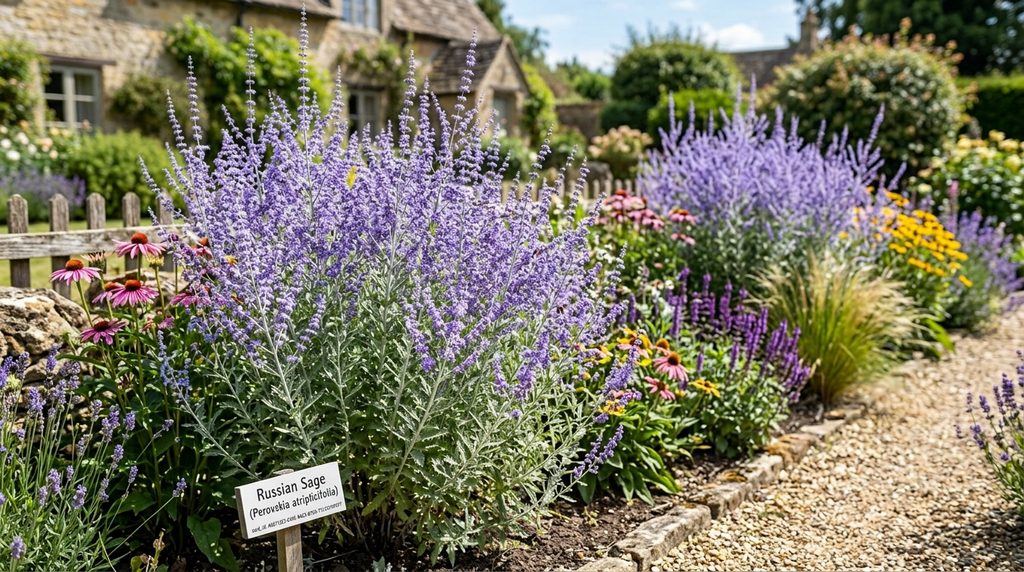
Bloom time: July through September | Zones: 4 to 9 | Height: 36 to 48 inches
Russian sage is primarily a foliage plant — the deeply cut silver-gray leaves release a strong herbal-sage fragrance when brushed, and the airy lavender-blue flower spikes add visual lightness to late summer borders.
It is one of the most heat, drought, and deer resistant perennials available. Blue Jean Baby and Lacey Blue are compact varieties excellent for smaller gardens.
- Care: Full sun, lean and well-draining soil, cut back hard to 6 inches in late winter/early spring
- Do not divide or disturb established plants — they resent root disturbance
9. Agastache (Hyssop / Anise Hyssop)
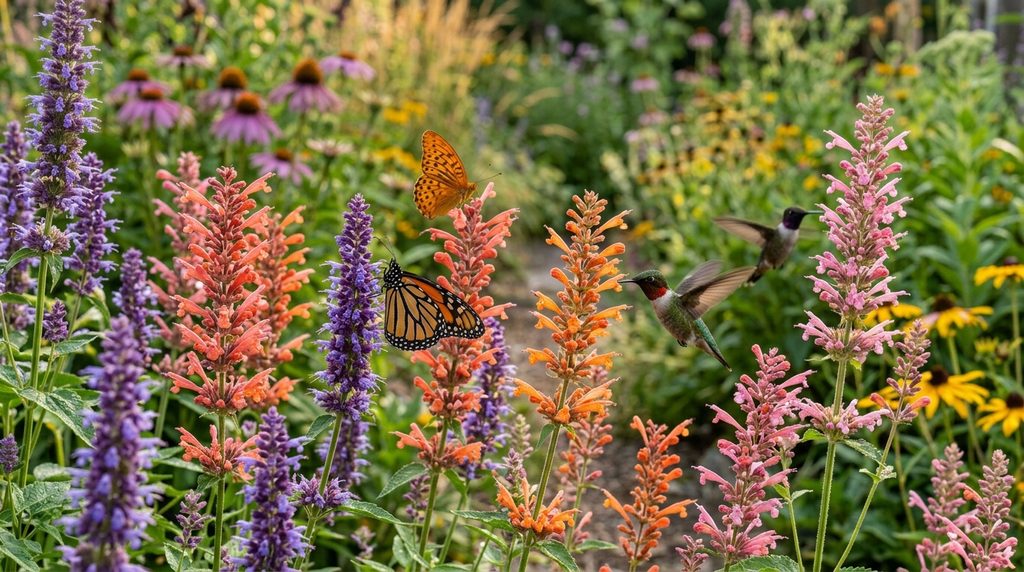
Bloom time: July through October | Zones: 5 to 11 (varies) | Height: 24 to 48 inches
Agastache is the best-kept secret in fragrant perennial gardening. The leaves smell of anise, mint, or licorice depending on variety — intensely aromatic when brushed. The flower spikes in purple, blue, orange, coral, and white bloom continuously for months and are absolutely alive with hummingbirds, butterflies, and bees.
Blue Fortune (Zones 5-9), Kudos Ambrosia (Zones 6-9), and Apache Sunset (Zones 5-10) are outstanding performers.
- Care: Full sun, well-draining soil, heat and drought tolerant once established
- Short-lived in some regions but prolific self-seeder — usually maintains presence in the garden
10. Garden Heliotrope / Valerian (Valeriana officinalis)
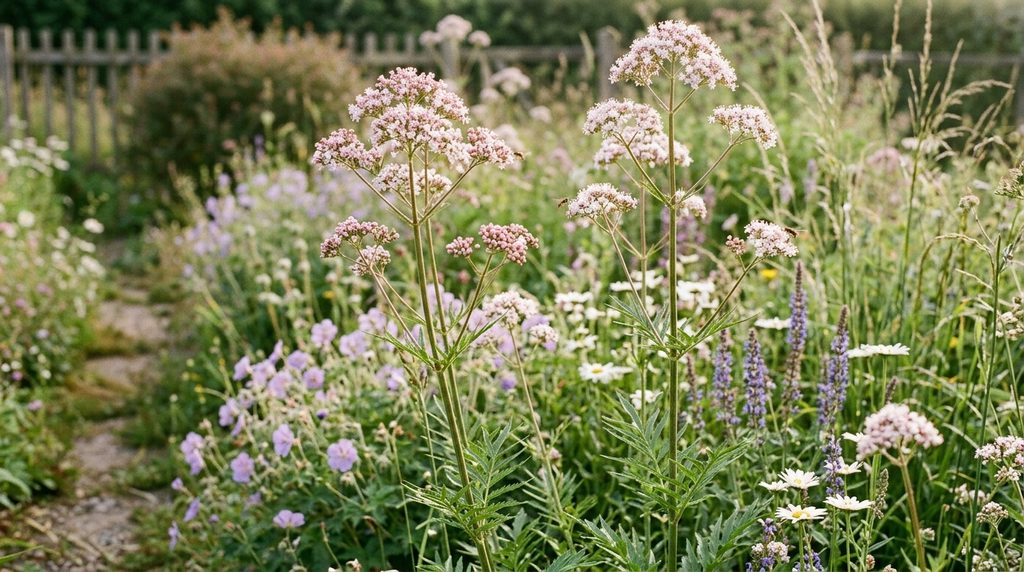
Bloom time: June through August | Zones: 4 to 9 | Height: 36 to 60 inches
True valerian (not to be confused with red valerian, Centranthus ruber) produces small white to pale pink flower clusters with a powerfully sweet vanilla-and-clover fragrance. It is stately and tall, with attractive ferny foliage.
This is a plant with genuine historical weight: valerian root has been used as a sedative and sleep aid since ancient Greece and Rome, and some research supports its mild efficacy for this purpose. The flowers themselves smell sweet and calming — the root famously smells like dirty socks.
- Care: Full sun to part shade, moist soil, tolerates wetter conditions than most perennials
- Self-seeds readily — deadhead if you want to limit spread
✅ Tip The strongest garden fragrances occur in warm, still conditions: mid-morning after dew evaporates, and in the early evening as temperatures drop. Design your seating areas and paths to take advantage of these windows. Fragrance intensity varies significantly between individuals of the same variety due to soil fertility, temperature, and humidity. If a plant’s fragrance disappoints in its first season, give it another year before replacing it. |
Frequently Asked Questions
What is the most fragrant perennial for a garden?
This is genuinely subjective, but garden phlox, Oriental lily (Stargazer especially), and agastache consistently rate highest in terms of detectable fragrance at a distance. Lily of the Valley has the most powerful individual flower fragrance but is only detectable at close range. Lavender and catmint offer the longest season of fragrance because the scent comes from foliage.
What fragrant perennials work in shade?
Lily of the Valley thrives in full shade and has an exceptional fragrance. Sweet woodruff (Galium odoratum) is another shade-tolerant fragrant groundcover with a sweet, fresh scent. Both primroses and bleeding heart have mild scents and perform in dappled shade.
Are fragrant perennials deer resistant?
Many are, because fragrance in plants often comes from essential oils and compounds that deer find unpalatable. Lavender, catmint, agastache, Russian sage, bee balm, and valerian are all reliably deer resistant. Peonies and lilies are NOT deer resistant and may need protection.
The Bottom Line
A garden that engages all the senses is simply more enjoyable to spend time in.
Plan your fragrant perennial succession now — spring bulbs and Lily of the Valley, followed by peonies and catmint, then lavender and garden phlox, then Oriental lilies and bee balm, then agastache and Russian sage through fall. With the right choices, you will barely have a week without meaningful scent from April through October.
That is the garden people come back to.
