
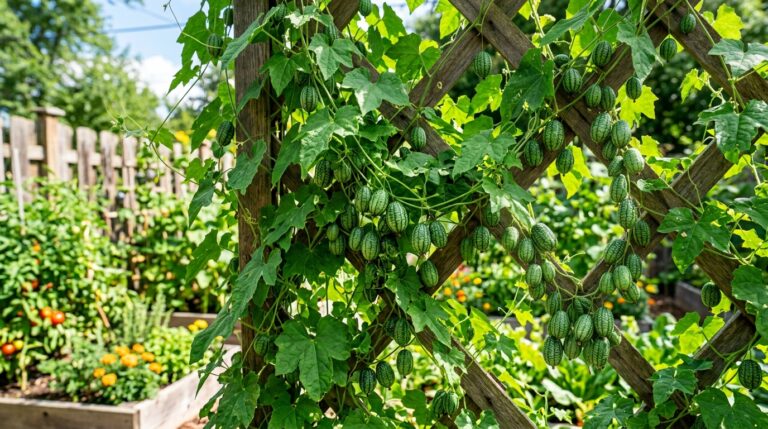
No other garden crop produces the reaction cucamelons do on first encounter.
Imagine handing someone a fruit the size of a grape that looks exactly like a miniature watermelon, down to the green and white stripes, and watching them eat something that tastes like a cucumber with a refreshing citrus-lime edge.
Cucamelons (Melothria scabra) are native to Mexico and Central America, where they’ve been cultivated for centuries under the name sandita (little watermelon) or pepquino. Despite their novelty status in US gardens, they are extraordinarily easy to grow and one of the most productive plants per square foot you can add to your vegetable garden.
They sell for up to $20 per pound at farmers markets. Growing your own from a $4 seed packet produces hundreds of fruits per plant from a single season.
What Exactly Is a Cucamelon?
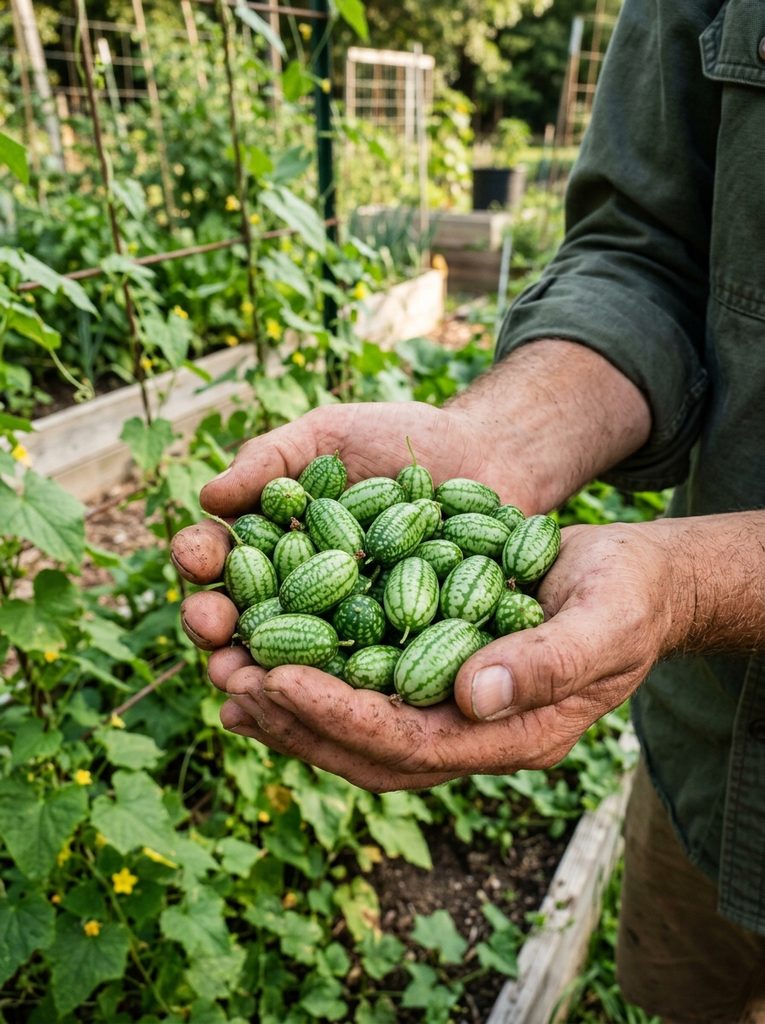
Cucamelons (Melothria scabra) are members of the Cucurbitaceae family — the same family as cucumbers, melons, squash, and gourds. Despite this, they are not a true cucumber or melon. They belong to a separate genus and species that looks and behaves similarly to cucumbers but is distinctly different.
- Native range: Mexico and Central America, where they grow as a perennial vine in warm climates
- Fruit size: 1 to 2 inches long — roughly the size of a large grape
- Appearance: Precisely miniaturized watermelon pattern — green with lighter green to white stripes
- Flavor: Crisp, refreshing, with a distinct citrus-lime edge alongside mild cucumber flavor
- Botanical name: Melothria scabra
- Other names: Mexican sour gherkin, mouse melon, pepquino, sandita
Why You Should Grow Cucamelons
- Pest resistance: Cucumber beetles and aphids, which devastate cucumber plants, rarely trouble cucamelons. This makes them dramatically lower-maintenance than cucumbers in most US gardens.
- Disease resistance: Powdery mildew — the fungal disease that plagues cucurbit family crops — is rarely an issue with cucamelons even when it affects neighboring cucumbers in the same bed.
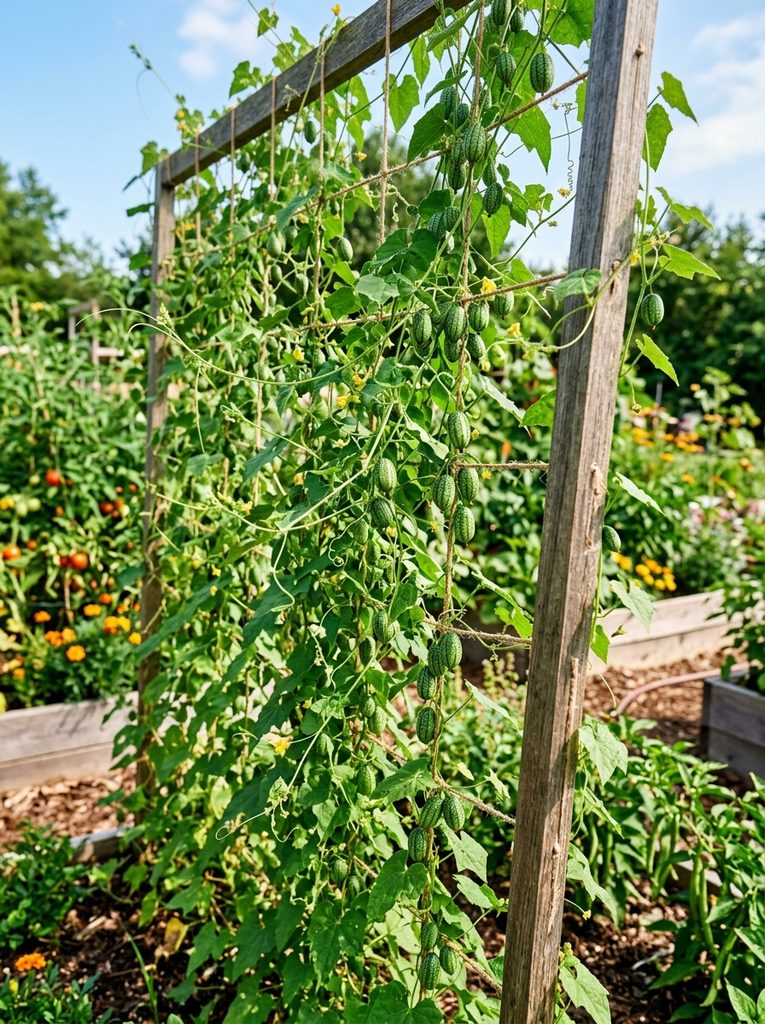
- Extreme productivity: One cucamelon plant produces hundreds of fruits in a single season, typically from July through frost.
- Drought tolerance: Cucamelons have a tuberous root system that stores water — they are significantly more drought-tolerant than cucumbers and require only about 1 inch of water per week.
- Martha Stewart endorsement: Home guru Martha Stewart has listed cucamelons as one of her top vegetables for beginners due to their ease of care — a reasonable assessment.
How to Grow Cucamelons: Complete Guide
Climate and Zone Requirements
Cucamelons grow as annuals in most US climates and as perennials in zones 9 to 11, where the tubers survive winter in the ground and reshoot in spring. In zones 4 to 8, treat as annuals and start fresh from seed each year.
They require warm soil to germinate and thrive — soil temperature should be consistently above 65°F before transplanting outdoors.
Starting Seeds
In zones 4 to 7: Start seeds indoors 4 to 6 weeks before your last frost date. Plant two seeds per cell in standard potting mix at 1/4-inch depth. Provide bottom heat (a seedling heat mat works well) — germination is much faster at 70-80°F than at room temperature. Expect germination in 7 to 14 days.
In zones 8 to 11: Direct sow outdoors after the last frost date when soil has warmed. Cucamelons direct-sown in warm soil often outperform transplanted seedlings.
Planting and Spacing
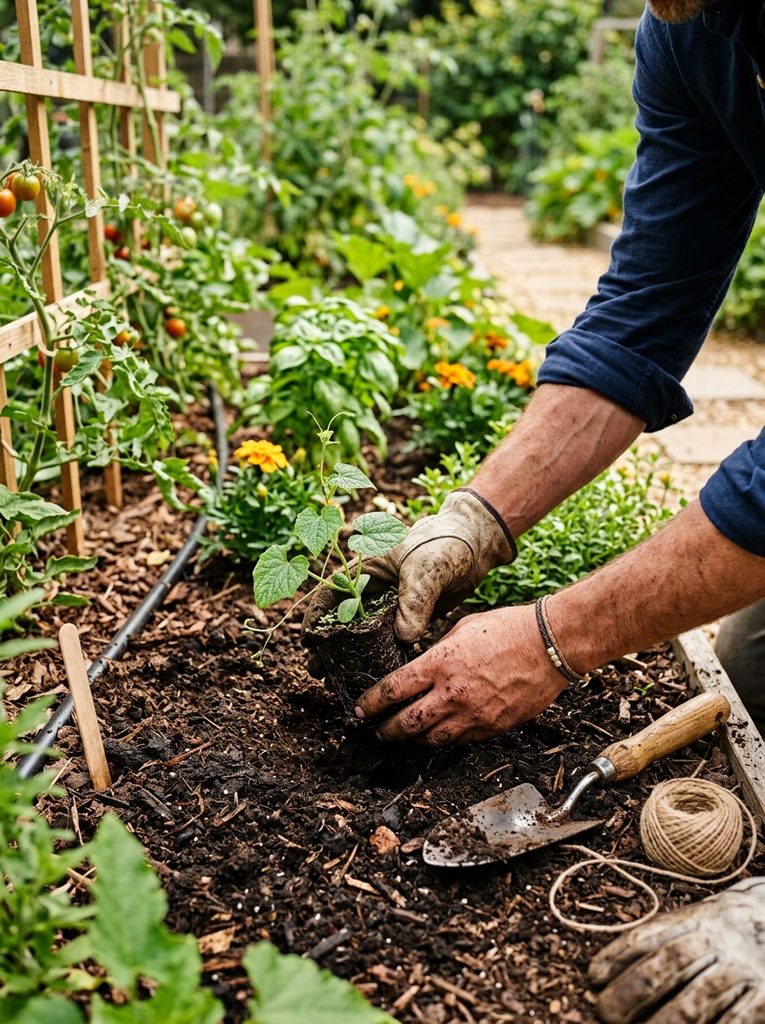
- Choose a sunny location: Minimum 6 hours of direct sun daily. Full sun is strongly preferred for productive fruiting.
- Prepare soil: Cucamelons prefer well-draining, fertile soil. Mix 2 to 3 inches of compost into the planting area before planting.
- Plant spacing: 9 to 12 inches apart in rows, or cluster 2 to 3 plants per trellis section.
- Install the trellis at planting time: Do not wait until plants are established — disturbing roots damages the vines. A 5 to 6-foot trellis per plant accommodates their full growth.
- Water in after transplanting and mulch the base to retain moisture.
Trellis: Non-Negotiable for This Plant
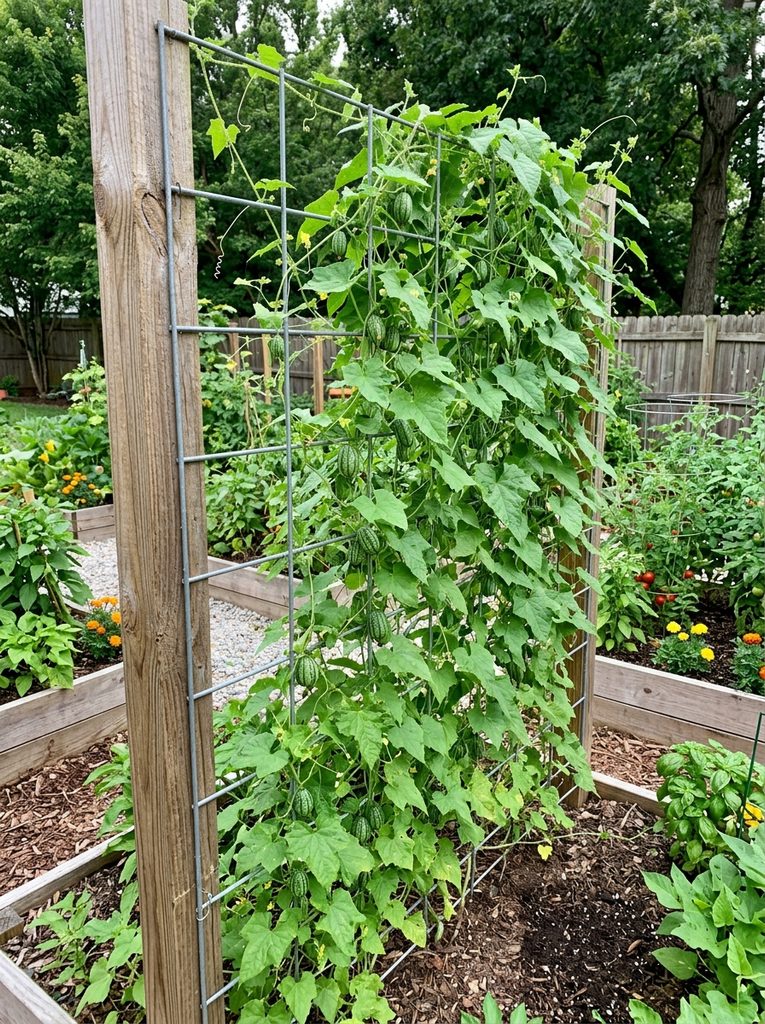
Cucamelon vines grow 10 feet or more in length and produce heavily. Left to sprawl on the ground, harvest becomes an hours-long exercise in searching through tangled growth.
Trellised cucamelons grow productively in 1/4 of the ground space, allow airflow that reduces the already-rare disease issues, and make harvest genuinely enjoyable.
Best trellis options:
- Cattle panel (16-foot sections from farm supply stores, $25 to $40): Sturdy and permanent
- Wire fence section stretched between T-posts: Practical and inexpensive
- Bamboo or wooden grid trellis: Natural aesthetic that suits cottage gardens
- Cucamelons climb enthusiastically with their tendrils and require minimal training beyond initial guidance onto the support
Watering
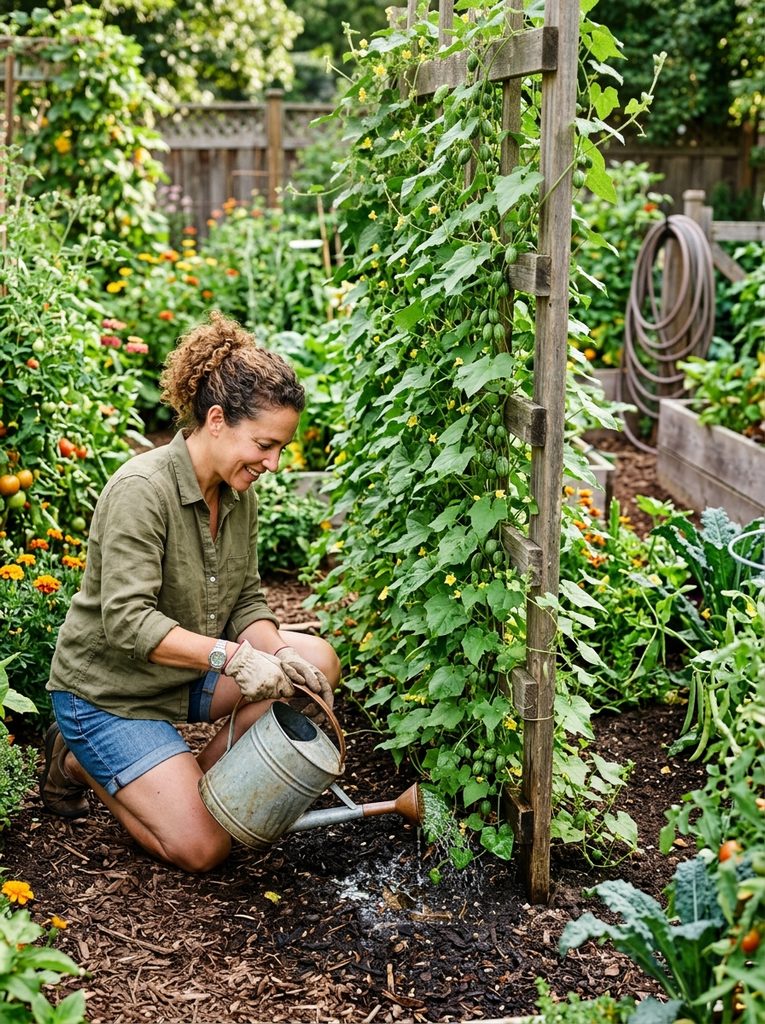
1 inch of water per week in warm weather. In cool or overcast periods, every 7 to 10 days. Because of their tuberous roots, cucamelons tolerate short dry periods far better than cucumbers.
Drip irrigation at the base is ideal — consistent root moisture with dry foliage reduces the minimal disease risk they face.
Fertilizing
Cucamelons are lighter feeders than cucumbers:
- At planting: Incorporate compost into soil and add a balanced slow-release fertilizer (10-10-10)
- Monthly during the growing season: Compost tea or a balanced liquid fertilizer (half strength) applied to the root zone
- Avoid high-nitrogen fertilizers once vines begin flowering — this promotes leafy growth at the expense of fruit production
When to Harvest
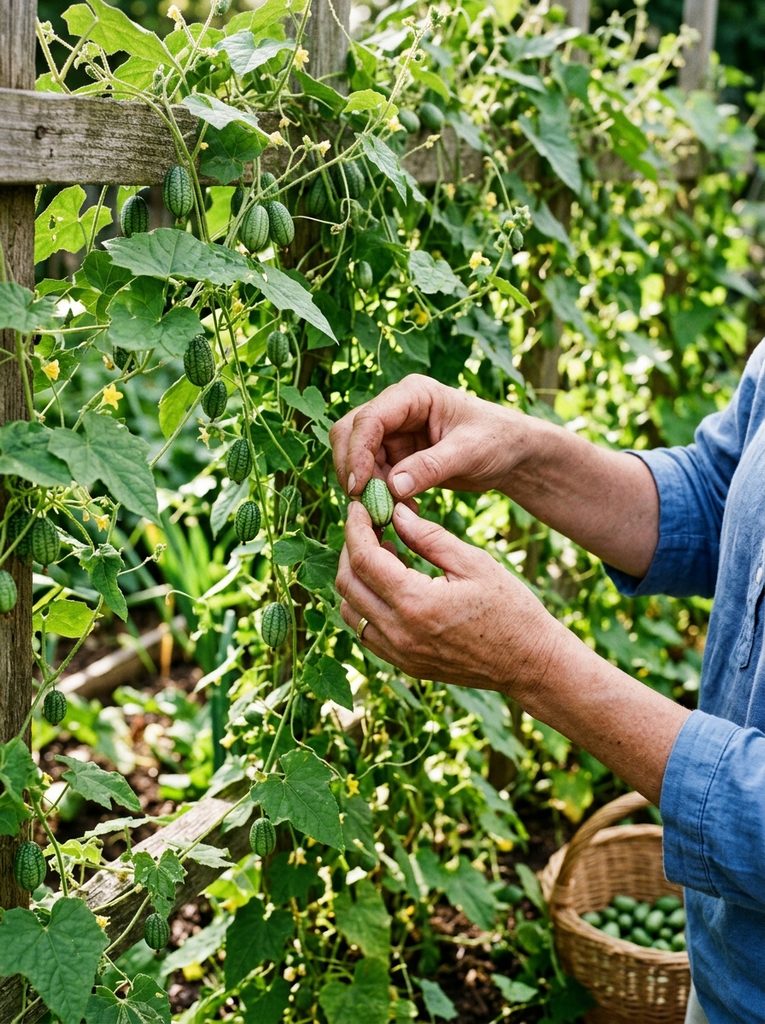
This is the most important cucamelon growing tip: harvest young.
Pick fruits when they are approximately 1 inch long — firm to the touch, glossy, and clearly striped. At this size, the flavor is at its most fresh and balanced — crisp texture with mild cucumber-lime flavor.
Left to grow larger, cucamelons develop a thicker skin and a sourness that intensifies dramatically. The skin becomes increasingly tart (hence “sour gherkin” in the name) and the texture softens.
Check plants every 2 to 3 days once fruiting begins — they produce so abundantly that a 5-day gap between harvests will leave you with overripe fruit.
Saving Seeds and Overwintering Tubers
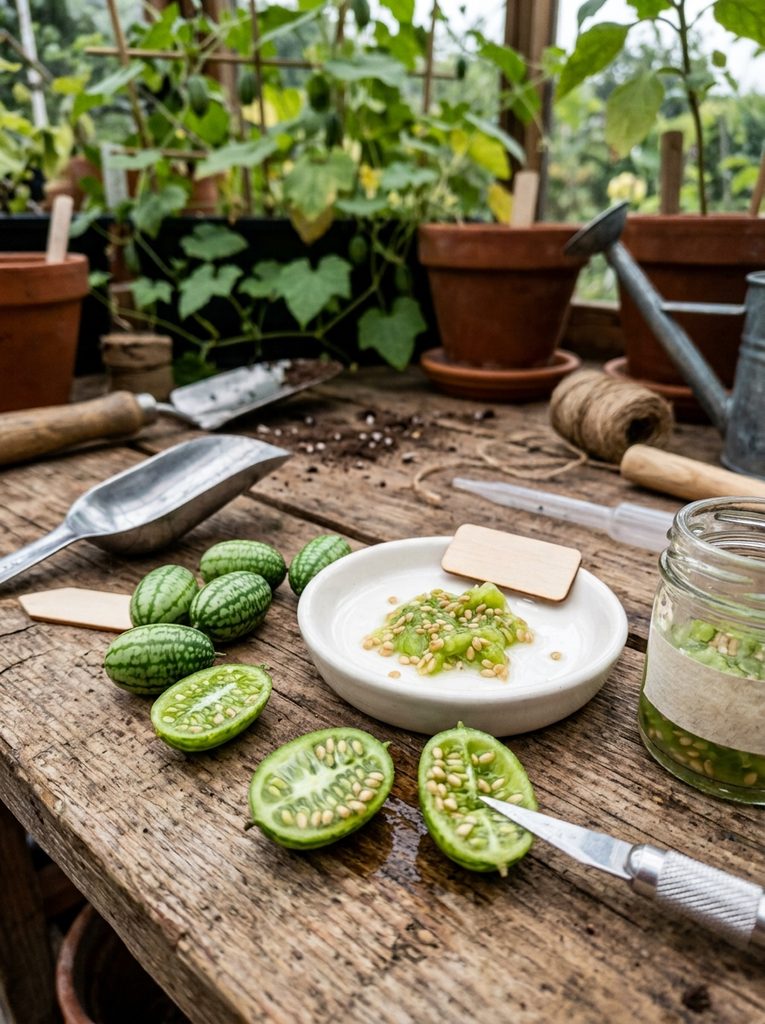
Cucamelons are open-pollinated — you can save seeds. Allow a few fruits to ripen fully on the vine until soft and yellowish. Scoop out seeds, ferment in water for 3 to 4 days, rinse thoroughly, and dry completely before storing in a cool, dry location. Seeds remain viable for 4 to 5 years.
In zones 9 to 11: After frost kills the top growth, dig the tuberous root carefully, pot in lightly moist soil, and store in a frost-free location through winter. Replant in spring for a significant head start over seed-grown plants — established tubers produce fruit weeks earlier.
Cucamelons in the Kitchen
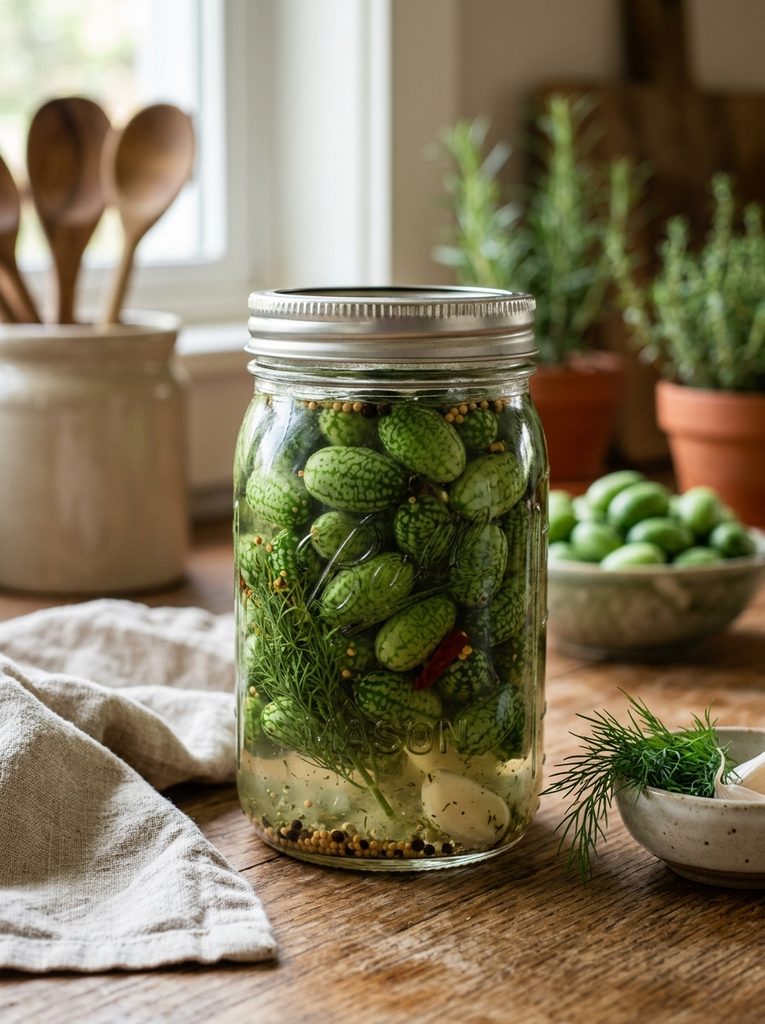
Their crisp texture and mild cucumber-lime flavor is genuinely versatile:
- Fresh snacking: Straight from the vine — the ultimate garden snack. The lime notes make them refreshing in summer heat.
- Salads: Add whole to summer salads for color, crunch, and an unexpected flavor note
- Pickling: Quick-pickle in dill brine (they require no cutting) for genuinely impressive dill pickles in miniature
- Salsa and guacamole: Halved cucamelons add crunch and citrus to both
- Cocktail garnish: Float 2 to 3 cucamelons in a gin and tonic or Campari soda for an immediately striking presentation
- Stir-fry: Add halved cucamelons in the last 60 seconds of cooking for a warm, slightly softened texture
|
✅ Tip Cucamelons hide exceptionally well behind their similarly-sized, similarly-patterned leaves. Set aside 10 minutes every 2 to 3 days specifically for harvest — run your hands through the foliage methodically rather than scanning visually. Do NOT start the entire seed packet at once. Plant 6 to 12 seeds for a first season, and save the rest. Cucamelons are extremely productive — 3 to 4 plants produce more fruit than most households can use fresh. |
Frequently Asked Questions
Are cucamelons easy to grow?
Yes — genuinely so. They are resistant to most common vegetable pests, rarely suffer disease, and tolerate drought better than cucumbers. Once vines are established (3 to 4 weeks after transplanting), they grow vigorously with minimal intervention. First-time vegetable gardeners consistently report success with cucamelons even when other crops struggle.
Do cucamelons taste like cucumbers?
Yes, primarily — with the addition of a bright citrus-lime edge that distinguishes them. The texture is crisper and more uniform than cucumber, and the flavor is milder but more complex. Most people who taste cucamelons for the first time find them more interesting and refreshing than standard cucumbers.
How long before cucamelons produce fruit?
From transplant to first harvest: approximately 60 to 70 days in warm conditions. From direct-sown seed: 70 to 85 days. Once they begin fruiting (usually mid-July in most US climates), they produce continuously until the first frost.
The Bottom Line
Cucamelons are genuinely the most surprising crop you can grow in a vegetable garden.
No other plant produces such a strong “what is that?” reaction from visitors. No other cucurbit is as pest-resistant or as productive per square foot. And the flavor — that crisp cucumber with lime edge — is genuinely excellent.
Order seeds from Baker Creek, Johnny’s, or Territorial Seeds. Get a trellis in the ground before planting. Harvest young and often. You will not regret giving this small, remarkable plant a place in your garden.
