
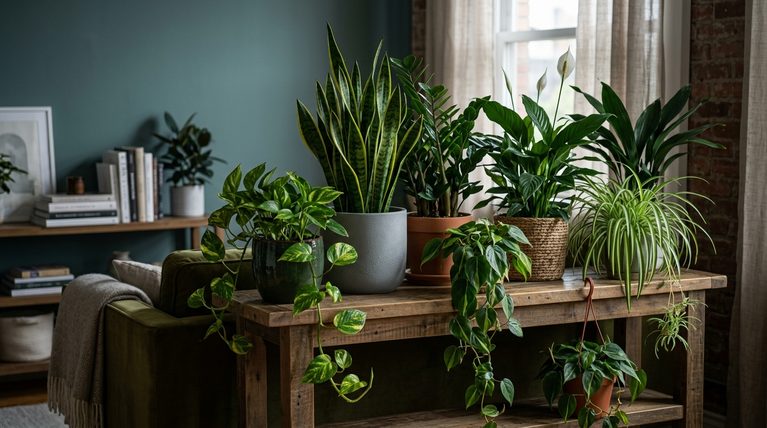
Most “no sunlight houseplant” lists are misleading. They tell you that pothos and snake plants need “zero sunlight” when the truth is more nuanced: no plant can photosynthesize without any light.
What these plants actually offer is the ability to survive and even grow in the low-light conditions that most indoor environments provide — typically 50 to 200 foot-candles, the equivalent of a reasonably lit room 8 to 10 feet from a window.
Understanding this honestly helps you select the right plant for the right location and set realistic expectations. Here are 12 plants that genuinely perform in low-light indoor conditions, with accurate light requirements and care notes.
A Quick Note on “Low Light” vs “No Light”
A “low-light” location indoors typically receives:
- 50 to 200 foot-candles: Rooms with no windows, or rooms where windows are blocked by trees, overhangs, or north-facing orientation
- 200 to 500 foot-candles: Bright indirect light, typical of a room with moderate natural light
- 500 to 1,000+ foot-candles: Bright indirect light near a window
None of the plants below can truly survive in zero light. If a room receives no natural light whatsoever, even the most shade-tolerant plants will eventually decline without supplemental grow lighting (a simple LED desk grow light on a timer provides adequate supplement for $15 to $30).
The 12 Best Low-Light Houseplants
1. Snake Plant / Mother-in-Law’s Tongue (Dracaena trifasciata)
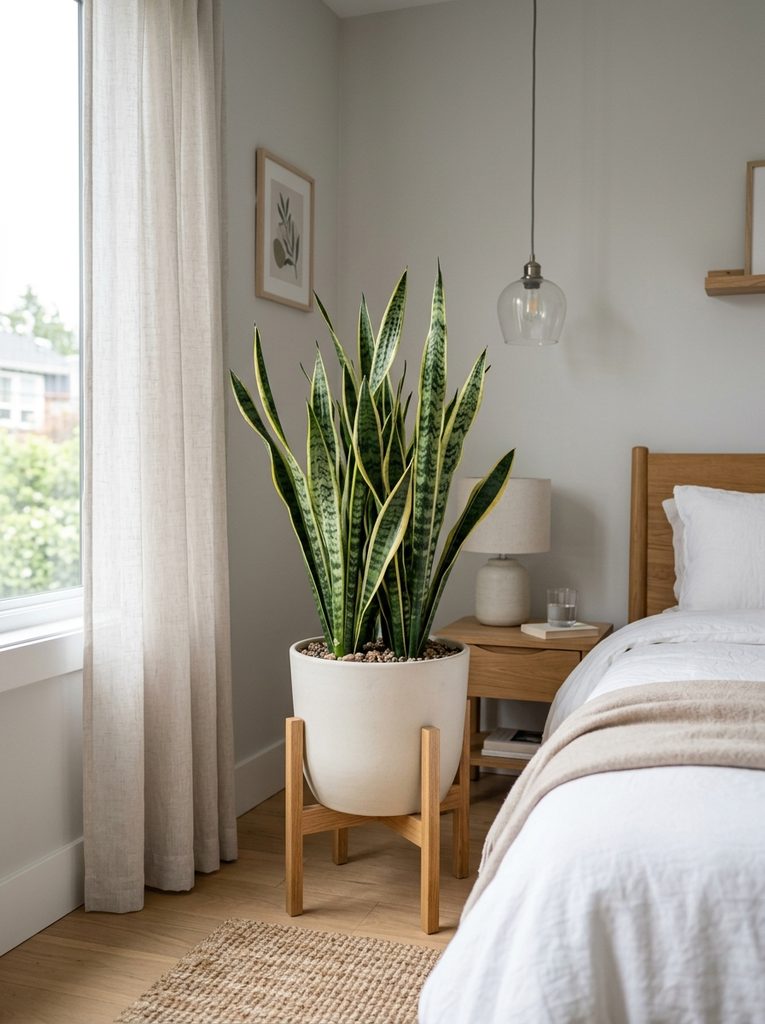
Minimum light: 50 to 100 foot-candles | Watering: Every 2 to 6 weeks | Zones for outdoor growing: 9 to 11
The snake plant is the benchmark for low-light tolerance — no other common houseplant is more widely documented to survive in genuinely dim conditions. Its upright, sword-like leaves with dark green banding and yellow or light-green margins have become synonymous with low-maintenance indoor greenery.
It is also one of the few plants that performs CAM photosynthesis — opening its stomata at night to exchange gas — meaning it releases oxygen overnight, making it a logical choice for bedrooms.
- Toxicity: Mildly toxic to pets and humans if ingested — causes swelling and nausea
- Common mistake: Overwatering; in low light, the soil dries out very slowly. Water once every 4 to 6 weeks in dim conditions.
2. ZZ Plant (Zamioculcas zamiifolia)

Minimum light: 75 to 150 foot-candles | Watering: Every 2 to 4 weeks
The ZZ plant is arguably the most indestructible houseplant available. Its thick, waxy leaves reflect light efficiently, and its underground rhizomes store water reserves that allow it to survive weeks of neglect.
It grows slowly in low light but does not decline in appearance the way faster-growing plants do. Perfect for offices, bathrooms with some ambient light, and corners far from windows.
- Toxicity: All parts contain calcium oxalate crystals; mildly toxic if ingested, causes irritation if sap contacts eyes or skin
- Growth: Slow in low light; do not expect rapid change
3. Pothos (Epipremnum aureum)
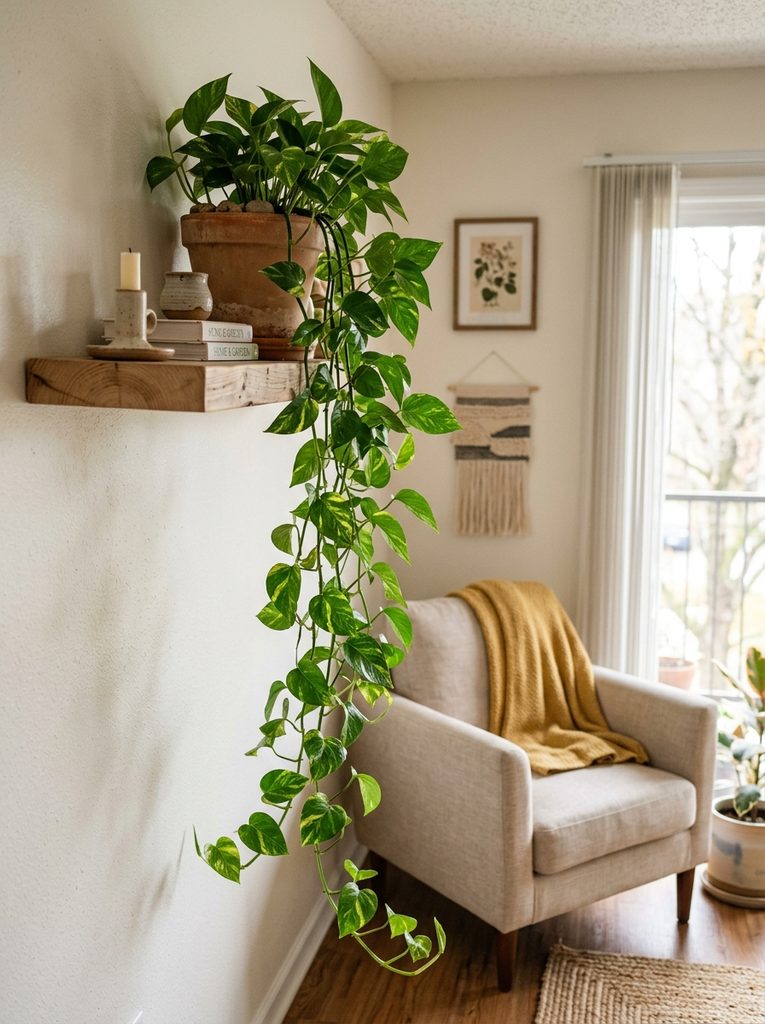
Minimum light: 100 to 200 foot-candles | Watering: Every 1 to 2 weeks
Pothos is the classic beginner plant for good reason. It grows reliably in a wide range of low-light conditions, produces long trailing vines that work in hanging baskets or on shelves, and signals clearly when it needs water (leaves begin to curl slightly before wilting becomes severe).
Golden Pothos is the most common and light-tolerant variety. Neon Pothos (bright chartreuse) and Marble Queen (white variegation) require slightly more light to maintain their distinct coloring.
4. Peace Lily (Spathiphyllum wallisii)
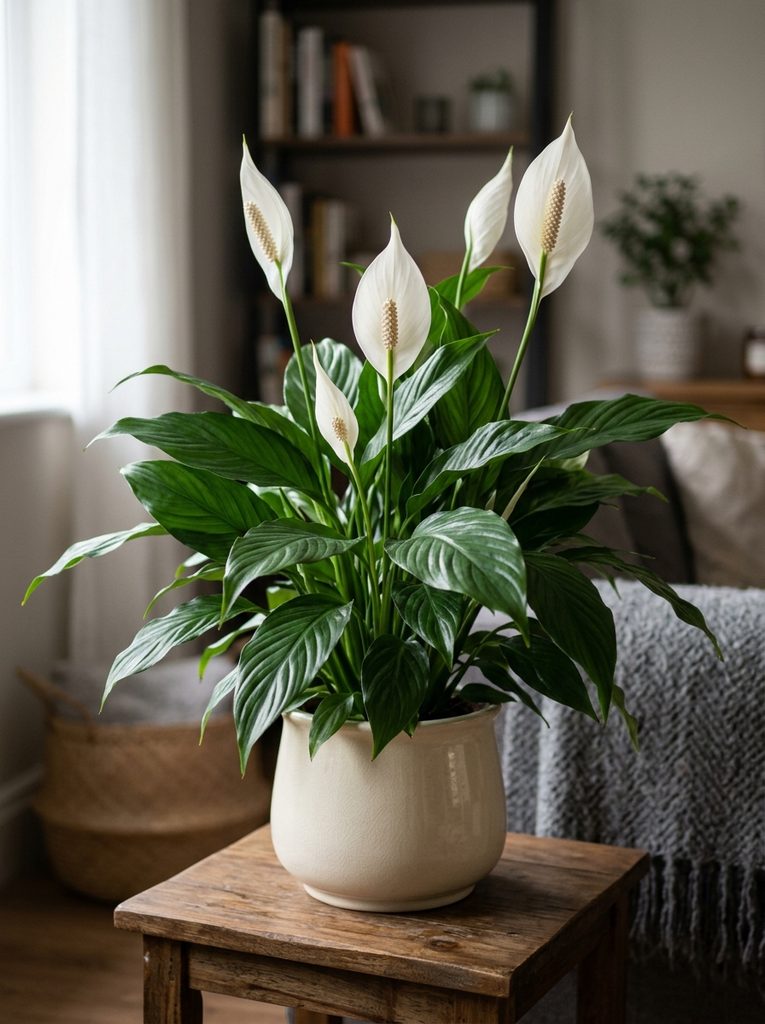
Minimum light: 75 to 150 foot-candles | Watering: Weekly
The peace lily is one of the few genuinely flowering plants that thrives in low light. Its white spathes (often mistaken for the flower itself — actually a modified leaf surrounding the true flower spike) bloom reliably in spring even in dimly lit spaces.
It also communicates dramatically: peace lilies droop visibly when they need water but recover quickly after watering. This makes them surprisingly manageable for people who find it difficult to judge soil moisture by touch.
- Air purification: Among the top performers in the NASA Clean Air Study for removing VOCs
- Toxicity: Mildly toxic to cats, dogs, and humans — causes oral irritation if ingested
5. Chinese Evergreen (Aglaonema spp.)
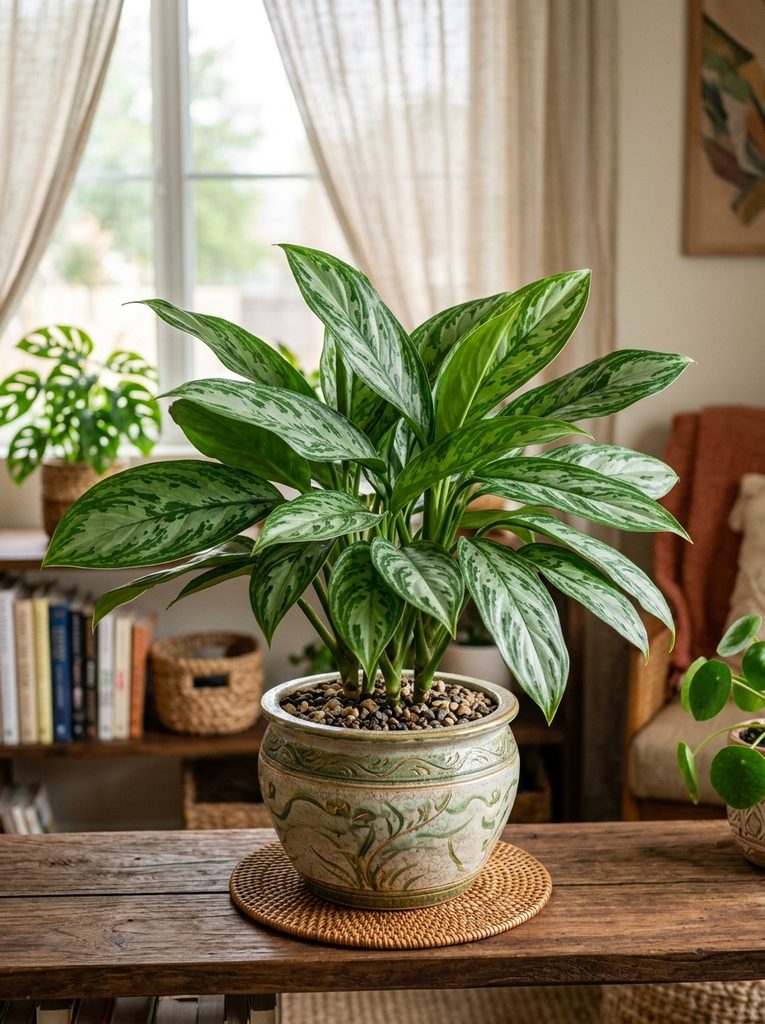
Minimum light: 75 to 200 foot-candles | Watering: Every 1 to 2 weeks
Chinese evergreen is one of the most varied houseplant genera in terms of foliage color — green-silver, pink, red, orange, and bicolor varieties are all available. The key rule: darker-leaf varieties (solid green, silver-green) tolerate the lowest light. Brightly colored varieties (pink, red, orange) need more light to maintain their color.
It is tropical Southeast Asian in origin and tolerates warm, humid rooms well.
6. Dracaena (Dracaena marginata, D. fragrans, D. sanderiana)
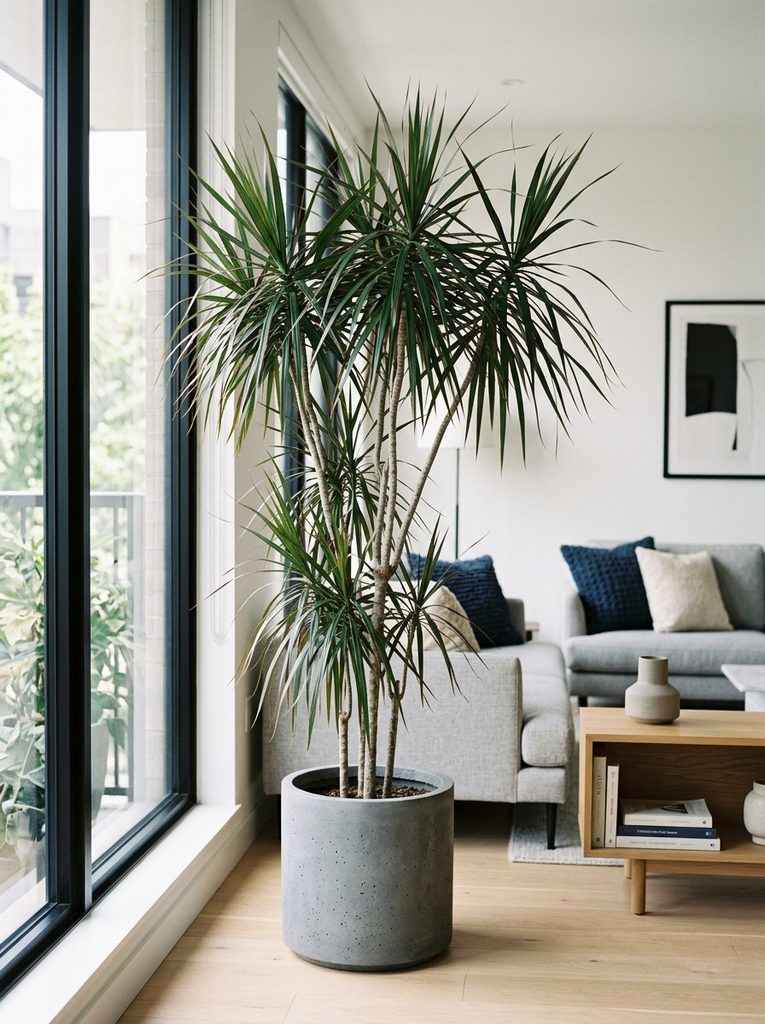
Minimum light: 100 to 200 foot-candles | Watering: Every 1 to 2 weeks
Dracaenas are striking, architectural plants with strap-like leaves in green, yellow-edged, or tricolor patterns. They tolerate low light while providing strong vertical form — particularly useful in spaces that need height and visual impact.
Dracaenas are sensitive to fluoride in tap water, which can cause brown leaf tips. Use filtered water or allow tap water to sit out 24 hours before using.
7. Parlor Palm (Chamaedorea elegans)
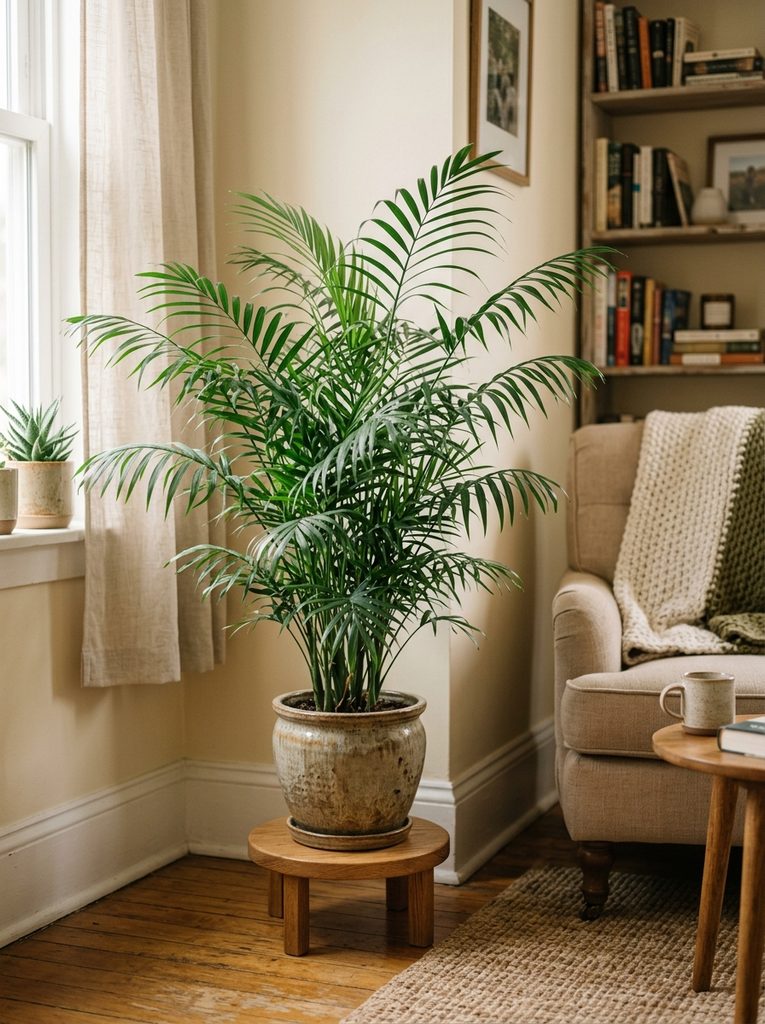
Minimum light: 75 to 150 foot-candles | Watering: Weekly
The parlor palm is the only palm species that genuinely tolerates low indoor light — most palms need bright direct sun. It is also non-toxic to pets, making it one of the best choices for households with cats or dogs.
Growth is slow in low light, but the graceful fronds maintain their appearance without the yellowing that most sun-lovers develop in shade.
8. Cast Iron Plant (Aspidistra elatior)
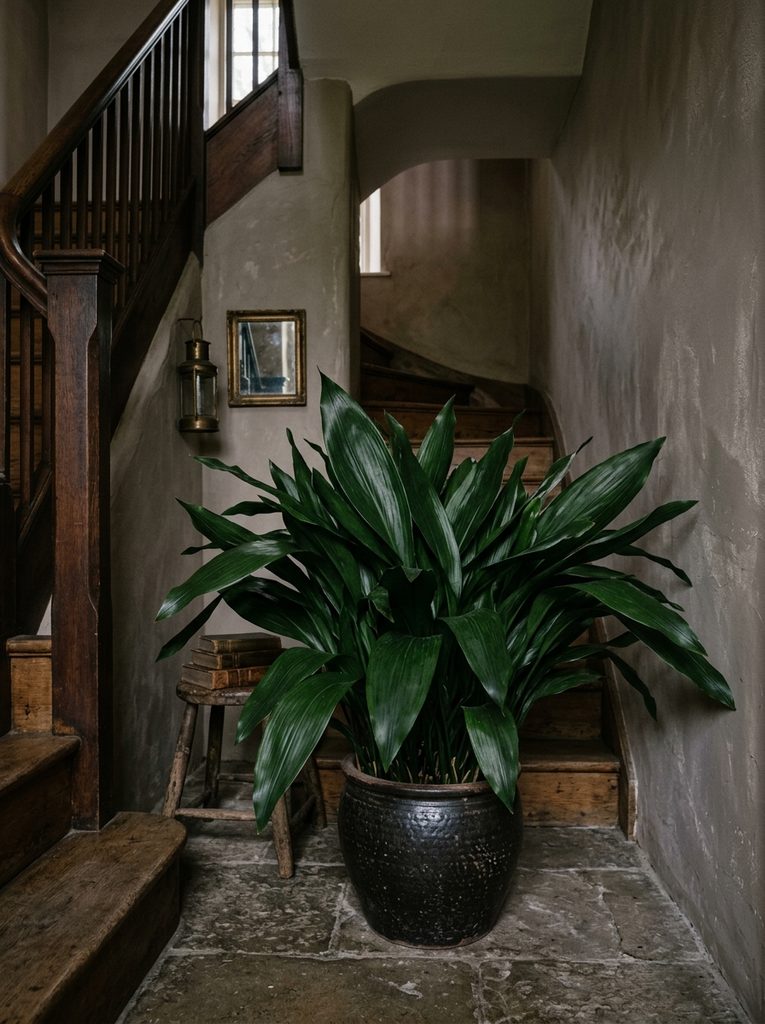
Minimum light: 25 to 75 foot-candles | Watering: Every 2 to 4 weeks
The cast iron plant earns its name. It survives in conditions that would kill virtually any other houseplant: deep shade, irregular watering, temperature swings, and low humidity. It grows slowly — sometimes producing only 1 to 2 new leaves per month — but maintains its dark green, glossy appearance with remarkable consistency.
If you have truly no-light conditions (under a staircase, in a basement with minimal ambient light), this is your best option.
9. Philodendron (Philodendron hederaceum, P. scandens)
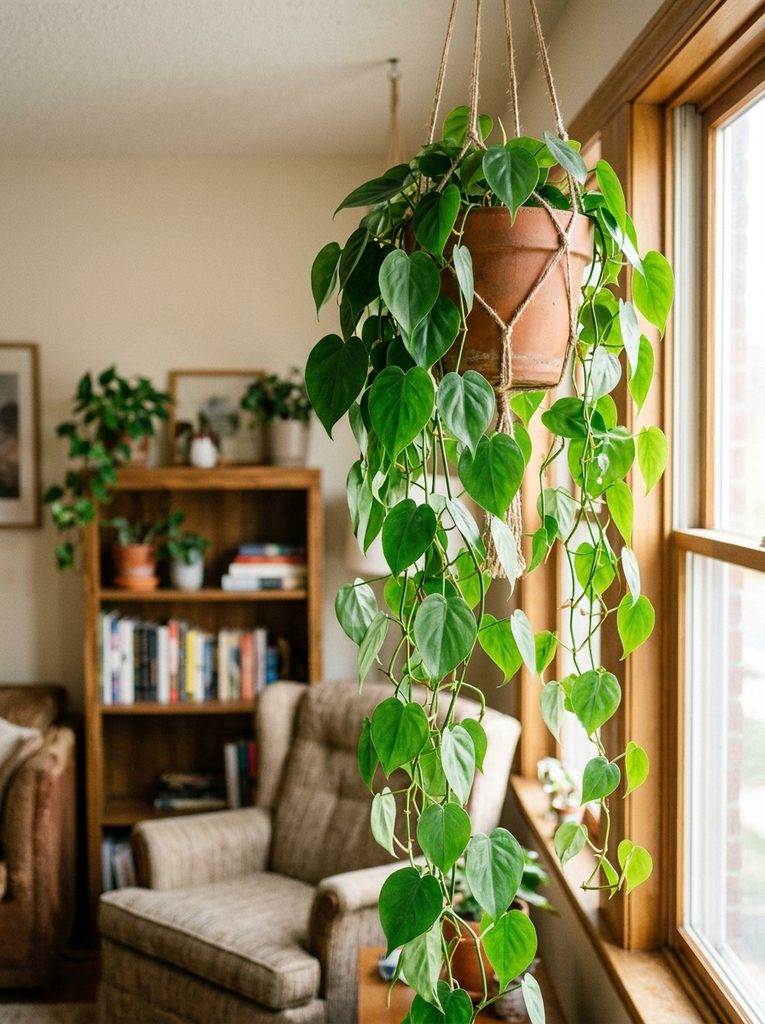
Minimum light: 100 to 200 foot-candles | Watering: Every 1 to 2 weeks
Heartleaf philodendrons are among the easiest and most adaptable of all houseplants. Their trailing or climbing habit works in hanging baskets, trained up a moss pole, or trailing from a shelf.
They are closely related to pothos but generally have thinner, more velvet-textured leaves. Like pothos, they adapt to low light, though growth slows considerably.
10. Monstera (Monstera deliciosa — Swiss Cheese Plant)

Minimum light: 100 to 200 foot-candles | Watering: Every 1 to 2 weeks
Monstera is the iconic statement plant of the modern indoor garden — large, dramatic, split leaves that photograph beautifully. It tolerates surprisingly low light, though the characteristic split-leaf pattern (which develops to let light through to lower leaves in its natural rainforest habitat) develops best with at least moderate indirect light.
In truly low light, Monstera will still survive but produce smaller, unperforated leaves.
11. Bromeliad (Guzmania, Neoregelia, Vriesea spp.)
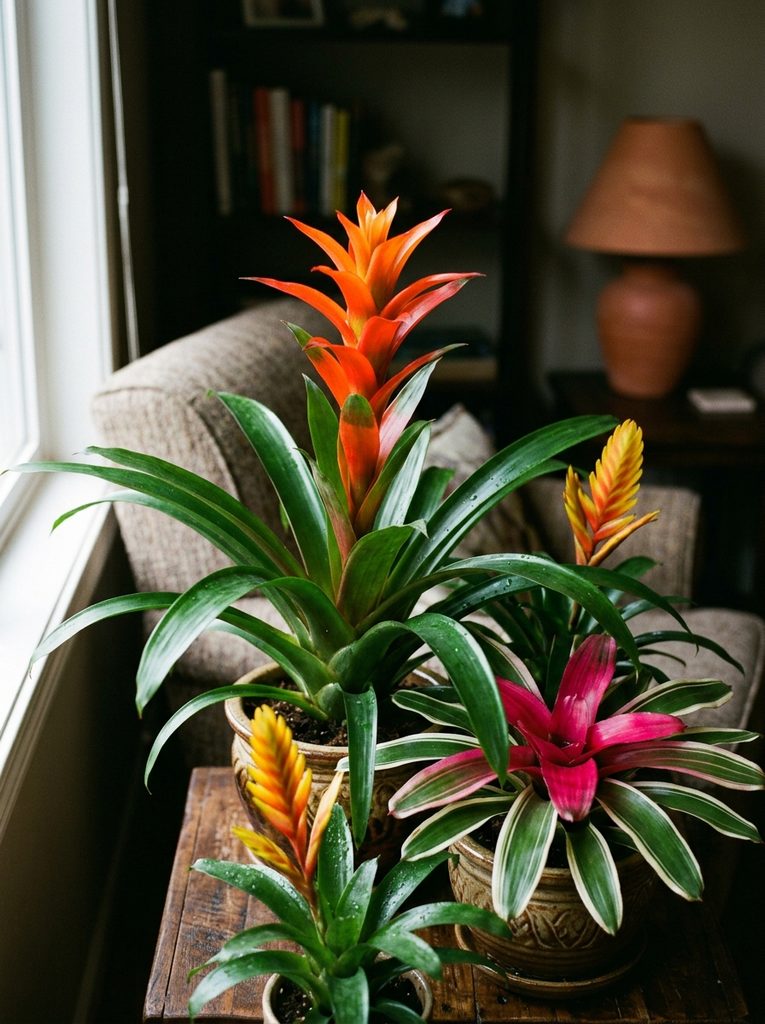
Minimum light: 100 to 200 foot-candles | Watering: Fill central cup with water; change weekly
Bromeliads are tropical plants that absorb water and nutrients through a central cup formed by their overlapping leaves — an unusual trait that makes their watering method different from most houseplants.
They bloom once in their lifetime, producing a spectacular flower spike that lasts for weeks to months. After flowering, the mother plant produces “pups” (offshoots) that can be separated and grown on.
12. Spider Plant (Chlorophytum comosum)
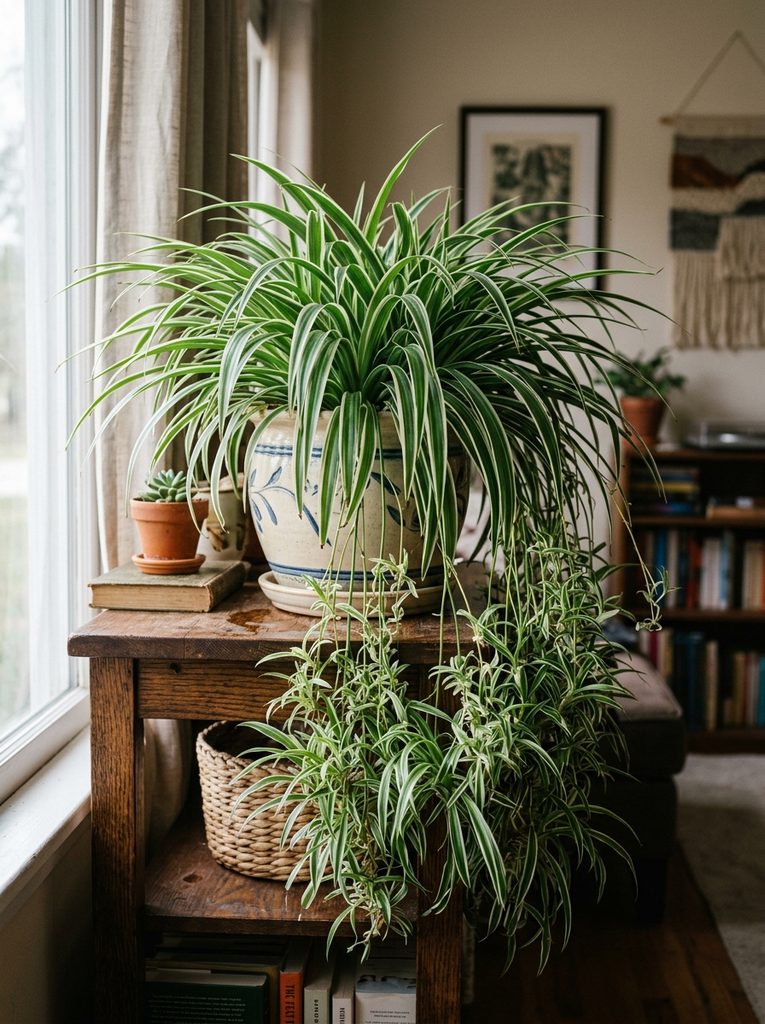
Minimum light: 100 to 200 foot-candles | Watering: Every 1 to 2 weeks
Spider plants are famously easy and produce abundant “spiderettes” (baby plants) on long trailing stems that can be propagated by placing in water or potting mix. They tolerate a wide range of light conditions, though variegated varieties (green and white stripes) maintain better coloring with more light.
Non-toxic to pets, rapid growing, and forgiving of irregular watering — one of the best introductory houseplants.
Care Principles for All Low-Light Houseplants
- Water less frequently: Low light means slower photosynthesis means slower water uptake. Plants in dim rooms need water far less often than the same plants in bright windows. Overwatering is the #1 cause of houseplant death.
- Use well-draining potting mix: In low light, soil stays moist longer. Good drainage prevents root rot.
- Wipe leaves monthly: Dust accumulates on indoor plant leaves and blocks light absorption. A damp cloth wipe once a month meaningfully improves a low-light plant’s ability to photosynthesize with the limited light available.
- Fertilize sparingly: Slow growth in low light means slow nutrient uptake. Fertilize at half strength, once every 6 to 8 weeks in growing season (spring/summer), not at all in fall/winter.
- Rotate quarterly: Rotate pots 90 degrees every month or two to ensure even growth toward available light sources.
✅ Tip If a low-light plant begins to look pale, stretched, or loses leaf coloring, move it closer to a light source for 2 to 4 weeks before returning it. Think of this as “recharging” — even shade-tolerant plants benefit from periodic bright light exposure. A simple LED clip-on grow light ($15 to $25 on Amazon), set on a 12-hour timer, transforms even a windowless bathroom or office into viable plant habitat. The investment pays back in healthy plants within weeks. |
Frequently Asked Questions
What is the absolute hardiest low-light houseplant?
The cast iron plant (Aspidistra elatior) is the most genuinely light-tolerant houseplant in common availability. It can survive in conditions that would kill a snake plant or ZZ plant. Its growth is very slow, but it maintains its appearance with minimal light, irregular watering, and temperature fluctuations that would stress other plants.
Can I grow houseplants in a bathroom without a window?
With supplemental grow lighting, yes. Without any light source — natural or artificial — no plant will survive indefinitely. A windowless bathroom with a simple LED grow light on a timer becomes suitable for pothos, ZZ plant, and peace lily.
Why are my low-light plant leaves turning yellow?
Yellow leaves in low-light plants almost always indicate overwatering. In dim conditions, soil dries extremely slowly. Before watering, push your finger 2 to 3 inches into the soil — water only when dry at that depth. Remove yellow leaves to prevent fungal spread.
The Bottom Line
A dim apartment or office is not an obstacle to keeping plants — it is a selection challenge.
The 12 plants above are proven performers in genuinely low-light conditions. Start with a snake plant, ZZ plant, or pothos — the three most forgiving — and build from there.
With the right selection and the discipline to underwater rather than overwater, indoor greenery in any lighting condition is achievable.
