
Planting under a mature shade tree is one of gardening’s genuine challenges. It is not simply shade, it is a combination of problems that few plants handle simultaneously: dense shade from the canopy, dry soil from root competition, depleted nutrients from an established root system, and in some cases (walnut trees) allelopathic chemicals that actively suppress other plants.
The landscape fabric and mulch solution that most homeowners default to is valid, it is low maintenance and prevents the frustration of plants struggling in impossible conditions. But if you want living color and texture under your trees, the 10 plants below will deliver it.
Why Under-Tree Gardening Is Difficult
Understanding the specific challenges helps you select and establish the right plants successfully.
- Root competition: Mature trees have extensive, competitive root systems that extend 2 to 3 times beyond the canopy drip line. These roots actively extract water and nutrients from the surrounding soil, leaving under-story plants to compete for limited resources.
- Dry shade: The canopy intercepts rainfall, and root competition removes what reaches the soil. This creates “dry shade” — the most difficult growing condition in temperate gardening. Most shade-loving plants expect moist shade. Dry shade is a fundamentally different challenge.
- Shallow root zones: Large surface roots make digging difficult and disturbing major roots can harm the tree. Planting must be done carefully around the existing root structure.
Planting Successfully Under Trees
Before selecting plants, follow these preparation steps:
- Add a thin layer (1 to 2 inches maximum) of compost to the surface without smothering existing surface roots
- Do not raise the soil grade around tree trunks, this can cause crown rot. Keep any soil additions thin and away from the trunk base.
- Water newly planted under-tree plants individually and consistently through the first season, drip irrigation or hand watering at the root zone works better than overhead sprinklers in this competitive environment
- For very aggressive tree roots (silver maple, Norway maple, beech), consider using sunken container planting, bury pots to their rim so that plants grow within the container rather than directly into root-dominated soil
10 Plants That Succeed Under Trees
1. Hostas (Hosta spp.)
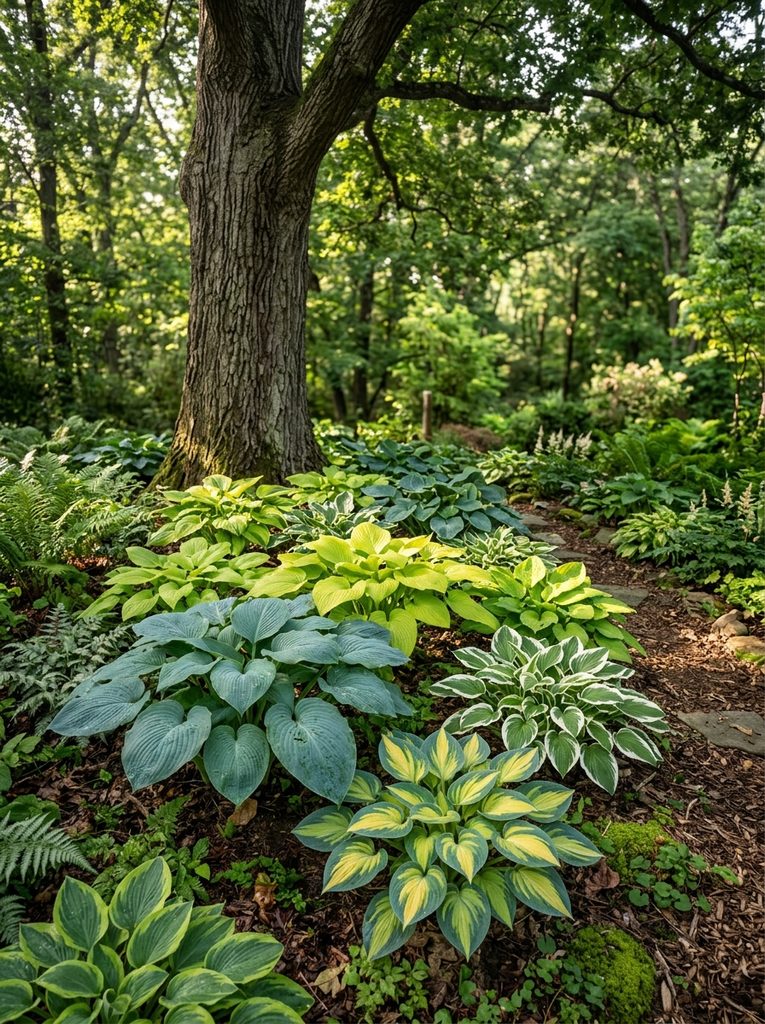
The most reliable and versatile under-tree plant available. Hostas are bred for shade, tolerate root competition better than most perennials, and come in an extraordinary range of leaf sizes (6 inches to 4 feet across), colors (blue-green to gold to white-variegated), and textures.
- Zone: 3 to 9
- Best for dry shade: ‘Halcyon’ (blue-gray, slug resistant), ‘Sum and Substance’ (giant, gold-green, sun tolerant), ‘Guacamole’ (fragrant flowers)
- Note: Deer eat hostas readily. In deer-pressure areas, use other options on this list.
2. Epimedium / Barrenwort (Epimedium spp.)

The single toughest ground-cover plant for dry shade with root competition. Epimedium is used by professional landscapers specifically for impossible spots under aggressive-rooted trees like silver maple. Once established it requires essentially no maintenance.
- Zone: 4 to 9 depending on species
- Bloom: Small, delicate flowers in yellow, white, pink, or purple in spring; the heart-shaped leaves provide interest year-round
- Establishment note: Takes 2 full seasons to establish. Do not judge by first-year performance.
3. Lenten Rose / Hellebore (Helleborus x hybridus)

Hellebores bloom in late winter to early spring, before the tree canopy leafs out and intercepts light. This seasonal timing makes them ideal under deciduous trees: they receive full sun during their blooming period, then transition to the shade they prefer for the summer.
- Zone: 4 to 9
- Shade tolerance: Excellent; one of the few plants that blooms reliably in deep shade
- Evergreen: The leathery leaves provide year-round interest
4. Wild Ginger (Asarum canadense — native; Asarum europaeum — European)

Wild ginger forms a dense mat of heart-shaped leaves that creates a beautiful living mulch under trees. The native North American species (A. canadense) is deciduous; the European species (A. europaeum) is evergreen with shinier, darker leaves. Neither requires much maintenance once established.
- Zone: A. canadense zones 3 to 7; A. europaeum zones 4 to 8
- Note: Not a culinary ginger — do not consume
5. Astilbe (Astilbe spp.)

Astilbe produces feathery plumes of red, pink, white, or purple flowers in summer, some of the most attractive blooms available for shaded conditions. The key requirement is consistent moisture; astilbe struggles in genuinely dry shade but thrives in the dappled shade of woodland-edge conditions.
- Zone: 3 to 9
- Best use: Under trees with slightly less aggressive root systems where moisture is more available; mulch heavily and water during dry periods
6. Lungwort (Pulmonaria officinalis)

Lungwort is one of the first perennials to bloom in spring, producing pink buds that open to blue-violet flowers (the color-change within a single flower is characteristic of the genus). The spotted silver-and-green leaves are attractive throughout the season.
- Zone: 3 to 8
- Drought tolerance: Moderate, better than astilbe but benefits from supplemental watering in dry summers
7. Ferns (Dryopteris, Polystichum, Athyrium)

Ferns are the classic woodland under-story plant for good reason. Several genera tolerate drier conditions than the moisture-hungry ostrich fern: Dryopteris (wood ferns) and Polystichum (holly ferns) are among the most drought-tolerant options.
- Best for dry shade: Dryopteris marginalis (marginal wood fern, zones 3 to 8), Dryopteris erythrosora (Japanese shield fern, striking coppery new growth, zones 5 to 9)
- Avoid in dry shade: Matteuccia struthiopteris (ostrich fern), needs consistently moist soil
8. Pachysandra / Japanese Spurge (Pachysandra terminalis)

The most widely planted ground cover for shaded conditions in North American gardens. Pachysandra forms a dense, weed-suppressing carpet of glossy evergreen leaves, topped with small white flowers in spring. Extremely low maintenance once established.
- Zone: 4 to 9
- Note: P. terminalis is Japanese, for a native alternative, use P. procumbens (Allegheny spurge, zones 4 to 9), which offers more ornamental interest with mottled leaves and fragrant flowers
9. Azalea and Rhododendron (Rhododendron spp.)

Where soil is acidic and naturally moist (as under oaks and pines, which create acidic leaf litter), azaleas and rhododendrons are spectacular. They bloom prolifically in spring, provide evergreen structure year-round, and make excellent transition plants between the tree and the open garden.
- Zone: Varies by variety; most 5 to 9
- Soil requirement: Acidic pH (4.5 to 6.0), test before planting. Under oaks, the natural soil tends to be acidic; under maples and other species, amendment may be needed.
10. Oakleaf Hydrangea (Hydrangea quercifolia)

A native North American shrub (southeastern US) that provides multi-season interest: white cone-shaped flowers in summer, spectacular red-orange fall foliage, distinctive exfoliating bark in winter. More drought tolerant than other hydrangeas. Grows to 6 to 8 feet, excellent in the outer zone of a tree canopy where some light penetrates.
- Zone: 5 to 9
- Position: Best at the canopy drip line where filtered light reaches; less suitable in deep shade directly under the trunk
✅ Tip
The most important thing you can do when establishing plants under trees is to water consistently and individually during the first two growing seasons. The tree’s root system is highly efficient at extracting water — it will outcompete your new plants for any moisture available. Hand water at the root zone of each new plant at least twice a week through the first summer.
Never mound soil around the base of a tree trunk to create a planting bed. This practice, extremely common in commercial landscaping, causes slow crown rot that can kill mature trees over 5 to 15 years.
Frequently Asked Questions
Can anything grow under a Norway maple?
Norway maple is one of the most challenging trees for under-story planting because of its dense, shallow root system. Epimedium and pachysandra are the two most consistently reliable choices. Hostas can work with supplemental water. For all other plants, consider the sunken container approach — burying pots to the rim creates root separation.
Should I put landscape fabric under a tree?
Landscape fabric under trees is not recommended for long-term use. It initially suppresses weeds but becomes counterproductive within 2 to 3 years as organic matter accumulates on top, weeds establish in that layer, and tree roots grow through or around the fabric. Wood chip mulch without fabric is more beneficial: it decomposes to improve soil, moderates soil temperature, and retains moisture without creating future maintenance problems.
The Bottom Line
Start with epimedium if conditions are genuinely tough (dry, dense shade, aggressive roots). Add hostas for visual interest and variety. Layer in hellebores for early-spring bloom. These three form the foundation of a successful under-tree garden that will establish and improve over time without constant intervention.
