
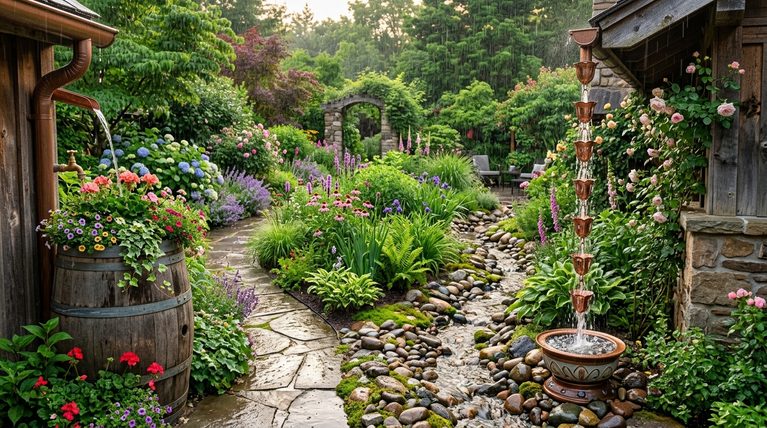
Your downspouts have a job: channel rainwater safely away from your foundation. They are good at that job, and terrible at everything else.
Gray plastic or aluminum pipes running down the side of your house are not exactly design features. But with some creativity, they can become exactly that, and solve real landscape problems like erosion, runoff pooling, and garden irrigation at the same time.
These 20 ideas range from a single afternoon project to weekend builds, from free to a few hundred dollars. All of them make downspouts less of an eyesore and more of an intentional part of your outdoor space.
Before You Start: The Basics of Downspout Runoff Management
Downspouts exist to protect your home’s foundation. Any landscaping you do around them should preserve or improve that function. The most common problems downspout landscapes are solving:
- Erosion at the discharge point: Water hitting the same spot repeatedly erodes soil, creates bare patches, and undermines nearby plant beds
- Pooling and standing water: Improper drainage can saturate plant roots and create mosquito breeding habitat
- Visible pipes: Standard downspouts run 3 to 4 feet above grade on the exterior of the home and rarely coordinate with any landscape design
The best downspout landscape projects address all three: they redirect water, prevent erosion, and conceal or beautify the pipe itself.
Rain Chain Ideas (4 Projects)
1. Copper Cup Rain Chain
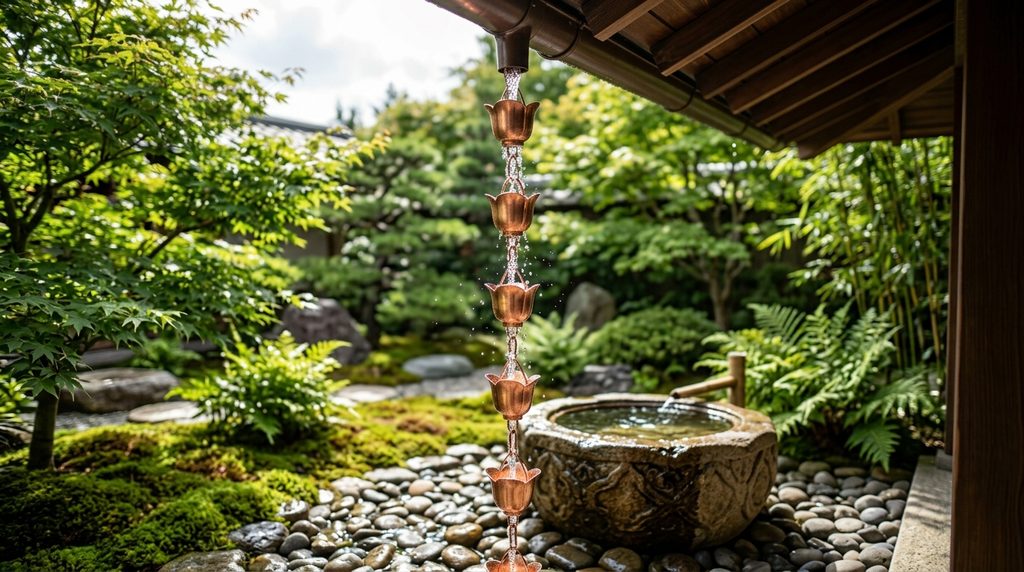
Rain chains (kusa ri doi in Japanese) replace the enclosed downspout entirely with a hanging chain of cups or links that guides water visually downward. The visual effect of water cascading from cup to cup is genuinely beautiful — particularly audibly satisfying in moderate rain.
Install by removing the downspout and hanging the chain from the gutter outlet hole. Direct the base into a decorative basin, rain barrel, or splash rock bed.
- Cost: $40 to $150 depending on length and material
- Best for: Front facades, porch corners, and locations where you’ll hear and see the rain
- Note: Rain chains handle light to moderate rain well; in heavy downpours they may overflow. A backup overflow system is wise in high-rainfall areas.
2. DIY Galvanized Bucket Rain Cascade
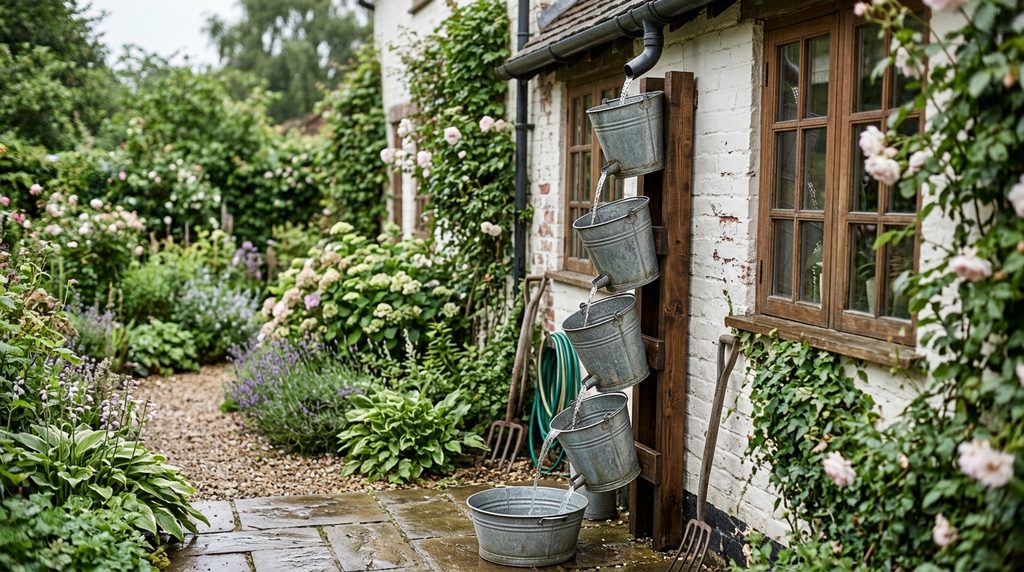
Attach three or four galvanized metal buckets or watering cans at descending heights beside or replacing the downspout. Drill holes in the base of each to allow water to trickle into the next level.
The farmhouse-industrial aesthetic of galvanized metal against a wooden fence or brick facade is genuinely striking. Plant small herbs or trailing flowers in the bottom bucket that aren’t part of the water flow path.
- Cost: $20 to $40 for the buckets; hardware store chains and anchors
3. Seashell or River Rock Rain Chain
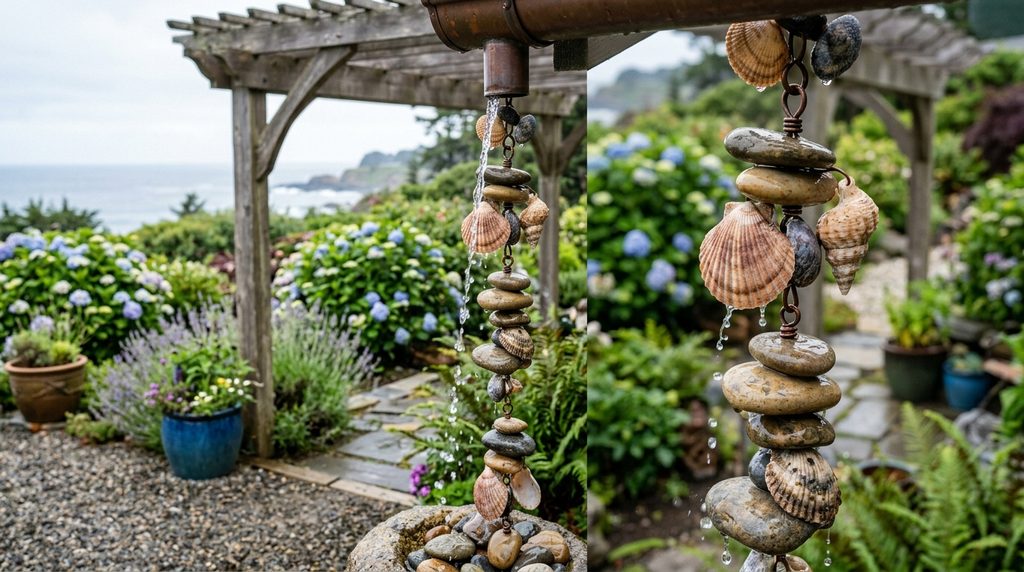
Thread large river stones, shells, or decorative ceramic elements onto heavy-gauge wire or chain to create a custom rain chain that fits your garden’s aesthetic exactly.
4. Bamboo Spout System
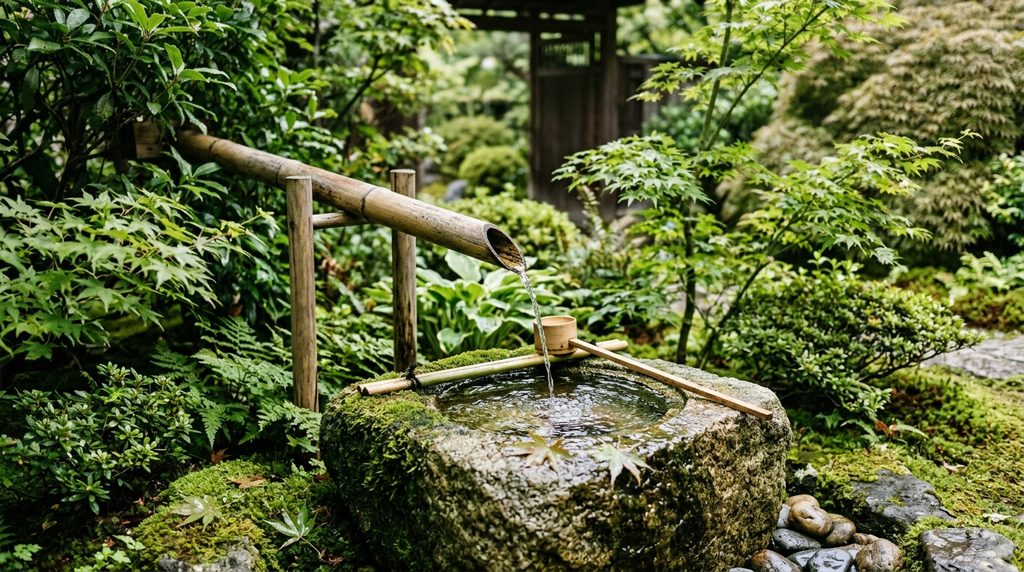
Replace the lower section of a downspout with a section of thick bamboo (available at garden centers and Asian import stores). Seal the joint with waterproof tape or silicone caulk. The natural material contrast between bamboo and stone discharge point creates a Japanese garden aesthetic.
Rain Barrel and Water Collection Ideas (4 Projects)
5. Decorative Rain Barrel Planter
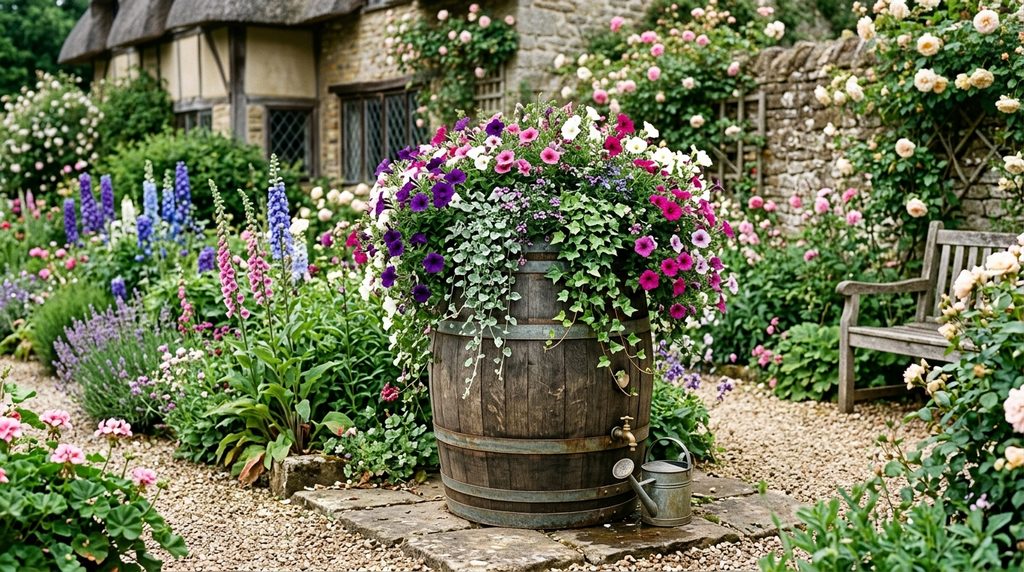
A 55-gallon rain barrel connected to your downspout collects 55 gallons from a single moderate rain event. At typical water rates, a season’s use of stored rainwater for garden irrigation saves $30 to $80 annually — and that math is not the reason most people install them.
Modern decorative rain barrels (available at Home Depot and Amazon for $80 to $180) are designed to look like urns, wooden barrels, or planters. Add cascading petunias or ivy to the top to complete the look.
- Essential: Include an overflow outlet directed away from the foundation for when the barrel is full
- Tip: Elevate the barrel 12 to 16 inches on cinder blocks or a platform to create enough gravity pressure for a hose connection to function
6. Half-Barrel Planter Collection System
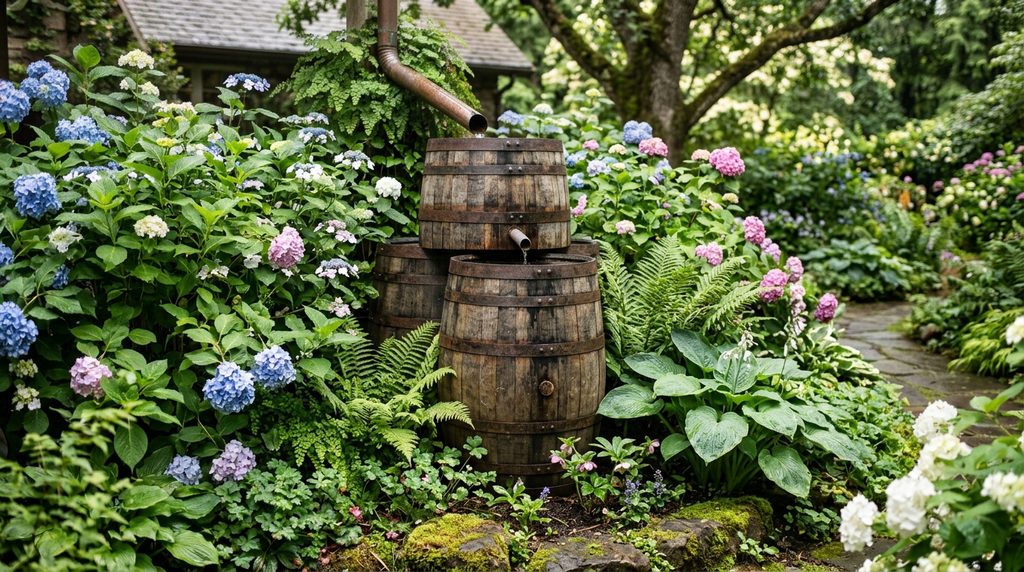
A whiskey barrel half filled with gravel and a submersible pump can capture and redistribute rainwater to nearby garden beds. Connect via a flexible diverter tube from the downspout to the barrel. Plant moisture-loving flowers (hydrangea, astilbe, ferns) around the base.
7. Galvanized Stock Tank Rain Collector
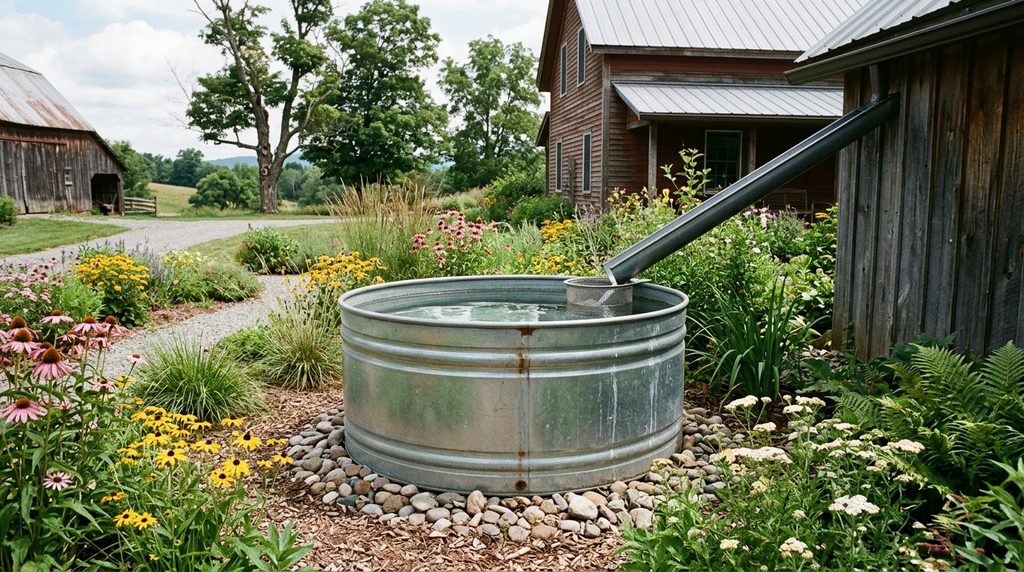
A 100-gallon galvanized stock tank (available at Tractor Supply for $60 to $120) positioned under an extended downspout creates a beautiful and practical water collection feature. Place it as a garden focal point, surround with native plants, and add a solar-powered submersible pump for a simple recirculating fountain when it fills.
8. Underground Cistern
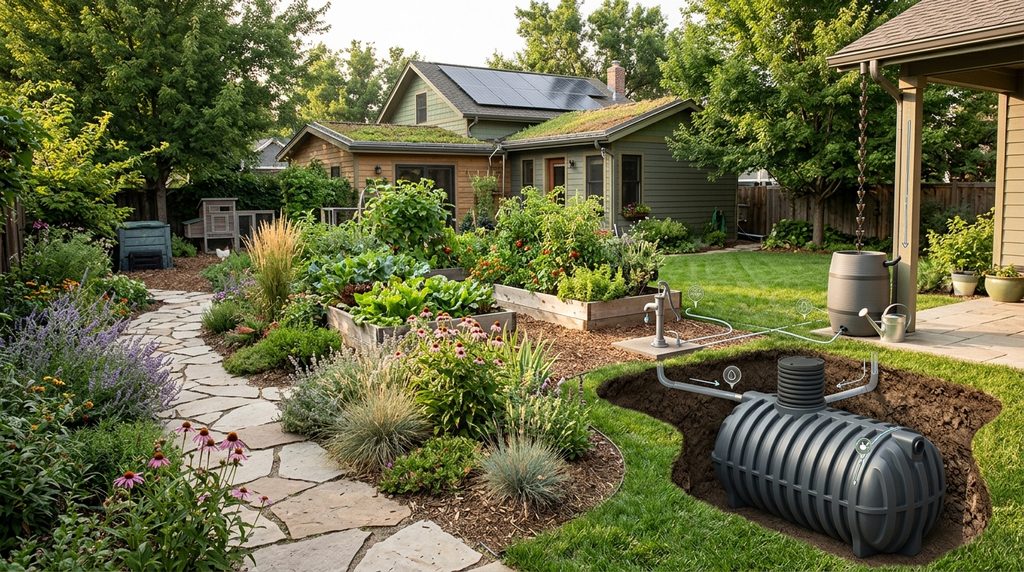
For serious water conservation, a buried 250 to 500-gallon cistern connected to multiple downspouts collects substantial water without any above-ground visual impact. A hand pump or electric pump retrieves water for irrigation. Cost ranges from $300 to $1,500+ depending on capacity and installation complexity.
Dry Creek Bed and Rock Garden Ideas (4 Projects)
9. Classic Dry Creek Bed

A dry creek bed is one of the most versatile and naturalistic approaches to downspout discharge management. The downspout terminates into a river-rock channel that carries water away from the foundation and disperses it gradually across a wider area.
- Materials: River rocks (various sizes), landscape fabric, border plants
- Technique: Dig a shallow channel (4 to 6 inches deep, 12 to 24 inches wide) leading away from the downspout. Line with landscape fabric. Fill with river rocks in varied sizes — larger rocks at the edges, smaller in the center mimicking a natural streambed.
- Plant along edges with: Ornamental grasses, black-eyed Susans, daylilies, or native sedges
- Cost: $30 to $80 for rocks plus plants
10. Rock Stack Feature
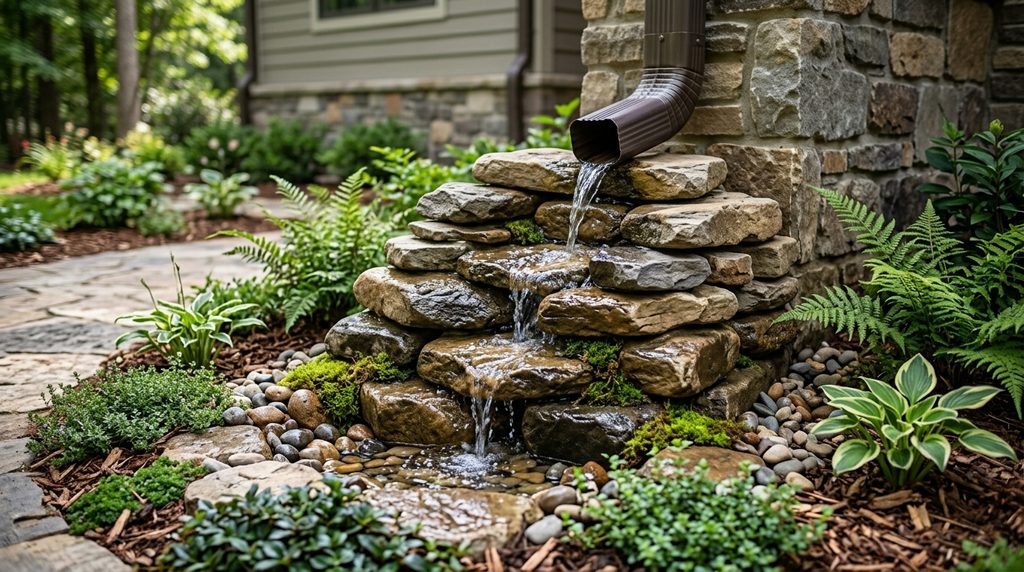
Build a decorative stack of flat fieldstone or flagstone around the downspout discharge point. Position stones so water flows between them rather than against soil, dissipating energy and preventing erosion.
This works particularly well against brick or stone foundation walls where the natural material aesthetic matches the home’s exterior.
11. Japanese Rock Garden Discharge

Create a small karesansui (dry landscape) feature around the downspout discharge: a raked gravel field with carefully placed larger stones. The downspout terminates into a central basin stone, water flows through the gravel field and percolates into the soil gradually.
12. Concrete Leaf Spout

Cast cement leaves in a stacked pile by pressing large leaves (rhubarb, hosta, elephant ear) into wet concrete to create natural molds. Stack 3 to 5 leaves in a cascading arrangement so rainwater flows from one leaf to the next.
This is a genuine DIY art project that requires a weekend but produces a one-of-a-kind garden sculpture that functions as a downspout extension.
- Tutorial: Search YouTube for “concrete leaf fountain” — the technique is well-documented
Concealment and Decoration Ideas (4 Projects)
13. Wooden Box Cover

Build a three-sided wooden box from cedar fence boards to encase the visible section of downspout from the gutter to the ground. The “U” shape slides over the pipe and can be painted, stained, or left natural to coordinate with your siding.
Attach a small trellis panel to the top and grow a climbing plant (clematis, morning glory, climbing hydrangea) to further soften the structure.
- Cost: Under $20 in cedar fence boards
14. Downspout Trellis Integration
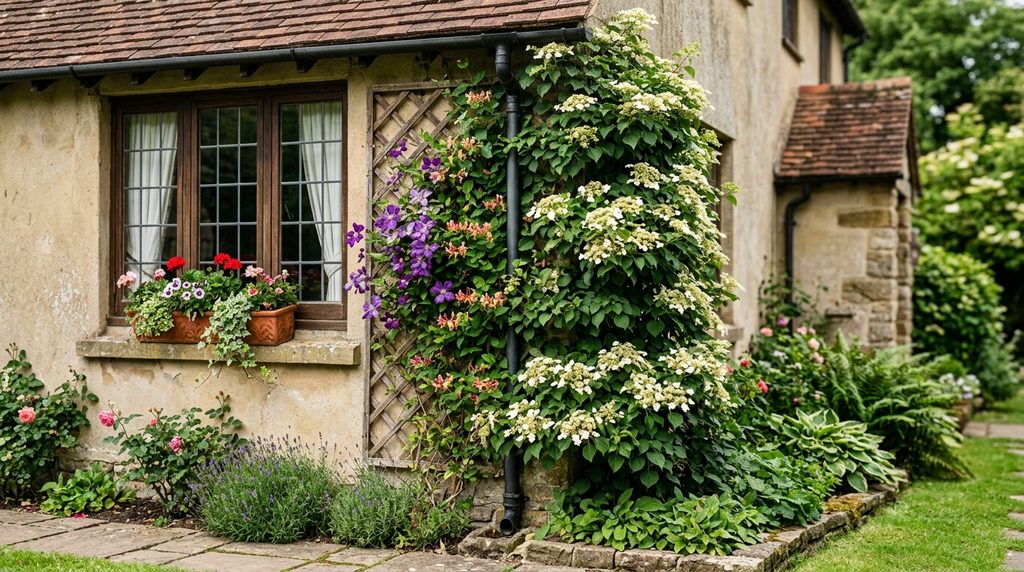
Attach a wooden or metal trellis panel directly to the wall beside the downspout and train a climbing plant across it. The growing coverage conceals the pipe within a few seasons and adds vertical garden interest.
- Best climbing plants for this use: Climbing hydrangea (Hydrangea anomala petiolaris), Virginia creeper (Parthenocissus quinquefolia), or confederate jasmine (Trachelospermum jasminoides)
15. Paint to Match

The simplest and most immediate improvement: paint the downspout to match the siding or trim color. A can of exterior metal paint ($6 to $12 at any hardware store) makes a downspout nearly invisible against the facade.
Use exterior primer first, then paint with any quality exterior latex or enamel. Color-match your siding at Home Depot or Lowe’s for a perfect blend.
16. Downspout Garden Nook

Build a small raised bed or container garden immediately around the downspout base. The structure conceals the pipe while channeling the water into the planting area.
Plant with moisture-loving plants that benefit from the additional water: Japanese iris, canna lilies, Louisiana iris, or elephant ears.
Rain Garden and Functional Landscape Ideas (4 Projects)
17. Classic Rain Garden

A rain garden is a shallow depression planted with native plants that is positioned to receive downspout runoff. It temporarily holds water after rain events, allowing it to slowly infiltrate into the soil rather than running off your property.
A properly sized rain garden (approximately 1/3 the area of the roof section draining to it) removes 30% more pollutants than a traditional lawn and dramatically reduces stormwater runoff volume.
- Site: 10 feet from the house minimum, away from the septic system, positioned to receive downspout discharge
- Depth: 6 to 12 inches — deep enough to hold water temporarily but shallow enough to drain within 24 to 48 hours
- Best plants: Native sedges, Joe-Pye weed, switchgrass, black-eyed Susans, coneflowers, cardinal flower
- Cost: $50 to $200 for a modest residential rain garden
18. Bog Garden Feature
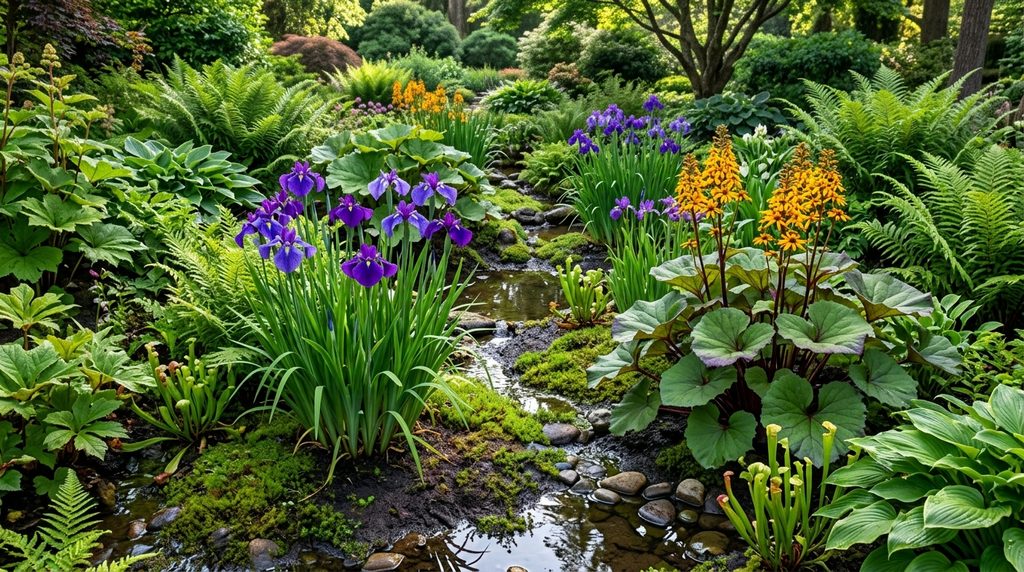
Extend the downspout into a lined bog area planted with moisture-loving ornamentals. Unlike a rain garden, a bog garden retains moisture — line with pond liner (available at Lowe’s for $20 to $40) perforated with drainage holes to slow but not stop drainage.
- Great bog plants: Ligularia, Rodgersia, Japanese iris, pitcher plants, horsetail reed (Equisetum)
19. Vegetable Garden Irrigation
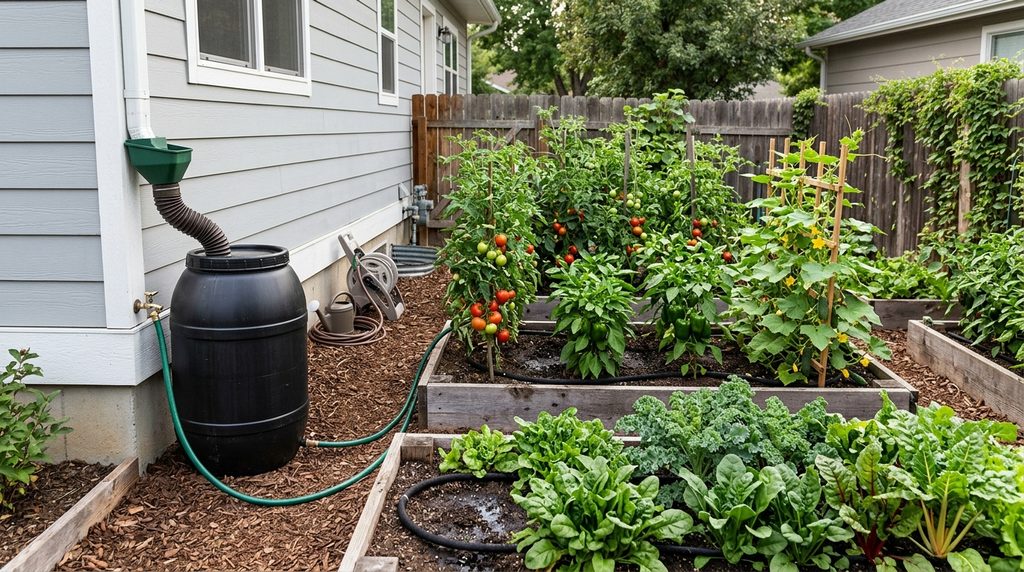
Extend your downspout with flexible corrugated pipe or a soaker hose connection to a nearby vegetable bed. During rain events, the garden is watered automatically — no hauling hoses needed.
This requires some planning to ensure the water path doesn’t erode the vegetable bed, and overflow management is important. A perforated distribution pipe buried 2 inches below the soil surface works well.
20. DIY Watering Can Cascade Waterfall

Mount three to five watering cans at descending heights on a garden wall or fence, connecting downspout water into the top can. Each can overflows into the next, creating a charming cascading feature that terminates in a basin or rain barrel.
The whimsical visual of water flowing from watering can to watering can is a crowd-pleaser and doubles as a functional water collection system.
✅ Tip Before installing any downspout modification, check that your gutter system is clean and functioning. Even the most beautiful downspout landscape feature cannot compensate for gutters that are clogged or sloped incorrectly. Install a mosquito screen over any open rain barrel or collection basin. Standing water breeds mosquitoes within 7 to 10 days — a screen prevents them from accessing the water surface to lay eggs. |
Frequently Asked Questions
How far should a downspout discharge from the foundation?
Water should be directed at least 4 feet from your foundation for average soil — 6 feet or more for clay-heavy soils that drain slowly. Inadequate distance allows water to saturate the soil against foundation walls, increasing hydrostatic pressure and risk of basement seepage.
Do I need a permit for a rain barrel?
In most US municipalities, rain barrels require no permit. Some western states (Colorado, Nevada, and Utah historically) have had restrictions on rainwater collection due to water rights laws, but most have updated their regulations to allow residential rain barrels. Check your local municipality before building underground cisterns, which may have size-related permit requirements.
How big should a rain garden be?
Calculate your rain garden size based on roof drainage area: the rain garden should be approximately 20 to 30% of the roof area draining to it. For a typical residential situation — a 1,000 square foot section of roof — a 200 to 300 square foot rain garden is appropriate. Online rain garden sizing calculators from state extension services simplify the math.
The Bottom Line
A downspout is doing its job whether you decorate it or not. But the same water that runs invisibly through a gray plastic pipe can cascade visibly down a copper chain, fill a rain barrel planter, or nourish a beautiful native plant rain garden.
The choice between those options is simply one of creativity and intention. Any of the projects above can be completed in a single weekend — and most of them cost less than a single visit to a garden center.
