
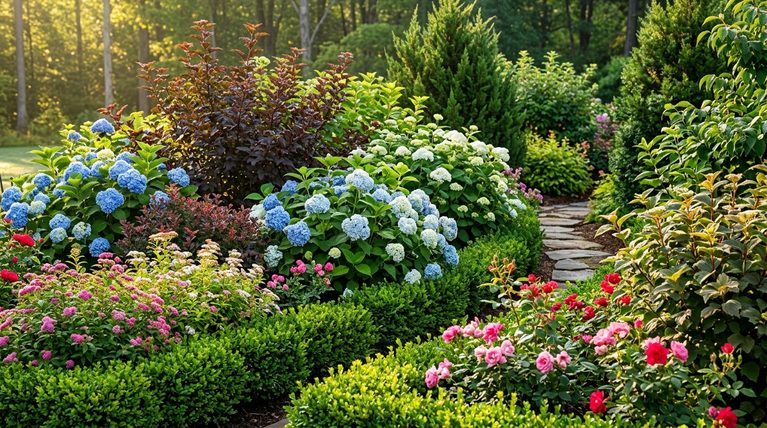
The right shrubs are the most valuable plants in a home landscape.
Unlike annuals that demand replanting, or perennials that need dividing, or trees that require professional maintenance, well-chosen shrubs spend years quietly growing more beautiful with minimal intervention. They provide structure, privacy, seasonal interest, and pollinator habitat — often simultaneously.
The key is choosing correctly in the first place. A shrub planted in the wrong location, wrong soil, or wrong climate becomes a constant battle. These 15 are selected for genuine low-maintenance performance: the right plants in the right conditions.
What Makes a Shrub Truly Low-Maintenance?
Before the plant list, a quick note on what “low-maintenance” actually means for shrubs:
- It does NOT mean zero care. All shrubs benefit from pruning at some point. All prefer decent soil. All need water during establishment (first 1 to 2 years).
- It DOES mean: no regular deadheading, no annual replanting, no pest spraying, no complex fertilization schedule, and infrequent (or no) irrigation once established.
- The most common mistake in shrub selection is choosing a plant that will outgrow its space — leading to repeated heavy pruning that defeats the purpose of low-maintenance gardening.
The 15 Best Low-Maintenance Shrubs
1. Incrediball Hydrangea (Hydrangea arborescens ‘Abetwo’)
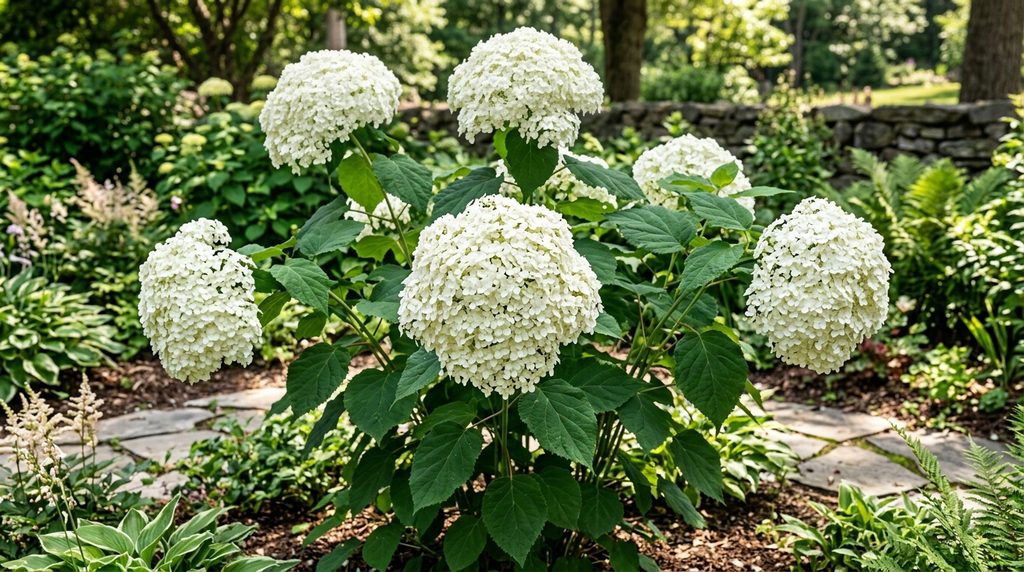
Zones: 3 to 9 | Height: 4 to 5 feet | Bloom: July through September | Sun: Full sun to part shade
Smooth hydrangeas (Hydrangea arborescens) are among the most forgiving and reliable flowering shrubs available. They bloom on new wood each year, meaning you can cut them back hard in late winter and they will flower reliably on new growth — completely eliminating the “did I prune at the wrong time?” anxiety that plagues bigleaf hydrangea owners.
Incrediball produces massive (up to 12-inch diameter) white snowball flower heads that age gracefully to parchment. It is cold-hardy to zone 3 and substantially more vigorous than the older Annabelle variety.
- Care: Cut to 12 to 18 inches from the ground in late winter. No other maintenance required.
2. Little Lime Hydrangea (Hydrangea paniculata ‘Jane’)
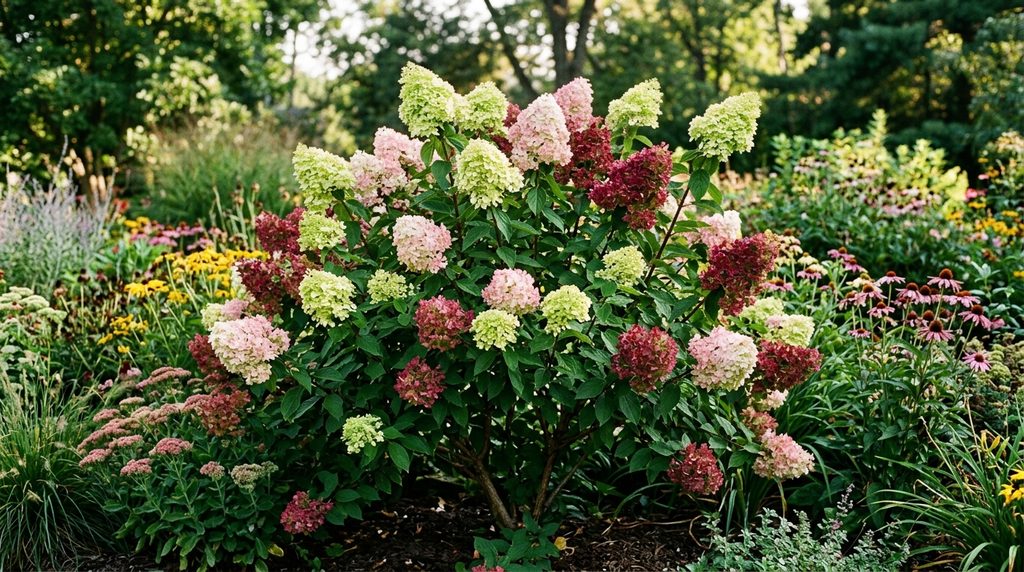
Zones: 3 to 8 | Height: 3 to 5 feet | Bloom: July through September | Sun: Full sun to part shade
Panicle hydrangeas are the most adaptable hydrangea group — they tolerate full sun, cold, heat, and drought far better than bigleaf types. Little Lime is a compact version of the popular Limelight hydrangea, producing chartreuse flower heads that age to pink and burgundy in fall.
Panicle hydrangeas also bloom on new wood, so pruning timing is forgiving.
3. Knock Out Rose (Rosa ‘Radrazz’)
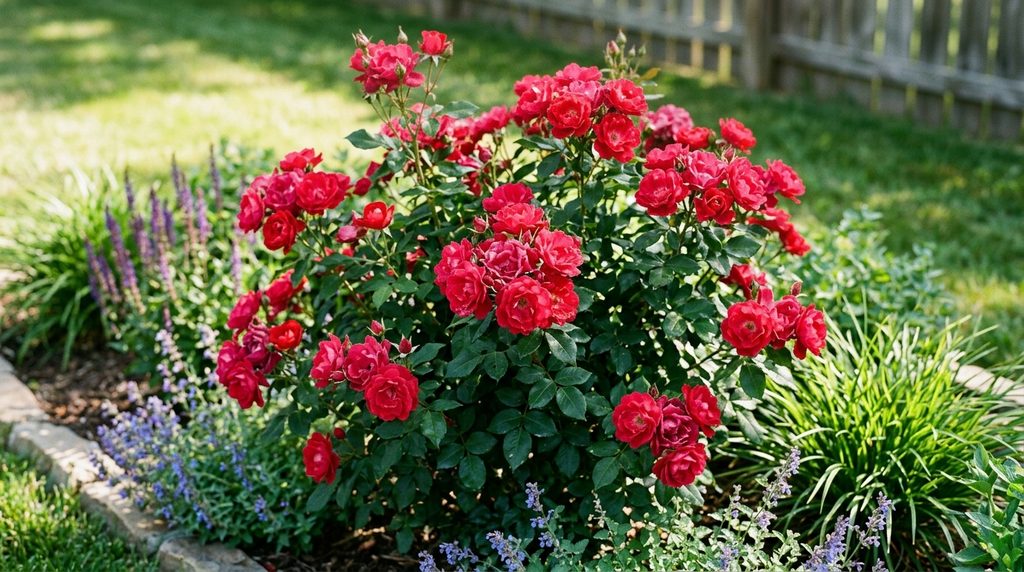
Zones: 4 to 9 | Height: 3 to 4 feet | Bloom: May through frost | Sun: Full sun
Knock Out roses changed the perception of roses as high-maintenance plants. They are self-cleaning (no deadheading needed), disease-resistant without spraying, and bloom continuously from late spring through the first hard freeze — approximately 6 months of uninterrupted color.
Red Knock Out is the original; Double Knock Out (fuller flowers), Pink Knock Out, Coral Knock Out, and Sunny Knock Out (yellow) are all equally easy.
- Care: Prune by one-third in early spring to shape. Fertilize monthly during growing season with a rose fertilizer for best performance.
4. Catmint (Nepeta x faassenii)
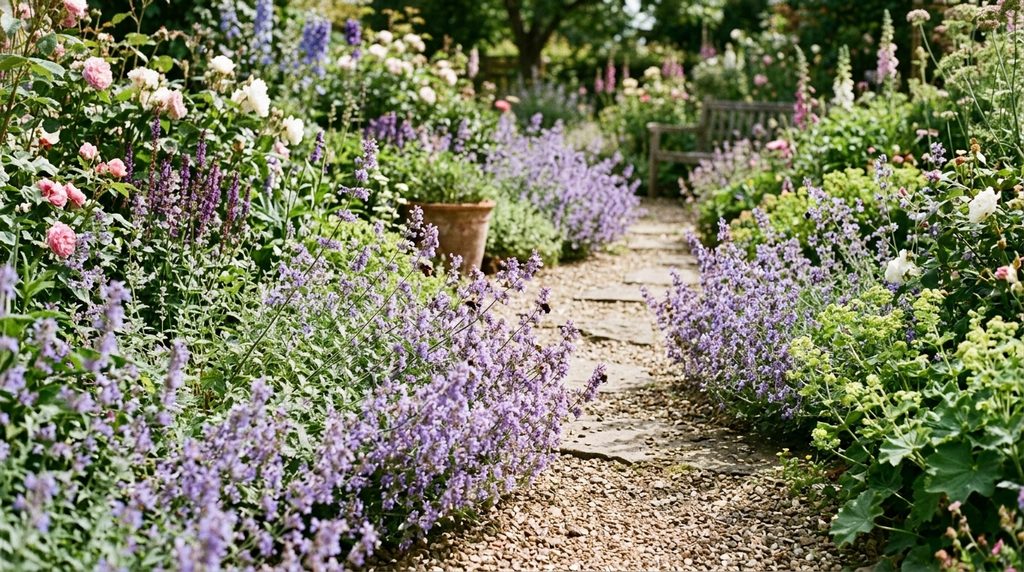
Zones: 4 to 8 | Height: 12 to 24 inches | Bloom: May through September | Sun: Full sun
Technically a herbaceous perennial often used as a groundcover, catmint behaves like a low shrub and is included here for its extraordinary low-maintenance credentials. It is drought tolerant, deer and rabbit resistant, fragrant, and blooms for months without deadheading.
Walker’s Low (ironically grows to 24 inches) is the most widely planted and most reliably performing variety.
5. Little Henry Virginia Sweetspire (Itea virginica ‘Sprich’)
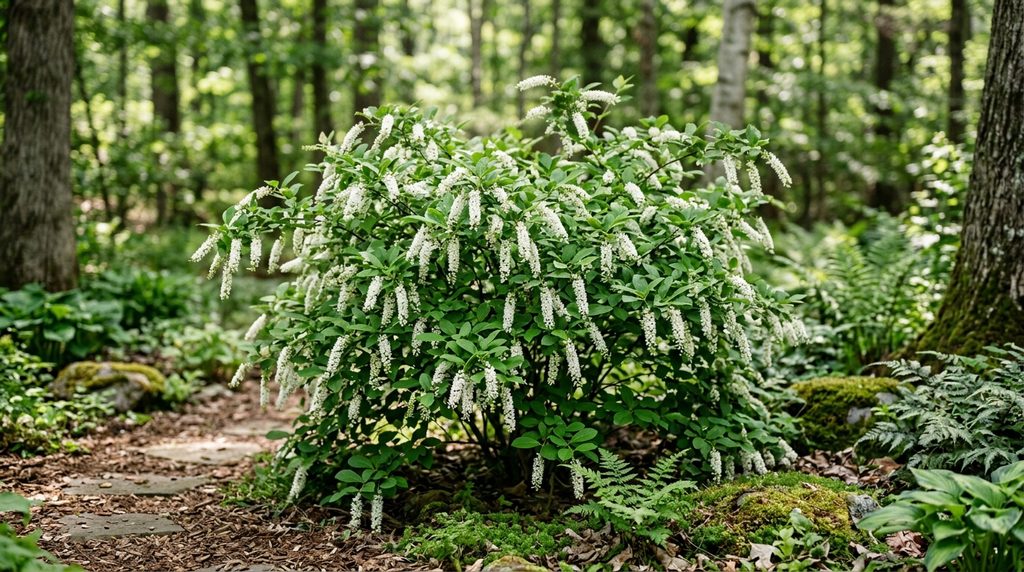
Zones: 5 to 9 | Height: 2 to 3 feet | Bloom: June to July | Sun: Full sun to full shade
Virginia sweetspire is a native North American shrub with exceptional cold hardiness, pest resistance, and adaptability to both wet and dry soils — a rarity in the shrub world. Little Henry is a compact cultivar that produces fragrant white flower racemes in summer and extraordinary scarlet-to-burgundy fall foliage.
Full sun to full shade adaptability makes it one of the most versatile shrubs on this list.
6. Dwarf Korean Lilac (Syringa meyeri ‘Palibin’)

Zones: 3 to 7 | Height: 4 to 5 feet | Bloom: May | Sun: Full sun
Dwarf Korean lilac offers the legendary fragrance of traditional lilacs in a compact, disease-resistant, slow-growing shrub that does not outgrow its space for decades. It blooms reliably without any special care, and its resistance to powdery mildew means the foliage stays attractive long after bloom.
- Care: Light pruning immediately after bloom (not in fall or spring when buds are set). No other maintenance needed.
7. Spirea (Spiraea japonica — Magic Carpet, Goldmound, Double Play)
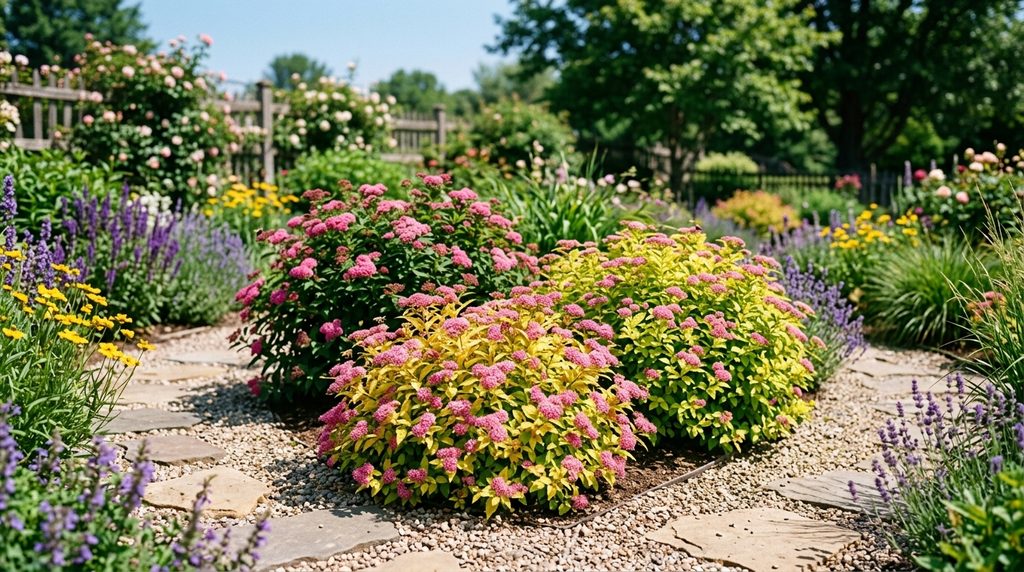
Zones: 4 to 8 | Height: 18 inches to 3 feet | Bloom: Summer | Sun: Full sun
Japanese spireas are workhorses of low-maintenance landscaping — fast-establishing, long-lived, colorful, and remarkably problem-free. Magic Carpet has bright red new growth maturing to yellow-green with pink flowers. Goldmound has golden foliage. Double Play series has red-orange spring color with good summer heat tolerance.
- Care: Shear back by one-third after bloom for a flush of colorful new growth. That is all.
8. Boxwood (Buxus spp.)
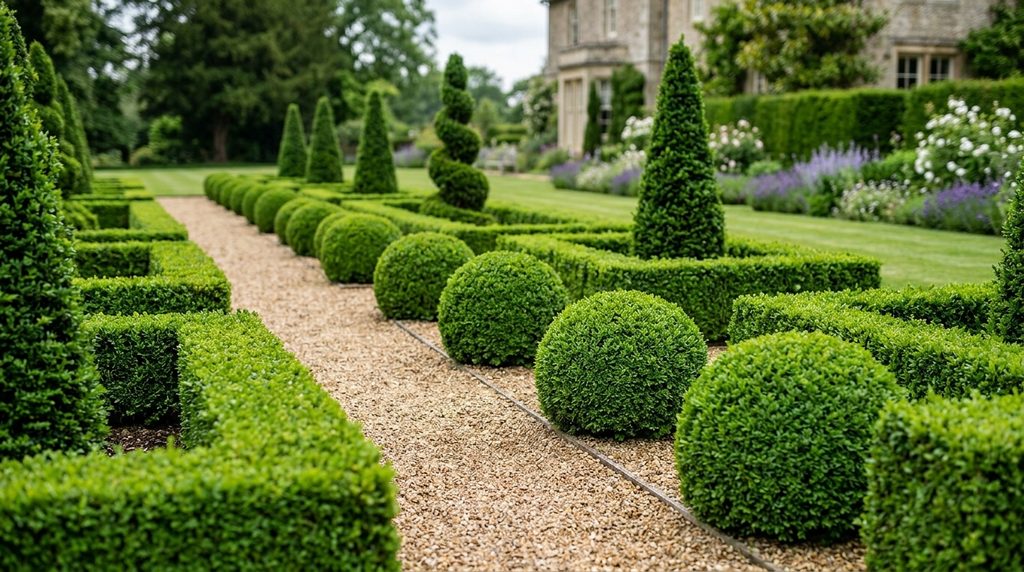
Zones: 5 to 8 (varies by variety) | Height: 2 to 6 feet | Bloom: Insignificant | Sun: Full sun to part shade
Boxwood provides the evergreen structure and formal shaping ability that few other shrubs can match. When properly sited (well-draining soil, not too wet), boxwood requires nothing but occasional shaping. SugarPlum Boxwood and Sprinter Boxwood are blight-resistant modern varieties that address the boxwood blight issues affecting older cultivars.
- Note: Select blight-resistant varieties if boxwood blight has been documented in your region.
9. Oakleaf Hydrangea (Hydrangea quercifolia)
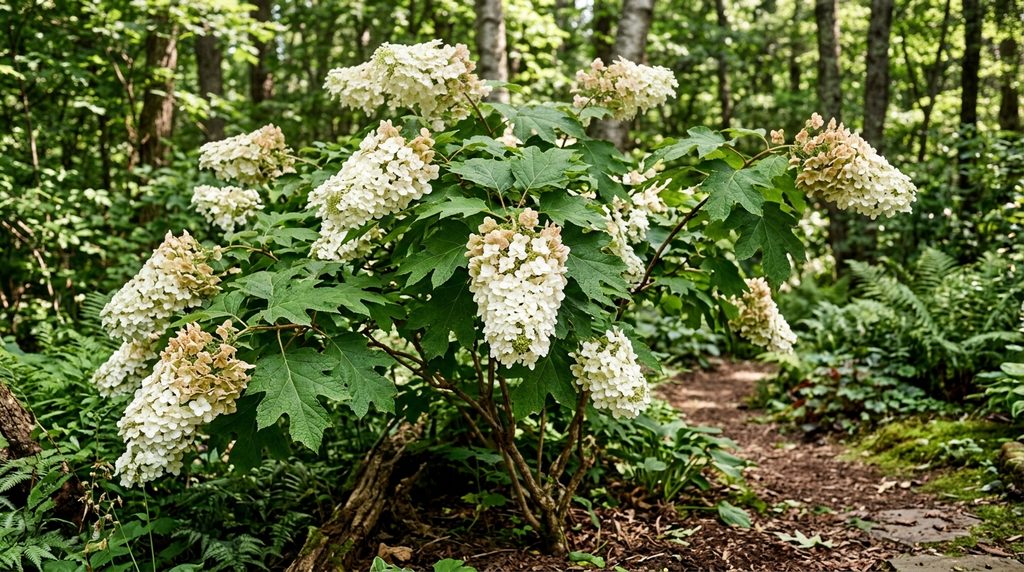
Zones: 5 to 9 | Height: 4 to 8 feet | Bloom: June through August | Sun: Full sun to deep shade
Already mentioned in the shade plants list, oakleaf hydrangea deserves a second entry here for its exceptional low-maintenance credentials. Native to the southeastern US, it thrives in poor soil, tolerates shade, drought, and clay — conditions that defeat most other large shrubs. Its four-season interest (flowers, fall color, bark) makes it one of the best value shrubs in American horticulture.
10. Itea virginica (Virginia Sweetspire — full-size)

Zones: 5 to 9 | Height: 3 to 5 feet | Sun: Full sun to full shade
The full-size Virginia sweetspire is equally adaptable to difficult sites as the compact version. It naturalizes readily in moist conditions, tolerates dry shade, and spreads by suckers to create a colony that covers difficult banks and slopes.
11. Summersweet (Clethra alnifolia)
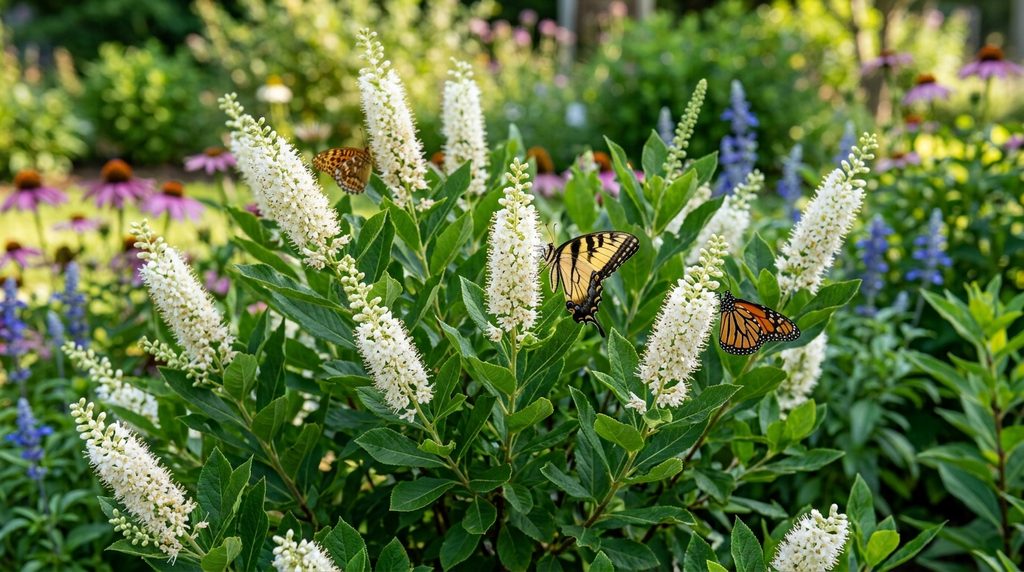
Zones: 4 to 9 | Height: 3 to 8 feet | Bloom: July through August | Sun: Full sun to full shade
Summersweet is a native North American shrub that produces intensely fragrant white or pink flower spikes in midsummer — one of the most powerfully sweet scents in the garden. It tolerates wet soil conditions, making it one of the few fragrant shrubs suitable for rain gardens, pond edges, and low-lying areas that stay moist.
12. Forsythia (Forsythia x intermedia)
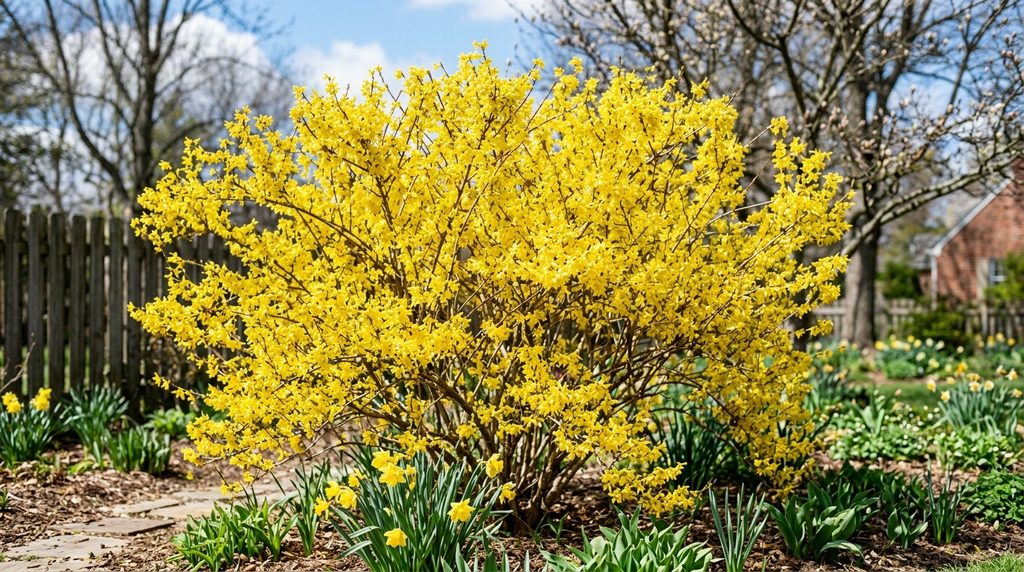
Zones: 5 to 8 | Height: 4 to 8 feet | Bloom: March through April | Sun: Full sun
Forsythia announces spring before almost any other plant. Its bright yellow flowers bloom on bare stems in early spring, often before the last snow. It is fast-growing, deer resistant, and adapts to poor soil.
The main maintenance consideration is that forsythia should be pruned immediately after bloom — not in late summer or fall, which removes next year’s flower buds. Select compact varieties (Gold Tide, Sunrise) for smaller gardens.
13. Ninebark (Physocarpus opulifolius)
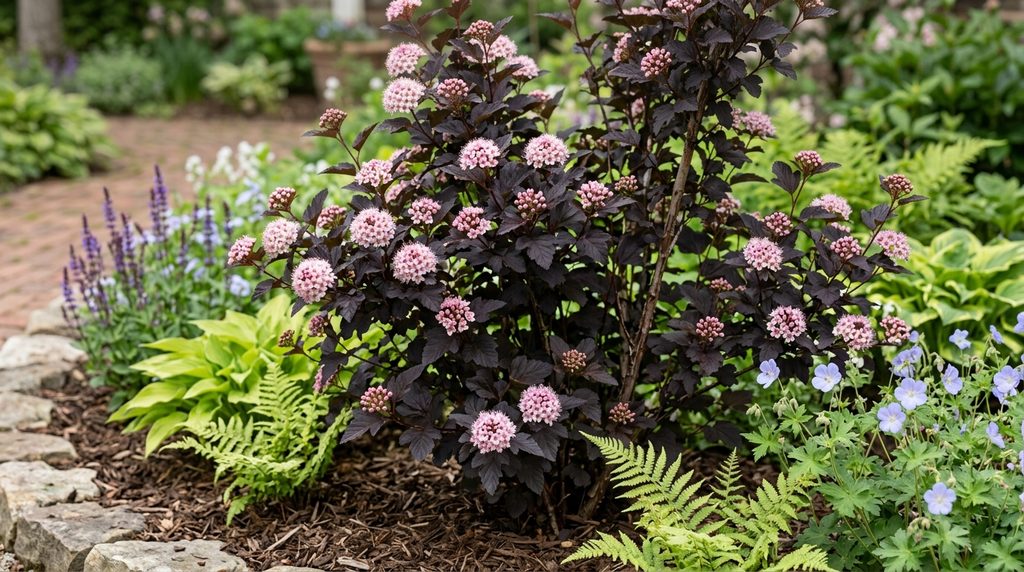
Zones: 2 to 8 | Height: 4 to 8 feet | Bloom: June | Sun: Full sun to part shade
Ninebark is one of the most cold-hardy, adaptable, and maintenance-free native shrubs available. Its spectacular foliage in purple-black (Diabolo, Summer Wine) or golden-yellow (Dart’s Gold, Nugget) provides season-long interest even after the small pink-white flower clusters fade.
It tolerates wet soil, clay, drought, and extreme cold — conditions that would stress most ornamentals.
14. Drift Roses (Rosa ‘Meidrifora’ and related cultivars)

Zones: 4 to 11 | Height: 18 to 24 inches | Bloom: May through frost | Sun: Full sun
Drift roses are scaled-down versions of Knock Out roses — compact, disease-resistant, self-cleaning, and continuously blooming. Their low profile (18 to 24 inches) makes them excellent for the front of borders, as groundcovers on slopes, or in mass plantings where Knock Outs would be too tall.
15. Viburnum (Viburnum spp.)
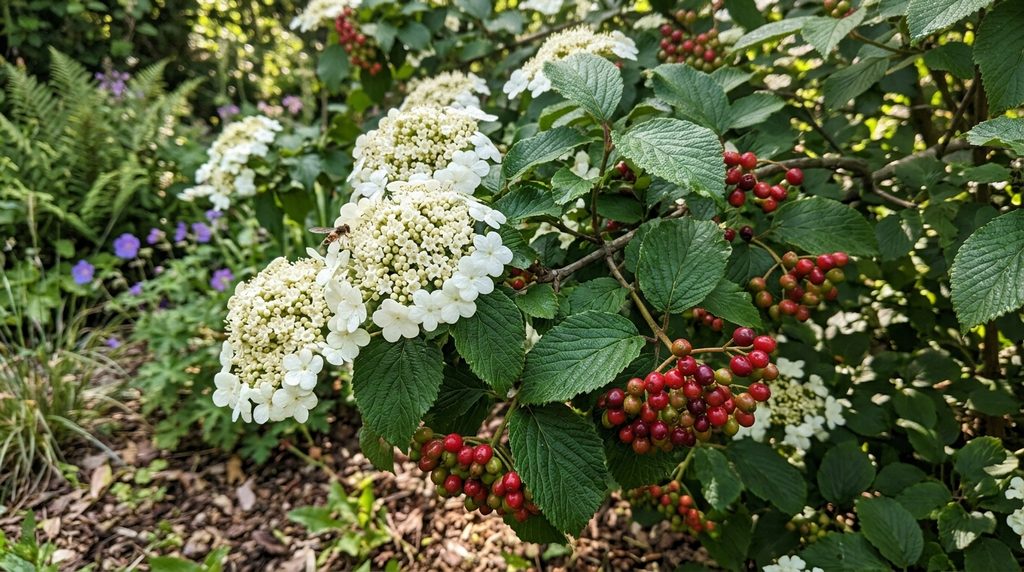
Zones: 4 to 9 (varies by species) | Height: 4 to 12 feet | Bloom: Spring | Sun: Full sun to part shade
The viburnum genus includes some of the most wildlife-valuable, pest-resistant, and low-maintenance shrubs in American horticulture. Arrowwood viburnum (V. dentatum) provides white flower clusters in spring, dark berries for birds in fall, and outstanding red-purple fall foliage. Snowball viburnum (V. opulus) and Korean spice viburnum (V. carlesii) add fragrance.
- Tip: Plant two different viburnum varieties for cross-pollination, which significantly improves berry production for wildlife.
Siting Shrubs for Long-Term Success
The most important decisions in shrub gardening happen before planting:
- Measure mature size, not pot size: A 3-gallon pot of Little Lime Hydrangea will be 4 to 5 feet wide in 3 years. Plant accordingly.
- Match sun to requirements: Shrubs planted in wrong light never perform at their best, regardless of care.
- Prepare soil before planting: Dig the planting hole 2 to 3 times the width of the root ball. Backfill with native soil plus 20 to 30% compost — do not plant in pure compost.
- Mulch at planting: 2 to 3 inches of bark mulch out to the drip line retains moisture, suppresses weeds, and moderates soil temperature during establishment.
- Water consistently for the first 2 growing seasons: Most shrub failure happens during this window when roots are not yet deep enough to survive drought.
✅ Tip Visit shrubs you’re considering at a reputable local nursery or botanical garden rather than buying based solely on online photos. Seeing mature specimens — their actual size, texture, and how they look in mixed plantings — prevents most landscape regrets. Group 3 or 5 of the same shrub rather than planting one of each variety. Repetition creates visual cohesion and gives each plant room to show its full character. |
Frequently Asked Questions
What is the easiest shrub to grow?
Spireas, catmint, and knock out roses consistently rank as the easiest for beginner gardeners. All are disease-resistant, tolerant of imperfect soil, cold-hardy in most US climates, and require nothing more than occasional shaping to thrive for years.
What shrubs grow well in shade?
Oakleaf hydrangea, summersweet (Clethra), Virginia sweetspire, and Arrowwood viburnum all perform reliably in partial to full shade. For deep shade, look for shade-specific selections within each genus, as adaptability varies between cultivars.
How far should shrubs be planted from a house?
As a general rule, small shrubs (under 3 feet mature height) can be planted 18 to 24 inches from a foundation. Medium shrubs (3 to 5 feet) should be 3 to 4 feet from the foundation. Large shrubs (5+ feet) need at least 5 to 6 feet. Always measure mature width as well as height — a shrub that grows 6 feet wide planted 2 feet from a wall is a maintenance headache within 5 years.
Do low-maintenance shrubs still need pruning?
Yes, but far less frequently. Most of the shrubs on this list need one annual pruning session — typically in late winter or immediately after bloom, depending on the plant. This takes 15 to 30 minutes per shrub per year for most home-scale plantings.
The Bottom Line
The right shrub in the right place is the definition of set-and-forget gardening.
Invest time in the selection and planting process, and the rewards are years of seasonal interest, wildlife habitat, and garden structure without the continuous labor that annuals and many perennials demand.
Start with one or two from this list this season. By next year, they will be growing bigger and more beautiful — entirely on their own.
