
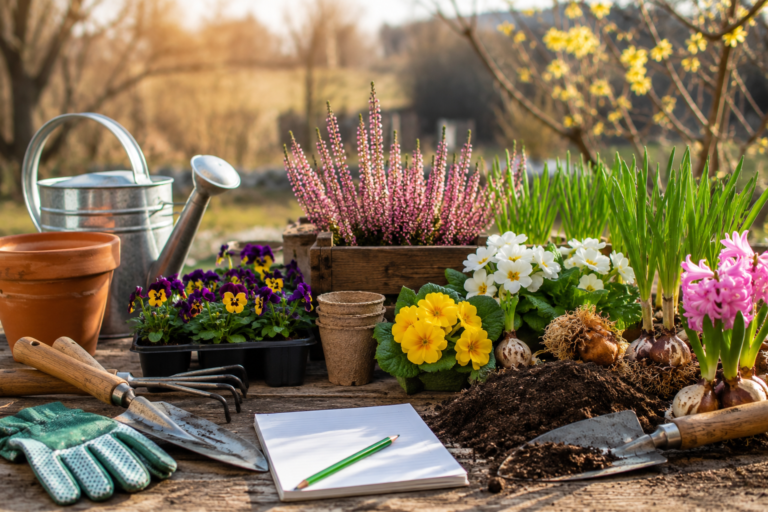
February feels like a dormant month for the garden.
In most temperate climates, the ground is cold, plants are bare, and there appears to be nothing to do but wait.
This impression is wrong. February is one of the most productive months a gardener can spend, and the work done now determines the quality and productivity of the entire growing season ahead.
Here are 6 tasks that genuinely move the needle.
1. Start Long-Season Seeds Indoors
February is the correct time to start the longest-season vegetables and flowers indoors in most temperate climates, typically 10 to 14 weeks before the last frost date.
What to start in February:
- Peppers: Require 8 to 10 weeks indoors before transplanting and germinate best at 80 to 85°F (heat mat required for reliable germination)
- Onions and leeks: 8 to 10 weeks to produce transplants of adequate size
- Celery and celeriac: 10 to 12 weeks, among the slowest-starting vegetables
- Perennial flowers from seed: Echinacea, agastache, lavender, all take 10 to 14 weeks to reach transplant size
- Lobelia and petunias: 10 to 12 weeks from seed to planting-size transplants
Key equipment for February seed starting: quality LED grow lights (keep 2 to 4 inches above seedlings for 14 to 16 hours daily), a seedling heat mat, and a thermometer to verify the root zone temperature your seeds need.
2. Order Seeds and Plan the Garden
The most popular varieties sell out by March. February is the reliable window to order from specialty seed companies before availability drops.
While ordering, draw a simple garden plan indicating where each crop will go. This is the moment to plan crop rotation (avoiding planting the same crop family in the same location as last year), companion planting combinations, and succession planting schedules.
3. Prune Dormant Trees, Shrubs, and Roses
Late winter is the ideal time for most dormant pruning. The structure of the plant is fully visible without foliage, disease pressure is minimal (no leaf surface for fungal spore deposition), and the plant’s energy reserves are intact before spring growth draws on them.
Prune now:
- Hybrid tea and shrub roses (except once-blooming climbers and old garden roses, these are pruned after they bloom)
- Fruit trees (apples, pears, plums, cherries), the classic late-winter task for improved fruit production
- Ornamental grasses, cut to 4 to 6 inches above the ground before new growth emerges
- Buddleja, caryopteris, and other shrubs that bloom on new wood, cut back hard
- Summer-blooming clematis (Group 3), cut to 12 to 18 inches above ground
Do NOT prune now:
- Spring-blooming shrubs (forsythia, lilac, rhododendron, azalea, viburnum), prune immediately after flowering
- Wisteria’s main pruning should wait until it’s easier to see where new buds are breaking
4. Clean, Sharpen, and Service Garden Tools
Dull, dirty tools make every garden task harder. February is the natural moment for tool maintenance, before the rush of spring planting leaves no time for it.
- Pruning shears: Disassemble, clean metal surfaces with steel wool, sharpen with a diamond file or sharpening stone on the beveled cutting edge only. Reassemble and apply a drop of machine oil to the pivot point.
- Spades, hoes, and forks: Remove rust with steel wool or a wire brush. Sharpen the cutting edge of spades and hoes with a mill file. Apply linseed oil to wooden handles.
- Mower blades: Remove, clean, sharpen, or replace if damaged. A sharp blade cuts cleanly; a dull blade tears grass and increases disease susceptibility.
5. Apply Dormant Oil to Fruit Trees and Shrubs
Dormant oil (also called horticultural oil) is a refined mineral oil that suffocates overwintering insect eggs and pests on the bark of fruit trees, roses, and ornamental shrubs. Applied correctly in late winter before bud break, it is one of the most effective and least toxic pest management interventions available.
Target pests: scale insects, aphid eggs, mites, psylla. Apply according to label directions when temperatures are consistently above 40°F during the day and will not drop below freezing for 24 hours after application.
6. Test Your Soil
A soil test conducted in February gives you time to apply amendments (lime to raise pH, sulfur to lower it, phosphorus, potassium) before the growing season. Amendments take weeks to fully integrate into the soil, applying them at planting time is too late for most to be effective.
Your state’s Cooperative Extension Service offers soil testing for $15 to $25 with detailed amendment recommendations. This is one of the highest-return investments in gardening, targeted amendments outperform generic fertilizer programs that do not account for what your specific soil actually lacks.
✅ Tip
Look for structural damage to garden structures — trellises, raised bed corners, pergola hardware — while the garden is empty. Repairs made in February are completed before they become urgent in April when everything needs attention simultaneously.
Keep a garden journal. Record seed varieties planted, planting dates, germination rates, and what performed well or poorly. This record becomes more valuable each year as it accumulates data specific to your microclimate, soil, and growing conditions.
Frequently Asked Questions
What vegetables can I plant in February?
In most temperate climates, February is for starting seeds indoors rather than direct outdoor planting. Peppers, onions, leeks, and celery are the key crops to start indoors in February. In zones 8 to 10 where winters are mild, direct outdoor sowing of cold-hardy crops (spinach, peas, broad beans, kale) may be appropriate in February, check your specific last frost date.
When should I start tomato seeds?
Tomatoes need 6 to 8 weeks of indoor growth before transplanting. Starting tomatoes in February (for a late April transplant date) typically produces overgrown, root-bound transplants that suffer transplant shock. Wait until March in most temperate climates, February is too early for tomatoes in all but the southernmost US regions.
The Bottom Line
The gardener who uses February well arrives at spring fully prepared: seeds started and growing under lights, tools sharpened, soil test results in hand, amendments applied, pruning complete. The gardener who waits until April scrambles continuously. Use February, the growing season’s work begins here.
