
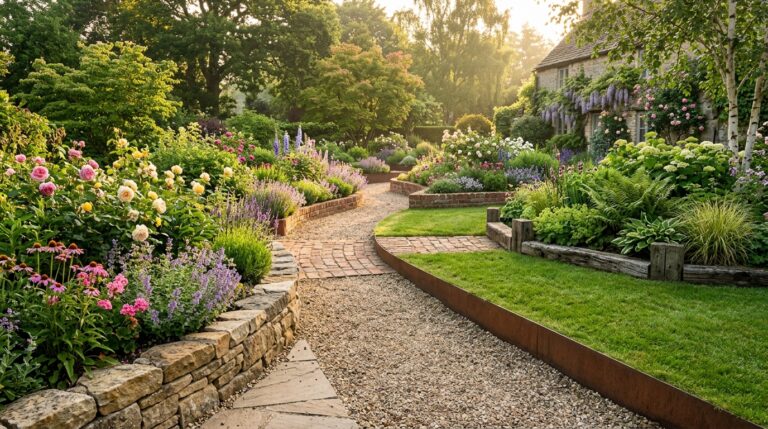
Garden bed edging does more than look attractive.
It creates a physical barrier that prevents grass from creeping into flower beds, keeps mulch contained, defines the visual transition between lawn and planting, and reduces the time spent on hand-edging throughout the season.
The question is which material suits your garden’s style, your soil type, your budget, and your willingness to maintain it.
This guide compares every major edging type honestly.
Why Edging Matters
A well-edged garden bed looks intentional and professional. Without edging, grass rhizomes invade garden beds continuously, requiring ongoing hand-removal that takes hours each season. Mulch migrates onto the lawn. The boundary between lawn and garden becomes indeterminate.
One afternoon installing quality edging can save 10 to 20 hours of maintenance per season for a moderately sized garden.
The Complete Guide to 28 Edging Materials
1. Metal Edging (Corten Steel, Aluminum, Galvanized Steel)
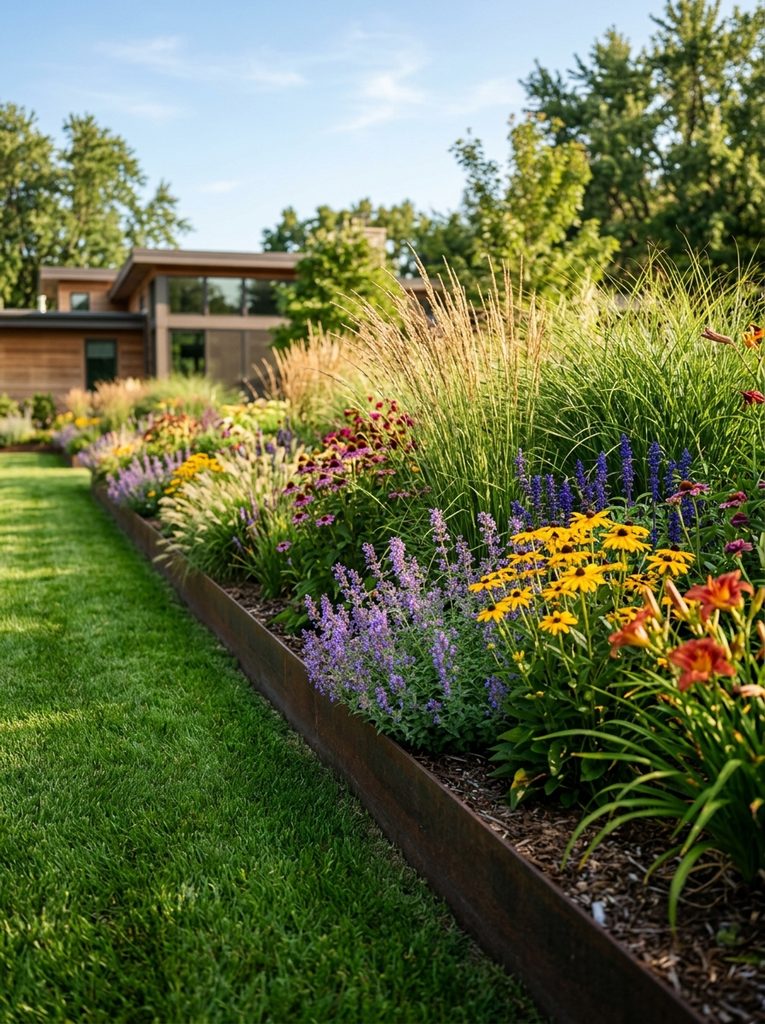
Metal edging is the choice of professional landscapers for clean, modern gardens. Installed by pressing a flexible metal strip into a shallow trench, it creates a razor-sharp edge that requires minimal maintenance once in place. JoAnne Loftus, President of Archival Designs, is quoted in Gardening Know How: thin metal edging delivers the crisp lines seen in high-end landscaping at a fraction of professional installation cost.
- Corten steel: Develops a natural rust patina over 1 to 2 seasons. Very durable (20+ years). The warm brown color complements naturalistic garden styles. Cost: $3 to $8 per linear foot.
- Aluminum: Lightweight, never rusts, flexible for curves. Virtually permanent once installed. Cost: $1.50 to $4 per linear foot.
- Galvanized steel: Strong, rust-resistant for 10 to 15 years. More rigid than aluminum. Cost: $2 to $5 per linear foot.
- Installation: Use a flat spade to create a shallow trench (3 to 4 inches deep). Set the edging strip vertically in the trench. Secure with provided stakes.
2. Brick Edging
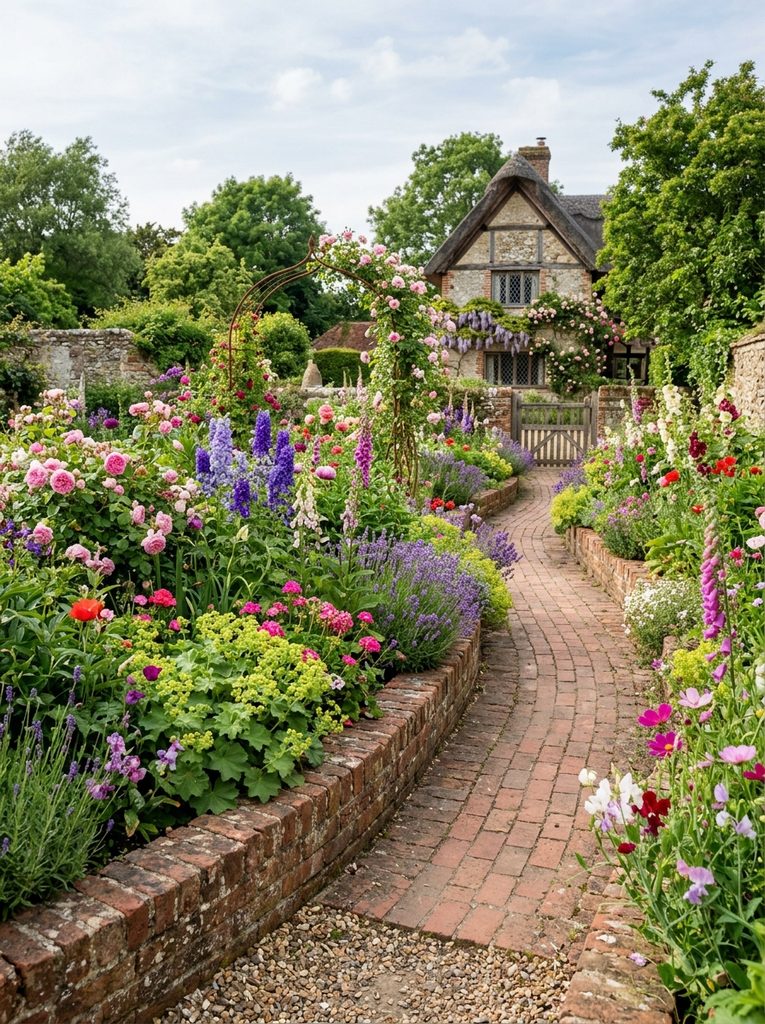
Brick is a timeless edging choice that suits cottage, English, and traditional garden styles. Bricks can be laid flat (single course, minimal height), stacked vertically (more pronounced border), or set diagonally at 45 degrees for a decorative diamond pattern.
- Durability: 20+ years with proper installation
- Cost: $0.50 to $2 per brick; a 20-foot run requires approximately 40 to 80 bricks
- Installation tip: Set bricks on a 2-inch sand base for stability and level installation. A rubber mallet and level ensure even placement.
- Garden style: Traditional, cottage, English, and formal
3. Concrete Pavers
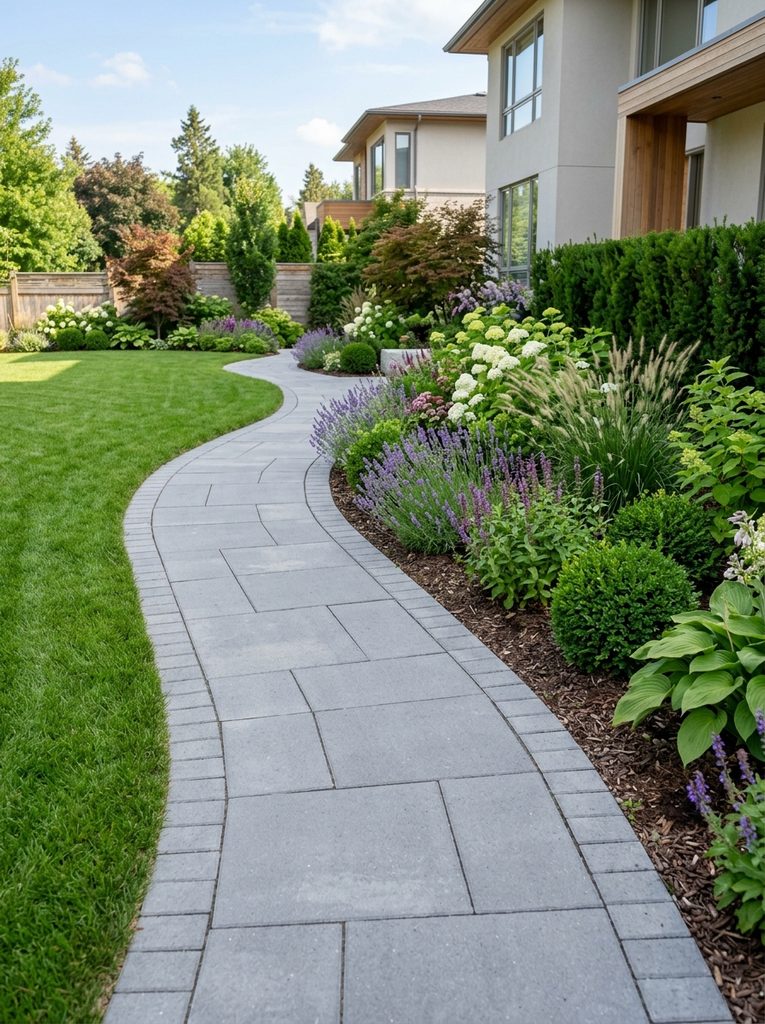
Concrete pavers (matching or contrasting those used in adjacent paths or patio) create a cohesive look that integrates the edging with the rest of the hardscape. Extremely durable and easy to maintain.
- Cost: $0.50 to $3 per paver
- Best for: Gardens with existing paved areas that can be matched
4. Natural Stone
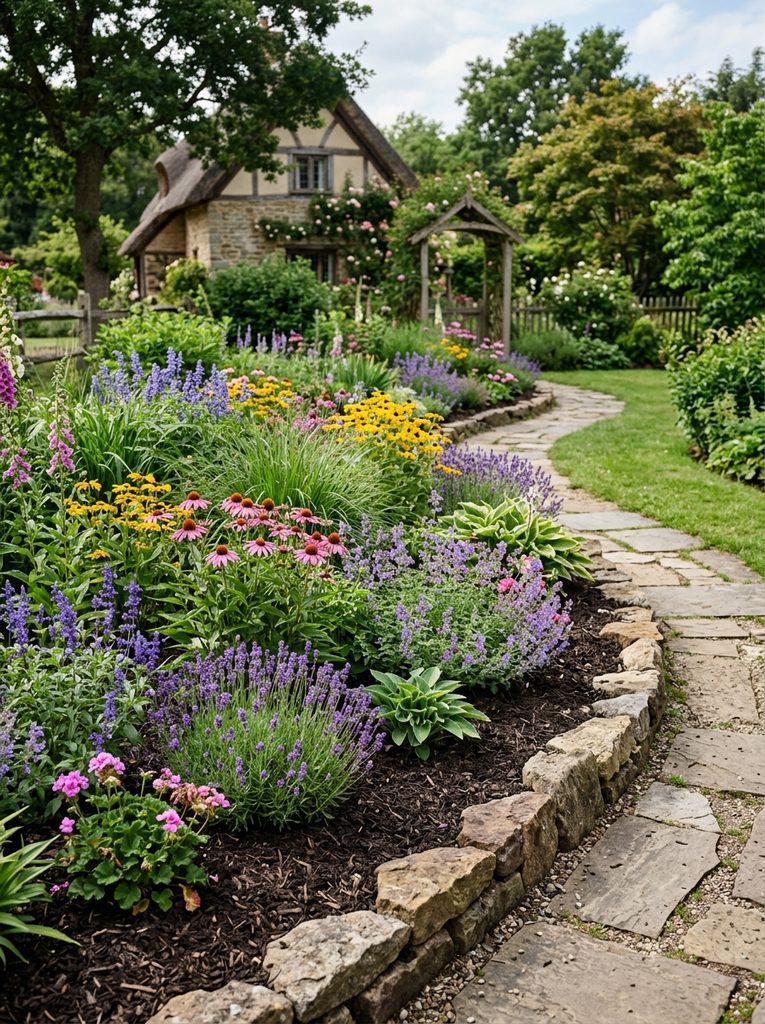
Fieldstone, flagstone, river rock, or cut stone used as edging brings natural beauty and weight to a garden border. Stone is permanent, low-maintenance, and gains character over time as moss and lichen colonize it.
- Cost: $2 to $15 per linear foot depending on stone type and thickness
- Best stone types: Flat fieldstone for stacking, granite or basalt cobbles for formal edging, irregular flagstone for cottage gardens
- Note: Irregular stone edging takes longer to install than manufactured products but creates a distinctive, high-quality look
5. Raised Stone Wall Edging
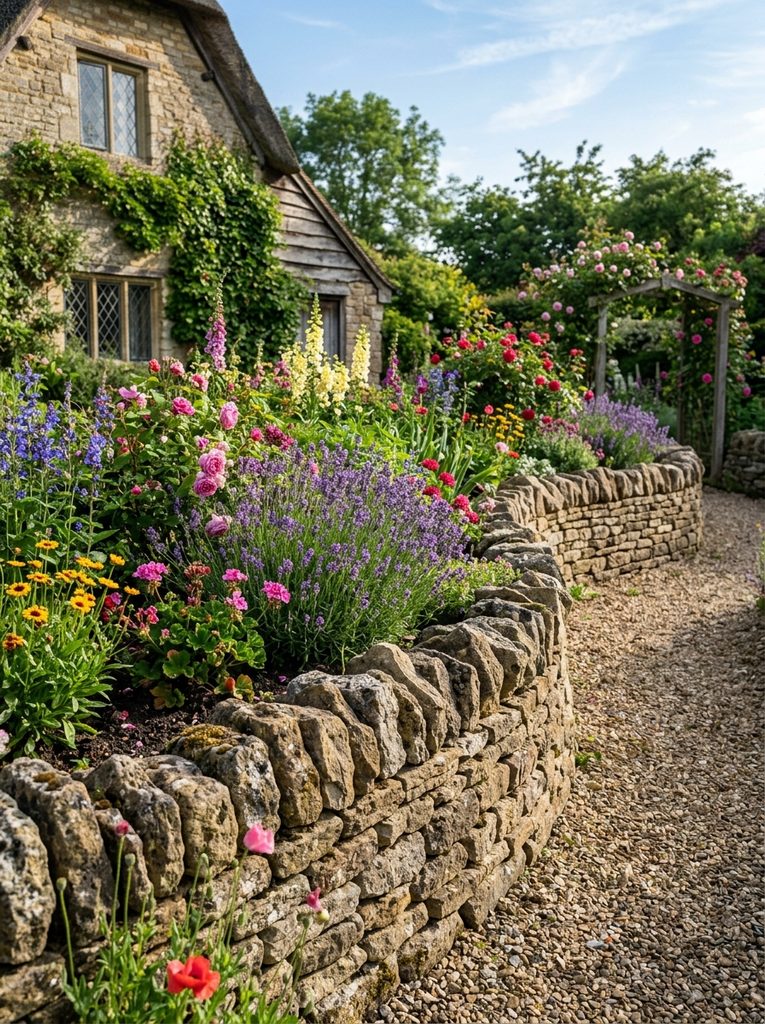
A dry-stacked stone wall 8 to 16 inches tall creates both edging and a retaining function, elevating the planting bed above the lawn level. This is more labor-intensive than flat edging but creates a genuine landscape feature.
- Best materials: Fieldstone, limestone, or sandstone with relatively flat faces
- Consideration: A raised stone wall becomes a microhabitat for beneficial insects and small lizards
6. Wooden Edging

Timber edging ranges from simple 2×4 boards at ground level to decorative Victorian-era picket-style edging. Cedar and redwood resist rot naturally and are the best species choices for direct soil contact.
- Pressure-treated lumber: Very long-lasting (10 to 25 years), but use only current CA/CB/CC treated lumber (not CCA-treated) near food gardens
- Cedar: Naturally rot-resistant for 5 to 10 years in ground contact. Beautiful color that weathers gracefully.
- Standard pine or fir: Lasts 2 to 4 years in ground contact before rotting. Acceptable for low-cost temporary edging.
7. Railway Sleepers / Railroad Ties
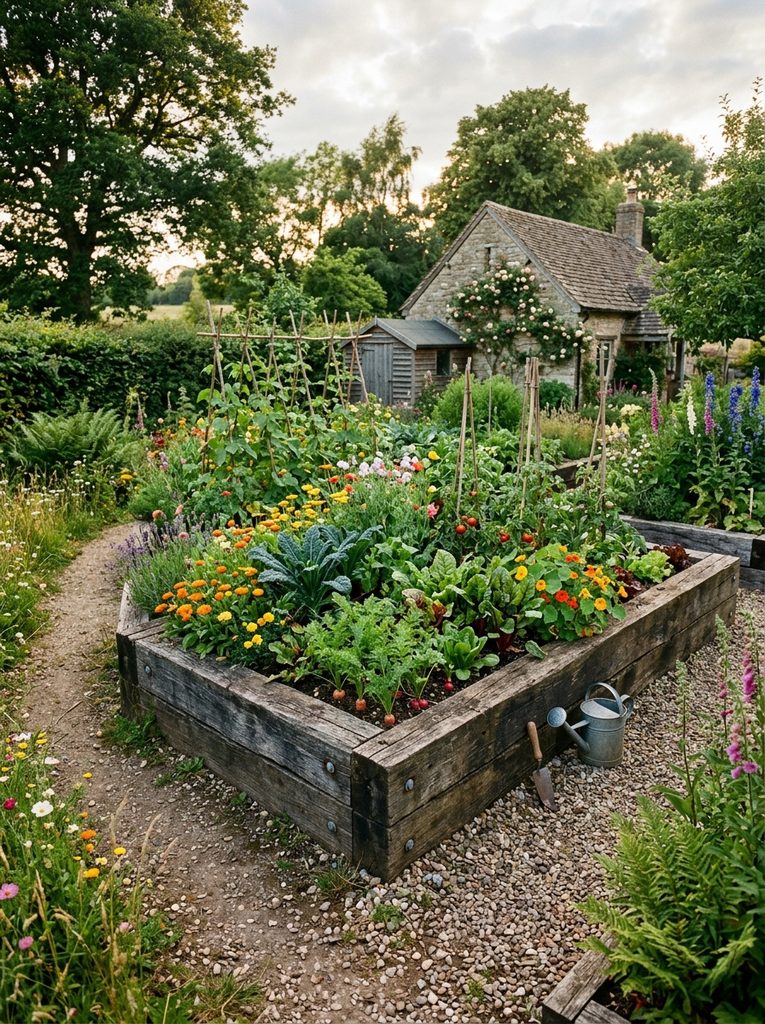
Large timber sleepers (new landscape versions, or genuine salvaged railroad ties) create a bold, heavy-duty raised bed edge with strong visual presence. Well suited to large borders, slope retention, and vegetable garden layout.
- New landscape timbers (8×8 inch hardwood or pressure-treated): $20 to $50 each
- Note: Original railroad ties contain creosote, which is not appropriate near food gardens. Use modern landscape timber equivalents.
8. Log and Branch Edging
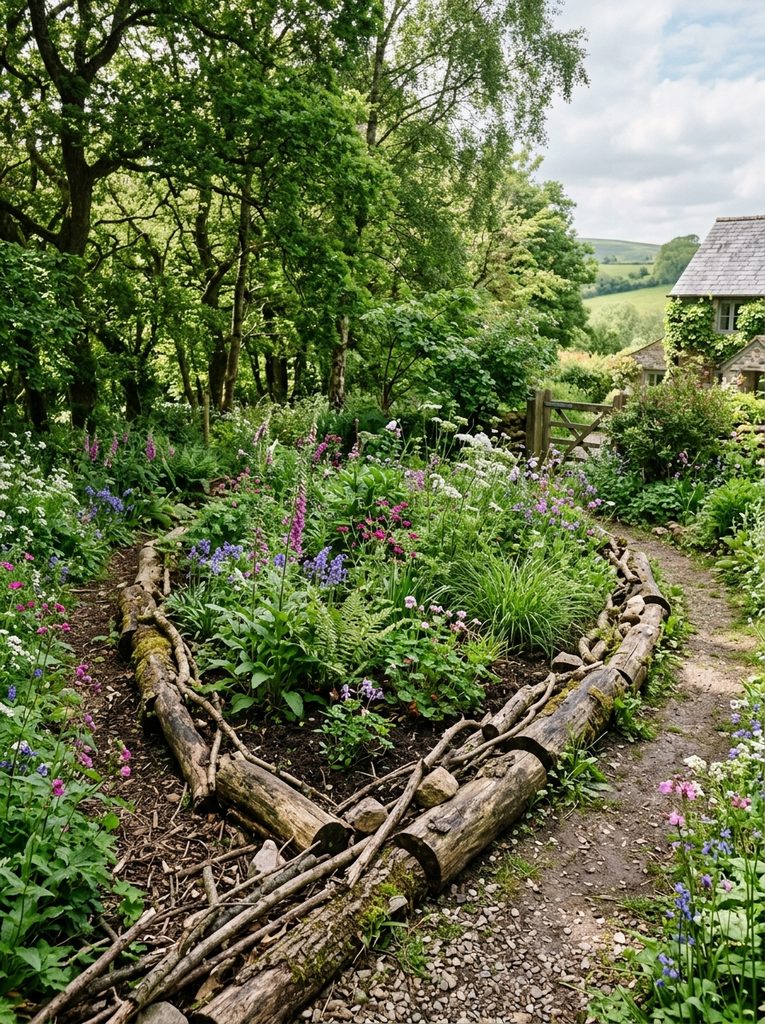
Short sections of cut log ends, or longer branches arranged horizontally along the border, create rustic, naturalistic edging at zero material cost if you have fallen trees available.
- Lifespan: 2 to 5 years depending on wood species and moisture
- Ecological benefit: Decomposing wood provides habitat for beneficial beetles and log-nesting bees
9. Plastic Roll Edging
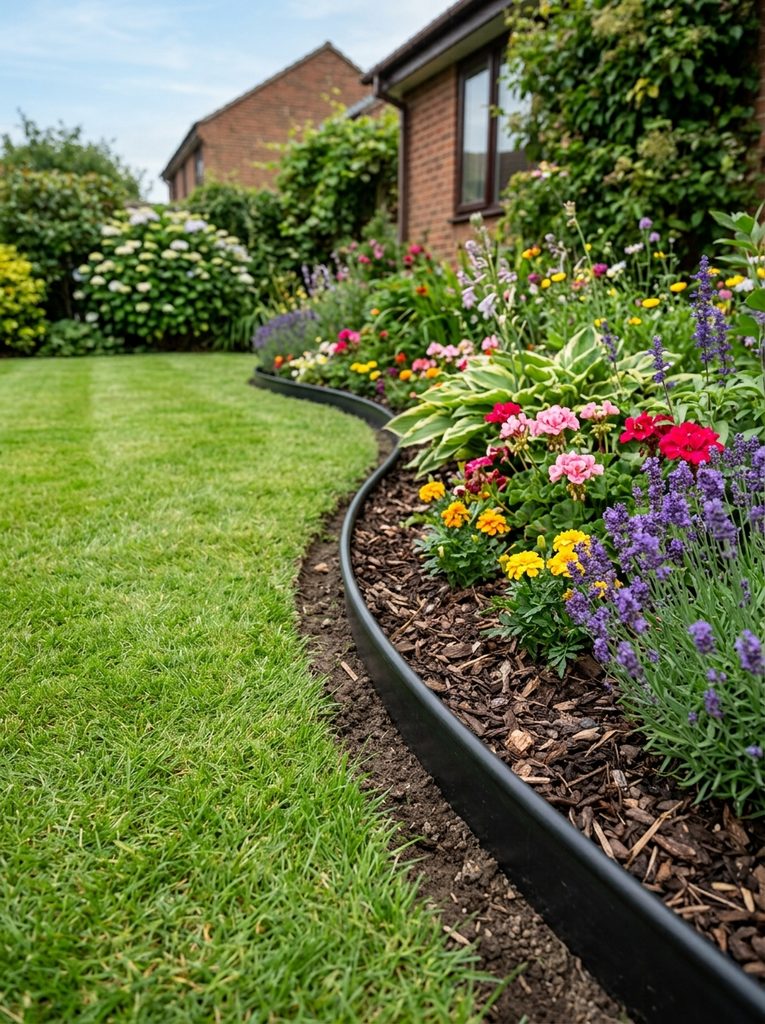
Black plastic roll edging is the most widely sold edging in garden centers, the least expensive, and the least attractive. It deforms in heat, becomes brittle with age, and heaves out of the ground over several winters.
- Cost: $0.20 to $0.60 per linear foot
- Lifespan: 3 to 7 years
- Best use: Budget installations in areas where aesthetics are not a priority
10. Concrete Curbing
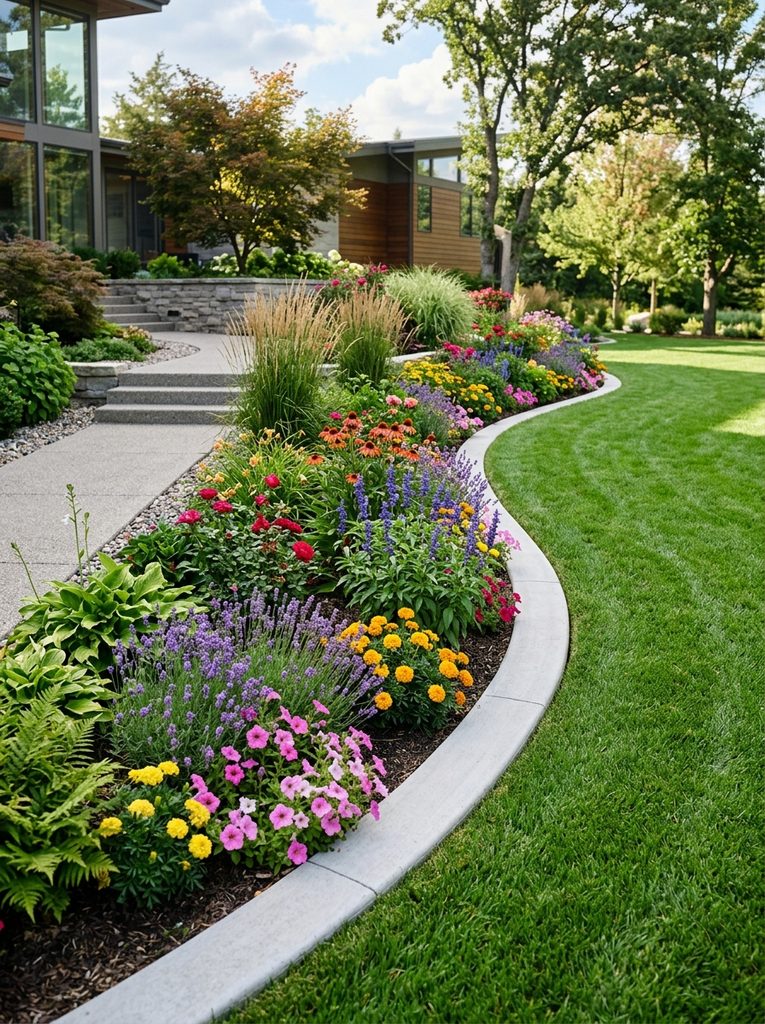
Poured concrete curbing (either professional-installed or DIY with forms) creates a permanent, durable, absolutely weed-resistant edge. The clean, minimalist look suits contemporary gardens.
- Professional installation: $8 to $20 per linear foot
- DIY: Forms and concrete for $1 to $3 per linear foot
- Best for: Permanent landscape installations where low maintenance is the priority
11. Gabion Stone Edging

Gabion cages (wire mesh frames filled with stone) create a bold, architectural edge that is simultaneously modern and natural. Gabions filled with pale limestone or river rock look particularly striking against dark mulch and green foliage.
- Cost: $10 to $30 per linear foot (materials)
- Best use: Sloped gardens where some retaining function is needed alongside aesthetic edging
12. Recycled Glass Bottle Edging
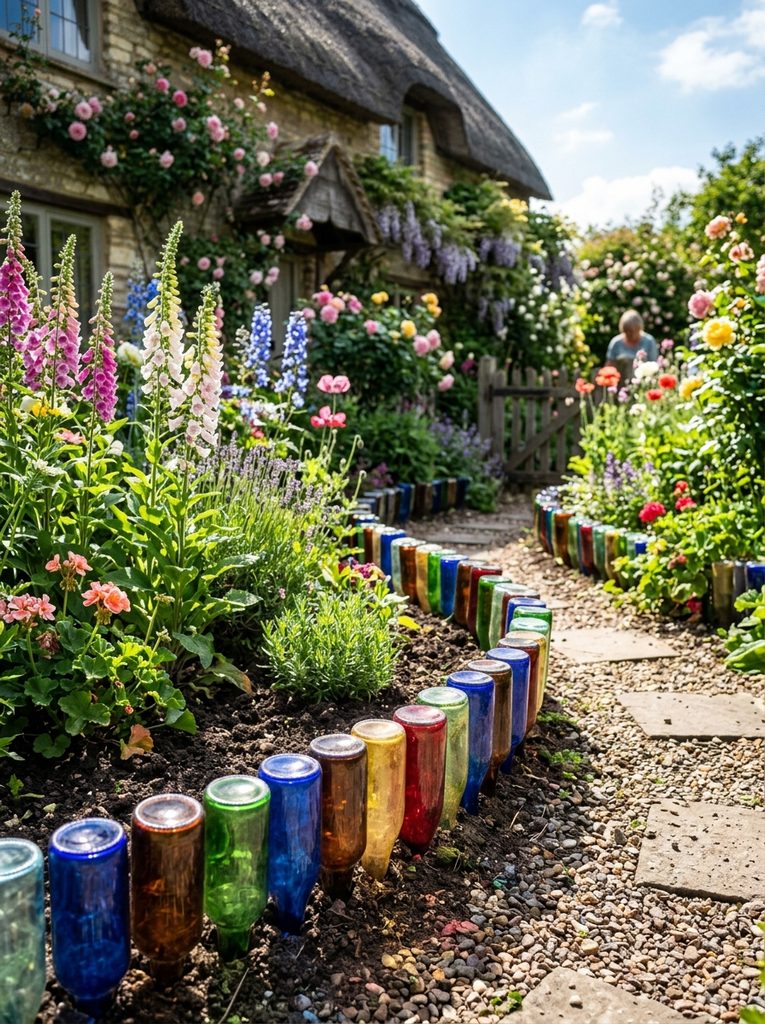
Glass bottles (wine, beer, or collected bottles in various colors) half-buried in a line with the base exposed create whimsical, colorful edging at essentially no cost. The glass reflects light and adds unexpected color.
- Best colors: Blue and green glass creates the most attractive effect
- Practical note: Set bottles at a uniform depth using a template for consistent appearance
13. Woven Willow Hurdle Edging

Fresh willow branches woven between upright stakes create traditional wattle edging — one of the oldest edging forms in European gardening. Beautiful in cottage and kitchen gardens. Biodegrades in 3 to 5 years and must be replaced.
14. Broken Terracotta Pots

Broken or whole terracotta pots half-buried in the soil create charmingly Mediterranean border edging. Particularly effective around herb gardens and Mediterranean plant combinations.
15. Mosaic Tile Edging
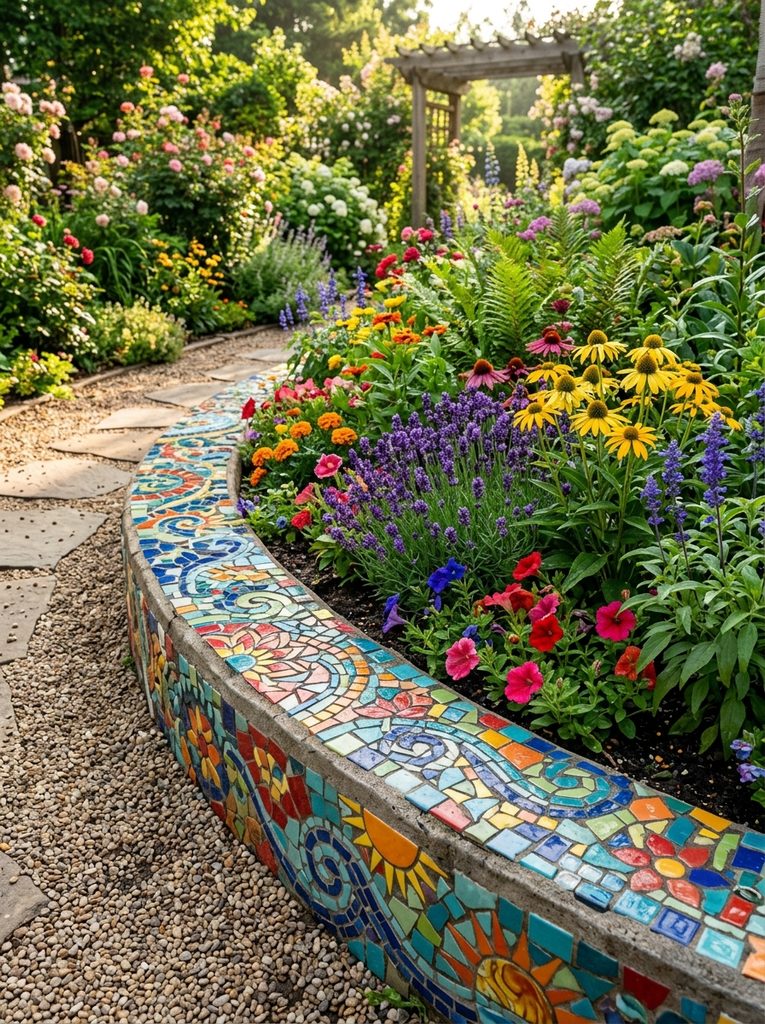
Broken ceramic tile (mosaic pieces) set into a narrow concrete strip creates colorful, completely unique edging that can be designed to reflect any theme or color scheme.
16. Eco-Border / Recycled Rubber Edging

Made from recycled tires, rubber edging is flexible, durable (20+ years), and available in multiple colors. More attractive than standard plastic roll edging and more environmentally responsible.
- Cost: $1 to $2.50 per linear foot
17. Laser-Cut Metal Decorative Edging
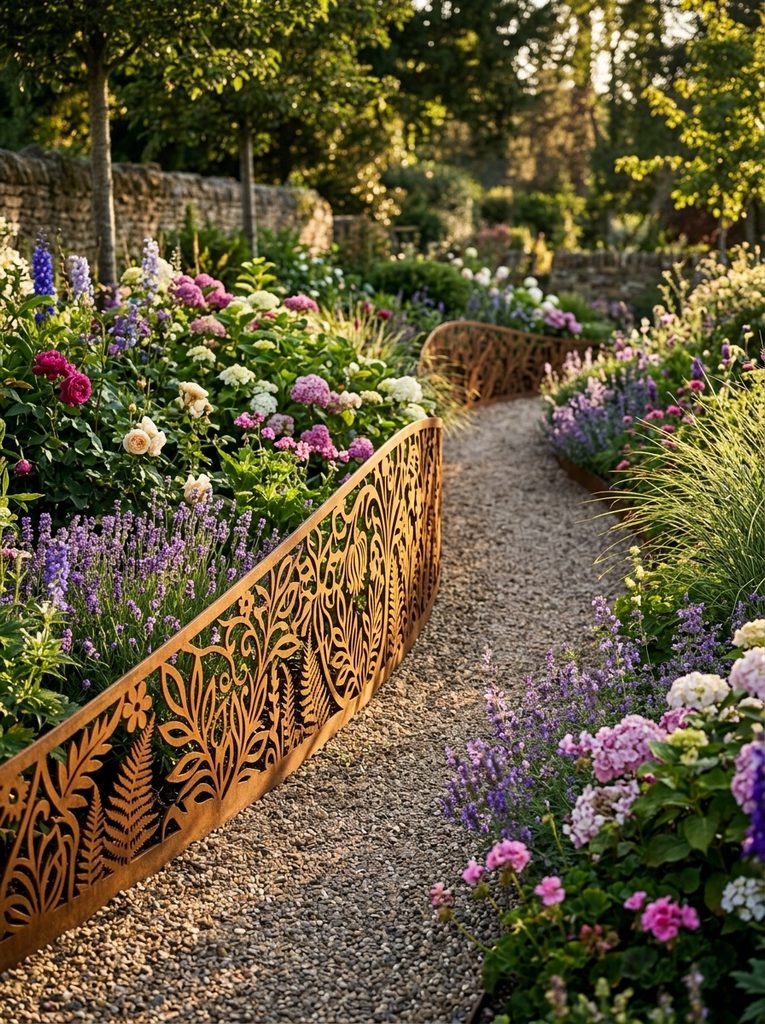
Laser-cut steel or aluminum edging (available online from boutique metalwork suppliers) with decorative patterns creates truly distinctive borders. Feather shapes, geometric patterns, and botanical motifs are all available.
- Cost: $5 to $20 per linear foot
- Best for: Featured borders where the edging itself is a design element
18. Bamboo Roll Edging
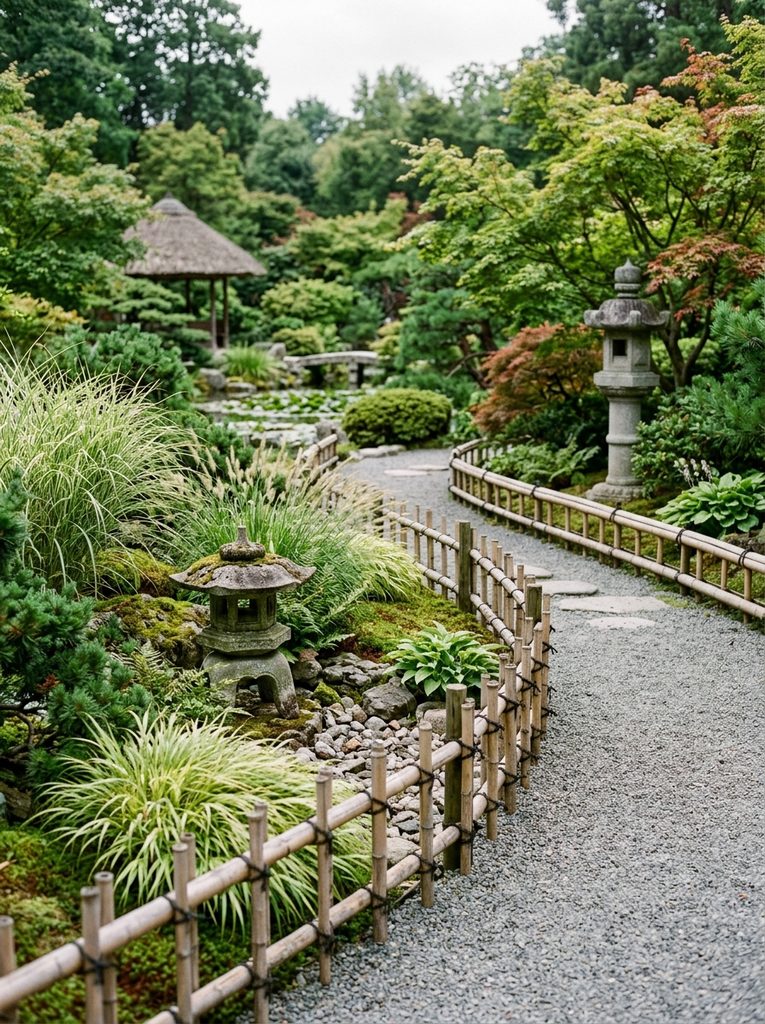
Rolled bamboo sections bound with wire create natural, Asian-inspired edging suitable for Japanese and contemporary gardens. Bamboo is a renewable resource with moderate durability (5 to 8 years).
19. Rock River Dry Creek Edging
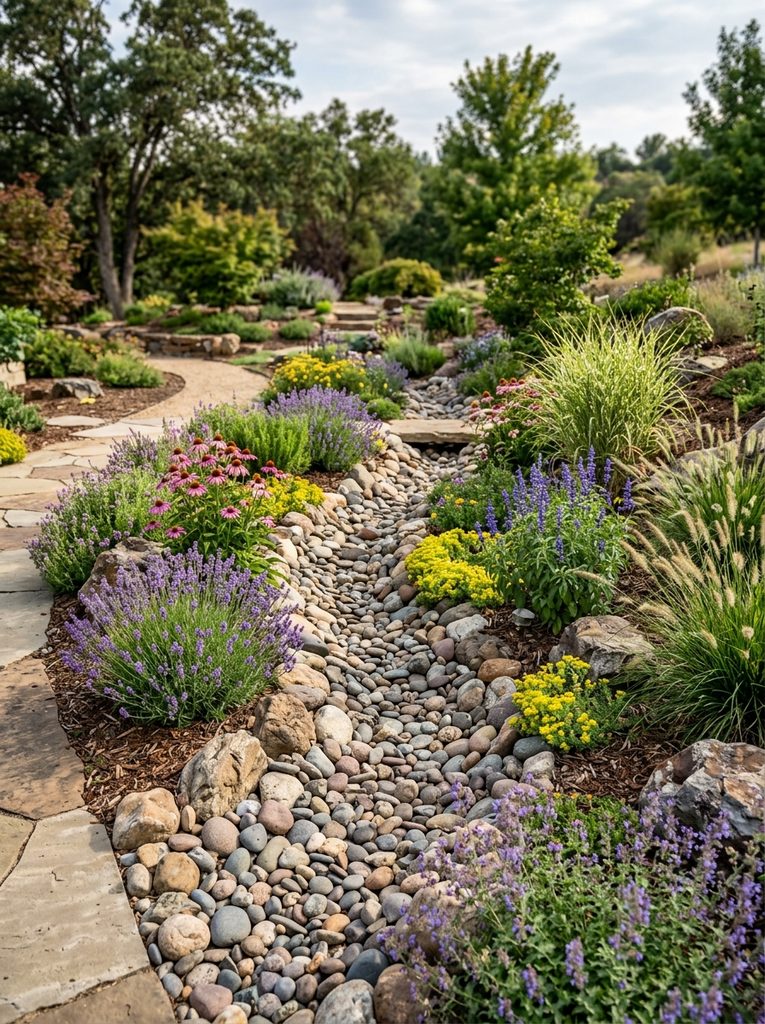
A narrow dry creek bed (river rocks arranged in a 6 to 12-inch-wide channel) separating lawn from garden bed serves as both edging and drainage channel, particularly useful for gardens prone to runoff.
20. Picket Fence Mini-Edging
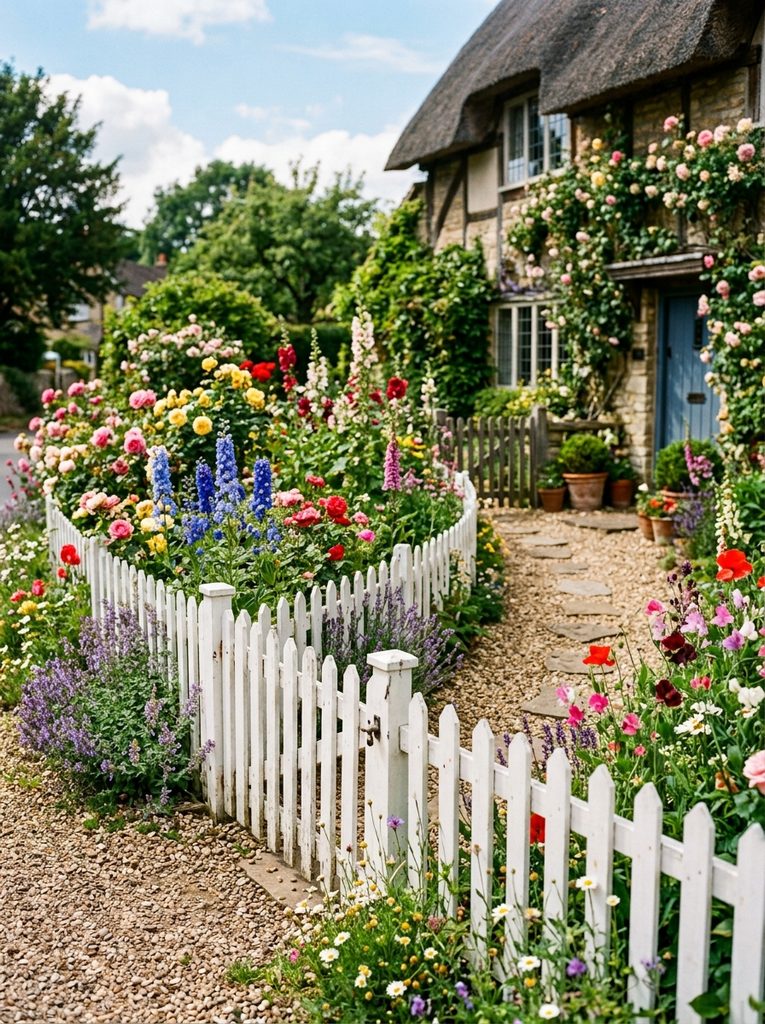
Small decorative picket sections (6 to 12 inches tall) sold in 3-foot lengths at garden centers create cottage-inspired edging that doubles as light deer and rabbit deterrent for low-growing plants.
21. LED Edging
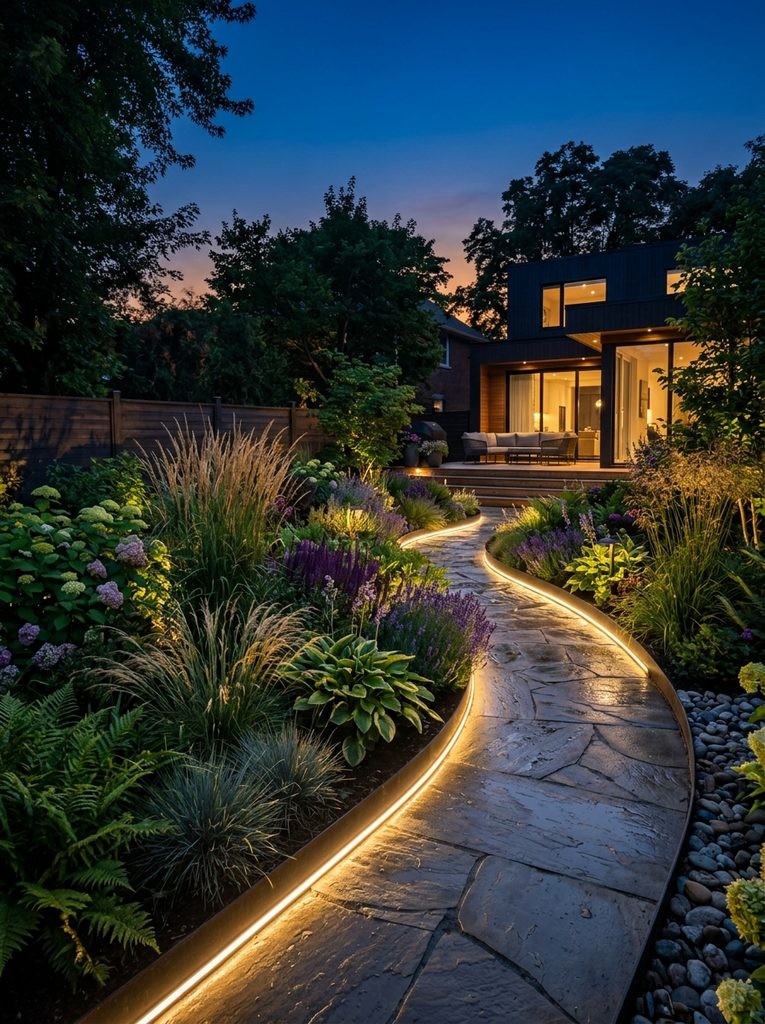
Outdoor LED ground lights integrated into garden edging provide ambient lighting while defining the garden border. Best for entertaining spaces and front yard beds that are viewed in the evening.
22. Concrete Block Edging
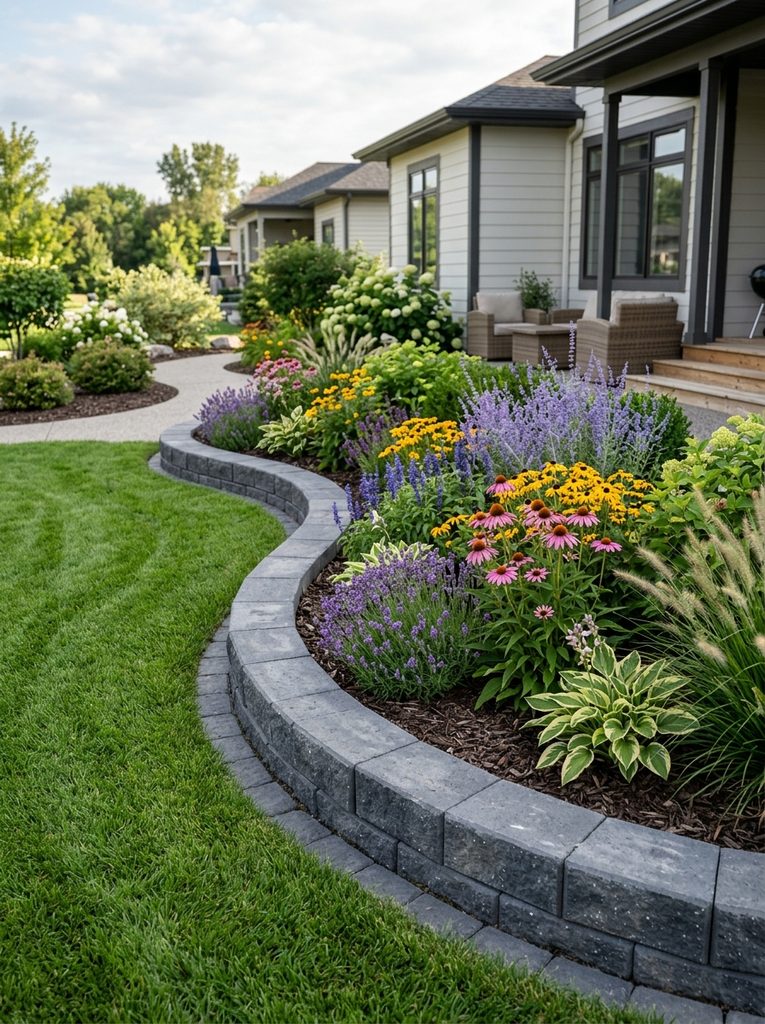
Decorative concrete landscape blocks create a structured, low-maintenance border. Available in many colors and profiles at home improvement stores for $0.50 to $3 per block.
23. Brick-on-Edge Soldier Coursing
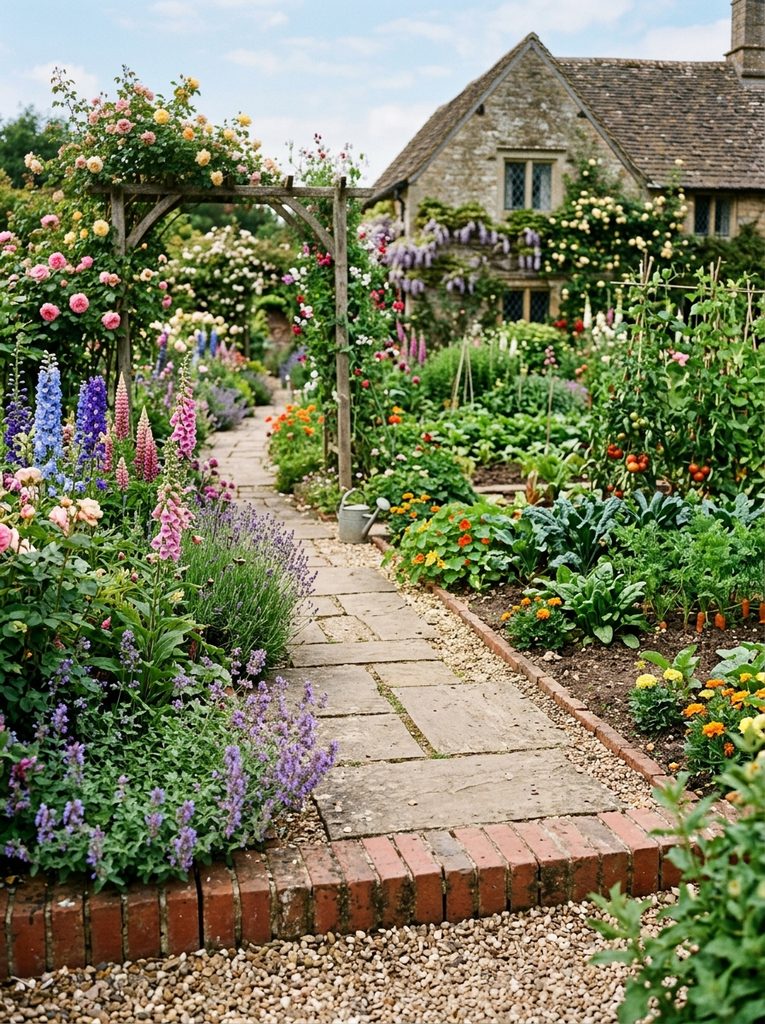
Bricks stood on their narrow side (soldier course) create taller, more visually prominent edging than flat-laid brick. Traditional in English kitchen garden design.
24. Seashell Edging
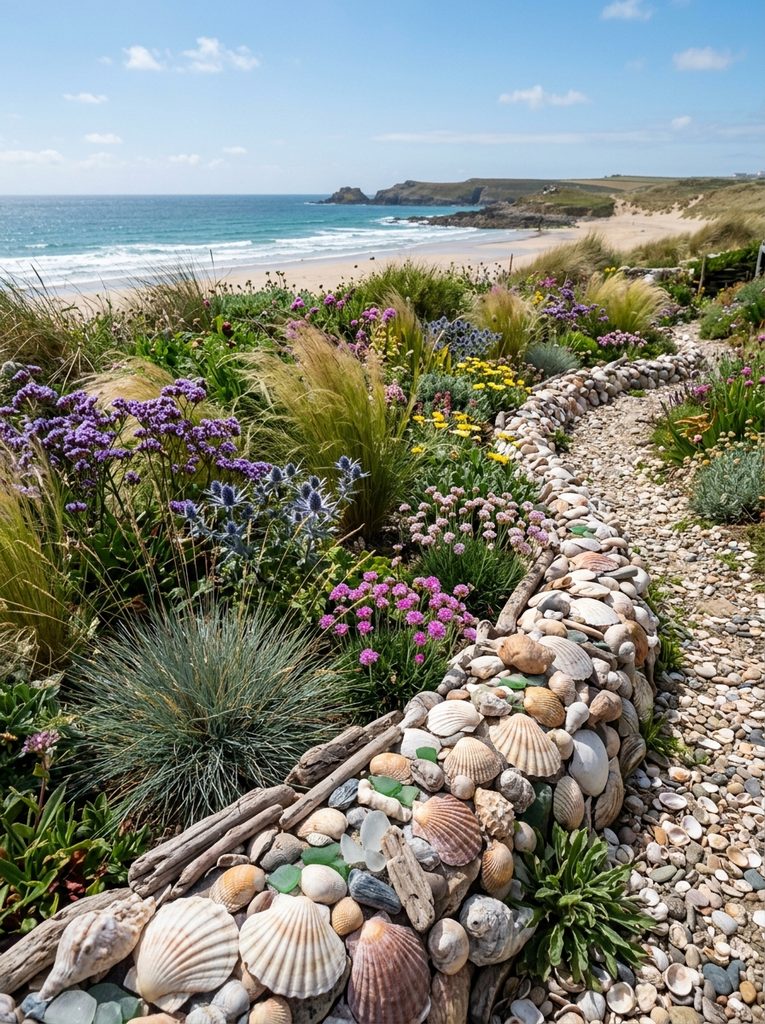
Collected seashells arranged along a border create coastal-inspired edging appropriate in beach and seaside gardens. Oyster shells, clam shells, and conch shells all work and bleach to attractive pale tones over time.
25. Slate and Shale Edging

Flat slate or shale pieces set vertically in the ground (like a comb) create one of the most beautiful natural edging effects. The dark color contrasts beautifully with green lawn and pale mulch.
26. Steel Coil Edging

Flexible coil steel edging (similar to slinky-style toy coils, but heavy-duty steel) is pushed into the ground between lawn and bed, bending flexibly to follow curves. Very quick installation.
27. Custom Poured Concrete Mosaic
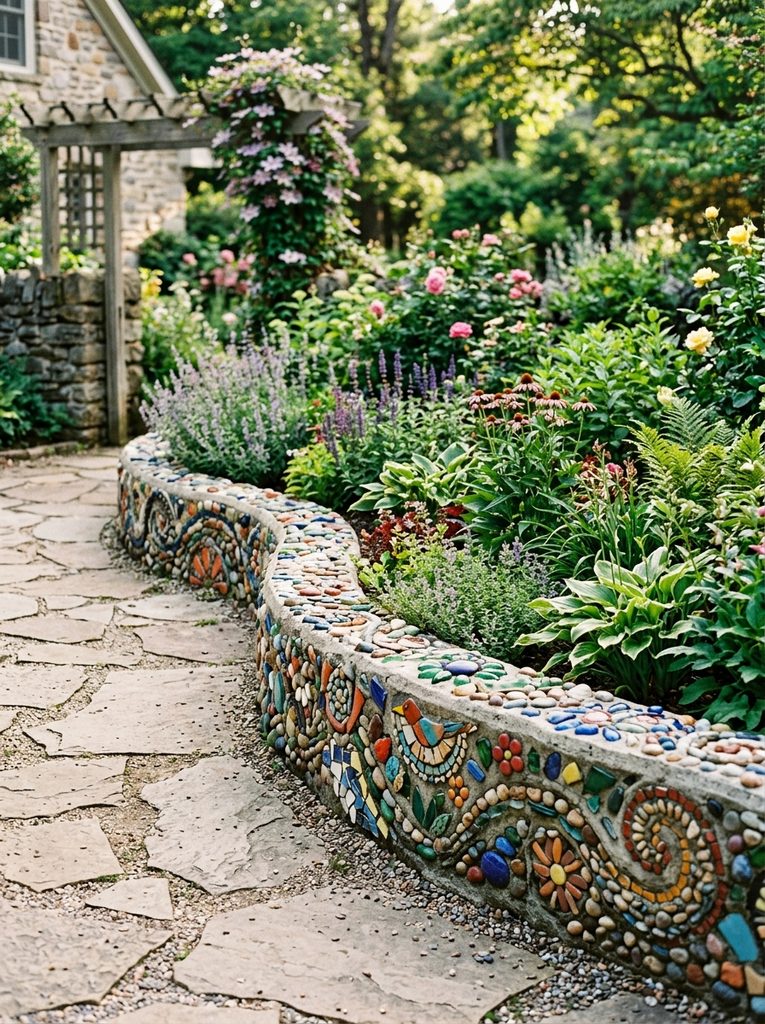
Commission or DIY a continuous poured concrete edging strip set with decorative mosaic, embedded stones, or glass pieces. Permanent and completely unique.
28. Living Edging (Lawn Substitutes)
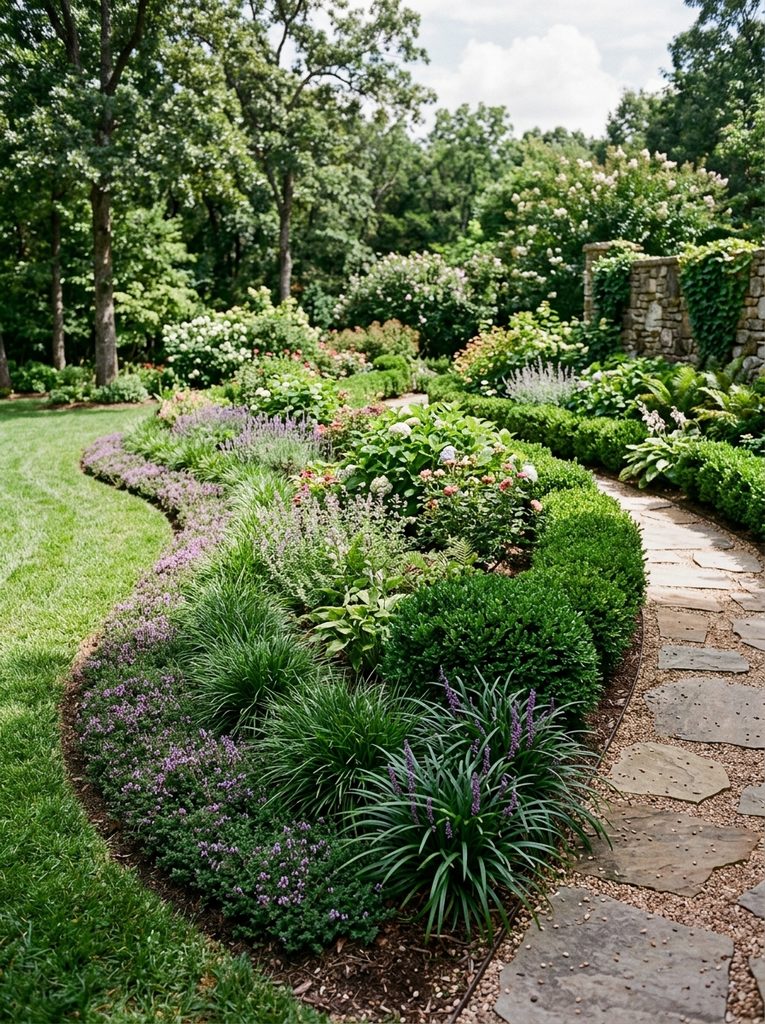
Low-growing plants used as living edging: creeping thyme, Ophiopogon japonicus (mondo grass), Liriope muscari, and clipped box hedge all create beautiful living borders that are permanent and self-maintaining once established.
✅ Tip Install metal edging with a slight inward lean of 5 to 10 degrees toward the garden bed. This lean keeps the edging from gradually tilting outward under soil pressure over the seasons. For curved beds, aluminum and recycled rubber edging are the most flexible options. Metal edging can be kinked for tight curves. For very tight curves, use shorter sections that follow the curve in short segments. |
Frequently Asked Questions
What is the most durable garden bed edging?
Corten steel, aluminum, and concrete are the most durable options, all lasting 20 years or more with minimal maintenance. Natural stone is essentially permanent. Pressure-treated timber lasts 15 to 25 years. The least durable options are standard black plastic roll edging (3 to 7 years) and untreated wood (2 to 4 years).
What is the easiest garden edging to install yourself?
Aluminum roll edging and rubber edging are the easiest DIY installations: they require only a spade, a mallet, and an hour or two for an average residential bed. Metal edging with stake systems is similarly straightforward. Brick and stone are more labor-intensive but still DIY-accessible.
The Bottom Line
The best edging is the one that fits your garden’s style, matches your maintenance appetite, and stays within your budget. Metal edging (aluminum or corten) offers the best combination of aesthetics, longevity, and practicality for most modern gardens.
For cottage and traditional styles, brick or natural stone provide character that manufactured materials cannot replicate. For low-budget installations, recycled rubber outperforms standard plastic significantly.
Whatever material you choose: install it once, install it correctly, and spend the subsequent seasons gardening rather than hand-edging.
Related Ideas:
- 20 Stunning Country Garden Decoration Ideas for a Charming Outdoor Space
- 15 Best Climbing Plants for Your Pergola and Arbor
