
Yellow stains on a toilet seat are one of the most common bathroom cleaning problems. They appear even in bathrooms that are cleaned regularly, which frustrates a lot of people. The reason they keep coming back is that cleaning the visible surface is not always enough. You need to know what type of stain you are dealing with.
This guide covers every cause of yellow toilet seat staining, the most effective way to remove each type, and why certain cleaning products make the problem worse.
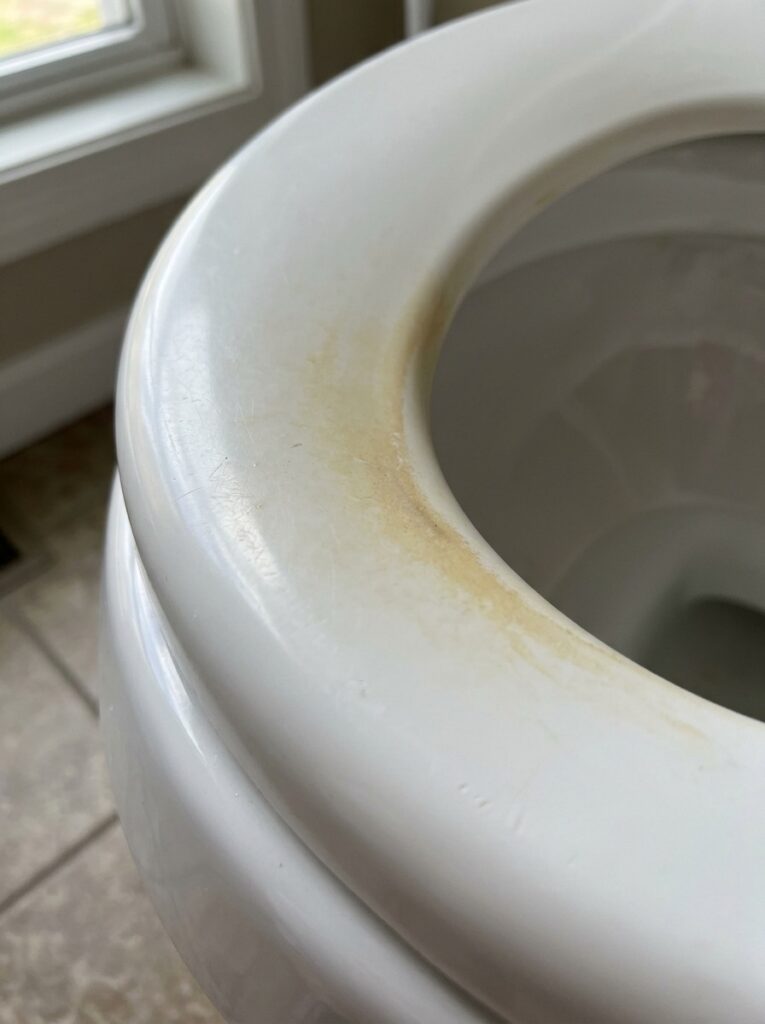
Table of Contents
What Causes Yellow Stains on Toilet Seats?
1. Urine splashback
This is the most common cause. Small amounts of urine land on the underside of the toilet seat and on the rim of the bowl with every flush and every use. Urine contains uric acid and mineral compounds. When urine dries on plastic, it leaves a yellow deposit. Over time, these dried deposits build up into a dark yellow or brownish stain that resists regular wiping.
Urine stains are usually worst on the underside of the seat, near the hinges, and on the inside front rim of the toilet bowl. Households with boys or men who use the toilet standing up are more likely to see this type of staining.
2. Hard water mineral deposits
When toilet water splashes onto the seat during flushing, it carries dissolved minerals. As the water evaporates, the minerals remain on the plastic surface. In hard water areas, which cover most of the US, this mineral deposit is primarily calcium carbonate. As layers of mineral buildup accumulate, they develop a yellow or off-white appearance.
You can tell this type of staining from urine staining by where it appears. Mineral staining tends to occur in a ring or pattern that corresponds to where water splashes, rather than being concentrated near the hinges or underside front edge.
3. Bleach discoloration
This surprises many people. Chlorine bleach can permanently yellow white plastic toilet seats. This happens because bleach reacts with the polymers in plastic and causes a chemical change that turns the surface yellow or gray. The discoloration is not removable because it is a chemical change in the plastic itself, not a surface deposit.
If your toilet seat has yellowed in patches that correspond to where bleach spray has landed, bleach is the likely cause. Stop using bleach spray on the seat going forward.
4. UV sunlight exposure
Plastic toilet seats can yellow from prolonged exposure to sunlight through a bathroom window. UV radiation breaks down the chemical bonds in white plastic (a process called photodegradation), turning it yellow or beige. This is the same process that yellows plastic appliances, old computer housings, and outdoor furniture over time.
UV yellowing is usually even across the whole seat rather than concentrated in one spot. If your toilet sits directly in a beam of sunlight, this is likely a contributing factor.
5. Age and general wear
White plastic yellows naturally over time regardless of how carefully it is maintained. Polypropylene and similar plastics used in toilet seats are particularly susceptible. Seats more than 5 to 7 years old may simply be yellowed from age.
What NOT to Use on a Yellow Toilet Seat
- Chlorine bleach: Makes plastic yellowing worse through chemical reaction. Only use bleach on ceramic toilet bowls, not on the seat.
- Steel wool or metal scourers: Will scratch the plastic permanently, creating microscopic grooves that trap more staining in the future.
- Harsh abrasive powder cleaners: Can dull and scratch plastic surfaces.
- Acetone or nail polish remover: Dissolves and damages plastic surfaces.
How to Remove Yellow Stains from a Toilet Seat: By Stain Type
Removing urine stains
Urine stains require a product that can break down uric acid deposits. Enzyme-based cleaners are the most effective because they contain biological enzymes that specifically digest uric acid and other organic compounds.
- Spray the stained areas with an enzyme cleaner such as Zout Laundry Spray, Nature’s Miracle Multi-Surface Cleaner, or Urine-Off Hard Surface Cleaner (available on Amazon).
- Leave for at least 10 minutes. For old, set-in stains, leave for 30 minutes.
- Scrub with a soft nylon brush or a non-scratch scouring pad. Focus on the hinge area, the underside edges, and the front inner rim.
- Rinse thoroughly with warm water and dry with a clean cloth.
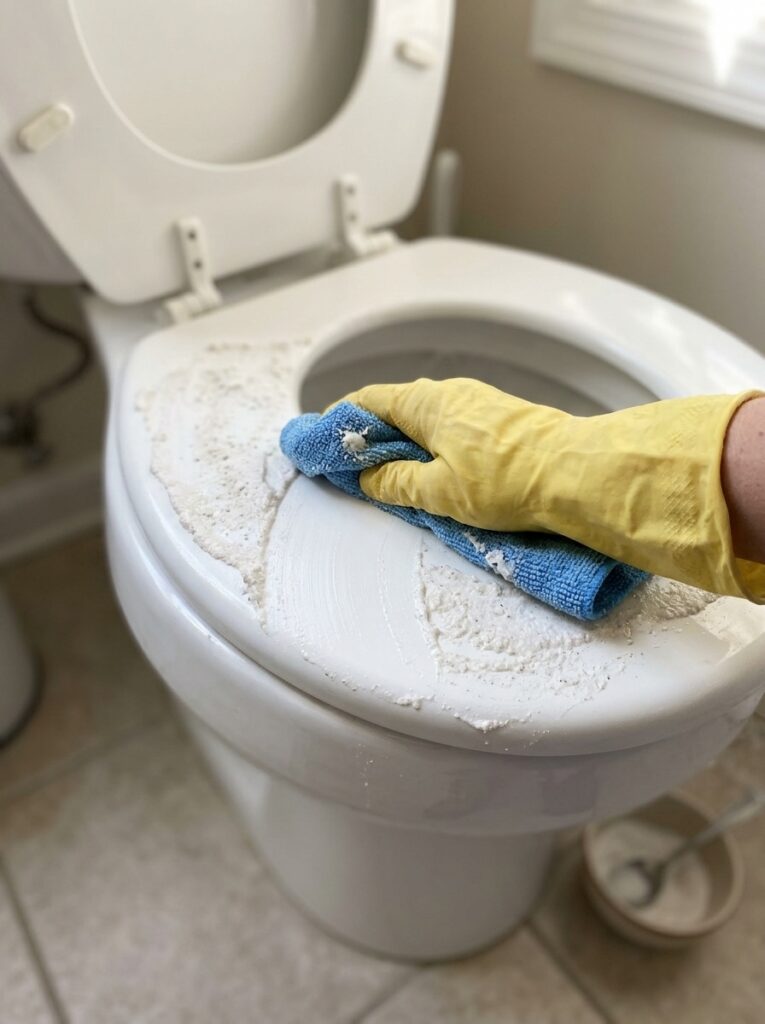
- For heavy staining, make a paste of baking soda and a small amount of dish soap. Apply to the stain, leave for 15 minutes, scrub, and rinse.
Removing hard water mineral stains
Mineral stains are alkaline and are dissolved by acidic cleaners. White vinegar and citric acid are the most effective natural options. Commercial products like CLR (Calcium, Lime, and Rust Remover) are faster for heavy buildup.
- Soak a few paper towels in undiluted white vinegar and lay them over the stained areas of the seat. This keeps the acid in contact with the stain longer than spraying alone.
- Leave for 20 to 30 minutes.
- Remove the paper towels and scrub the area with a soft nylon brush.
- Rinse and dry.
- For heavy mineral buildup, apply a small amount of CLR Calcium Lime Rust Remover (available at Walmart) on a cloth and rub it on the affected area. Leave for 2 minutes, then rinse off completely. Do not leave CLR on surfaces for longer than stated on the label.
Removing bleach-caused yellowing
Bleach-caused yellowing cannot be fully reversed because it is a chemical change in the plastic, not a surface stain. However, you can reduce its appearance. Bar Keepers Friend Cleanser (available at most grocery stores) is a mildly acidic powder cleaner that is effective on plastic stains and can lighten bleach discoloration.
- Wet the surface. Sprinkle a small amount of Bar Keepers Friend Cleanser directly onto the yellowed area.
- Work into a paste using a damp sponge.
- Rub gently in circular motions for 1 to 2 minutes.
- Rinse thoroughly. The surface should not be scrubbed hard as Bar Keepers Friend can scratch if used too aggressively.
If the yellowing is severe and does not respond to cleaning, the seat needs to be replaced. Toilet seats are sold at Walmart, Home Depot, and Lowe’s in many styles and brands.
For general and unknown staining: the soaking method
If you are not sure what type of stain you are dealing with, the soaking method works well for a thorough clean of the entire seat.
- Remove the toilet seat by unfastening the hinge bolts at the back. Most toilet seat hinges have a plastic cap that pops up to reveal a nut you can unscrew by hand or with pliers.
- Fill the bathtub with warm water and add 1 cup of OxiClean Versatile Stain Remover powder.
- Submerge the toilet seat and lid fully. Leave to soak for 1 to 2 hours.
- Scrub with a soft brush, rinse thoroughly with clean water, and dry completely before reattaching.
Tip: OxiClean uses oxygen bleach (sodium percarbonate), which is much safer for plastic than chlorine bleach. It removes stains through an oxidation reaction rather than a chemical attack on the plastic surface.
How to Prevent Yellow Stains from Returning
- Wipe the toilet seat, including the underside and hinge area, every two to three days with a damp cloth and a small amount of dish soap or an all-purpose bathroom spray like Scrubbing Bubbles. Do not wait until stains are visible.
- Use a toilet cleaner that contains citric acid for the bowl rather than bleach. This prevents mineral staining and does not risk splashing bleach onto the seat.
- Apply a thin coat of car wax or furniture wax to the toilet seat surface once a year. This creates a slightly hydrophobic layer that prevents liquids from soaking into the plastic surface.
- If your bathroom gets direct sunlight, fit UV-blocking window film on the bathroom window. This stops UV yellowing without reducing light.
- Consider switching to a toilet seat with a slow-close lid. These close gently rather than slamming, which reduces water splashing onto the seat and the floor.
For choosing and using cleaners safely, see the American Cleaning Institute guide to cleaning surfaces.
Related Guides
- How to Get Fake Tan Off a Toilet Seat (Every Method, Ranked)
- How Often Should You Clean Your Toilet? (A Complete Schedule)
- How to Use a Pumice Stone to Clean a Toilet (Hard Water Stains, Rust Rings, Mineral Buildup)
Frequently Asked Questions
Why does my toilet seat keep turning yellow even though I clean it every week?
Weekly cleaning removes visible grime but may not fully address the cause. If the yellowing is from urine, the problem is usually insufficient cleaning of the hinge area and the underside edges where urine pools and dries. Try an enzyme cleaner like Urine-Off and make sure you clean the hinge area and the full underside every time. If the yellowing is from bleach use, the discoloration will continue as long as bleach contacts the plastic.
Can bleach remove yellow stains from a toilet seat?
Do not use chlorine bleach on a plastic toilet seat. Bleach reacts chemically with white plastic and makes yellowing worse, not better. This is a very common mistake. Use enzyme cleaners for urine stains, vinegar or CLR for mineral stains, and Bar Keepers Friend for general yellowing. Bleach is appropriate for the ceramic toilet bowl but not the plastic seat.
Should I replace my toilet seat or can I clean it?
If the yellowing is from urine or mineral buildup, cleaning will work. If the yellowing is from bleach damage or UV exposure, it can be improved but not completely reversed through cleaning. If the seat is more than 7 years old and yellowed through age, replacing it is the most cost-effective solution. Basic toilet seats are sold at Walmart and Home Depot.
What is the yellow stain under the toilet seat near the hinges?
The hinge area collects urine, dust, and moisture that are difficult to reach with regular cleaning. Over time, dried urine deposits accumulate in this spot and darken. This is the most common location for yellow staining on toilet seats. Use an enzyme cleaner or baking soda paste applied with an old toothbrush to clean into and around the hinge. Some toilet seats have quick-release hinges that pop off for easier cleaning.
How do I know if my toilet seat yellowing is from bleach or from urine?
Bleach yellowing is usually even across the surface or forms a pattern corresponding to where bleach spray has landed. It appears uniform and faded rather than having a concentrated stain pattern. Urine yellowing tends to be concentrated on the underside, near the hinges, and at the front inside edges, and has a darker, more golden color. Mineral staining appears in splash patterns.
