
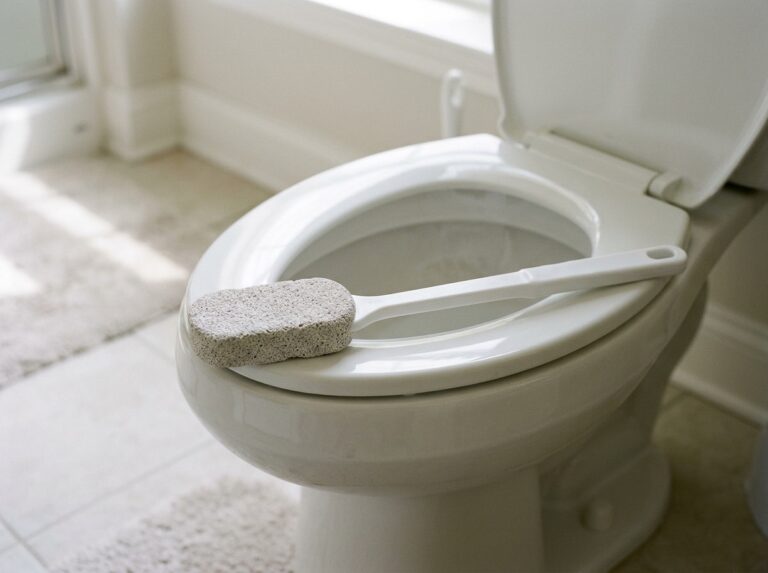
If you have stubborn brown or orange stains in your toilet bowl that will not shift no matter what cleaner you use, a pumice stone is probably the answer. It is a natural volcanic rock that is hard enough to scrub away mineral deposits and rust but soft enough that it will not scratch porcelain when used correctly.
This guide explains exactly how to use a pumice stone on your toilet safely, what it can and cannot be used on, and which products to buy.
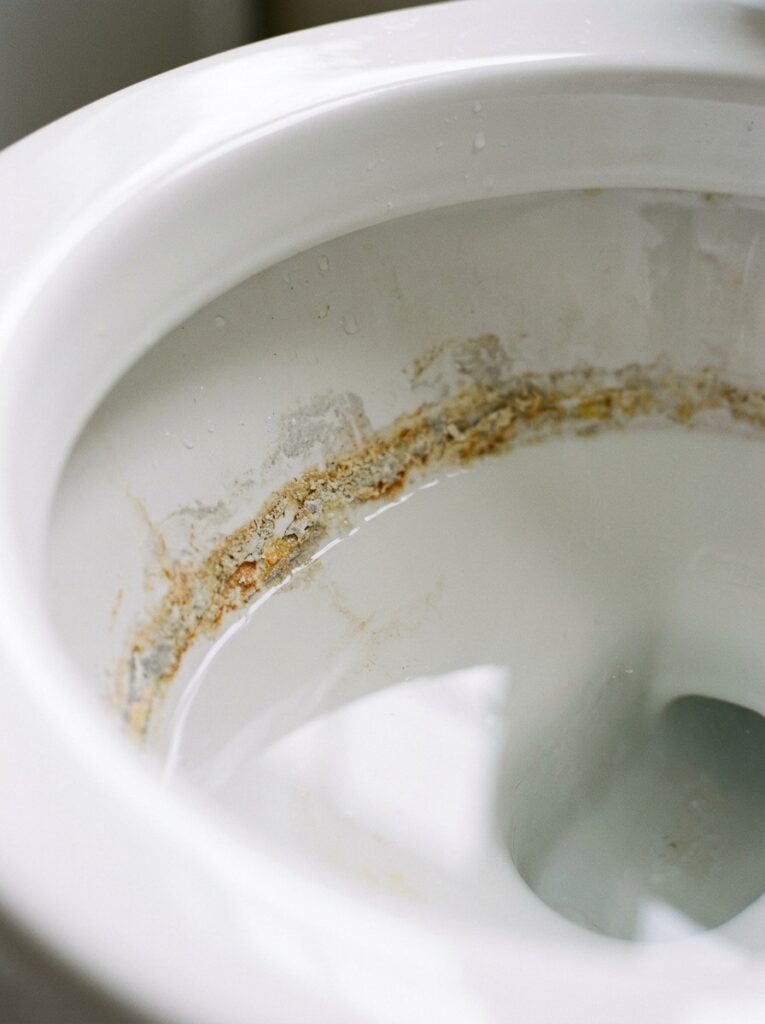
Table of Contents
What Is a Pumice Stone and How Does It Clean?
Pumice is a porous volcanic rock formed when lava cools rapidly. Its texture is naturally abrasive, but it is softer than most ceramic and porcelain surfaces. As you scrub with a wet pumice stone, tiny particles of pumice break off and combine with the water to form a gentle abrasive paste. This paste physically removes mineral deposits and stains that are bonded to the porcelain surface.
Regular toilet bowl cleaners work by dissolving stains chemically. They work well on fresh buildup, but very old or thick mineral deposits resist chemical cleaners completely. Pumice works mechanically. It grinds the deposit away regardless of how old or thick it is.
WARNING: A dry pumice stone will scratch porcelain. Both the pumice stone and the toilet surface must stay wet throughout the entire cleaning process. If either dries out, stop and re-wet before continuing.
What a Pumice Stone Can and Cannot Clean
Safe to use a pumice stone on:
- Porcelain toilet bowl interior (hard water lines, rust rings, mineral deposits, brown staining)
- Inside the toilet cistern if visible deposits are present
- Porcelain sinks and bathtubs (with the same wet technique)
- Oven racks (dry method only, not relevant here)
Never use a pumice stone on:
- The toilet seat or lid (almost always plastic or wood, both will scratch permanently)
- The outside of the cistern (plastic or coated ceramic, will scratch)
- Faucets, metal fittings, or chrome fixtures
- Fiberglass or acrylic tubs and shower trays
- Marble, laminate, or any natural stone surface
- Grout (too abrasive, will damage the grout surface)
What to Buy: Pumice Stones with Handles
Do not use a bare pumice stone that requires you to put your hand inside the toilet bowl. Buy a pumice stone with a long handle designed specifically for toilet cleaning. These are available at most hardware stores and online.
- Pumie Toilet Bowl Ring Remover with Handle (available at Walmart, Target, and Amazon): One of the most widely available options in the US. The stone is attached to a plastic handle and can be shaped to reach different areas of the bowl.
- Scrubbing Bubbles Extra Power Toilet Brush with Pumice (available at most stores): Combines a regular brush with a pumice attachment.
- KingOrigin Pumice Stone Toilet Bowl Cleaner with Handle (available on Amazon): A two-pack that offers good value. Stones wear down with use and will eventually need replacing.
All pumice stones for toilet use work the same way. The main factors to consider are handle length and whether the stone can be shaped to fit the curve of your bowl.
How to Use a Pumice Stone to Clean a Toilet: Step-by-Step
- Put on rubber gloves. Gather your pumice stone with handle, a toilet bowl cleaner, and clean water.
- Apply a toilet bowl cleaner around the inside of the bowl and under the rim. Let it sit for 10 to 15 minutes. This softens the mineral deposits and makes the pumice stone more effective.
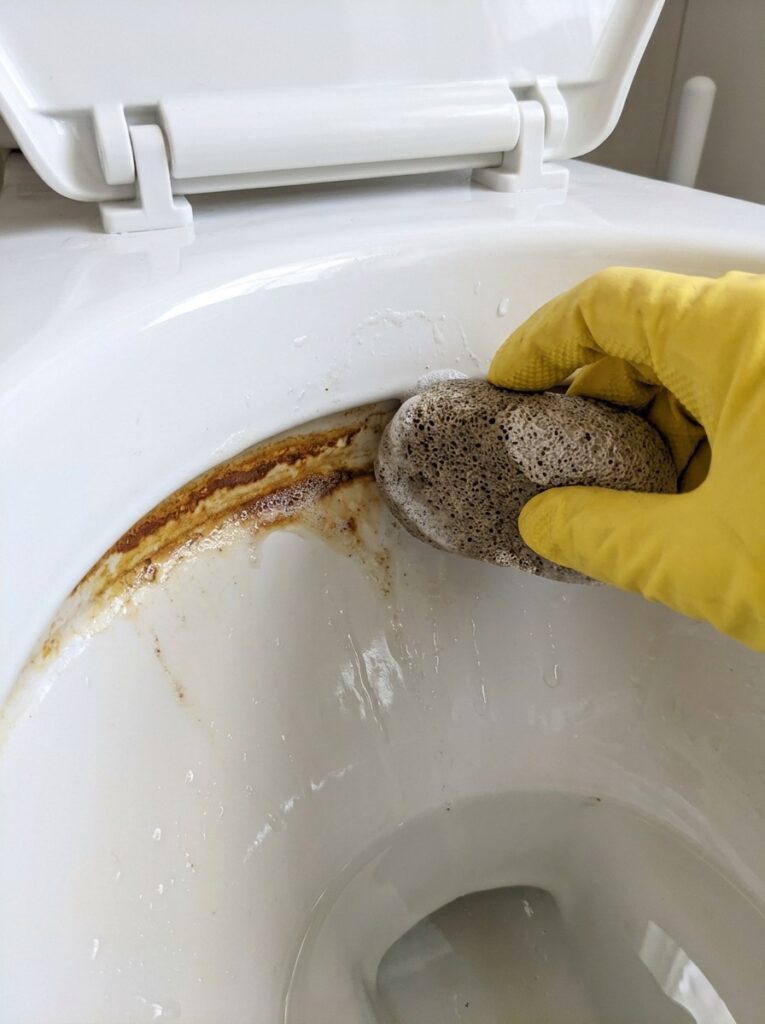
- Soak the pumice stone in water for at least 2 minutes before starting. A fully saturated stone is softer and less likely to scratch.
- Wet the inside of the toilet bowl surface where the stains are. Keep a cup of water nearby to re-wet the stone and bowl throughout the process.
- Press the pumice stone against the stain and scrub using firm, even pressure in a circular or back-and-forth motion. Let the stone do the work. You do not need to press hard.
- You will see a grayish paste forming on the surface as the pumice wears away. Do not rinse this off immediately. The paste is itself an abrasive that continues cleaning as you scrub.
- Rinse the bowl area every few minutes with water from a cup to check progress. Re-wet the stone each time.
- Continue scrubbing until the stain is gone. Very thick deposits from years of hard water buildup may take 5 to 10 minutes of steady scrubbing.
- Flush the toilet once to rinse the bowl and remove the pumice residue.
- Apply a fresh coat of toilet bowl cleaner and scrub with your regular toilet brush to clean the bowl fully and deodorize.
Tackling Specific Stain Types
Hard water ring at the waterline
This is the most common use for a pumice stone in US homes, particularly in hard water states like Texas, Arizona, California, and Florida. The ring is calcium and magnesium carbonate deposited by hard water. Scrub directly along the ring line with the wet pumice stone using firm pressure. Most rings disappear in two to five minutes of steady scrubbing.
Rust stains
Orange or reddish-brown rust stains come from iron in the water supply or from aging iron pipes. Apply Iron Out Automatic Toilet Bowl Cleaner (available at Home Depot) inside the bowl and leave for 15 minutes before using the pumice stone. The Iron Out dissolves the iron compound so the pumice can remove the residue more easily.
Dark brown buildup under the rim
Mineral deposits and mold combine under the toilet rim and are hard to reach with a brush. Use the pumice stone at an angle to reach up and under the rim. Angle the stone so it contacts the underside surface and scrub with short strokes.
Staining inside the cistern
Lift the cistern lid and look inside. If you see brown or orange deposits on the porcelain walls inside, you can use the pumice stone carefully on those surfaces as well. Keep the stone and the surface wet. Do not touch any metal valves, fittings, or the float mechanism with the stone.
Tip: The pumice stone will wear down as you use it and may eventually need reshaping. If the flat face wears to an uneven shape, rub it on a rough concrete surface outside to create a new flat edge. Do not use a worn stone with sharp edges as it is more likely to scratch.
How Often to Use a Pumice Stone
Pumice stone cleaning is a deep-cleaning task, not a routine one. Use it four to six times per year for maintenance in a hard water area. Using it more frequently than this over a long period could gradually dull the toilet bowl’s glaze, making new stains stick more easily.
Between pumice cleanings, use a regular toilet bowl cleaner weekly and drop in an in-tank descaler tablet monthly if you live in a very hard water area. Products like Vacplus Automatic Toilet Bowl Cleaner Tablets reduce mineral buildup between cleanings.
Preventing Hard Water Stains from Building Up
- Drop a toilet tank descaler tablet into the cistern once a month. They slowly release citric acid or other descaling agents with every flush.
- Clean the bowl with a toilet cleaner that contains hydrochloric acid, like Lysol Power Toilet Bowl Cleaner, every one to two weeks. The acid dissolves early-stage mineral deposits before they harden.
- Flush the toilet regularly if it is a guest bathroom that rarely gets used. Stagnant water deposits minerals faster than flowing water.
- If hard water is a persistent problem throughout your home, a whole-house water softener is the long-term solution. These are available from Lowe’s and Home Depot, usually with installation.
For choosing and using cleaners safely, see the American Cleaning Institute guide to cleaning surfaces.
Related Guides
- How Often Should You Clean Your Toilet? (A Complete Schedule)
- Does Bleach Damage Toilet Bowls? What Is Actually Safe (And What Is Not)
- Do Toilet Cistern Blocks Damage Your Toilet? The Honest Answer
Frequently Asked Questions
Will a pumice stone scratch my toilet?
A wet pumice stone used on a porcelain toilet bowl with light to moderate pressure will not scratch the surface. The key requirements are that both the stone and the toilet surface must stay wet throughout the entire process, and you should not press excessively hard. A dry pumice stone on a dry surface will scratch. Do a small test patch in an inconspicuous area of the bowl first if you are uncertain.
Can I use a pumice stone on a colored toilet bowl?
Yes, with caution. The pumice stone removes mineral deposits from the porcelain surface without stripping the color from the porcelain itself, since the color is baked into the glaze. However, colored toilets can be more difficult to test inconspicuously. Do a small test in the least visible area of the bowl first and check for any change in surface texture or appearance.
How long does a pumice stone last?
A pumice stone wears away gradually with each use. A single stone typically lasts between five and ten cleaning sessions depending on how much scrubbing is needed. When the stone becomes very small or develops sharp edges, replace it. Most pumice toilet cleaners come in two-packs.
What if the stains still will not come out after using a pumice stone?
If stains persist after thorough pumice stone scrubbing, try soaking the bowl with a stronger descaling product before the next pumice session. Pour a cup of white vinegar into the bowl and add a cup of baking soda. Leave overnight. Then apply a commercial descaler like CLR Bath and Kitchen Cleaner and leave for 30 minutes before scrubbing with the pumice stone. Very old rust stains embedded in worn porcelain may be permanent.
Can I use a regular face pumice stone on the toilet?
You can use a plain pumice stone without a handle, but you would need to put your gloved hand into the water to reach the stains, which most people prefer to avoid. Purpose-made toilet pumice stones with handles are inexpensive and make the job much easier. Keep any stone you use for toilet cleaning separate from stones used for personal grooming.
