
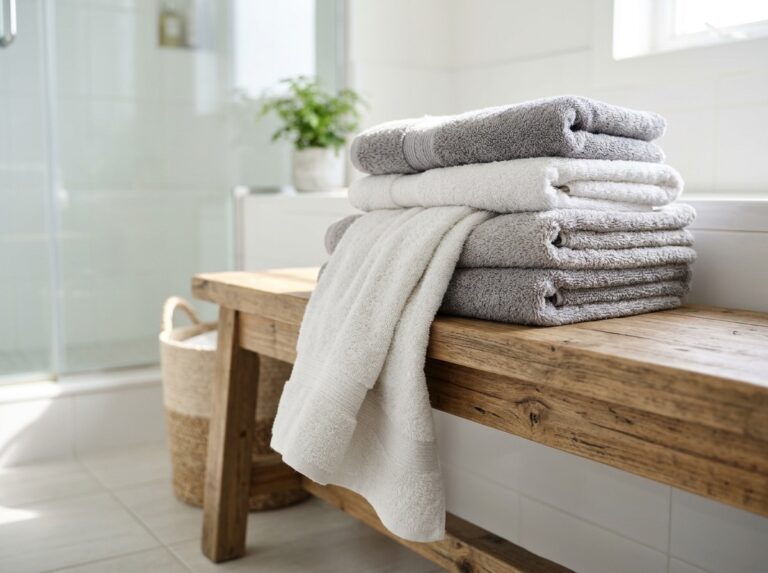
Towels that feel like sandpaper after air drying are one of the most common laundry complaints. If you do not have a dryer, or you are trying to cut down on energy costs, it can feel like softness is just not achievable without one.
It is. You just need to adjust a few things in how you wash, dry, and care for your towels.
This guide breaks down the exact reasons towels go stiff, and the seven most effective methods for keeping them soft even when they are line dried or air dried indoors.
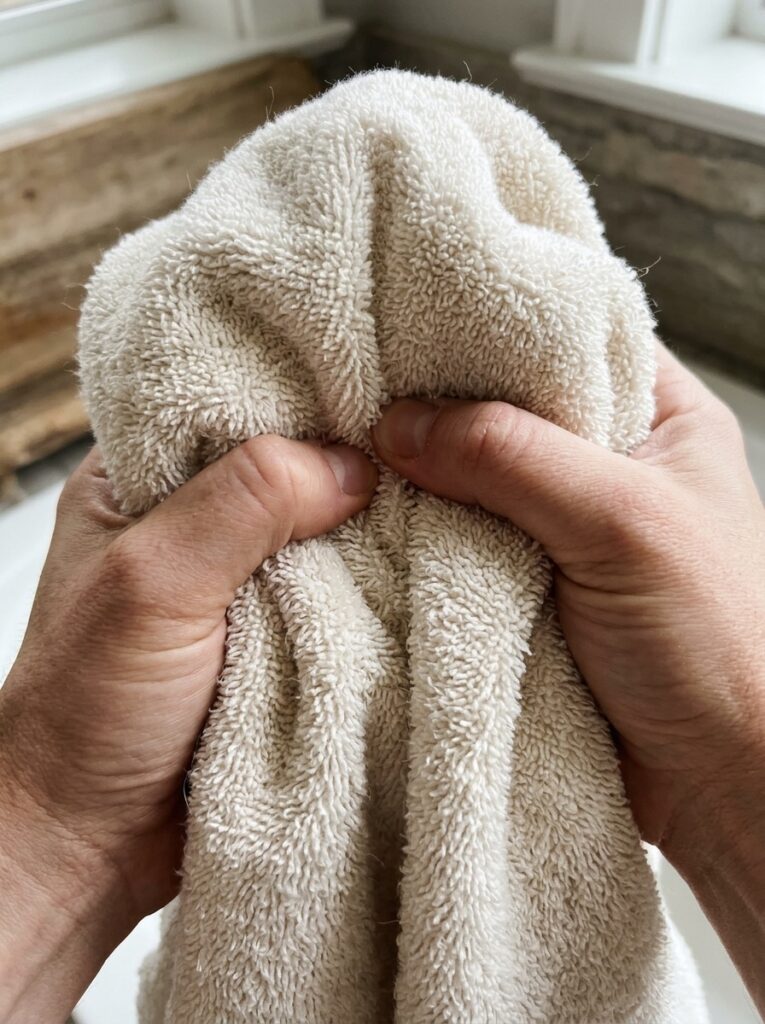
Table of Contents
Why Do Towels Go Stiff When Air Dried?
Understanding the cause helps you fix the right problem:
1. Detergent Buildup
This is the most common culprit. Using too much detergent, or washing towels in cool water that does not fully dissolve and rinse it out, leaves soap residue trapped in the fibers. Over time, this residue hardens the cotton loops and reduces absorbency. Even a few washes with slightly too much detergent accumulates into a stiffening layer.
2. Fabric Softener Buildup
Counterintuitively, fabric softener is bad for towels. It deposits a silicone-based coating on the fibers that makes them feel soft initially, but builds up over time to create a waxy layer that traps dirt, reduces absorbency, and ultimately makes towels stiff and less effective. Many towel manufacturers explicitly recommend against using fabric softener.
3. Hard Water Mineral Deposits
Roughly 85 percent of American homes have hard water to some degree. Hard water is high in calcium and magnesium ions that bind to fabric fibers during washing. Over repeated washes, these minerals accumulate and create a stiff, rough texture, similar to the effect of mineral deposits on shower glass.
4. Lack of Agitation During Drying
In a dryer, constant movement keeps the cotton loops open and fluffy as they dry. When air drying, the loops dry flat and compressed, especially when draped over a radiator where one side is pressed against heat with no airflow. The result is flattened, stiff fibers.
Method 1: Use Less Detergent
This single change makes one of the biggest differences. Use half, or even a third, of the detergent dose recommended on the packaging when washing towels. Towels need cleaning, but they do not need as much detergent as heavily soiled clothing. Less detergent means less residue, less buildup, and softer towels over time.
If your towels are already stiff from detergent buildup, strip them: wash a full cycle with only 1 cup of white vinegar and no detergent. This dissolves accumulated soap residue. Then run a second cycle with a small amount of your regular detergent.
Tip: Liquid detergent is preferable to powder for towels. Liquid dissolves more completely in all water temperatures and is less likely to leave residue.
Method 2: Replace Fabric Softener with White Vinegar
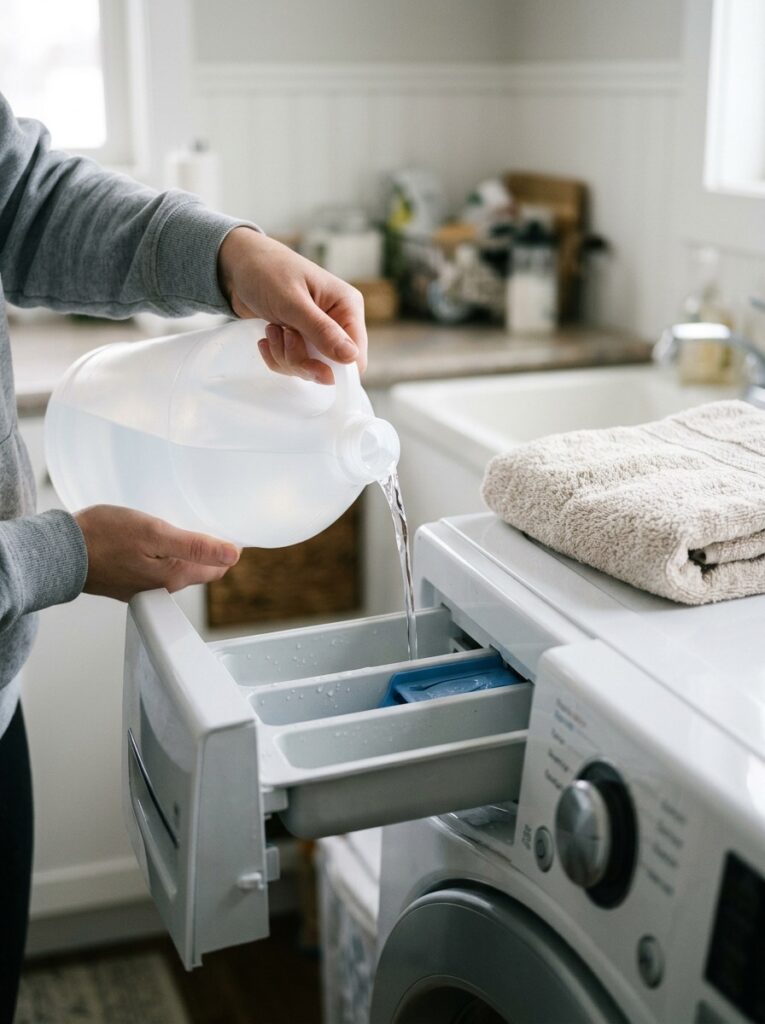
White vinegar is the single best natural softener for towels, and it costs a fraction of commercial fabric softeners.
Add half a cup of distilled white vinegar to the fabric softener compartment (or directly into the drum during the rinse cycle). The mild acidity dissolves detergent and mineral residue from fiber loops, restores the pH balance of the cotton, acts as a natural antibacterial agent, and leaves no scent once the towels are dry.
Do not mix vinegar with detergent in the same cycle, add it only during the rinse. Using both simultaneously neutralizes their individual effects.
Warning: Never use vinegar and bleach together, they produce chlorine gas when combined. Use vinegar on a completely separate cycle from bleach.
Method 3: Add Baking Soda to the Wash
Adding half a cup of baking soda directly to the drum along with your (reduced) detergent boosts cleaning power, neutralizes odors, and helps keep the fiber loops open. It is especially effective at counteracting hard water minerals.
For a deep restore wash on towels that have lost all their softness, use both baking soda and vinegar, but in separate cycles. Wash with baking soda (plus a small amount of detergent), then run a rinse cycle with half a cup of vinegar. This combination strips years of built-up residue.
Method 4: Use the Right Wash Temperature
Washing towels at the right temperature ensures detergent fully dissolves and oils are properly removed:
- 104 degrees F to 140 degrees F (40 degrees C to 60 degrees C) is the sweet spot for towels, warm enough to dissolve detergent fully and break down body oils, but not so hot as to damage fibers
- Cold water washes below 86 degrees F (30 degrees C) do not rinse detergent as effectively, leading to faster buildup
- Very hot water can break down the cotton fibers and cause long-term stiffness
Wash towels together: do not mix with clothing. Lint from clothing can transfer onto towels, creating a matted texture. Towels washed alone maintain cleaner, fluffier loops.
Method 5: Shake Towels Before and After Washing
This simple step makes a noticeable difference:
- Before washing: give each towel a firm shake to loosen compressed fibers and any loose debris before it goes in the machine
- After washing: shake vigorously as soon as the cycle ends. This helps separate the fiber loops and begins restoring loft before drying
- After drying: give a final shake and snap to fully fluff the loops
The shaking mimics some of the agitation a dryer provides, and it is particularly helpful when air drying indoors.
Method 6: Dry Towels Correctly
How you dry towels without a dryer makes a significant difference in how they feel:
Outdoors on a Line (Best Result)
Line drying with a gentle breeze is the closest you can get to dryer softness without a machine. The moving air lifts the fiber loops, and the breeze creates a light agitation similar to tumbling. On a warm, breezy day, line-dried towels can be genuinely soft.
Hang towels from the narrow end, securing with clips at each corner. Spread as much of the towel surface area as possible. Avoid folding them fully over the line. This doubles the drying time and leaves one side stiff.
Indoors on a Drying Rack
Lay towels flat across the top bars of a drying rack rather than draping them over a single bar. This maximizes surface area and allows air to circulate on both sides. Set a fan nearby to create airflow. This dramatically reduces drying time and prevents the stiff, flat texture that comes from still-air drying.
Avoid Radiators
Drying towels directly on a radiator is one of the worst methods for softness. The intense, concentrated heat on one side dries the fibers rapidly and unevenly, while the side against the radiator surface gets no airflow at all. This creates the classic rough, cardboard-like texture.
Tip: If you must dry towels indoors without a rack, try laying them flat over the back of chairs to maximize airflow on both sides.
Method 7: Finish with a Short Tumble (If Possible)
If you occasionally have access to a dryer, at a laundromat, a friend’s home, or if you own one but are trying to use it less, even 10 to 15 minutes on a low-heat setting after air drying makes a dramatic difference.
Air dry the towels until they are 80 to 90 percent dry (this saves significant energy compared to full tumble drying), then finish with a short tumble. The brief agitation fluffs the fiber loops into shape and removes the stiffness that comes from air drying.
Use wool dryer balls rather than dryer sheets. They create air pockets between fibers and speed up drying time without any chemical residue.
How to Restore Already-Stiff Towels
If your towels are already rough and stiff, here is how to restore them:
Vinegar Strip Wash
- Wash towels in hot water (140 degrees F / 60 degrees C) with 2 cups of white vinegar and NO detergent.
- Run a second wash with half a cup of baking soda and NO detergent.
- Wash one final time with a small amount of your regular detergent.
- Dry correctly using the methods above.
This process strips years of built-up residue from detergent and fabric softener and restores the cotton loops. Many people are surprised by how much softer their old towels feel after this treatment.
Address Hard Water
If you are in a hard water area, residue restoration washes will need to be done more regularly. Long-term solutions include:
- Water softener pellets or pods added to each wash cycle, products like Calgon Water Softener help prevent mineral buildup
- Installing a whole-home water softener is the most comprehensive solution
- Using chelating agents in your laundry, products like Charlie’s Soap or laundry detergents formulated for hard water work by binding to and rinsing away minerals
For more laundry care basics, see the American Cleaning Institute guide to clean clothes.
Related Guides
- How to Get Mildew Smell Out of Towels (For Good)
- 13 Best Fabric Softener Alternatives That You Must Know (2025)
- What Temperature Should You Wash Towels, Sheets, and Clothes?
Frequently Asked Questions
Does white vinegar really work to soften towels?
Yes, and it is more effective than fabric softener for long-term softness. Vinegar dissolves detergent and mineral residue that accumulates in fiber loops, which is the main cause of stiffness. Add half a cup to the rinse cycle. The vinegar smell fully dissipates as towels dry.
How do I stop towels from smelling musty when air dried?
Musty smell comes from bacteria or mold growing in fibers that stayed damp too long. Prevention: remove from the washing machine immediately, shake vigorously, and dry in a space with good airflow. If already musty, add a cup of white vinegar to a hot wash cycle. This kills odor-causing bacteria.
Is it bad to dry towels on a radiator?
For softness, yes. Radiators dry unevenly with concentrated heat, flattening the cotton loops and creating stiffness. More practically, drying laundry on radiators raises indoor humidity levels significantly, which can encourage mold growth on walls and ceilings. Use a drying rack with airflow instead.
Why are my towels stiff even after using fabric softener?
Fabric softener is likely the cause of the stiffness, not the cure. Softener leaves a silicone-based coating that builds up over repeated washes. Stop using it. Run a strip wash with white vinegar to remove the accumulated coating. Go forward with vinegar in the rinse cycle instead.
How often should I wash towels?
Every 3 to 4 uses for bath towels, or about once a week. Allowing too many uses between washes allows more oils and bacteria to build up, making restoration harder. Hand towels in the bathroom should be washed every 1 to 2 days, since they are used by multiple people and stay damp.
