
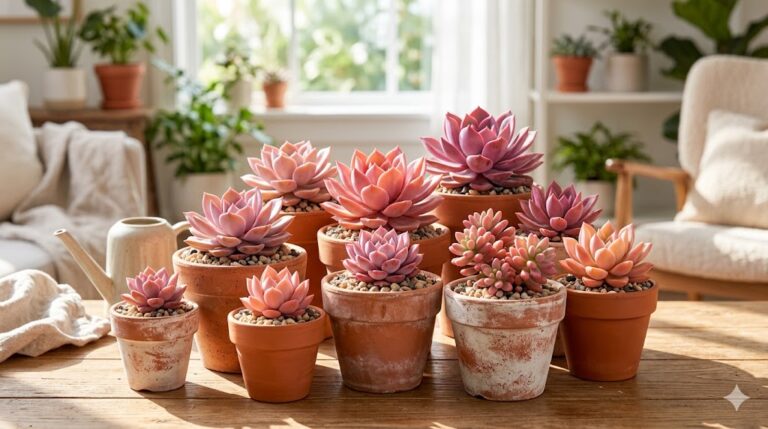
The pink succulent phenomenon is not a nursery trick.
The extraordinary colors of succulents, from pale blush to deep magenta, coral to burgundy, are real, biological, and produced by the plants themselves in response to specific growing conditions.
Understanding why succulents turn pink is the key to getting them to do it on purpose. And once you know the mechanism, you can take a dull, green grocery store succulent and transform it into a vivid, deeply colored plant within weeks.
Why Succulents Turn Pink (The Science)
Succulent color comes primarily from anthocyanins, the same family of pigments responsible for the red in strawberries, the purple in blueberries, and the fall color of autumn leaves.
Plants produce anthocyanins as a stress response. Specifically, succulents produce them in response to:
- High light intensity: UV radiation triggers anthocyanin production as a natural sunscreen protecting the plant’s internal tissues
- Temperature extremes: Both cold temperatures (night temps below 50°F) and significant day-night temperature differential trigger color intensification
- Drought stress: Reduced watering concentrates anthocyanins in plant tissues
- Nutrient stress: Low-nitrogen conditions reduce chlorophyll production, allowing underlying anthocyanin colors to dominate
None of these stressors harm the plant when applied correctly. The deeply colored succulents you see in designer photos and succulent arrangements are stressed plants, in the same way that athletes pushed to their physical limit look their most spectacular.
Green, healthy-looking succulents are often over-pampered: too much shade, too much water, too much fertilizer. The most beautiful succulents are slightly stressed.
How to Make Succulents Turn Pink
Step 1: More Sun
Move indoor succulents to a south or west-facing window where they receive 4 to 6 hours of direct sun daily, or move containers outdoors in warm weather.
Transition gradually: a succulent that has been in dim indoor light moved directly to full outdoor sun will sunburn. Increase exposure by 1 to 2 hours per day over 1 to 2 weeks.
For indoor succulents without access to adequate natural light, a grow light positioned 4 to 6 inches above the plant for 12 to 14 hours daily produces similar color-triggering effects.
Step 2: Allow Drought Cycles
Most succulents are watered too frequently. The standard guidance: water thoroughly, then allow the soil to dry completely, as in completely, bone dry, before watering again.
In summer: this might mean watering every 10 to 14 days. In winter: every 3 to 6 weeks.
The drought cycle between waterings concentrates plant compounds and triggers the stress response that deepens color.
Step 3: Reduce Fertilizer
Stop fertilizing if you want maximum color. Nitrogen fertilizer promotes green leafy growth, exactly what you don’t want for colorful succulents.
If you choose to fertilize at all, use a dilute (1/4 strength) cactus/succulent fertilizer once in spring only.
Step 4: Expose to Temperature Differential
If your climate allows, leave succulents outside overnight when temperatures drop to 45 to 55°F. The cool nights accelerate anthocyanin production dramatically. This is one of the fastest ways to intensify succulent coloring, within 2 to 3 weeks of regular cool-night exposure, most succulents become significantly more vivid.
Do not expose succulents to frost (below 32°F) unless they are specifically frost-tolerant varieties.
15 Best Pink Succulent Varieties
Echeveria Varieties
1. Echeveria ‘Perle von Nürnberg’
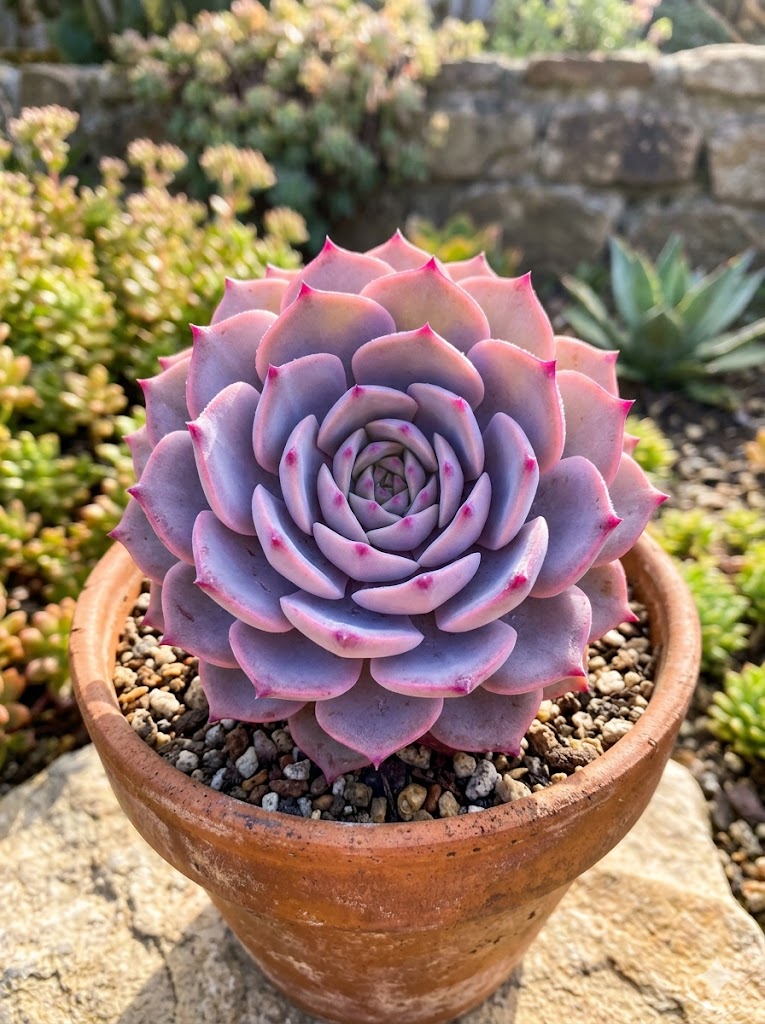
One of the most widely grown pink succulents, a compact rosette with pastel purple-pink leaves tipped with deeper pink. The coloring intensifies significantly with full sun. Typically 3 to 5 inches diameter. Hardy to approximately 25°F with protection.
2. Echeveria ‘Afterglow’
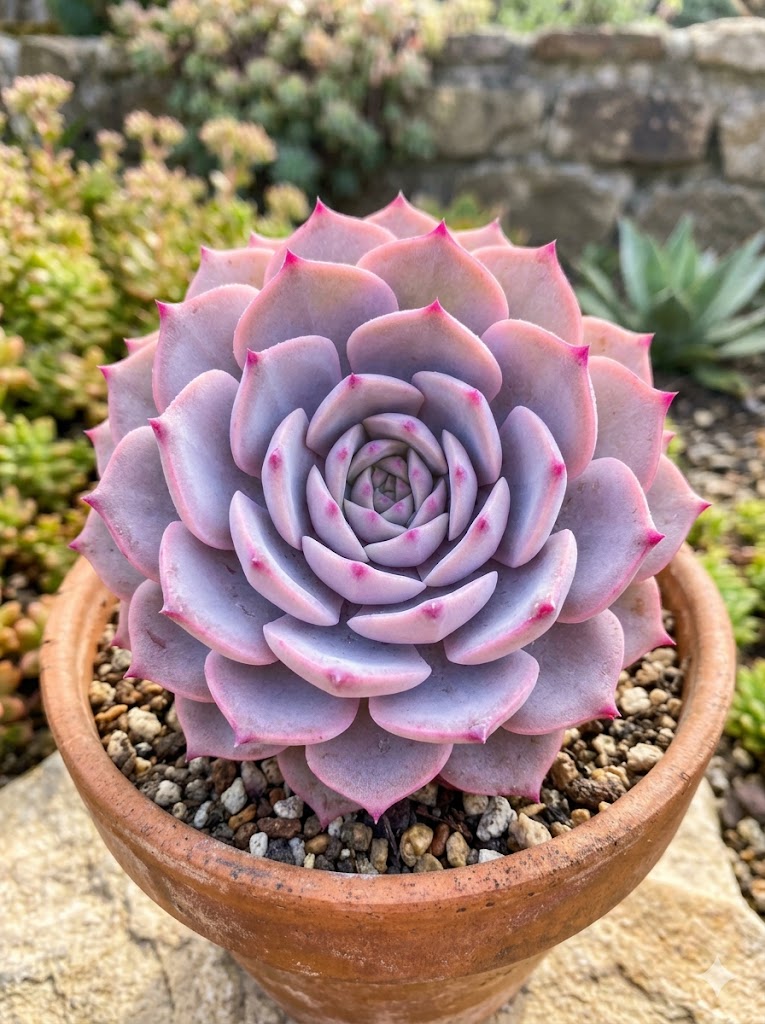
A larger echeveria (6 to 10 inches diameter) with striking pink and lavender leaves dusted with a powdery frosting (farina). The farina provides natural UV protection, handle minimally to avoid smudging it.
3. Echeveria ‘Pink Champagne’
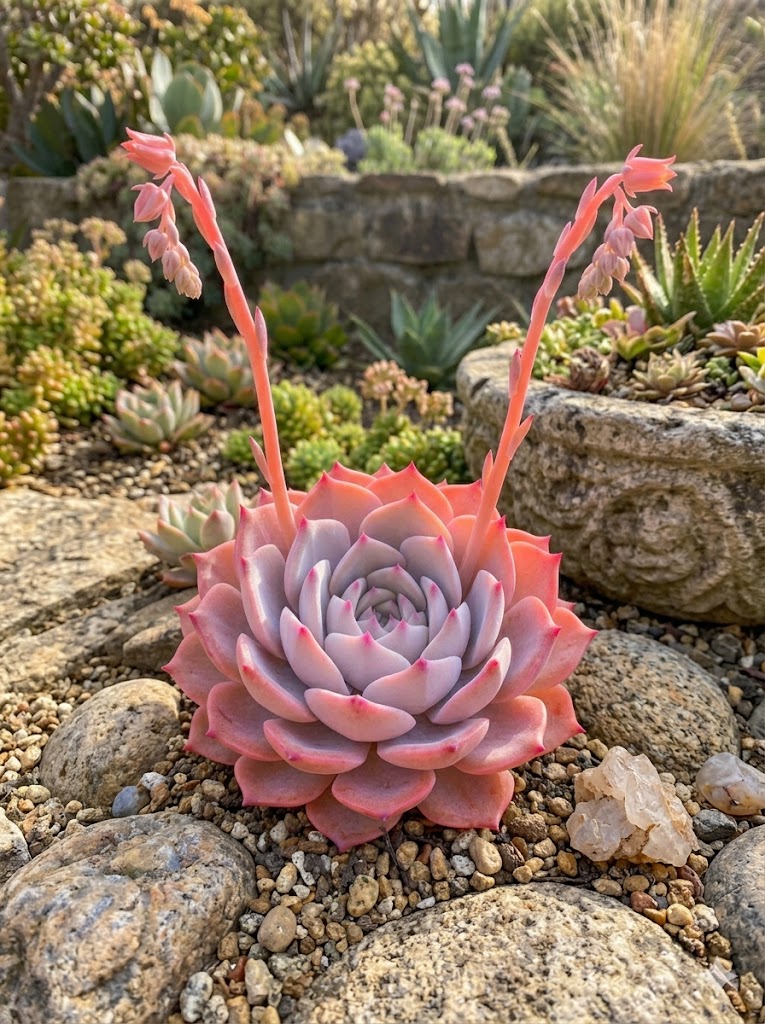
A hybrid with pale pink rosette leaves that develop deeper pink and coral tones with sun stress. Produces pink flower stalks in summer that are equally decorative.
4. Echeveria subsessilis
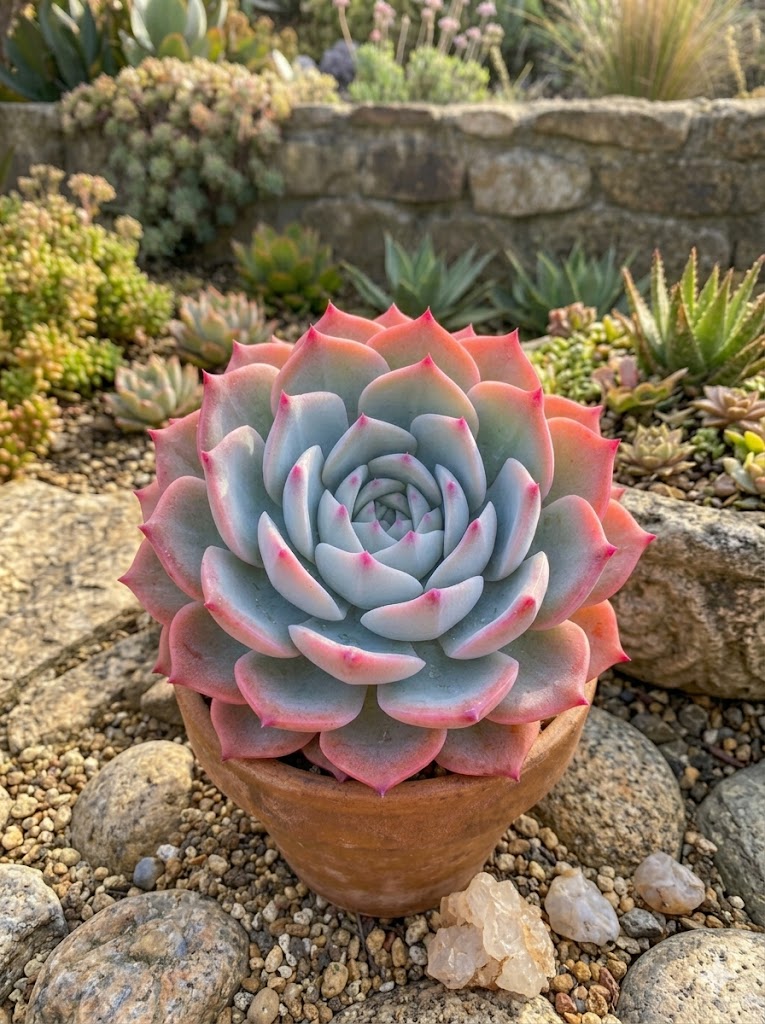
Also called “Morning Beauty”, produces delicate, spoon-shaped leaves in blue-green that flush distinctly pink to rose at the tips when sun-stressed. One of the most naturally pink-expressing echeveria species.
5. Echeveria ‘Lola’
A compact hybrid (3 to 4 inches) with a beautiful translucent quality to its pink-lavender leaves. Particularly appealing in arrangements and terrariums.
Graptopetalum and Graptoveria Varieties
6. Graptopetalum paraguayense (Ghost Plant)
One of the most reliable “stress-color” succulents available. In shade, the leaves are pale green-gray. In full sun with limited water, the entire plant transitions to deep rose-pink to near-red. Highly drought tolerant and hardy to 15°F.
7. Graptoveria ‘Debbie’
A compact hybrid with naturally pink-purple leaves that deepen to vivid magenta-rose under full sun stress. One of the most consistently pink succulents without requiring intense stress conditions.
8. Graptoveria ‘Titubans’ (White Plum)
Pale, almost white leaves that develop a strong blush-pink color with appropriate sun and temperature stress. The contrast between the natural white-gray and the stress-induced pink is particularly striking.
Sedum Varieties
9. Sedum rubrotinctum (Jelly Beans)
The plump, jelly-bean-shaped leaves start green and turn vivid red-pink to red with sun and drought stress. An extremely easy-to-grow, fast-propagating succulent that produces dramatic color reliably.
10. Sedum ‘Rosea’ (Pink Stonecrop)
A perennial stonecrop with pink-blushed green leaves and attractive pink flower clusters in summer. Hardy to zone 4, making it one of the few succulents suitable for cold-climate outdoor growing.
Crassula Varieties
11. Crassula ‘Campfire’
In shade: plain green. In full sun: the leaves transition to vivid red-orange at the tips, creating a flame-like effect. One of the most dramatic color transformers in the succulent world.
12. Crassula ovata ‘Hummel’s Sunset’ (Sunset Jade)
A jade plant variety whose leaves develop yellow and red blushing under full sun. In intense light, the plant becomes predominantly red-orange at the outer leaf margins. Grows to a small shrub (2 to 3 feet) in warm climates.
Aeonium Varieties
13. Aeonium arboreum ‘Zwartkop’ (Black Rose)
Not pink, but a deep burgundy-black in full sun that creates stunning contrast with pink companions. In shade, the leaves revert to green. This is one of the most reliable color transformers in the Aeonium genus.
14. Aeonium ‘Kiwi’
Tricolor rosettes with green centers, yellow middles, and pink-red margins that intensify in full sun. The color range in a single plant creates a watercolor effect that is genuinely spectacular in mass planting.
Other Notable Pink Succulents
15. Orostachys iwarenge (Chinese Dunce Cap)
Produces tight, compact rosettes in silver-pink that offsets prolifically. In summer it grows; in fall it flowers with a tall cone-shaped spike and then the rosette dies, leaving many offsets behind. One of the most unique pink succulents and cold-hardy to zone 5.
Care Basics for Pink Succulents
- Soil: Well-draining cactus/succulent mix or standard potting mix amended with 50% perlite
- Pots: Terra cotta for best drainage (dries faster than plastic); ensure drainage holes are present
- Water: Soak completely, then allow full dry-out between waterings, typically 10 to 21 days depending on season and light
- Light: As much direct sun as possible for color; most require 4 to 6 hours minimum
- Temperature: Most succulents prefer 60 to 80°F but tolerate 45 to 55°F nights, which actually improves color
- Repotting: When roots emerge from drainage holes or plant has outgrown its container, typically every 2 to 3 years
Propagating Pink Succulents
Most succulents propagate readily from leaves or cuttings, making them among the most economical plants to collect:
- Gently twist a healthy leaf from the parent plant with a slight side-to-side motion. The leaf must come off cleanly at the base , if part of the base remains on the plant, it will not propagate.
- Set leaves on top of dry cactus mix in a bright, indirect light location. Do not plant or water.
- Within 2 to 3 weeks, tiny pink roots will emerge from the base. A small rosette follows within 1 to 2 months.
- Once the parent leaf has dried and shriveled, the new plant is established. Repot into its own container.
✅ Tip The white powdery coating on many succulents (called farina or epicuticular wax) is natural UV protection. Once removed by handling, it does not grow back on existing leaves, but new growth will have fresh farina. Handle farina-coated succulents (Echeveria ‘Afterglow’, Dudleya, Pachyveria) only by the base or pot. Group pink succulents in odd numbers (3, 5, 7) for the most visually cohesive arrangements. Combine different textures, rosette types (Echeveria) with upright types (Crassula) and trailing types (Sedum rubrotinctum), for maximum interest. |
Frequently Asked Questions
Why is my pink succulent turning green?
Succulents turn green when conditions improve too much: more shade, more water, more fertilizer. The plant produces chlorophyll in response to better conditions and the anthocyanin colors fade. To restore the pink, move to more sun, reduce watering, and stop fertilizing.
Are pink succulents real or dyed?
Most pink succulents available at garden centers are real and naturally colored, their pink tones are genuine responses to growing conditions. Some novelty succulents ARE spray-painted (which harms the plant and fades within weeks), these are typically bright, unnatural colors like electric blue or neon pink. Natural succulent pinks, lavenders, and rose tones are biological pigments that deepen and fade with care.
Will my pink succulent stay pink indoors?
Most will lose intensity indoors unless they receive direct sun through a south or west-facing window for 4+ hours daily. Supplemental grow lighting (LED grow light 4 to 6 inches above plants, 12 to 14 hours daily) successfully maintains color in many varieties.
The Bottom Line
Pink succulents are one of the most rewarding and low-maintenance plants you can collect.
Understanding that color is a stress response, and that the right kind of stress produces beauty rather than harm, transforms how you care for these plants. More sun, less water, cooler nights.
Start with Echeveria ‘Perle von Nürnberg’, Ghost Plant (Graptopetalum paraguayense), or Sedum rubrotinctum for reliably striking color with minimal effort. Move them to your sunniest spot, reduce watering, and watch them transform.
