
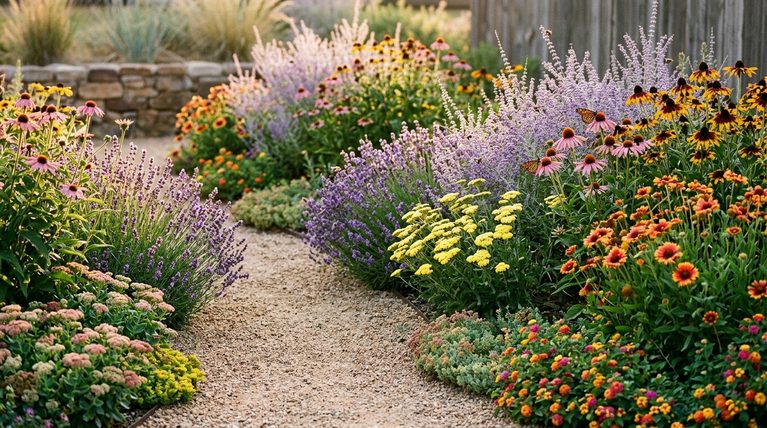
A dry spell should not mean a dead garden.
The plants on this list have evolved in some of the world’s harshest conditions, Mediterranean coastlines, western American prairies, South African grasslands, and brought that genetic resilience into garden cultivation.
Once established (typically after their first full growing season), each of these plants can survive on natural rainfall in most US regions, dramatically reducing both water bills and maintenance time while maintaining a genuinely attractive garden.
These are not survivor plants that merely cling to existence in drought. They are plants that actively bloom and grow in dry conditions.
Understanding “Drought Tolerance”
A critical clarification before the plant list: drought tolerance and drought resistance are often used interchangeably but are subtly different.
A drought-tolerant plant can survive extended dry periods after establishment but will perform better with some supplemental water. A drought-resistant plant stores water or has structural adaptations that allow it to thrive — not just survive — with minimal irrigation.
Both types appear below. In either case, the key phrase is “after establishment.” Most drought-adapted plants require regular water for their first 4 to 8 weeks after planting to establish deep root systems. After that, their water needs drop dramatically.
The 15 Best Drought-Resistant Flowering Plants
1. Portulaca / Moss Rose (Portulaca grandiflora)
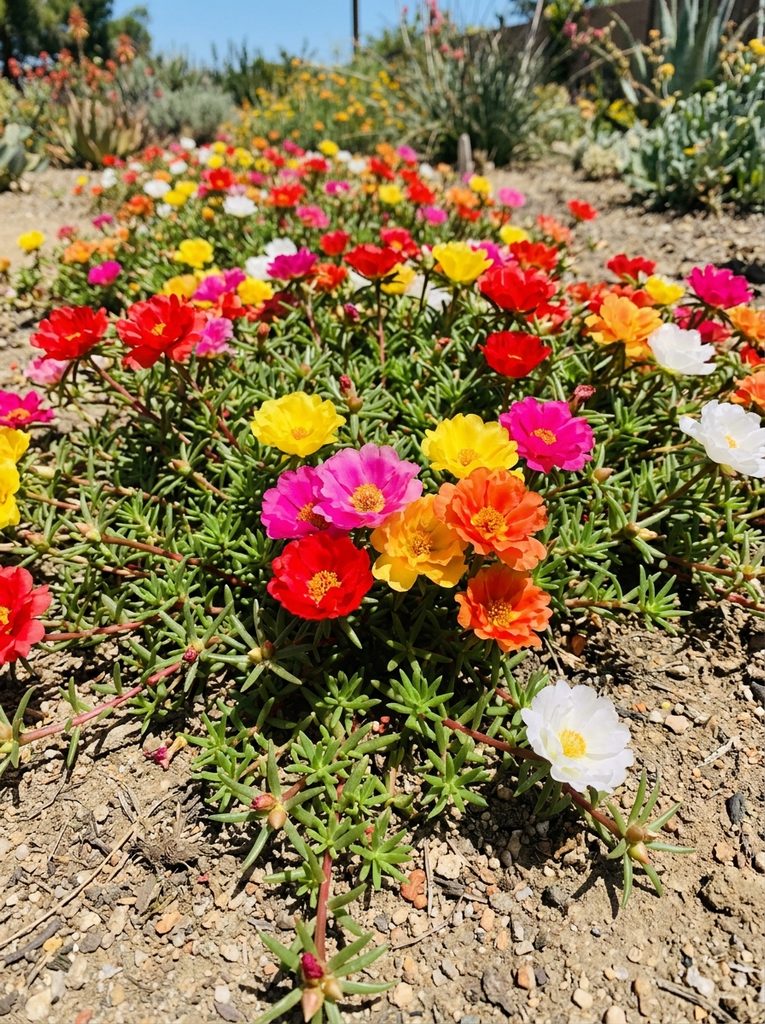
Type: Annual | Zones: All | Height: 6 to 8 inches | Bloom: Summer through frost
Portulaca is the definitive drought-resistant annual. Its thick, succulent-like leaves store water, and the brilliant flowers in red, orange, yellow, pink, and white open in full sun and close on cloudy days — a behavior that fascinates children and adults alike.
It thrives in the conditions that kill other plants: poor sandy soil, intense heat, and zero irrigation. Seeding itself freely, it often returns year after year without replanting.
2. Lavender (Lavandula angustifolia and Lavandin hybrids)
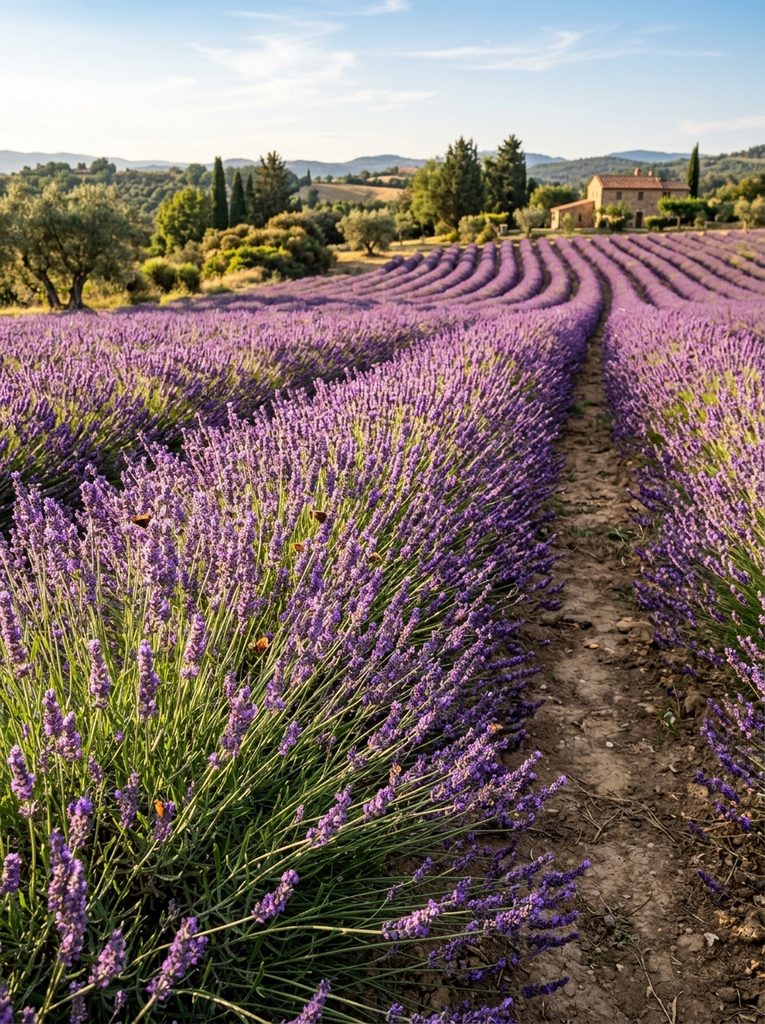
Type: Perennial | Zones: 5 to 9 | Height: 12 to 30 inches | Bloom: June through August
Native to the rocky, dry hillsides of the Mediterranean, lavender evolved for drought. After its first season, established lavender plants can survive on natural rainfall throughout most of the US without supplemental irrigation.
The Lavandin hybrids (Grosso, Phenomenal) are larger, more fragrant, and more cold-hardy than straight English lavender. Phenomenal tolerates zone 4 winters and is considered the most weather-adaptable lavender commercially available.
3. Echinacea / Purple Coneflower (Echinacea purpurea)
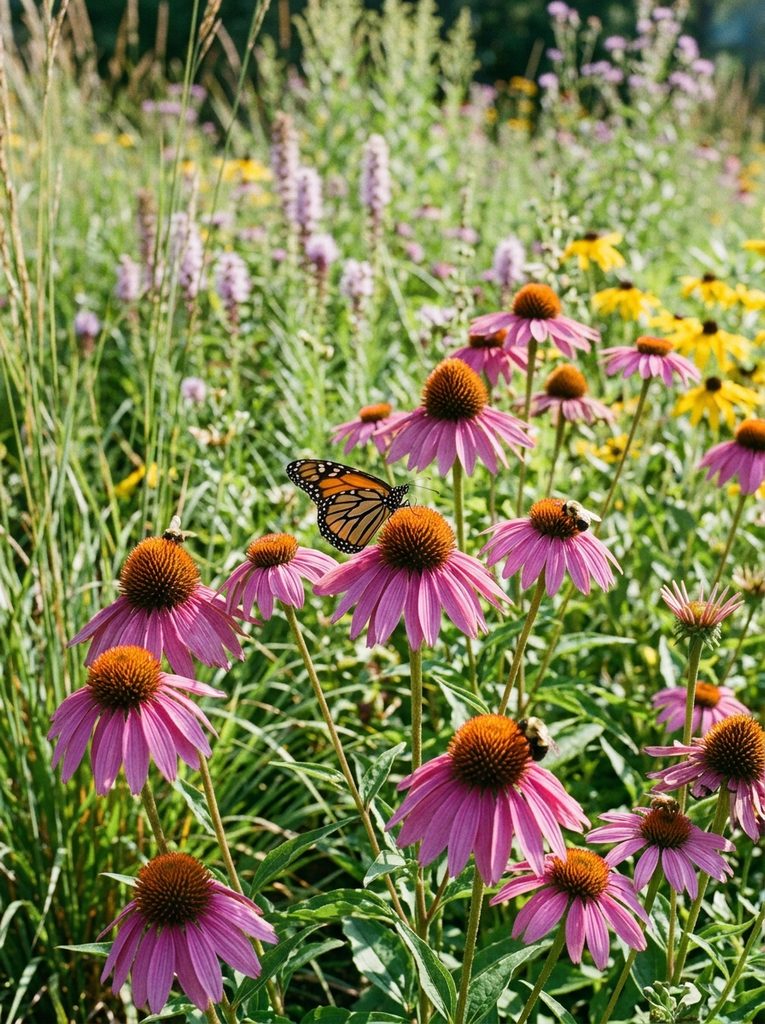
Type: Perennial | Zones: 3 to 9 | Height: 24 to 48 inches | Bloom: July through September
Echinacea is a native North American prairie plant evolved for hot, dry summers. Once established, it thrives on natural rainfall even during extended dry periods. Its daisy-like flowers in pink, purple, white, orange, and yellow bloom for months and are followed by seed heads that feed goldfinches through winter.
Highly deer-resistant, long-blooming, and self-seeding. Among the easiest drought-tolerant perennials to establish.
4. Russian Sage (Perovskia atriplicifolia)
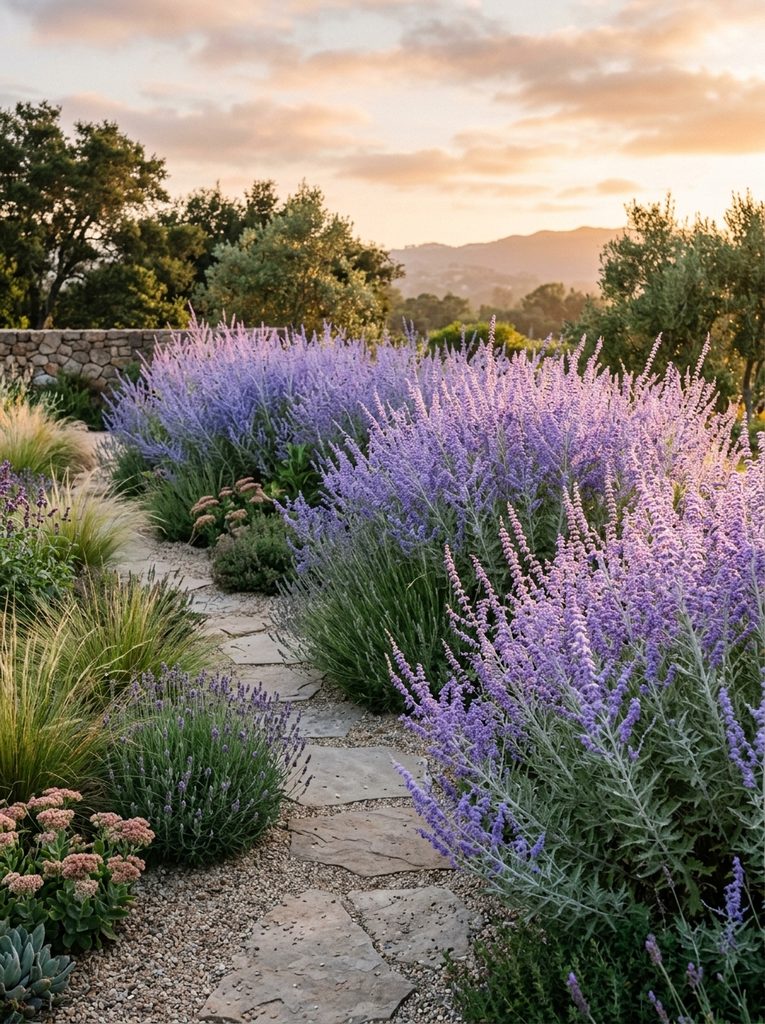
Type: Perennial | Zones: 4 to 9 | Height: 3 to 4 feet | Bloom: July through September
Russian sage produces clouds of small lavender-blue flowers on silver-white stems throughout late summer and fall, at exactly the moment when many gardens look tired. It is among the most heat, drought, and poor-soil tolerant perennials in cultivation.
The airy habit and gray-silver coloring pair beautifully with bolder flowers like echinacea, black-eyed Susan, and ornamental grasses.
5. Blanket Flower (Gaillardia x grandiflora)

Type: Perennial | Zones: 3 to 10 | Height: 18 to 24 inches | Bloom: June through frost
Blanket flower is one of the longest-blooming and most reliably drought-tolerant perennials for American gardens. Its vivid bicolor flowers in red, orange, and yellow bloom from early summer through the first hard freeze — a 5-to-6-month performance that few other plants can match.
Native to the western US prairies where it grows in poor, gravelly soil with minimal precipitation.
6. Catmint (Nepeta x faassenii)
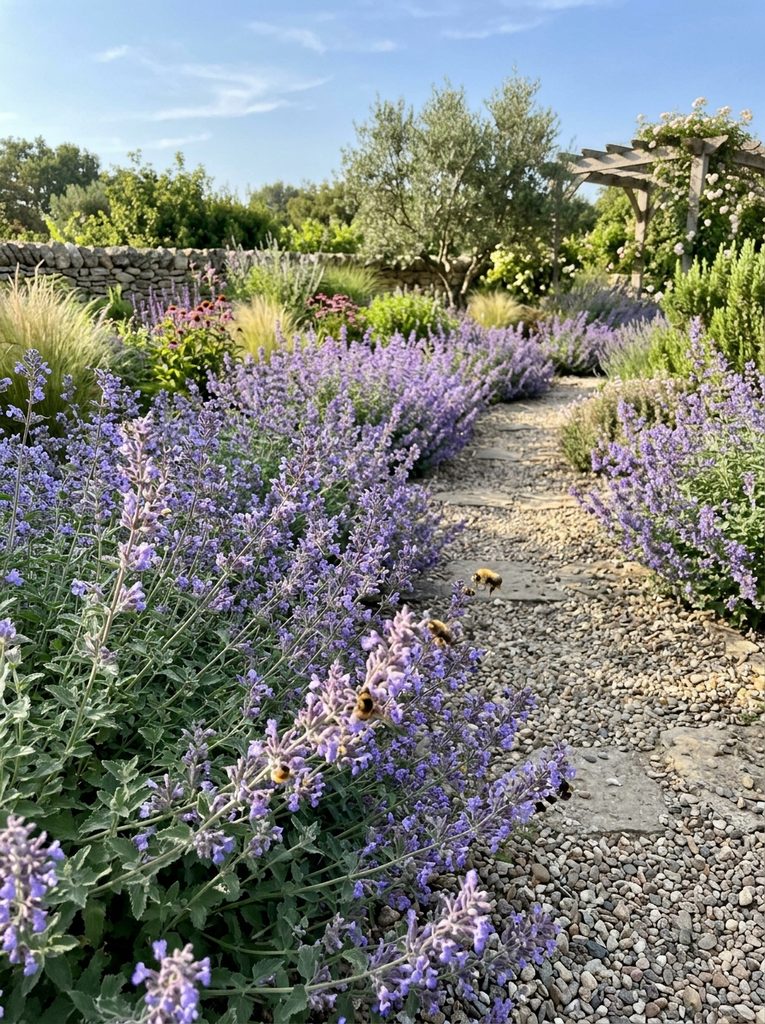
Type: Perennial | Zones: 4 to 8 | Height: 12 to 24 inches | Bloom: May through September
Catmint is one of the most adaptable perennials for difficult garden conditions — drought, poor soil, and heat are all handled with ease. Its long bloom season and deer resistance make it a garden workhorse.
Walker’s Low (confusingly, it grows to 24 inches despite its name) and Cat’s Meow are consistently high-rated varieties with particularly long bloom periods.
7. Coreopsis / Tickseed (Coreopsis spp.)
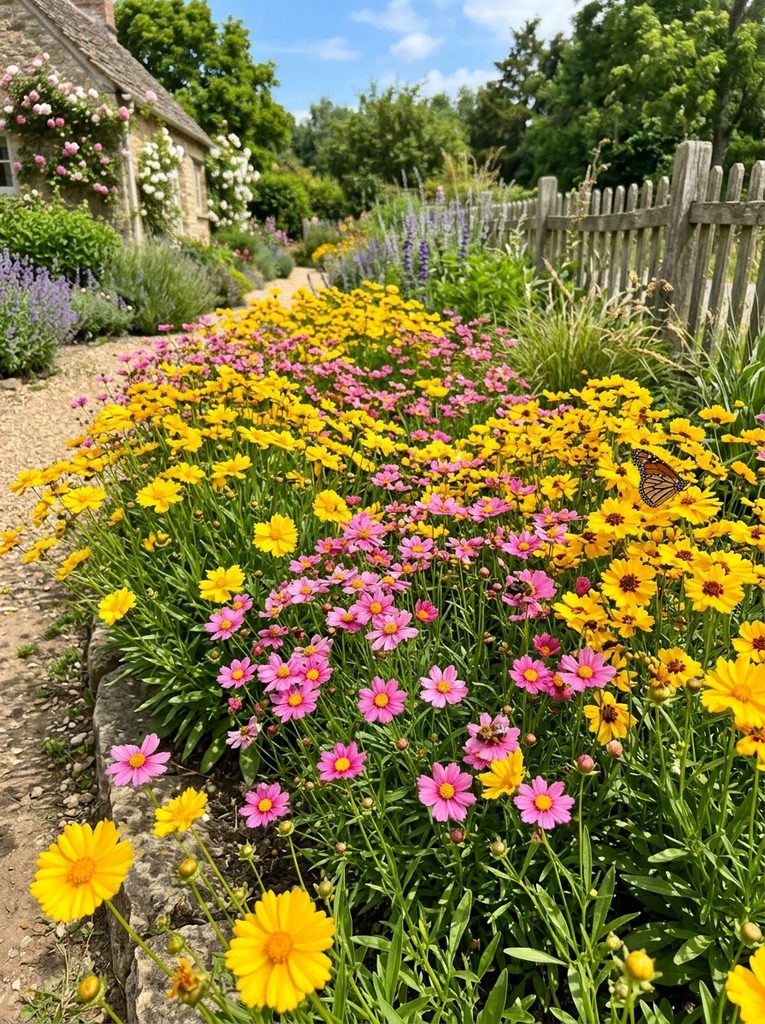
Type: Perennial and Annual | Zones: 4 to 9 | Height: 12 to 36 inches | Bloom: June through October
Coreopsis produces cheerful yellow, pink, red, and bicolor daisy-like flowers that bloom prolifically with minimal care. Native to North American prairies and meadows, it is fully adapted to the dry conditions that occur naturally in those environments.
Deadhead regularly to maintain continuous bloom. Moonbeam (soft yellow, 18 inches) and Zagreb (golden yellow, 12 inches) are excellent compact varieties.
8. Yarrow (Achillea millefolium)
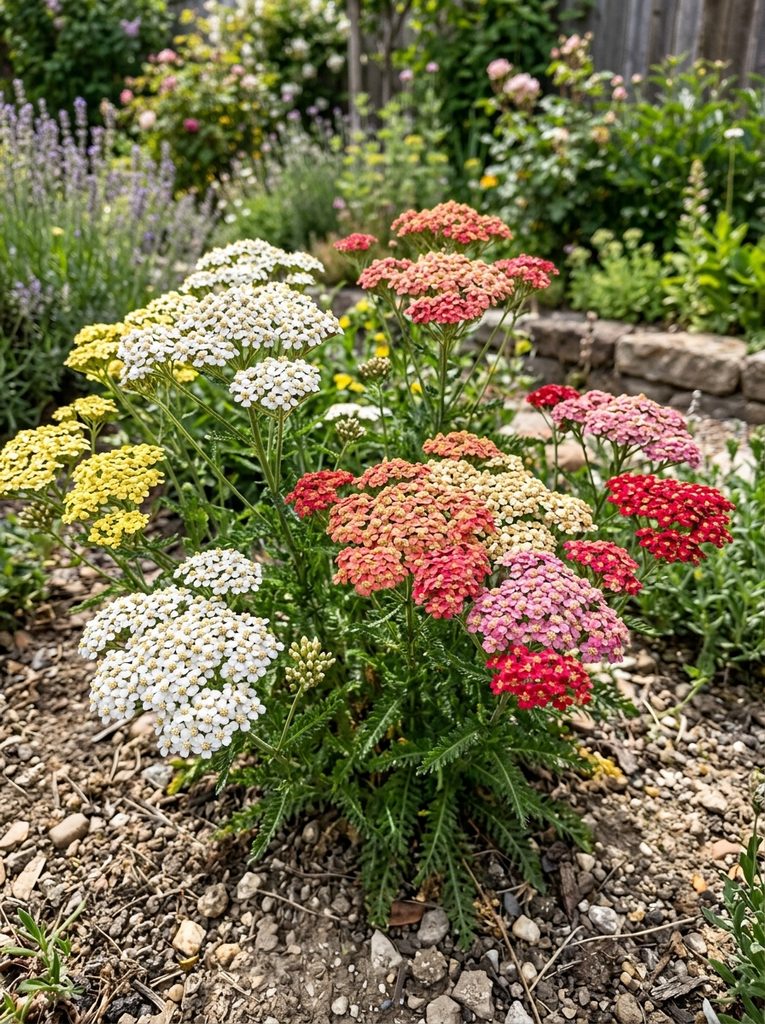
Type: Perennial | Zones: 3 to 9 | Height: 18 to 36 inches | Bloom: June through September
Yarrow is one of the toughest perennials in cultivation. It thrives in lean, dry, even rocky soil where most plants fail, producing flat-topped flower clusters in white, yellow, salmon, pink, and red throughout summer.
The feathery foliage has a pleasant herbal scent. Named varieties like Paprika (red), Moonshine (butter yellow), and Coronation Gold (golden yellow) are excellent border plants with superior drought performance.
9. Sedum / Stonecrop (Sedum / Hylotelephium)
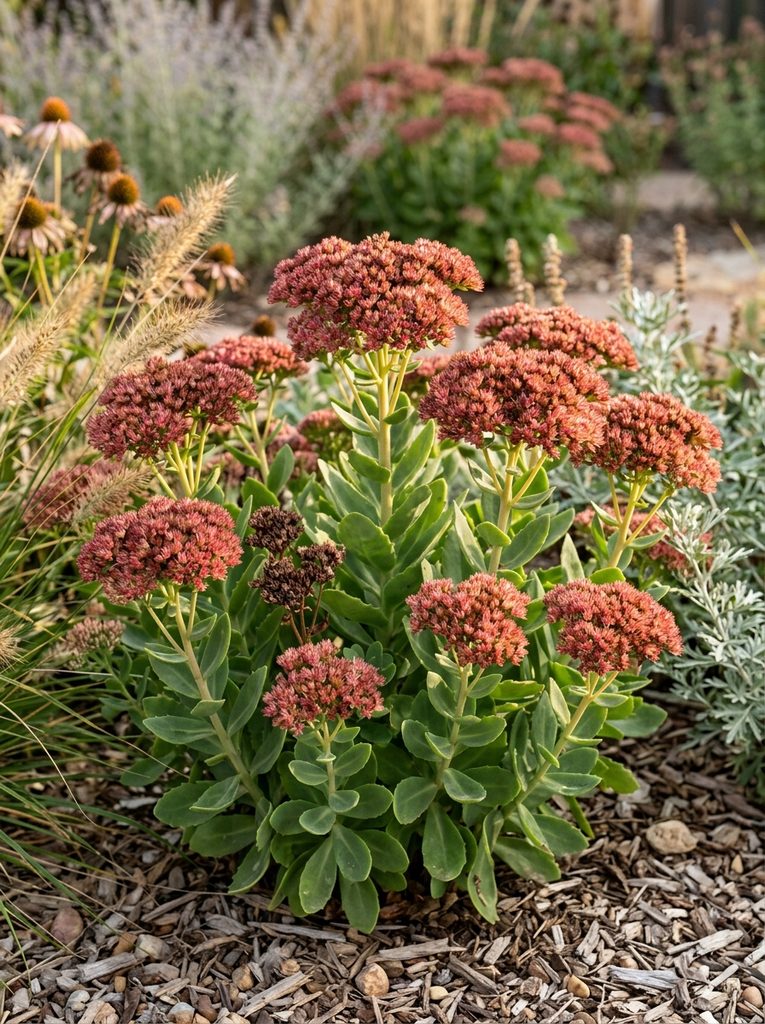
Type: Perennial | Zones: 3 to 9 | Height: 4 to 24 inches depending on variety | Bloom: Late summer to fall
Sedums are succulents adapted for exactly the kind of drought tolerance many gardeners need. Their thick, water-storing leaves allow them to go weeks between rainfall without stress.
Autumn Joy is the classic upright variety with pink flowers aging to rust-red in fall. Angelina is a spreading groundcover sedum with golden-yellow foliage. Dragon’s Blood has burgundy-red foliage and pink flowers.
10. Lantana (Lantana camara)
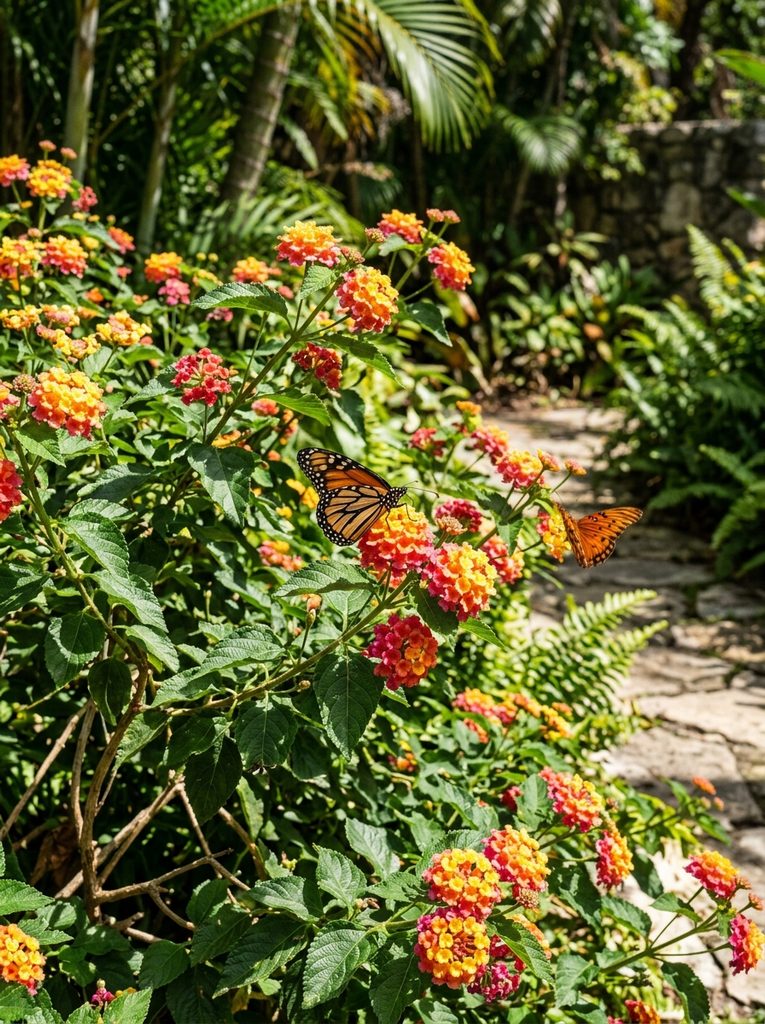
Type: Tender perennial (annual in zones below 9) | Zones: 9 to 11 perennial, annual elsewhere | Height: 18 to 48 inches | Bloom: Late spring through frost
Lantana is a tropical plant that blooms continuously in heat that wilts most other annuals. Once established, it is extraordinarily drought tolerant — happily growing in hot, dry conditions with infrequent watering.
The multicolored flower clusters transition through yellow, orange, red, and pink as individual flowers age, giving each cluster a naturally gradient appearance.
- Note: Invasive in some southeastern US and Hawaiian ecosystems. Check local recommendations before planting in zones 9+.
11. Agastache / Hyssop (Agastache spp.)
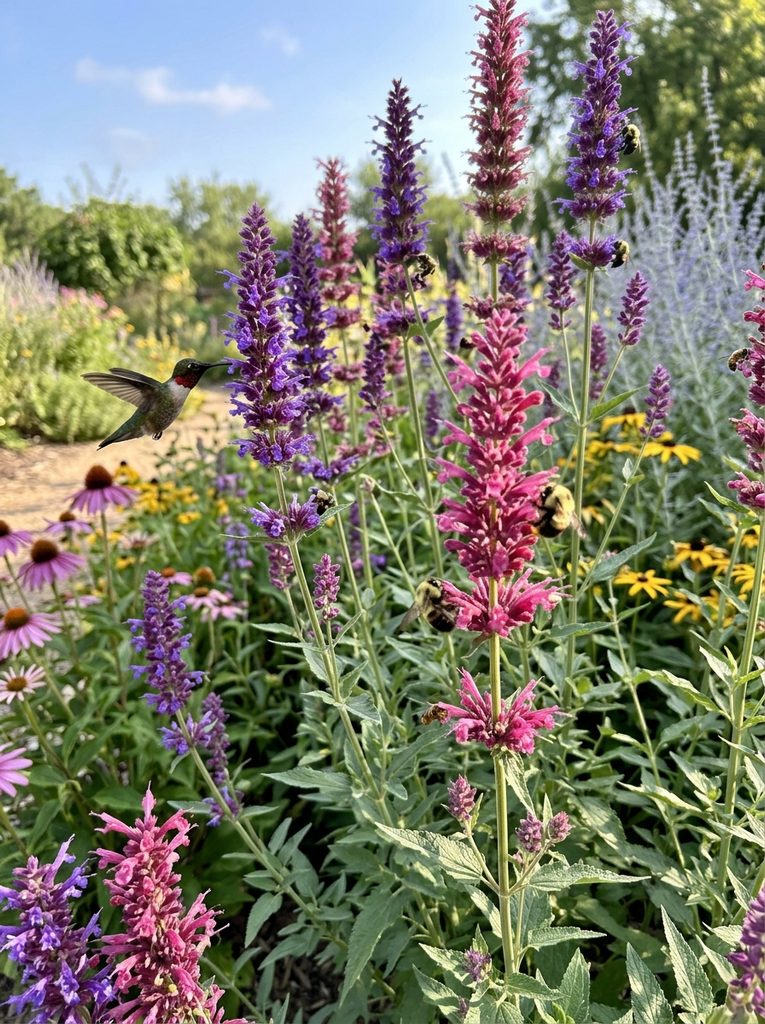
Type: Perennial | Zones: 5 to 10 (varies by species) | Height: 24 to 48 inches | Bloom: July through October
Agastache is rapidly becoming one of the most popular drought-tolerant perennials for good reason: it blooms for months, is loved by hummingbirds and bees, has aromatic foliage, and handles heat and dry conditions with ease.
12. Black-Eyed Susan (Rudbeckia hirta and R. fulgida)

Type: Short-lived perennial/biennial | Zones: 3 to 9 | Height: 18 to 36 inches | Bloom: July through September
Black-eyed Susans are native to North American meadows and prairies — environments defined by dry summer conditions. They self-seed prolifically and can naturalize in garden settings, providing years of nearly maintenance-free color.
13. Verbena (Verbena bonariensis and hybrids)

Type: Tender perennial/annual | Zones: 7 to 11 perennial, annual elsewhere | Height: 18 to 48 inches | Bloom: Summer through frost
Verbena bonds heat and drought tolerance with prolific, long-blooming flowers in red, purple, pink, and white. Verbena bonariensis (tall purple verbena) self-seeds freely and brings valuable height and transparency to garden designs.
14. California Poppy (Eschscholzia californica)
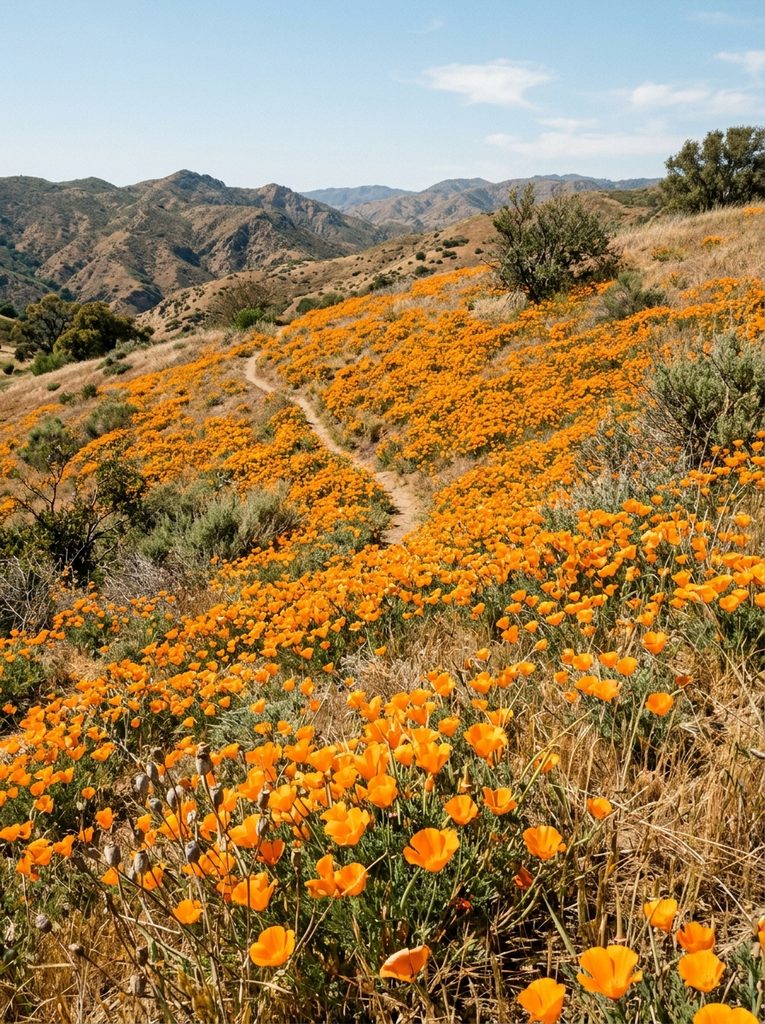
Type: Annual or tender perennial | Zones: All | Height: 12 to 18 inches | Bloom: Spring through summer
California poppies are the definitive drought-adapted annual — native to the dry coastal hills and Central Valley of California where they carpet hillsides in spring after winter rains, then go dormant in summer heat.
Direct sow in fall (in warm climates) or early spring. They resent transplanting but self-seed reliably once established.
15. Allium / Ornamental Onion (Allium spp.)
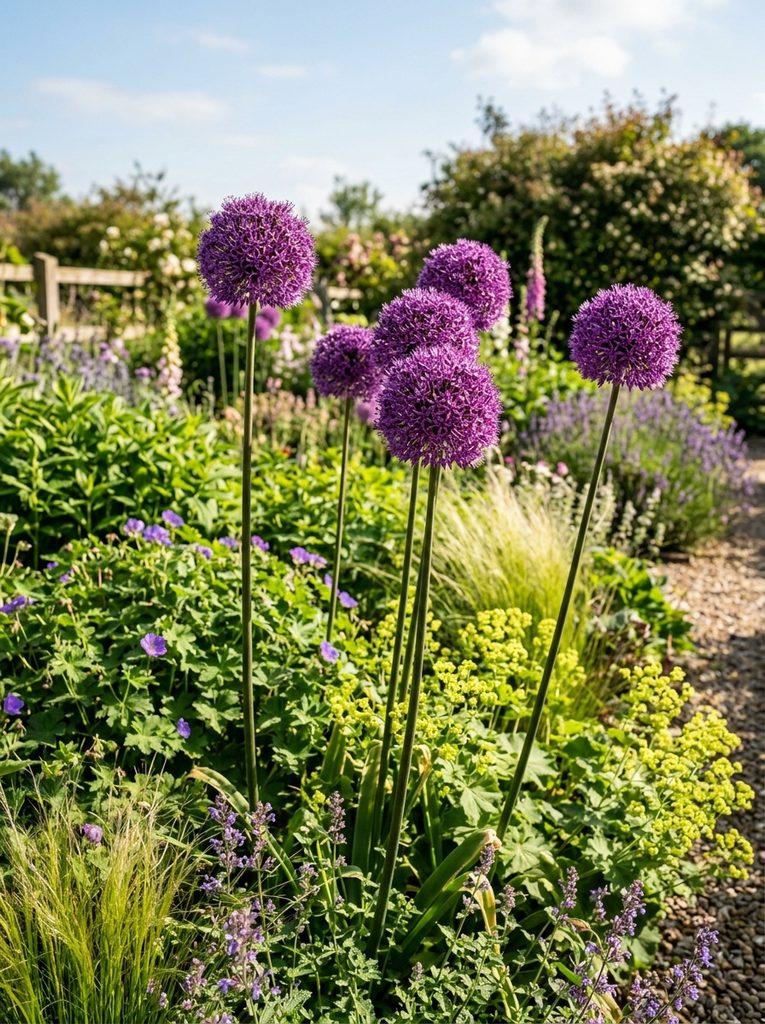
Type: Perennial bulb | Zones: 4 to 9 | Height: 12 to 48 inches | Bloom: May through August depending on variety
Ornamental alliums are among the most architectural and pest-resistant of all drought-tolerant plants. Their perfect spherical flowerheads in purple, white, pink, and yellow are genuinely striking, and the foliage’s onion scent deters deer and rabbits.
Plant bulbs in fall like tulips. Once established, alliums are nearly permanent with no division required.
Establishing Drought-Tolerant Plants Successfully
Even drought-adapted plants need support during establishment. Follow these steps:
- Water consistently for the first 4 to 8 weeks after planting to establish deep root systems.
- Apply 2 to 3 inches of mulch around plants (not touching stems) to retain moisture during establishment.
- After the first full season, gradually reduce watering frequency to encourage deeper root growth.
- Avoid high-nitrogen fertilizers which push soft, water-dependent growth. Lean soil produces tougher, more drought-resistant plants.
✅ Tip The best indicator of drought adaptation is origin. Plants native to Mediterranean climates (lavender, rosemary), western US prairies (echinacea, coneflower, black-eyed Susan), or South African grasslands (agastache relatives) are almost universally drought-tolerant once established. Plant in groups of 3, 5, or 7 odd numbers. Groups look more natural and allow drought-tolerant plants to collectively shade the soil surface around them, reducing evaporation for each other. |
Frequently Asked Questions
What is the most drought-resistant perennial for hot climates?
Lavender, Russian sage, agastache, and yarrow consistently rank as the top performers in hot, dry regions. In the deepest South and desert Southwest, portulaca, blanket flower, and lantana handle conditions that defeat most other flowering plants.
How long before drought-tolerant plants need no supplemental water?
Most drought-tolerant perennials are ready to reduce supplemental watering after their first full growing season (typically 12 to 16 months after planting). Bulb plants like allium and iris typically become drought-tolerant in 2 to 3 years after planting.
Do drought-tolerant plants attract pollinators?
Many of the best drought-tolerant plants are also top pollinator plants: lavender, agastache, echinacea, catmint, and yarrow are all consistently ranked among the highest-value plants for native bees, honeybees, butterflies, and hummingbirds. A drought-tolerant garden is frequently also a pollinator garden.
The Bottom Line
A water-wise garden is not a compromise. It is a different kind of beauty — plants selected for resilience and purpose, that look after themselves, attract wildlife, and bloom magnificently without constant attention.
Plant the right species in the right soil conditions, water through establishment, then step back. The reward is a garden that thrives without you hovering over it — which is exactly what a garden should be.
