

Fresh herbs on your kitchen counter, without soil, without daily watering schedules, without the mess of repotting.
Growing herbs in water is not a gardening trend. It is a technique that gardeners and herbalists have used for centuries to maintain fresh cuttings and propagate new plants.
The key insight is this: most common culinary herbs will not only survive in water, they will actively grow new roots and continue producing fresh leaves for weeks or months. A 4-inch cutting of basil from a grocery store, placed in a glass of water on a sunny windowsill, will develop roots within 5 to 7 days and can be harvested for fresh leaves for months afterward.
Here is exactly how to do it, and which herbs work best.
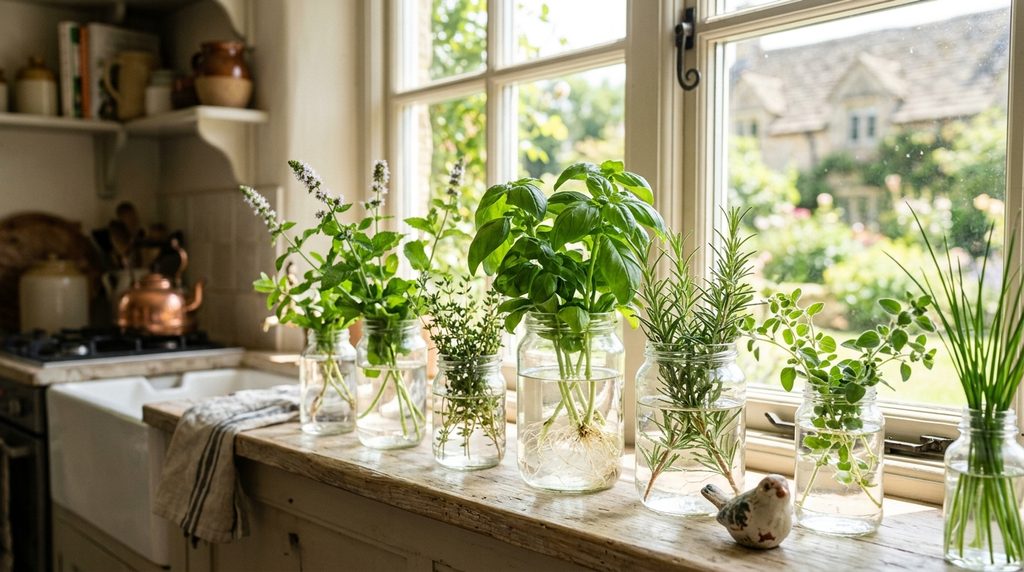
Why Water Growing Works
Plants need water, oxygen, and light for photosynthesis. Soil typically provides the first two, but it is not strictly necessary. Many herbs evolved in moist, well-aerated riparian environments and readily root directly in water when given the chance.
The advantages of water growing:
- No soil, no mess — ideal for kitchen counters, apartments, and small spaces
- No watering schedule — just top off the jar when water drops low
- No soil-borne pests — fungus gnats, spider mites, and many root diseases are soil-dependent
- Visible root development — you can monitor growth progress through a clear jar
- Year-round production — independent of outdoor seasons
- Propagation from grocery store herbs — most fresh-cut herbs from the supermarket will root in water
Setup: What You Need
The setup is genuinely minimal:
- Containers: Glass jars (mason jars, old wine bottles, glass vases) work perfectly. The narrow mouth of most bottles helps support the cutting upright. Darker glass reduces algae growth; wrap clear jars in kraft paper or use a dark-colored container.
- Water: Tap water works in most municipalities. If yours is heavily chlorinated, let it sit in an open container for 24 hours before using, or use filtered water. Avoid distilled water — plants benefit from the trace minerals in tap or spring water.
- Light: A south or west-facing windowsill providing at least 6 hours of light is ideal. In winter, a small LED grow light ($15 to $30 on Amazon) placed 4 to 6 inches above the containers compensates for reduced daylight.
- No fertilizer needed in the first months. If herbs plateau after 6 to 8 weeks, add a few drops of liquid seaweed fertilizer or fish emulsion diluted to half strength.
How to Take Cuttings
- Choose a healthy stem 4 to 6 inches long from an actively growing part of the plant.
- Cut just below a leaf node — the slightly raised point on the stem where leaves attach. This is where roots will form.
- Remove all leaves from the bottom 2 to 3 inches of the cutting. Submerged leaves rot and contaminate the water.
- Place in your container with enough water to cover the bare stem but not the remaining leaves.
- Change the water every 5 to 7 days to prevent bacterial buildup.
- Keep out of direct afternoon sun for the first week while roots develop.
Most herbs root within 1 to 3 weeks. Faster rooters: basil, mint, lemon balm. Slower rooters: rosemary, sage, thyme.
The 10 Best Herbs to Grow in Water
1. Basil
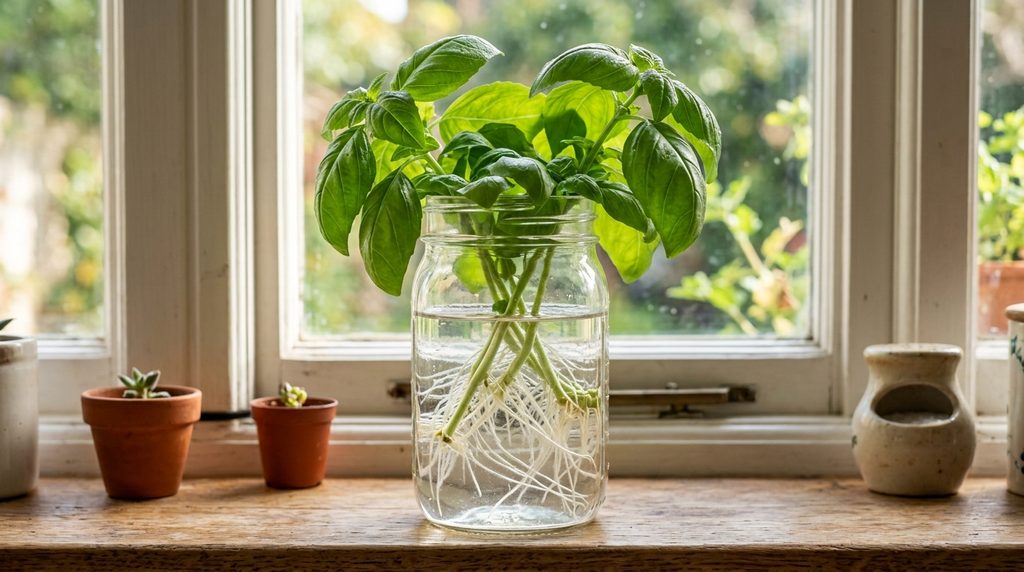
Ease: Very easy | Rooting time: 5 to 10 days | Light: Bright, 6+ hours
Basil is the gateway herb for water growing — fast-rooting, visually satisfying, and immediately useful. A single cutting from a $3 grocery store pot can become a months-long supply of fresh leaves.
Keep basil away from cold windowsills in winter (below 60°F stresses it significantly). Harvest regularly by pinching off the top 2 to 3 leaf pairs, which encourages branching rather than the plant going to seed.
- Culinary uses: Pesto, pasta sauces, caprese salad, pizza, infused oils, Thai dishes
- Best varieties: Genovese (classic), Siam Queen (Thai), Purple Ruffles (decorative)
2. Mint
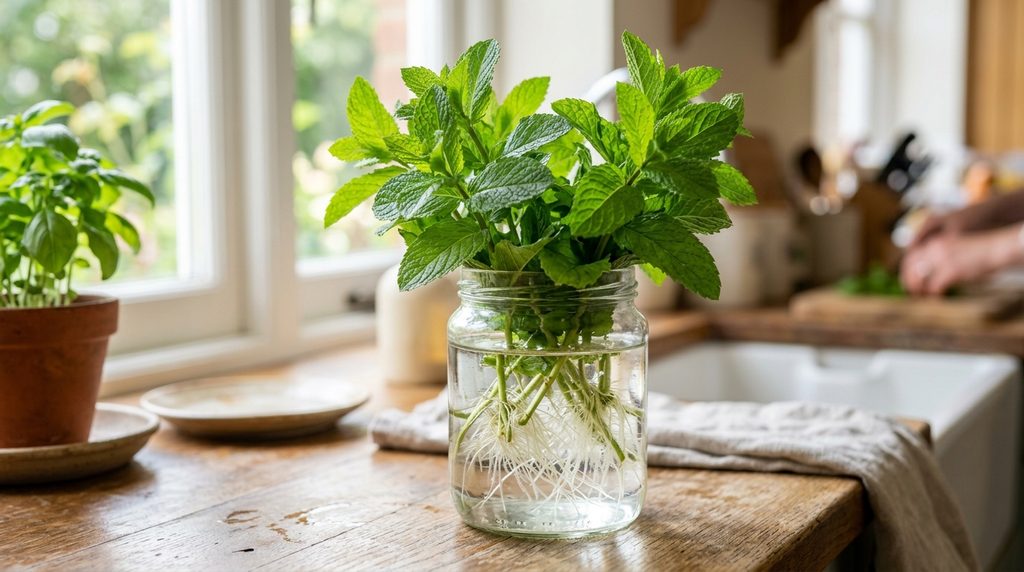
Ease: Effortless | Rooting time: 3 to 5 days | Light: Moderate (4+ hours)
Mint may be the easiest plant to root in water — stems often begin showing white root nubs within 48 hours. It is also one of the most aggressively invasive plants in the garden, which makes containing it in a water jar a genuine advantage.
Mint tolerates lower light than most herbs, making it suitable for north-facing windows or spots away from direct sun.
- Culinary uses: Teas, cocktails (mojitos, mint juleps), desserts, tzatziki, Vietnamese spring rolls
- Varieties: Spearmint, peppermint, chocolate mint, apple mint, Moroccan mint
3. Oregano
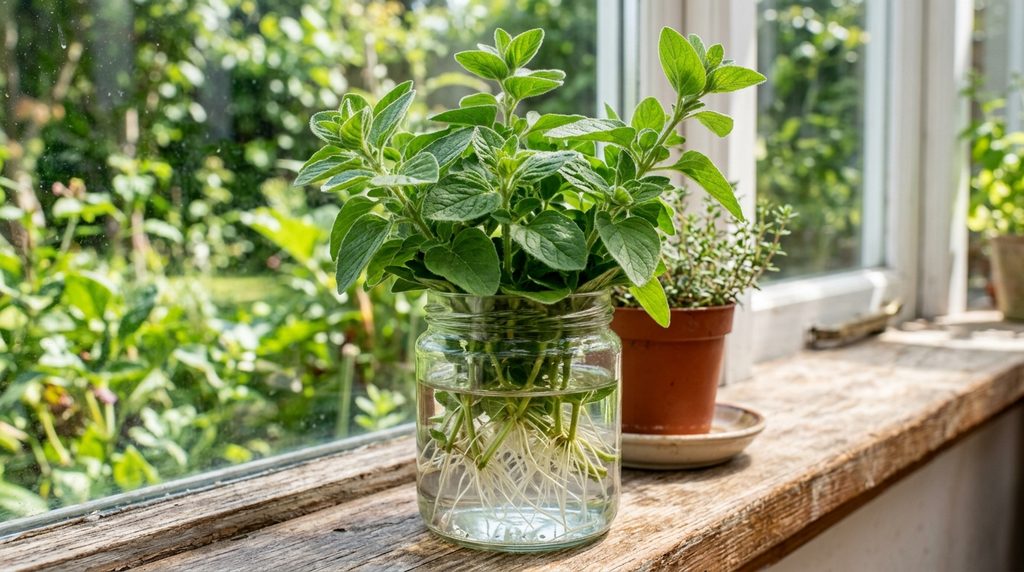
Ease: Easy | Rooting time: 7 to 14 days | Light: Bright, 6+ hours
Oregano roots readily from soft stem cuttings and grows vigorously in water. Use Greek or Italian oregano for the most intense culinary flavor; common oregano is milder.
Harvest by cutting stems back by one-third when they reach 6 to 8 inches long.
- Culinary uses: Pizza, pasta, marinara, Mediterranean roasted meats, Greek salads
4. Rosemary
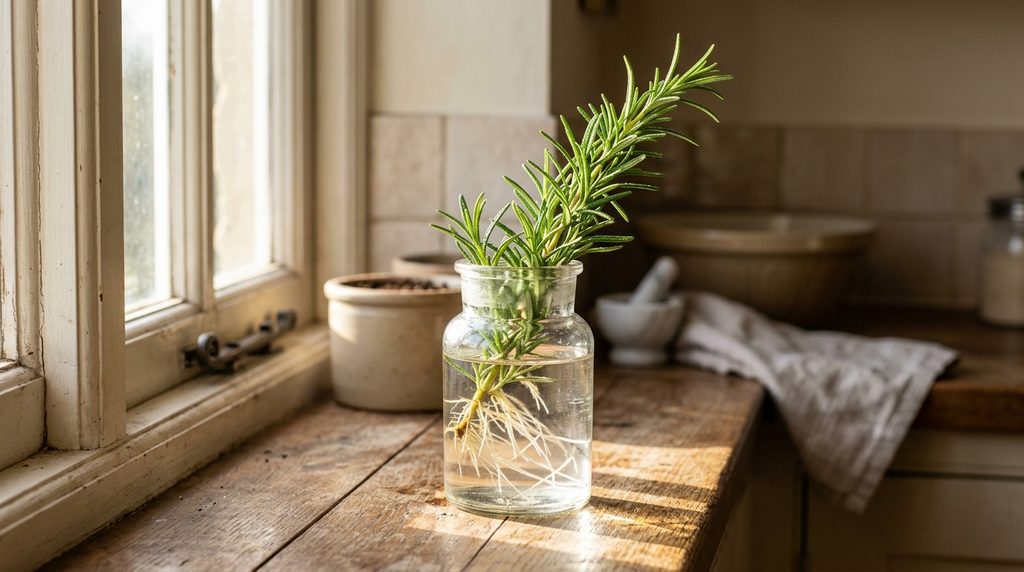
Ease: Moderate | Rooting time: 3 to 6 weeks | Light: Full sun, 6+ hours
Rosemary is the most rewarding but most patient of the water-grown herbs. The thick, semi-woody stems take significantly longer than soft-stemmed herbs to produce roots, but once rooted, rosemary can grow for years in water.
Use only soft green spring cuttings — not woody stems. Dipping in rooting hormone (Bonide Bontone II, $7 at Home Depot) speeds the process. Keep in the sunniest spot available.
- Culinary uses: Roasted meats and vegetables, focaccia, herb-infused olive oil, potatoes
- Important: Full sun is non-negotiable. In low light, rosemary weakens and dies.
5. Thyme
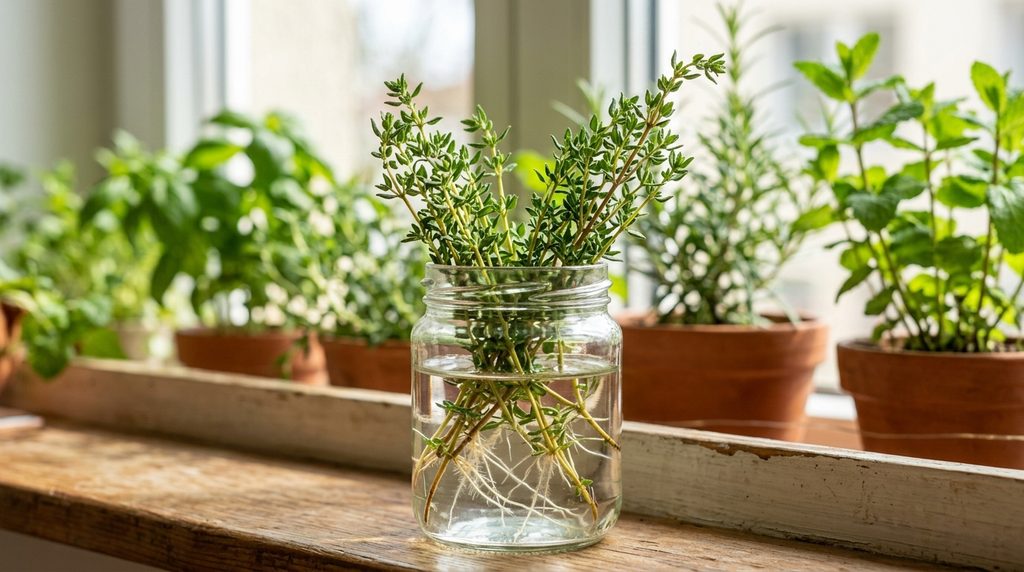
Ease: Easy | Rooting time: 10 to 21 days | Light: Bright, 6+ hours
Take cuttings from the current year’s soft green growth — avoid woody stems which root poorly. Thyme tolerates cooler conditions than most herbs and can maintain adequate growth in windows with 4 to 5 hours of sun in winter.
- Culinary uses: Soups, stews, roasted chicken, compound butters, bread
6. Sage

Ease: Moderate | Rooting time: 14 to 21 days | Light: Bright, 6+ hours, good ventilation
Sage is one of the more challenging herbs to water-grow because it is susceptible to mildew in humid, stagnant conditions. Take soft spring cuttings, keep the jar in a well-ventilated spot with bright light, and change water weekly without fail.
- Culinary uses: Stuffing, pork, butternut squash, brown butter sauce, sage tea
- Traditional use: Sage tea has been used for sore throats and as a natural antimicrobial for centuries
7. Lemon Balm
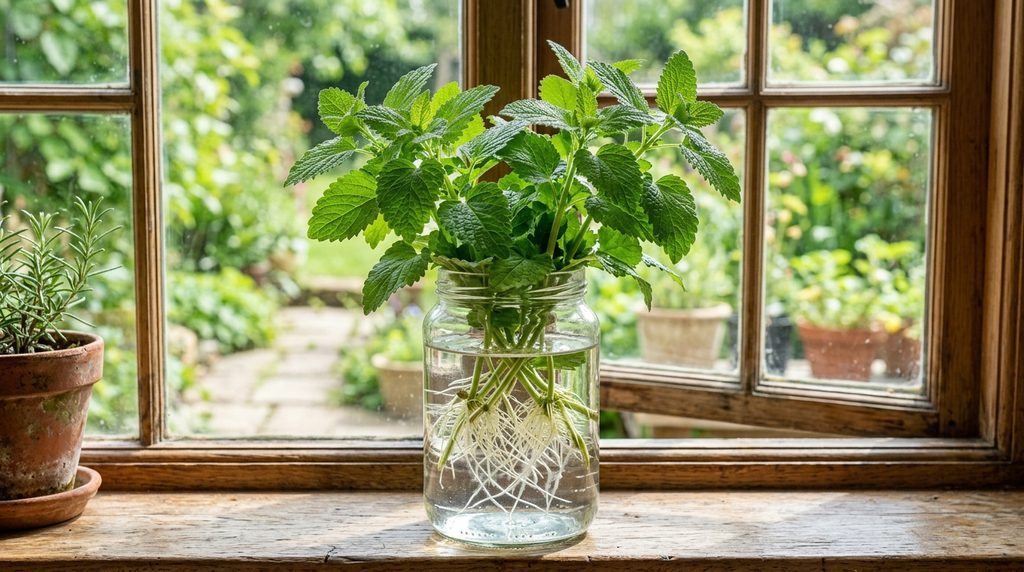
Ease: Very easy | Rooting time: 5 to 10 days | Light: Moderate to bright (4+ hours)
Lemon balm (Melissa officinalis) is a member of the mint family with bright lemon-scented leaves. It roots quickly in water, tolerates moderate light, and regrows rapidly after harvesting.
Research published in Phytotherapy Research suggests lemon balm has mild anxiolytic (anti-anxiety) properties when consumed as tea.
- Culinary uses: Herbal teas, infused water, lemonade, fruit salads, honey
8. Stevia
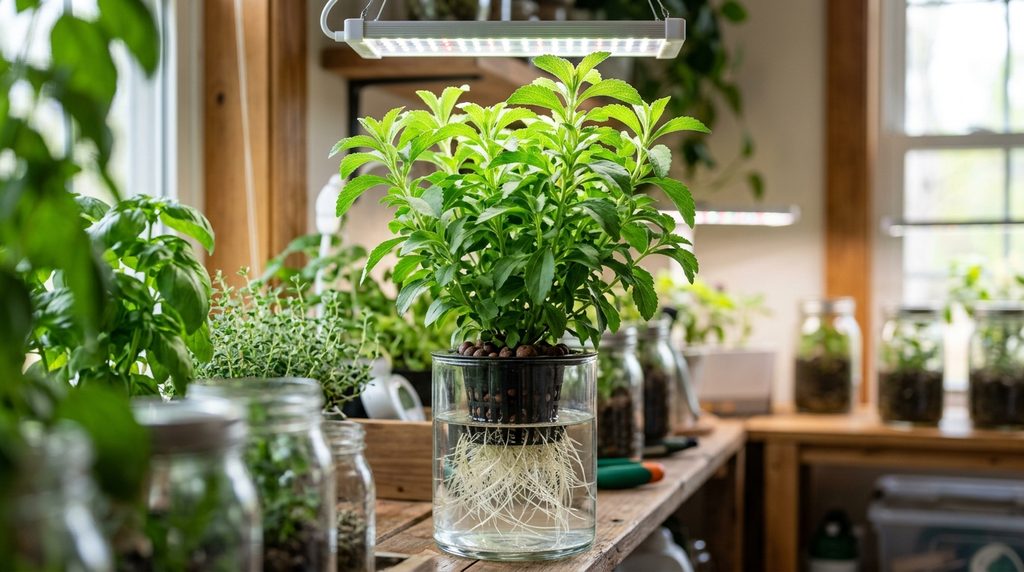
Ease: Easy | Rooting time: 7 to 14 days | Light: Bright, 6+ hours
Stevia (Stevia rebaudiana) is the natural sweetener plant whose leaves are 200 to 300 times sweeter than sugar with essentially no calories. Growing it at home from water-rooted cuttings provides a fresh supply of leaves to add to teas and beverages.
Start from cuttings of actively growing shoots in spring or summer. Stevia struggles in winter low light — supplement with a grow light.
- Use: Add 2 to 3 fresh leaves to a cup of herbal tea instead of sugar
9. Tarragon (French)
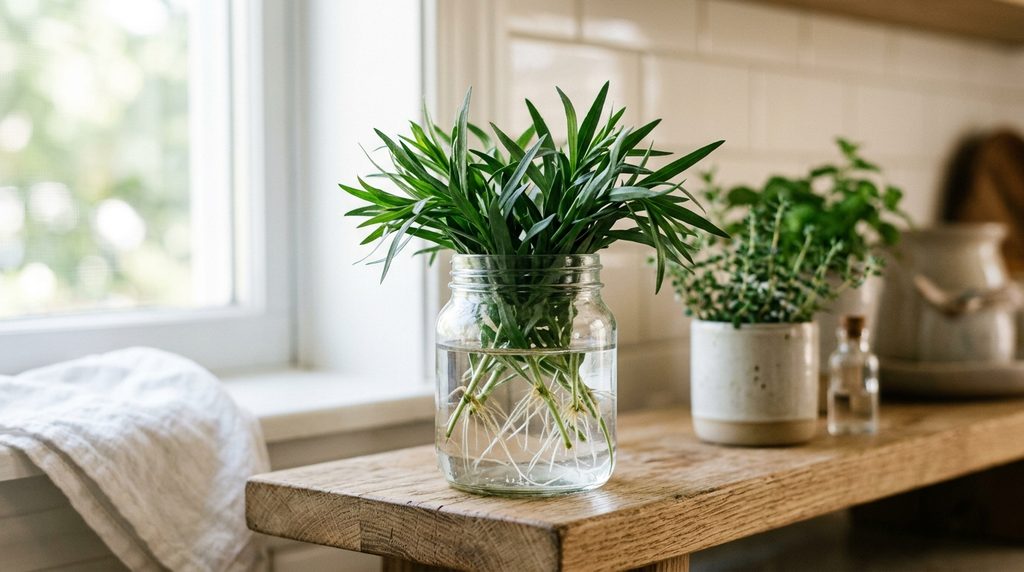
Ease: Moderate | Rooting time: 10 to 21 days | Light: Bright, 6+ hours
Note: Grow French tarragon (Artemisia dracunculus var. sativa), not Russian tarragon, which has little culinary flavor. French tarragon is not grown from seed — it is propagated only by division or cuttings, making water propagation the ideal method.
The flavor is distinctively anise-like and forms the base of classic French sauces including bearnaise and sauce verte.
- Culinary uses: Bearnaise sauce, fines herbes, chicken and egg dishes, French vinaigrette
10. Chives
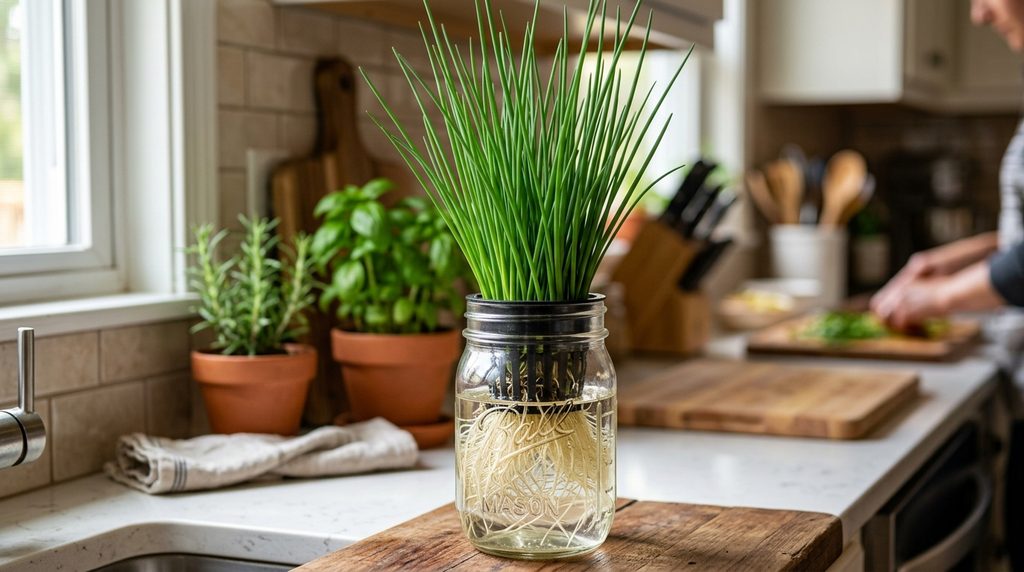
Ease: Easy | Method: Division or seed | Light: Moderate (4+ hours)
Chives are typically grown from seed or division rather than stem cuttings, but they thrive in water once established. Plant a small clump from a pot into a wider container of water — the bulb base sits in the water while the green tops grow upward.
Harvest by snipping the green tops to 1 inch above the water line. Regrowth is rapid and continuous.
- Culinary uses: Baked potatoes, scrambled eggs, cream cheese, garnishes, dumplings
Troubleshooting Common Problems
Algae Growing in the Water
Green slime in the jar is harmless algae feeding on light and nutrients in the water. Switch to a dark or opaque container, or wrap your clear jar with paper or burlap. Change water more frequently.
Stems Rotting at the Base
Usually caused by leaves submerged in the water. Remove all leaves below the waterline. Change water and trim the stem end with clean scissors before returning to fresh water.
No Roots After 3 Weeks
Check that you are using soft, non-woody stem tips. Try adding a small amount of willow water (soak willow branches in water overnight) or rooting hormone to stimulate root development.
✅ Tip You can often start water-herb gardens directly from grocery store herbs. Look for bunches with the stems intact. Immediately place them in water and they will frequently root — basil, mint, and cilantro are particularly reliable from supermarket bunches. Label each jar with the herb name and the date cuttings were placed in water. This makes it easy to track rooting time and replace batches that plateau. |
Frequently Asked Questions
How long do water-grown herbs last?
Indefinitely, if the water is changed regularly and they receive adequate light. Some gardeners maintain water-rooted mint and basil for 2 to 3 years before the plants become too large or leggy and need refreshing with new cuttings.
Can I use the same water for all herbs?
It is better to keep each herb in its own container to prevent cross-contamination in the event of bacterial or fungal issues. It also makes it easier to monitor and change water for specific plants.
Do I need to use liquid fertilizer?
Not initially. For the first 6 to 8 weeks, herbs grow on stored energy and any trace minerals in tap water. If growth slows significantly, add a small amount of half-strength liquid seaweed fertilizer or fish emulsion (like Neptune’s Harvest, $15 at Amazon) every 2 to 3 weeks.
The Bottom Line
A water herb garden on your kitchen counter is one of the lowest-barrier, highest-reward gardening projects available.
No soil. No mess. No complicated setup. Just a few glass jars, some fresh cuttings, and a sunny windowsill — and you will never run out of fresh basil for pasta again.
Start with basil and mint this week. Add rosemary, lemon balm, and chives over the following month. By the time winter arrives, you will have a thriving, fragrant herb collection that produces through every cold month until spring.
