
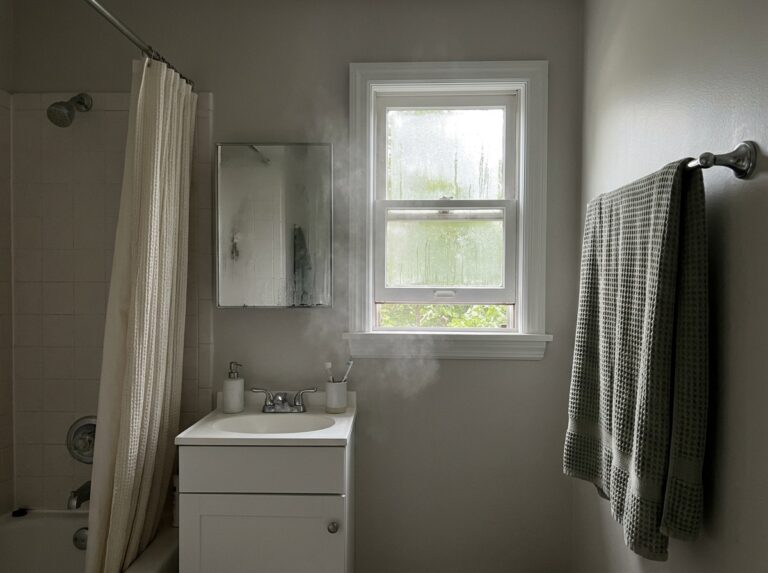
A stagnant or musty smell in the bathroom is one of the most common household complaints. The smell is usually persistent and seems to resist cleaning. That is because cleaning the visible surfaces does not fix the actual source of the odor.
This guide covers every cause of a stagnant bathroom smell in order from most to least common. Work through them in order. Most bathrooms have just one or two causes, and each one has a clear fix.
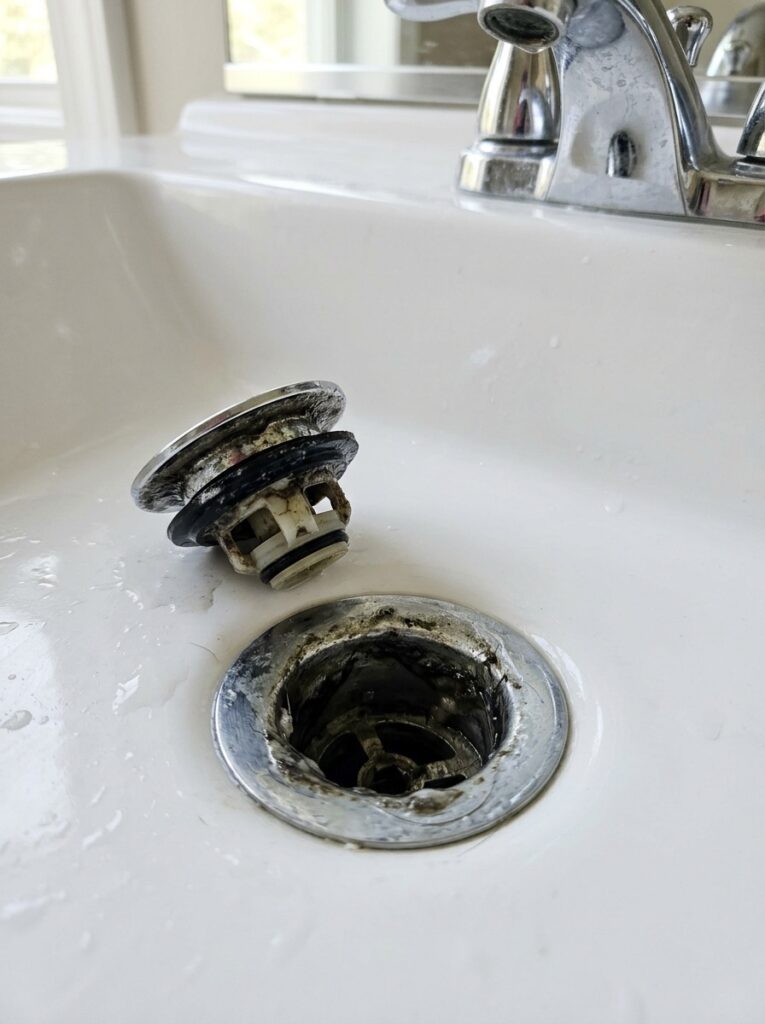
Table of Contents
Cause 1: Mold and Mildew on Surfaces
Mold and mildew produce a strong, distinctive musty smell. Bathrooms are high-humidity environments, and mold can form on any surface that stays damp. The most common locations are grout lines and caulk in the shower and around the tub, the underside and folds of the shower curtain, the bath mat, the bottom edge of walls near the floor, the ceiling, and the back of the toilet near the floor.
How to fix it:
- Spray all moldy surfaces with a mold-killing spray. Good US options include Tilex Mold and Mildew Remover (available at Walmart), Clorox Tilex Shower, or a 1:1 mix of white vinegar and water for a non-bleach option.
- Leave for 10 to 15 minutes.
- Scrub with a stiff brush, paying extra attention to grout lines, caulk, and folds in the curtain.
- Rinse and dry.
- Machine wash the bath mat and shower curtain.
After cleaning, fix the ventilation problem that allowed the mold to form. Run the exhaust fan during every shower and for 15 minutes after. If your bathroom has no exhaust fan, open the window immediately after showering and use a squeegee on the walls and glass.
Cause 2: Clogged or Slow Drains
A partial clog in the shower or sink drain is one of the most common sources of bathroom smell. Water drains slowly, sits in contact with hair, soap scum, and bacteria, and becomes stagnant. The bacteria and decomposing organic matter produce hydrogen sulfide gas, which smells like rotten eggs or sewage.
You will usually notice this smell more strongly when water is draining or just after someone showers.
How to fix it:
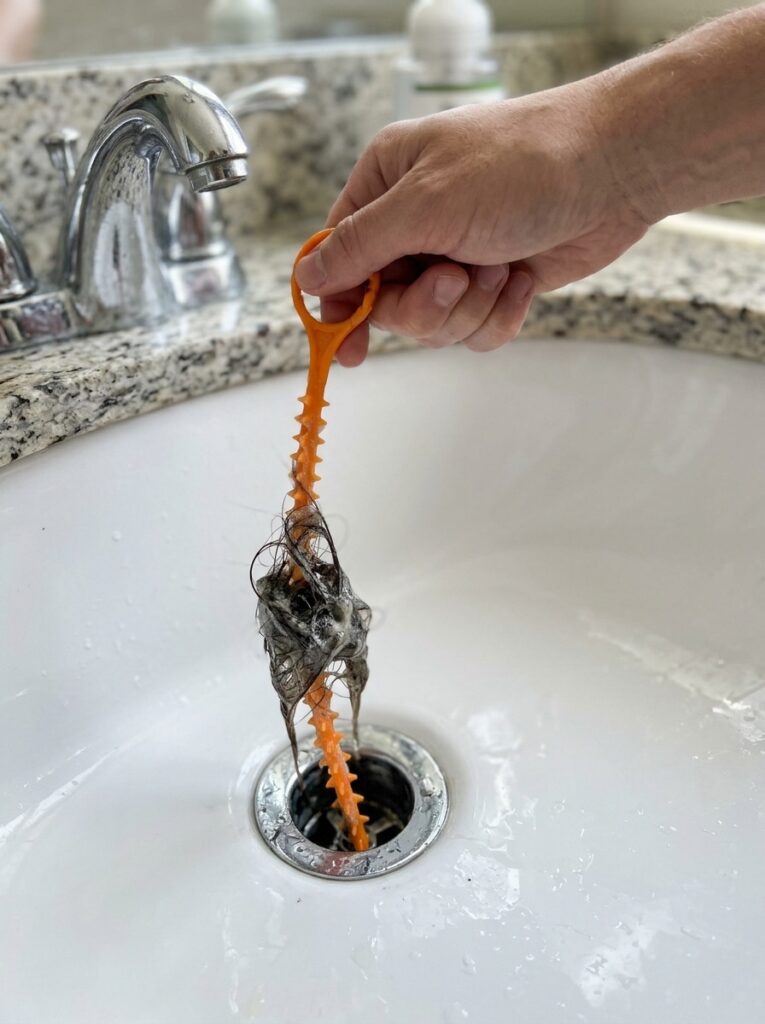
- Remove the drain cover and use a plastic hair catcher tool or Zip-It drain cleaning tool (available at hardware stores) to pull out any hair and debris. This alone fixes most partial clogs.
- Pour 1/2 cup of baking soda into the drain. Follow immediately with 1/2 cup of white vinegar. Cover the drain and let the fizzing reaction work for 10 minutes.
- Flush with a full kettle of very hot water.
- For stubborn clogs, use a gel drain cleaner like Drano Max Gel (available at Walmart and Target). Pour in the recommended amount, leave for 30 minutes, and flush with hot water.
Tip: Install a TubShroom or SinkShroom drain hair catcher (available on Amazon). These sit inside the drain opening and catch hair before it enters the pipe, preventing future buildup. Empty them weekly.
Cause 3: A Dry P-Trap
A P-trap is the curved section of pipe beneath every drain. It holds a small amount of water at all times. That standing water creates a seal that blocks sewer gases from rising through the drain into the bathroom. When the P-trap dries out, sewer gas comes straight up through the drain. You will notice a strong sewage or rotten egg smell that does not go away with cleaning.
This is the most common cause of smell in bathrooms that are not used regularly, guest bathrooms, basement bathrooms, or vacation properties.
How to fix it:
Run water in every sink, shower, and tub drain for at least 30 seconds. This refills the P-trap. The smell should disappear within a few hours. For bathrooms that sit unused for weeks or months at a time, pour a cup of water down every drain weekly, or pour a tablespoon of cooking oil into each drain. The oil sits on top of the water and slows evaporation.
Cause 4: Mold or Biofilm Inside the Drain Pipes
Even if the drain is not clogged, a layer of biofilm can build up on the inside walls of the pipe just below the drain cover. Biofilm is a slimy layer of bacteria, soap scum, and body oils that coats the pipe and releases a musty, drains smell continuously.
Signs of this cause include a constant low-level smell that is strongest at the drain itself, and a slimy feeling on the inside of the drain when you touch it.
How to fix it:
- Pour 1 cup of baking soda down the drain.
- Follow with 1 cup of white vinegar. Cover the drain for 10 minutes.
- Flush with boiling water from a kettle.
- For persistent biofilm, pour 1/2 cup of diluted bleach (1 part bleach, 3 parts water) down the drain and leave for 30 minutes before flushing. This kills the bacteria in the biofilm.
Repeat once a month to prevent biofilm from rebuilding. A TubShroom or drain cover also helps by reducing the amount of organic material entering the pipe.
Cause 5: Leaking Pipes
A slow leak behind the wall, under the floor, or beneath the tub or shower tray creates standing water in an enclosed, dark space. That water quickly becomes stagnant and grows mold. The smell comes from the mold and the stagnant water together, and no amount of surface cleaning will fix it.
Signs of a leak-related smell include a musty smell that is worse in one specific area of the bathroom, water staining or discoloration on walls or the ceiling below the bathroom, soft or spongy flooring near the toilet, tub, or shower, and a smell that persists even after thorough cleaning.
How to fix it:
A leaking pipe behind a wall or under a floor requires a plumber. Do not delay. A slow leak that is ignored will cause structural damage, mold growth in the wall cavity, and a much larger repair bill over time. A plumber can diagnose the leak using a camera inspection and repair it without major demolition in most cases. A plumbing repair call is far less disruptive than mold remediation or floor replacement.
Cause 6: Poor Ventilation and Residual Moisture
Even without mold or drain issues, a bathroom with poor ventilation will smell musty. Steam from showers adds a large amount of moisture to the air. If that moisture has nowhere to go, it settles on every surface, keeps the bathroom persistently damp, and creates a stale, humid smell.
How to fix it:
- Run the exhaust fan during every shower and for at least 15 minutes after. If your exhaust fan is old or weak, it may not be moving enough air. A standard bathroom exhaust fan should move at least 1 CFM per square foot of bathroom area. A 60-square-foot bathroom needs at least a 60 CFM fan.
- If there is no exhaust fan, open the window during and after showering.
- Use a squeegee on the walls and door after every shower to remove standing water from surfaces.
- Leave the bathroom door open after showering to allow air exchange with the rest of the home.
- Consider a small bathroom dehumidifier like the Pro Breeze Electric Mini Dehumidifier (available on Amazon) for bathrooms with chronic humidity problems.
Cause 7: Dirty Grout and Toilet Base
Grout between floor tiles and the base of the toilet collect urine, soap residue, and water over time. Even a small amount of trapped urine under the toilet base or in floor grout produces a persistent stale smell that is not resolved by wiping visible surfaces.
How to fix it:
- Scrub floor grout with a stiff grout brush and an oxygen bleach cleaner like OxiClean Powder mixed with warm water. Leave for 5 minutes and scrub again before rinsing.
- Check the seal around the base of the toilet. If the caulk or wax ring seal is cracked or missing, urine seeps underneath during use. Re-caulk around the toilet base with a bathroom-grade silicone caulk like GE Silicone 2+. If the wax ring itself is compromised, a plumber needs to reset the toilet.
- Use a toilet-specific enzyme cleaner like Unique Super Digest-It (available on Amazon) on the floor around the toilet base. Enzyme cleaners break down uric acid deposits that regular cleaners miss.
A Checklist Approach: Working Through the Causes
If you cannot immediately identify where the smell is coming from, work through this checklist in order:
- Check all surfaces for visible mold, including the ceiling, curtain, caulk lines, bath mat, and behind the toilet.
- Run water in every drain for 30 seconds to refill P-traps.
- Pull hair and debris from every drain using a removal tool.
- Treat all drains with a baking soda and vinegar flush.
- Check for soft flooring, staining, or discoloration that could indicate a hidden leak.
- Assess ventilation: is there an exhaust fan, does it work properly, is it used consistently?
- Scrub floor grout and check the toilet base seal.
The EPA explains how indoor moisture leads to mold in its brief guide to mold, moisture and your home.
Related Guides
- How to Clean Mould Off Walls (and Stop It Coming Back)
- How to Clean a Shower Tray with Baking Soda (And What to Do for Tough Stains)
- Pink Mold in Shower: What It Is, How to Remove It, and How to Stop It Coming Back
Frequently Asked Questions
Why does my bathroom smell even though it looks clean?
Bathroom smell rarely comes from the surfaces you can see. The most common hidden sources are biofilm inside drain pipes, a dry P-trap, mold inside wall cavities from a slow leak, blocked jets in the drain, and cracks in the toilet wax ring seal. Clean-looking bathrooms can have any of these problems. Work through the checklist above to find the specific cause.
What is the fastest way to get rid of a musty bathroom smell?
Run water in every drain to refill P-traps, flush all drains with baking soda and vinegar, and spray visible mold with a mold killer. These three steps fix the most common causes within a few hours. For a faster temporary improvement while you diagnose the real cause, place a bowl of baking soda on the bathroom counter. It absorbs odors from the air passively.
Why does my bathroom smell like sewage after it rains?
Rain can cause air pressure changes in the sewer system that push sewer gas upward through drain traps. If your P-traps are already low on water or partially dried out, rain-driven pressure surges can push gas past them into the bathroom. Refill all P-traps by running water in every drain. If the problem recurs after rain, your plumbing vent pipe on the roof may be blocked by leaves or a bird nest. A plumber can clear this quickly.
Can a bathroom smell be coming from the walls?
Yes. Mold growing inside a wall cavity behind the shower, bathtub, or sink is a common source of persistent musty smell. You typically cannot see this mold from inside the bathroom. Signs include a musty smell that intensifies in warm or humid weather, discoloration or bubbling paint on the wall surface, or soft spots in drywall. This requires professional mold remediation if the affected area is larger than 10 square feet.
How do I stop my bathroom from smelling musty long-term?
Long-term prevention comes down to three habits: running the exhaust fan during and after every shower, wiping down wet surfaces or squeegeeing the shower after each use, and flushing all drains once a month with a baking soda and vinegar treatment. Add a monthly mold check of grout, caulk, and the bath mat. These steps address every root cause and keep bathrooms consistently fresh.
