
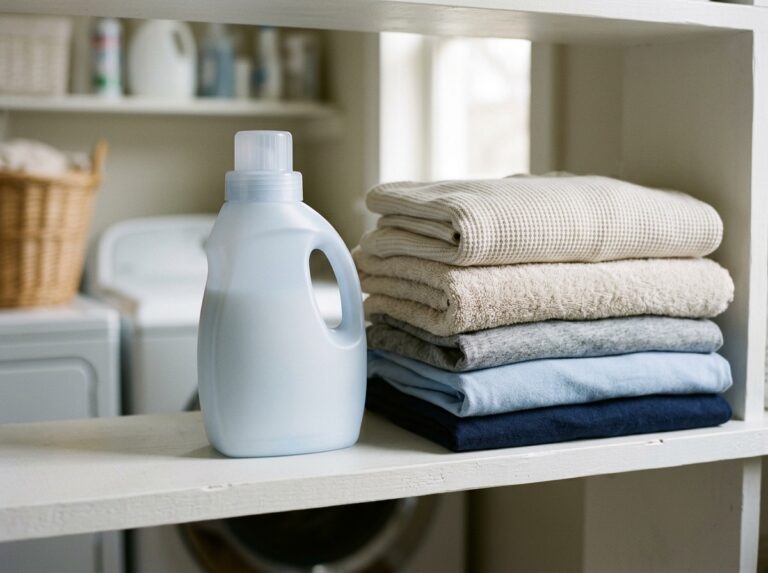
Fabric conditioner is one of those laundry products almost everyone uses but few people actually use correctly. Too much in the wrong compartment, on the wrong fabrics, or at the wrong time in the cycle, and you can end up with stiff, streaky, or less-clean clothes instead of soft, fresh-smelling ones.
This guide covers exactly how fabric conditioner works, where it goes in both front-load and top-load machines, how to use it when handwashing, what to never put it on, and how to fix common problems.
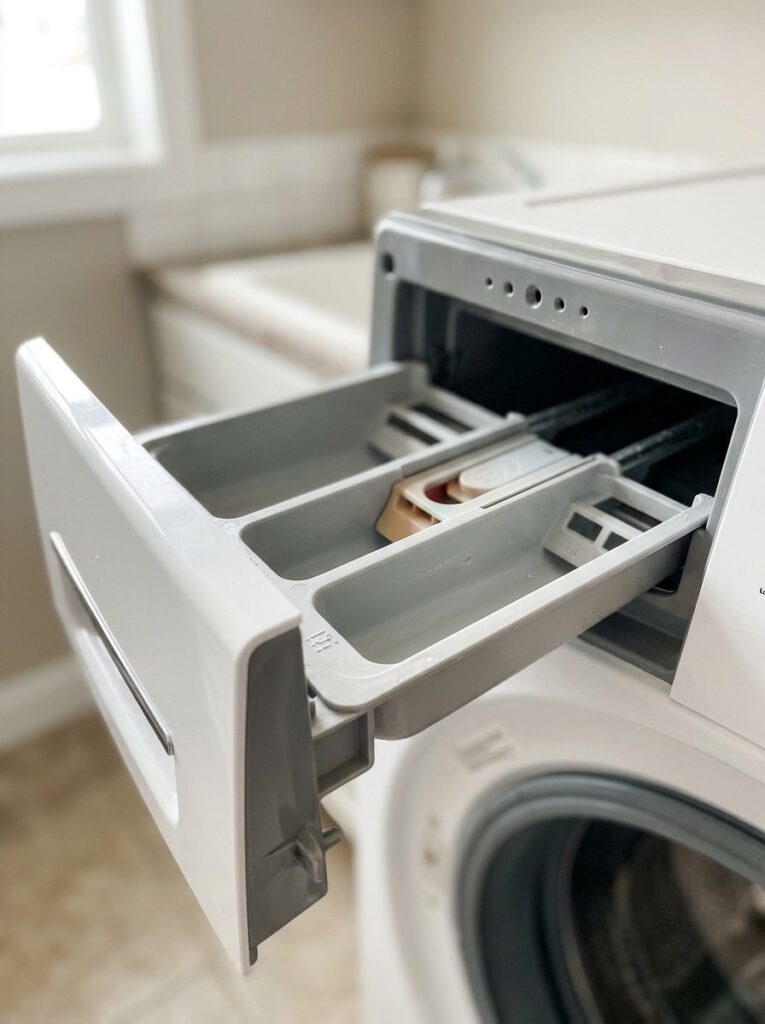
Table of Contents
What Does Fabric Conditioner Actually Do?
Fabric conditioner (also called fabric softener. They are the same product) works like a conditioner for your hair. It coats the individual fibers of the fabric with a thin, lubricating layer of positively charged chemicals called quaternary ammonium compounds, or ‘quats.’
This coating:
- Reduces friction between fibers, making fabric feel softer and smoother
- Reduces static buildup, especially in synthetic fabrics after tumble drying
- Helps fibers release moisture more easily in subsequent washes (to a degree)
- Adds scent that clings to the fabric coating
- Slightly reduces wrinkling by lubricating fibers so they bounce back more easily
Importantly, fabric conditioner is released into the drum during the final rinse cycle, after detergent has already done its cleaning work. This timing is critical and is why it must go in the correct compartment.
Where to Put Fabric Conditioner in a Front-Load Washing Machine
Front-load washers have a pull-out dispenser drawer with three compartments. The function of each:
- Compartment I (or 1): Pre-wash detergent, only used if you select a pre-wash cycle
- Compartment II (or 2, or the largest compartment): Main wash detergent
- Compartment III (or III, or the compartment marked with a flower or asterisk symbol): Fabric conditioner
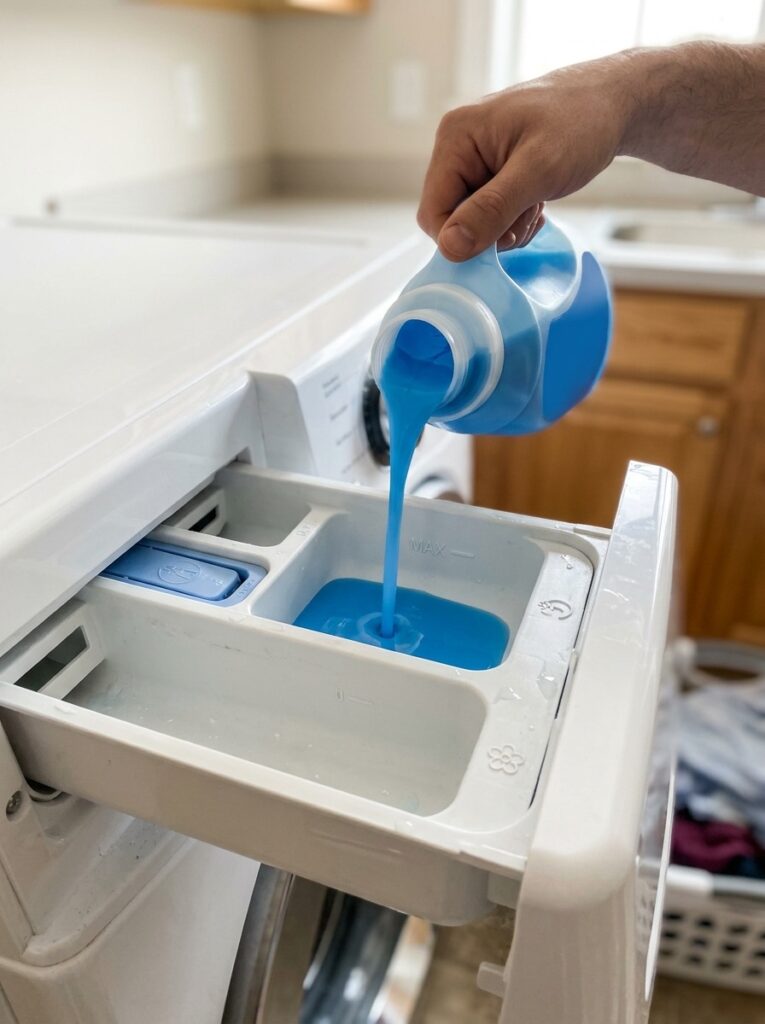
Pour your fabric conditioner into the flower/star compartment before starting the wash. Do not fill above the MAX line. Overfilling causes excess conditioner to get flushed into the drum at the wrong time, which can leave greasy residue on clothes.
💡 Tip: If you cannot identify the compartments, check the inside of the drawer for molded symbols, or look up your machine model number + ‘drawer compartments’ online. Every major brand uses the flower symbol for softener, but positioning varies.
Where to Put Fabric Conditioner in a Top-Load Washing Machine
Top-loading machines vary:
Top-loader with a built-in fabric softener dispenser
Many top-loaders have a small dispensing cup or compartment in the center agitator column or near the drum rim. Fill this before starting the wash. The machine automatically releases the softener at the correct rinse cycle stage.
Top-loader without a built-in dispenser
You will need to add the fabric conditioner manually during the rinse cycle. Watch the machine and add it when the drum is filling with fresh rinse water, not during the wash cycle, and not after the water drains.
A more convenient alternative: use a Downy Ball dispenser. This is a plastic ball you fill with fabric softener and drop into the drum before the wash. Centrifugal force causes it to open automatically during the spin/rinse cycle, releasing the softener at the right time without you having to monitor the machine.
How Much Fabric Conditioner Should You Use?
Always start with the manufacturer’s recommended dose printed on the bottle. This varies by product concentration and load size. As a general rule:
- Standard loads: 1 bottle cap (approximately 2 to 3 tablespoons) for most liquid conditioners
- Large loads or heavy items: up to 1.5 caps
- HE (High Efficiency) washers: use the smaller dose line, HE machines use much less water, so standard doses are too concentrated
⚠️ Warning: More is not better with fabric conditioner. Using too much causes a waxy buildup on fibers over time, which actually makes fabric feel stiff and reduces absorbency in towels. If your towels have become scratchy and water-repellent, over-conditioning may be the cause.
How to Use Fabric Conditioner When Hand-Washing
Fabric conditioner works well when hand-washing too. Here is how:
- Wash garments in warm water with your regular detergent as normal
- Drain the soapy water and rinse thoroughly
- Fill the basin with fresh clean water
- Mix 1 tablespoon of fabric conditioner with a cup of warm water, then add to the basin
- Submerge garments and gently agitate for 2 to 3 minutes
- Soak for 5 to 10 minutes
- Gently squeeze out excess water: do not wring
- Dry as usual
Never pour concentrated fabric conditioner directly onto a garment. Always dilute it first to avoid staining.
What to Never Use Fabric Conditioner On
Not all fabrics and items benefit from fabric conditioner. Some are actively harmed by it. Avoid using fabric conditioner on:
Towels
Towels should absorb water efficiently. Fabric conditioner coats the cotton fibers, reducing their ability to wick moisture. Over-conditioning turns towels into glorified squeegees. If you want soft towels, use 1/2 cup of white vinegar in the rinse cycle instead. It naturally softens fibers without coating them.
If you do use conditioner on towels, skip it every other wash at minimum.
Wool and Cashmere
Fabric conditioner can coat and flatten the delicate scales of wool and cashmere fibers, potentially causing bobbling, pilling, or felting over time. Use a specialist wool wash like Woolite or The Laundress Wool & Cashmere Shampoo instead.
Silk
Silk fibers have a natural protein coating called sericin. Fabric conditioner can interfere with this coating and alter the texture and sheen of the fabric over time.
Sportswear and Athletic Fabrics
Moisture-wicking performance fabrics rely on open fiber structures to move sweat away from the body. Fabric conditioner clogs these structures, making your expensive running gear or gym clothes significantly less effective. Use a sport-specific detergent like Hex Performance or Tide Sport instead.
Waterproof and DWR-Coated Outerwear
Jackets, rain gear, and waterproof hiking clothing treated with DWR (Durable Water Repellent) coatings will lose their water-repellent properties if conditioned. Wash these items with a technical wash like Nikwax Tech Wash and re-treat with a DWR spray or wash-in reproofer.
Flame-Resistant Children’s Clothing
Flame-resistant sleepwear and safety clothing contain chemical treatments that fabric conditioner can degrade. Always check the label: many flame-resistant items specify clearly: do not use fabric softener.
Microfiber Cloths
Microfiber cleaning cloths rely on millions of tiny split fibers to trap dust and bacteria. Fabric conditioner fills in these splits, turning a highly effective cleaning cloth into a regular cloth.
Common Fabric Conditioner Problems and Fixes
Greasy or oily spots on clothes after washing
This is undiluted fabric conditioner making contact with fabric before the rinse cycle. Causes: overfilling the compartment, pouring conditioner into the wrong compartment, or using a conditioner that is too thick for your machine.
Fix: Use slightly less conditioner, make sure it is in the correct compartment, and try diluting very thick conditioners with a little water before adding. Run the affected garments through a plain water rinse cycle.
Conditioner is not being released (remains in the drawer after the wash)
Causes: the dispenser drawer is blocked with old, dried conditioner buildup; the conditioner is too thick; or the machine did not complete the rinse cycle properly.
Fix: Remove and clean the dispenser drawer thoroughly under hot running water, the conditioner compartment especially tends to accumulate a white or yellow residue. If the conditioner is very thick, dilute it with an equal part of warm water before adding to the drawer.
Clothes smell like the conditioner scent fades quickly
Fabric conditioner scent is designed to adhere to the coating it creates on fibers. If clothes aren’t smelling as fresh as expected, try using slightly more conditioner, ensure the machine is completing the full rinse cycle, or switch to a different brand. Scent-boosting beads like Downy Unstopables or Gain Fireworks added to the drum (not the dispenser) provide longer-lasting fragrance.
Fabric Conditioner vs. Dryer Sheets: What Is the Difference?
Dryer sheets like Bounce or Snuggle are the dryer equivalent of liquid fabric conditioner. They contain similar conditioning compounds in a solid form that transfer to clothes during the drying cycle through heat and contact.
Dryer sheets are especially effective at reducing static electricity. Liquid fabric conditioner is more effective at softening fibers during the wash itself. For best results, use both: liquid conditioner in the wash, dryer sheet in the dryer.
The same restrictions apply to dryer sheets. Do not use on towels, athletic wear, or flame-resistant clothing.
How to Store Fabric Conditioner
Store fabric conditioner at room temperature, away from direct sunlight. Under the kitchen or laundry sink is ideal. Avoid storing in garages or sheds where temperature extremes can cause the product to thicken or separate.
Once opened, use within 6 months for best results. Thick or separated conditioner may not dispense properly and can leave residue in the drawer.
For more laundry care basics, see the American Cleaning Institute guide to clean clothes.
Related Guides
- 13 Best Fabric Softener Alternatives That You Must Know (2025)
- Does Fabric Softener Really Clean Clothes? (Find Out)
- 11 Surprising Benefits of Using Unscented Fabric Softeners
Frequently Asked Questions
Can I put fabric conditioner in with detergent?
Never mix fabric conditioner and detergent together. They are chemically incompatible and will neutralize each other. Detergent is negatively charged to attract and lift dirt; conditioner is positively charged to coat fibers. Mixed together, they cancel out, leaving clothes neither properly cleaned nor properly conditioned.
What happens if I put fabric conditioner in the wrong compartment?
If you put conditioner in the main wash compartment, it gets released during the washing cycle along with detergent. This means it is neutralized by the detergent before it can work, washed away entirely before the rinse, and cannot coat the fibers as intended. Your clothes will not be softened and may actually be harder to clean.
Can I use fabric conditioner every wash?
For most clothing items: yes. For towels, you should skip every other wash to preserve absorbency. For any of the items listed in the ‘what not to use it on’ section, avoid entirely.
Does fabric conditioner clean clothes?
No. Fabric conditioner contains no cleaning agents and cannot remove dirt, oils, or stains. It is purely a finishing treatment applied during the rinse. You must always use detergent in addition to conditioner.
Can fabric conditioner cause allergies or skin reactions?
Yes, some people are sensitive to the fragrances or preservatives in fabric conditioner. If you or someone in your household develops itchy skin, rashes, or irritation that correlates with laundry, switch to a fragrance-free, hypoallergenic option like Seventh Generation Free & Clear Fabric Softener or All Free Clear Fabric Softener.
Is white vinegar a good substitute for fabric conditioner?
White vinegar is an excellent natural alternative. Add 1/2 cup to the fabric softener compartment for each wash. It naturally softens fibers by dissolving mineral and detergent residue, reduces static, and eliminates musty odors. It leaves no vinegar smell on clothes once dry.
