
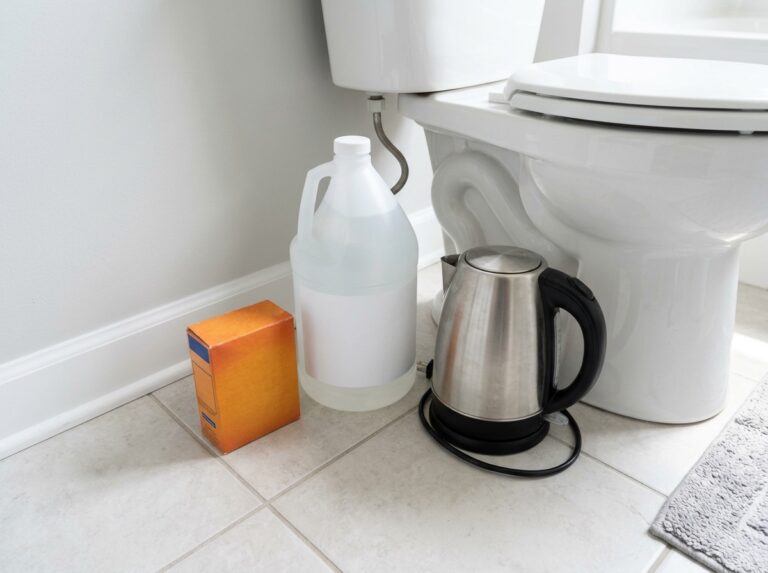
Baking soda and washing soda are two of the most common household cleaning products people reach for when a toilet gets clogged. They work well in sinks and drains, but their usefulness in a toilet depends entirely on what is causing the blockage.
This guide explains exactly when these products can help, when they cannot, how to use them step by step, and what to do if the clog does not clear.
Table of Contents
Baking Soda vs. Washing Soda: What Is the Difference?
Baking soda is sodium bicarbonate (NaHCO3). It is mildly alkaline and produces carbon dioxide gas when mixed with an acid like vinegar. The fizzing action can help dislodge soft blockages and break down grease. It is safe for all pipes including older metal pipes.
Washing soda is sodium carbonate (Na2CO3), also sold as Arm and Hammer Super Washing Soda. It is significantly more alkaline than baking soda, roughly 11 on the pH scale compared to baking soda at around 8.3. This makes it more effective at cutting through grease and organic residue. However, it is also stronger and should not be used in pipes made from aluminum. It is fine for PVC and cast iron.
Both products are far gentler than chemical drain openers. Neither will dissolve solid blockages like a foreign object or a hardened wad of paper.
When These Products Work on a Toilet Clog
Baking soda and washing soda work best when the blockage is made of soft, organic material: toilet paper that has packed too tightly, waste buildup, or grease residue coating the inside of the pipe that is narrowing the passage. The alkaline solution softens the material, and the fizzing reaction from vinegar adds mechanical pressure.
They are less effective and often useless on clogs caused by non-organic materials such as wet wipes, cotton balls, feminine hygiene products, children’s toys, or any solid object. These items do not break down in alkaline solution. They need physical removal.
WARNING: Never flush wet wipes, paper towels, cotton balls, or ‘flushable’ wipes. Most so-called flushable wipes do not dissolve in water. They are one of the top causes of serious toilet and sewer blockages in the US.
Method 1: Baking Soda and Vinegar
This is the best natural starting point for a clogged toilet. The reaction between baking soda (alkali) and white vinegar (acid) produces carbon dioxide and creates a fizzing action that can help loosen soft clogs.
- Check the water level in the bowl. If the bowl is full and nearly overflowing, bail out some water with a bucket before adding anything. This gives the solution room to work and prevents overflow.
- Pour 1 cup of baking soda directly into the toilet bowl. Aim for the center of the drain opening, not the water.
- Slowly pour 2 cups of white vinegar into the bowl. Pour in a steady stream, not all at once. You will see fizzing begin immediately.
- Leave the solution to work for at least 30 minutes. For stubborn clogs, leave it for up to an hour.
- Follow with a bucket of very hot (not boiling) water poured from waist height. The height adds pressure that helps push the loosened clog through. Do not use boiling water as this can crack the porcelain.
- Flush the toilet. If the water drains normally, the clog has cleared. If not, repeat once before trying a stronger method.
Method 2: Washing Soda and Hot Water
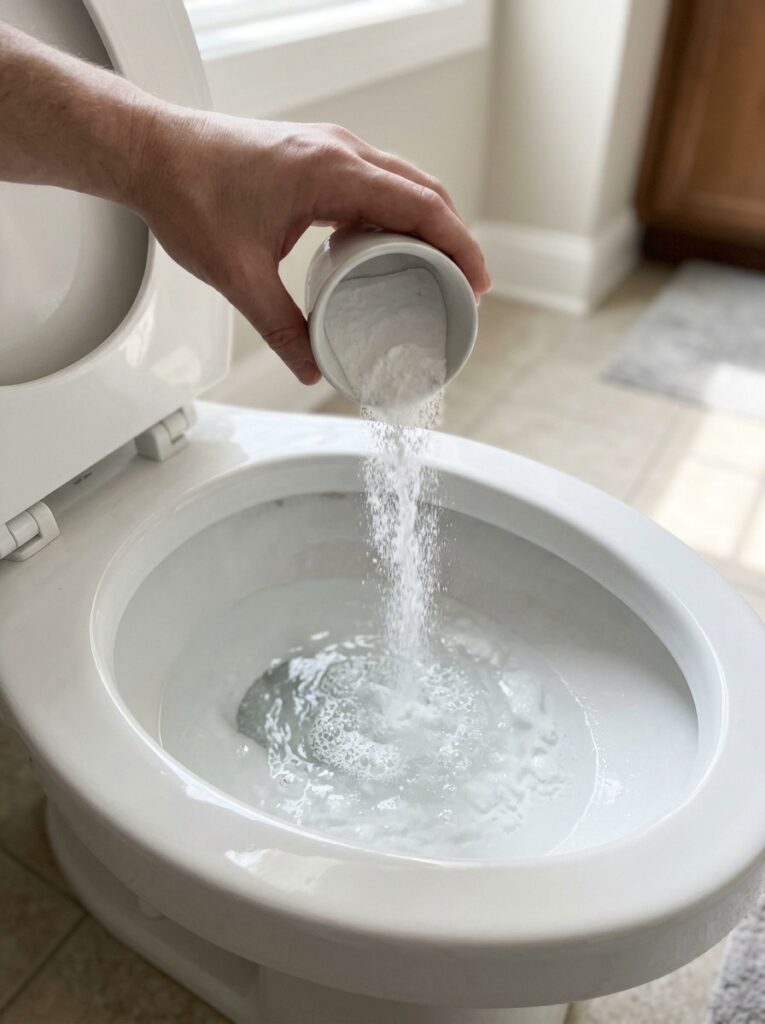
Washing soda is more alkaline than baking soda and does not require an acidic reaction to work. It acts directly on grease and organic buildup. This method works well when the clog is caused by a gradual buildup of waste residue over time.
- Make sure the toilet is not about to overflow. Remove water if needed.
- Pour 1/2 cup of Arm and Hammer Super Washing Soda directly into the toilet bowl.
- Let it sit for 10 minutes. The washing soda will start to dissolve in the water and begin breaking down the organic matter in the clog.
- Pour a bucket of very hot water (not boiling) from waist height into the bowl.
- Wait 15 minutes, then flush. If the bowl drains slowly but does drain, the blockage is partially cleared. Repeat the process once more.
Tip: Washing soda is sold in the laundry aisle of most US grocery stores and Walmart as Arm and Hammer Super Washing Soda. A 55-ounce box can be used for dozens of household cleaning tasks.
Method 3: Dish Soap and Hot Water
This method is one of the most effective no-plunger approaches for soft toilet clogs. Dish soap acts as a lubricant, coating the inside of the pipe and the clog itself so it slides through more easily. Hot water adds pressure and helps soften the material.
- Squeeze about 1/4 cup of dish soap (Dawn or any brand) directly into the toilet bowl. Work it around the sides so it coats the drain opening.
- Let it sit for 20 to 30 minutes. The soap settles into the drain and starts coating the blockage.
- Fill a bucket with the hottest tap water available. Do not use boiling water.
- Pour the water into the bowl from waist height in a steady, forceful stream.
- Wait a few minutes, then flush. Repeat if needed.
What to Do When These Methods Do Not Work
Use a toilet plunger
A toilet plunger is different from a sink plunger. A toilet plunger (also called a flange plunger) has a rubber flap that folds down into the drain opening to create a seal. Place it over the drain, make sure there is enough water in the bowl to cover the cup, and pump in and out firmly about 20 times. Pull up sharply on the final stroke to break the seal and draw the clog back. Repeat until the water drains freely.
A Korky or RIDGID toilet plunger is sold at Home Depot and Walmart. Every bathroom should have one.
Use a toilet auger (closet auger)
If plunging does not work, the clog is either very deep or is made of something that will not compress. A toilet auger is a cable tool with a protective sleeve that you insert into the toilet drain and crank to break up or hook the blockage. A basic toilet auger is sold at hardware stores. It is the most reliable DIY tool for stubborn toilet clogs.
Try a commercial drain opener
Liquid-Plumr Urgent Clear (available at Walmart) is formulated specifically for full-standing-water clogs. It is a gel that sinks through standing water and works at the blockage. Leave it for 15 minutes, then flush with hot water. Do not use this in combination with other cleaners.
WARNING: Never mix chemical drain openers with bleach, vinegar, or any other cleaner. The combination can release toxic chlorine gas or cause dangerous heat reactions.
How to Prevent Toilet Clogs
- Only flush toilet paper and human waste. Everything else goes in the trash.
- Use single-ply toilet paper if your household goes through a lot of paper. It breaks down faster than two-ply or three-ply.
- Do a monthly maintenance pour: 1/2 cup of baking soda followed by 1 cup of white vinegar down the toilet drain, left for 30 minutes, then flushed with hot water. This prevents buildup before a full clog develops.
- If you have young children, use a toilet lock to prevent objects from being dropped in.
- Older pipes and low-flow toilets installed before 1994 are more prone to clogs. If your toilet clogs frequently, it may be worth having a plumber inspect the drain line.
For choosing and using cleaners safely, see the American Cleaning Institute guide to cleaning surfaces.
Related Guides
- How Often Should You Clean Your Toilet? (A Complete Schedule)
- Do Toilet Cistern Blocks Damage Your Toilet? The Honest Answer
- How to Use a Pumice Stone to Clean a Toilet (Hard Water Stains, Rust Rings, Mineral Buildup)
Frequently Asked Questions
Does baking soda actually unclog a toilet?
Baking soda can unclog toilets when the blockage is made of soft organic material such as compacted toilet paper or waste residue. The fizzing reaction with vinegar provides mild mechanical action and the alkaline solution softens the material. It is not effective on solid objects, non-biodegradable materials, or clogs deep in the drain line.
What is the fastest way to unclog a toilet without a plunger?
The dish soap and hot water method tends to work faster than baking soda alone. Pour 1/4 cup of dish soap into the bowl, wait 20 minutes, then pour a bucket of hot water from waist height. If you have washing soda, this is also faster-acting than baking soda because it does not need an acidic reaction to work. For stubborn clogs, a toilet auger is the fastest reliable solution short of calling a plumber.
Is it safe to use washing soda in a toilet?
Yes. Washing soda is safe for porcelain toilets and PVC or cast iron pipes. It is not safe for aluminum pipes, which are rarely found in US homes built after the 1970s. Use the amounts described in this guide and follow with hot water to flush it through. Do not leave a concentrated washing soda solution sitting in contact with rubber seals for extended periods.
Can I use baking soda and vinegar in a toilet with a slow drain rather than a full clog?
Yes, and this is actually where these products work best. Monthly use of the baking soda and vinegar method keeps drain lines clear, dissolves early-stage organic buildup, and reduces odors. It works as maintenance much better than it works as an emergency clog remover.
When should I call a plumber for a blocked toilet?
Call a plumber if you have tried the baking soda method, dish soap method, a plunger, and a toilet auger and the toilet is still blocked. Also call a plumber if multiple drains in your home are slow or blocked at the same time, as this indicates a blockage in the main sewer line rather than the toilet drain. Multiple drain blockages are a serious issue that requires professional equipment to clear.
