

When Night Sky Petunias first appeared in 2016, photos of them went viral almost immediately, and understandably so. Deep violet-purple petals splashed with irregular white dots that look exactly like a star field. Each flower is unique, no two petals are identical, and the pattern visibly changes based on temperature.
They are real. The photos are not manipulated. The temperature-responsive pattern change is genuine biology. And they are actually quite easy to grow, if you understand what drives the star pattern.
What Are Night Sky Petunias?
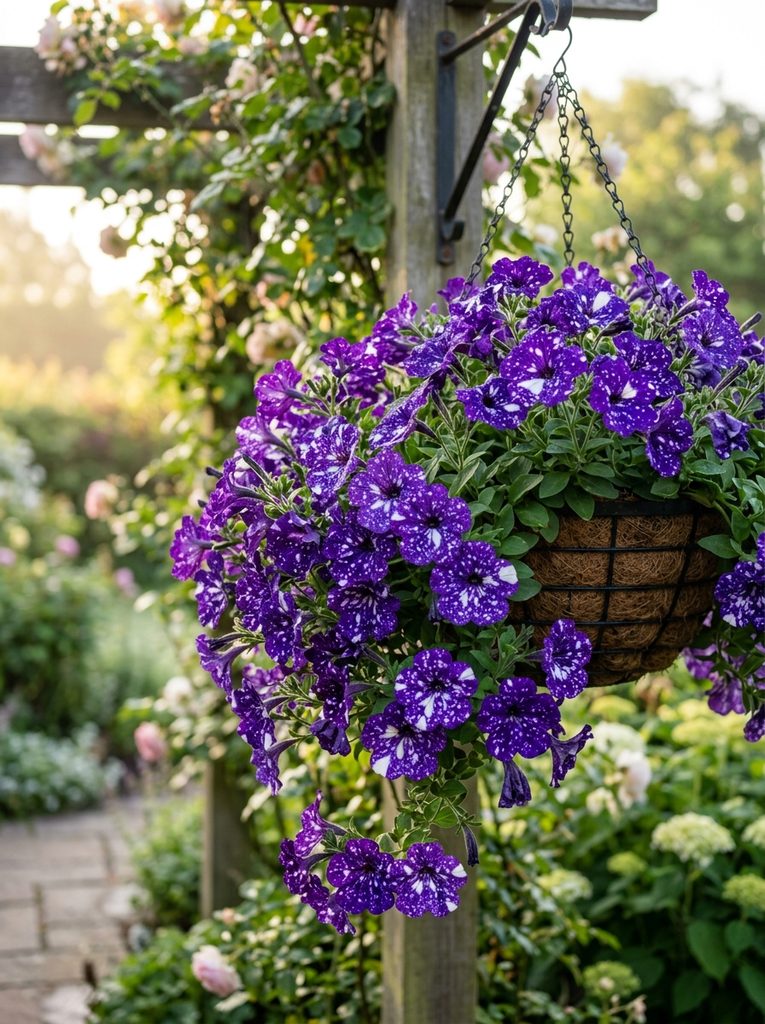
Night Sky Petunias (Petunia cultivars in the Night Sky / Starry Sky series) are hybrids of Petunia x hybrida, bred by Italian horticulturalist Antonella Capo and introduced to the market in 2016. They are semi-trailing annuals that grow 10 to 16 inches tall with a spread of 24 to 36 inches — ideal for hanging baskets and containers.
Related varieties in the same family include Pink Sky, Starry Sky Burgundy, and Lightning Sky — each featuring the same white speckling on a different base color.
The Science of the Star Pattern
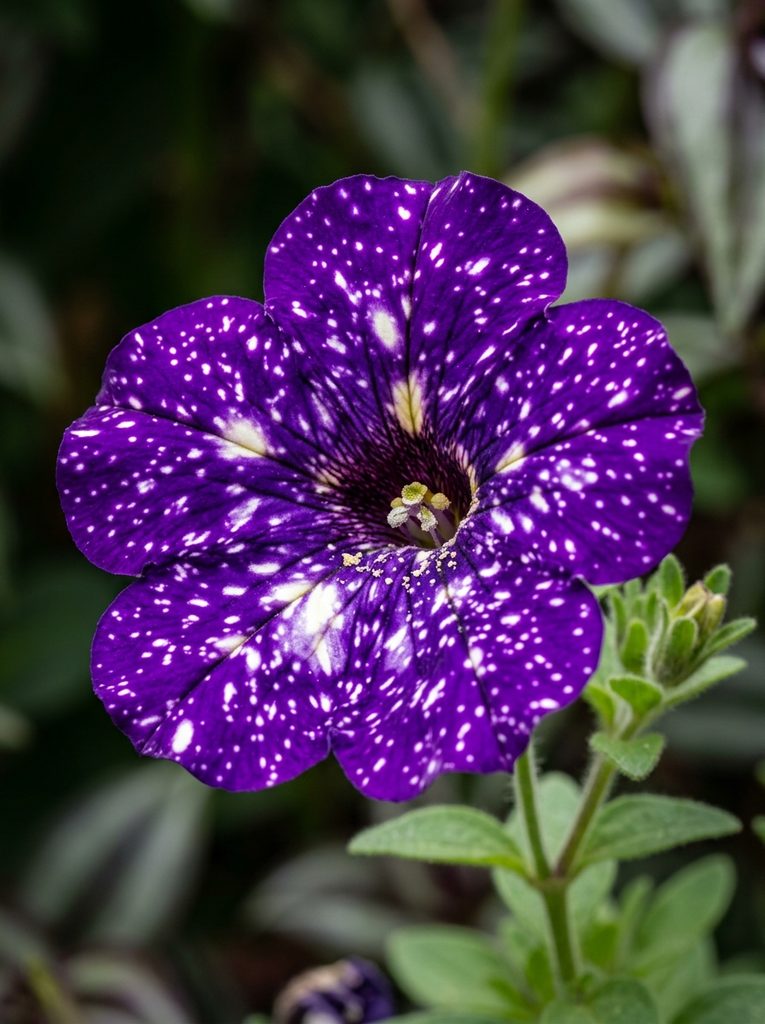
The white dots and splotches are not painted on — they are areas of the petal where purple pigment (anthocyanin) has not developed. The temperature differential between day and night determines how much white appears:
- Cool nights (around 50°F / 10°C) + warm days: More white stars — the dramatic galactic pattern most people want
- Consistently warm nights (above 65°F / 18°C): White areas shrink or disappear; flowers become more uniformly purple
- Very hot conditions: Pattern may fade almost completely temporarily
This means the best Night Sky petunia displays occur in spring and autumn when temperature differentials are greatest. Midsummer heat with warm nights produces less striking patterns — but the pattern returns as nights cool in autumn.
As The Fabulous Garden blog documented from direct experience: “Late July was just hot all the time, with little variation between night and day. At last, cooler nights arrived with the fall and the petunia skies started to twinkle again.”
How to Maximize the Starry Pattern
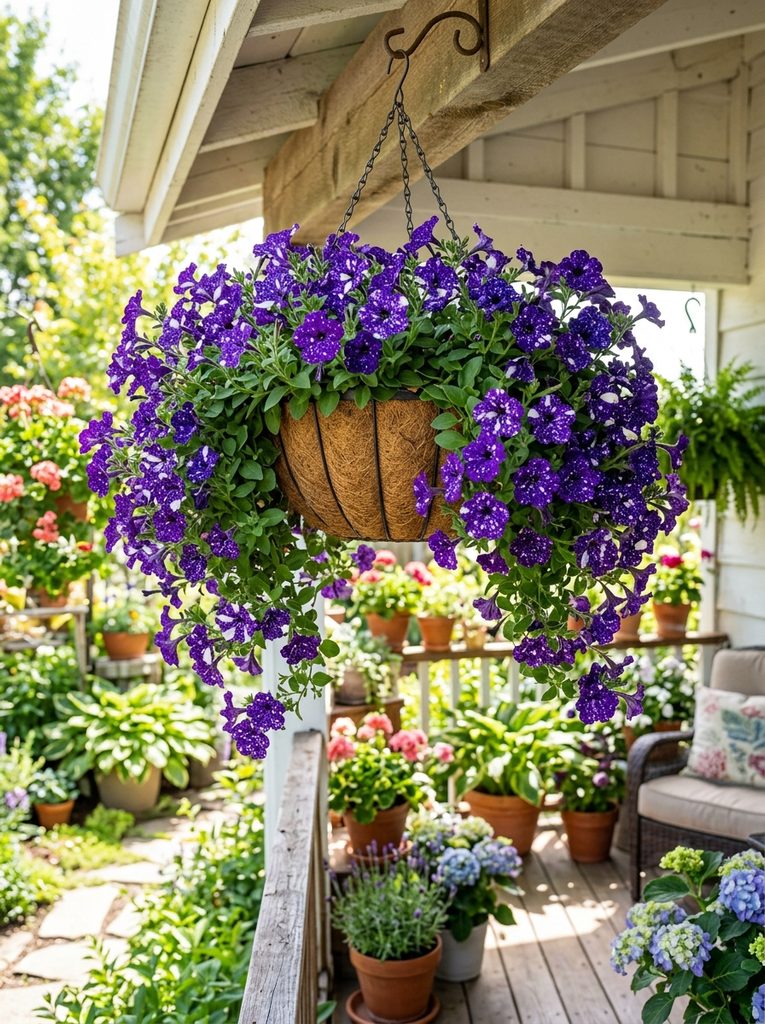
- Move container plants to a cooler location at night during summer — even a few degrees cooler (a shaded patio vs. a sun-baked balcony) makes a noticeable difference in pattern intensity
- Prioritize positions with warm, sunny days and naturally cool nights — north-facing patios, high elevations, and coastal locations often provide better conditions
- Accept that summer heat will temporarily reduce the pattern — this is normal and reversible with cooler autumn temperatures
Growing Night Sky Petunias: Complete Care
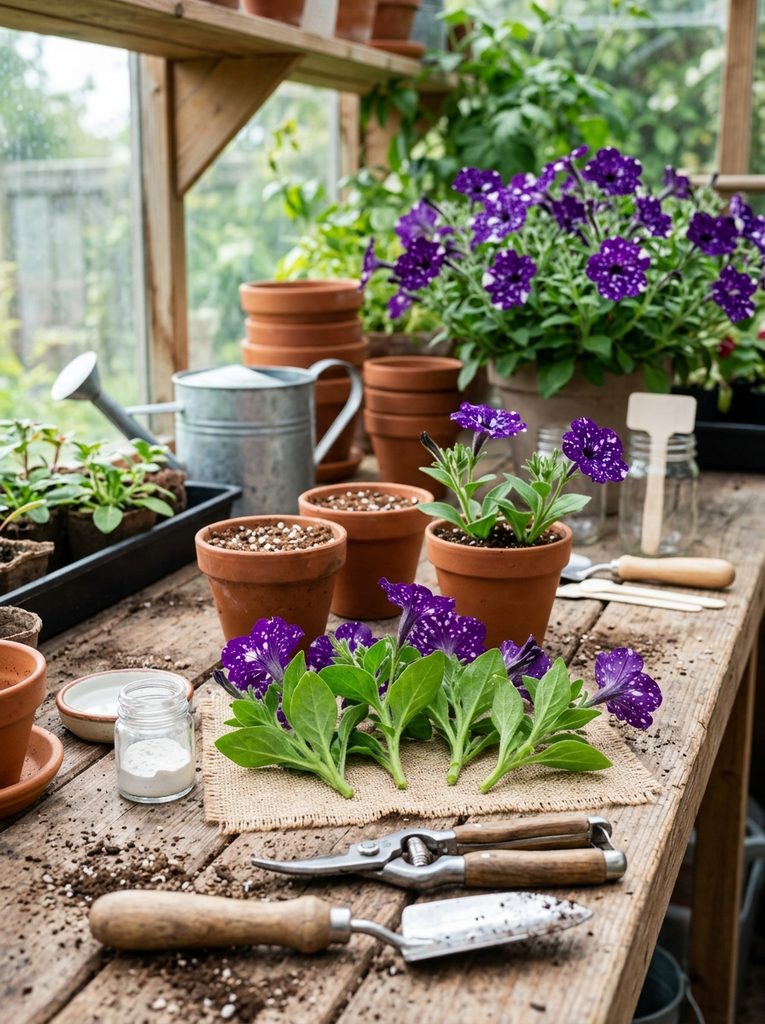
Where to Get Them
Night Sky Petunias are more difficult to find than standard petunias — many garden centers sell out quickly in spring. Sources:
- Local garden centers and nurseries in spring (call ahead to confirm stock)
- Online plant nurseries (Burpee, Proven Winners, Ball Horticultural) — buy transplants rather than seeds for more reliable pattern expression
- Seeds on Etsy and Amazon — starting from seed is possible but requires 10 to 12 weeks indoors before last frost, and pattern consistency varies
Light
Full sun — minimum 6 hours of direct sunlight daily. More light = more intense colors. Plants in less than 4 hours of sun produce fewer flowers and less vivid patterns.
Soil
Well-draining, fertile soil with a slightly acidic to neutral pH (6.0 to 7.0). In containers, use a quality potting mix — do not use garden soil in containers, which compacts and drains poorly.
Watering
Water when the top inch of soil is dry. Petunias do not like drought, but they do not tolerate soggy soil either. Water at the base of the plant — wet foliage increases fungal disease risk. Container plants need more frequent watering than in-ground plants (often daily in summer heat).
Fertilizing
Petunias are heavy feeders. Apply a balanced liquid fertilizer (10-10-10) at half strength every 2 to 3 weeks throughout the growing season. Without regular feeding, growth slows and bloom production declines noticeably within 4 to 6 weeks.
Deadheading and Trimming
Remove spent flowers promptly to prevent seed pod formation and encourage continuous new bloom. If plants become leggy in midsummer (long stems with fewer flowers), cut back by one-third. New compact growth with fresh flowers develops within 2 to 3 weeks.
Overwintering
Night Sky Petunias are annuals in most climates (perennial only in USDA zones 10 to 11). Before the first frost, take 4 to 6-inch stem cuttings, root them in water or moist potting mix, and grow under lights indoors through winter. This allows you to carry over a favorite plant’s exact genetics rather than purchasing new transplants each spring.
✅ Tip
If you want to photograph your Night Sky Petunias at their most dramatic, shoot in the morning on the day after a cool night. The temperature drop from night to morning activates the maximum white speckling, and morning light shows the purple color at its most vivid before midday heat begins.
Pair Night Sky Petunias with Moonflower vine (Ipomoea alba) for a cosmic-themed night garden — the moonflower’s white trumpet blooms open at dusk just as the petunia’s star patterns are best appreciated in the cool evening air.
[Add a YouTube video about: “night sky petunia grow care galaxy flowers”]
Frequently Asked Questions
Why did my Night Sky Petunias lose their star pattern?
Almost certainly due to warm nights reducing the temperature differential. This is normal in midsummer and is temporary. As nights cool in late summer and autumn, the pattern returns. You can also try moving container plants to a cooler overnight location to see if the pattern intensifies.
Can Night Sky Petunias grow indoors?
Yes, but they require very bright light — at minimum a south-facing window with 6+ hours of direct sun, or supplemental grow lighting. Indoor environments also tend to have consistent warm temperatures that reduce the star pattern. They will grow and bloom indoors with adequate light, but the pattern is best outdoors with natural temperature variation.
The Bottom Line
Night Sky Petunias live up to the photos — when temperature conditions are right, the galaxy pattern is genuinely extraordinary. The key insight most care guides miss: expect the pattern to fade in midsummer heat and return in autumn. This is normal biology, not a failure of care.
Buy transplants in spring, place in a sunny spot with natural day-night temperature variation, feed every two weeks, deadhead regularly. You will have one of the most remarkable container plants your garden has ever seen.
