
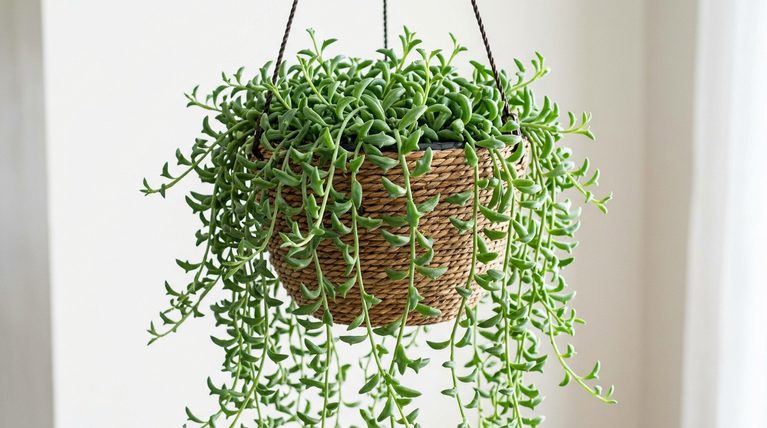
If you’ve ever doubted that plants can be cute, the dolphin succulent will change your mind immediately.
Senecio peregrinus, commonly called dolphin succulent or string of dolphins, produces tiny, plump leaves that are shaped exactly like leaping dolphins, complete with what look like fins. The resemblance is genuinely uncanny, and it’s made this quirky little plant one of the most talked-about succulents on social media.
Beyond the novelty factor, it’s also a beautifully cascading plant that looks stunning in hanging baskets and on shelves. And while it has a reputation for being tricky, with the right care it’s very manageable. Here’s everything you need to know.
What Is a Dolphin Succulent?
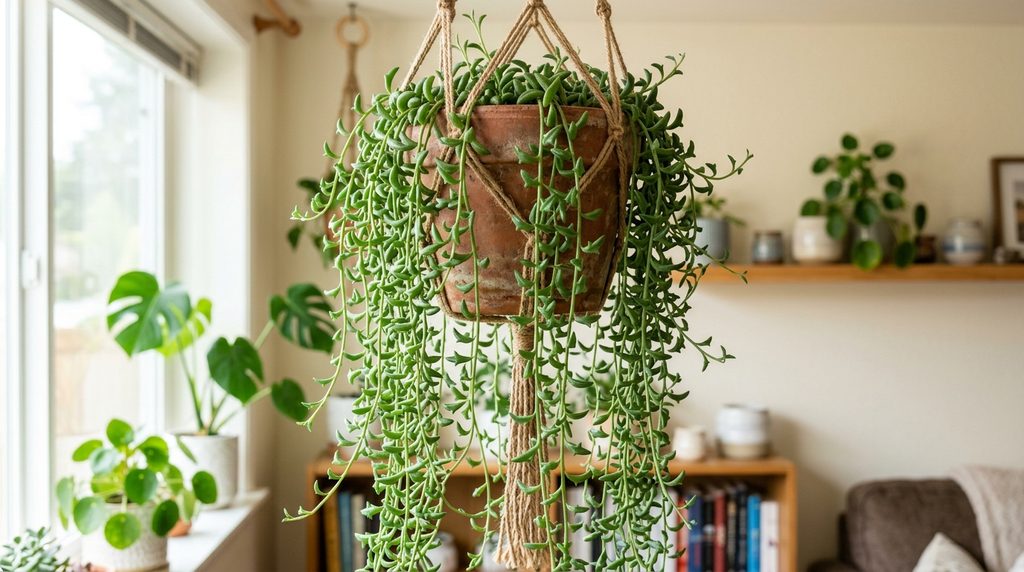
Senecio peregrinus is a hybrid succulent, believed to be a cross between Senecio rowleyanus (string of pearls) and Senecio articulatus (hot dog cactus). It was developed in Japan and has become a cult favorite worldwide.
The ‘dolphin’ leaves have a distinctive curved, hollow shape with two small projections that mirror a dolphin’s pectoral fins. As stems grow longer and cascade downward, the effect of a pod of leaping dolphins becomes even more pronounced.
Key characteristics:
- Mature length: Trailing stems can reach 12-20 inches long
- Flowers: Small white and purple daisy-like flowers with a cinnamon scent (a lovely bonus)
- Growth rate: Slow to moderate
- Lifespan: Can live many years with proper care
- Family: Asteraceae (same family as daisies and sunflowers)
How to Care for Dolphin Succulents
Dolphin succulents have the same basic needs as most succulents — with a few important specifics to know.
Light
Bright indirect light is ideal. A spot near an east or west-facing window that gets a few hours of gentle direct sun is perfect. Too much intense direct sun (especially afternoon sun) can scorch the leaves. Too little light causes etiolation — the plant stretches out and loses its compact, dolphin-shaped leaves.
Watering
This is where most people go wrong. Dolphin succulents are extremely susceptible to root rot from overwatering. Water thoroughly, then allow the soil to dry out COMPLETELY before watering again. In summer, this might mean watering every 2-3 weeks. In winter, reduce to once a month or less.
Soil
Use a well-draining cactus and succulent mix. Add extra perlite (30-50% by volume) to improve drainage further. Standard potting soil retains too much moisture and will cause root rot.
Temperature
Dolphin succulents prefer temperatures between 50-80°F (10-27°C). They cannot tolerate frost. Protect from temperatures below 40°F — bring containers indoors in autumn if you live in zones 1-9.
Humidity
They prefer drier air — average indoor humidity is usually fine. Avoid placing them in bathrooms or kitchens where humidity is high.
Fertilizing
Feed once a month during spring and summer with a diluted balanced liquid fertilizer (at half the recommended strength). Do not fertilize in fall or winter when the plant is resting.
Potting
Choose a pot with drainage holes — this is non-negotiable. Terracotta pots are ideal because they’re porous and help wick away excess moisture. Repot every 2-3 years when roots begin to emerge from drainage holes.
How to Propagate Dolphin Succulents
Propagating dolphin succulents is rewarding and relatively straightforward once you know the method.
Leaf propagation is possible but rarely successful with this variety — stem cuttings are far more reliable.
- Take a 3-4 inch stem cutting from a healthy plant using clean, sharp scissors
- Remove leaves from the bottom inch of the cutting
- Allow the cut end to callous over for 24-48 hours (this prevents rot when planted)
- Insert the calloused end into barely moist cactus/succulent mix
- Place in bright indirect light and avoid watering for 1-2 weeks
- After 2 weeks, give a very light watering — roots should begin forming within 3-6 weeks
- Once the cutting shows signs of new growth, care for it as a mature plant
Common Problems and How to Fix Them
Here are the most common dolphin succulent problems and their solutions:
Wrinkled, deflated leaves
Underwatering. Give the plant a thorough watering and the leaves should plump back up within 24-48 hours.
Mushy, brown stems at the base
Root rot from overwatering. Act fast — unpot the plant, trim all brown/mushy roots with clean scissors, let dry for a few days, and repot in fresh, dry cactus mix.
Long, stretched-out stems with wide gaps between leaves
Etiolation caused by insufficient light. Move the plant to a brighter spot. Cut the stretched stems back and propagate them — they won’t return to compact growth, but new growth in better light will look correct.
Leaves losing the dolphin shape, becoming more cylindrical
Usually a sign the plant is stressed by too much heat, too much direct sun, or inconsistent watering. Check care conditions and adjust.
White powdery coating on leaves
This is epicuticular wax — completely normal and protective. Do NOT try to wipe it off.
Where to Display Dolphin Succulents
The cascading growth habit of dolphin succulents makes placement options particularly fun:
- Hanging baskets: Watch the trailing dolphins cascade downward in a delightful display
- High shelves: Let stems trail over the edge — they’ll grow longer over time
- Desktop plant stands: Elevating the pot allows stems to hang freely
- Window boxes: A bright, dry window box filled with dolphin succulents is magical
- Paired with other succulents: Combine with string of pearls, string of turtles, and string of hearts for an adorable trailing succulent collection
|
🌿 Pro Tip: Before publishing, make sure your article includes at least one original image, a proper schema markup (Article or HowTo), and links to 3-5 of your own related posts to build topical authority. |
Frequently Asked Questions
These FAQs are optimized for Google’s ‘People Also Ask’ featured snippets. Answer each clearly and concisely in your published article.
|
Q: Are dolphin succulents toxic? A: Yes — Senecio species, including dolphin succulents, are toxic to dogs, cats, and humans if ingested. Keep them out of reach of pets and small children. |
|
Q: Why are my dolphin succulent leaves not shaped like dolphins? A: New growth that doesn’t look dolphin-shaped is usually caused by insufficient light (etiolation) or the plant being a different species sold under the same name. Ensure your plant gets 3-4 hours of bright indirect light daily. |
|
Q: How often do dolphin succulents flower? A: Typically once a year, usually in spring. The small daisy-like flowers have a lovely cinnamon scent. Flowers appear on healthy, mature plants grown in good light. |
|
Q: Can dolphin succulents live outside? A: Yes, in USDA zones 10-12 year-round. In colder zones, bring them in before temperatures drop below 40°F. |
Conclusion
The dolphin succulent is one of those rare plants that combines genuine novelty with real beauty and — once you understand its care needs — real manageability.
It doesn’t want much: bright indirect light, infrequent watering, excellent drainage, and the occasional feed. In return, it gives you a trailing cascade of tiny leaping dolphins that will delight everyone who sees it.
Once you own one, the next challenge is resisting the urge to buy the entire string-of-things family. Fair warning: there are a lot of them.
