
Opening your closet to find moldy shoes is one of the most frustrating cleaning discoveries. Once mold takes hold in a shoe, it can spread to other pairs and to clothing within days. The good news is that mold on shoes is almost always caused by the same small set of problems, and all of them are fixable.
This guide covers why shoes go moldy, how to prevent it from happening, and how to clean every type of shoe material if mold has already appeared.
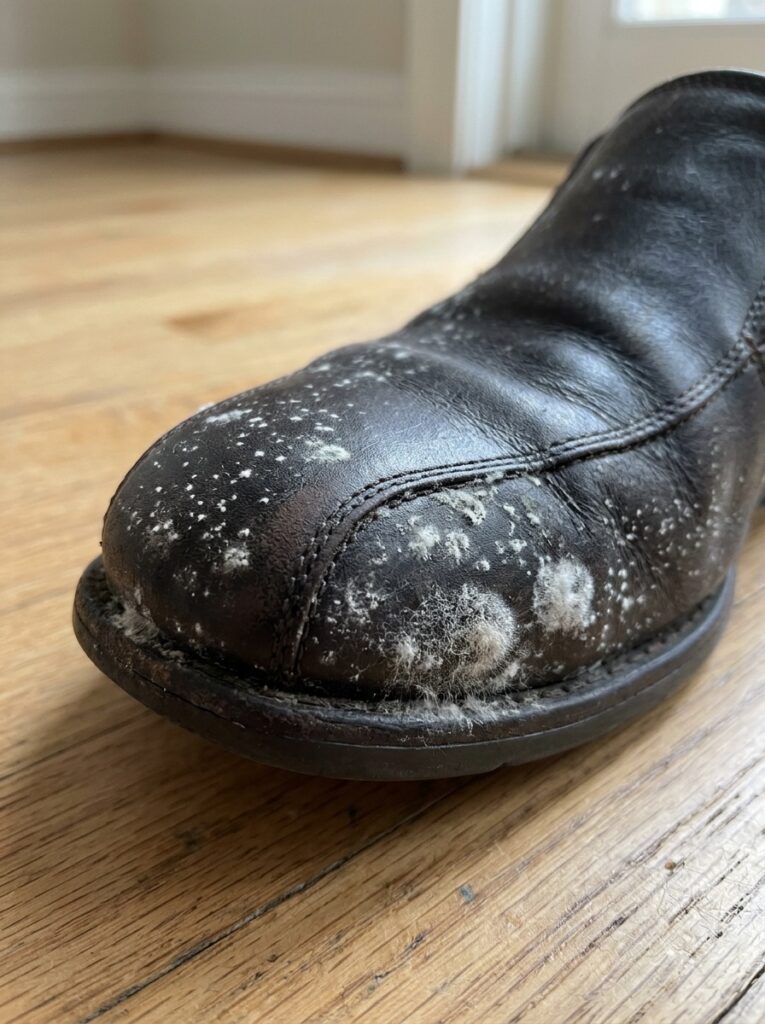
Table of Contents
Why Do Shoes Go Moldy in the Closet?
Mold grows wherever it finds moisture, darkness, limited airflow, and an organic material to feed on. Your closet provides all four. Here is exactly why it happens:
Shoes are stored before they are fully dry
This is the most common cause. Feet sweat constantly during the day. That moisture is absorbed into the lining, insole, and upper of the shoe. If you take your shoes off and put them straight into a closed closet, all that trapped moisture has nowhere to go. In the dark, enclosed space, mold spores that are naturally present in the air begin to grow within 24 to 48 hours.
Wet shoes from rain or puddles
Shoes that get wet outdoors are even more saturated than sweat-dampened shoes. Storing them in a closet without drying them first is almost guaranteed to result in mold.
The closet itself is damp or poorly ventilated
Closets against exterior walls or bathroom walls are colder and more prone to condensation. A closet that is packed too tightly has no airflow. Wooden shelving or flooring absorbs moisture and holds it. All of these factors create a microenvironment that mold thrives in.
Leather and fabric absorb and retain moisture
Leather is a porous, organic material. Mold feeds on it readily. Fabric sneakers and canvas shoes also absorb moisture from the air, especially in humid summers. Synthetic materials like rubber and plastic resist mold much better, but the interior lining of even synthetic shoes is often fabric.
How to Prevent Shoes from Getting Moldy: 8 Steps
1. Always dry shoes completely before storing them
This is the most important step. If shoes are damp for any reason, sweat, rain, or cleaning, let them air dry fully before putting them in the closet. This means leaving them in a well-ventilated area for several hours. For leather shoes, stuff them with newspaper while drying. The paper absorbs moisture from inside and helps the shoe keep its shape. Change the newspaper every few hours until it comes out dry.
2. Put silica gel packets inside every pair
Silica gel absorbs moisture from the air inside the shoe. Place one or two packets inside each shoe whenever they go into storage. You can buy large bags of silica gel desiccant packets cheaply from Amazon. Recharge them by putting them in a 250-degree oven for two hours. Do not use the flavored or scented shoe fresheners as a substitute, they do not absorb moisture the way silica gel does.
3. Store shoes on an open wire rack instead of in boxes or bags
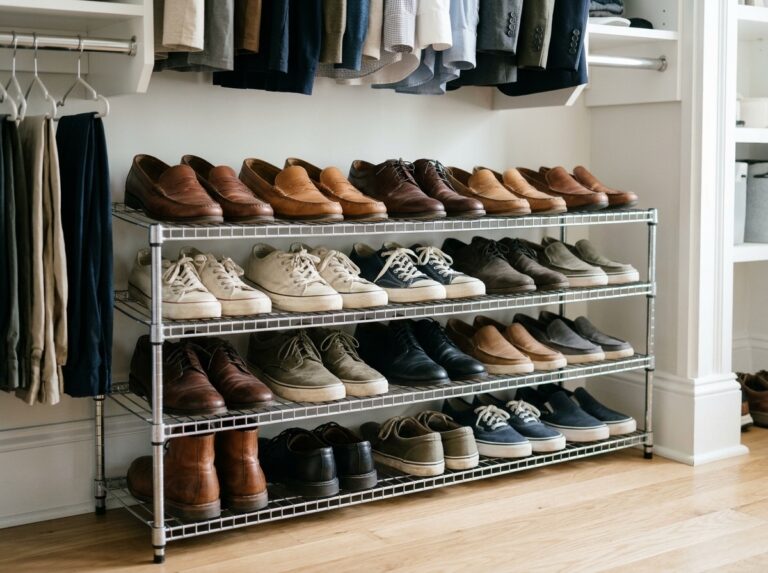
Closed shoe boxes trap humidity. Plastic bags are even worse. Open wire shoe racks allow air to circulate around every pair. For shoes you use regularly, an open rack in or near the closet is the best storage option. IKEA, Amazon, and Walmart all sell sturdy wire shoe racks.
4. Use cedar shoe trees for leather shoes
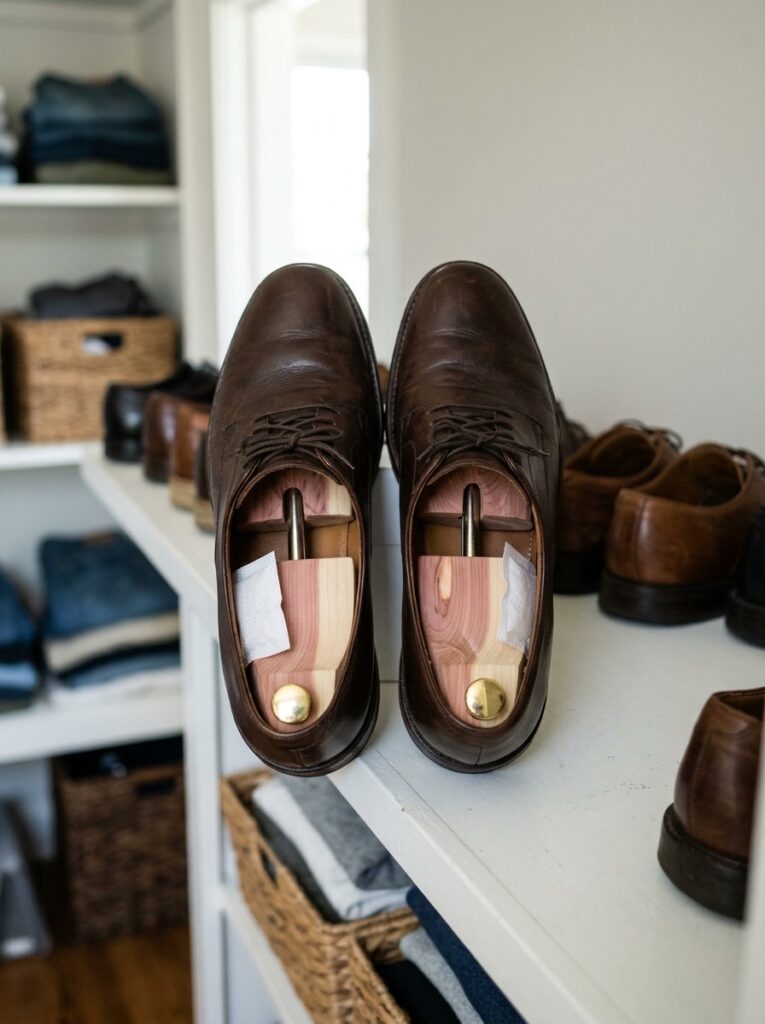
Cedar wood absorbs moisture and odors. Cedar shoe trees placed inside leather shoes between wears will draw out residual foot moisture and help the shoe dry fully. They also maintain the shoe’s shape. Split-toe cedar shoe trees are available on Amazon and last for years.
5. Do not pack shoes tightly together
Shoes touching each other restrict airflow. Leave space between pairs. If your closet is overcrowded, move less-worn pairs to another storage solution or donate pairs you rarely use.
6. Check the closet for moisture sources
Pull the closet away from the wall and look for signs of moisture. Look for condensation, damp patches, or dark spots on the back wall or floor. Closets on exterior-facing walls are the most at risk. If you find moisture, let the wall dry out fully, treat any mold with a mold-killing spray, and consider adding a small dehumidifier to the room or a moisture-absorbing product like DampRid inside the closet.
7. Use DampRid or a mini dehumidifier in high-humidity environments
DampRid Hanging Moisture Absorbers (available at Walmart) are designed to go inside closets. They pull moisture from the air passively and last two to three months. In humid climates or apartments with poor ventilation, these make a noticeable difference. Replace them when the absorber crystals have dissolved and the water chamber is full.
8. Brush leather shoes before storing them
Dirt and organic debris on the outside of shoes are food for mold. Give leather shoes a quick brush with a dry soft-bristle brush before storing them. Remove any mud, soil, or debris from the soles and seams. Do not use water to clean leather shoes unless necessary.
How to Clean Moldy Shoes
WARNING: Take moldy shoes outside or to a well-ventilated area before cleaning. Brushing off mold indoors releases spores into the air. Wear a mask, gloves, and avoid touching your face.
Leather shoes
- Take the shoes outside. Use a dry stiff-bristle brush to remove as much surface mold as possible. Brush away from your body.
- Wipe down the entire surface with a cloth dampened in undiluted white vinegar. Vinegar kills the majority of mold species on contact.
- Leave the shoes in a dry, well-ventilated spot in indirect sunlight for several hours.
- Once fully dry, apply a leather conditioner like Leather Honey or Bickmore Bick 4 to restore the leather. Mold and vinegar both dry out leather.
- Stuff with newspaper and allow to dry completely overnight before storing.
Canvas and fabric sneakers
- Brush off loose mold outside.
- Mix one tablespoon of baking soda with one cup of warm water. Apply to the moldy areas with a soft brush.
- For stubborn mold stains on white canvas, apply a small amount of OxiClean Versatile Stain Remover paste.
- Leave for 15 to 20 minutes then rinse with clean water.
- Allow to air dry fully in sunlight before storing.
Suede shoes
Suede is delicate. Use a dry suede brush to remove surface mold. Apply white vinegar lightly with a cotton ball and allow to dry naturally. Do not saturate suede with liquid. For bad mold on suede, a professional shoe repair shop or dry cleaner is the safer option.
Rubber and synthetic shoes
- Mix one part white vinegar with one part water in a spray bottle.
- Spray all surfaces and wipe with a clean cloth.
- For stubborn mold inside the shoe, apply a small amount of diluted bleach solution (1 tablespoon bleach per cup of water) to the interior lining only.
- Rinse and dry fully before storing.
Tip: Balled-up newspaper inside wet shoes absorbs moisture faster than air drying alone. Change the newspaper every two to three hours until it comes out dry. This method works for all shoe types.
When to Throw Shoes Away
Some moldy shoes cannot be saved. Consider replacing them if the mold has penetrated deep into the material and cleaning does not remove the smell, if the leather is cracking or the fabric is disintegrating, if the interior lining is heavily molded and cannot be reached for cleaning, or if the shoes have been moldy before and keep returning despite your prevention steps.
The EPA explains how indoor moisture leads to mold in its brief guide to mold, moisture and your home.
Related Guides
- How to Clean Mould Off Walls (and Stop It Coming Back)
- 5 Best Laundry Detergent That Kills Fungus (2025)
- Pink Mold in Shower: What It Is, How to Remove It, and How to Stop It Coming Back
Frequently Asked Questions
Why do my shoes keep going moldy even after I clean them?
If mold returns to the same shoes repeatedly, either the shoes are being stored before they are fully dry, the closet itself has a moisture problem, or the mold has penetrated deep enough into the material that surface cleaning is not reaching it. Check for moisture coming from the closet wall, add silica gel packets to each pair, and ensure shoes have at least two to four hours of air drying time before being stored.
Can moldy shoes make you sick?
Yes, potentially. Wearing shoes with mold on the interior lining can cause skin irritation, athlete’s foot-like fungal infections, and toenail infections. Breathing in mold spores released when handling moldy shoes can trigger allergic reactions, coughing, and respiratory irritation. People with asthma or mold allergies are more sensitive. Always clean moldy shoes outside and wear a mask while doing so.
Does silica gel actually prevent shoe mold?
Yes. Silica gel absorbs moisture from the air inside the shoe, which removes the primary condition mold needs to grow. It does not kill existing mold but is very effective at preventing new growth when used consistently. Replace or recharge the packets when they feel heavy or when the color-indicating type changes color.
Is it safe to wear shoes that had mold on them once cleaned?
Generally yes, once the shoes are fully cleaned and the mold smell is gone. For shoes that had mold only on the outside, cleaning with vinegar and drying in sunlight is usually sufficient. If the interior lining had visible mold, clean it thoroughly with vinegar, allow to dry completely, and consider replacing the insoles before wearing them again.
How do I stop a whole closet from getting moldy?
The main steps are: never store damp clothing or shoes, leave wardrobe doors open for at least an hour per day to allow air exchange, pull the wardrobe away from the wall by at least two inches if possible to allow air behind it, use DampRid or a small room dehumidifier in high-humidity areas, and declutter so clothing is not packed tightly together. If mold keeps returning to the wardrobe structure itself, the problem may be a damp wall behind it that needs professional attention.
