
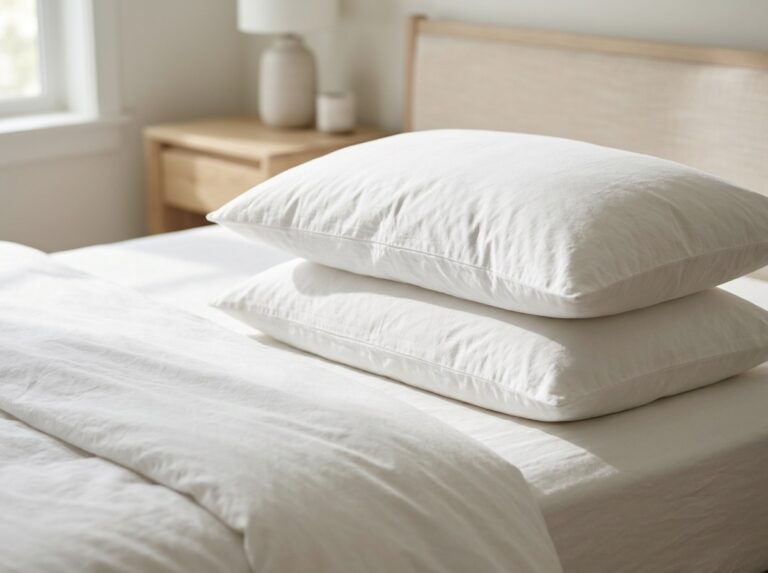
Most people wash their pillowcases regularly, but the actual pillow itself? That is a different story.
The average person sweats around 26 gallons of fluid into their bedding each year. Skin oils, dead skin cells, saliva, and dust mites work their way through pillowcases over time and accumulate inside the pillow. Washing the pillow itself is not optional if you care about hygiene and sleep quality.
This guide covers how to wash every major pillow type correctly, how to dry them without creating lumps, and how often you should be doing it.
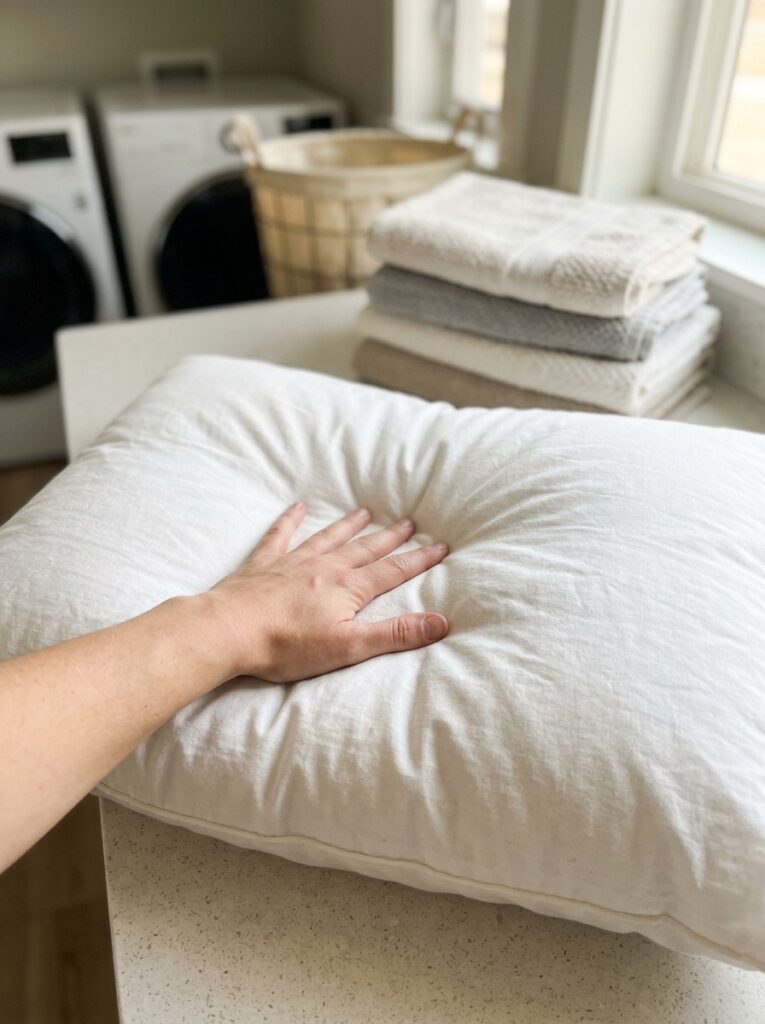
Table of Contents
How Often Should You Wash Pillows?
The standard recommendation is to wash pillows every 3 to 6 months, with every 4 months being a practical middle ground for most people.
Wash more frequently if you sweat heavily during sleep, have allergies or asthma (dust mites are a major trigger), a pet sleeps on or near your pillow, or you have been sick.
Pillowcases are a separate matter: those should be washed weekly alongside your sheets, since they make direct contact with your skin every night.
Tip: A pillow protector (a thin zippered cover worn under the pillowcase) dramatically reduces how much sweat and oil penetrates the actual pillow, extending the time between full washes.
Before You Start: Check the Care Label
Every pillow type has different washing requirements. The care label will tell you what is safe.
- Synthetic (polyester) fill: machine washable, most forgiving
- Down and feather fill: machine washable with care, or hand wash
- Memory foam: never machine wash; hand wash or spot clean only
- Latex: never machine wash; hand wash or spot clean only
- Buckwheat or shredded foam: remove fill and wash only the cover
How to Machine Wash Down and Synthetic Pillows
Both down (feather) and synthetic (polyester fill) pillows can be machine washed. The process is the same for both.
What You Will Need
- Mild liquid detergent, NOT powder (powder can clump inside fill and cause lumps)
- Two dryer balls or two clean tennis balls
- A large capacity front-loading washer (or agitator-free top loader)
Warning: Machines with a central agitator can twist and damage pillow fill, creating permanent clumps. Use a front-loader if possible, or take pillows to a laundromat with large front-loading machines.
Steps
- Remove all pillowcases and pillow protectors. Wash those separately.
- Check the pillow for any rips or tears. Stitch these closed before washing: open seams allow fill to escape and make a mess in your washer.
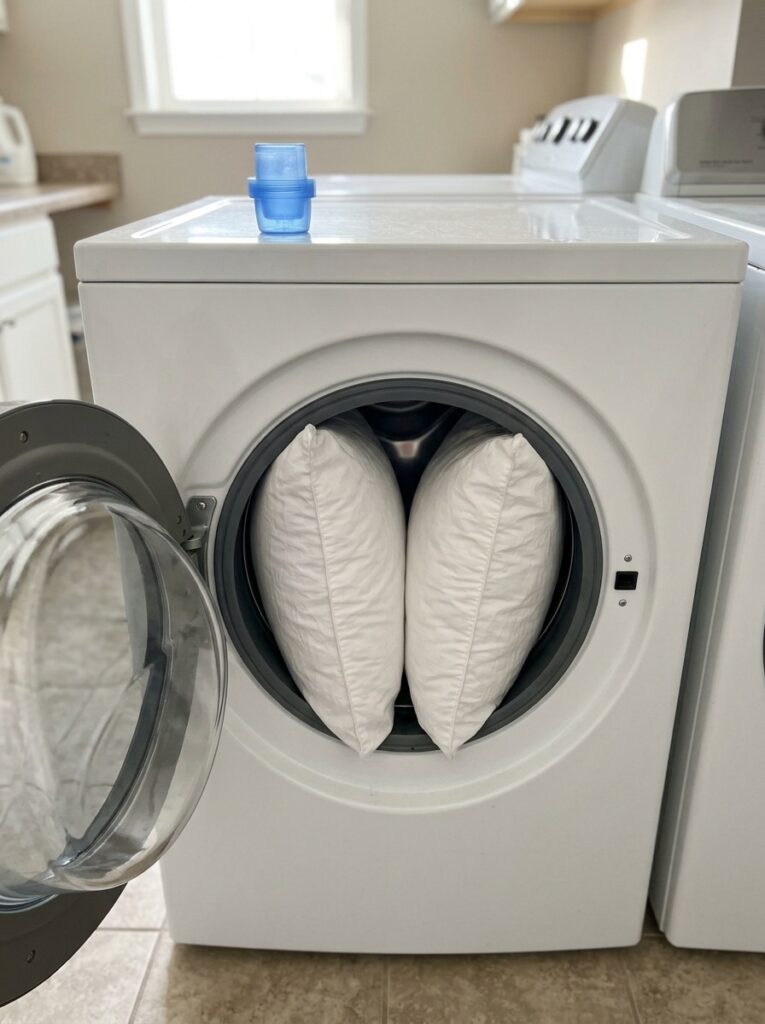
- Load TWO pillows at a time. This balances the washing machine drum and prevents the machine from spinning off balance.
- Select a Gentle or Delicate cycle with warm water, around 104 degrees F (40 degrees C). Cold water also works for down and synthetic.
- Use a small amount of mild liquid detergent, about half the normal dose. Less detergent means less residue trapped in the fill.
- Do NOT use fabric softener. It leaves residue inside down clusters and synthetic fill, reducing loft and creating clumps.
- After the wash cycle completes, run an additional rinse and spin cycle. This ensures all detergent is fully flushed out of the fill, trapped soap causes stiffness and odor.
- Check that the pillow has fully spun and is as dry as possible before moving to the dryer.
How to Dry Pillows
Drying is the most critical step. An incompletely dried pillow becomes a mold and mildew breeding ground, and you will never be able to remove that musty smell once it sets in.
Tumble Drying (Recommended)
- Place both pillows in the dryer together on a low heat setting.
- Add two clean tennis balls or dryer balls. These move between the pillows during the cycle, beating the fill back into shape and preventing clumps from forming.
- Run the dryer for at least 60 to 90 minutes, longer for thick or king-size pillows.
- Pause the dryer every 20 to 30 minutes, remove the pillows, and manually knead and fluff them with your hands. Break up any clumps you feel before returning them to the dryer.
- Test for dryness: squeeze each pillow firmly. If you feel any cool, damp spots or hear any squeaking from down, the pillow is NOT fully dry. Continue drying.
- A fully dry pillow will feel fluffy, light, and uniformly warm throughout.
Warning: Do not assume the pillow is dry just because the outside feels warm. The interior fill can remain damp while the cover feels completely dry. Putting a damp pillow back on the bed causes mold growth inside.
Air Drying
Air drying works but takes significantly longer, often 24 to 48 hours for down pillows. It is a viable option for synthetic fill pillows, which dry faster.
- Lay pillows flat on a clean, dry surface in a well-ventilated room or outside in the shade
- Flip and manually fluff every 2 to 3 hours
- Do not prop against a wall, the fill settles and creates permanent lumps
- Do not use outdoors in direct, harsh sunlight. UV exposure can degrade some fills
How to Clean Memory Foam Pillows
Memory foam cannot go in the washing machine. The agitation and water saturation break down the foam cell structure, causing permanent deformation. Once memory foam is damaged this way, it cannot be repaired.
Spot Cleaning (For Small Stains)
- Combine a small amount of mild dish soap or liquid laundry detergent with warm water.
- Dampen a clean cloth and wring out so it is barely damp. Never soaking.
- Blot the stained area using a circular motion. Do not rub or saturate the foam.
- Use a second clean, dry cloth to blot out the moisture.
- Allow the spot to air dry completely before replacing the cover. This may take several hours.
Deep Cleaning Memory Foam
If the pillow genuinely needs a full clean, this method works but requires patience:
- Fill a bathtub or large sink with cool water and a small amount of gentle detergent.
- Submerge the pillow and gently squeeze water through the foam. Do not wring or twist.
- Drain the soapy water, refill with clean water, and squeeze through to rinse until water runs clear.
- Gently press (do not twist) the foam to remove water. Roll in dry towels to absorb as much as possible.
- Lay flat to air dry in a ventilated room. This can take 24 to 48 hours. Do NOT use a dryer: the heat destroys memory foam.
- The pillow must be completely dry before using. Test by pressing firmly: no cool damp spots anywhere.
Tip: Protect your memory foam pillow with a zippered pillow protector and wash it weekly. This significantly reduces how often you need to clean the foam itself.
How to Clean Latex Pillows
Latex pillows are similar to memory foam. No washing machine, no dryer. Latex is rubber-based and heat-sensitive; high temperatures cause it to become brittle and crack.
Use the same spot cleaning method described above for memory foam. For deeper cleans, the hand washing bathtub method works but requires even longer drying time, as latex is dense and holds water.
How to Spot Treat Pillow Stains
Yellow Sweat and Oil Stains
Mix 1 tablespoon of dish soap, 2 tablespoons of white vinegar, and 1 cup of warm water. Apply with a cloth and blot. For set-in stains, apply a paste of baking soda and hydrogen peroxide, let sit 30 minutes, then brush off and blot clean.
Blood Stains
Use cold water only: hot water sets blood permanently. Apply hydrogen peroxide (3%) directly to the stain, let bubble for 5 minutes, then blot clean with cold water. Repeat if needed before washing.
General Odor
Sprinkle baking soda generously over the pillow surface. Leave for at least 1 hour or overnight. Vacuum off thoroughly before washing or returning to use.
When to Replace Your Pillows
No amount of washing can fix a worn-out pillow. Replace pillows when:
- The pillow no longer returns to shape after being folded in half and released
- There are permanent lumps, flat spots, or uneven areas that do not respond to fluffing
- There are persistent stains that will not come out after washing
- The pillow has a musty smell that survives a full wash cycle
- Your neck or shoulders hurt in the morning, poor support affects spinal alignment
Most synthetic and down pillows should be replaced every 1 to 2 years. Memory foam pillows typically last 2 to 3 years. High-quality latex pillows can last 4 or more years with proper care.
For more laundry care basics, see the American Cleaning Institute guide to clean clothes.
Related Guides
- What Temperature Should You Wash Towels, Sheets, and Clothes?
- How to Wash Egyptian Cotton Sheets (And Keep Them Soft for Years)
- How to Wash a Weighted Blanket Without Ruining It
Frequently Asked Questions
Why do my pillows come out lumpy after washing?
Lumps form when fill clumps together and is not redistributed during drying. The solution is dryer balls (or tennis balls) and manually fluffing the pillow every 20 to 30 minutes during the drying cycle. Also ensure the pillow is fully dry, damp fill creates permanent clumps.
Can you wash two pillows together?
Yes, in fact, this is recommended. Washing two pillows together balances the washing machine drum and prevents it from spinning off-center. Just make sure there is enough room in the machine for both to move freely.
Why do pillows turn yellow?
The yellow color comes from body oils, sweat, and saliva that pass through pillowcases over time and absorb into the fill. A pillowcase alone does not fully block moisture transfer. Using a pillow protector under the pillowcase dramatically reduces yellowing.
Can I wash a pillow that says dry clean only?
Spot cleaning is generally safe. For a full clean, take it to a dry cleaner who handles household textiles. The dry clean label exists because the fill or fabric is too delicate for water washing.
How do I know if my pillow is fully dry?
Squeeze it firmly in multiple spots. If any area feels cool, dense, or damp, it needs more drying time. A fully dry pillow will feel uniformly warm and light throughout. Down pillows in particular can take two or more full dryer cycles to dry completely.
