
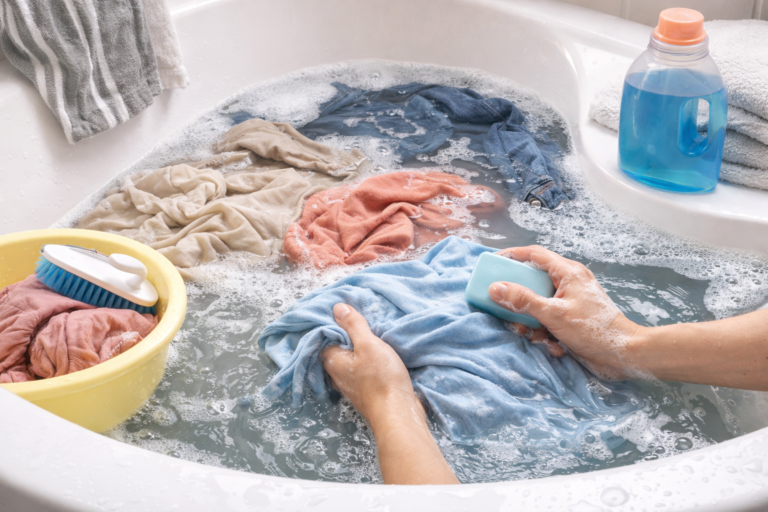
Maybe your washing machine just broke down. Maybe you’re in a new apartment waiting on laundry access. Maybe you’re traveling and a hotel sink isn’t going to cut it for a full load.
Whatever the reason, washing clothes in a bathtub is a completely legitimate solution, and when you do it right, your clothes come out genuinely clean.
The process is more straightforward than most people expect. The part most people get wrong isn’t the washing, it’s the rinsing and the drying.
This guide covers all of it, step by step, including how to handle different fabrics and which products make the whole thing a lot easier.
What You’ll Need
You don’t need much. Most of this you probably already have:
- Liquid laundry detergent — liquid dissolves more reliably in a bathtub than powder. Use less than you would in a machine; a tablespoon or two is enough for a full tub.
- A clean bathtub — rinse it first. Soap scum or cleaning product residue will end up in your clothes.
- A plunger (dedicated to laundry) — optional but genuinely effective. A clean plunger acts as a manual agitator and speeds up the whole process.
- A mesh laundry bag — useful for delicates and small items that can tangle or stretch.
- Clean towels — for pressing water out of clothes before hanging to dry.
- A drying rack or sturdy shower rod — for air drying after washing.
| Detergent Tip Laundry detergent sheets are a game-changer for bathtub washing and travel. They dissolve instantly in any temperature water, there’s no measuring, and no risk of using too much soap, which is the most common hand-washing mistake. Brands like Tru Earth and Earth Breeze work extremely well and are available on Amazon. |
Step-by-Step: How to Wash Clothes in a Bathtub
Step 1: Sort Your Clothes
Don’t throw everything in together. Sort into at minimum two groups: darks and lights. Washing a red shirt with white socks in a bathtub will dye your socks faster than in a machine, because the water is more concentrated with less dilution.
Also separate heavily soiled items, muddy jeans, workout clothes, and wash those last so they don’t contaminate everything else.
Step 2: Fill the Tub
Fill your tub with enough water to submerge your clothes, typically 4 to 6 inches. Use the water temperature appropriate for your fabrics (see the fabric guide below). When in doubt, cold water is always safe for any fabric.
Add your detergent and swirl the water with your hand to distribute it before adding clothes.
Step 3: Submerge and Agitate
Add your clothes and push them down into the water. Let them soak for 10 to 15 minutes to allow the detergent to penetrate the fabric, this is the step most people skip, and it’s where most of the cleaning actually happens.
After soaking, agitate the clothes by:
- Kneading and squeezing them against the base of the tub
- Swishing them back and forth through the water
- Using a clean plunger with an up-and-down pumping motion for 3 to 5 minutes
Pay extra attention to heavily soiled areas, collar lines, underarms, cuffs, by rubbing the fabric against itself or scrubbing gently with a soft brush.
Step 4: Drain and Rinse (Do This Twice)
This is the step that separates truly clean clothes from clothes that feel stiff and smell faintly of soap. Most people under-rinse.
- Drain the soapy water completely.
- Refill the tub with clean cold water.
- Agitate the clothes again for 2 to 3 minutes.
- Drain again.
- Repeat with a second clean rinse. For thick items like jeans or towels, a third rinse is worth it.
The water should run mostly clear by your final rinse. If it’s still sudsy, rinse again.
Step 5: Remove Excess Water
Do not wring your clothes especially anything delicate, knitted, or structured. Wringing distorts the shape of fabric and can permanently stretch or damage it.
Instead: lift the garment and gently press it against the side of the tub to drain. Then lay it flat on a clean dry towel, roll the towel up around the garment, and press down firmly along the whole length. Unroll and repeat with a second dry towel if needed. This removes a surprising amount of water and dramatically speeds up drying time.
| Never Wring Wool or Delicates Wringing wool causes it to felt, the fibers lock together permanently and you end up with a shrunken, misshapen garment. For wool, cashmere, and silk, always press water out gently. No exceptions. |
Fabric Guide: Water Temperature and Agitation
Different fabrics need different handling. Here’s a quick reference:
| Fabric Type | Water Temp | Agitation | Notes |
| Cotton (t-shirts, underwear, socks) | Warm | Normal agitation | Easy – most forgiving fabric |
| Denim (jeans) | Cold | Soak + gentle squeeze | Heavy; takes longest to dry |
| Wool & cashmere | Cold only | Very gentle – no wringing | Felts if agitated; lay flat to dry |
| Silk & delicates | Cold only | Barely any agitation | Use specialist detergent |
| Synthetics (polyester, nylon) | Cold or warm | Normal agitation | Dries quickly – good for travel |
| Linen | Cold or warm | Normal agitation | Wrinkles easily; iron damp |
How to Dry Clothes After Bathtub Washing
This is where patience matters. Air drying takes longer than a machine dryer, plan for it.
On a drying rack
The best option for most clothes. Hang items so air can circulate around them, don’t overlap or bunch. Lightweight items like t-shirts and underwear will be dry in 3 to 5 hours indoors. Heavier items like jeans and towels can take 12 to 24 hours.
On a shower rod or towel bar
Works well for a small number of items. Drape rather than fold over the rod to maximize airflow. Avoid overcrowding, clothes touching each other stay damp much longer.
Near a fan or open window
Moving air speeds drying significantly. If you have a fan, point it toward your hanging clothes. On a dry day, an open window can cut drying time almost in half.
Flat drying for delicates and knitwear
Wool, cashmere, and anything that might stretch must be dried flat, never hung. Hanging a wet wool sweater will stretch it out of shape under its own weight. Lay it flat on a clean towel or a mesh drying rack and reshape it while still damp.
| Faster Drying Tip A portable clothes drying rack with a cover uses trapped warm air to cut drying time significantly. Useful if you hand wash regularly. Search ‘heated clothes airer’ or ‘clothes drying rack with cover’ on Amazon. |
Tips to Make Bathtub Washing Easier
- Wash smaller loads more frequently. Trying to wash an entire week’s laundry in one session is exhausting. Four to six items at a time is manageable and you’ll get better results.
- Use cold water by default. Cold water is safe for virtually all fabrics, uses less energy, and reduces the risk of color bleeding.
- Pre-treat stains before washing. Apply a small amount of detergent directly to stains and let it sit for 5 minutes before the main wash.
- Wash workout clothes and dark denim separately and always last. These release the most dye and odor into the water.
- Use a laundry plunger. A clean toilet plunger used only for laundry agitates clothes far more effectively than hand kneading and saves your arms.
- Do it the night before you need the clothes. Air drying takes time. Wash in the evening and by morning most items will be ready.
When Bathtub Washing Isn’t Enough: Products Worth Considering
If you’re doing this regularly, or your apartment laundry situation isn’t improving anytime soon, there are some products that make a real difference.
1. The Scrubba Wash Bag
A portable washing machine that fits in a backpack. Fill it with water and detergent, seal it, and knead the bag against itself for a few minutes. The internal nodules act like a washboard and get clothes genuinely clean. Designed for travel but used by many apartment dwellers without laundry access. Available on Amazon.
[Amazon link: Scrubba Wash Bag]
2. Portable Mini Washing Machines
If you have a bathtub or sink and an electrical outlet, a countertop mini washing machine handles small loads automatically without any installation. Models from COMFEE and BLACK+DECKER are consistently well-reviewed and priced under $150. You fill them with water manually, run a wash cycle, drain, and repeat for the rinse. Far less effort than hand washing for regular use.
[Amazon link: COMFEE Portable Washing Machine]
3. Tru Earth Laundry Detergent Strips
Pre-measured dissolvable strips that eliminate the measuring and overdosing problem so common with bathtub washing. They dissolve in any temperature water and one strip is exactly the right amount for a bathtub load. Much more convenient than a bottle of liquid detergent when you’re working in a bathroom.
[Amazon link: Tru Earth Laundry Strips]
4. Mesh Laundry Bags (Set of Multiple Sizes)
Invaluable for delicates, underwear, socks, and small items that tangle. Also useful for keeping a load organized in the tub. A multi-size set costs almost nothing on Amazon and lasts for years.
[Amazon link: Mesh Laundry Bag Set]
Frequently Asked Questions
How long does it take to wash clothes in a bathtub?
The washing and rinsing process takes about 20 to 30 minutes for a small load of 4 to 6 items. Add another 5 to 10 minutes for the towel-pressing step. Drying time is anywhere from 3 hours (lightweight items) to 24 hours (heavy denim or towels).
Can I use dish soap or shampoo instead of laundry detergent?
In a pinch, yes, but neither is ideal. Dish soap produces a lot of suds that are very difficult to rinse out completely, leaving residue on fabric. Shampoo rinses more easily and is a better emergency substitute. Baby shampoo works reasonably well for delicates. But proper laundry detergent, especially the strip format, is worth having on hand.
Will bathtub washing shrink my clothes?
Only if you use hot water on fabrics that shouldn’t get it, primarily wool and some cottons, or if you put them in a dryer on high heat afterward. Cold water washing followed by air drying will not shrink your clothes.
How do I wash jeans in a bathtub?
Turn them inside out, use cold water, soak for 15 minutes, agitate by kneading especially at the waistband and crotch seam, rinse twice, and press out as much water as possible before hanging. Expect 12 to 24 hours of drying time. Hang near a fan to speed things up.
How do I prevent clothes from smelling musty after hand washing?
Musty smell after washing almost always means either insufficient rinsing, soap residue left in the fabric, or clothes that didn’t dry quickly enough. Rinse thoroughly until the water runs clear, press out as much water as possible with a towel, and hang clothes somewhere with good airflow. Spread them out immediately after washing; don’t leave them bunched up.
The Bottom Line
Washing clothes in a bathtub isn’t just a last resort, when you know what you’re doing, it works well. The keys are soaking long enough to let the detergent do its job, rinsing more thoroughly than you think you need to, and giving clothes enough time and airflow to dry properly.
For occasional use, everything in this guide is all you need. If you find yourself doing this regularly, a Scrubba wash bag or a compact countertop washing machine will make the process dramatically easier, and both are well worth the investment compared to ongoing laundromat costs.
Related Articles: