
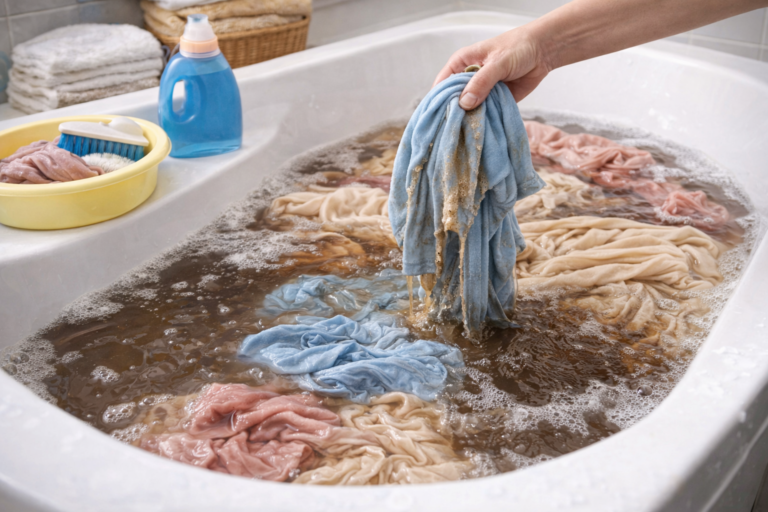
If you’ve spent any time on cleaning TikTok or laundry Facebook groups, you’ve seen the videos: a bathtub full of what looks like clean white towels, soaking in water that turns a deeply unsettling shade of brown or grey.
That’s laundry stripping, and it’s as satisfying as it looks.
But does it actually do anything useful, or is it just visually dramatic? And should you do it? Here’s an honest breakdown.
What Is Laundry Stripping?
Laundry stripping is a deep-cleaning soak designed to remove accumulated residue that regular washing leaves behind. Over months and years of washing, fabrics can build up layers of:
- Detergent residue (especially from using too much)
- Fabric softener coating
- Hard water mineral deposits
- Body oils and sweat that weren’t fully removed
- Bacteria embedded in the fabric fibers
Regular washing cycles, even good ones, don’t always remove all of this, especially from thick fabrics like towels, bed sheets, and athletic wear. Stripping is designed to break it all down at once in a long, hot soak.
Does Laundry Stripping Actually Work?
Yes — with some important caveats.
The gross water you see in the viral videos is real. It genuinely is residue, mineral deposits, and other buildup releasing from the fabric. After stripping, towels often feel noticeably softer and more absorbent, sheets feel lighter, and workout clothes smell cleaner.
That said, laundry stripping works best when:
- You’ve been using too much detergent or fabric softener consistently
- You live in a hard water area with significant mineral buildup
- You’re stripping towels, sheets, or gym clothes rather than delicate items
- The items haven’t been stripped recently (or ever)
If your laundry routine is already good, correct detergent amounts, no fabric softener on towels, regular machine cleaning, stripping will still produce some color change in the water but the results will be less dramatic and less necessary.
| Important Don’t strip every wash. Laundry stripping is a deep-clean reset, not a routine. For most households, stripping towels and bedding every 3 to 6 months is plenty. Over-stripping can degrade fabric fibers over time. |
How to Strip Laundry: Step-by-Step
What you’ll need:
- A bathtub or large bucket
- Very hot water (as hot as your tap goes — or boil some kettle water to add)
- Borax (half a cup)
- Washing soda / sodium carbonate (quarter cup) — not baking soda
- Powdered laundry detergent (quarter cup) — powder works better than liquid here
Method:
- Fill your bathtub with very hot water.
- Add the borax, washing soda, and detergent and stir until dissolved.
- Submerge clean, damp laundry (items should be freshly washed before stripping).
- Let soak for 4 to 6 hours, stirring every hour or so.
- Drain, wring gently, and run the items through a regular wash cycle with no detergent.
- Dry as normal.
| Ready-Made Option If mixing your own stripping solution sounds like too much work, laundry stripping packets — like those from Molly’s Suds or RLR Laundry Treatment — come pre-measured and are very effective. Just add to a hot bathtub soak. Available on Amazon. [Amazon link: RLR Laundry Treatment] |
What Can and Can’t Be Stripped
Good candidates for stripping:
- Bath and kitchen towels
- Bed sheets and pillowcases
- Athletic and gym wear
- Baby clothes and cloth diapers
- White cotton items
Do NOT strip:
- Wool, cashmere, or silk (the hot water and harsh compounds will damage these)
- Brightly colored items (colors may bleed or fade)
- Delicate or dry-clean-only fabrics
- Items with embroidery or embellishment
Products for Laundry Stripping
1. RLR Laundry Treatment
A classic laundry stripping product that’s been around for decades. Pre-measured packets, very effective, and works particularly well on cloth diapers, towels, and sportswear. Available in packs on Amazon.
[Amazon link: RLR Laundry Treatment]
2. Borax (20 Mule Team)
The key ingredient in DIY laundry stripping solutions. A large box is inexpensive and lasts for many strip sessions. Also useful for general laundry boosting.
[Amazon affiliate link: 20 Mule Team Borax]
3. Arm & Hammer Super Washing Soda
The washing soda component of the DIY strip recipe. Not the same as baking soda, washing soda is more alkaline and far more effective for stripping. Available in most grocery stores and on Amazon.
[Amazon affiliate link: Arm & Hammer Washing Soda]
Frequently Asked Questions
Can I strip laundry in the washing machine instead of a bathtub?
Some people do, but it’s less effective. The long soak time is what makes stripping work, most washing machine cycles are too short and the water cools down too quickly. A bathtub or large bucket with very hot water is the proper method.
Why did my laundry stripping water turn so dark?
That color comes from a combination of mineral deposits from hard water, detergent and fabric softener residue, and body oils and skin cells trapped in the fabric. The darker the water, the more buildup there was to release. It’s not dirt in the conventional sense, your items were probably clean by normal standards, it’s accumulated residue that regular washing can’t shift.
Is laundry stripping safe for washing machines?
Laundry stripping is done in a bathtub, not a washing machine. The final rinse cycle after stripping is fine for your machine. The stripping process itself doesn’t involve the machine at all.
How often should I strip my laundry?
For most households, stripping towels and bedding every 3 to 6 months is appropriate. If you’re using the correct amount of detergent, no fabric softener on towels, and washing at appropriate temperatures, you can go longer between strip sessions.
The Bottom Line
Laundry stripping works — the viral videos aren’t exaggerating. It genuinely removes accumulated residue that regular washing misses, and it makes a noticeable difference to how towels, sheets, and gym clothes feel and smell. It’s not something you need to do constantly, but as a periodic deep-clean reset, it’s worth doing. The DIY recipe with borax and washing soda is effective and cheap; pre-made packets are convenient if you’d rather not measure.
Related Articles: