
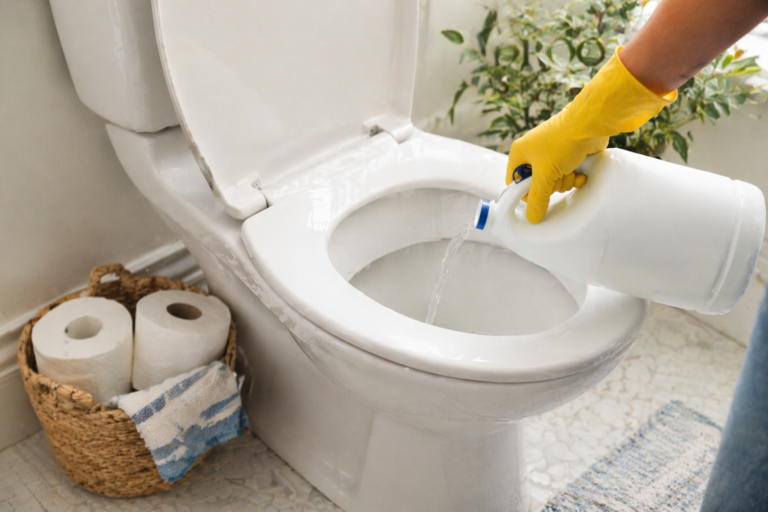
Most people either bleach their toilet far too infrequently or reach for bleach every time they clean when a gentler product would do the job just fine.
Getting the frequency right matters because bleach is a powerful disinfectant, but overusing it can gradually degrade the porcelain glaze and is completely unnecessary for day-to-day maintenance cleaning.
This guide gives you a practical, honest cleaning schedule for every household type, explains what bleach actually does in a toilet, and shows you the situations where it is genuinely needed versus situations where simpler products work better.
What Bleach Actually Does to a Toilet
Household bleach is sodium hypochlorite in diluted form. When applied to a toilet bowl, it does several things:
- Kills bacteria, viruses, and fungi on contact, making it highly effective for disinfecting
- Oxidizes organic matter, which removes many stains caused by bio-film and bacteria buildup
- Has a whitening effect on yellowed or dulled porcelain caused by organic staining
What bleach cannot do well:
- Dissolve mineral deposits, limescale, or rust stains. These are calcium and iron-based and require acid-based cleaners like white vinegar, CLR, or Bar Keepers Friend to dissolve them
- Remove deep scratches or surface etching
- Replace mechanical scrubbing for removing physical buildup
The key takeaway: bleach is a disinfectant and an organic stain remover, but it is not a universal toilet cleaner. Using it more often than needed adds chemical load to your bathroom without improving cleaning results.
The Right Bleach Frequency Based on Your Household
Single Person Household: Once Every Two to Three Weeks
A toilet used by one person in good health does not accumulate bacteria or organic buildup fast enough to justify weekly bleaching. A general toilet bowl cleaner used weekly combined with bleach every two to three weeks keeps the bowl disinfected without overexposing the porcelain or generating unnecessary chemical fumes.
Two-Person Household: Once a Week
With two regular users, weekly bleaching as part of your standard bathroom clean is appropriate. Apply bleach, let it sit for 10 minutes while you clean the toilet exterior, then scrub and flush. This takes about five minutes of actual work.
Family with Children: Once or Twice a Week
Children are messier toilet users and are more likely to spread germs in the bathroom. For households with children, bleaching the toilet bowl once or twice a week is reasonable, especially if any child is in the stage of potty training or is sick. The toilet seat and handle should be wiped down with a disinfectant wipe daily.
High-Traffic Shared Bathrooms: Every Two to Three Days
For a bathroom used by multiple adults, guests, or roommates, or for a bathroom used by anyone with a weakened immune system, more frequent bleaching reduces bacterial load. Every two to three days is appropriate.
When Someone Is Sick: After Every Use
If someone in the household has a stomach illness, flu, or any contagious infection, the toilet should be disinfected with bleach after every use for the duration of the illness. This prevents spread within the household. Use gloves, flush the lid down before flushing, and ensure good ventilation.
How to Bleach a Toilet Properly
- Flush the toilet to wet the bowl walls.
- Apply 1/2 cup of household bleach (5 to 8 percent sodium hypochlorite) around the inside of the rim.
- Let it sit for 10 minutes maximum. This is enough dwell time for disinfection.
- While it soaks, wipe the exterior of the toilet with a disinfectant spray or bleach wipe.
- Scrub the bowl with a toilet brush, including under the rim.
- Flush to rinse everything away completely.
Ventilation Required: Always open a window or run the exhaust fan when using bleach. Chlorine fumes in a small, enclosed bathroom can irritate airways and eyes, especially with longer exposure.
Never Mix: Do not use bleach immediately after or before ammonia-based cleaners (many glass cleaners contain ammonia) or acidic cleaners like vinegar. Mixing bleach with either creates toxic gases. Always rinse the bowl with plain water between different cleaning products.
What to Use Between Bleach Treatments
Bleaching every week does not mean scrubbing every week. On days when you are not using bleach, a squirt of standard toilet bowl cleaner and a quick scrub keeps the bowl fresh without introducing unnecessary chemicals. Options:
- Toilet bowl cleaner gel (Lysol, Clorox, Method): Apply under the rim, let sit 5 minutes, scrub, flush. Good for weekly use.
- Baking soda: A cup dropped into the bowl overnight neutralizes odors and provides mild cleaning action.
- Vinegar: 2 cups into the bowl with 1 cup of baking soda, left for 15 to 30 minutes then scrubbed, handles limescale and organic staining without bleach.
- Hydrogen peroxide: A disinfecting alternative to bleach. Safe for weekly use and gentler on surfaces.
Signs You Are Bleaching Too Much
- The glaze inside the bowl looks dull or slightly rougher than it used to
- You are getting streaks or discoloration on the porcelain that were not there before
- The toilet seat has become yellowed or brittle (from bleach splashing on it)
Porcelain is durable but not immune to prolonged bleach exposure. If you have been bleaching daily for months, scale back and give the bowl a rest. The damage is usually cosmetic and will not worsen once you reduce frequency.
The Things Bleach Will Not Fix
If your toilet bowl has a persistent brown or orange ring, bleach is not the answer. These rings are typically hard water mineral deposits, iron staining, or a combination of both. Bleach will not dissolve them and in fact can set iron stains deeper by oxidizing the iron.
For mineral rings and hard water staining, use a citric acid cleaner, CLR Calcium Lime and Rust Remover, or Bar Keepers Friend powder. These are acid-based or oxalic acid-based products that dissolve mineral deposits rather than trying to bleach over them.
Frequently Asked Questions
Q: Is it safe to bleach the toilet every day?
Daily bleaching is unnecessary and potentially counterproductive for most households. Porcelain glaze, while durable, can be gradually dulled by constant bleach exposure over months. More importantly, daily bleaching provides no additional hygiene benefit over weekly bleaching when combined with regular brushing. Save it for when you actually need the disinfecting power.
Q: Can I put bleach in the toilet tank to keep it clean?
No. Never put bleach directly into the toilet tank on a continuous basis. The tank contains rubber flappers, gaskets, and plastic components that are not designed for prolonged chemical exposure. Bleach degrades rubber rapidly, causing the flapper to fail and the toilet to run continuously. This wastes water and requires a plumber visit. Keep bleach in the bowl only.
Q: Why does my toilet still smell after I bleach it?
If the smell returns quickly after bleaching, the source is probably not the bowl itself. Check: the toilet base (urine accumulates at the base bolts), under the rim (buildup in the siphon jets), and the toilet seat hinges (bacteria collects in the hinge hardware). A persistent sulfur or sewer smell can also indicate a dry or faulty wax ring at the base of the toilet.
Q: How long should I leave bleach in the toilet before flushing?
Ten minutes is the standard recommendation for adequate disinfection. Leaving it longer than 30 minutes provides no additional benefit and increases the risk of surface dulling over time. There is no value in leaving bleach overnight.
Q: What is a good bleach alternative for toilet cleaning?
3 percent hydrogen peroxide is an excellent disinfecting alternative to bleach. It kills bacteria and viruses, whitens organic staining, and is considerably gentler on surfaces and seals. It also produces no toxic fumes when used alone. Apply under the rim, let sit 10 minutes, scrub, and flush.
Related Articles: