
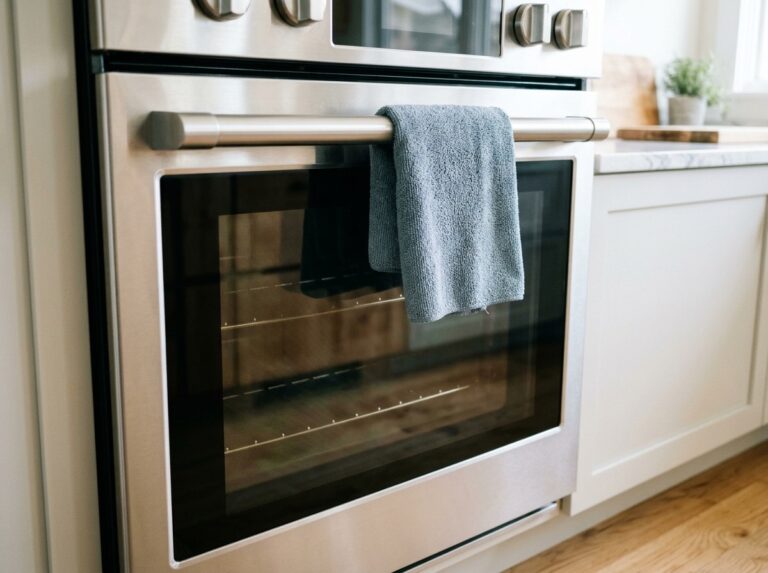
The inside of an oven door often has two or three layers of glass with a gap between them. Over time, grease and steam work their way into that gap, and the result is a brown haze you can see but cannot reach with a cloth. Regular oven cleaning does not touch it.
There are two ways to clean between oven door glass. The first is to remove the glass panels, clean them properly, and put them back. The second is to thread a cleaning tool through the vent slots at the top or bottom of the door. This guide covers both methods in full.
WARNING: Turn off your oven at the power source and allow it to cool completely before opening the door or touching any glass panels. Hot oven glass is under thermal stress and is dangerous to handle.
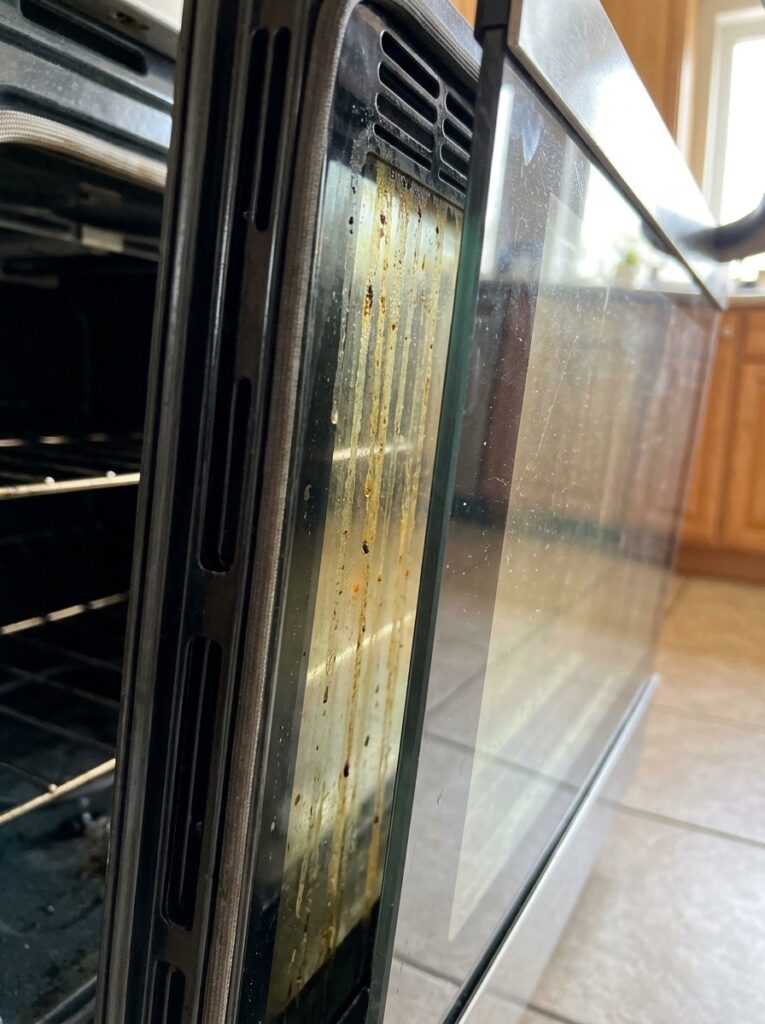
Table of Contents
Method 1: Removing the Glass Panels (Best Results)
This is the most thorough method. Removing the glass gives you direct access to both sides of each panel so you can clean them completely.
Step 1: Find your oven manual
Glass panel removal varies by oven brand and model. Some oven doors unclip along the top edge and allow the glass to slide out. Others use screws along the door frame. A few models require removing the entire oven door before the glass can be accessed. Look up your oven brand and model number on the manufacturer’s website or search for the manual at Manualslib.com. The model number is usually on a sticker inside the oven door frame or on the back of the appliance.
Common US oven brands and their general approaches: GE ovens often have screws on the inner door panel. Whirlpool and KitchenAid doors typically unclip from the top. Samsung ovens vary by model. Frigidaire doors usually have a visible screw strip along the inner edge. Bosch and LG doors often require full door removal first.
Step 2: Remove the oven door (if required)
For ovens that require the door to be removed first: open the door to the broil or full-open position. Locate the hinge locks on each hinge, usually a small clip or lever near the hinge arm. Flip both hinge locks into the locked position. Partially close the door to about a 45-degree angle. Grip the door firmly on both sides near the top and lift up and out. Set the door down on a padded flat surface with the inner glass facing up.
Step 3: Open the door panel
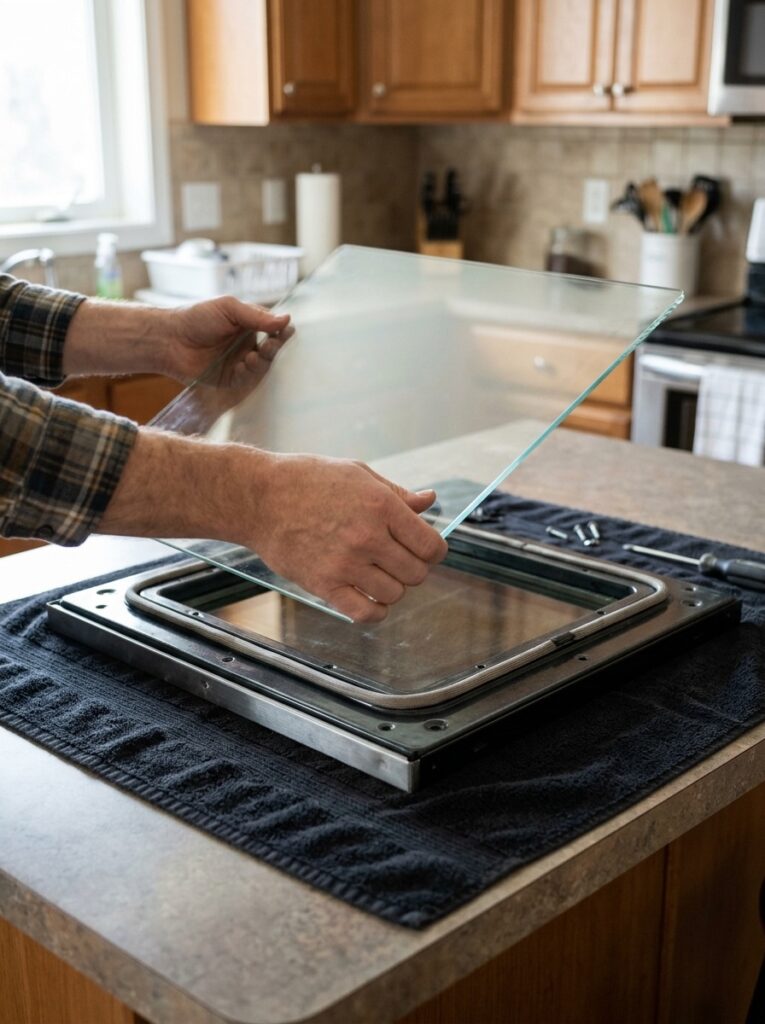
- Lay a thick folded towel on the kitchen counter. This protects both the counter and the glass.
- Using a Phillips head or Torx screwdriver (check your manual), remove the screws securing the inner door panel. Keep the screws in a small bowl so they do not get lost.
- Carefully lift out the glass panels one at a time. Handle them by the edges only. Oven glass is toughened but still breakable if dropped on a hard surface.
- Lay each panel flat on the towel with the dirty side facing up.
Step 4: Clean the glass panels
For moderate grease buildup, use the baking soda paste method:
- Mix 3 tablespoons of baking soda with enough dish soap and water to form a thick paste. The consistency should be similar to toothpaste.
- Spread the paste over the glass surface using a sponge or your gloved fingers.
- Leave for 20 to 30 minutes. The paste will start to absorb the brown grease deposits.
- Wipe away the paste with a damp cloth, rinsing frequently.
- Spray the glass with a 1:1 mix of white vinegar and water and wipe dry with a microfiber cloth to remove any remaining residue and leave the glass streak-free.
For heavy, baked-on brown deposits, use a commercial oven cleaner:
- Easy-Off Fume Free Oven Cleaner (available at Walmart) is safe for oven glass. Spray it on the dirty side of the panel, leave for 30 minutes, then wipe off with a damp cloth. Do not use regular oven cleaner spray directly inside a hot oven on glass, but it is safe to use on a cold removed panel.
- A dishwasher tablet dampened with water and rubbed directly on the glass surface in a circular motion is very effective on baked-on grease. The surfactants and enzymes in the tablet cut through grease quickly. This works well on the inner door glass and takes about 5 minutes per panel.
Step 5: Reassemble the door
- Wipe the inside of the door frame with a damp cloth to remove any grease that transferred from the removed glass.
- Place each glass panel back in the correct position and orientation. Check your manual if you removed multiple panels, as they often have a specific order.
- Replace and tighten all screws firmly but not over-tightened.
- Rehang the door if you removed it: align the hinge slots with the oven hinges, lower the door into place, open to full position, and unlock the hinge clips.
- Before using the oven, turn it on to 300 degrees Fahrenheit for 10 minutes to burn off any cleaning product residue. Open windows while doing this.
Method 2: Cleaning Through the Vent Slots (Without Disassembling)
Most oven doors have narrow vent slots along the bottom or top edge of the door. These slots allow hot air to circulate during baking. You can insert a long cleaning tool through these slots to reach the inside glass surfaces without removing any panels.
This method is less thorough than removing the panels, but it is good enough to remove light to moderate haze, and it is much faster.
What you need:
- A thin wooden dowel, a wire coat hanger straightened out, or a long flexible ruler
- A clean microfiber cloth cut into strips about 3 inches wide
- Rubber bands
- Your cleaning solution: dish soap and water mixed 1:4 in a spray bottle, or the vinegar and water mix
- Cut a microfiber cloth strip into a piece that is about 3 inches wide and long enough to wrap around the end of your rod or dowel with some overlap.
- Dampen the cloth with your cleaning solution. It should be damp but not dripping.
- Secure the cloth to the end of the rod with rubber bands, making sure it is firm and will not slide off inside the door.
- Locate the vent slots along the top or bottom edge of the closed oven door. They are usually a row of small rectangular holes.
- Insert the rod into a vent slot and use it to wipe the inside glass surface. Use slow, overlapping strokes. You will feel the resistance when the cloth contacts the glass.
- Remove the cloth when it is dirty, replace with a fresh damp piece, and repeat until the cloth comes out clean.
- Finish with a dry piece of microfiber cloth on the rod to remove moisture and leave the glass clear.
Tip: Take a photo of the inside of your oven door before inserting the cleaning rod so you know which direction to move the rod to cover the full glass surface. You cannot see inside while you clean, so mental mapping helps.
Best Cleaning Products for Oven Door Glass
- Baking soda paste with dish soap: Best for moderate grease. Safe, inexpensive, and very effective when left to sit.
- Easy-Off Fume Free Oven Cleaner: Most effective on heavy baked-on brown deposits. Use only on removed panels or the cool inside door surface.
- Dawn Dish Soap and vinegar spray: Good for light grease and for the final polish step to remove streaks.
- Dishwasher tablet: Fast and effective for baked-on grease when used wet and rubbed directly on the glass.
- Bar Keepers Friend Cleanser: Very effective on hard water stains and mineral discoloration on glass. Make a paste, apply, leave 2 minutes, rub gently, rinse.
How Often to Clean Between Oven Door Glass
How quickly grease builds up between the panels depends on what you cook and how often. If you roast meats, bake at high temperatures, or cook dishes that bubble or splatter regularly, the inside glass can haze up within two to three months.
A practical schedule is to clean between the glass panels every three to four months as part of a full oven deep clean. Cleaning the outside and inside glass surfaces monthly prevents the worst of the buildup from working its way into the gap between panels.
For choosing and using cleaners safely, see the American Cleaning Institute guide to cleaning surfaces.
Related Guides
- Can You Clean an Oven with Dishwasher Tablets? (What Works and What to Skip)
- How to Clean a Tiled Kitchen Floor: Grease, Grout, and Everything In Between
- 15 Dishwasher Tablet Cleaning Hacks That Actually Work (With Instructions)
Frequently Asked Questions
My oven manual says not to remove the glass. Can I still do it?
Some manufacturer warranties state that user disassembly voids the warranty. If your oven is under warranty, check whether removing the glass panels yourself will affect your coverage before proceeding. If the oven is out of warranty, the glass panel removal is a straightforward task for most models and does not risk damage to the oven if done carefully following the manual’s instructions.
I can’t find the vent slots on my oven door. Does my oven have them?
Not every oven has accessible vent slots wide enough to insert a cleaning tool. Some premium or European-style ovens are sealed doors. If your oven has no accessible vent slots and the manual does not describe glass panel removal, you may need to contact the manufacturer for service or visit an appliance repair shop. Some appliance repair technicians will clean between sealed oven door glass as a service call.
The baking soda paste is not removing all the staining. What is stronger?
For heavy brown buildup that baking soda cannot shift, try Easy-Off Fume Free Oven Cleaner on a cold removed panel. Leave it on for 30 minutes, then wipe off with a damp cloth and rinse thoroughly. If even that does not fully remove the staining, the glass may have a permanent haze where the burned-on grease has slightly etched the surface. Replacement glass panels are available for most oven brands on Amazon and appliance parts websites.
Will oven cleaner damage the glass?
Most oven cleaners are safe for toughened oven glass. The glass is designed to withstand both high temperatures and strong degreasers. Use Easy-Off Fume Free rather than caustic lye-based oven cleaners, and always rinse thoroughly after cleaning to remove all product residue before operating the oven again.
How do I stop grease from getting between the glass panels in the future?
Grease enters the gap between panels through the same vent slots you use for cleaning. There is no way to fully prevent this short of sealing those vents, which you should not do. The best approach is to clean frequently so grease does not have time to bake on and become difficult to remove. Placing a baking sheet on the lowest rack below anything that might bubble over also significantly reduces the amount of grease that reaches the door.
