
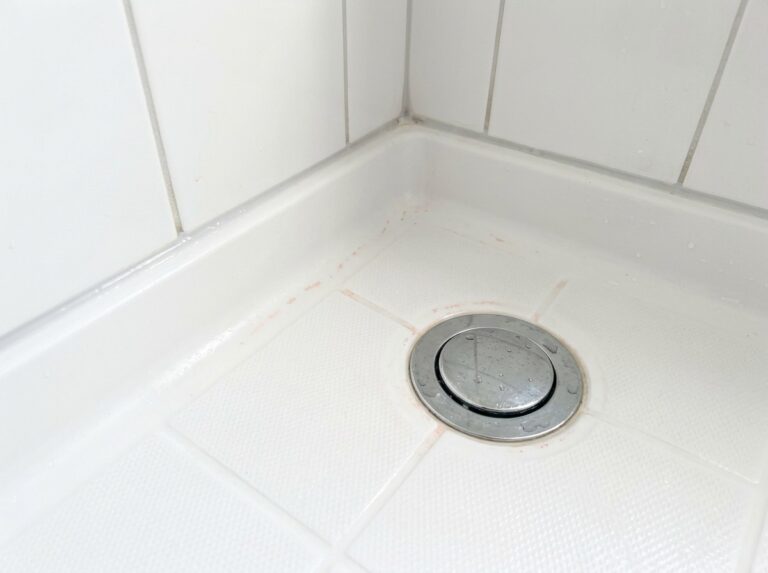
That pink or reddish slime appearing in your shower is not actually mold. It is a bacteria called Serratia marcescens, and it is one of the most common bathroom problems in the US. Understanding what it is and why it keeps coming back is the key to getting rid of it for good.
This guide covers everything you need to know, from what causes it to the exact cleaning steps, and what to do daily to prevent it from returning.
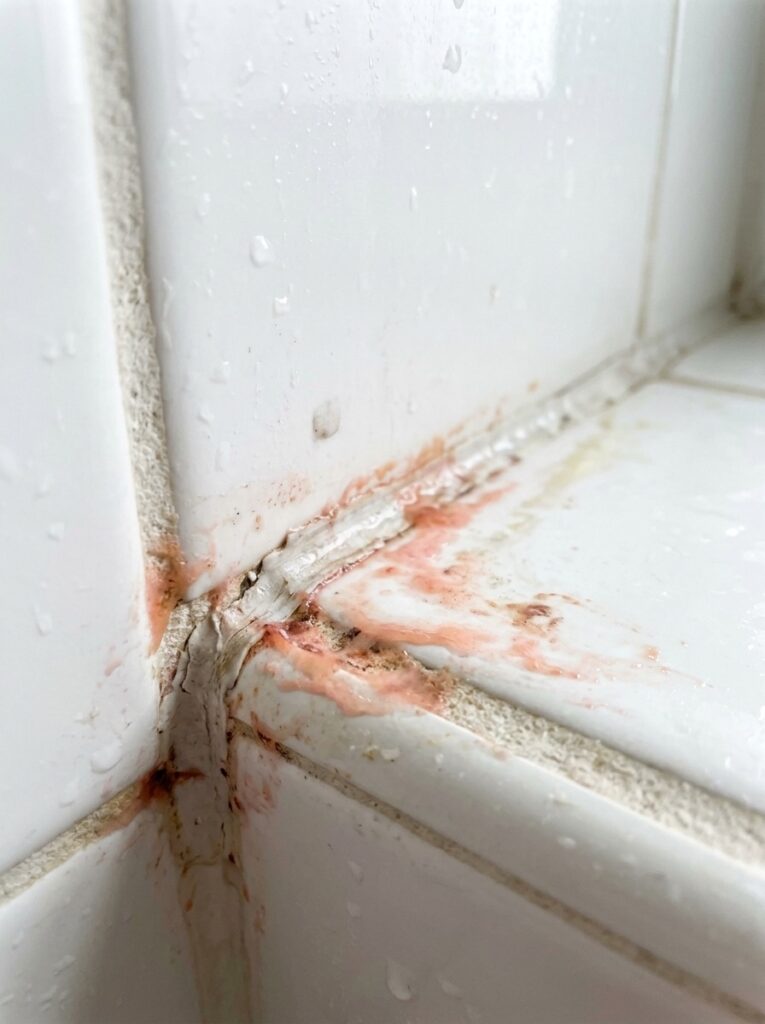
Table of Contents
What Is Pink Mold in the Shower?
The pink or orange-pink film in your shower is a bacterial biofilm caused by Serratia marcescens. It is not a fungus or true mold. It is an airborne bacterium that occurs naturally in water, soil, and the environment. It enters your home through open windows, doors, and ventilation.
Once it lands in your shower, it finds exactly what it needs to survive: moisture, warmth, and fatty residue from soap and shampoo. The bacteria produce a red pigment called prodigiosin. At first only a few bacteria are present and the color is barely visible. As the colony grows, the pink deepens to red or orange. The surface becomes slimy as the bacteria form a biofilm.
Serratia marcescens grows fastest in the areas of your shower that stay wet the longest. You will typically see it first in the corners of the shower tray, along the caulk lines, on the shower curtain near the waterline, around the drain, and inside the showerhead.
WARNING: Although pink mold is less dangerous than black mold, it can cause urinary tract infections, bladder infections, and in rare cases pneumonia if it enters the body through an open wound or the eyes. People with weakened immune systems should take extra care when cleaning it.
Why Does Pink Mold Keep Coming Back?
Pink mold returns quickly because the conditions that feed it never fully go away. Your shower will always have moisture, warmth, and soap residue. Unless you actively reduce these after every shower and clean regularly, the bacteria recolonize within days.
The most common reasons it keeps returning are: not rinsing soap residue off the walls and floor after showering, poor ventilation allowing moisture to sit for hours, not drying the shower after use, and only wiping away the visible pink without disinfecting the surface to kill remaining bacteria.
What You Need Before You Start
- Rubber gloves
- Goggles or safety glasses
- A face mask or respirator (recommended)
- Stiff-bristle scrub brush or old toothbrush for grout
- Spray bottle
- Baking soda
- Liquid dish soap
- Chlorine bleach (such as Clorox Regular Bleach) or a bleach-based bathroom cleaner
- Clean dry towel or squeegee
How to Remove Pink Mold from the Shower: Step-by-Step
Step 1: Protect yourself
Put on rubber gloves, goggles, and a mask before starting. Open the bathroom window and turn on the exhaust fan. You will be working with bleach, and the area is enclosed.
Step 2: Scrub away the biofilm
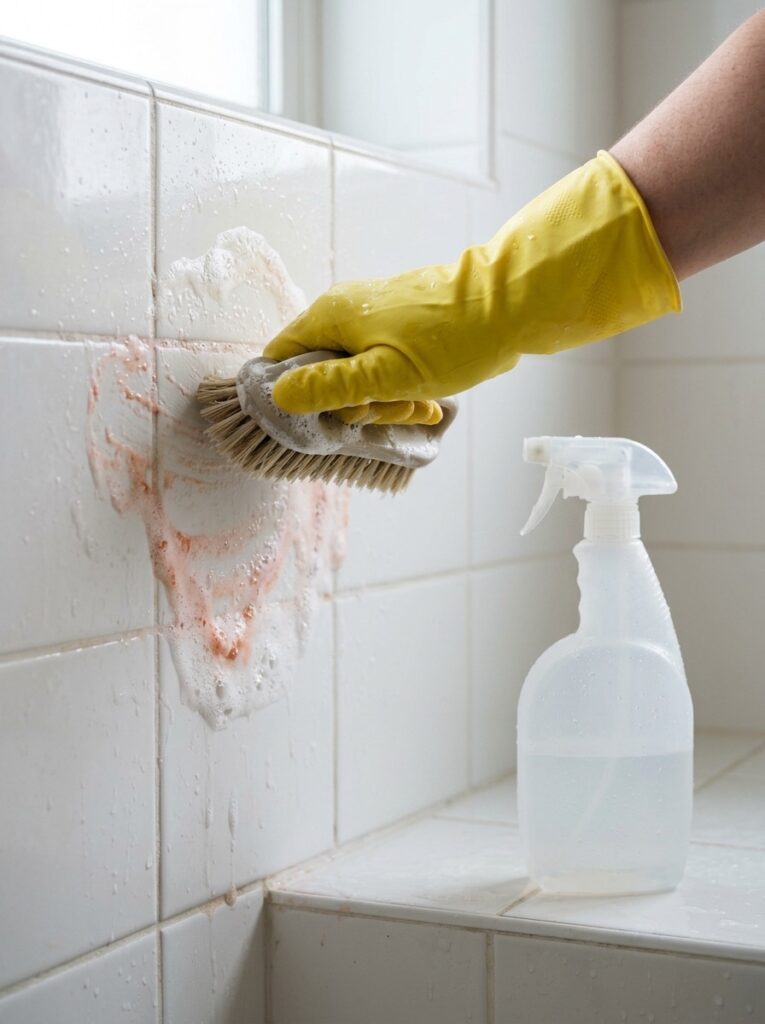
Mix 1/4 cup of baking soda with 1 tablespoon of liquid dish soap to form a runny paste. Dip a stiff-bristle brush into the paste and scrub all visible pink areas firmly. Work from the top of the walls downward. Pay extra attention to grout lines, caulk, the corners of the shower tray, and the base of the curtain. The scrubbing breaks apart the slimy biofilm so the disinfectant can reach the bacteria underneath.
Step 3: Rinse away the paste
Rinse all scrubbed surfaces thoroughly with warm water. Use the showerhead to flush everything down the drain.
Step 4: Disinfect with bleach solution
Mix 1 part chlorine bleach with 1 part warm water in a spray bottle. Spray all surfaces you have scrubbed, including walls, floor, drain surround, and any caulk lines. Leave the solution on for 10 minutes. Do not rinse yet. The bleach kills the bacteria that the scrubbing loosened but did not remove.
Step 5: Scrub lightly and rinse
After 10 minutes, give the treated areas a light scrub with the brush, then rinse with clean water. Dry all surfaces with a clean towel or run a squeegee across the tiles and floor.
How to Clean Pink Mold from a Shower Curtain
- Spray the curtain with the 1:1 bleach and water solution. If the curtain is colored, use OxiClean Versatile Stain Remover spray instead of bleach.
- Leave for 10 minutes.
- Remove the curtain from the hooks and put it in the washing machine.
- Add your regular laundry detergent plus 1 tablespoon of bleach for a white curtain, or OxiClean for a colored curtain.
- Wash on a warm gentle cycle.
- Hang to dry completely in sunlight before re-hanging. Sunlight has a natural sanitizing effect.
If the liner is badly stained or worn, replace it. Vinyl liners are sold at Walmart and Target and are not meant to last forever.
How to Clean Pink Mold from a Showerhead
- Fill a zip-lock bag with undiluted white vinegar.
- Place the bag over the showerhead so the face is fully submerged in the vinegar.
- Secure it with a rubber band. Leave for at least 30 minutes, or overnight for heavy buildup.
- Remove the bag and run the shower on hot for 1 minute to flush out any loosened deposits.
- Scrub the showerhead face with an old toothbrush and rinse.
How to Clean Pink Mold from Grout
Grout is porous and holds bacteria more stubbornly than tile surfaces. The paste method alone may not be enough.
- Apply undiluted bleach directly to the pink grout using a small paintbrush or an old toothbrush.
- Leave for 15 minutes.
- Scrub vigorously with the toothbrush using small circular motions.
- Rinse with clean water.
- If any pink remains, repeat. Badly stained grout may need two or three treatments.
Tip: After cleaning grout, apply a grout sealer once fully dry. Sealed grout is far less porous and resists bacteria buildup much more effectively. Products like Aqua-X Grout Sealer are available at Home Depot.
How to Prevent Pink Mold from Returning
Dry the shower after every use
This is the single most effective prevention step. Use a squeegee to wipe down the walls and floor after every shower. Then leave the shower door or curtain open to let air circulate. Serratia marcescens cannot thrive without standing moisture.
Rinse soap residue off the walls
Run the shower on hot for 30 seconds after you finish bathing and aim the head at all the walls and the floor. This flushes away the soap and shampoo residue that the bacteria feed on.
Improve bathroom ventilation
Run your exhaust fan during every shower and for at least 15 minutes after. If your bathroom does not have an exhaust fan, open the window immediately after showering. High humidity is the main driver of bacterial growth. A bathroom exhaust fan upgrade makes a significant difference.
Weekly spray with vinegar
Fill a spray bottle with undiluted white distilled vinegar and spray all shower surfaces once a week. Leave it on, do not rinse. Vinegar is acidic enough to inhibit bacterial growth and disrupt early-stage biofilm. It is not strong enough to kill an established colony, but it is very effective as a weekly maintenance step.
Clean the shower curtain monthly
Wash your shower curtain in the washing machine every three to four weeks. This removes the soap scum and body oil residue that feeds the bacteria before they can form a visible biofilm.
Fix leaky faucets and grout
Any dripping tap, cracked caulk, or damaged grout creates areas of constant moisture. Fix these promptly. Re-caulk the shower annually using a mold-resistant caulk like GE Silicone 2+ Kitchen and Bath Caulk, available at most hardware stores.
The EPA explains how indoor moisture leads to mold in its brief guide to mold, moisture and your home.
Related Guides
- How to Clean Mould Off Bathroom Sealant (Silicone and Grout)
- The Best Grout Cleaning Hacks That Actually Work (Tested Methods, Ranked)
- How to Clean a Shower Tray with Baking Soda (And What to Do for Tough Stains)
Frequently Asked Questions
Is pink mold in the shower dangerous?
For most healthy adults, brief skin contact with pink mold in the shower is not a serious health risk. However, Serratia marcescens can cause urinary tract infections and bladder infections if it enters the body through the eyes or an open wound. People with compromised immune systems, the elderly, and young children are more vulnerable. It should always be removed promptly and not allowed to build up.
Why does pink mold keep coming back even after I clean it?
Pink mold returns because cleaning removes the visible bacteria but does not fix the conditions that allow it to grow. If you do not disinfect after scrubbing, surviving bacteria recolonize within days. If the shower stays wet after use, or soap residue is left on surfaces, the bacteria have everything they need to start again. Disinfect with bleach after every clean and dry the shower after every use.
Can I use vinegar instead of bleach to kill pink mold?
White vinegar inhibits bacterial growth and works well as a weekly preventive spray, but it is not as effective as bleach for killing an established biofilm. For removing visible pink mold, use the baking soda scrub followed by the bleach disinfection. Reserve vinegar for the weekly maintenance spray to prevent the bacteria from getting established in the first place.
Does pink mold only grow in showers?
No. Serratia marcescens can grow anywhere in the bathroom that stays damp and has fatty residue. Common locations include the toilet bowl waterline, around sink drains, on bath mats, inside rubber bath toys, and on the underside of soap dishes. Check all of these areas when you treat your shower.
What is the difference between pink mold and black mold?
Pink mold is a bacteria, not a true mold. It is generally less dangerous than black mold. Black mold (Stachybotrys chartarum) is a true fungus that releases mycotoxins and is strongly linked to respiratory problems, allergic reactions, and serious illness. If you see black, green, or dark patches in your bathroom that look fuzzy rather than slimy, treat it as black mold and consider calling a professional if it covers a large area.
