
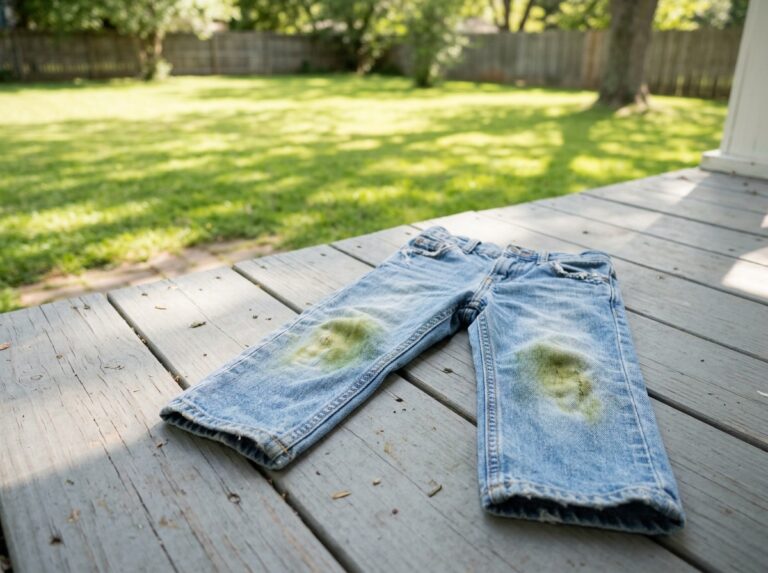
Grass stains look like they should come out in the wash, but they rarely do without pre-treatment. The reason is that grass contains chlorophyll and other natural pigments that bond chemically with fabric fibers the same way a dye does. The longer the stain sits, the stronger this bond gets.
A standard wash cycle on its own is usually not enough. You need to break the chemical bond first. Here are six methods that work, ranked from gentlest to strongest.
WARNING: Never tumble dry a grass-stained garment before the stain is fully removed. Heat from the dryer permanently bonds chlorophyll to the fabric fibers.
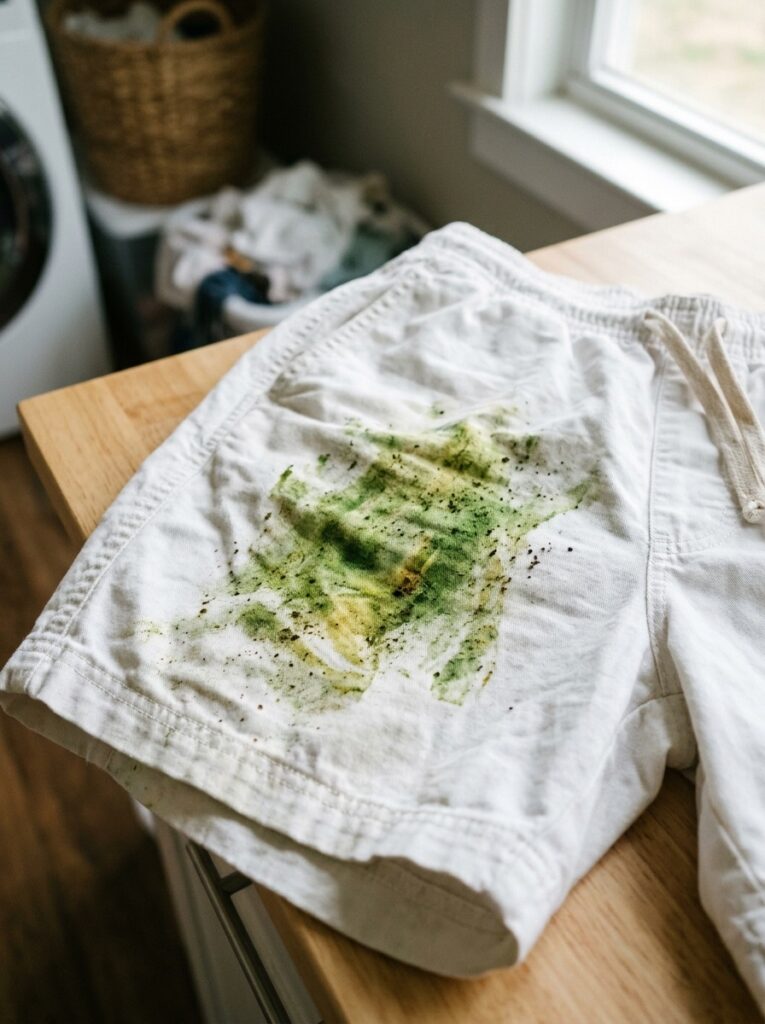
Table of Contents
Why Grass Stains Are Hard to Remove
Grass stains are a mix of chlorophyll, protein, and other organic compounds. Chlorophyll is a green pigment that behaves like a natural dye, with a strong chemical affinity for plant-based natural fibers like cotton and linen. It bonds with the fibers at a molecular level.
This is why grass stains are classified as combination stains, containing both protein and tannin components. To remove them fully, you need both an enzymatic action to break down the protein and an acid or oxidizing agent to break down the color pigment.
Before You Start: Remove Solid Matter
Before applying any treatment, brush away any loose grass, dirt, or dried mud from the fabric surface. Use an old toothbrush or soft nail brush. Do not rub the stain. Work from the outside edge inward. Removing the solid material stops it being rubbed deeper into the fibers during treatment.
Method 1: White Vinegar Soak (Best for Fresh Stains)
White vinegar is acetic acid, which helps break down the chlorophyll bond and lift the pigment from the fibers.
- Mix equal parts white distilled vinegar and cold water in a bowl or small basin.
- Soak the stained area in the solution for 30 minutes.
- After soaking, rub your usual liquid laundry detergent into the stain with a toothbrush.
- Let the detergent sit for 10 minutes.
- Rinse with cold water.
- Machine wash on the coolest safe cycle for the fabric.
- Check before drying. Repeat if green is still visible.
Tip: For extra power, use undiluted white vinegar on the stain first, wait 10 minutes, then do the vinegar-water soak. This works well on jeans and cotton t-shirts.
Method 2: Dish Soap and Hydrogen Peroxide (Best All-Round Method)
This combination targets both the protein and pigment components of a grass stain. The dish soap breaks down oily residue and lifts particles, while hydrogen peroxide oxidizes and bleaches the chlorophyll pigment.
- Mix one part 3% hydrogen peroxide with two parts liquid dish soap.
- Apply the mixture directly to the stain.
- Work it in gently with a soft toothbrush.
- Leave for 20 to 30 minutes.
- Rinse with cold water, then wash normally.
WARNING: Hydrogen peroxide has mild bleaching properties. Test on a hidden seam before using on dark or brightly colored clothing. This method is safest on white, light gray, and pale fabrics.
Method 3: Baking Soda and Hydrogen Peroxide Paste
This is a thicker version of Method 2, useful when the stain has a lot of depth and you want the paste to stay in contact with the fabric.
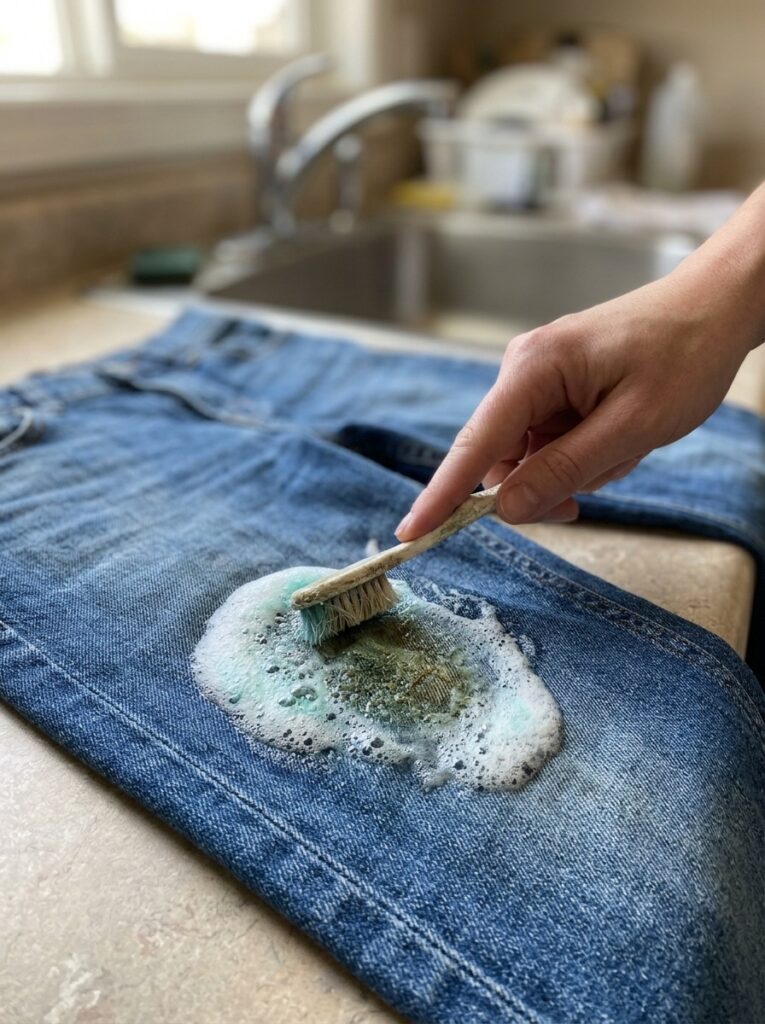
- Mix 1 tablespoon of baking soda with enough hydrogen peroxide to form a thick paste.
- Apply over the stain and spread it evenly with a toothbrush.
- Leave for 30 minutes.
- Scrub gently with the toothbrush, then rinse with cool water.
- Apply a small amount of laundry detergent, leave for 10 minutes, and machine wash.
Method 4: Enzyme Laundry Detergent Pre-Treatment
Enzyme-based laundry detergents contain protease and other enzymes that break down protein-based stains. Grass stains respond well to enzymatic treatment because of their protein component.
To use: apply a generous amount of liquid biological detergent such as Tide Ultra OXI, Persil ProClean with Enzymes, or All Mighty Pacs with Stainlifters directly to the dry stain. Work it into the fabric with your fingers. Let it sit for 30 minutes before washing. Do not dilute or rinse off the detergent before putting in the machine.
For stubborn stains, pre-treat the same way and then add an enzyme-based stain booster like OxiClean Versatile Stain Remover directly to the wash cycle.
Method 5: Rubbing Alcohol (For Synthetic Fabrics and Denim)
Rubbing alcohol (isopropyl alcohol) dissolves the organic compounds in grass stains and works well on durable fabrics like denim, polyester, and cotton blends. Avoid it on silk, wool, and acetate.
- Dampen a clean white cloth with rubbing alcohol.
- Blot the stain firmly, working from the outer edge inward.
- Replace the cloth with a clean section as it picks up color.
- Once the stain has lightened, rinse with cold water and wash normally.
Method 6: Commercial Stain Removers for Stubborn or Dried Stains
For old dried grass stains, commercial enzyme pre-treaters give the best results. Recommended products available in the US:
- Zout Triple Enzyme Formula Spray: Very effective on protein-based stains. Spray on, wait 5 minutes, wash.
- Carbona Stain Devils No. 1 (Grass and Mud): Formulated for chlorophyll and soil stains.
- Shout Advanced Action Gel: Good for deep-set stains on sportswear and school uniforms.
- OxiClean Spray: Broad-spectrum oxygen bleach that handles both the protein and pigment components.
For any of these, follow the product instructions. Apply, let sit for the stated time, do not let the product dry on the fabric, and wash immediately after.
Grass Stains on Different Fabric Types
White clothes
You can use hydrogen peroxide directly on white fabrics. Apply it undiluted to the stain, leave for 10 minutes, then rinse and wash. After treating, hang the item outdoors in direct sunlight. Sunlight helps break down any remaining green pigment through its natural bleaching effect.
Dark jeans and dark clothing
Stick to Method 1 (vinegar soak) or the enzyme pre-treatment. Avoid hydrogen peroxide. For dark denim, rubbing alcohol works well without bleaching risk.
Sportswear and synthetic fabrics
Use the enzyme pre-treatment method or rubbing alcohol. Do not use bleach-based products on synthetic moisture-wicking fabrics. Wash on a cool cycle, as heat can set the stain and may damage synthetic fibers.
Children’s school uniforms
Tide Ultra OXI and Spray ‘n Wash are both effective and gentle enough for repeated use on school uniform fabrics. Pre-treat immediately after the stain occurs for best results.
For other stain types, see the stain removal guide from the American Cleaning Institute.
Related Guides
- Can You Put Muddy Clothes In The Washing Machine?
- How to Get Blood Out of White Clothes (Fresh and Dried Stains)
- Does Hydrogen Peroxide Bleach Clothes? (Important Things You Need To Know )
Frequently Asked Questions
Are grass stains permanent if not treated immediately?
Grass stains can become permanent if left untreated for several days, especially if the item goes through a hot wash or dryer with the stain present. However, even old dried grass stains often respond to a good enzyme pre-treater. Act as soon as you notice the stain for the best chance of full removal.
Why does my washing machine not remove grass stains on its own?
Standard wash cycles are not designed to break the chlorophyll bond. The water and detergent in a normal wash cycle carry away loose soil very well, but they do not chemically break down the pigment bond that chlorophyll forms with cotton fibers. Pre-treatment with an enzyme cleaner or acid breaks the bond before the wash removes it.
Does toothpaste remove grass stains?
White non-gel toothpaste contains mild abrasives and some detergent that can help lift surface grass stains from durable fabrics. Apply a pea-sized amount, rub in gently, leave for 10 minutes, then rinse. It is not as effective as vinegar, dish soap, or enzyme treatments, but works as an emergency option.
Can I use bleach on grass stains?
Chlorine bleach is not recommended for grass stains. It does not effectively break down chlorophyll and can damage or yellow some fabrics. Oxygen bleach such as OxiClean is the correct choice, especially for white and light-colored fabrics, as it oxidizes the pigment without attacking the fibers.
How do I get grass stains out of white shoes?
Apply a paste of baking soda and hydrogen peroxide to the stained area using an old toothbrush. Leave for 20 minutes, scrub gently, then rinse. For canvas shoes, follow up with a cold machine wash in a laundry bag. For leather, use a leather cleaner and avoid water saturation.
