
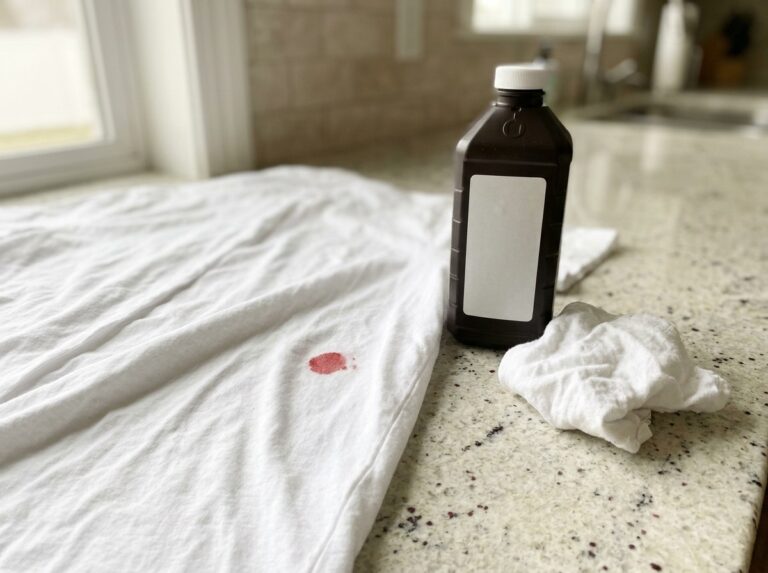
Blood on white clothes is one of the more alarming laundry situations. The stark contrast against white fabric, combined with the knowledge that blood stains can be permanent if handled incorrectly, makes it feel urgent. The good news is that with the right approach, blood stains, even old, dried ones, are removable from white fabric.
The key rules are consistent: cold water only, act fast, use the right chemistry for the stage of the stain, and never put the garment in the dryer until the stain is completely gone.
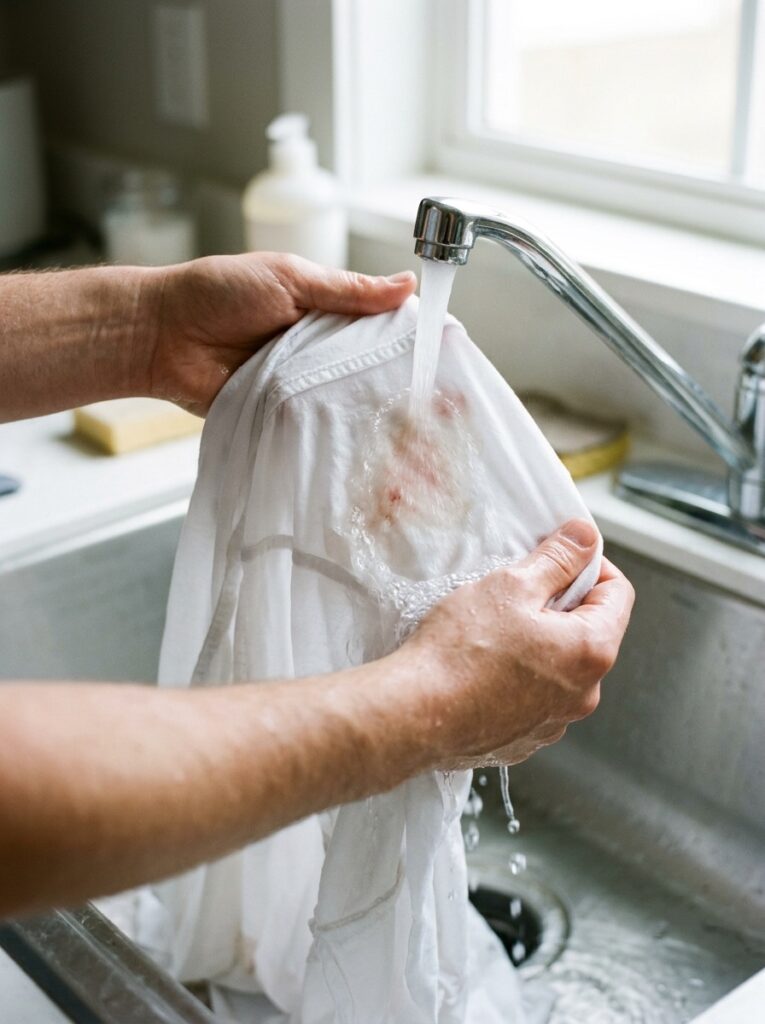
Table of Contents
Why Blood Is Hard to Remove: The Science
Blood contains hemoglobin, a protein-based compound, along with other proteins including fibrinogen (which helps blood clot). When these proteins are exposed to heat, they undergo denaturation, essentially cooking into the fabric fibers in the same way an egg white solidifies when heated. Once set, the proteins bond strongly to the fabric and become extremely difficult to remove.
This is why every blood stain removal method shares one non-negotiable rule: cold water only. Warm or hot water is the single biggest mistake you can make with a blood stain.
⚠️ Critical Rule: Never use hot or warm water on a blood stain. Never put a blood-stained garment in the dryer until the stain is fully gone. Heat permanently sets blood into fabric fibers.
Method 1: Fresh Blood Stains, Cold Water Flush + Soap
Speed is the most important factor with fresh blood. The faster you act, the less the proteins have time to bond to the fibers.
- Remove the garment and hold the stained area under cold running water immediately. Let the water flow from the back of the fabric through to the front, flushing the blood out rather than pushing it deeper.
- Continue rinsing for 1 to 2 minutes, using your fingers to gently rub the stained area under the water flow.
- If the stain is already fading significantly, continue flushing until it disappears, then launder in cold water.
- If blood remains, apply a small amount of dish soap (Dawn or similar) directly to the wet stain. Work it in with your fingers.
- Let the dish soap sit on the stain for 5 minutes, then rinse again under cold water.
- Launder in cold water with your regular detergent. Check the stain before drying, if any trace remains, do not put in the dryer.
Method 2: Hydrogen Peroxide (Best for White Clothes)
Hydrogen peroxide is the most effective stain remover for blood on white fabrics. It acts as a mild bleaching oxidant that breaks down the hemoglobin proteins in the blood. Because white clothing cannot be bleached further by it at standard concentrations, it is the ideal treatment.
Use standard 3% hydrogen peroxide from the pharmacy (the brown bottle). Do not use higher concentrations: they can damage fabric.
- Rinse the stain first with cold water to remove as much blood as possible
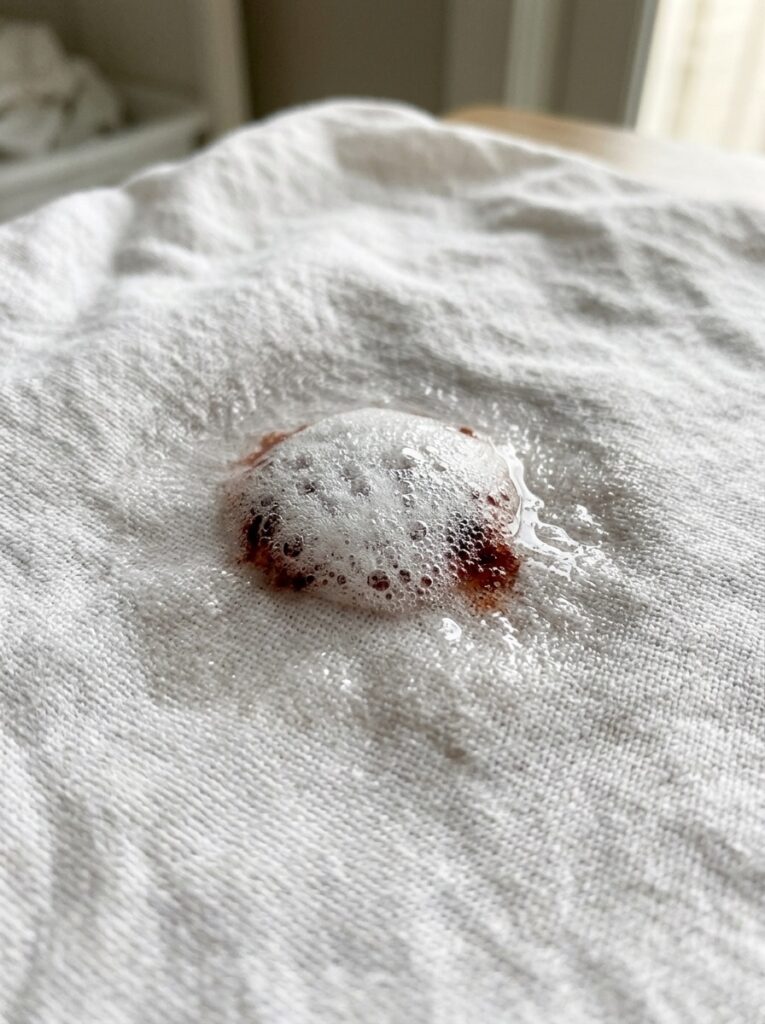
- Pour a small amount of 3% hydrogen peroxide directly onto the stain. You will see it bubble and fizz. This is the oxidation reaction breaking down the blood proteins.
- Let it sit for 5 to 10 minutes. The stain should visibly lighten during this time.
- Blot with a clean white cloth to check progress. If the stain remains, reapply and let sit again.
- Rinse with cold water, then launder in cold water.
- Check before drying. Repeat if any shadow remains.
💡 Note: Hydrogen peroxide is safe on white fabrics but can lighten or bleach colored fabrics. For anything that isn’t white, always test on a hidden seam first.
Method 3: Dried or Set-In Blood Stains
Dried blood stains require a more aggressive pre-treatment to re-hydrate and break down the set protein bonds before washing.
Step 1: Scrape and soak
- Gently scrape off any dried surface blood with a blunt knife or butter knife. Do not press hard or you will embed it deeper.
- Soak the stained area in cold water for 30 to 60 minutes to re-hydrate the dried blood proteins.
- Apply hydrogen peroxide and follow the method above. For very old dried stains, let the peroxide sit for up to 30 minutes, reapplying as it fizzes out.
Step 2: Enzyme pre-treatment
For stubborn dried stains, an enzymatic stain remover is the most effective tool. These products contain protease enzymes that specifically break down protein-based stains like blood, sweat, and grass.
Recommended products for white clothes:
- OxiClean White Revive: specifically formulated to brighten and deodorize white fabrics
- Zout Triple Enzyme Formula: highly concentrated enzyme spray
- Spray ‘n Wash with Enzymes: widely available drugstore option
- Puracy Natural Stain Remover: plant-based enzyme option
Apply directly to the stain, work into the fabric gently, and let sit for 15 to 30 minutes (or per product instructions). Wash in cold water.
Other household options for dried blood on white clothes
Baking soda paste
Mix 2 tablespoons of baking soda with enough cold water to form a thick paste. Apply to the stain, work in gently, and leave for 30 minutes. The mild abrasive and alkaline properties help lift the stain. Rinse with cold water before washing.
Salt solution
Mix 1 tablespoon of table salt with 1 cup of cold water to create a saline solution. Soak the stained area for 30 minutes, the salt draws moisture and dissolved proteins out of the fabric. Particularly useful for delicate fabrics that cannot handle stronger chemical treatments.
Meat tenderizer
This may sound unusual, but unseasoned meat tenderizer powder (like Adolphs) contains papain, a protease enzyme that breaks down blood proteins. Mix 1 teaspoon with enough cold water to make a paste, apply to the damp stain, and leave for 30 to 60 minutes. Rinse and wash cold. Available at most grocery stores.
Dealing With Blood on Delicate White Fabrics
Silk, wool, and fine lace require gentler treatment:
- For fresh stains: blot immediately with cold water, avoiding rubbing
- Salt method is safe: apply a saltwater solution or a paste of salt and cold water to the wet stain, let sit for 20 to 30 minutes, then rinse with cold water
- Avoid hydrogen peroxide on silk: it can weaken the protein structure of silk fibers
- For stubborn stains on silk or wool, take the garment to a dry cleaner rather than risking damage with chemical treatments at home
After Treatment: Washing and Drying
Once you have treated the stain with your chosen method:
- Wash in cold water (below 60°F / cold setting on your machine)
- Use a biological/enzyme laundry detergent if available, brands like Tide Ultra OXI, Persil ProClean with Enzymes, or Arm & Hammer Plus OxiClean are all good choices
- After the cycle, remove and inspect the stain before drying
- If any trace of the stain remains, do not dry, repeat the treatment
- Air dry or use the lowest possible heat dryer setting once confirmed stain-free
For other stain types, see the stain removal guide from the American Cleaning Institute.
Related Guides
- How to Remove Vomit Stains from Clothing: The Ultimate Guide
- Does Hydrogen Peroxide Bleach Clothes? (Important Things You Need To Know )
- Can You Mix Hydrogen Peroxide And Laundry Detergent? (Important Notes)
Frequently Asked Questions
What if the blood stain has been washed and dried already?
If the garment has been through a dryer with the stain still present, the heat has partially set it, making removal harder but not impossible. Soak the stain in cold water with an oxygen bleach product like OxiClean White Revive overnight. Apply an enzyme pre-treater the next morning and rewash in cold water. It may take two or three rounds, but most set stains can still be significantly faded or removed.
Can I use chlorine bleach on blood stains on white clothes?
Avoid it. Chlorine bleach (Clorox) can actually react with the proteins in blood and yellow the stain further, making it harder to remove. Oxygen bleach (OxiClean) is the correct bleach-based product for blood stains. It is safer and more effective for protein stains.
Does lemon juice work on blood stains?
Lemon juice has mild bleaching properties due to citric acid, and it can help lighten residual blood on white fabric. Apply directly to a rinsed, damp stain, expose briefly to sunlight (which activates the bleaching effect), then rinse and wash cold. It works best as a finishing treatment after initial cleaning rather than a primary stain remover.
My blood stain has gone pink/brown but not fully removed, what now?
This is common after a first treatment. The main red blood color is from hemoglobin which responds quickly to cold water and hydrogen peroxide. The residual yellowish-brown tint is from other proteins. Apply an enzyme cleaner directly to the remaining mark, let sit for 30 minutes, and rewash cold. You may need two to three treatment cycles for an old or deep stain.
Is it safe to soak white clothes in hydrogen peroxide?
Short soaks of 30 minutes in 3% hydrogen peroxide are safe for most white cotton and poly-blend garments. For longer soaks or higher concentrations, the peroxide can begin to weaken fabric fibers. Always test on an inconspicuous area first, and stick to the standard pharmacy-grade 3% solution.
