

Country garden style about creating outdoor spaces that feel lived-in, warm, unpretentious, and deeply connected to natural growth.
The decorative elements that define country gardens, weathered wood, aged terracotta, found objects repurposed as containers, hand-painted details, wildflower drifts, share the quality of having arrived naturally rather than been placed with precision.
Here are 20 decoration ideas that create a genuine country garden character.
Containers and Planters
1. Galvanized Stock Tanks and Buckets

Galvanized metal, cattle troughs, old milk cans, watering cans, and farm buckets, is one of the defining materials of American country garden style. The silvery metal, when planted with colorful annuals or herbs and allowed to weather to a matte patina, creates an instantly recognizable country aesthetic.
Old galvanized watering cans with their spouts still attached, planted with trailing petunias or geraniums, are particularly charming and frequently photographed for their effortless vintage character.
2. Vintage Terracotta Stacked and Clustered

Terracotta pots in multiple sizes, clustered together at different heights and filled with herbs, succulents, or trailing flowers, create the appearance of an organic, accumulated collection rather than a designed display. The key is quantity and variety: 7 to 12 pots of different ages, sizes, and shapes create the look. Three identical pots do not.
3. Worn Wooden Wheelbarrows as Planters
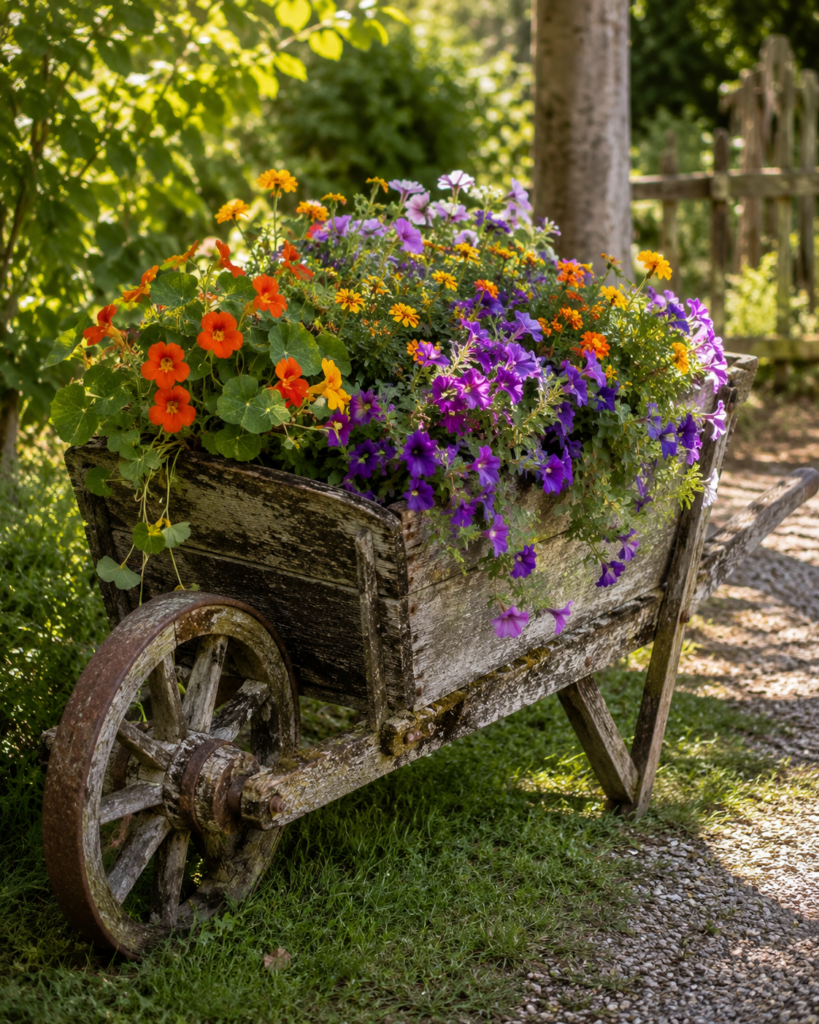
An old wooden wheelbarrow filled with soil and planted with annuals or herbs is one of the most recognizable country garden props. The charm lies entirely in the patina of the wheelbarrow, new, clean wheelbarrows look wrong. Find genuinely weathered ones at farm sales, antique markets, or simply weather a new one by leaving it outside in full weather for a full season before planting.
4. Repurposed Farm Equipment
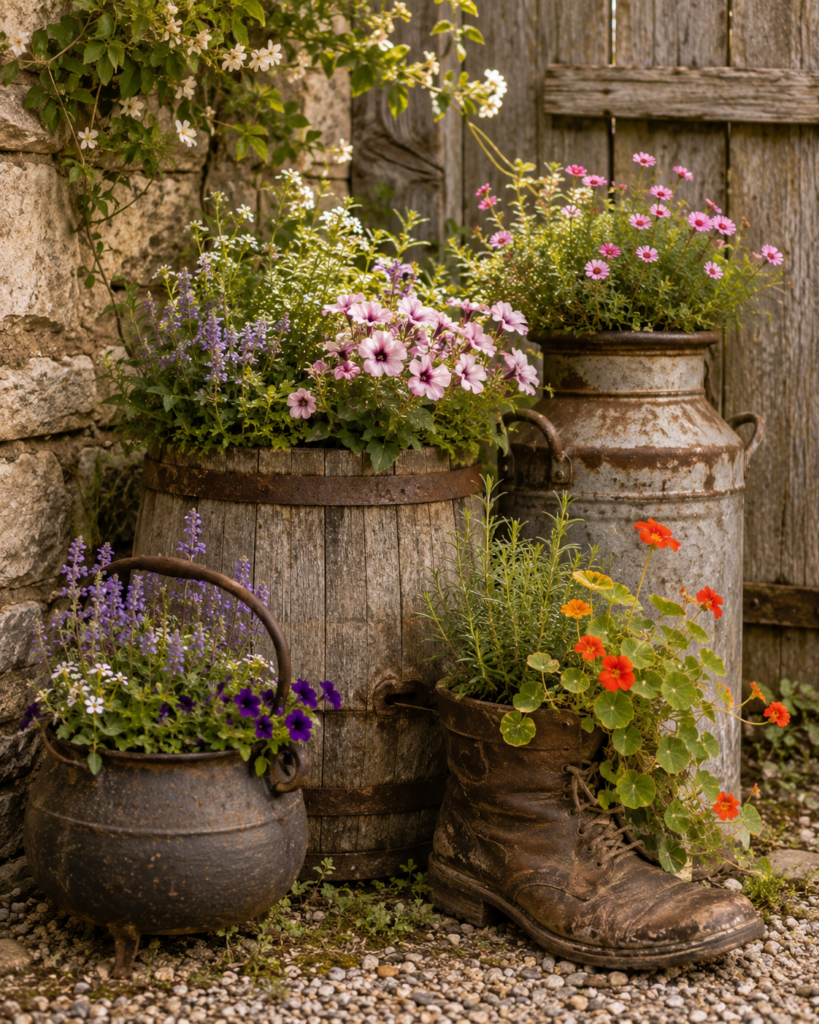
Old farm equipment, cast iron kettles, wooden barrels, stone sinks, milk churns, and even old boots, all have a long country garden tradition as unexpected plant containers. The whimsy of these objects as planters is part of the appeal. Laurie Lee’s description of his mother’s cottage garden in Cider with Rosie notes she grew geraniums in a cast-iron water softener, and this tradition of resourceful improvisation is at the heart of country garden decoration.
Paths and Surfaces
5. Irregular Flagstone Paths

Country garden paths should look like they grew into existence rather than were installed. Irregular flagstone pieces in varying sizes, with gaps between them filled with creeping thyme, chamomile, or moss, create paths that improve with age as the filler plants establish.
Avoid perfectly cut uniform stone for country gardens. The irregularity is the charm.
6. Pea Gravel Paths

Pea gravel in warm buff, cream, or golden tones is the quintessential country garden path surface. It drains well, looks natural, invites bare feet, and crunches pleasantly underfoot. Edge gravel paths with lavender, catmint, or alchemilla for the classic look.
7. Mown Grass Paths Through Meadow

In larger country gardens, mown paths winding through unmown grass (wildflower meadow or longer ornamental grass) create a pastoral quality that no hard surface can match. The contrast between the neat, mown path and the abundant flowering meadow to each side creates exactly the sense of productive wildness that defines country garden character.
Structural and Vertical Elements
8. Rustic Obelisks and Tuteurs
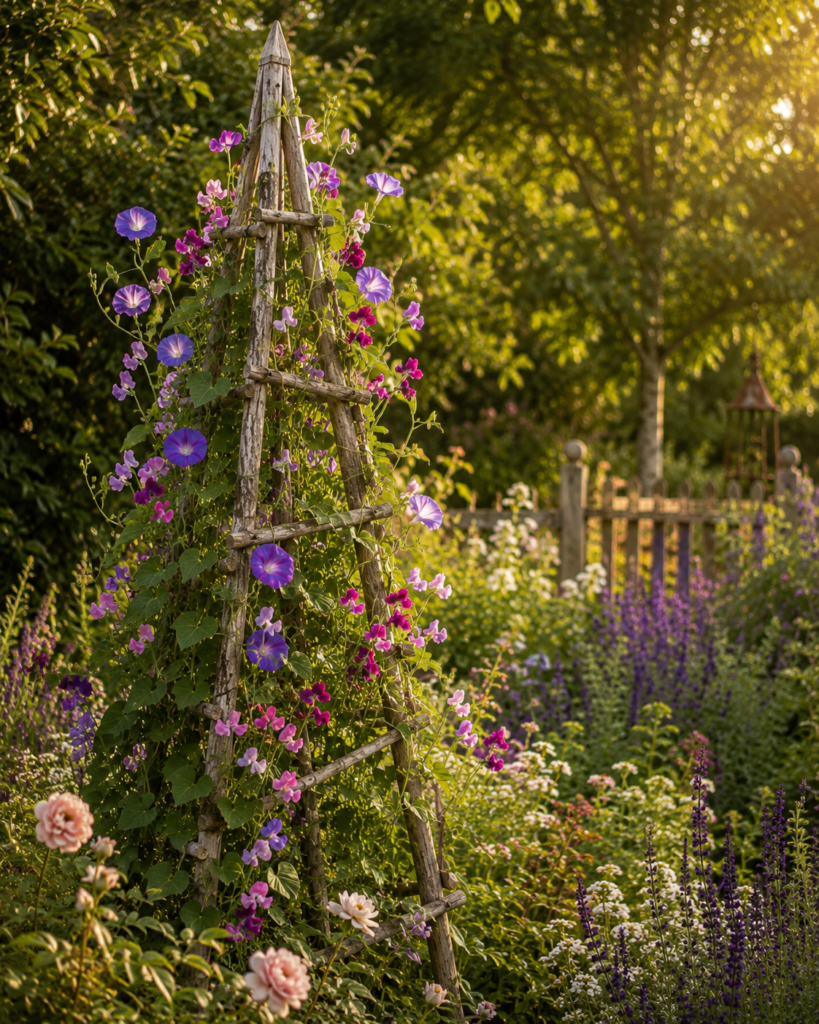
Tall wooden obelisks (tuteurs), either bought or built from stripped branches, provide vertical structure in country garden borders while supporting climbing plants. Unlike the polished metal obelisks used in formal gardens, country garden tuteurs are often rough-hewn, weathered, and irregular, which makes them more rather than less attractive.
- Fast-growing climbers for country obelisks: Sweet peas, climbing nasturtiums, black-eyed Susan vine, and annual morning glory
9. Weathered Wooden Signs and House Names
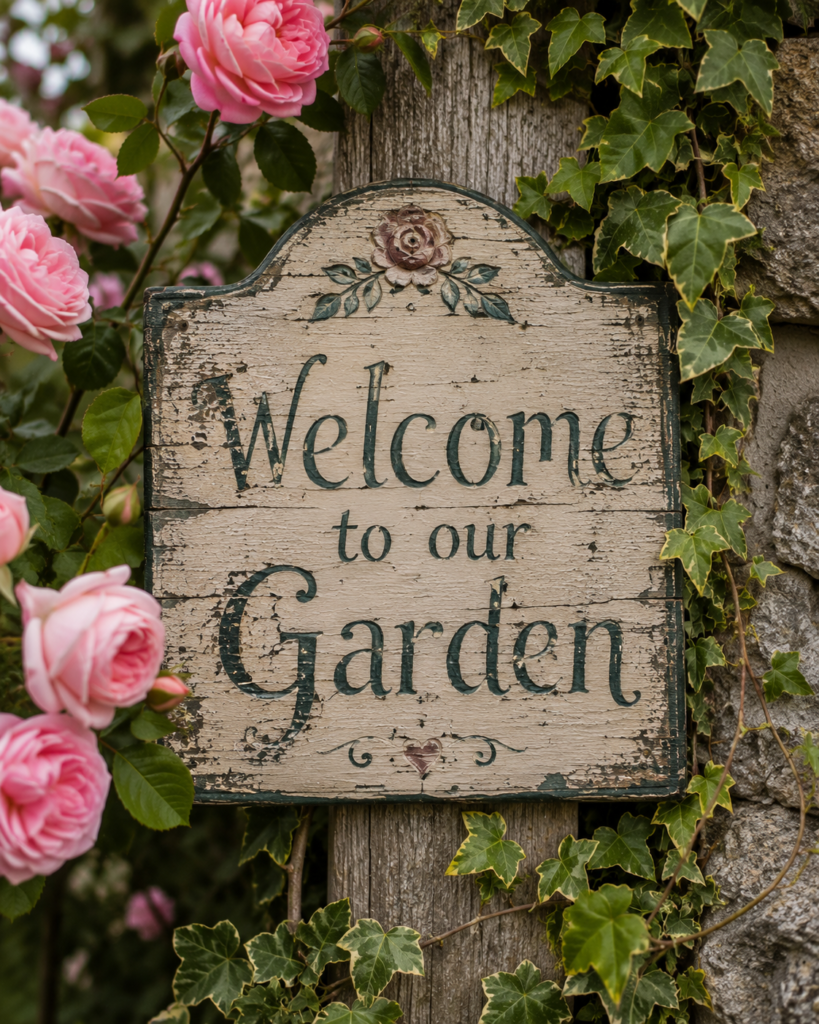
Hand-painted or carved wooden signs, garden names, plant labels, house names, or welcoming phrases, add a personal, human-made quality to a garden that manufactured objects cannot provide. Weathering the paint (leaving it slightly chipped or distressed) is period-appropriate.
10. Wattle Fencing and Willow Hurdles

Woven willow or hazel wattle panels create natural-looking temporary dividers within the garden that suit the country aesthetic perfectly. Available from specialist garden suppliers, or DIY-made from harvested willow shoots in late winter.
11. Split Rail Fence
The classic American country garden boundary is the split rail fence (zigzag or straight). Made from split log rails stacked in post-supported sections, it looks entirely right in rural and semi-rural settings while also working well in suburban gardens seeking a country character.
Planted Features
12. Wildflower Meadow Sections
Even a small wildflower area (20 to 30 square feet is enough) adjacent to a garden bed or path edge transforms a country garden. Annual wildflower mixes (cosmos, cornflowers, poppies, larkspur, phacelia) sown directly into prepared bare soil in spring create a naturalistic drift that defines the country garden more than any manufactured decoration.
- Best annual meadow mixes: American Meadows and Prairie Moon Nursery both offer regionally appropriate wildflower seed mixes
13. Old-Fashioned Rose Hedge
A hedge of Rosa rugosa or heritage shrub roses, allowed to grow as a loose, semi-formal hedge rather than being clipped to rigid geometry, brings the most important country garden plant into the structural landscape.
14. Kitchen Garden Beds
Visible vegetable and herb production is fundamental to the country garden aesthetic. Even a small kitchen garden bed (4×8 feet) planted with tomatoes, beans, squash, and herbs contributes enormously to the productive, purposeful character of a country garden. The presence of food crops is historically authentic and deeply appealing.
15. Specimen Fruit Tree
A single apple, pear, quince, or plum tree allowed to grow into a relaxed, full shape (rather than being rigorously pruned to a formal shape) brings productive beauty to the country garden. Underplant with spring bulbs, wildflowers, or low perennials.
Water Features and Wildlife
16. Stone Birdbath
A weathered stone birdbath, ideally old enough to have lichen developing on its surface, is one of the most valuable wildlife features in any garden while also serving as an attractive focal point. Position in a spot where birds can see approaching predators (not hidden under dense shrubs) but near enough to plantings for cover.
17. DIY Pond or Water Trough
A small pond (even a galvanized cattle trough sunk into the ground with a few aquatic plants and a submerged marginal shelf) creates a wildlife magnet and the soothing sound of still water reflecting sky and clouds. Country gardens almost universally feature some form of water.
18. Bee and Butterfly-Friendly Planting
A deliberate grouping of pollinator plants, lavender, echinacea, single dahlias, buddleja, achillea, and late-season asters, creates not just a garden feature but a living ecosystem. The sight and sound of bees working a lavender hedge on a summer afternoon is one of the defining sensory experiences of a country garden.
Finishing Details
19. Hand-Painted Terracotta and Clay
Simple pots painted with botanical illustrations, garden names, or decorative patterns add a handmade quality to the container collection. Even simple polka dots or stripes painted with exterior craft paint create personal decorative details that purchased items cannot replicate.
20. Lanterns and Solar Lights
Country garden evening lighting should be warm, low, and unpretentious: storm lanterns with candles or solar-powered LED candles, fairy lights wrapped around old wooden structures, and simple solar stake lights along a path edge all create the warm, welcoming atmosphere that defines country garden evenings. Avoid bright white LED spotlights, which have a commercial rather than country character.
✅ Tip The most effective way to accelerate a “weathered” aesthetic for new country garden objects (wooden planters, terracotta pots, garden signs) is to paint them with natural yogurt or dilute liquid fertilizer and leave in a shaded, moist spot for a few weeks. The microorganisms in yogurt colonize porous surfaces and accelerate the development of moss and lichen. Restraint in decoration is as important as creativity. The best country gardens have decoration that feels discovered rather than arranged. Leave plenty of planting doing the visual work, decoration should punctuate the planting, not compete with it. |
Frequently Asked Questions
What is the difference between a country garden and a cottage garden?
Cottage garden and country garden styles share significant overlap but have different emphasis. Cottage gardens focus primarily on dense, romantic planting with a defined English heritage tradition. Country gardens incorporate a broader set of materials and cultural references, including American rural traditions, working farm aesthetics, and productive food growing alongside ornamentals. Country garden decoration makes more use of functional farm objects repurposed decoratively.
How do I make a small suburban garden feel like a country garden?
The most effective techniques for suburban spaces: use warm-toned natural materials (terracotta, natural wood, gravel), include at least one food crop (a raised vegetable bed or fruit tree), incorporate a birdbath or small water feature, plant at least one climber on any fence or wall, and allow a small area to grow more naturalistically (even a square meter of wildflowers). The absence of anything obviously modern or urban creates the impression more than any single element.
The Bottom Line
Country garden decoration works best when it reflects genuine character rather than purchased style. The galvanized watering can that was actually used for watering before it became a planter, the wooden bench weathered by real seasons of outdoor use, the hand-painted sign lettered imperfectly by an actual hand, these objects carry authenticity that precise reproductions cannot replicate.
Collect, repurpose, weather, and personalize. The country garden aesthetic accumulates over time rather than being installed at once.
Related Articles:
