
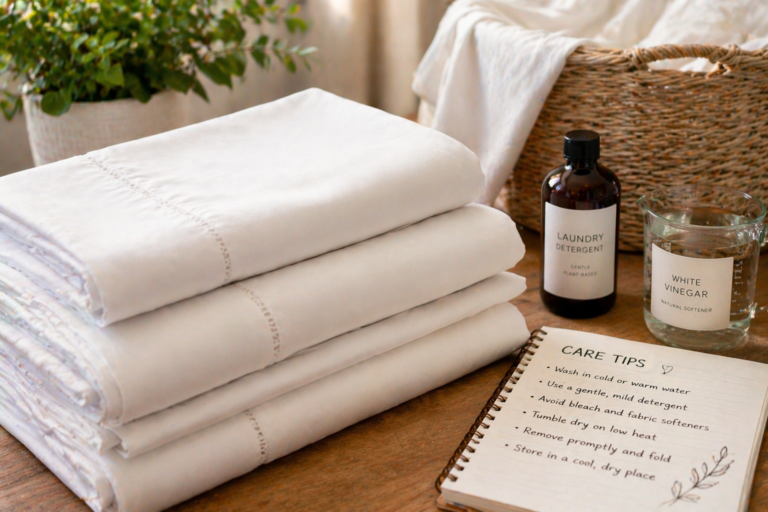
Egyptian cotton sheets are one of the best investments you can make for your bedroom, long, strong fibers, exceptional softness, and a durability that improves with every wash when you treat them right.
The problem is that most people wash them the same way they wash everything else. Too hot, too much detergent, wrong cycle, and those premium sheets start to pill, fade, or lose that characteristic softness within months.
This guide covers everything you need to know: the right temperature, the right cycle, what to avoid, how to dry them, and how to keep them getting softer over time.
What Makes Egyptian Cotton Different?
Egyptian cotton (also called Giza cotton) is grown in the Nile River Valley, where the climate and soil produce fibers that are significantly longer than standard cotton.
These longer fibers, called long-staple or extra-long-staple cotton, result in a finer, stronger thread that can be woven more tightly.
The result is a fabric that gets softer with each wash rather than rougher, is highly breathable and moisture-wicking, has greater tensile strength than standard cotton, and holds color better over time.
Thread count alone does not define quality in Egyptian cotton, fiber length and weave quality matter more. A 400-thread-count genuine Egyptian cotton sheet will outperform a cheap 1,000-thread-count sheet made from lower-grade fibers.
| Tip: When buying Egyptian cotton sheets, look for certification from the Cotton Egypt Association (CEA), this verifies authentic Egyptian cotton rather than blends or mislabeled products. |
What Temperature to Wash Egyptian Cotton Sheets
Temperature is one of the most important factors in caring for Egyptian cotton. The correct temperature is 104 degrees F (40 degrees C) for a standard wash. This is warm enough to clean thoroughly and kill most bacteria, but cool enough to protect the fibers.
Temperature Guide
- 86 degrees F (30 degrees C) – Use for lightly soiled sheets or when you want to be extra gentle. Sufficient for regular weekly maintenance washes.
- 104 degrees F (40 degrees C) – The standard recommended temperature. Effective at removing oils, sweat, and general grime.
- 140 degrees F (60 degrees C) – Only when hygiene is critical, such as after illness. Repeated washes at this temperature will shorten the lifespan of even high-quality Egyptian cotton.
- Above 140 degrees F – Never. This causes shrinkage and accelerates fiber breakdown.
| Warning: Do not wash Egyptian cotton on the Cotton cycle on your machine, this is typically 140-195 degrees F and far too hot for long-term care. |
How to Wash Egyptian Cotton Sheets in the Washing Machine
Machine washing is perfectly fine for Egyptian cotton sheets. Just follow these steps:
What You Will Need
- Mild, color-safe liquid laundry detergent (Seventh Generation Free and Clear, Puracy Natural Liquid Laundry Detergent, or Woolite Complete)
- Optional: half a cup of distilled white vinegar for the rinse cycle
- Optional: half a cup of baking soda for stain treatment or brightening
Steps
- Wash sheets separately from other items, zippers, buttons, and rough fabrics from clothes can snag and damage Egyptian cotton fibers.
- Separate by color. Wash white sheets with white sheets, darks with darks. Even small amounts of dye transfer can affect Egyptian cotton colorfastness.
- Place sheets in the drum loosely. Overpacking leads to uneven cleaning and more wrinkles.
- Select a Delicate or Gentle cycle with a low spin speed. High spin speeds stress the fibers and cause premature wear.
- Set the temperature to 104 degrees F (40 degrees C).
- Add your detergent, use half the recommended dose. Egyptian cotton does not need heavy detergent loads, and excess detergent leaves residue that reduces softness over time.
- Optional: Add half a cup of white vinegar to the fabric softener compartment. It acts as a natural softener, removes detergent residue, and brightens whites without the coating commercial fabric softeners leave.
- Run the cycle. Remove sheets promptly when done, sitting in a damp machine causes wrinkles and can encourage mildew growth.
| Tip: Egyptian cotton sheets actually get softer with repeated washing, so do not be afraid to wash them regularly. Just use the right settings every time. |
What NOT to Use on Egyptian Cotton Sheets
Several common laundry products will damage Egyptian cotton over time:
Fabric Softener
Skip it entirely. Fabric softener leaves a waxy coating on fibers that temporarily makes them feel soft but reduces breathability, traps dirt, and makes sheets less absorbent over time. Cumulative buildup also makes sheets feel heavier and stiff in the long run.
Bleach
Chlorine bleach is too harsh for Egyptian cotton, it breaks down the long-staple fibers that make the fabric superior. For whites, use oxygen-based brighteners like OxiClean White Revive instead.
Dryer Sheets
Like fabric softener, dryer sheets coat the fibers and reduce softness over time. They are also unnecessary, a good wash with correct settings is enough.
Hot Water
Hot water causes shrinkage and weakens fiber structure. Egyptian cotton sheets may shrink 3 to 5 percent even at correct temperatures; hot water makes this worse.
How to Hand Wash Egyptian Cotton Sheets
Hand washing is an option if you are being extra cautious or dealing with a delicate embroidered sheet set.
- Fill a clean bathtub with cool to warm water (max 104 degrees F).
- Add a small amount of mild detergent and dissolve fully.
- Submerge the sheet and work the water through by gently pressing and lifting the fabric.
- Pay extra attention to pillowcase openings and anywhere skin oils concentrate.
- Drain the soapy water. Refill with clean water and rinse until no suds remain.
- Do not wring. Gently press the sheet against the tub edge, then roll into a ball before transferring to towels.
- Roll inside dry towels to remove excess water, then lay flat or hang to dry.
How to Dry Egyptian Cotton Sheets
Air Drying (Best for Longevity)
Line drying or hanging your sheets is the gentlest drying method and extends the lifespan of the fabric. Hang sheets over a clothesline or drying rack, smoothing out wrinkles with your hands while still damp.
Avoid drying in direct intense sunlight for extended periods, UV rays fade colors. A shaded outdoor spot or a well-ventilated room is ideal.
Tumble Drying
Egyptian cotton can be tumble dried, use a low heat setting. Medium or high heat can cause shrinkage and accelerates fiber wear.
- Remove sheets from the dryer while still slightly damp, this makes ironing much easier and prevents over-drying.
- Use wool dryer balls instead of dryer sheets to reduce static and soften without chemical residue.
- Do not over-dry. Egyptian cotton that is bone dry from the dryer becomes stiffer and more prone to wrinkles.
| Tip: Want hotel-quality sheets? Try tumble drying until about 80 percent dry, then remove and smooth onto the bed immediately. The residual heat and damp will leave them flat and crisp without ironing. |
How to Remove Common Stains from Egyptian Cotton Sheets
Sweat and Body Oil Stains
These yellowish stains are extremely common on pillowcases and top sheets. Pre-treat before washing:
- Mix equal parts dish soap and hydrogen peroxide (3%) to form a paste.
- Apply to the stain and let sit for 30 minutes to 1 hour.
- Rinse with cold water, then launder as normal.
Blood Stains
Act fast, cold water is essential. Hot water sets blood stains permanently.
- Rinse immediately under cold running water.
- Apply a small amount of dish soap or hydrogen peroxide and work in gently.
- Rinse again with cold water and launder at 86 degrees F (30 degrees C).
General Stains (Coffee, Tea, Wine, Food)
Blot immediately to remove excess, then apply a pre-treatment stain remover like Zout or Spray n Wash. Let sit 10 minutes and wash at 104 degrees F. Adding half a cup of baking soda to the drum helps boost stain removal and keeps whites bright.
How Often Should You Wash Egyptian Cotton Sheets?
Once a week is the standard recommendation. Sheets accumulate dead skin cells, body oils, sweat, and dust mites quickly. Pillowcases attract the most buildup since they are in direct contact with your face. If you have oily skin or use heavy skincare products at night, consider washing pillowcases every 2 to 3 days.
How to Iron Egyptian Cotton Sheets
Egyptian cotton sheets iron beautifully and a properly ironed set looks genuinely luxurious. A few tips:
- Iron while sheets are still slightly damp, this makes wrinkles release much more easily.
- Use a steam setting on medium heat. The steam penetrates the fibers and releases creases without damage.
- Do NOT use the Cotton setting on your iron, it is too hot and can scorch Egyptian cotton.
- Iron pillowcases inside out if they have decorative embroidery.
Frequently Asked Questions
Do Egyptian cotton sheets shrink?
Yes, some shrinkage is normal, typically 3 to 5 percent in the first few washes. To minimize this, always wash at 104 degrees F (40 degrees C) or lower, and tumble dry on low heat. Pre-washing before first use can shrink the sheets upfront so they fit your bed properly afterward.
Can you use fabric softener on Egyptian cotton?
No. Fabric softener coats the fibers with a waxy residue that reduces breathability, softness, and absorbency over time. Use white vinegar in the rinse cycle instead, it softens naturally and removes detergent buildup without leaving residue.
Why are my Egyptian cotton sheets getting rough?
This is almost always caused by detergent or fabric softener buildup. Run a wash cycle using only a cup of white vinegar and no detergent at 104 degrees F. This strips accumulated residue. Going forward, use less detergent and skip the fabric softener.
How do I keep my Egyptian cotton sheets white?
Add half a cup of baking soda to the drum during washing. For yellowing, soak in a solution of OxiClean White Revive and warm water for 30 minutes before laundering. Avoid chlorine bleach, it weakens fibers. Line drying in shade also helps maintain brightness without UV damage.
What detergent is best for Egyptian cotton sheets?
Look for a mild, pH-neutral liquid detergent without bleach, optical brighteners, or heavy enzymes. Good options: Seventh Generation Free and Clear, Puracy Natural, or Woolite Complete. Use half the recommended dose and always choose liquid over powder.
Can you put Egyptian cotton sheets in the dryer?
Yes, on a low heat setting. Remove while still slightly damp to prevent over-drying. Use wool dryer balls to reduce static and tumble time. Never use high heat, it causes shrinkage and weakens the fiber structure that makes Egyptian cotton superior.
Related Articles: