
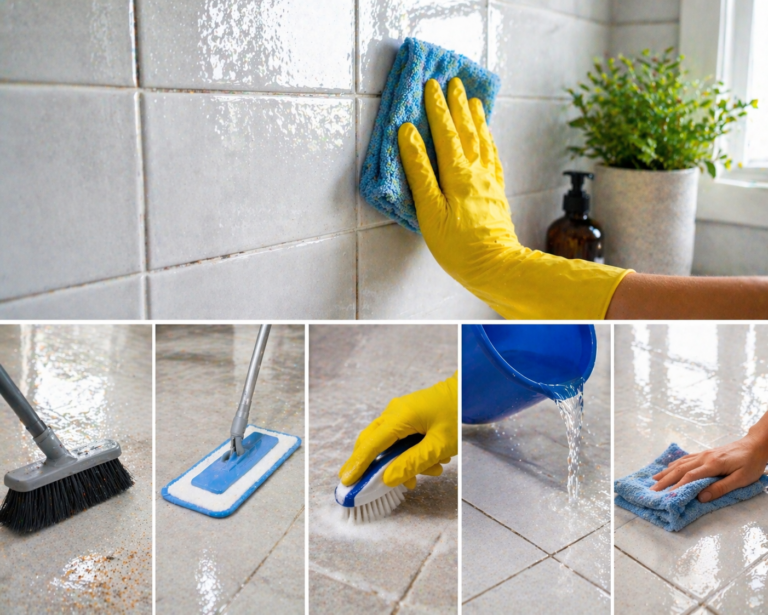
Porcelain tile is one of the easiest flooring materials to maintain, but only if you use the right products and techniques.
Use the wrong cleaner and you can dull the finish, leave a soapy residue that attracts more dirt, or gradually damage the grout holding the tiles in place.
This guide covers everything: how to clean glazed, unglazed, and textured porcelain tiles, how to tackle stubborn stains by type, how to clean the grout, and what products to absolutely avoid.
Understanding Porcelain Tile (and Why It Matters for Cleaning)
Porcelain tiles are made from dense, fine-grained clay fired at very high temperatures — higher than standard ceramic tiles.
The result is a tile that absorbs almost no water (water absorption rate under 0.5%), resists staining, and doesn’t harbor bacteria or mold the way grout or natural stone can.
But porcelain comes in several finishes, and each one needs slightly different care:
- Glazed porcelain: Has a protective glass-like coating. The most common and easiest to clean. Avoid abrasives that can scratch the glaze.
- Unglazed porcelain: No coating — the tile surface is raw fired clay. More porous than glazed, stains more easily, and should be sealed.
- Polished porcelain: High-gloss, mirror-like finish. Beautiful but shows every water spot and smear. Needs gentle cleaning and buffing to maintain the shine.
- Textured porcelain: Slip-resistant surface with raised texture. Harder to clean because dirt gets into the grooves. Needs more frequent scrubbing.
What to Avoid on Porcelain Tiles
Before diving into the right methods, here’s what you must never use:
- Bleach for regular cleaning: Occasional diluted use for disinfecting is fine, but regular bleach cleaning degrades the grout, lightens colored grout, and can dull the surface of some tiles.
- Ammonia-based cleaners: Damage both tile finishes and grout over time.
- Acidic cleaners (undiluted vinegar, lemon juice): Fine for occasional spot treatment, but regular use etches grout and, on polished tiles, can affect the surface finish.
- Steel wool or abrasive scourers: Scratch glazed and polished porcelain permanently.
- Wax or oil-based cleaners: Leave a sticky residue that attracts dirt and makes tiles slippery.
- Excessively wet mopping: Excess water gets into grout, causes it to deteriorate, and can loosen adhesive under the tiles over time.
Regular Cleaning: The Weekly Routine
For most porcelain floors, a simple weekly routine keeps them in perfect condition without any special products.
Step 1: Sweep or Vacuum First
Always remove loose dirt, dust, and debris before mopping. Mopping over grit drags abrasive particles across the tile surface — especially damaging on polished porcelain.
Use a soft-bristled broom or a vacuum with the brush bar turned off (or set to hard floor mode). Don’t use a stiff broom that can scratch the surface.
Sweep daily in high-traffic areas like kitchens. Weekly is fine for bathrooms.
Step 2: Mop with a Mild Solution
Fill a bucket with warm water and add a few drops of pH-neutral floor cleaner or plain dish soap. You don’t need much — too much soap leaves residue.
Use a microfiber mop and wring it out thoroughly before each pass. The mop should be damp, not dripping.
Work from the farthest point in the room back toward the door so you don’t walk on the clean area.
Change the water frequently. Mopping with dirty water just redistributes grime.
Step 3: Rinse
This step is often skipped and makes a significant difference.
Rinse the floor with a clean mop and plain warm water to remove any soap residue. Soap buildup is the #1 cause of porcelain tiles looking dull even after cleaning — it leaves a film that attracts dirt.
Step 4: Dry
Towel-dry or buff with a clean microfiber cloth, especially on polished porcelain. Air-drying leaves water spots on high-gloss tiles.
| 💡 Pro Tip: For polished porcelain tiles, skip any mop and bucket setup. Instead, lightly dampen a microfiber floor mop, clean, and immediately buff dry. This prevents water spots and maintains the gloss. |
Stain Removal by Stain Type
Different stains respond to different treatments. Porcelain’s low porosity means most stains sit on the surface and are removable if you act quickly.
Grease and Oil Stains (Kitchens)
- Apply a few drops of dish soap directly to the stain.
- Add a little warm water and work it in with a soft brush.
- Let it sit for 5 minutes.
- Scrub and rinse clean.
For baked-on grease, a degreasing floor cleaner (like Zep Neutral Floor Cleaner) applied and left for 10 minutes before scrubbing works well.
Coffee, Tea, and Food Stains
- Make a paste from baking soda and water.
- Apply to the stain and let it sit for 10–15 minutes.
- Scrub gently and rinse.
For stubborn coffee or tea stains, a small amount of hydrogen peroxide (3%) applied and left for 5 minutes before scrubbing is very effective.
Rust Stains
Do not use bleach on rust stains — it can set them permanently. Use an oxalic acid-based product like Bar Keepers Friend.
- Wet the tile surface.
- Sprinkle or apply Bar Keepers Friend and work into a paste.
- Leave for 1 minute — no longer.
- Scrub and rinse immediately.
Limescale and Hard Water Deposits
Hard water deposits are alkaline and respond to acid. White vinegar diluted 50/50 with water, applied and left for 5–10 minutes, then scrubbed and rinsed, works well.
For heavier buildup, a commercial limescale remover like CLR or Lime-A-Way applied briefly (follow label instructions carefully) is more effective.
Soap Scum (Bathrooms)
Heat some white vinegar in the microwave until warm, mix with an equal amount of dish soap, spray on, wait 20 minutes, and wipe clean.
Dried Grout or Cement Haze (After New Tile Installation)
New porcelain installations often leave a haze of dried grout or cement on the tile surface. Use a purpose-made grout haze remover or a diluted phosphoric acid cleaner, following the label instructions carefully. Never use these on natural stone.
How to Clean Porcelain Tile Grout
Clean tiles with dirty grout don’t look clean. The grout needs separate attention.
For Light Grout Staining
- Make a paste from baking soda and water.
- Apply to the grout lines with an old toothbrush.
- Scrub in gentle circular motions.
- Rinse with clean water.
For Dark or Moldy Grout
- Apply hydrogen peroxide (3%) directly to the grout lines.
- Let it sit for 10 minutes.
- Scrub with a stiff grout brush or old toothbrush.
- Rinse thoroughly.
For white grout that’s gone grey or black with mold, an OxiClean paste mixed with water (oxygen bleach) is safe, effective, and won’t damage colored grout the way chlorine bleach can.
| 💡 Pro Tip: After cleaning grout, apply a grout sealer (like Aqua Mix Sealer’s Choice Gold) to seal the pores and make future cleaning much easier. Reapply every 1–2 years. |
Cleaning Textured Porcelain Tiles
Textured tiles require more effort because dirt settles into the raised texture and grips there.
- Sweep daily to remove loose particles before they get pressed into the texture.
- Mop with your mild solution and a mop that can flex into the texture — a cotton string mop works better than a flat pad for deeply textured tiles.
- For embedded grime, apply your cleaning solution and let it soak for 5–10 minutes before scrubbing with a stiff brush.
- Use a grout brush or deck brush for large textured areas — toothbrushes are too small.
- Rinse very thoroughly, as cleaner residue hides in the texture and attracts more dirt.
How to Make Porcelain Tiles Shine
Porcelain can look dull even when clean if there’s residue buildup or the finish has dulled over time.
Here’s how to restore the shine:
- Strip residue buildup: Mop with a diluted solution of white vinegar and water (1:4 ratio), then rinse extremely thoroughly with plain water. This removes the soap film responsible for dullness.
- Buff polished tiles: After cleaning, buff dry with a clean, dry microfiber cloth using circular motions. This removes water spots and restores the gloss.
- Use a dedicated tile polish: Products like Black Diamond Marble & Tile Floor Cleaner or Rejuvenate All-Floors Cleaner can restore shine on glazed and polished porcelain.
- Avoid waxing: Wax on porcelain looks good initially but builds up quickly, attracts dirt, and is very difficult to remove.
Frequently Asked Questions
Can I use a steam cleaner on porcelain tile?
Yes — steam cleaners are excellent on porcelain and grout. The high-temperature steam kills bacteria and mould without chemicals and can loosen tough grime from grout lines. Keep the nozzle moving and avoid holding it in one spot too long on polished tiles.
Why do my porcelain tiles look dull after mopping?
The most common cause is soap residue. Too much detergent leaves a film that dries dull and attracts more dirt. Switch to a pH-neutral cleaner used sparingly, always rinse with plain water after mopping, and dry the floor to remove water spots.
Can I use bleach on porcelain tiles?
Occasionally, yes — diluted bleach (1 tablespoon per gallon of water) can disinfect and help with mould or staining. But regular bleach use damages grout over time, so limit it to periodic use rather than your weekly clean.
How often should I clean porcelain tile floors?
Sweep or vacuum daily in kitchens and high-traffic areas. Mop weekly with a mild cleaner. Do a deeper clean with grout attention monthly, and reseal grout every 1–2 years.
Is vinegar safe on porcelain tile?
Diluted vinegar is generally safe on porcelain tiles themselves for occasional use. But avoid using it on grout regularly, over time, the acid degrades the grout. Never use vinegar on natural stone tiles like marble, travertine, or limestone.
Related Articles: