
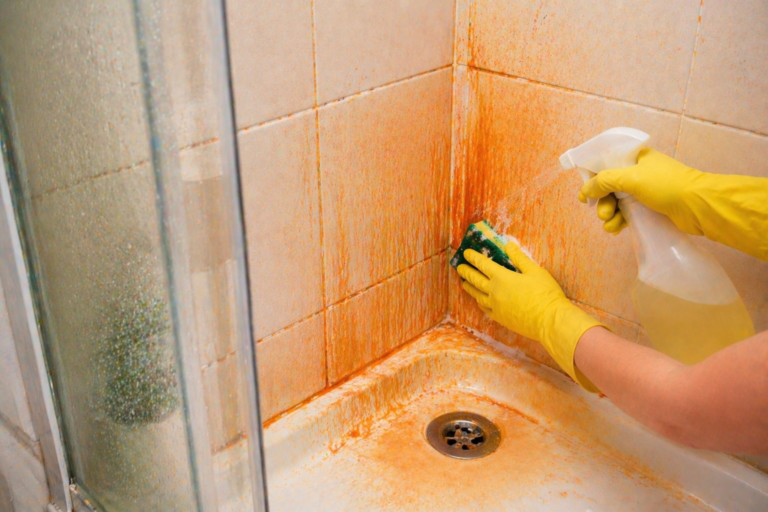
Orange stains in the shower are one of those cleaning mysteries that can make you feel like your bathroom is dirty even when you scrub it regularly.
Here’s the thing: those orange marks aren’t always the same thing. The cause determines the fix — and using the wrong method often makes it worse or wastes your time entirely.
This guide breaks down exactly what’s causing the orange stains in your shower, which cleaning method works for each type, and how to stop them from coming back.
What Causes Orange Stains in the Shower?
There are three main culprits. Identifying yours before you reach for the cleaning products will save you a lot of frustration.
1. Iron and Mineral Deposits from Hard Water
If your water supply has a high iron or magnesium content, those minerals are carried into your shower with every use.
When the water evaporates off surfaces, it leaves the minerals behind. Iron oxidizes (essentially rusts) and creates those distinctive orange-brown streaks — especially around the drain, on the shower floor, and along the waterline.
This is the most common cause in the US, particularly in homes with well water or older municipal supplies. It’s not a health risk, but it’s persistent and gets worse over time.
2. Serratia Marcescens (Pink/Orange Bacteria)
The second culprit is Serratia marcescens — a common airborne bacterium that thrives in damp, warm environments. It produces a pink-to-orange pigment as it grows, which is why you’ll see it called ‘pink mold’ even though it’s technically a bacteria, not a mold.
It shows up as a slimy, pinkish-orange film, typically in the following spots:
- Around the drain
- On the shower tray or floor, especially in standing water areas
- Along grout lines
- On the shower curtain, particularly near the bottom
Unlike mineral deposits, Serratia marcescens is a health concern. It can cause urinary tract infections, eye infections, and respiratory issues — particularly in people with compromised immune systems. Clean it promptly and thoroughly.
3. Soap Scum Reacting with Hard Water
Soap scum by itself is usually whitish, but when it mixes with iron-rich water and oxidizes over time, the resulting buildup can take on a yellowish-orange hue.
This type of stain tends to sit on walls and glass doors rather than the floor, and has a waxy feel to it.
How to Tell What Type of Stain You Have
Before grabbing any cleaner, do a quick inspection:
- Hard, crusty, rust-colored streaks following water drip lines = iron/mineral deposits
- Slimy, soft, pinkish-orange film that’s easily wiped off = Serratia marcescens bacteria
- Yellowish-orange waxy buildup on walls and doors = soap scum/mineral mix
The cleaning methods below are organized by cause. Start with the right one and you’ll get results far more quickly.
Method 1: Removing Iron and Mineral Deposits (Rust Stains)
Acid is the key here. Iron and mineral deposits are alkaline, and they break down when exposed to acid.
White Vinegar Method (Mild Stains)
- Mix equal parts white vinegar and water in a spray bottle.
- Spray generously over the stained areas and let it sit for 20–30 minutes.
- Scrub with a non-scratch brush or the rough side of a sponge.
- Rinse thoroughly with warm water and repeat if needed.
Baking Soda + Vinegar Paste (Moderate Stains)
- Make a paste from equal parts baking soda and salt, then add enough vinegar to create a thick mixture.
- Apply it directly to the stain and let it fizz for 15–20 minutes.
- Scrub in circular motions with a stiff brush.
- Rinse with warm water.
Bar Keepers Friend or CLR (Stubborn Iron Stains)
For heavy buildup that vinegar won’t touch, a commercial cleaner with oxalic acid or citric acid is your best bet.
- Bar Keepers Friend (powder or liquid) — make a paste, apply to the stain, wait 1 minute, scrub and rinse. Works exceptionally well on porcelain and fiberglass.
- CLR Calcium, Lime & Rust Remover — apply directly to the stain, wait 2 minutes maximum, then scrub and rinse. Do not let it sit longer than instructed.
- The Works Bathroom & Rust Remover — budget-friendly and surprisingly powerful on rust stains in fiberglass shower stalls.
| ⚠️ Warning: Never use CLR or acid-based cleaners on natural stone showers (marble, travertine, granite). The acid will etch and permanently damage the surface. |
Method 2: Killing and Removing Serratia Marcescens Bacteria
Bacteria requires a disinfectant, not just a cleaner. Vinegar alone won’t fully eliminate Serratia marcescens — you need something with genuine antibacterial power.
Hydrogen Peroxide (Preferred — Safe and Effective)
- Pour 3% hydrogen peroxide (standard drugstore variety) into a spray bottle.
- Spray liberally over the affected areas.
- Let it sit for 10–15 minutes to penetrate and kill the bacteria.
- Scrub with a soft brush, paying attention to grout lines and the drain area.
- Rinse thoroughly and dry the surface.
Hydrogen peroxide is excellent because it kills bacteria and mold spores without the harsh fumes of bleach, and it also has a mild whitening effect on grout.
Diluted Bleach Solution (For Severe or Recurring Cases)
- Mix 1 cup of bleach with 5 liters (about 1.3 gallons) of water.
- Apply to stained areas with a sponge or spray bottle.
- Let sit for 10 minutes.
- Scrub with a soft-bristled brush.
- Rinse very thoroughly to remove all bleach residue.
| ⚠️ Warning: Never mix bleach with vinegar or ammonia-based cleaners. This creates toxic chlorine gas. Use one or the other, never both. |
Method 3: Removing Soap Scum with Orange Tinge
Soap scum responds best to a combination of a degreaser and a mild acid.
Hot Vinegar + Dish Soap
- Heat 1 cup of white vinegar in the microwave until hot (about 1 minute).
- Add 1 cup of dish soap and pour into a spray bottle. Shake gently.
- Spray onto walls and doors and let sit for 30 minutes.
- Wipe off with a damp microfiber cloth, then rinse.
Baking Soda Paste
- Spread a thick paste of baking soda and water over the soapy buildup.
- Spray or drizzle white vinegar over it and let it fizz.
- Scrub and rinse clean.
How to Stop Orange Stains from Coming Back
Cleaning the stains is only half the battle. Prevention saves you significant effort long-term.
Wipe Down After Every Shower
The single most effective habit: take 30 seconds after each shower to wipe down the walls and floor with a squeegee or microfiber cloth.
This removes the water (and the minerals and bacteria in it) before it can dry on the surface and leave deposits.
Install a Shower Filter
If iron-rich water is your issue, a shower head filter that reduces iron and mineral content is a game-changer.
Look for filters designed for iron reduction — standard carbon filters don’t address iron. The AquaBliss SF100 or similar iron-reduction filters cost $30–$60 and can be installed in minutes.
For whole-home treatment, a water softener system ($800–$2,500 installed) eliminates the problem at the source.
Improve Bathroom Ventilation
Serratia marcescens thrives in persistent dampness. Running your bathroom exhaust fan during and for 20–30 minutes after every shower dramatically reduces the moisture that allows bacteria to grow.
Switch from Bar Soap to Liquid Body Wash
Bar soap is a major contributor to soap scum. Liquid body wash rinses away more cleanly and reduces the fatty deposits that feed bacteria and mix with minerals to create orange staining.
Weekly Spray-Down
Once a week, spray the shower walls and floor with undiluted white vinegar or a diluted hydrogen peroxide solution. Let it sit for 5 minutes and rinse. This takes less than 2 minutes and prevents buildup from taking hold.
Frequently Asked Questions
Is orange mold in the shower dangerous?
If the orange stain is Serratia marcescens bacteria (slimy, soft, pinkish-orange film), it can pose health risks — particularly for urinary tract infections and eye irritation. Clean it promptly with hydrogen peroxide or diluted bleach, and address the underlying dampness that allows it to grow.
Why do I keep getting orange stains even after cleaning?
Recurring orange stains signal an ongoing source — either iron-rich water that keeps depositing minerals, or persistent dampness allowing bacteria to regrow. Cleaning removes the stain but doesn’t fix the cause. Install a shower filter for iron issues, or improve ventilation for bacterial growth.
Can I use CLR on a fiberglass shower?
Yes, CLR can be used on fiberglass, but follow the instructions carefully — apply, wait 2 minutes maximum, then rinse immediately. Leaving it longer can dull the finish.
What causes orange stains around the shower drain specifically?
The drain area stays wet the longest after showering, making it the prime spot for both mineral deposit buildup and bacterial growth. The combination of standing water, soap residue, and slow drainage creates ideal conditions for orange staining.
Does baking soda remove orange stains from grout?
Baking soda paste works well for mild orange staining in grout, especially when combined with vinegar. For deeper staining, hydrogen peroxide (3%) applied to the grout and left for 10 minutes is more effective. For severe iron staining in grout, Bar Keepers Friend is the strongest DIY option.
Related Article: