
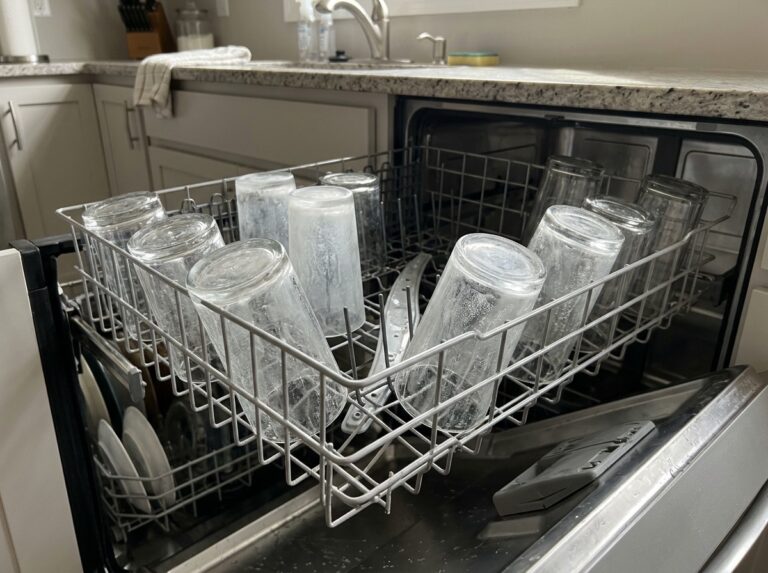
A dishwasher that leaves your dishes smellier or dirtier than when you loaded them is one of the most frustrating kitchen appliance problems. It wastes time, water, and electricity, and you still end up re-washing by hand. The good news is that almost all of these problems come down to a small number of specific causes, and most can be fixed without calling a technician.
This guide covers every cause of smelly and dirty dishes, explains what is happening inside the machine, and gives step-by-step fixes for each problem.
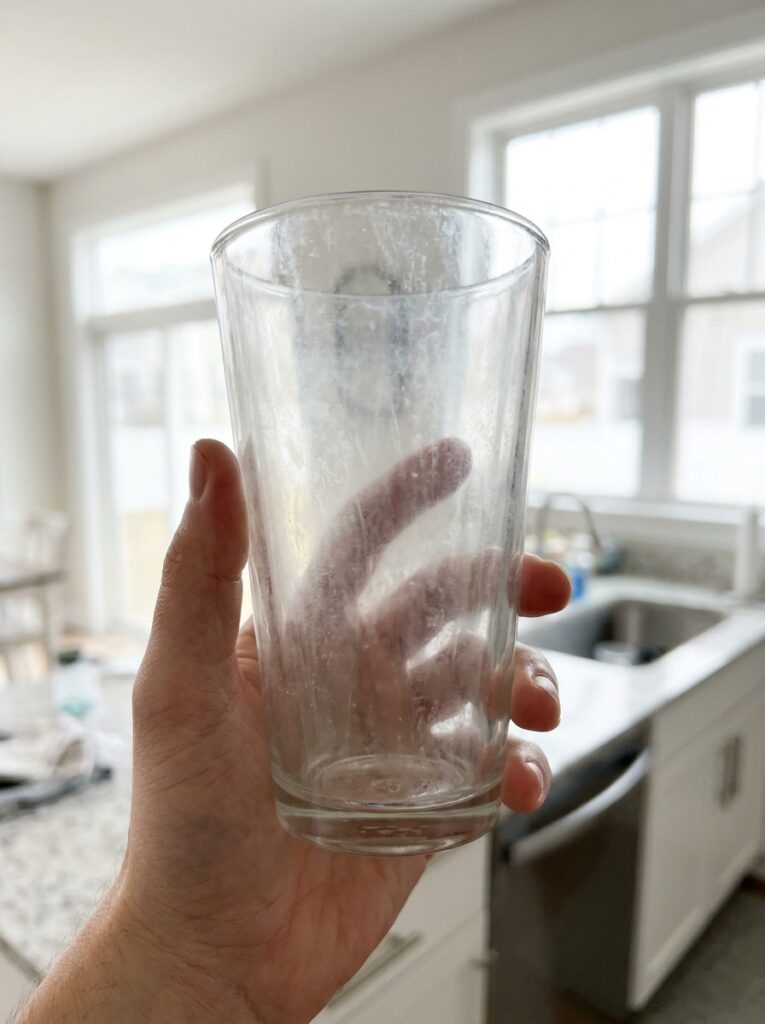
Table of Contents
Problem 1: Dishes Come Out Still Dirty
Cause 1: Clogged filter
The dishwasher filter sits at the bottom of the machine and catches food particles from the wash water before they recirculate. When it gets clogged, the dirty water with food particles is pumped back over your dishes during the rinse cycle. This is the single most common cause of dishes coming out dirty.
- Locate the filter: it is at the bottom center of the dishwasher tub, usually a circular piece that you can see if you remove the bottom rack.
- Twist the upper cylindrical filter counterclockwise and lift it out. Then lift out the flat mesh filter underneath.
- Take both pieces to the sink. Rinse under hot running water to remove loose debris.
- Use an old toothbrush to scrub the mesh gently. The small holes in the mesh get blocked with greasy particles that hot water alone does not dislodge.
- For heavy grease buildup on the filter, soak in warm water with 1 tablespoon of dish soap for 10 minutes before scrubbing.
- Rinse thoroughly, reassemble, and lock back into position by twisting clockwise.
Clean the filter once a month if you run the dishwasher daily, or every 2 months for lighter use.
Cause 2: Blocked spray arms
The spray arms have small holes that jet water over the dishes. These holes get blocked by mineral deposits from hard water, small seeds, broken glass fragments, and food particles. When holes are blocked, some dishes get little or no water coverage and come out dirty.
- Remove the spray arms: most unclip or unscrew from their mounting. The lower arm usually lifts off after pulling the bottom rack out. The upper arm is typically attached to the underside of the upper rack.
- Hold each arm under running water and spin it to see if all the holes are open. You will see restricted water flow from any blocked holes.
- Use a toothpick to clear each blocked hole. Do this carefully and thoroughly.
- For mineral deposit buildup, soak the arms in a bowl of undiluted white vinegar for 30 minutes, then clear the holes with a toothpick.
- Rinse and reattach.
Cause 3: Wrong wash cycle or water temperature
A quick or eco cycle saves water and energy but may not have the cleaning power to remove heavy food soiling. If dishes are heavily soiled, use the Normal or Heavy cycle. Hot water is also essential. The water entering your dishwasher should be at least 120 degrees Fahrenheit for effective cleaning. You can test your hot water temperature at the kitchen faucet with a meat thermometer. If the water is below 120 degrees, run the hot tap until it is at maximum heat before starting the dishwasher cycle. This ensures the machine fills with already-hot water rather than waiting for cold water in the pipes to flush through.
Cause 4: Overloading
An overloaded dishwasher prevents water from reaching all dishes. Bowls and cups should face down. Large items should not block the spray arm rotation. Dishes should not be stacked. Tall items in the lower rack can block the upper spray arm from spinning. Load according to the manual’s diagram if possible.
Cause 5: Not scraping dishes before loading
Dishwashers do not need dishes to be pre-rinsed, but large chunks of food, bones, pits, and seeds must be scraped off before loading. These items clog the filter rapidly and get redistributed by the wash water. Scrape plates over the trash or compost before loading.
Problem 2: Dishes Come Out Smelly
Cause 1: Dirty filter (most common)
A filter loaded with old food particles in the warm, moist environment of a dishwasher becomes a bacterial breeding ground within days. This produces the rotten or sour smell that transfers to dishes. Clean the filter using the steps above. After cleaning, run an empty cycle with 2 cups of white vinegar placed in a bowl on the top rack to flush the interior.
Cause 2: Dirty door seal
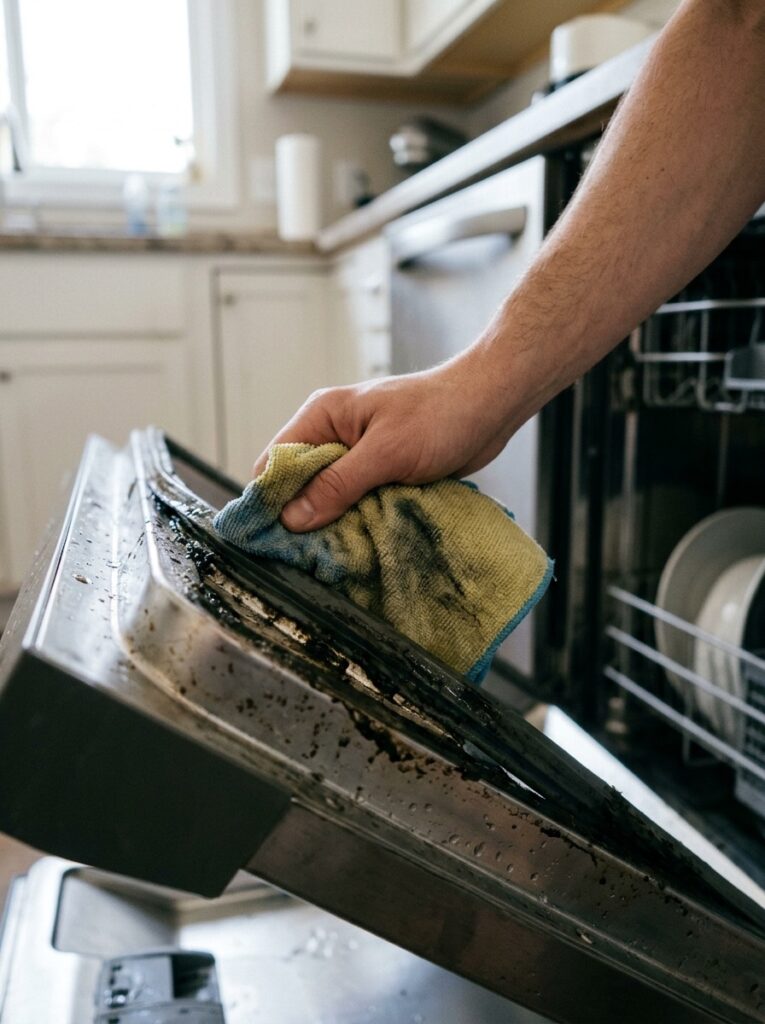
The rubber gasket along the inside of the door collects food particles, grease, and mold in its folds. Dishes coming out with a musty or mildew smell often point to a dirty door seal.
- Open the dishwasher door fully.
- Using a damp toothbrush dipped in baking soda paste, scrub along the entire length of the rubber door seal, working the bristles into every fold.
- Wipe clean with a damp cloth.
- Do this once a month to prevent mold buildup.
Cause 3: Standing water or drainage problem
If water is pooling at the bottom of the dishwasher after a cycle, it means the machine is not draining fully. This standing water quickly becomes foul-smelling and the smell transfers to dishes in the next cycle. Check for these issues:
- Is the drain hose kinked or blocked? The drain hose connects the dishwasher to the sink drain under the counter. A kink in the hose prevents full drainage.
- Is the air gap (the small device on the countertop near the faucet, if your installation has one) clear? An air gap blocked with debris prevents drainage.
- Is the sink drain itself slow? A slow sink drain backs up into the dishwasher drain line.
Cause 4: Wrong detergent amount or old detergent
Too little detergent leaves food residue on dishes. Too much produces excess suds that reduce rinsing effectiveness and leave a soapy residue. Use the amount recommended for your water hardness. Detergent pods are the most foolproof option as they deliver the correct dose automatically. Old powdered detergent that has clumped or hardened is less effective. Store powdered detergent in a sealed container and replace it if it has hardened.
Problem 3: Dishes Come Out Cloudy or with White Film
White film or cloudiness on glasses and dishes is not the same as dirty dishes. It is usually caused by one of two things.
Hard water mineral deposits
Hard water contains dissolved calcium and magnesium. These minerals deposit on dishes as the water evaporates during drying, leaving a white, chalky film. This is the most common cause of cloudy glasses. Fix it by adding a rinse aid to the dishwasher’s rinse aid dispenser. Finish Jet-Dry Rinse Aid (available at most grocery stores) is the most widely available US product. The rinse aid causes water to sheet off dishes during the rinse cycle rather than beading, which prevents mineral deposits.
For existing deposits on glasses, soak them in undiluted white vinegar for 15 minutes, then rinse. The acid dissolves the calcium deposits.
Detergent residue
If cloudy residue appears immediately after the cycle, before drying, and rinses off easily with water, it is detergent residue rather than mineral deposits. This means the rinse cycle is not removing all the detergent. Causes include using too much detergent, a blocked spray arm reducing rinse coverage, or a low water temperature during the rinse cycle.
How to Deep Clean a Smelly Dishwasher in 4 Steps
- Clean the filter thoroughly using the steps in Problem 1, Cause 1.
- Clear all spray arm holes using a toothpick.
- Place 2 cups of white vinegar in a bowl on the top rack of the empty dishwasher. Run the hottest, longest cycle available. The vinegar deodorizes, dissolves mineral deposits, and cleans grease from the interior walls and spray arms.
- After the vinegar cycle finishes, sprinkle 1 cup of baking soda on the bottom of the dishwasher floor and run a short hot cycle. The baking soda neutralizes any remaining odors. Your dishwasher should now smell clean and fresh.
WARNING: Never add vinegar and baking soda at the same time. Run the vinegar cycle first, allow it to complete fully, then add the baking soda for the second cycle. Combining them in the machine cancels out the effects of both.
Commercial Dishwasher Cleaners
If natural methods do not fully resolve the smell or performance issue, a commercial dishwasher cleaner can be used for a thorough reset. Affresh Dishwasher Cleaner (available at Target, Walmart, and Amazon) is the most widely recommended US product. Drop one tablet in the bottom of an empty dishwasher and run the hottest cycle. It is formulated specifically for dishwasher interior components and removes limescale, grease, and odor-causing bacteria.
Preventing Smelly and Dirty Dishes Long-Term
- Clean the filter every 4 to 6 weeks. This one habit prevents the majority of dishwasher problems.
- Use rinse aid consistently. Refill the dispenser every 1 to 2 months.
- Run the dishwasher hot. Use the heated dry setting or the sanitize cycle if available.
- Leave the door slightly open after a cycle finishes to allow the interior to dry out and prevent mold growth.
- Run a hot empty cycle with vinegar once a month to keep the interior clean.
- Always scrape food off dishes before loading. Never block the spray arm rotation with large items.
For more on washing dishes, see the dishwashing tips from the American Cleaning Institute.
Related Guides
- How to Clean a Dishwasher (Every Part, Step-by-Step)
- How to Clean a Dishwasher Filter (Step-by-Step, All Brands)
- 15 Dishwasher Tablet Cleaning Hacks That Actually Work (With Instructions)
Frequently Asked Questions
My dishes smell like wet dog or mildew after the dishwasher. What causes this?
A wet dog or mildew smell on dishes usually comes from a dirty door seal, a clogged filter harboring bacteria, or standing water in the bottom of the tub. Clean the filter, scrub the door seal with baking soda paste, and run the vinegar and baking soda cleaning cycles. Check that the machine drains fully at the end of each cycle. If water always remains at the bottom, there is a drainage issue to investigate.
My glasses come out with a rainbow film or iridescence. Is that mineral deposits?
Rainbow or iridescent film on glasses is usually etch damage, not mineral deposits. Etching occurs when the glass surface is chemically worn by repeated dishwasher cycles, particularly at high temperatures with harsh detergent. Unlike mineral deposits, etching is permanent and cannot be cleaned off. It is more common on fine crystal or delicate glassware. To prevent further etching, wash delicate glasses by hand or use a cooler dishwasher cycle with a less aggressive detergent.
I cleaned everything but my dishwasher still smells after a cycle. What else could it be?
If the smell persists after cleaning the filter, door seal, spray arms, and running a vinegar cycle, check these additional sources: the air gap on the countertop if your installation has one (clean it by removing the cap and clearing any debris from the inside); the drain hose connection to the garbage disposal or sink drain (food buildup can accumulate at this junction); and the garbage disposal itself if connected (run the disposal with hot water and a few ice cubes to clean the grinding chamber).
Can I use a dishwasher pod as a cleaner instead of buying Affresh?
A dishwasher pod run in an empty hot cycle will clean the interior to some extent but is not as effective as a dedicated dishwasher cleaner. Dishwasher pods are formulated to clean dishes rather than machine components. They do not target limescale on spray arms and heating elements the way Affresh or the vinegar method does. For routine monthly maintenance, the vinegar method is more effective than a pod. For a thorough periodic clean, Affresh is worth the small cost.
The inside of my dishwasher has dark stains or brown patches. What are they?
Dark brown staining inside a dishwasher is usually from a combination of old food residue, mineral deposits, and mold. It most often appears on the door interior, around the filter housing, and on the bottom corners. Run the vinegar cleaning cycle first. For stains that remain after the vinegar cycle, apply a paste of Bar Keepers Friend Soft Cleanser to the stained areas, leave for 5 minutes, scrub with a soft sponge, and rinse thoroughly. Bar Keepers Friend is safe for stainless steel dishwasher interiors.
