
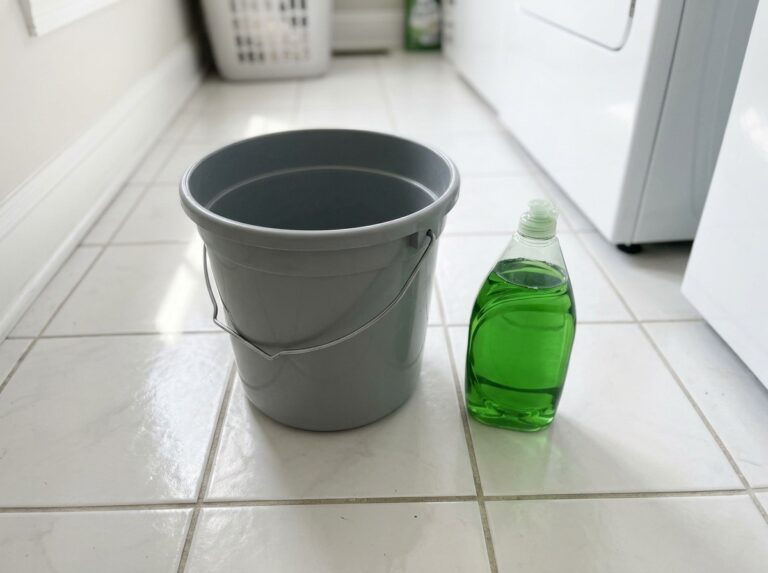
Dish soap is one of the simplest and most effective ways to unblock a toilet without a plunger. It works by lubricating the inside of the drain pipe and coating the blockage so that water pressure can push it through more easily. Most households have dish soap on hand, which makes this a practical first step when a toilet gets clogged.
This guide covers the exact method, why it works, what types of clogs it will and will not clear, and what to do next if it does not work.
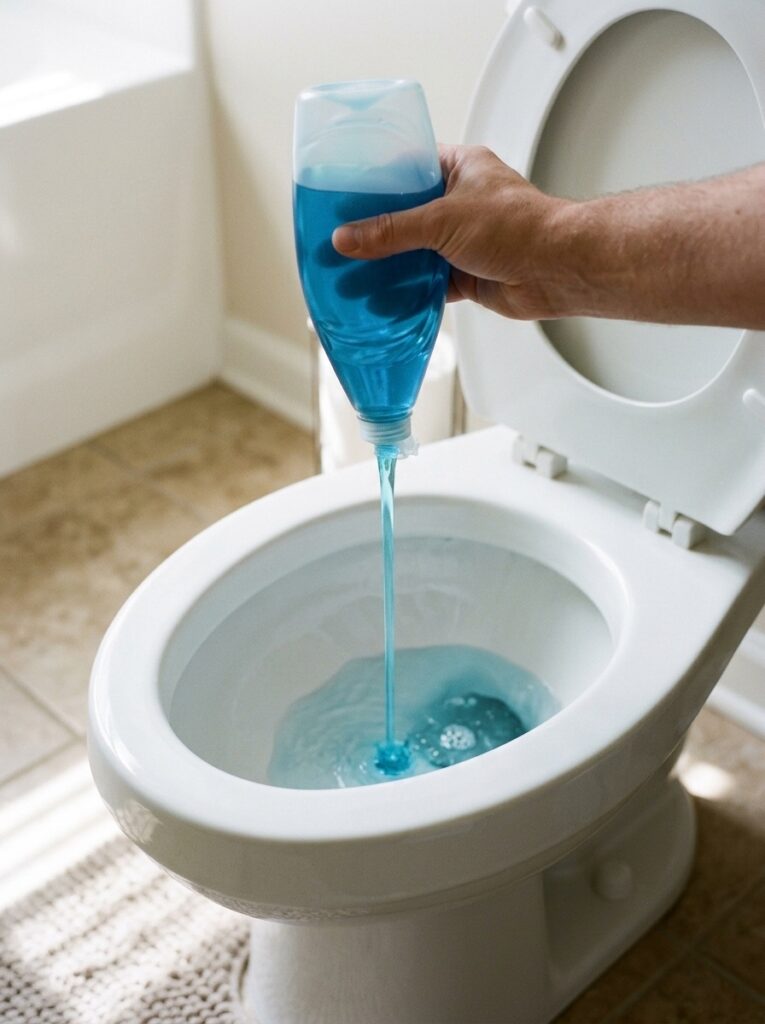
Table of Contents
Why Dish Soap Works on a Blocked Toilet
Most toilet blockages are caused by too much toilet paper or soft waste that has compacted in the drain. Dish soap is a surfactant. Surfactants reduce the surface tension of water and create a slippery, lubricating layer on the surfaces they contact. When dish soap settles into the drain, it coats the inside of the pipe and the surface of the clog. This makes the blockage slippery and reduces friction so that hot water poured from height can push it through.
Dish soap also softens grease and organic waste, which helps break the clog apart so smaller pieces pass through individually instead of as one solid mass.
This method works best on clogs that are close to the drain opening. It is less effective on deep blockages or clogs made of non-biodegradable materials like wet wipes or cotton products.
What You Need
- Dish soap (any brand: Dawn, Palmolive, Joy, or store brand)
- A bucket
- Hot tap water (not boiling)
- Rubber gloves
- Old towels or newspaper to protect the floor
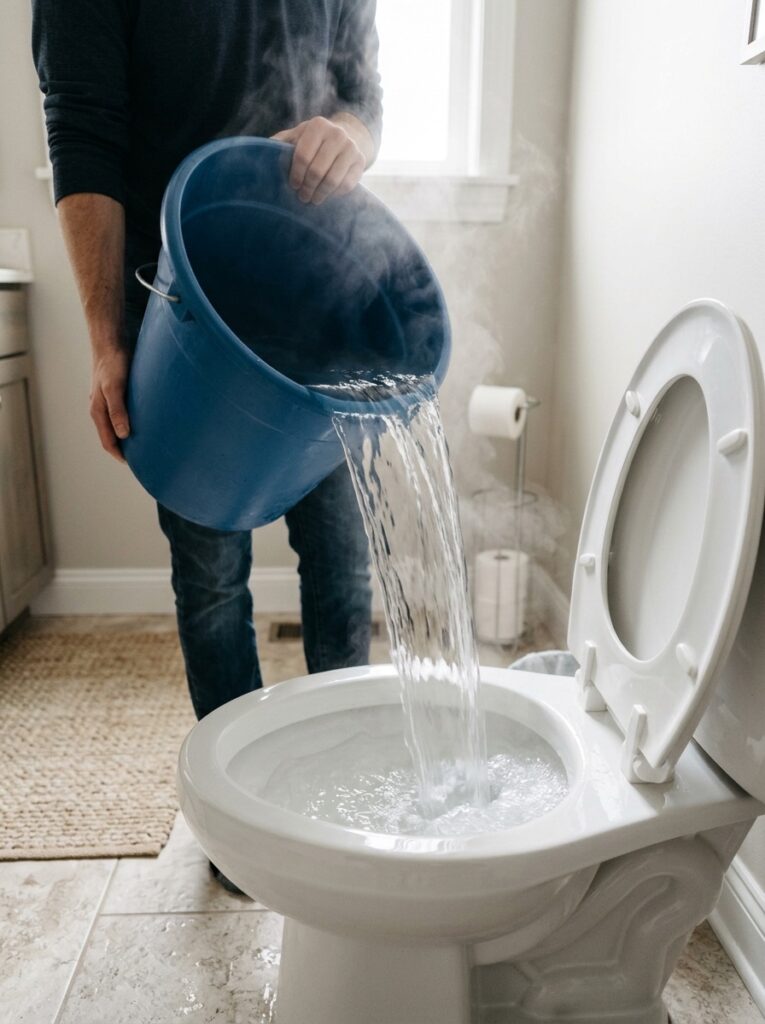
WARNING: Do not use boiling water in a toilet bowl. Boiling water can crack the porcelain. Use the hottest water from your tap, or heat water to just below boiling and let it cool for a minute.
The Dish Soap Method: Step-by-Step
- Put on rubber gloves. Lay old towels or newspaper around the base of the toilet in case of splashing.
- Check the water level in the bowl. If it is close to the rim and at risk of overflowing, bail some water out into a bucket first. You need room for the soap and water to go in without causing a flood.
- Squeeze approximately 1/4 cup (about 4 tablespoons) of dish soap directly into the toilet bowl. Aim it so the soap coats the sides of the bowl and runs down into the drain opening. A thick soap like Dawn works well because it settles slowly into the drain.
- Leave the soap to settle for 20 to 30 minutes. This gives it time to coat the drain pipe walls and the surface of the blockage. Do not flush during this time.
- Fill the bucket with the hottest water your tap produces, roughly 120 to 140 degrees Fahrenheit. A full bucket holds about 3 gallons.
- Hold the bucket at waist height above the toilet bowl. Pour the water in a steady, firm stream directly into the bowl. The height creates additional water pressure that pushes against the clog.
- Wait a few minutes for the combination of the soap lubrication and water pressure to work. Then attempt to flush. If the toilet flushes normally, the clog has cleared.
- If the water drains partially but slowly, the clog is loosening but not fully cleared. Repeat steps 3 through 7 once more before moving to a different method.
Tip: If you do not have a bucket, a large plastic pitcher or a big pot works just as well. The important thing is pouring from height for pressure, and using a large enough volume of water to push the clog through.
Dish Soap Plus Baking Soda for Extra Power
You can combine the dish soap method with baking soda and vinegar for a stronger effect. The fizzing reaction adds mechanical pressure on top of the lubricating action of the soap.
- Add 1/4 cup of dish soap to the bowl and wait 10 minutes.
- Add 1 cup of baking soda.
- Slowly pour 2 cups of white vinegar. Watch for overflow as it fizzes.
- Leave for 30 minutes.
- Pour a bucket of hot water from waist height.
- Flush and check.
Types of Clogs Dish Soap Will and Will Not Clear
Works well on:
- Compacted toilet paper blockages
- Soft waste buildup
- Partial clogs causing slow flushing
- Grease or soap scum buildup inside the drain pipe
Does not work well on:
- Wet wipes, paper towels, or tissues (these do not break down in water)
- Cotton balls, cotton swabs, or tampons
- Solid objects such as children’s toys
- Clogs deep in the drain line beyond the toilet trap
- Tree root intrusion into the main sewer line
If you can see or suspect a non-dissolvable object is in the drain, do not keep pouring water in. This can make the blockage worse or push it deeper.
What to Try If Dish Soap Does Not Work
Step 1: Use a toilet plunger
A flange plunger (also called a toilet plunger) creates a suction seal inside the drain opening that can physically dislodge blockages. It is the most reliable tool for toilet clogs and every bathroom should have one.
To plunge correctly: make sure there is enough water in the bowl to cover the rubber cup. Insert the flange into the drain opening and push down to create a seal. Pump up and down firmly 15 to 20 times without breaking the seal. Pull up sharply on the final stroke. Repeat until the toilet flushes freely. A Korky or RIDGID toilet plunger is sold at Walmart and Home Depot.
Step 2: Use a toilet auger
A toilet auger, also called a closet auger, is a coiled cable with a handle that you insert into the toilet drain. You crank the handle to extend the cable, which breaks up the clog or hooks the blockage so you can pull it out. A basic toilet auger is sold at hardware stores. The RIDGID 3-foot toilet auger is a well-reviewed option available at Home Depot.
Insert the end of the cable into the drain with the protective sleeve sitting in the toilet bowl. Turn the handle clockwise while pushing down to advance the cable. When you feel resistance, you have reached the clog. Continue cranking to break it up. Retract the cable slowly.
Step 3: Try Liquid-Plumr Urgent Clear
Liquid-Plumr Urgent Clear is specifically designed for full-standing-water clogs. It is sold at Walmart. Pour the entire bottle in, wait 15 minutes, then flush with hot water. Do not use in combination with other products.
Step 4: Call a plumber
If none of these methods work, or if your toilet has been clogging repeatedly over the past few months, call a licensed plumber. Recurring clogs in the same toilet often point to a partial obstruction deeper in the drain line or a tree root intrusion that no household tool can reach.
How to Prevent Toilet Blockages
- Use single-ply toilet paper, which dissolves faster than double or triple-ply.
- Flush twice after heavy use to prevent paper from packing together.
- Never flush wet wipes, even those marketed as flushable. They do not dissolve and are a leading cause of blocked sewer lines.
- Keep a lidded trash can next to every toilet for cotton products, dental floss, and tissues.
- Do a maintenance flush every month: pour 1/4 cup of dish soap and a bucket of hot water into the toilet, wait 20 minutes, then flush. This clears soft buildup before it becomes a full clog.
For choosing and using cleaners safely, see the American Cleaning Institute guide to cleaning surfaces.
Related Guides
- How to Unblock a Toilet with Baking Soda and Washing Soda (No Plunger Needed)
- How Often Should You Clean Your Toilet? (A Complete Schedule)
- Do Toilet Cistern Blocks Damage Your Toilet? The Honest Answer
Frequently Asked Questions
How long should I leave dish soap in the toilet before flushing?
Leave dish soap in the toilet for at least 20 minutes before adding water or flushing. This gives the soap time to settle into the drain opening and coat the blockage with a lubricating layer. Waiting longer, up to an hour, can help on stubborn clogs.
Does the type of dish soap matter?
Any dish soap will work. Thicker, gel-style soaps like Dawn Ultra tend to stay in place longer and settle into the drain more slowly, giving them more time to coat the pipe walls. Avoid dish soaps that contain bleach if you also plan to use vinegar or baking soda in the same cleaning session, as mixing bleach and vinegar releases toxic chlorine gas.
Can I use shampoo or hand soap instead of dish soap?
Yes. Shampoo, hand soap, and even hair conditioner are surfactants and will provide a lubricating effect. They are less concentrated than dish soap so use a larger amount, about 1/2 cup. They are a good option if dish soap is not available. Avoid bar soap as it can add to the blockage rather than clearing it.
Is it safe to flush the toilet after pouring a whole bucket of water in?
Yes. Pouring a bucket of water from waist height simulates the flushing action. If the water drains down without overflowing, the toilet is flushing normally. Attempt a regular flush after the water has gone down completely. If the water rises back up when you flush, stop immediately and try plunging before flushing again.
My toilet is making a gurgling sound after I cleared the clog. Is that normal?
Gurgling after a toilet is unblocked usually means there is still some air trapped in the drain line, or that another drain nearby (such as a sink drain) shares the same vent pipe and is being affected. Run water in your other drains for a minute. If the gurgling continues for more than a day or if multiple drains in your home are slow, it could indicate a partial blockage further down the main drain line that needs a plumber’s attention.
